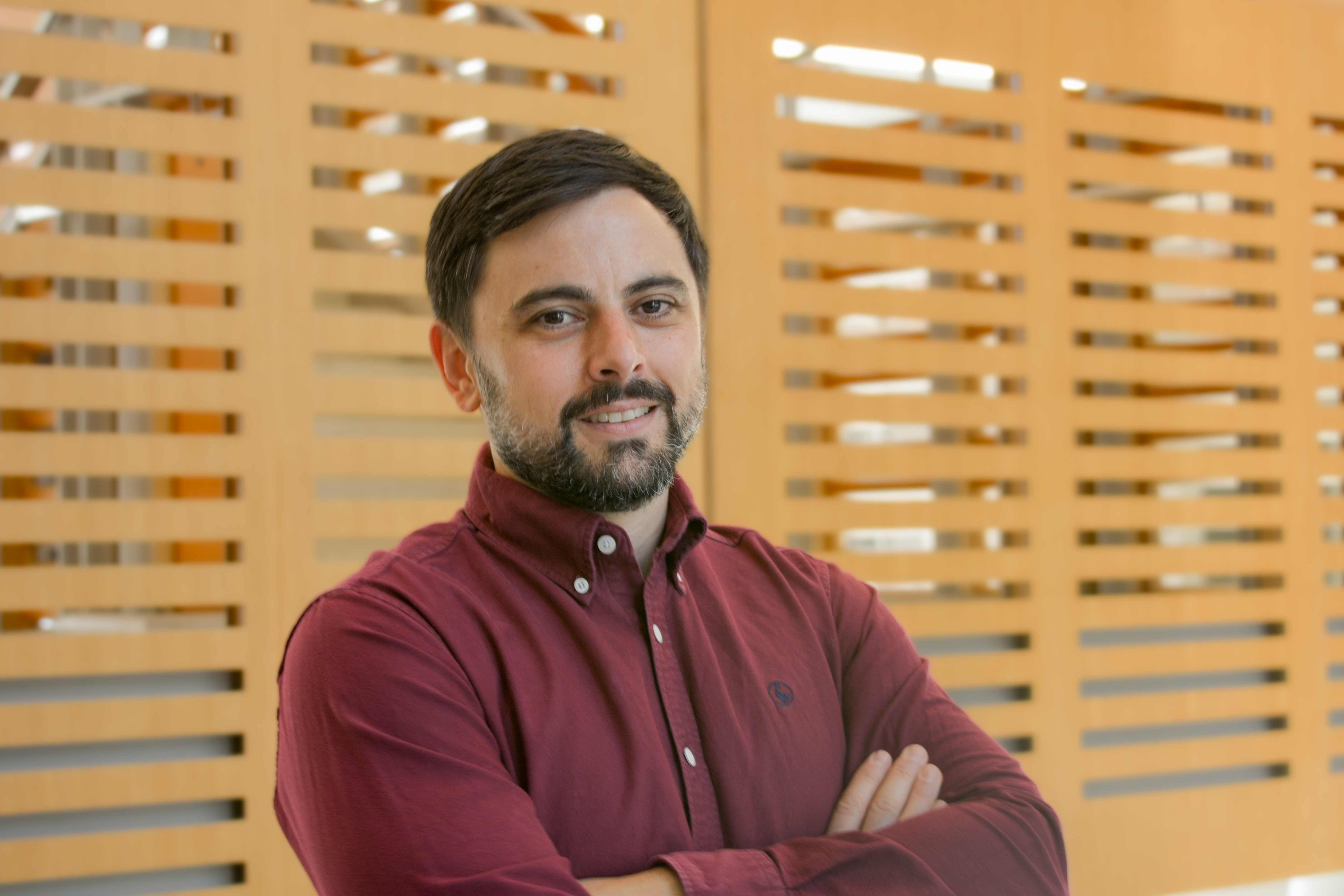
Michael Lucey is the Sidney and Margaret Ancker Chair and Distinguished Professor of French and Comparative Literature at the University of California, Berkeley. His work bridges French literature from the 19th to 21st centuries with social theory, sexuality studies, and linguistic anthropology. He has authored the critically acclaimed What Proust Heard: Novels and the Ethnography of Talk (2022) and Thinking about Sexuality with Novels (forthcoming). As founding director of the Center for the Study of Sexual Culture , he has shaped interdisciplinary research in queer theory and gender studies. Current research focuses on novels as ethnographic tools Specializes in Proust, Balzac, Woolf, and contemporary French fiction Translation work includes Didier Eribon and Édouard Louis His recent articles explore phonetics in narrative, readability frameworks, and sociological implications of literary form. He actively engages with comparative methodologies and critical theory, while his teaching spans British and American literature’s intersections with French modernism. Lucey’s academic leadership includes directing Berkeley’s Center for the Study of Sexual Culture, which supports global discourse through fellowships and conferences. His office hours are held in Dwinelle Hall and via Zoom. Contact: mlucey@berkeley.edu
Lillie Padilla is an Assistant Professor of Spanish Linguistics at Sam Houston State University's Department of World Languages and Cultures. Holding a Ph.D. and M.A. in Spanish Linguistics from Arizona State University alongside a Bachelor of Arts from the University of Ghana, her research explores interdisciplinary connections between: Afro-Latinx representation in educational materials Discourse analysis and language ideologies Sociolinguistic studies in Equatorial Guinea Critical race theory applications in language teaching Her work focuses on Spanish subject pronoun expression patterns in multilingual contexts and curriculum development for inclusive pedagogy. Recent publications examine: Representation gaps in Spanish language textbooks Methodological challenges in Equatorial Guinea research Critical discourse analysis of Netflix's Elite series Intersectional representation of Afro-Latinx women Scientific achievements include: Finalist for American Association of Linguistics 2025 award for co-edited volume Representation, Inclusion and Social Justice in World Language Teaching Padilla's research continues to shape conversations about linguistic diversity and marginalized voices in language education through both empirical studies and theoretical frameworks.
Nicholas Evans is a Distinguished Professor in the Department of Linguistics at the School of Culture, History & Language, Australian National University. He is an ARC Laureate Fellow and serves as Director of the ARC Centre of Excellence for the Dynamics of Language (CoEDL), reflecting his leadership in integrating typology, descriptive linguistics, and cognitive science. His work spans linguistic diversity, endangered languages, and the interplay between language and culture. His research focuses on Australian and Papuan languages, with extensive fieldwork in remote communities. Key interests include linguistic typology, historical and contact linguistics, semantics, and the cognitive underpinnings of grammar. He has published foundational grammars and dictionaries of Kayardild, Bininj Gun-wok, and Dalabon, contributing significantly to the documentation of endangered languages. His recent publications reveal a strong trend in cross-linguistic studies of social cognition (SCOPIC), syntactic typology, and phylogenetic modeling of the Yam languages. These works integrate linguistic, cognitive, and genetic data, highlighting interdisciplinary approaches to understanding language evolution and human diversity. ARC Laureate Fellow Fellow of the Australian Academy of the Humanities (FAHA) Fellow of the Academy of the Social Sciences in Australia (FASSA) Fellow of the British Academy (FBA) Evans supervises research students and leads major projects such as 'The Wellsprings of Linguistic Diversity' and CoEDL, which involve extensive collaboration across institutions and disciplines. His grants include modeling Pacific creoles and phonemic analysis of Tok Pisin. He is also involved in digital archiving initiatives like PARADISEC and the Language Data Commons of Australia, ensuring long-term preservation of linguistic data. He leads and contributes to research teams focused on Southern New Guinea languages, paradigm syncretisms (PARABANK), and cultural heritage preservation. His work emphasizes reciprocal engagement with speech communities and training the next generation of language documenters.
Felicity Meakins is a Professor of Linguistics at the University of Queensland, affiliated with the School of Languages and Cultures. She specializes in documenting First Nations languages in northern Australia, focusing on language contact processes, revitalization, and the impact of English on Indigenous languages. Her work bridges academic research and community engagement, including consulting on Native Title claims and language revitalization programs. Education: She studied at the University of Queensland between 1995–2001, completing her PhD in 2008. Prior to her academic career, she worked as a community linguist with Diwurruwurru-jaru Aboriginal Corporation (2001–2004) and as a PhD researcher with the Aboriginal Child Language Project (2004–2008). Research Interests: Meakins explores language contact, mixed languages, and Indigenous knowledge systems. Her projects include the 'Dingo Lingo' study tracing canine terminology across Australia and co-authored works like Tamarra: A Story of Termites on Gurindji Country (2023) and Understanding Linguistic Fieldwork (2018). She has compiled dictionaries and grammars for languages such as Gurindji, Bilinarra, and Mudburra. Grants & Recognition: Recipient of the Eureka Award (2021), LSA’s Hale Award (2021), and a Fellow of FASSA/FAHA. She led the UQ node of the ARC Centre of Excellence for the Dynamics of Language (2022). Labs/Teams: Collaborates with the Language Data Commons of Australia (LDaCA) and Indigenous communities in Northern Territory projects like the Wave Hill Walk-Off documentation.
Nicholas Evans is Distinguished Professor of Linguistics and Director of the ARC Centre of Excellence for the Dynamics of Language (CoEDL) at the Australian National University’s School of Culture, History & Language. His work bridges fieldwork-based language documentation with theoretical questions in typology, cultural evolution, and social cognition. Focus on endangered Australian and Papuan languages Director of ARC Laureate Project on 'The Wellsprings of Linguistic Diversity' Co-leader of SCOPIC (Social Cognition Parallax Corpus) study Collaborator in global linguistic diversity initiatives His research explores how micro-level community multilingualism shapes macro-level linguistic diversity, with fieldwork spanning seven years in remote Indigenous communities. Recent projects include PARABANK (paradigm syncretism analysis) and Southern New Guinea language studies, particularly Nen and Yam family languages. Scientific recognition includes the Ken Hale Award (Linguistic Society of America), Anneliese Maier Forschungspreis, and fellowships in the Australian Academy of Humanities, Australian Social Sciences Academy, and the British Academy.
Andrew Lynch serves as Professor and Associate Dean for Program Development in the Department of Modern Languages & Literatures within the College of Arts and Sciences at the University of Miami. His academic leadership extends beyond teaching responsibilities to include significant administrative contributions to program development across the institution. Lynch's research interests center on sociolinguistics with particular focus on Spanish language dynamics in Miami, heritage language socialization, bilingualism, and language ideology. His work examines how language functions within specific social contexts, especially in workplace environments where Spanish heritage speakers navigate linguistic demands. He investigates the complex interplay between language, identity, and social structures in postmodern urban settings, with special attention to the Cuban diaspora experience in South Florida. His publication record reveals consistent scholarly engagement with heritage language education, Spanish language variation, and the sociolinguistic landscape of global cities. Lynch's research demonstrates how language practices in Miami reflect broader patterns of linguistic adaptation and resistance within diasporic communities. His work often addresses the tension between linguistic heritage and social integration, examining how language ideologies shape educational practices and community identity. Lynch's scholarly contributions span multiple formats, including single-authored books, co-authored publications, handbook chapters, and journal articles in both English and Spanish. His work frequently appears in high-impact sociolinguistics and language education journals, reflecting his interdisciplinary approach that bridges theoretical linguistics with practical educational implications.
Claire Bowern is Professor of Linguistics at Yale University specializing in historical linguistics, language documentation, and Australian Indigenous languages. Her research employs computational phylogenetics to study language evolution and supports language revitalization through digital archives and fieldwork methodologies. Recent publications address: Phylogenetic signal in lexical evolution across language families Digital infrastructure for endangered language documentation (FLEx software analysis) Decolonizing linguistics pedagogy and research practices Her work consistently integrates linguistic, anthropological, and computational approaches to analyze language diversity and change. She contributes to global databases including Grambank and D-PLACE, examining links between linguistic, cultural, and environmental patterns.
Svitlana Antonyuk-Yudina serves as a Lise Meitner senior postdoctoral researcher at the University of Graz, Austria, within the Institute of German Studies under the Austrian Science Fund (FWF) project M 3361-G "Deriving Discourse Configurationality of (East) Slavic" led by Prof. Victor Edgar Onea Gaspar. Her research centers on syntax-semantics interfaces , argument structure , and information structure in East Slavic languages (Ukrainian and Russian), with specific expertise in quantification, Instrumental syntax, Object Shift phenomena, and the realization of Givenness/Focus. Current investigations explore aspect-argument structure relations in East Slavic and cross-linguistic scope freezing, while her interests increasingly extend to generative typology and contact-induced language change. Dr. Antonyuk-Yudina holds the prestigious Lise Meitner Fellowship from the Austrian Science Fund (FWF). She is actively engaged in the FWF project M 3361-G and co-edits two Special Collection volumes for Glossa: a journal of general linguistics , with experimental work mapping East Slavic syntactic structures to prosodic realization upcoming.
Marlyse Baptista is the President's Distinguished Professor of Linguistics at the University of Pennsylvania, Department of Linguistics. She is affiliated with the School of Arts & Sciences and MindCore initiative. Her research focuses on language contact, creolization processes, bilingualism, and experimental methods in creole studies. Baptista leads the Language Contact and Cognition Lab, previously known as the Cognition, Convergence and Language Emergence (CCLE) group at the University of Michigan. Education includes a PhD in Linguistics (Harvard, 1997), MA degrees from Harvard and the Université de Bordeaux III, and extensive training in multilingual education. Her work bridges generative syntax with experimental approaches, including artificial language learning to study language convergence. Key themes include the cognitive underpinnings of creole formation, bidirectional influences in Cape Verdean Creole, and the role of congruence in language acquisition. Research highlights include studies on Cape Verdean Creole's grammatical properties, genetic-linguistic admixture correlations, and pedagogical resources for creole language education. Recent projects explore experimental validation of creole genesis theories through multilingual acquisition studies. Scientific Awards: President's Distinguished Professorship (University of Pennsylvania) Labs/Teams: Language Contact and Cognition Lab, MindCore Grants/Projects: MULTI Project (creole language educational resources), NSF-funded studies on creole genesis mechanisms Baptista's work emphasizes interdisciplinary approaches, integrating syntax theory, psycholinguistics, and sociolinguistics to address foundational questions in contact linguistics and creolistics.
Mark Post is a Senior Lecturer and Honours Coordinator in the Discipline of Linguistics at the Faculty of Arts and Social Sciences, The University of Sydney. He also serves as Deputy Head of School (Humanities) and is affiliated with the China Studies Centre, Sydney Southeast Asia Centre, and The Vere Gordon Childe Centre. His educational background includes a BA Hons from Wesleyan University, an MA from the University of Oregon, and a PhD from La Trobe University. Dr. Post's research focuses on describing and explaining the typologies and relationships among Greater Mainland Southeast Asian and Himalayan languages. His descriptive work relies exclusively on primary field data, with interests in improving fieldwork methodologies. He approaches linguistic explanation from a functional-diachronic perspective, viewing language as a dynamic process whose structures emerge from patterns of discourse and interaction. His extensive publication record reveals a strong focus on Eastern Himalayan languages, particularly Tani languages, with research spanning linguistic typology, historical linguistics, and language documentation. Key themes include classifiers, deixis, applicatives, and the ethnolinguistic prehistory of the Eastern Himalaya across more than 50 publications since 2004. His notable recognition includes: 2011 Recipient of the Association for Linguistic Typology's Pāṇini Award Dr. Post has supervised research students including Chintan SHETH on ethno-linguistic prehistory in the Eastern Himalaya. His grant history includes significant projects such as 'Pseudo grains and adaptiveness in the Eastern Himalayas' (ARC, 2023), 'Center for Cultural Linguistic Diversity - Eastern Himalayas' (Firebird Foundation, 2022), and 'A Documentation of the Upper Belt variety of Minyong (Adi)' (Endangered Languages Documentation Programme). He is a life member of the Galo Language Development Committee (Arunachal Pradesh, India) and actively participates in the Association for Linguistic Typology, Australian Linguistic Society, and North East Indian Linguistics Society.
Maja J Matarić is the Chan Soon-Shiong Chaired and Distinguished Professor of Computer Science at the University of Southern California's Viterbi School of Engineering, with courtesy appointments in Neuroscience and Pediatrics. She serves as founding director of the USC Robotics and Autonomous Systems Center, co-director of the USC Robotics Research Lab, and Principal Scientist at Google DeepMind. Previously, she held leadership roles as USC's interim Vice President of Research (2020-2021) and Vice Dean for Research (2006-2019). Her educational background includes: PhD in Computer Science and Artificial Intelligence from MIT (1994) MS in Computer Science from MIT (1990) BS in Computer Science from University of Kansas (1987) Matarić pioneers Socially Assistive Robotics (SAR) , a field her lab named, focusing on human-robot interaction that provides assistance through social rather than physical support. Her research targets critical health and wellness challenges including post-stroke rehabilitation, autism spectrum disorder therapy, cognitive exercises for Alzheimer's patients, ADHD academic support, and mental health interventions. She develops systems modeling user engagement, personality, and motivation, with extensive real-world deployments in schools, rehabilitation centers, and homes. Analysis of her recent publications reveals dominant themes in cognitive health robotics (2025 CHI paper on LLM-powered elder care), pediatric assistive technology (2025 IDC speech therapy review), and adaptive preference modeling (2025 HRI contrastive learning work). Her research consistently bridges machine learning with human-centered design for vulnerable populations. Major scientific recognition includes: ACM Athena Lecturer Award (2024) ACM Eugene L. Lawler Humanitarian Award (2024) ACM Fellow (2020) Presidential Mentoring Award (2011) Multiple society fellowships (AAAS, IEEE, AAAI) As a dedicated mentor, Matarić has championed underrepresented groups through CRA-W, placing numerous women in faculty positions. She leads USC Viterbi's K-12 STEM Outreach Program serving low-income Los Angeles schools and authored The Robotics Prime for student education. Her research has secured significant funding enabling real-world technology transfer, with documented impact in rehabilitation centers and homes through deployable SAR systems. Her Robotics Research Lab at USC drives innovation in embodied AI, with current projects spanning LLM-integrated elder care robots, ADHD academic companions, and autism therapy systems. The lab emphasizes co-design with end-users and rigorous real-world validation across diverse populations.
University of California , Santa Barbara (UCSB)United States
Bernard Comrie is a Research Professor Emeritus in Linguistics at the University of California, Santa Barbara (UCSB), affiliated with the College of Letters and Science. He previously served as Director of the Department of Linguistics at the Max Planck Institute for Evolutionary Anthropology in Leipzig (1998–2015) and held a Distinguished Professorship at UCSB (2002–2021). His career includes teaching positions at the University of Cambridge, University of Southern California, and leadership roles in major research institutions. Comrie’s research focuses on Language universals and typology Historical linguistics Languages of the Caucasus, New Guinea, and Great Andamanese He emphasizes fieldwork-driven cross-linguistic analysis of topics like tense/aspect, transitivity, numeral systems, and prehistoric migration studies through collaborations with archaeologists and geneticists. His recent publications explore morphosyntactic variation (e.g., verb indexing in Asian languages, reflexivity in Tsez), language contact (Kanashi prehistory), and numeral system typology. Articles often bridge theoretical linguistics with empirical data from understudied languages. Notable contributions include the World Atlas of Language Structures and foundational work on Nakh-Daghestanian and Andamanese languages. He advocates for interdisciplinary approaches to reconstructing prehistoric human movements via linguistic evidence.
Roberto Martin-Martin is an Assistant Professor of Computer Science at the University of Texas at Austin, where he leads the Robot Interactive Intelligence (RobIN) Lab. His research bridges robotics, computer vision, and machine learning to enable robots to operate autonomously in human-centric environments like homes and offices. Previously, he was a Postdoctoral Scholar at the Stanford Vision and Learning Lab working with Fei-Fei Li and Silvio Savarese, and an AI Researcher at Salesforce AI. Education: Ph.D. and M.Sc. in Robotics from Technische Universität Berlin (TUB), advised by Professor Oliver Brock B.Sc. from Universidad Politécnica de Madrid Dr. Martin-Martin's research focuses on developing AI algorithms that combine reinforcement learning and imitation learning with advanced planning and control to address core challenges in robot perception. His work spans mobile and whole-body manipulation, dexterous and contact-rich interactions, and long-horizon tasks in unstructured environments. He takes inspiration from human cognition through psychology and cognitive science to develop solutions for skills ranging from simple pick-and-place operations to complex tasks like cooking and furniture assembly. His recent publications demonstrate a strong trend toward enabling robots to learn from human demonstrations, particularly through video, and to safely adapt these demonstrations to their own morphology. There's significant emphasis on mobile manipulation, bimanual tasks, and developing hardware that supports robust robot learning through trial and error. His work shows increasing integration of large language models and vision-language models to enhance robot understanding and task execution. Scientific Awards: RSS Pioneer (2020) Winner of Amazon Picking Challenge (2015) RSS Best Systems Paper Award (2016) ICRA Best Paper Award IROS Best Mechanism Award Amazon Faculty Award AAAI Young Faculty IJCAI Early Faculty Nominated for Best Paper at IROS (2014, 2017) Dr. Martin-Martin advises PhD students including Arpit Bahety, who is working on mobile manipulation and learning. He serves as Chair of the IEEE Technical Committee on Mobile Manipulation and is a co-founder of QueerInRobotics. His research is supported by industry partnerships and academic funding sources that enable his lab to develop both hardware and software innovations in robotics. He directs the Robot Interactive Intelligence (RobIN) Lab at UT Austin, which takes a holistic approach to robot intelligence, developing both the hardware (like the BaRiFlex gripper) and software frameworks necessary for robots to learn from interaction. The lab's research addresses the full pipeline from perception to action, with particular emphasis on learning from human demonstrations, safe exploration, and adapting to novel objects and environments.
Emma Trentman is an Associate Professor of Arabic at the University of New Mexico (UNM) and Director of the Language Learning Center. Her research focuses on Applied Linguistics, particularly on language learning during study abroad programs, virtual exchange, and the impact of language ideologies on multilingual approaches. Research Interests: Multilingualism, Language Ideologies, Study Abroad Programs, Intercultural Communication, Arabic Language Education, and Curriculum Development. Key Publications: Co-editor of Language Learning in Study Abroad: The Multilingual Turn (2021), with works featured in The Modern Language Journal , Foreign Language Annals , and Critical Multilingualism Studies . Teaching: Offers Arabic language courses and the Languages Capstone class, integrating critical perspectives into language pedagogy. Editorial Work: Co-editor for Critical Multilingualism Studies Journal , advocating for plurilingual practices in education. Publications: Explores topics such as translanguaging, sociolinguistic competence, and decolonizing language learning frameworks across diverse contexts (Egypt, Tanzania, China). Advocacy: Engages in critical discussions on equity, identity, and sociocultural dimensions in language education.
Marcin Wągiel is an Assistant Professor in the Department of Czech Language at the Faculty of Arts, Masaryk University, Brno, Czech Republic. His office is located in building D, room D.413 at Arna Nováka 1, with contact details including phone 549 49 8884 and email marcin.wagiel@phil.muni.cz. His research centers on theoretical and descriptive linguistics with emphasis on Czech language semantics and syntax. Key interests include degree/number constructions, part-whole structures, classifier systems, and temporal-modal interactions in natural language. He employs formal linguistic frameworks to analyze comparative and typological phenomena across languages, particularly within Slavic linguistics. Wągiel actively supervises doctoral research, currently guiding a thesis on temporal-modal semantics. He has secured significant research funding including Czech Science Foundation projects like Classification of classifiers (GA24-10073S, 2024-2026) and Part-whole structures across languages (GA20-16107S, 2020-2023). Additionally, he contributes to Masaryk University's student research programs supporting work in general linguistics, Indo-European studies, narratology, and Baltic studies.