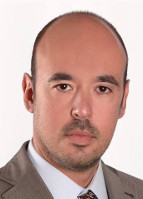
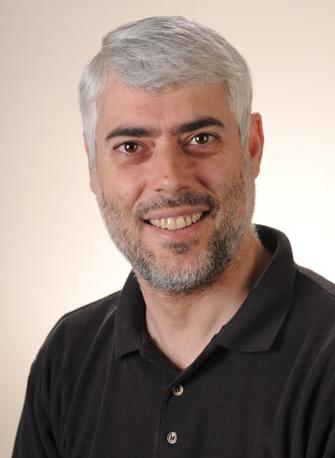
Gesa van den Broek is an Assistant Professor at Utrecht University's Faculty of Social and Behavioural Sciences , specializing in Education and Learning: Development in Interaction . Her research focuses on instructional design, cognitive psychology, and memory studies, particularly in foreign language pedagogy and higher education research. Areas of Expertise: Instructional Design, Cognitive Psychology, Memory Studies, Foreign Language Pedagogy Research Themes: Dynamics of Youth (DoY), Game Research, Higher Education Research Her recent work investigates retrieval practice mechanisms, stepwise worked examples, and multimedia learning effects. She actively collaborates on educational technology tools like ET_cam_home and participates in public engagement activities, including media contributions to Dutch outlets like Volkskrant and Trouw.
Monika Jezak is a Professor at the Official Languages and Bilingualism Institute within the Faculty of Arts at the University of Ottawa. She has over 30 years of experience in French-as-a-second-language education and language policy, serving as an expert for UNESCO, the Centre for Canadian Language Benchmarks, and Canadian governmental organizations. She currently directs the Language Management Interdisciplinary Research Group and serves as Editor-in-Chief of the Compendium of Language Management in Canada . Research Interests: Language policy, bilingualism, adult immigrant integration, sociolinguistics, literacy, and educational frameworks. Her work focuses on linguistic risk-taking, language planning, and literacy in minority francophone communities, with projects funded by SSHRC, FCAR, and Canadian government agencies. She has contributed to UNESCO initiatives and developed key language competency frameworks like the Canadian Language Benchmarks. Scientific Awards: SSHRC funding FCAR funding Prix d'excellence from Québec Centrale de l'enseignement Monika teaches courses including FLS 2513 - Grammaire française pour étudiants en langue seconde , BIL 5508 - Langue, pouvoir et politiques identitaires , and BIL 5507 - Planification et politiques linguistiques au Canada .
Stavros Vologiannidis serves as an Assistant Professor in the Department of Informatics, Computer and Telecommunications Engineering at the International University of Greece. His academic career spans both teaching and research in control theory, robotics, and machine learning applications. Previously, he was associated with the Mathematics Department at Aristotle University of Thessaloniki where he completed his education and conducted postdoctoral research. Education: B.Sc. in Mathematics from Aristotle University of Thessaloniki (1997) Ph.D. in Control Theory from Aristotle University of Thessaloniki (2005) with dissertation titled 'ALGEBRAIC-POLYONYMICAL COMPUTING METHODS IN CONTROL THEORY' Dr. Vologiannidis' research focuses on Classical and Intelligent Control Theory, Robotics, and Machine Learning, with particular expertise in polynomial matrices and automatic control systems. His work bridges theoretical mathematics with practical engineering applications, especially in educational robotics and industrial control systems. He has developed several educational platforms including EUROPA, a ROS-based educational robot for teaching sensor integration and data acquisition. His publication record shows a clear evolution from theoretical control systems research toward applied machine learning and educational technology. Recent work demonstrates increasing focus on practical applications of AI in education, urban feature recognition, industrial monitoring, and robotics education across multiple educational levels from middle school through university. His research combines mathematical rigor with real-world implementation. Scientific Recognition: Excellence Scholarship in the 'Excellence Scholarships 2010' program of the Research Committee Total citations exceeding 250 with Scopus H-index of 9 Dr. Vologiannidis has secured numerous research grants and led multiple projects including 'Rapid Earthquake Damage Assessment Consortium – REDACt', 'Predictive Maintenance 4.0', and 'Development of computational methods for optimization of eigenvalue assignment problems'. He has collaborated extensively with institutions across Europe including UTIA Foundation in Prague and has participated in EU-funded projects like GALENOS and GN4-1 GÉANT Research and Education Networking. His laboratory work centers around the EUROPA educational robotics platform and the StreetScouting urban feature detection system, both of which integrate hardware, software, and educational applications. These projects demonstrate his commitment to translating theoretical research into practical educational and industrial tools.
Dr. Sarah Wolf serves as Head of the Junior Research Group 'Mathematics for Sustainability Transitions' at Free University of Berlin's Department of Mathematics and Computer Science and as a Senior Researcher and Board Member at the Global Climate Forum (GCF). Her dual affiliation bridges rigorous mathematical modeling with real-world sustainability policy, focusing on complex socio-ecological systems through an interdisciplinary lens since joining GCF's Green Growth initiative in 2012. Wolf earned her PhD in Mathematics from Freie Universität Berlin in 2010 with the thesis 'From Vulnerability Formalization to Finitely Additive Probability Monads,' developed during interdisciplinary work at the Potsdam Institute for Climate Impact Research. Her academic foundation combines pure mathematics with applied climate impact research, establishing her unique approach to formalizing sustainability concepts. Her research centers on agent-based modeling of socio-technical systems, with core expertise in sustainability transitions , green growth mechanics , and sustainable mobility . She develops mathematical frameworks to clarify vulnerability concepts while embedding simulations in stakeholder dialogues through innovations like the 'Decision Theatre Triangle.' This work uniquely positions mathematics as both analytical tool and communication medium for climate policy. Analysis of her 15 most recent publications reveals an evolutionary trajectory from foundational vulnerability formalization (2009-2012) toward applied stakeholder-integrated modeling (2021-2023). Her work consistently bridges mathematical rigor with policy relevance, showing increasing emphasis on participatory approaches while maintaining computational sophistication in agent-based systems. No scientific awards are documented in the source material, though her leadership in the MATH+ junior research group indicates competitive funding attainment. As group head, she directs research strategy and likely mentors junior researchers, though no formal student advisees are listed. Wolf leads the 'Mathematics for Sustainability Transitions' junior research group within FU Berlin's Biocomputing Group, collaborating with institutions like the Potsdam Institute. Her team develops computational frameworks for green growth transitions, emphasizing stakeholder co-creation through platforms like the Decision Theatre while maintaining strong ties to GCF's global policy networks.
Leanne M. Currie is an Associate Professor at the UBC School of Nursing , part of the University of British Columbia's Faculty of Applied Science. Her work bridges nursing practice with health informatics, focusing on technology-mediated stigma reduction, usability design, and equity in digital health platforms. Nursing Informatics Health Information Technology Virtual Health Systems Stigma Reduction in Digital Platforms Equity, Diversity, and Inclusion (EDI) in Technology Community and Rural Health Equity Her recent research explores EHR compatibility, mHealth adoption, and the social determinants of critical illness recovery. She develops tailored digital tools for patient self-management and integrates Indigenous knowledge frameworks into health informatics curricula. Her work emphasizes human-centered design, safety in clinical technology, and cross-sectoral collaboration. Dr. Currie's publications highlight partnerships with healthcare providers to address technology-related safety events, co-design of person-centered apps, and the impact of digital tools on nurse emotional exhaustion. She actively contributes to defining anti-stigma design guidelines and advancing fair classification systems in health equity.
Dr. Silke Hamann is a researcher at the University of Amsterdam, Faculty of Humanities, Department of Linguistics. Her work bridges phonology and phonetics, focusing on the emergence of phonological features, perceptual cues in segmental contrasts, and the interaction of phonology with orthography and language acquisition. Current projects: diachronic loanword adaptation, congenital amusia's impact on speech perception, Bantu languages (with Nancy Kula and Laura Downing), Catalan studies (with Francesc Torres-Tamarit) Research interests span synchronic/diachronic phonology, phonetic perception, computational modeling of phonological acquisition, and cross-linguistic analysis of retroflex consonants. Her publications analyze phenomena in Korean, Japanese, Bantu languages, German, Portuguese, and Slavic languages, with recurring themes of cue weighting, phonological constraints, and orthographic influence. Recent articles highlight her focus on creaky voice diagnostics, loanword phonotactics, congenital amusia, and Bantu intonation systems. Collaborations with Nancy Kula (Bantu) and Francesc Torres-Tamarit (Catalan) underscore her international research network.
Dr. Qingshi Tu is an Assistant Professor in the Department of Wood Science at the University of British Columbia (UBC) Faculty of Forestry . His research focuses on integrating industrial ecology principles with computational modeling to advance sustainable bioeconomy development. Research Pillars: System-scale sustainability modeling using process simulation, statistics, and AI Environmental/economic/social impact assessment of bioenergy and bioproducts Interactions between bioeconomy, circular economy, and climate mitigation Technical Expertise: Life Cycle Assessment (LCA) Material Flow Analysis (MFA) Techno-economic Analysis (TEA) Machine Learning for sustainability Publication Scope: Dr. Tu has published 20+ articles in top journals like Journal of Industrial Ecology , Nature Communications , and ACS Nano , covering topics from nanomaterial synthesis to climate policy frameworks. His work emphasizes system-scale modeling of bioeconomy-climate interactions. Laboratory: Leads the Sustainable Bioeconomy Research Group , developing computational tools for evaluating emerging biotechnologies.
Joel Sokol is the Harold E. Smalley Professor in the H. Milton Stewart School of Industrial and Systems Engineering at Georgia Tech. He serves as Director of the interdisciplinary Master of Science in Analytics (MSA) degree, offered both on-campus and online. His academic journey began with a Ph.D. in Operations Research from MIT (1999), followed by bachelor's degrees in Mathematics, Computer Science, and Applied Sciences in Engineering from Rutgers University (1994). Education Ph.D. in Operations Research (MIT, 1999) B.S./B.A. in Mathematics, Computer Science, Applied Sciences in Engineering (Rutgers, 1994) Dr. Sokol's research focuses on Sports Analytics , Health Informatics , and Supply Chain Optimization . He pioneered the LRMC (Logistic Regression/Markov Chain) method for NCAA basketball tournament predictions, which has become an industry standard. His work extends to organ transplantation logistics, maritime shipping networks, and semiconductor manufacturing optimization, blending machine learning with traditional operations research techniques. The articles reflect his interdisciplinary expertise: 2025 introduced a Smart Stadium Testbed for real-time sports analytics, while 2024 addressed Language Model Safety . Earlier publications (2023–2018) focused on transplant survival modeling, vaccine scheduling, and maritime logistics, showcasing his ability to apply analytics to diverse domains. Scientific Awards EURO Management Science Strategic Innovation Prize (2008) Cozzarelli Prize finalist (non-sports research) Georgia Tech's highest teaching awards (multiple years) INFORMS and IISE recognitions for curriculum development As a leader in analytics education, Sokol co-founded the INFORMS Sports Operations Research section and served as INFORMS Vice President of Education. His work has practical applications in professional sports, healthcare, and industry, with methodologies adopted by teams, medical institutions, and global logistics networks.
Steven C. Grambow is an Associate Professor and Associate Chair of Education in the Department of Biostatistics & Bioinformatics at Duke University School of Medicine. He serves as Director of Duke’s Clinical Research Training Program (CRTP) and Co-Director of the Duke Clinical and Translational Science Institute (CTSI) Workforce Development Pillar. With over two decades of experience in graduate education, he has trained more than 1,000 physician-scientists in statistical methods while developing innovative programs for clinical research education across various delivery formats. His work focuses on creating pathways into clinical and translational research through partnerships with institutions like North Carolina Central University and Durham Technical Community College. Grambow actively explores AI integration into biostatistical workflows and leads initiatives in faculty development, active learning models, and cross-disciplinary collaboration frameworks. As a collaborative statistical scientist, his research spans observational studies, randomized trials, and epidemiologic investigations addressing public health challenges including amyotrophic lateral sclerosis (ALS), post-traumatic stress disorder (PTSD), and cardiovascular risk reduction. His recent publications highlight innovations in biostatistical education, AI applications, and community-engaged research models. Scientific Awards: American Statistical Association teaching honors Duke University teaching honors Grambow has secured significant grants from NIH, Department of Defense, and University of Colorado-Denver for projects spanning statistical methods in cardiovascular disease research, patient-focused drug development resources, and multi-component lifestyle interventions. He actively mentors through Duke’s educational programs and leads quantitative collaboration units in academic healthcare settings.
Jessica Young Schmidt is an Associate Teaching Professor in the Department of Computer Science at North Carolina State University, serving as ABET Coordinator since 2017 and Course Coordinator for CSC226: Discrete Mathematics. Her primary focus is undergraduate education, particularly CSC116: Introduction to Computing – Java and CSC226, where she implements flipped classroom models and comprehensive end-of-semester exercises. Her educational background includes: Ph.D. in Computer Science, North Carolina State University, 2012 M.S. in Computer Science, North Carolina State University, 2009 B.S. in Computer Science and Mathematics, Roanoke College, 2007 Dr. Schmidt's research centers on computer science education, emphasizing active learning, instructional design, and software engineering pedagogy. She has pioneered methods like collaborative software engineering exercises for CS1 materials and frameworks for assessing critical thinking, with her work on end-of-semester integration earning a SIGCSE 2020 award. Her publications reveal an evolution from privacy policy analysis (2009-2012) toward educational innovation in recent years. Her scholarly contributions demonstrate consistent focus on curriculum development and assessment, particularly in integrating software testing throughout computer science education and enhancing student comprehension through structured reflection. She has received the following recognition: Third Best Paper, SIGCSE 2020 Technical Symposium (Experience Reports and Tools Track) As ABET Coordinator, Dr. Schmidt drives curriculum assessment and continuous improvement, while her CSC226 coordination ensures pedagogical consistency across sections. Her teaching innovations directly support student success in foundational computer science concepts.
Emily K Harrington is an Assistant Professor in Special Education at the University of Illinois. Her research focuses on early intervention strategies, language facilitation, and caregiver collaboration in speech-language pathology. Academic Rank: Assistant Professor Department: Special Education University: University of Illinois Research Interests center on naturalistic language facilitation strategies and early intervention for toddlers. She evaluates diversity measures in linguistic assessments and explores methods to enhance communication outcomes through parent training and collaborative frameworks. Construct validity in language assessments Innovative early intervention techniques Family-centered speech therapy approaches Scientific Collaborations include partnerships in clinical research and educational program development, focusing on caregiver involvement and standardized evaluation metrics.
Kathryn Seigfried-Spellar serves as an Adjunct Professor in the cyberforensics program within the School of Applied and Creative Computing at Purdue University's Polytechnic Institute. She holds a prominent international reputation as an expert in the psychosocial and technological factors associated with cybercriminal behavior, with particular expertise in the criminological characteristics and grooming strategies of online child sex offenders. Her professional appointments include membership in the Tippecanoe High Tech Crime Unit and Special Deputy status for the Tippecanoe County Prosecutor's Office. Dr. Seigfried-Spellar completed her academic training at Purdue University, earning a PhD in Technology with concentration in Cyberforensics and Psychology (2011), an MA in Forensic Psychology from City University of New York, John Jay College of Criminal Justice (2007), and a BA in Psychology and Law and Society from Purdue University (2005). Her research interests focus on the psychological aspects of cybercrime, particularly the personality and motivation of cyberdeviants, child sexual exploitation, and behavioral analysis of digital evidence. Her work bridges the gap between psychological theory and digital forensics practice, with significant contributions to understanding online child sex offenders' behaviors and characteristics. She has conducted international research including a 2022-2023 Fulbright Scholar position at the University of Valencia, Spain, studying criminological differences in online child sex offenders, and has been awarded the International Fellows Award for Summer 2024 at the University of Adelaide, Australia. Dr. Seigfried-Spellar's scholarly contributions have been recognized with numerous awards including the 2023 Jefferson Award, 2022 University Faculty Scholar designation at Purdue, the 2022 Outstanding Early Career Achievement in Forensic Science Award from the American Academy of Forensic Sciences, and multiple Outstanding Research Awards from the Digital and Multimedia Sciences Section of the American Academy of Forensic Sciences (2015-2018). She serves as the Chair of the Digital and Multimedia Sciences section of the American Academy of Forensic Sciences and is a Fellow of this organization. Her professional affiliations also include membership in the American Psychological Association, American Psychology-Law Society, and International Association of Law Enforcement Intelligence Analysts. In December 2023, she co-founded and co-organized the Child Sexual Abuse Reduction Research Network workshop at the University of Adelaide, bringing together academics, nonprofit institutions, and law enforcement professionals focused on combating online child sexual abuse.
Jorge Camba is an Associate Professor at the School of Engineering Technology and holds a courtesy appointment in the Department of Computer Graphics Technology at Purdue University . He also serves as a Senior Research Scientist (by courtesy) in the Department of Industrial Engineering at the University of Naples Federico II , Italy. PhD in Systems and Engineering Management (Universidad Politécnica de Valencia, Spain) MSc in Digital Media (East Tennessee State University) MSc in Computer Science (Universidad de Vigo, Spain) His research explores intelligent CAD systems , digital manufacturing , and mixed reality environments , focusing on model quality assurance , design intent communication , and collaborative design tools . Recent work investigates spatial cognition in CAD education , geometric variability analysis , and annotation-driven knowledge management . Key trends in his publications include parametric modeling strategies , 3D annotation systems , and XR applications in design evaluation. Awards include the Purdue Faculty Scholar (2021) and I3B Fellow (2021). He has presented at conferences on topics like Industry 4.0 , space habitat design , and digital product quality .
Kazumi Matsumoto serves as Associate Professor of Japanese within the Department of Modern Languages and Classics at Ball State University's College of Sciences and Humanities. Her academic profile centers on empirical research in second language acquisition with specialized focus on Japanese language pedagogy and learner performance metrics. Her educational credentials include: Ph.D. in Applied Linguistics (Japanese), Purdue University (2010) Dr. Matsumoto's research program investigates fluency development , second language writing , and intercultural competence through rigorous quantitative methodologies. She pioneered the application of computational tools like the Fluency Calculator to objectively measure oral production characteristics, challenging traditional subjective fluency assessments. Her scholarly trajectory reveals evolving methodological sophistication—from early kanji recognition studies examining L1 transfer effects to current corpus-based analyses of oral dysfluency patterns across proficiency levels. This progression demonstrates consistent commitment to objective measurement in second language performance, particularly through computational analysis of learner corpora and tool development for fluency assessment. Dr. Matsumoto's advising activities and grant funding details are not specified in available institutional materials.
Onur KARDEŞ serves as Assistant Professor in the Department of Computer Engineering at Beykent University's Faculty of Engineering and Architecture since 2020. His prior academic appointments include: Research Assistant, Department of Computer Science, Stevens Institute of Technology (2004-2008) Lecturer, Department of Mathematics and Computer Science, Faculty of Arts and Sciences, Beykent University (2000-2004) His research integrates data mining, privacy-preserving computation, and artificial intelligence with practical applications in educational technology and urban systems. Key contributions include developing privacy-enhancing protocols for distributed data mining and pioneering generative AI solutions for automated student assessment and digital teaching assistants. Analysis of his 2023-2025 publications reveals accelerating focus on generative AI implementations, particularly in educational evaluation (automated examination paper analysis) and urban planning (AI-driven smart city frameworks). This evolution demonstrates strategic adaptation to emerging technologies while maintaining core expertise in secure computation and data mining.