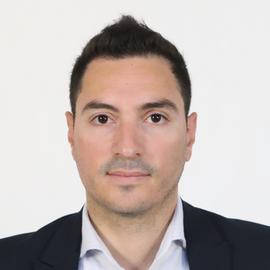
Professor Maja Pantic is a Professor of Affective & Behavioural Computing at the Department of Computing, Faculty of Engineering, Imperial College London. Her research focuses on artificial intelligence, image processing, and audio-visual speech recognition. She leads projects in multimodal systems, including facial analysis, emotion recognition, and speech-driven animation. Affiliations include the AI for Healthcare initiative, the Artificial Intelligence Network, and the Machine Learning Network. Her work addresses challenges in real-time speech enhancement, cross-modal learning, and synthetic data generation. Recent publications emphasize advancements in audiovisual speech synthesis, lip-reading, and emotion-aware systems. She has contributed to datasets like KAN-AV and SEWA DB, advancing research in face analysis and affective computing.
Soteris Demetriou is a Senior Lecturer of Computer Systems Security at Imperial College London's Department of Computing, within the Faculty of Engineering. He leads the Applications, Platforms, and Systems Security (APSS) Research Lab and directs the Academic Centre of Excellence in Cyber Security Research (ACE-CSR). His research focuses on securing mobile, IoT, and cyber-physical systems through techniques like explainable AI, reverse engineering, and trusted computing. Notable contributions include tools for privacy preservation in machine learning models, detection of LiDAR spoofing attacks, and securing Android's middleware. Education: PhD and MSc in Computer Science (University of Illinois at Urbana-Champaign), Diploma in Electrical and Computer Engineering (University of Patras). Research Interests: Mobile/IoT security, AI security, trusted computing, and vulnerability analysis. Key areas include privacy in generative models, adversarial attacks on autonomous systems, and large-scale distributed systems. Publications: Over 50 peer-reviewed papers in top venues like NDSS, CCS, and SOSP. Recent work addresses privacy in speech generation, LiDAR security for autonomous vehicles, and hyperscale serverless architectures at Meta. Awards: Distinguished Paper Award at NDSS 2018, Best Paper at SafeThings 2024, and multiple travel grants. Served on technical committees for PETS, CCS, and AutoSec. Grants & Collaborations: SPRITE+ grant for Bio-IoT security, collaboration with Meta on distributed systems, and leadership in ACE-CSR. Labs: APSS Lab focuses on systems and AI security, with interdisciplinary projects in healthcare and autonomous systems.
Dr. Ben Swift is a Senior Lecturer at the School of Cybernetics, ANU, specializing in AI, computational art, and cybernetics. He leads the Cybernetic Studio, an interdisciplinary collective exploring cybernetic systems through hardware/software/people collaborations. As a livecoding artist, he performs globally and co-founded the ANU Laptop Ensemble. His research spans generative AI, open-source tools like Extempore, and UX design. Education: PhD in Computer Science (ANU) Projects: Australia's Digital Economy (2022), The Augmented Web (2019) Research focuses on AI creativity, biofeedback interfaces, and computational music. His work bridges technical innovation with artistic expression, evident in projects like TSPNet and adversarial camera systems. Key contributions include Extempore’s development and studies in live coding disruption. Awards unspecified but recognized internationally for interdisciplinary impact.
Giuseppe Bruno Averta is a Fixed-term Researcher at the Department of Control and Computer Science (DAUIN), Polytechnic University of Turin, and a member of the Interdepartmental Center SmartData@PoliTO - Big Data and Data Science Laboratory. He is affiliated with the College of Computer, Film and Mechatronics Engineering and contributes to national and international research in artificial intelligence and robotics. Averta has held a Visiting Researcher position at the Massachusetts Institute of Technology (MIT) from January to June 2019. His research interests include Computer Vision, Deep Learning, Robotics, Neural Architecture Search, Egocentric Vision, Embodied Intelligence (Edge/Tiny ML), and Human-Robot Collaboration . His work is aligned with ERC sectors in Artificial Intelligence, Machine Learning, and Robotics, and contributes to UN SDGs such as Good Health and Well-being, Industry Innovation and Infrastructure, and Responsible Consumption and Production. The recent publication trends highlight his focus on vision-language models (e.g., CLIP), egocentric action recognition, efficient neural architectures (e.g., BiSeNet, MaskFormer), and robust deep learning. His research bridges theoretical advances with practical robotics applications, including grasping and manipulation. Scientific Awards and Recognitions: Georges Giralt PhD Award (euRobotics AISBL, 2021) Wiley Best Reviewer (Wiley, Italy, 2021) Best Paper Award, ICUMT 2015 (2017) Fellow, ELLIS Network of Excellence (2022–) Fellow, DAAD AInet (2022–) DAAD AInet Fellowship Advising and Grants : Averta supervises multiple PhD students in the Artificial Intelligence and Computer and Systems Engineering doctoral programs at Politecnico di Torino. He is involved in teaching at both the master’s and doctoral levels, including courses on Robot Learning and Machine Learning and Deep Learning. He is also a co-inventor on a national and international patent for a method and algorithm for the automatic design of neural networks through machine learning, indicating active research funding and innovation. Labs and Research Groups : He is a member of the SmartData@PoliTO center and contributes to research in the VANDAL PoliTO lab (as indicated by his student Davide Buoso). His work is deeply integrated with teams working on egocentric vision, embodied AI, and neural architecture search.
Frederic PRECIOSO is a University Professor at Côte d'Azur University, affiliated with the Sophia Antipolis Computer Science, Signals and Systems Laboratory (I3S), a joint research unit of CNRS, Inria, and the university. He is a member of the MAASAI Project Team (Joint INRIA-CNRS-UCA), based at the Fermat Building, INRIA Sophia Antipolis Méditerranée, where he conducts research in artificial intelligence and deep learning. His research interests lie at the forefront of modern AI, focusing on Deep Learning , Large Language Models (LLM) , Vision-Language Models (VLM) , and Small Language Models (SLM) . His work bridges theoretical and applied aspects of artificial intelligence, particularly in multimodal and scalable learning systems. The analysis of his research themes indicates a strong focus on next-generation AI architectures, particularly in language and vision integration, with implications for natural language processing, computer vision, and intelligent systems. He teaches courses in Computer Science, Artificial Intelligence, and Machine Learning, contributing to both undergraduate and graduate education in digital sciences. Frederic PRECIOSO is actively involved in research through the MAASAI Project Team, a collaborative effort between Inria, CNRS, and Côte d'Azur University, focusing on advanced AI methodologies and their applications. His work is supported by this interdisciplinary research environment, fostering innovation in AI and data science.
Paolo Rota is a tenure-track Assistant Professor at the University of Trento, affiliated with the Department of Information Engineering and Computer Science (DISI) and the Center for Mind/Brain Sciences (CIMeC). His research lies at the intersection of computer vision, machine learning, and multimodal AI, with a strong emphasis on vision-language models and activity recognition. His research interests include zero-shot action recognition, temporal action localization, open-world recognition, and person image synthesis. He explores how large multimodal models can be leveraged for practical applications in video analytics and industrial AI, often developing training-free or source-free adaptation methods that improve model generalization. Recent publications show a consistent trend in utilizing large vision-language models (e.g., CLIP, LMMs) for tasks such as image classification, domain adaptation, and action recognition, emphasizing simplicity, zero-shot capabilities, and real-world applicability. His work frequently appears in top venues including CVPR, NeurIPS, ICCV, and ICIAP. He actively mentors PhD students including Benedetta Liberatori, Jiaqi Liu, Yan Shu, Shiyao Xu, and Alessandro Conti, often co-advising with faculty such as Elisa Ricci and Nicu Sebe. He also contributes to teaching, including delivering lectures on machine learning for the MSc in Data Science program. He co-founded Mountain Maps, a startup using AI to enhance outdoor navigation and mountain exploration. His work bridges academic research and practical innovation, aiming to increase the real-world impact of AI systems.
Yang Liu is an Assistant Professor in the Department of Electrical and Computer Engineering at the Baskin School of Engineering, University of California, Santa Cruz. Previously, they were affiliated with Harvard University and earned their PhD in 2015 from the Department of EECS at the University of Michigan, Ann Arbor. Their research lies at the intersection of machine learning, fairness, and trustworthy AI, with a strong focus on large language models, federated learning, and causal reasoning. Their research interests include: Machine Learning and Fairness Federated and Privacy-Preserving Learning Large Language Model Safety and Unlearning Causal Inference and Counterfactual Reasoning Anomaly Detection and Robust Forecasting Human-AI Interaction and Ethical AI Recent publications (2024–2025) demonstrate a strong trend in developing methods for machine unlearning, fairness in LLMs, and robustness under label noise and distribution shifts. Their work frequently appears in top-tier venues such as NeurIPS, ICLR, ICML, AAAI, and KDD, often in collaboration with researchers like Zhaowei Zhu, Mingyan Liu, Jiaheng Wei, and Kun Zhang. Themes include algorithmic fairness, model accountability, and human-aligned AI systems. Scientific contributions include: Frameworks for LLM unlearning and model editing Methods for fair classification and recourse Robust time series forecasting under anomalies Test-time adaptation in multimodal models Causal approaches to debiasing and policy learning While no formal advising list is provided, the depth and volume of collaborative work suggest active mentorship of graduate students and postdocs. Their research program is highly active, with numerous ongoing projects in trustworthy and socially responsible AI.
Joseph E. Gonzalez is an Associate Professor in the Department of Electrical Engineering and Computer Science at the University of California, Berkeley, co-director of the Sky Computing Lab and RISE Lab, and member of the Berkeley AI Research (BAIR) group. His work bridges artificial intelligence and data systems with significant impact on large language model infrastructure and deployment. His research focuses on large language models (LLMs) including tool use, RAG, and agent systems; LLM deployment infrastructure; edge-based machine learning; cloud computing innovations; and computer vision applications. He addresses the full machine learning lifecycle from training to serving, emphasizing real-time decision systems and secure execution environments. Scientific Awards: Okawa Research Grant NSF Expedition Award NSF CAREER Award Professor Gonzalez mentors 17 current graduate students and numerous former students/post-docs across AI and systems research. His work is funded by the NSF Expedition grant for the RISE Lab, an NSF CAREER Award, and industrial sponsors including major technology companies. He co-directs the RISE Lab advancing real-time intelligent secure execution systems, and the Sky Computing Lab pioneering cloud computing abstractions. These initiatives tackle low-latency systems, online learning algorithms, and security frameworks for intelligent decision-making in physical environments.
Pascal Vincent is an Associate Professor at the Department of Computer Science and Operational Research , University of Montreal, and a key member of the Montreal Institute for Learning Algorithms (MILA) . He holds a PhD in Computer Science from the University of Montreal and has been pivotal in advancing machine learning and artificial perception. Education: PhD in Computer Science (University of Montreal, 2003) His research spans machine learning , deep learning , representation learning , and neural networks , focusing on unsupervised methods and geometrically inspired algorithms. He explores how intelligent systems can autonomously build meaningful representations from raw data, driven by principles like the manifold hypothesis . Key projects include generative stochastic networks , contractive autoencoders , and high-dimensional sequence transduction . His work has resulted in 15+ recent publications in top venues like NIPS, ICML, and CVPR. Scientific Awards : Best student-paper award at ICML 2012 Honorable mention at NIPS 2011 Funded by FCI, FRQNT, CRSNG, CIFAR, and IBM Pascal has supervised 15+ doctoral and Master’s students , including Florian Bordes, Tom Bosc, and Nicolas Boulanger-Lewandowski, across topics like representation learning and generative models . He is also a co-founder of the UNIQUE (Union Neurosciences & Intelligence Artificielle Québec) research consortium.
Marco Cuturi is a Research Scientist at Apple ML Research in Paris and Professor of Statistics at CREST-ENSAE, Institut Polytechnique de Paris. His work bridges machine learning , optimal transport , and optimization , with applications in time-series analysis , kernels , and multiresolution methods . He has held academic roles at Kyoto University and Princeton University, and previously worked in the financial industry. Research Interests: Optimal transport theory and computational methods Kernel design for structured data and histograms Time-series alignment and soft-DTW Entropic regularization in optimization Applications to computer vision and genomics Teaching: Cuturi has taught courses on linear optimization at Princeton, geometric methods in machine learning at Kyoto, and scientific English. He has also organized machine learning summer schools in Kyoto, Les Houches, and other international venues. Recent Trends: His 2024-2025 publications focus on entropic optimal transport solvers, disentangled representation learning via Gromov-Monge gaps, and applications to text-to-image diffusion models. Collaborative work with institutions like Google Research, MIT, and University of Tokyo highlights his interdisciplinary impact.
Michele Cagol is a Professor at the Free University of Bozen-Bolzano , Faculty of Educational Sciences. Their work bridges pedagogy, emotional education, and ecological sustainability, with a focus on relational learning frameworks and multisensory educational practices. Research Themes : Emotional education, educational ecology, sustainability pedagogy, media and communication education, teacher training. Projects : Lead participant in the EU Interreg Alpine Space project FRACTAL , promoting green space awareness in the Alpine region. Recent publications emphasize radical relational pedagogy, ecological ethics, and the role of wonder in learning. Notable methodologies include intra-actionist music composition and microteaching for multilingual competencies. Teaching responsibilities span General Pedagogy , Social Education , and teacher training for primary/middle school contexts.
Louis Collins is a Professor in the Department of Biomedical Engineering and Department of Neurology and Neurosurgery at McGill University, with associate membership at the Center for Intelligent Machines. His work focuses on advanced medical imaging techniques for neurological applications. Key Expertise: Non-linear image registration, model-based segmentation, neuroimaging, MRI analysis Applications: Alzheimer's disease, Parkinson's disease, multiple sclerosis, epilepsy, schizophrenia Methodology: Development of computer vision algorithms for image-guided neurosurgery (IGNS), automated atlasing, and biomarker quantification Collins' research combines computational neuroanatomy with clinical translation, particularly in: Quantifying brain atrophy and anatomical variability across populations Optimizing MRI templates for improved diagnostic accuracy Developing tools like SEEGAtlas for surgical electrode classification Exploring neurophysiological fingerprints of neurodegenerative diseases His lab (NIST-Lab) actively pursues CIHR-funded projects on ultrasound-based image-guided neurosurgery and machine learning applications in clinical trials.
Craig Jones is an Assistant Professor of Computer Science at Johns Hopkins University's Whiting School of Engineering. He is affiliated with the Malone Center for Engineering in Healthcare and contributes to the Precision Medicine Analytics Platform's Imaging and Data Science Subcommittees. BSc in Computer Science and Mathematics from Simon Fraser University MSc in Medical Biophysics from the University of Western Ontario PhD in Physics from the University of British Columbia His research focuses on applying artificial intelligence and neural networks to medical image processing, particularly for MRI, CT, optical coherence tomography (OCT), and ultrasound datasets. Key areas include 2D/3D image processing, anomaly detection, segmentation, and uncertainty quantification, with clinical applications in neurosurgery, ophthalmology, and oncology. Projects span robotic imaging, neuroendoscopic guidance, and cancer boundary detection. Recent publications highlight advancements in vision-language models for 3D medical imaging, automated segmentation of venous malformations, and AI-guided neurosurgical tools. Articles emphasize multimodal data fusion, self-supervised learning, and federated learning for rare cancer analytics. He received a $310,000 Department of Defense grant in 2022 to develop AI-guided treatments for venous malformations. His work bridges clinical imaging domains and computer vision as a member of the Radiology AI Lab (RAIL), a collaborative effort across Johns Hopkins Hospital, the Whiting School of Engineering, and the Applied Physics Laboratory.
Dr. Emre Sefer is an Associate Professor at the Faculty of Engineering, Özyeğin University, specializing in machine learning and bioinformatics. He holds a Ph.D. in Computational Biology from Carnegie Mellon University (2015), an M.S. in Computer Science from University of Maryland College Park (2011), and a B.S. in Computer Engineering from Boğaziçi University (2008). His research bridges graph machine learning with financial networks, bioinformatics, and data engineering. Ph.D.: Computational Biology, Carnegie Mellon University M.S.: Computer Science, University of Maryland College Park B.S.: Computer Engineering, Boğaziçi University Research focuses on applying machine learning to financial and biological networks: Bioinformatics : 3D genome modeling, protein modifications, transcriptomic analysis Graph Machine Learning : GNNs for fraud detection, drug response prediction, and network evolution Financial Networks : Cryptocurrency investment strategies, asset price prediction His lab (OzU Machine Learning in Finance and Bioinformatics Lab) develops graph-based deep learning methods for cross-domain applications, including NFT market analysis and chromatin structure prediction. He received the Best research paper award at Recomb 2016 for work on 3D genome architecture. Former postdoc at CMU Machine Learning Department Industry experience as Quantitative Strategist at Goldman Sachs and JPMorgan
Professor Emil Lupu is a Professor of Computer Systems at the Department of Computing , Imperial College London. He leads the Resilient Information Systems Security Group and serves as Co-Director of the National Research Institute in Trustworthy Inter-Connected Cyber-Physical Systems (RITICS) . As a Security Science Fellow at Imperial’s Institute for Security Science and Technology, his work bridges academic research with real-world security challenges. Education: PhD in Computing, Imperial College London (1994–1998) His research focuses on security and resilience of cyber-physical systems (CPS) , with emphasis on defending against data spoofing attacks , adversarial machine learning , and IoT vulnerabilities . He pioneered the Ponder policy systems for access control and the Self-Managed Cell framework for autonomic computing, and developed Bayesian Attack Graphs for scalable risk assessment in CPS. Recent publications highlight trends in adversarial robustness (2025–2022), including LIDAR spoofing defense for autonomous vehicles, LLM security , and attack graph analysis for IoT. His work explores the intersection of safety and security , applying model-checking to identify adversarial threats in train control, microgrids, and aviation systems. Scientific Awards: Security Science Fellowship, Imperial College London (2011–present) As co-founder of the PETRAS National Centre of Excellence in IoT Cybersecurity (2016–2021), he advanced security methodologies for interconnected systems. His collaborations with institutions like the Cyber Security Body of Knowledge (CyBoK) demonstrate his leadership in shaping cybersecurity research standards. Current projects include the RITICS Institute , focusing on trustworthy cyber-physical systems, and exploring generative AI for security poisoning with practical defenses against adversarial ML.