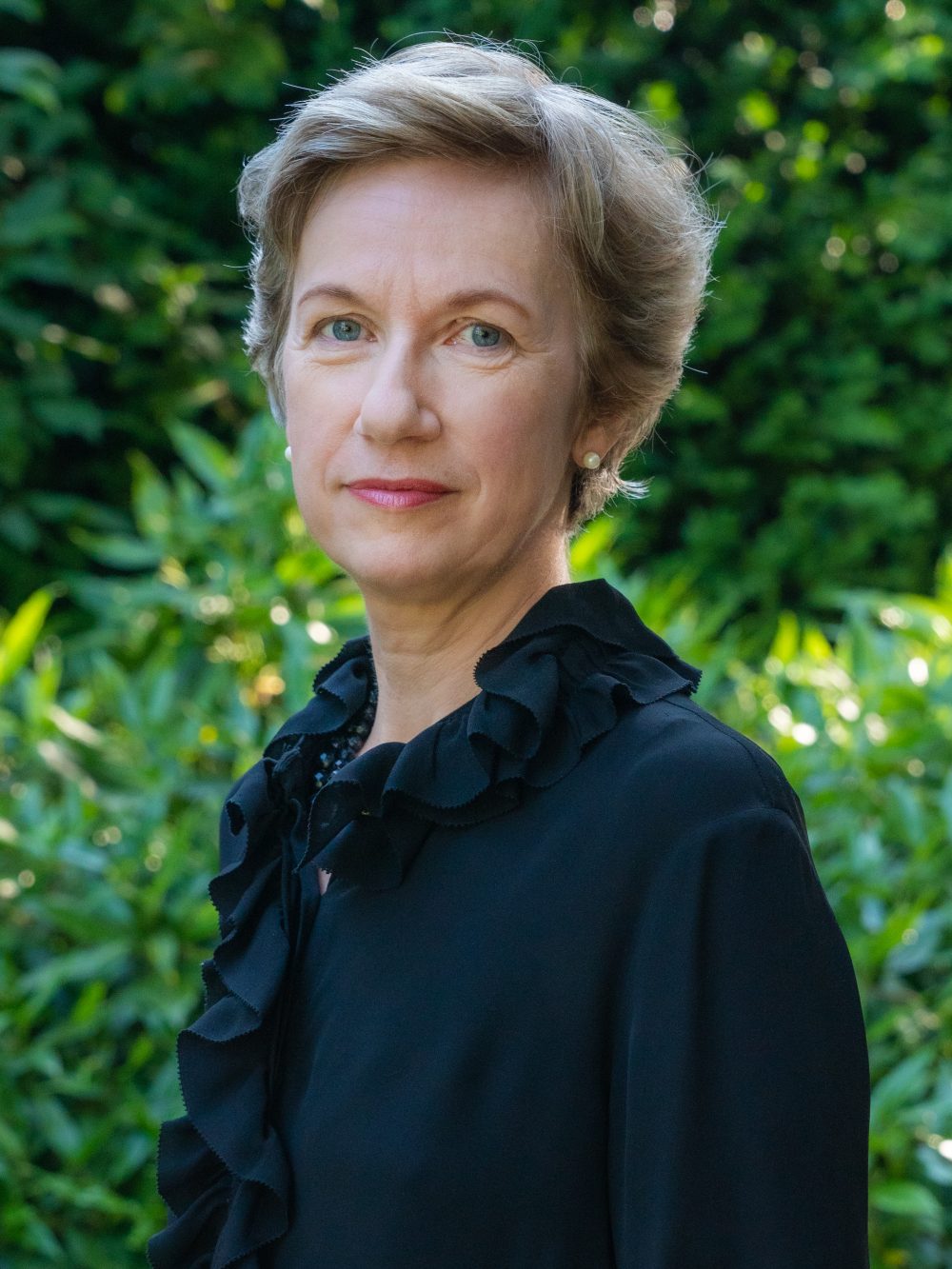
Professor Merje Kuus is a distinguished political geographer at the Department of Geography , Faculty of Arts , University of British Columbia . Her work bridges political geography , international relations , and sociology to examine knowledge production in policy-making contexts. PhD from Syracuse University (1999) WSET Level 3 Award in Wine holder Active in Arctic Circle's Mission Council on the GlobalArctic Research focuses on expertise in diplomatic practices , with empirical specializations in European Union and Arctic governance . She also explores geographical imaginaries in wine production , connecting policy analysis to cultural geography. Key publications include: Geopolitics and Expertise: Knowledge and Authority in European Diplomacy (Wiley Blackwell, 2014) Geopolitics Reframed: Security and Identity in Europe’s Eastern Enlargement (Palgrave Macmillan, 2007) Ashgate Research Companion to Critical Geopolitics (co-edited, 2013) Recent scientific awards include: Fulbright Fellowship Killam Fellowship SSHRC Canada grants Her supervision portfolio spans climate governance, disaster response expertise, and transnational policy networks, with completed PhD theses on topics ranging from Vancouver's climate governance to Arctic resource governance .
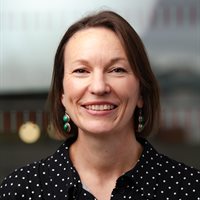
Olivia Khoo is Professor of Film and Screen Studies and Head of Film, Screen and Culture in the Faculty of Arts at Monash University. She is a leading scholar in Asian Australian and Asian cinema studies, with extensive contributions to media diversity, gender and sexuality in media, and streaming technologies. She is actively involved in national research leadership, including roles in the Australian Research Council College of Experts and the Screen Diversity and Inclusion Network. PhD in Cultural Studies – University of Melbourne LL.B. (Hons) – University of New South Wales B.A. (Hons) in English Literature – University of Western Australia Graduate Certificate in Higher Education – Monash University Her research centers on screen media diversity, streaming platforms, and transnational Asian and Asian Australian cinema. She explores how gender, sexuality, and race intersect in media representation, with a strong focus on diasporic identities and cultural citizenship. Her work bridges cultural studies, legal frameworks, and media industry practices to advocate for inclusive screen ecosystems. The recent publications reflect a sustained engagement with streaming technologies, racial representation, leadership in Asian Australian communities, and policy development for media diversity. Her work spans academic monographs, journal articles, and influential policy reports, demonstrating both theoretical depth and real-world impact in shaping equitable media landscapes. Special Commendation for the Dean’s Award for Postgraduate Research Supervision (2022) Three-time nominee, Monash Graduate Association Supervisor of the Year Award Founding Series Editor, Gender, Sexualities and Cultures in Asia (Springer) Founding Associate Editor, Studies in World Cinema: A Critical Journal (Brill) Olivia has supervised 18 PhD and MA students to completion and has led major research projects, including two ARC Discovery Projects. She is currently leading interdisciplinary collaborations across Law, Business, and Arts at Monash, particularly on the Incentivising Australian Screen Diversity report. She also co-founded the Asian Australian Studies Research Network and has held fellowships at the Asia Research Institute (NUS) and the University of California Humanities Research Institute. She leads the Film, Screen and Culture program at Monash and is central to initiatives like the Streaming Industries & Genres Network. Her collaborative projects involve national and international institutions, focusing on media flows between Australia and East Asia, and the transformation of cultural identity through digital platforms.
Claire Mercer is a Professor of Human Geography at the London School of Economics and Political Science (LSE), based in the Department of Geography and Environment. Her research focuses on urbanization in Africa, particularly in Tanzania, examining how middle-class identities are constructed through suburban housing and self-build practices. She explores themes of class reproduction, urban inequality, and the intersection of civil society with development policies. Mercer is a leading scholar in African urban studies, with expertise in diaspora networks, postcolonial geographies, and NGO dynamics. Her current research project, funded by the ESRC, investigates how self-build housing in Ghana and Tanzania drives urban and economic growth. She has authored multiple books and articles, including the upcoming monograph The suburban frontier: middle class construction in Dar es Salaam (University of California Press, 2024). Mercer serves on editorial boards for journals such as the International Journal of Urban and Regional Research and Antipode , contributing to critical debates in development geography. Her work spans interdisciplinary themes including African urbanism, spatial inequality, and the politics of belonging. Key regions of focus include Tanzania, Cameroon, and the UK. Mercer’s research bridges theoretical frameworks from human geography with empirical studies of African urbanization, emphasizing the material and aesthetic dimensions of class formation in peripheral urban areas.
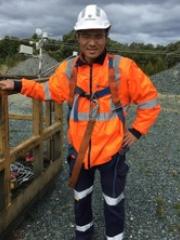
Dr. Chenming Zhang is an Advanced Queensland Industry Research Fellow at the School of Civil Engineering, The University of Queensland. His research focuses on hydrological processes in coastal and terrestrial groundwater systems, with particular emphasis on evaporation-driven mass and heat transport in soils and tailings, and hydrogeochemical dynamics in aquifers and mine waste systems. Specializes in IoT-based environmental monitoring Develops numerical models for coastal aquifer dynamics Conducts field and laboratory experiments on tailings behavior Research interests span coastal hydrology, groundwater modeling, mine waste management, and environmental monitoring. He works on contamination transport, aquifer protection, and climate impacts on water systems. Recent publications analyze: Iron curtain formation in subterranean estuaries Sea water intrusion mechanisms Salinity dynamics in tidal wetlands Smart sewer monitoring systems Scientific awards include the prestigious Advanced Queensland Industry Research Fellowship. He supervises multiple PhD projects on mine waste hydrology and coastal aquifer management, with notable collaboration on: Evolution Mining's gold tailings projects ARC Discovery Projects on coastal processes Grange Resources' PAF cell instrumentation His work combines field measurements, laboratory testing, and computational modeling to address critical environmental challenges in mining and coastal zones.
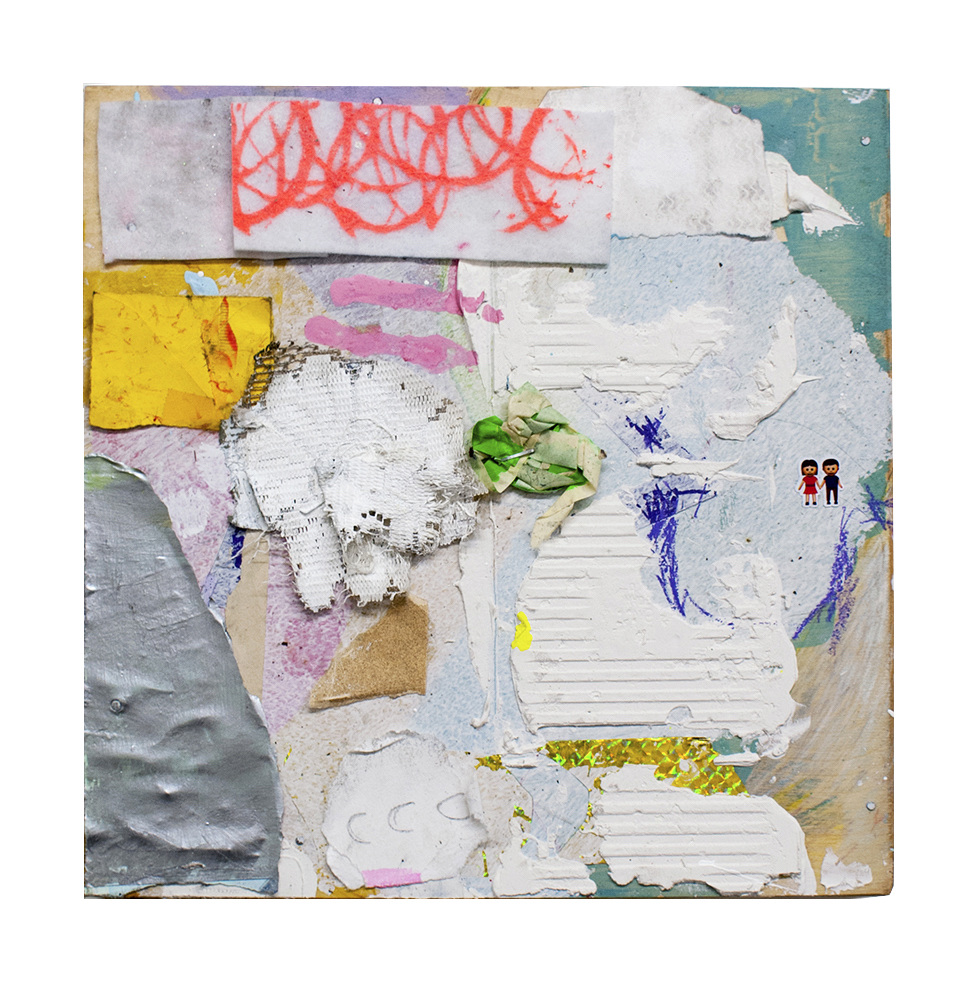
Laura M Denzer is an Adjunct Assistant Professor in the Drawing, Painting Department of the School of Art + Art History at the University of Florida. She holds a BFA from the School of the Art Institute of Chicago (2011) and an MFA from the University of Florida (2017). Her practice focuses on spatial and corporeal investigations through collage, painting, and mixed media, exploring themes of memory, identity, and transformation. Denzer’s research examines how physical and abstract spaces shape personal and collective narratives. Her work often incorporates fragmented forms, architectural references, and domestic patterns to reflect on liminal states and life transitions. Recent projects address motherhood and pandemic experiences as catalysts for reimagining selfhood and temporal continuity. Her artistic output includes over 100 works across decades, with notable series from 2023-2024 featuring screenprints that blend color theory and narrative imagery. Earlier works like Arms Folded (2016) and Party Favors (2011) demonstrate her evolving engagement with material experimentation and conceptual layering. Denzer’s practice also extends to curatorial roles, including her guest editorship of Number Magazine #96: Dependency . Her creative process integrates found materials, intuitive color choices, and formal investigations to create compositions that balance rootedness and transience. Current work explores spatial fragmentation as a metaphor for life transitions, reflecting on both personal and societal upheavals.
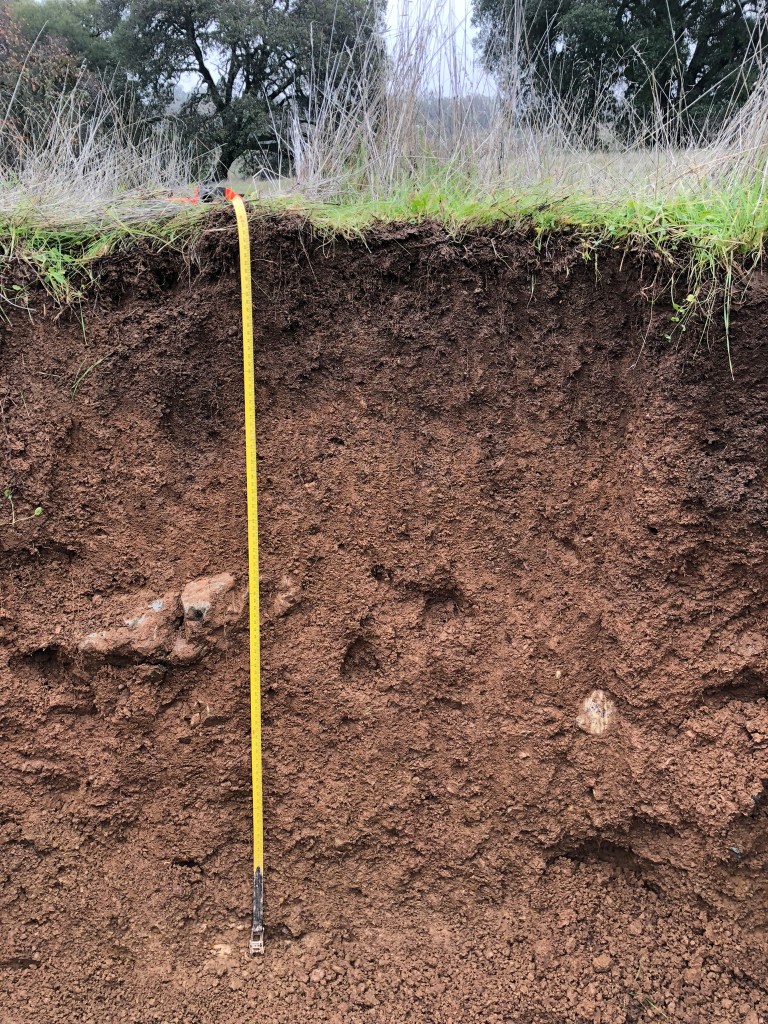
Eric Slessarev is an Assistant Professor at Yale University , affiliated with the Department of Ecology and Evolutionary Biology and the Yale Center for Natural Carbon Capture. His research focuses on soil biogeochemistry, particularly how soil properties influence carbon and nutrient cycling in terrestrial ecosystems, with applications to climate change mitigation strategies like enhanced rock weathering and perennial grass cultivation. Teaches Ecology of Landforms and General Ecology Labs located at KGL 318 (research) and KGL 417 (office) His recent publications highlight interdisciplinary approaches to understanding mineral-organic matter interactions, microbial controls on carbon cycling, and policy implications for soil-based carbon removal strategies. Key methodologies include global data synthesis, isotope tracing, and experimental manipulation of soil-plant systems across depth profiles. Notably, his 2025 work demonstrates drought impacts on carbon persistence, microbial harnessing for CO2 removal, and economic modeling of reversible carbon storage. 2024 studies explore deep-rooted plant effects on carbon fractions, calcium's role in mollisol formation, and policy optimization for carbon sequestration.
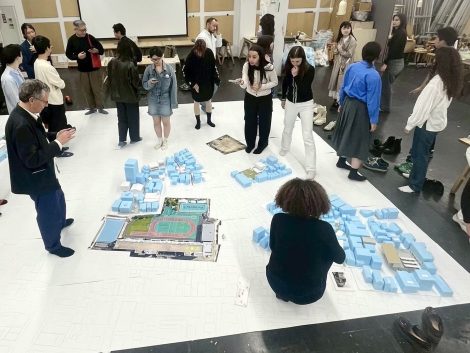
Keigo Kobayashi is an Associate Professor at Waseda University's Faculty of Science and Engineering, School of Creative Science and Engineering, Department of Architecture. He has served in this position since 2016, previously holding the rank of Assistant Professor from 2012 to 2016. His professional journey includes significant experience at the Office for Metropolitan Architecture (OMA) in Rotterdam, where he worked as a Senior Architect and Project Architect from 2007 to 2012. His educational background includes a Master of Architecture II from Harvard University's Graduate School of Design (2005), a Master of Architecture from Waseda University's Graduate School of Science and Engineering (2003), and a Bachelor's degree in Architecture from Waseda University's School of Science and Engineering (2002). Kobayashi's research focuses on architectural planning and city planning, with particular interests in food-related architecture, spatial behavior, and sustainable design. His work explores the intersection of architecture with everyday life, examining how spatial configurations influence human behavior and community formation. Recent research has investigated food systems in urban contexts, playful approaches to spatial design, and the relationship between architectural form and environmental performance. His publications demonstrate a strong focus on practical applications of architectural theory, with projects spanning from food truck design in Shodoshima to zero-energy housing solutions and innovative approaches to architectural education. His work shows a consistent interest in how architecture can respond to contemporary social challenges while maintaining theoretical rigor. Excellence in Concrete Construction Award 2019, American Concrete Institute (ACI), Qatar National Library / OMA Kobayashi actively contributes to architectural education through various committee memberships, including serving as Chief of the Subcommittee on Strategies for International Compatibility in Architectural Education at the Architectural Institute of Japan and leading the Caberra Accord Correspondence Subcommittee at the Japan Accreditation Board for Engineering Education. His teaching portfolio at Waseda University is extensive, covering architectural design studios from undergraduate to doctoral levels. He leads several research initiatives, including the Wakusei Project in Tosa, Kochi, NPO PLAT (Platform for Architectural Thinking), and the European Thinkbelt/McDonald's Radio University project which represents an innovative approach to architectural education and community engagement, particularly in contexts of migration and cultural exchange.
Maria Iacovou is a Professor of Prehistoric and Protohistoric Archaeology at the Department of History and Archaeology, University of Cyprus. She has held leadership roles including Deputy Dean of the Faculty of Philosophy, Chair of the Department of History and Archaeology, and Deputy Director of the Archaeology Research Unit. Her research focuses on ancient Cyprus, urbanization, and Mediterranean archaeology, with a particular emphasis on the Bronze and Iron Ages. She has directed major projects like the Palaepaphos Urban Landscape Project and the Palaepaphos-Laona Tumulus Investigation. Iacovou has received numerous fellowships and awards, including from the Fulbright Commission, British Academy, and Onassis Foundation. She has authored/co-edited over 20 monographs and contributed to international conferences. Her work integrates archaeological fieldwork, historical cartography, and GIS technologies.
Radu Iovita is an Associate Professor in the Department of Anthropology at New York University. Previously, he held positions at the University of Tübingen (until 2023) and the Leibniz Research Institute for Archaeology in Germany. His research focuses on Paleolithic archaeology, human-environmental interactions, and stone tool technology, with a specific emphasis on the Eurasian loess steppe. He leads the EU-funded PALAEOSILKROAD project in Kazakhstan, investigating human dispersals during the Late Pleistocene. His Anthrotopography lab combines microscopic analysis of tool use and remote sensing to reconstruct past landscapes. Education: PhD in Anthropology (University of Pennsylvania, 2008), MPhil in Archaeology (University of Cambridge, 2002), AB in Anthropology (Harvard University, 2001). Key grants include an ERC Starting Grant (2017–2022). Research interests span lithic technology, experimental archaeology, and geoarchaeological methods. Recent work includes discoveries of Paleolithic sites in Kazakhstan, studies on Neanderthal adhesive use, and AI-driven analysis of use-wear patterns. Collaborations involve institutions like ETH Zurich and the University of Tübingen. He is actively involved in field projects in Central Asia and lab-based experimental studies.
Prof. Dr. Andreas Zick is a leading scholar at Bielefeld University, serving as Scientific Director of the Institute for Interdisciplinary Conflict and Violence Research (IKG) and Professor for Socialization and Conflict Research at the Faculty of Education. He also co-leads the ConflictA initiative since 2023 and contributes to migration education through the Faculty of Education. 2008: Professor for Socialization and Conflict Research, Bielefeld University 2013: Director of IKG 2023: Scientific Head of ConflictA His research focuses on intergroup conflicts , group-based antipathy , right-wing extremism , radicalization , and socialization processes . He investigates spatial dimensions of radicalization, societal integration challenges, and prejudice dynamics through comparative studies. Recent publications analyze radicalization spaces (2024-2025) using spatial sociology, democratic conflict perceptions (2025), and cross-cultural prosocial behavior during pandemics. Key methods include ethnography, longitudinal surveys, and multi-perspective comparative analysis. Scientific contributions recognized by: Communicator Award (2016) Nevitt Sanford Lifetime Award (2022) Active in public policy as member of the Federal Agency for Civic Education's advisory board and Federal Commissioner's Antiracism Expert Council. Leads major projects on radicalization prevention and spatial conflict dynamics with national/international partners.
Seulgi Moon is an Associate Professor at the University of California, Los Angeles (UCLA) in the Department of Earth, Planetary, and Space Sciences . She has been affiliated with UCLA since 2015, first serving as an Assistant Professor until 2022, followed by her current role as Associate Professor. Education : Ph.D. in Geological and Environmental Sciences (2007-2013), Stanford University M.S. in Earth System Science (2005-2007), Seoul National University B.A. in Earth System Science, summa cum laude (2001-2005), Seoul National University Her research focuses on geomorphology, planetary geology, and Earth surface processes. She investigates sediment transport, climate-landscape interactions, and planetary surface dynamics, with notable work on Martian geological features and hydrological systems. Her publications highlight advancements in understanding sediment transport mechanics (Flinchum et al., 2018) and planetary surface processes (Moon et al., 2017), both recognized as top cited/downloaded papers in the Journal of Geophysical Research: Earth Surface . Scientific Awards : Katharina von Salis Fellowship (2024) AGU Robert Sharp Lecture (2022) AGU Luna B. Leopold Early Career Award (2022) Sloan Research Fellow (2022) NSF CAREER Award (2019) UCLA Faculty Career Development Award (2018) Gabilan Stanford Graduate Fellowship (2008-2011) She has been active in mentoring postdoctoral scholars and contributes to advancing computational and analytical methods in geosciences.
David N. Thomas is a Professor of Arctic Ecosystem Research and Director of the International Masters Programme for Environmental Change and Global Sustainability at the University of Helsinki. He is affiliated with the Faculty of Biological and Environmental Sciences, working within the Ecosystems and Environment Research Programme and the Helsinki Institute of Sustainability Science. Dr. Thomas is a distinguished Marine-Arctic-Antarctic-Climate Biologist with extensive expertise in sea ice research, polar ecosystems, and climate change impacts. His research focuses on the biogeochemical processes within sea ice, carbon cycling in polar regions, and the ecological implications of a changing Arctic Ocean. He has made significant contributions to understanding how sea ice ecosystems function and respond to environmental change, with particular attention to microbial communities, nutrient dynamics, and carbon fluxes. His recent publications demonstrate a strong focus on the changing Arctic Ocean ecosystem, carbon and microbial dynamics in thawing permafrost landscapes, and sea ice biogeochemistry. Dr. Thomas has also contributed to important policy documents such as the PAME Synthesis Report on Ecosystem Status in the Central Arctic Ocean, bridging the gap between scientific research and environmental management. Professor Thomas has recently published the 4th Edition of "Sea Ice: Its Physics, Chemistry, Biology, Geology and Societal Importance," which represents a comprehensive update to this seminal work in polar science. His research spans both Arctic and Antarctic environments, examining how these critical polar regions are responding to global environmental change.
Barbara Bombi is a Professor of Medieval History at the University of Kent's School of History. She holds a PhD from the Catholic University of Milan (2000) and has held research positions at the German Historical Institute in Rome, University of Padua, and Corpus Christi College, Oxford. Her research focuses on the High Middle Ages (1200-1450), specializing in the medieval papacy, canon law, crusades, and the Teutonic Order. She leads the Leverhulme/British Academy-funded 'Diplomacy and the Making of Europe' project. Elected Fellow of the British Academy (2022) and member of the Royal Historical Society Council (2019), she also serves as General Editor of the Canterbury and York Society and on the Internationale Historische Kommission. Teaching spans later medieval Europe, religious history, and canon law. Education: PhD in Medieval History, Catholic University of Milan (2000) Research Fellowships: German Historical Institute Rome (2001), University of Padua (2002–2004) Research Interests: Her work examines papal diplomacy, Anglo-papal relations (as seen in her 2019 OUP monograph), and the Teutonic Order's archival practices. She analyzes the Baltic Crusades' role in European identity formation and medieval diplomatic practices' impact on state-building. Current projects include compiling a catalog of manuscripts of the Liber Extra. Publications Trends: Her articles and books explore papal elections, curial administration, and military orders' archival strategies. Recent works emphasize diplomatic networks and their role in shaping late medieval Europe's political landscape. Awards/Grants: British Academy Fellowship (2022) Leverhulme/BA Small Grant (2018–present) Labs/Teams: Directs the 'Making of Europe' international research network through the Centre for Medieval and Early Modern Studies (MEMS).
Dr. Lauren Hammond serves as Lecturer in Teacher Education at the Institute for Education, Teaching and Leadership within the Moray House School of Education and Sport at the University of Edinburgh, a position she assumed in August 2022 after eight years at IOE, UCL's Faculty of Education and Society. Her academic career bridges secondary school teaching in London and Singapore with higher education expertise in geography teacher education, curriculum development, and doctoral supervision. Her educational background includes a PhD in Geography Education from University College London (2020), an MA in Geography Education from the Institute of Education (2009), a PGCE in Secondary Geography from the University of Bristol (2006), and a BA (Hons) in Geography from King's College London (2004). This foundation supports her interdisciplinary research at the intersection of children's geographies, geography education, and geographies of education. Dr. Hammond's research centers on children's rights, urban educational spaces (particularly London), and empowering young people through geography. She employs participatory methods including storytelling and mapping with youth, investigating how educational spaces reproduce social injustices and how geographical concepts illuminate educational processes. Her work critically examines geography's construction in schools and universities while exploring teacher education for complex socio-political contexts. Her recent publications reveal strong thematic continuity in children's geographies and geography education, with growing emphasis on race, climate change, and pandemic research ethics. Key trends include participatory methodologies, urban justice frameworks, and critical analyses of teacher development in volatile educational landscapes. Dr. Hammond holds significant professional recognition including: Fellow of the Royal Geographical Society (FRGS) Senior Fellow of the Higher Education Academy (SFHEA) She actively supervises postgraduate students and has secured competitive research funding including UCL's Centre for Teachers and Teaching Research grant (£3,500) for race and educational spaces (2023), an IOE Early Career Impact Fellowship (£1,000) on children's urban rights (2021), and seed funding for PGCE mentoring evaluation (£8,317.50, 2017). Her collaborative approach extends to organizing major conferences and leading cross-institutional networks. As deputy secretary of the RGS's Geography and Education Research Group and membership officer of the Geographies of Children, Youth and Families Research Group, she actively shapes research communities. Her leadership extends to the Geography Education Research Collective and Geographical Association's special interest groups, fostering national and international scholarly collaboration.
Marios Koutsias is a Senior Lecturer at Essex Law School, University of Essex, specializing in EU Commercial Law, Company Law, and Data Protection. He holds an LLB from Aristotle University of Thessaloniki, an LLM in EU Law from the University of Essex, an MA in Politics and International Relations from King's College London, and a PhD in Law from the University of Essex. Prior to his academic career, he practiced as a lawyer on Greek Law and European Union Law in Thessaloniki and Brussels, and remains a member of the Thessaloniki Bar Association, Greece. His educational background includes: LLB from Aristotle University of Thessaloniki, Greece LLM in EU Law from University of Essex MA in Politics and International Relations from King's College, London PhD in Law from University of Essex Dr. Koutsias' research focuses on Company Law, Corporate Governance, Comparative Company Law, European Union Law with a special emphasis on the Internal Market, and Privacy and Data Protection. His work critically examines shareholder primacy versus stakeholder theory, the influence of national cultural identities on corporate governance frameworks, and the evolving landscape of data protection regulations in the digital economy. He has made significant contributions to understanding how Brexit might reshape European corporate governance paradigms and the tensions between commercial interests and privacy rights in global trade. His publication record reveals a strong interdisciplinary approach, connecting theoretical legal concepts with practical commercial applications. The research trends show increasing focus on post-Brexit regulatory alignment, stakeholder governance models, and data protection challenges in international commerce. His most recent 2025 article argues that Brexit should not sever UK-EU privacy regulatory connections to protect both trade interests and human rights. Dr. Koutsias supervises PhD students in Law with expertise in corporate governance frameworks across different jurisdictions. His current supervisees include Tioluwani Comfort Tioluwani and Iman Abdulrahman M Alfaraj, while he has successfully guided seven PhD students to completion since 2016, including Christina Gkampitsaki (awarded January 2024) and Tioluwani Comfort Tioluwani (awarded December 2023). His teaching responsibilities encompass Company Law (LW225), Law of the European Union (LW302), Final Year Research Project (LW304), Introduction to the Law of the European Union (LW430), Industry Placement (LW811), and Data Protection Law in the Digital Age (LW656). He has secured research funding including the 2019 Mondaq KTP 2 grant from Innovate UK. Dr. Koutsias has co-authored three significant books: 'Company Law in the New Europe' and 'The Nature of Corporate Governance: The Significance of National Cultural Identity' (both Edward Elgar Publishers), and 'Company Law' by Palgrave with Professor Janet Dine, which is considered one of the leading textbooks in the field. He also serves as a Specialist Contributor to Gore Brown on EU Company Law publications, demonstrating his recognized expertise in this specialized area.