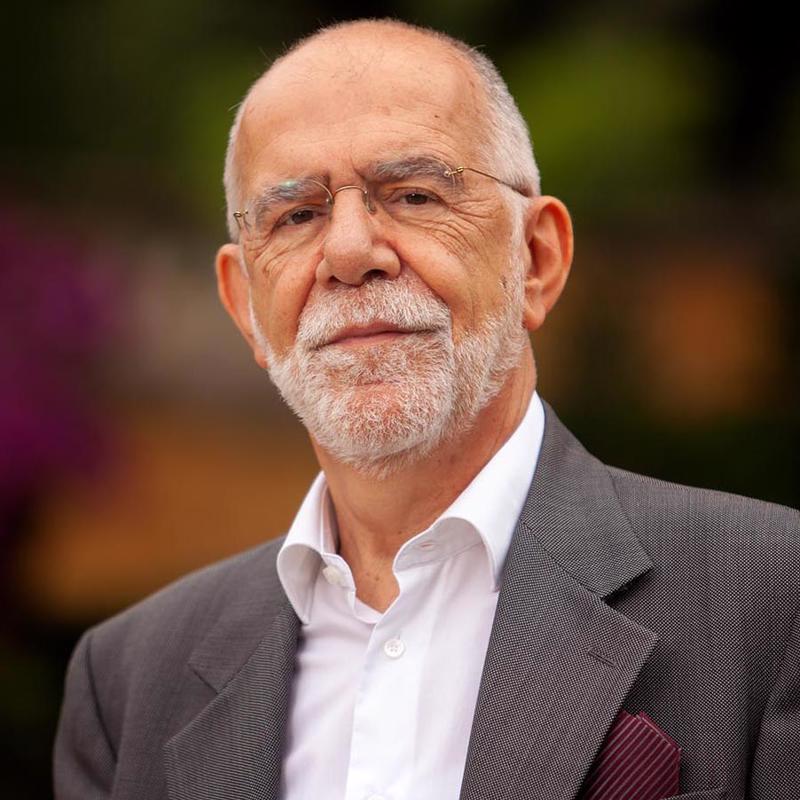
Montserrat Jimenez Sanchez is a Professor at the University of Oviedo, affiliated with the Department of Geology. Her research focuses on geological processes shaping the Cantabrian Mountains, particularly in external geodynamics and geomorphology. Education: PhD in Geomorphology from the University of Oviedo (1994) Research Area: External Geodynamics Research Group: GEOCANTÁBRICA (Procesos Geológicos Modeladores del Relieve de la Cordillera Cantábrica) Her work emphasizes the interplay of tectonic forces and sedimentary dynamics in landscape evolution. No scientific awards or publications were listed in the provided text.
Dr. Henry Loeser is a Lecturer in Media Entrepreneurship at Bournemouth University, specializing in digital media policy, community broadcasting, and media economics. His research focuses on small-market media systems, EU audiovisual sector alignment, and the impact of digital transitions on local journalism. He has contributed to international conferences and publications on these topics. His recent publications include analyses of European audiovisual policy, digital radio developments, and community media challenges. External responsibilities include advisory roles for the Czech Ministry of Culture (2014-2016) and leadership positions in organizations like the Community Media Forum Europe (Board member, 2009-2019) and RadioExpert.org (Director, 2008-2020). His work emphasizes media regulation, cross-border collaboration, and the sustainability of community-driven media models in the digital age.
Özgür Aktürk is an Assistant Professor in the Department of Geological Engineering at Akdeniz University, Faculty of Engineering, where he has been serving since 2011. His academic journey began at Ankara University, continued with a master's and doctorate at Middle East Technical University, and includes research experience at the University of Tennessee. He is actively involved in teaching and research in geotechnical and geophysical engineering, with strong industry collaboration through his R&D company. Doctorate: Middle East Technical University, 2010 Undergraduate: Ankara University, 2001 His research interests span Applied Geophysics , Engineering Geology , Electrical Resistivity Imaging , Soil and Rock Mechanics , Seismic Hazard Assessment , and Numerical Modeling . He applies these to practical problems such as tunnel stability, dam safety, karst investigations, and urban infrastructure. His work integrates field geophysics with computational models to assess geotechnical risks. The recent articles reflect a consistent focus on geophysical subsurface characterization, particularly using electrical resistivity methods, and geotechnical stability analysis. Key themes include urban geophysics for subway systems , karst cavity detection , soil liquefaction , and statistical analysis of geological materials . His collaborations with researchers like V. Doyuran, K. Kayabalı, and F. Uçar highlight interdisciplinary and applied research trends. He has supervised multiple master's students on topics related to tunnel deformation, landslide hazards, and geophysical site assessment. Although no formal scientific awards are listed, his extensive publication record and participation in funded projects indicate active research engagement. He is a member of the Engineering Geology Association and the Chamber of Geological Engineers, and has served on thesis juries. Özgür Aktürk has founded JeoTasarım Proje ve Mühendislik under Akdeniz University TEKNOKENT, demonstrating a commitment to applied research and technology transfer. His work bridges academic research and practical engineering solutions, particularly in water resources and geohazard mitigation projects.
Professor Paul Zedler is affiliated with the University of Wisconsin – Madison , where he holds a joint position as Professor of Environmental Studies at the Gaylord Nelson Institute for Environmental Studies and as an Affiliate in the Botany Department . He is also a Senior Scientist at the UW-Madison Arboretum , contributing to research and education at the interface of ecology, conservation, and environmental policy. Research Focus: Plant community/population ecology, fire ecology, ecosystem resilience, and biodiversity conservation in agricultural landscapes Key Projects: Wisconsin Healthy Grown® potato ecolabel, prairie restoration at Badger Army Ammunition Plant, Eastern Tallgrass Prairie Fire Science Consortium Teaching: Graduate course ES 993 (Land Resources program) and undergraduate capstone ES 600 (Environmental Studies certificate) Lab Structure: Virtual lab with students in Botany (via affiliation) and Nelson Institute programs, collaborating with Arboretum and external organizations His research spans fire dynamics in Mediterranean shrublands, Midwest prairie-oak savanna systems, and interdisciplinary solutions for environmental problems. Publications address ecological restoration, fire effects, and market-based conservation tools like eco-labels. Students include doctoral and master’s candidates in Environment and Resources, with lab alumni contributing to diverse conservation initiatives.
Silvia Osuna Oliveras is an ICREA Researcher at the Institute of Computational Chemistry and Catalysis (IQCC), University of Girona, where she leads the OsunaLab research group. She holds a PhD in Chemistry from the University of Girona (2010) and completed postdoctoral training at UCLA under Prof. K.N. Houk with a Marie Curie Fellowship. She has held prestigious positions including Juan de la Cierva, Ramón y Cajal, and ICREA, reflecting her standing as a leading figure in computational chemistry. Her research focuses on theoretical and computational modeling of enzyme catalysis , with an emphasis on understanding reaction mechanisms, designing biocatalysts, and improving catalytic efficiency using quantum mechanics/molecular mechanics (QM/MM) methods. Her work bridges organic chemistry, physical chemistry, and biochemistry, contributing to sustainable and green chemistry through enzyme engineering. The 15 most recent publications analyzed span high-impact journals such as Nature , Nature Catalysis , Nature Chemical Biology , Nature Communications , JACS , and Angewandte Chemie . These works reveal a strong trend in computational enzymology , reaction mechanism elucidation , and biocatalyst design , often integrating advanced simulation techniques with experimental validation. Key subfields include QM/MM, free energy calculations, protein dynamics, and enzyme engineering for organic transformations. Her scientific achievements have been recognized with numerous awards: Premi Nacional d'Investigació 'María Teresa Toral' (2023) Premi Talent Científic Emergent (2023) EuChemS Lecture Award (2022) FCRi Young Talent Researcher (2019) Lilly-RSEQ Young Investigator (2019) EuCheMS Organic Division Young Investigator (2017) RSEQ Young Investigator (2016) FPdGi Research Prize (2016) She leads a well-funded research program supported by the European Research Council (ERC FASTEN Consolidator Grant, GREENZYME and KITZYME Proof of Concept), MINECO (COCOZYME), and EVOCAT projects, managing approximately €2.6 million in grants. Her lab actively contributes to scientific outreach, having published five popular science articles and co-edited a special issue on 'Nanoreactors and Molecular Prisons' in Current Organic Chemistry . The OsunaLab group is based at the Institute of Computational Chemistry and Catalysis (IQCC), a leading research institute at the University of Girona focused on theoretical and computational approaches in chemistry. The group collaborates internationally and trains the next generation of computational chemists, despite no current students being listed in the provided text.
Vera M. Hesslinger is a Researcher at the Department of General Psychology and Methodology , Faculty of Human Sciences, Otto-Friedrich-Universität Bamberg. She earned her PhD in Experimental Psychology from Johannes Gutenberg University Mainz , supervised by Univ.-Prof. Dr. Heiko Hecht. Her work focuses on the perception and experience of art , cognitive maps , and social perception dynamics . Research Interests : Art perception, cognitive processing of visual ambiguity, social factors in aesthetics, and psychophysical analysis of color and depth perception. Key Contributions : Co-authored studies on the Mona Lisa’s 3D implications, #TheDress color perception, and social conformity in aesthetic judgments. Explored semantic instability in art and cognitive mapping. Recent Trends : Her 2022-2023 publications examine analytic vs. synthetic art perception and cross-cultural emptiness in architecture , reflecting a blend of experimental psychology and applied aesthetic research. Teaching : Conducts seminars on perception and observation exercises for BSc Psychology students, emphasizing empirical methods. Contact : Located at Markusplatz 3, Bamberg; office hours by appointment via email vera.hesslinger@uni-bamberg.de .
Professor Neil Arnold is a faculty member at the University of Cambridge , affiliated with the Department of Geography and serving as Director of the Scott Polar Research Institute . He holds multiple college roles including Fellow, College Lecturer, and Director of Studies at St John's College. Research Focus: Arnold's work spans Earth and Mars, examining glacier melt dynamics, subglacial hydrology, and planetary geomorphology. He employs field studies, numerical modelling, and remote sensing across diverse locations including the Alps, Himalaya, Svalbard, Iceland, Greenland, Antarctica, and Mars. Key Article Trends: His publications focus on Martian glaciology (subglacial water, debris-covered glaciers), Antarctic ice shelf meltwater (slush contributions, surface hydrology), and Greenland Ice Sheet processes (lake drainage, meltwater impacts). Methodologies emphasize numerical modelling, remote sensing, and comparative planetary analysis. Scientific Awards: Fellow of the Royal Geographical Society (FRGS)
William Dickson Cunningham is a Professor in the Department of Environmental Earth Science at Eastern Connecticut State University, where he has been since 2012. He is an internationally recognized expert in global tectonics and mountain building processes, with 35 years of fieldwork in Central Asia, the Andes, Alps, Antarctica, and the southwestern United States. His research has been cited over 5,200 times, and he has presented at international conferences in 15+ countries. Prior to Eastern Connecticut, he served as Senior Lecturer at the University of Leicester for 18 years. Education Ph.D., University of Texas at Austin (1993) M.S., University of Arizona (1986) A.B., Dartmouth College (1982) His research interests focus on mountain building processes , active fault systems , intracontinental deformation , and earthquake hazards . He also investigates the tectonic history of Connecticut , neotectonics , and LiDAR applications in tectonic studies . Recent publications highlight fault kinematics in western China, crustal reactivation, and earthquake risk assessment. Professor Cunningham has supervised over 40 senior projects, M.Geol. theses, and Ph.D. students in structural geology, tectonics, and remote sensing. His scientific awards include the ECSU Distinguished Professor Award (2019) , Antarctic Service Medal (1990) , NSF Postdoctoral Research Associate (1993-1994) , and European Commission Marie Curie Fellowship (1999) . He has led domestic and international field courses in Arizona, Idaho-Wyoming, and Iceland.
Gui Becker is an Associate Professor in the Department of Biology at Pennsylvania State University, where he investigates critical intersections of disease ecology, microbiome dynamics, and conservation biology with a focus on amphibian populations. As an Affiliate Researcher in Penn State's Climate and Natural Systems theme, his work addresses environmental change impacts on wildlife disease in tropical ecosystems, particularly Brazil's Atlantic Forest and Cerrado biomes. His research spans four core areas: Disease Ecology: Mechanisms of fungal pathogens like Batrachochytrium dendrobatidis (Bd) in amphibian declines Microbiome Research: Protective roles of skin and gut microbiomes against disease Conservation Biology: Effects of habitat fragmentation, drought, and pollution on population viability Wildlife Disease Dynamics: Climate-pathogen interactions driving outbreaks Analysis of his 15 most recent publications reveals interdisciplinary trends combining field ecology, microbiome sequencing, and computational modeling. Key findings demonstrate drought-induced microbiome disruption increasing disease susceptibility, thermal mismatch effects on fungal virulence, and habitat fragmentation altering host-pathogen interactions. His work consistently links environmental stressors to disease outcomes, providing actionable insights for amphibian conservation in changing landscapes. Scientific Awards: No awards were mentioned in the provided text. Advising and Grants: The provided information does not specify student mentorship or grant funding details. Labs and Teams: Becker leads collaborative research across Brazil and North America, working with institutions in the Atlantic Forest region. His team integrates field ecologists, microbiologists, and conservation practitioners to address amphibian disease crises through the Climate and Natural Systems initiative at Penn State.
Christina Grozinger is a Professor in the Department of Entomology at Pennsylvania State University and serves as the Director of the Huck Institutes of the Life Sciences. Her research integrates genomics, molecular biology, and ecology to understand social behavior, chemical communication, and health in honey bees and other pollinators. She leads a highly collaborative and interdisciplinary research program focused on improving pollinator conservation and management. Her research interests include: Genomic and molecular basis of social behavior in insects Chemical communication and pheromone signaling in honey bees Host-parasite interactions and immune responses in pollinators Landscape genomics and environmental stress responses Pollinator conservation and sustainable beekeeping practices The recent articles (2024–2025) reflect a strong focus on applying cutting-edge molecular tools—such as transcriptomics, DNA metabarcoding, and machine learning—to address urgent conservation challenges. Themes include climate change impacts on bee fertility, viral infections in insect hosts, landscape-level pathogen dynamics, and the use of citizen science for monitoring firefly populations. Her work bridges fundamental biology with applied solutions for pollinator decline. Scientific awards and recognitions include: Distinguished Professor at Pennsylvania State University Publius Vergilius Maro Professor of Entomology Appointment to the National Academies Committee on Insect Declines Dr. Grozinger leads major research initiatives, including Scialog grants on environmental impacts on animal behavior, and advises numerous graduate students and postdoctoral researchers. She has secured significant funding for interdisciplinary projects, such as those combining ecological modeling with decision support systems for land managers. Her leadership extends to directing the Huck Institutes, where she fosters innovation across life sciences. She is actively involved in science communication and education, including courses on pollinator conservation that assess cognitive impacts on students. She leads research teams focusing on: The Grozinger Lab at Penn State, which studies molecular mechanisms of social behavior Interdisciplinary collaborations in landscape ecology, genomics, and conservation Citizen science and machine learning applications in pollinator monitoring Development of spatial decision support tools for ecological management
Guido Grosse is a prominent researcher specializing in permafrost dynamics, Arctic environments, and climate change impacts. His work explores geomorphological processes, carbon cycling, and remote sensing applications in polar regions. Research Interests: Quantifying permafrost degradation and its implications for Arctic landscapes Analyzing methane emissions from thermokarst lakes and their climate feedback mechanisms Developing remote sensing techniques to monitor high-latitude environmental changes Studying thermo-erosional valleys and fluvio-thermal interactions in ice-rich permafrost Assessing the vulnerability of permafrost landforms under global warming Investigating submerged talik refreezing in Siberian lake-lagoon systems Collaborative Networks: Guido has co-authored studies with experts from institutions like the Alfred Wegener Institute, University of Alaska Fairbanks, and Stockholm University. His recent publications integrate multi-sensor satellite data for enhanced environmental time series analysis.
Pier Luigi Parcu is a PartTime Lecturer at the Robert Schuman Centre for Advanced Studies of the European University Institute. He also serves as Director of the Centre for Media Pluralism and Media Freedom and the Centre for a Digital Society. His research focuses on industrial organization , law and economics , and the intersection of regulation and antitrust . In media studies, he examines digital platforms , media pluralism , and ownership concentration in media enterprises. He holds a Ph.D. in Economics from the University of California, Los Angeles (UCLA). Recent work includes analyzing EU competition law enforcement , media pluralism monitoring , and innovation models in technology. He supervises Annaliese Milano Merfield and has contributed to 6 publications in 2025.
Åsa Bergman is a Senior Lecturer in Cultural Studies at the University of Gothenburg , with a focus on musicology and aesthetics. Her work spans research, teaching, and critical analysis of music's role in identity formation, social inclusion, and mediatized culture. Her research explores: Classical music's evolution in digital/media landscapes Gender dynamics in jazz and music institutions El Sistema's educational and social integration models Emotional and political dimensions of music consumption Recent publications address marketing strategies of concert institutions, identity creation through music, and critical perspectives on equality in music education. While her articles span symphonic music commodification, feminist activism, and ethnographic methodologies, no scientific awards are explicitly mentioned. She teaches and supervises at both undergraduate and doctoral levels.
Mats Björkin is a Professor in the Department of Aesthetics at the University of Gothenburg. His research focuses on film distribution , industrial media culture , and technological/economic media history . Currently, he is developing methodological frameworks for analyzing organizational and technological influences on media evolution. His publications traverse diverse subfields but consistently examine media's role in societal transformation . Recent work includes analyses of 1950s youth fashion documentaries , WWI-era film logistics , and 1945-60 Swedish industrial modernization . Earlier contributions explore Swedish cinema's sexual revolution , peer-to-peer distribution , and media archaeology . Mats specializes in historical media ecologies through lenses of film logistics , corporate communication , and technological transitions . His work connects media historiography with contemporary issues like digital film preservation and gender representation in archives. Email: mats.bjorkin@filmvet.gu.se
Univ.-Prof. Dr. Hubert Job is a Senior Professor of Geography and Regional Research at the Institute of Geography and Geology, Faculty of Philosophy, University of Würzburg. His work bridges spatial planning, regional development, and environmental economics with regional focus on Central Europe, the Alps, and Africa. Research Interests : Protected area management, ecological connectivity, sustainable tourism economics, socio-economic impact analysis, cultural landscape preservation, and transnational spatial governance. Projects : Leads PlanToConnect (€301,000 sub-budget) for ecological corridor integration in Alpine spatial systems, contributes to multi-regional input-output analyses (DBU-funded), and evaluates nature tourism impacts in Lüneburger Heide, Wadden Sea, and Bavarian Forest National Parks. Awards : Recipient of the Austrian Geographical Society's Hans Bobek-Preis (2000) for exceptional contributions to geographical research. Collaborations : Chairs ARL European Working Group AlpPlan, collaborates with institutions across Sweden, Mexico, Tanzania, and Italy, and integrates UNESCO MAB frameworks into Alpine conservation.