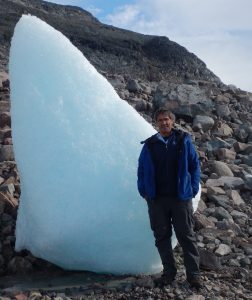
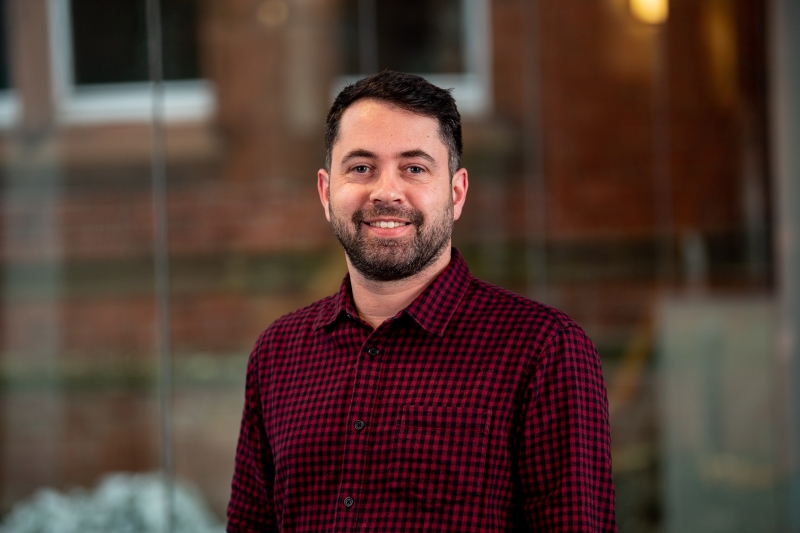
Associate Professor Colin Jackson is affiliated with the Research School of Chemistry at the Australian National University College of Physical & Mathematical Sciences . His research spans enzyme engineering, synthetic biology, and protein evolution, with a focus on directed evolution approaches for biocatalysis and molecular biophysics. Former CSIRO and Weizmann Institute researcher Key projects: plastic degradation enzymes, viral protease inhibitors, noncanonical amino acid incorporation His work leverages ancestral sequence reconstruction and machine learning to explore protein sequence spaces, with notable outputs in fitness landscape analysis and biocatalytic applications . Recent publications highlight advancements in: Plastic biodegradation enzyme engineering Antiviral peptide design targeting SARS-CoV-2 Fluorinated noncanonical amino acids for protein studies Marine bacterial transport proteins Organophosphate resistance mechanisms While no formal awards are listed in this data, his research portfolio demonstrates strong industry and biomedical applications through: ANU Researcher Portal publications Collaborative projects with international institutions 50+ funded projects including gene therapy platforms and food waste solutions
Professor Graham Sander is a Professor of Hydrology at Loughborough University, affiliated with the School of Civil and Building Engineering. His research focuses on mathematical modeling of soil erosion, unsaturated soil flow, contaminant transport dynamics, and nonlinear diffusion-convection equations. He leads the NERC-funded project on multi-dimensional soil erosion and chemical transport, collaborating with Lancaster University’s Department of Environmental Science. His academic qualifications include a BSc (Hons) and PhD. Recent research emphasizes integrating particle size-selective models to predict sediment and contaminant delivery to water bodies, supported by lab and field experiments. He has also pioneered pseudospectral methods for infiltration modeling and explored flood risk management through nature-based solutions like leaky barriers. Key contributions include advancing understanding of rainfall-driven erosion dynamics, including splash effects and rock fragment coverage impacts. His work spans experimental hydrology, numerical simulation, and interdisciplinary approaches to environmental challenges. He co-edits hydrology journals and advocates for rigorous scientific communication in the field. Grants: NERC-funded soil erosion project, Australian Research Council project on unsaturated soil flow. Labs/Teams: Collaborator with Lancaster University’s Environmental Science Department.
Philippe Christe is an Associate Professor in the Department of Ecology and Evolution at the University of Lausanne (UNIL), Faculty of Biology and Medicine. His research centers on host-parasite interactions, with a focus on bats, birds, and their ectoparasites, integrating behavioral, physiological, and genetic approaches. He leads the Christe Group, which investigates evolutionary and ecological dynamics in host-parasite systems, particularly avian malaria and bat-mite relationships. He is actively involved in conservation initiatives, including the Jorat Peri-Urban Nature Park, and collaborates with KORA on human-wildlife interactions. Bachelor's degree in biology, UNIL (1989) PhD in Zoology and Animal Ecology, UNIL (1994) Philippe Christe’s research interests lie at the intersection of parasitology, evolutionary ecology, and conservation biology. He investigates how host defenses evolve in response to parasitic pressures, examining trade-offs between immunity and life history traits such as reproduction and survival. His work often integrates field studies with experimental and molecular techniques. Key model systems include Parus major (great tit) and Culex pipiens in avian malaria, and bat species with their ectoparasitic mites. He also explores broader ecological interactions, including predator-prey dynamics and wildlife conservation in human-modified landscapes. His recent publications reflect a strong emphasis on disease ecology, wildlife conservation, and molecular methods. Articles span topics such as avian malaria transmission, lynx population dynamics, snow leopard behavior, and habitat fragmentation effects on insects. These works employ advanced techniques like DNA metabarcoding, spatial modeling, and long-term monitoring, demonstrating a trend toward interdisciplinary, data-driven ecological research with direct conservation applications. Dubois Foundation Prize for an educational CD-Rom on bats (2004) Communication Award from the Faculty of Biology and Medicine of UNIL (2017) Philippe Christe has supervised numerous PhD and Master’s students, contributing significantly to training the next generation of ecologists and evolutionary biologists. His group collaborates widely with institutions such as the Museum of Zoology in Lausanne and KORA, and participates in large-scale conservation projects involving snow leopards, lynx, and bats. He has been involved in research grants related to host-parasite coevolution, wildlife monitoring, and conservation strategies. His leadership in establishing the Jorat Peri-Urban Nature Park and involvement in the UNIL Interdisciplinary Center for Mountain Research highlight his commitment to applied science and environmental stewardship. He leads the Christe Group, which conducts research on host-parasite coevolution, with a focus on bats and their ectoparasites, and birds affected by avian malaria. The group combines fieldwork, laboratory experiments, and molecular analyses, and includes post-docs, PhD students, and technical staff. Collaborations extend to researchers in Bern, Paris, and Spain, fostering an international and interdisciplinary research environment.
David Al-Attar is a Professor at the University of Cambridge's Department of Earth Sciences, actively involved in theoretical and computational geophysics research. He serves as a supervisor within the Cambridge NERC Doctoral Landscape Awards (Training Partnerships) program, particularly in the CREATES initiative focusing on climate and environmental science. Education: While specific educational details aren't provided in the text, his extensive publication record and professorial position at Cambridge indicate advanced training in geophysics and applied mathematics. Research Interests: Professor Al-Attar's work spans several interconnected areas within geophysics. His primary focus includes theoretical and computational problems in geophysics, with particular emphasis on continuum mechanics as applied to Earth systems. He develops new physical and mathematical theories for understanding Earth processes, including rigorous function space methods for inverse problems and uncertainty quantification. His sea level change research aims to constrain ice sheet evolution during the last glacial period to better understand modern contributions to sea level rise. Additionally, he investigates solid Earth dynamics including seismic free oscillations, body tides, and Earth rotation, contributing to our understanding of deep Earth structure and mantle dynamics. Research Themes: His publications demonstrate expertise in adjoint methods, glacial isostatic adjustment, mantle viscosity, planetary seismology, and computational methods for geophysical problems. Recent work emphasizes 3-D Earth modeling, sensitivity analysis, and the integration of satellite observations with theoretical models. Current Projects: Potential projects for students include inverse problems related to deglacial sea level change with focus on uncertainty quantification, modern sea level monitoring using satellite data, and solid Earth dynamics particularly regarding outer core viscosity in tidal and rotational dynamics. Contact: He can be reached at da380@cam.ac.uk for research inquiries and collaboration opportunities.
Alex Liu is a Researcher at the Department of Earth Sciences within the University of Cambridge. He specializes in palaeobiology , focusing on the origin and early evolution of animals, particularly the Ediacaran biota (~579–539 million years ago), and their co-evolution with Earth's environment. Research Focus: Refines understanding of animal body plan evolution, taphonomy, sedimentology, and macroevolutionary trends. Methodologies: Combines fieldwork, experimental studies, petrology, phylogenetics, and big-data analyses. Collaborations: Works with international museums and research teams on fossil sites in Namibia, Canada, and Brazil. Additional Interests: Explores meiofaunal evolution, paleogeography, paleoclimate, and conservation paleobiology. He supervises Cambridge NERC Doctoral Landscape Awards (DLA) projects and welcomes student contributions to taxonomic, paleoecological, and analytical studies.
Yaoqing Yang is an Assistant Professor at the Department of Computer Science, Dartmouth College. He earned his PhD in Electrical and Computer Engineering (ECE) from Carnegie Mellon University (CMU) and completed postdoctoral research at UC Berkeley's RISE Lab. His work focuses on robustness in machine learning systems, spectral analysis of neural networks, and algorithm design for structured data like graphs and point clouds. PhD in ECE, Carnegie Mellon University Postdoc, RISE Lab, UC Berkeley BS in Electrical Engineering, Tsinghua University Research interests include diagnosing and mitigating model failures through heavy-tailed spectral analysis, decision boundary studies, and loss landscape visualization. He develops methods such as AlphaPruning and SharpBalance to enhance large language models and ensemble learning. Recent work spans 2025 publications on spectral evolution of neural networks, agentic AI for science, and LLM safety. Key collaborations include Michael W. Mahoney and other researchers. Burke Research Initiation Award, Dartmouth (2024) DOE grant for scientific foundation models (2024) DARPA grant for AI robustness (2024) He serves as Area Chair at NeurIPS 2025 and ICLR 2026, and has presented at Google Research, Lawrence Berkeley National Laboratory, and leading universities worldwide. His lab at Dartmouth engages in theoretical and applied research, with connections to UC Berkeley's RISE Lab and collaborations across institutions like CMU and Tsinghua University.
Mark S. Mizruchi serves as the Robert Cooley Angell Collegiate Professor of Sociology, Barger Family Professor of Organizational Studies, and Professor of Management and Organizations at the University of Michigan's College of Literature, Science, and the Arts. His distinguished career spans over three decades since joining Michigan as a full Professor in 1991 after rising to Associate Professor at Columbia University. Robert Cooley Angell Collegiate Professor of Sociology Barger Family Professor of Organizational Studies Professor of Management and Organizations Former Director of Organizational Studies Program (2012-2021) His research centers on the economic and political behavior of large American corporations through social network analysis, with current projects examining the changing nature of the American corporate elite, globalization of American banking, and corporate lobbying determinants. Mizruchi's work bridges sociology, organizational studies, and political economy, revealing how corporate networks shape American political life and economic structures. His publications include four influential books, with The Fracturing of the American Corporate Elite (2013) winning both the George R. Terry Award and the Distinguished Contribution to Scholarship Award. His research demonstrates significant trends toward corporate elite fragmentation and its political consequences, particularly the decline of corporate moderation in American politics. George R. Terry Award from Academy of Management Distinguished Contribution Award from ASA Political Sociology Section Guggenheim Fellowship (2011) National Science Foundation Presidential Young Investigator Award Center for Advanced Study in Behavioral Sciences Fellowship Two University of Michigan teaching excellence awards Mizruchi has advised numerous students through the Organizational Studies Program, securing Barger Leadership Institute funding for student research on corporate elites. His extensive service includes Associate Editorship at Administrative Science Quarterly , Consulting Editorship at the American Journal of Sociology , and reviewing for over 50 scholarly journals and granting agencies. He maintains active research laboratories examining corporate networks and their societal implications, with ongoing projects investigating contemporary corporate political behavior in polarized America.
Professor Jonathan Adams holds a Chair in Archaeology at the University of Southampton's Department of Archaeology. He leads the Centre for Maritime Archaeology (CMA), established in 1997, and teaches at both undergraduate and postgraduate levels. His career spans over 30 years, including pivotal roles in the Mary Rose excavation and foundational work in deepwater maritime archaeology. Adams specializes in the Black Sea region, focusing on environmental change impacts on prehistoric populations, maritime connectivity, and naval technology's role in state-building. Affiliations: Centre for Maritime Archaeology, Southampton Marine and Maritime Institute Key Projects: Black Sea Maritime Archaeology Project (since 2015), Ships of State (with Södertörn University) Education: BA in Archaeology & Ancient History (Durham University), DPhil in Maritime Archaeology (Stockholm University). His research integrates ship science, oceanography, and historical analysis. He currently supervises seven PhD students and has mentored over 500 graduates through the MA/MSc in Maritime Archaeology program launched in 1995. Research Interests: Chronology of environmental change in the Black Sea Maritime connectivity across historical periods Role of naval architecture in early modern state development
Marios Koutsias is a Senior Lecturer at Essex Law School, University of Essex, specializing in EU Commercial Law, Company Law, and Data Protection. He holds an LLB from Aristotle University of Thessaloniki, an LLM in EU Law from the University of Essex, an MA in Politics and International Relations from King's College London, and a PhD in Law from the University of Essex. Prior to his academic career, he practiced as a lawyer on Greek Law and European Union Law in Thessaloniki and Brussels, and remains a member of the Thessaloniki Bar Association, Greece. His educational background includes: LLB from Aristotle University of Thessaloniki, Greece LLM in EU Law from University of Essex MA in Politics and International Relations from King's College, London PhD in Law from University of Essex Dr. Koutsias' research focuses on Company Law, Corporate Governance, Comparative Company Law, European Union Law with a special emphasis on the Internal Market, and Privacy and Data Protection. His work critically examines shareholder primacy versus stakeholder theory, the influence of national cultural identities on corporate governance frameworks, and the evolving landscape of data protection regulations in the digital economy. He has made significant contributions to understanding how Brexit might reshape European corporate governance paradigms and the tensions between commercial interests and privacy rights in global trade. His publication record reveals a strong interdisciplinary approach, connecting theoretical legal concepts with practical commercial applications. The research trends show increasing focus on post-Brexit regulatory alignment, stakeholder governance models, and data protection challenges in international commerce. His most recent 2025 article argues that Brexit should not sever UK-EU privacy regulatory connections to protect both trade interests and human rights. Dr. Koutsias supervises PhD students in Law with expertise in corporate governance frameworks across different jurisdictions. His current supervisees include Tioluwani Comfort Tioluwani and Iman Abdulrahman M Alfaraj, while he has successfully guided seven PhD students to completion since 2016, including Christina Gkampitsaki (awarded January 2024) and Tioluwani Comfort Tioluwani (awarded December 2023). His teaching responsibilities encompass Company Law (LW225), Law of the European Union (LW302), Final Year Research Project (LW304), Introduction to the Law of the European Union (LW430), Industry Placement (LW811), and Data Protection Law in the Digital Age (LW656). He has secured research funding including the 2019 Mondaq KTP 2 grant from Innovate UK. Dr. Koutsias has co-authored three significant books: 'Company Law in the New Europe' and 'The Nature of Corporate Governance: The Significance of National Cultural Identity' (both Edward Elgar Publishers), and 'Company Law' by Palgrave with Professor Janet Dine, which is considered one of the leading textbooks in the field. He also serves as a Specialist Contributor to Gore Brown on EU Company Law publications, demonstrating his recognized expertise in this specialized area.
Søren Munch Kristiansen is an Associate Professor in the Department of Geoscience at Aarhus University, Faculty of Natural Sciences. His interdisciplinary research bridges geoscience and archaeology, focusing on the complex interactions between soil, water, and human societies across time. He is actively engaged in transdisciplinary projects involving geoarchaeology, groundwater, and public health. Research Interests: His work centers on how soil and groundwater have shaped human prehistory and continue to influence modern life. Key areas include safe drinking water from a lifelong perspective, geoarchaeological prospection, Viking Age settlements, and the application of geophysical and geochemical methods in archaeological contexts. He is particularly interested in novel, interdisciplinary methodologies. Recent Research Trends: His recent publications reveal a strong focus on integrating geophysical data (e.g., GPR, borehole databases) with archaeological interpretation, especially in 3D urban modeling and landscape change. Themes include Viking Age sites, interglacial deposits, and anthropogenic soil modifications. His work increasingly employs machine learning and large-scale data synthesis. Scientific Awards: No awards mentioned in the provided text. Advising and Grants: While specific students are not listed, he leads and participates in multiple funded research projects, indicating an active supervisory role. His grants span from 2016 to 2024, including projects like TITAN, SAGA, and 'Fingerprinting displaced molecular substances,' highlighting sustained funding and leadership in interdisciplinary geoscience-archaeology research. Labs and Teams: He is involved in collaborative networks such as the Soil Science & Archaeo-geophysics Alliance (SAGA), suggesting leadership in interdisciplinary research teams. His work often involves multi-proxy analyses and international collaborations, particularly in Scandinavian archaeological geophysics.
Amol Deshpande is a Professor in the Department of Electrical Engineering and Computer Sciences at the University of California, Berkeley, College of Engineering. With over 160 publications spanning from 2000 to 2025, his research has significantly impacted the database systems community. His work bridges theoretical foundations with practical systems, evidenced by numerous publications in top-tier venues including SIGMOD, VLDB, and ICDE. Professor Deshpande's research focuses on database systems, with particular expertise in graph databases, data management, probabilistic databases, query optimization, and data provenance. His work addresses fundamental challenges in managing complex data, including efficient graph analytics, dataset versioning, streaming data processing, and privacy-preserving data management. Recent research directions include entity-relationship abstractions beyond traditional relations, standalone catalog engines for large data systems, and graph theoretical approaches to dataset versioning. His publication trends show a consistent focus on evolving database technologies, with early work on probabilistic databases and query optimization, transitioning to graph analytics and data provenance, and more recently addressing modern challenges in data cataloging, privacy-first data management, and serverless stream processing. His research spans both theoretical contributions (e.g., approximation algorithms for stochastic optimization) and practical systems building (e.g., RStore, TreeCat). Professor Deshpande has mentored numerous PhD students who have become active researchers in the database community, including Hui Miao, Souvik Bhattacherjee, and Konstantinos Xirogiannopoulos. His collaborative work spans across institutions, with frequent collaborations with researchers from MIT, University of Maryland, and other leading institutions. His research has been supported by major funding agencies and has influenced both academic research and industry practices in data management. The evolution of his work reflects the changing landscape of data management, from traditional relational systems to modern graph and streaming data challenges.
Jonathan B. Martin is a Professor at the University of Florida's College of Liberal Arts and Sciences. His research focuses on hydrogeochemical processes in diverse environments including carbonate karst aquifers, coastal systems affected by sea-level change, and deglaciated watersheds in Greenland. He leads the Research Coordination Network on Carbonate Critical Zones and holds an NSF grant for Greenland watershed studies. Education: BA in Environmental Science, Wesleyan University (1980) MS in Geology, Duke University (1987) PhD in Earth Sciences, University of California, San Diego (Scripps Institution of Oceanography) (1993) Research Interests: Martin's work examines geochemical fluxes driven by biogeochemical reactions coupled with hydrological flow. This includes: (1) Water-solute-isotope dynamics in carbonate karst aquifers like Florida's Floridan Aquifer and Bahamian/Yucatan systems; (2) Coastal aquifer-estuary exchanges impacting metal mobilization and greenhouse gas fluxes; and (3) Weathering processes in deglaciated landscapes affecting global carbon cycles. His lab develops field methods to quantify submarine groundwater discharge and contaminant transport. Publications: Recent articles demonstrate strong emphasis on climate-aquifer interactions, with recurring themes including Greenland glacial meltwater biogeochemistry, coastal karst aquifer responses to sea-level rise, and carbonate mineral reactions in global carbon cycling. Work frequently integrates field measurements with geochemical modeling. Laboratory: Directs the Hydrogeochemistry Laboratory with capabilities including ion chromatography, cavity ring-down spectroscopy, nutrient autoanalysis, and fluorescence spectrometry for studies of water-rock interactions.
Éric Bélanger is a Professor in the Department of Political Science at McGill University, specializing in Canadian and Quebec politics. His research focuses on electoral behavior, political parties, nationalism, and public opinion dynamics. He holds a PhD from the Université de Montréal and has published extensively on topics such as generational shifts in Quebec nationalism, party realignment, and municipal voting patterns. His work frequently employs quantitative methods, including advanced econometric modeling for election forecasting. Research interests include: Quebec and Canadian political systems Political party competition and realignment Nationalist movements and identity politics Economic voting and fiscal policy impacts Municipal elections and local governance Comparative studies of electoral systems His recent work highlights innovative approaches to forecasting elections in diverse contexts like France and Latin America, while maintaining a strong focus on Quebec-specific issues such as generational voting patterns and the evolving nationalist landscape. Bélanger’s research often bridges theoretical frameworks with empirical analysis, contributing to both Canadian and comparative political science literatures.
Alex Wilson is an Associate Professor at Queen's Business School, Queen's University Belfast. He holds leadership roles including Director of Internationalisation and Direction of Reputation and Rankings at Queen's Business School, and previously held directorships at Loughborough University's School of Business and Economics. Research Interests: Open Strategy, Digital Strategizing, Strategy as Practice, Future of Management Education. Expertise in qualitative methods, IT/social media's role in strategic work, and business school innovation. His research explores how technology mediates strategic processes, organizational legitimacy, and the evolving purpose of business schools. He has advised on strategic initiatives for institutions globally and contributed to defining digital strategizing frameworks. Key Achievements: Recipient of CABS Research Fellowships (2017, 2018) Dean’s Award for Early Career Teaching Excellence (2015) Led studies on Singapore Management University's strategic evolution and UK business school competitiveness. Advises PhD students focusing on topics like corporate sustainability tensions, services offshoring, and Christian values in business. Active in hosting international delegations and delivering invited talks on open strategy and digital transformation.
David Simmons-Duffin is a Professor of Theoretical Physics at the California Institute of Technology (Caltech), where he has held positions since 2016. He is part of the Division of Physics, Mathematics and Astronomy, contributing to the Physics Department. His career progression includes roles as Visiting Associate (2016–17), Assistant Professor (2017–20), and Associate Professor (2020–21) before becoming full Professor in 2021. Education: A.B. and A.M. from Harvard University (2006), CASM from the University of Cambridge (2007), and Ph.D. from Harvard University (2012). His research focuses on conformal field theory (CFT), bootstrap methods, quantum field theory, and AdS/CFT correspondence. Key areas include precision computations in strongly coupled systems, critical phenomena, and applications to holography and quantum gravity. Research highlights include advancing the conformal bootstrap program, analyzing CFT data in 3D Ising models, and exploring connections between CFTs and gravitational theories. His work often bridges theoretical frameworks with numerical methods, yielding insights into operator product expansions (OPE), spectral gaps, and causality constraints. Affiliations include the Institute for Quantum Information and Matter (IQIM) and other Caltech research centers. His contributions have shaped modern approaches to understanding universality in critical systems and the geometric aspects of quantum field theories. Notable collaborations involve high-precision calculations, bootstrap island techniques, and studies of thermal QFT and light-ray operators. His work emphasizes interdisciplinary methods, combining analytic tools with computational advancements to tackle complex theoretical problems.