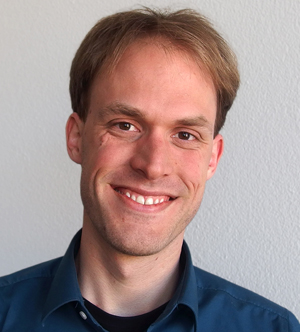
Prof. Dr. Frank Ulbrich is a Lecturer and Programme Director for the BSc Business Administration at the Lucerne School of Business (HSLU). He holds a PhD in Business Administration from the Stockholm School of Economics. His academic career spans roles at universities in Sweden, the UK, Canada, and Switzerland, alongside IT & Management consulting experience. Research focuses on management education, project management, information management, and organizational change. He has published extensively in areas like shared services, digital transformation, and curriculum development. Notable awards include multiple Emerald Literati Awards and a Fellowship from the Higher Education Academy. Education: PhD in Business Administration (Stockholm School of Economics) Affiliations: Institute of Business and Regional Economics at HSLU Teaching Subjects: Academic Methods, Higher Education Management, Project Management, Digital Transformation Recent presentations include discussions on bridging academia-industry gaps, curriculum integration of SDGs, and data-driven learning strategies. His work emphasizes aligning education with labor market needs and advancing evidence-based teaching practices.
Afonso S. Bandeira is a Professor in the Department of Mathematics (D-MATH) at ETH Zurich, where he conducts research at the intersection of mathematics, statistics, and computer science. He maintains strong affiliations with several interdisciplinary research centers including the Institute For Operations Research (IFOR), the Max Planck ETH Center for Learning Systems, the ETH Foundations of Data Science, and the ETH AI Center, with a courtesy appointment at D-ITET. Bandeira actively teaches courses including Mathematics of Signals, Networks, and Learning, and Mathematics of Data Science. His research focuses on High Dimensional Probability, Random Matrices, Mathematical Statistics, Theoretical Computer Science, Combinatorics, and Mathematical Optimization. Bandeira's work often explores the theoretical foundations of data science, examining phase transitions in statistical problems, computational barriers, and the geometry of high-dimensional spaces. He maintains a research group blog called Randomstrasse101 that emphasizes open problems in his field. Analysis of his recent publications reveals a strong focus on matrix and tensor concentration inequalities, synchronization problems, nonconvex optimization landscapes, and computational-statistical tradeoffs in high-dimensional inference. His work bridges theoretical mathematics with practical applications in machine learning and data analysis, particularly examining where computational limitations arise in statistical problems. Bandeira actively mentors students and researchers, currently supervising several doctoral candidates including Daniil Dmitriev, Konstantin Donhauser, Anastasia Kireeva, Kevin Lucca, Chiara Meroni, Gil Kur, Petar Nizic-Nikolac, and Almut Roedder. He emphasizes that students working with him should participate in the DACO seminar and group meetings, and encourages prospective students to have completed his Mathematics of Signals, Networks, and Learning or Mathematics of Data Science courses. He leads a research group focused on the mathematics of data science, with regular group meetings and seminars. Bandeira has developed comprehensive lecture notes including 'A Tour Through the Mathematics of Signals, Learning, and Networks' (2025) and 'Mathematics of Machine Learning' (2021), and previously authored 'Ten Lectures and Forty-Two Open Problems in the Mathematics of Data Science' (2015).
Dr. Robert Huber serves as a Lecturer at the Department of Environmental Systems Science at ETH Zürich, specializing in Agricultural Economics and Policy. His research focuses on the integration of interdisciplinary knowledge to analyze and evaluate management and policy options that promote sustainable development in the agricultural sector. Institution: ETH Zürich Department: Agricultural Economics and Policy Research Focus: Sustainable Agriculture and Policy Methodologies: Bio-economic and agent-based modeling Dr. Huber's research explores how multifunctional agricultural sectors can provide essential non-market goods and services while maintaining their primary economic function of food production. His work applies bio-economic and agent-based modeling techniques to understand farmers' decision-making processes regarding ecosystem services provision, coupled with economic valuation techniques to analyze societal demand for these services. His research aims to identify effective and efficient policy measures that align supply and demand for ecosystem services at landscape scale. His recent publications demonstrate strong expertise in agricultural policy analysis, climate change mitigation strategies, sustainable farming practices, and innovative modeling approaches. His work spans topics from herbicide-free agriculture using remote sensing technologies to biodiversity enhancement in agricultural landscapes and the cost-effectiveness of different climate change mitigation policies at various scales. Remote sensing applications in sustainable agriculture Behavioral aspects of farmer decision-making Policy evaluation methodologies Climate change adaptation in farming systems Economic valuation of ecosystem services Digitalization impacts on agricultural policy Dr. Huber has published extensively in high-impact journals including Journal of Agricultural Economics, People and Nature, and Q Open. His collaborative research often involves interdisciplinary teams addressing complex agricultural sustainability challenges. His publications demonstrate a consistent focus on practical policy implications derived from rigorous empirical analysis.
Dr. Giulia Donati is a Researcher at Eawag – Swiss Federal Institute of Aquatic Science and Technology, affiliated with the Department of Environmental Social Sciences. She holds a PhD from ETH Zürich and has extensive experience in conservation biology, inter/transdisciplinary research, and project management. Her work focuses on social-ecological systems, ecological connectivity, and biodiversity conservation in aquatic and terrestrial ecosystems. Education: PhD (2016–2020, ETH Zürich), MSc (2013–2015, University of Lausanne), BSc (2010–2013, University of Lausanne). Notable roles include postdoctoral research on BlueGreenNet (2021–2024) and Connect-HDL (2020), and leadership in the Save Our Seas Foundation project (2019–2020). Research emphasizes social-ecological networks, blue-green infrastructure, and amphibian connectivity in human-dominated landscapes. Projects like BlueGreenNet and Connect-HDL integrate ecological modeling with stakeholder collaboration to enhance biodiversity. Her work bridges ecology, policy, and urban planning to address global conservation challenges. Publications span topics from clownfish genetics to urban biodiversity frameworks, reflecting interdisciplinary approaches. Active in science communication and policy-relevant research, she collaborates across sectors to foster sustainable solutions. Current affiliations include Eawag’s PEGO research group and the Department of Environmental Social Sciences.
Freek Persyn is a Full Professor of Architecture and Urban Transformation at ETH Zurich, where he has held the NEWROPE Professorship since 2019. He leads the Design in Dialogue Lab within the Department of Architecture, focusing on spatial design and social innovation. Persyn co-founded the spatial planning firm 51N4E in 1998, which specializes in urban and social transformation across Europe. Persyn's research centers on the concept of 'Design in Dialogue,' which emphasizes transdisciplinary collaboration to address the complexity of contemporary urban challenges. His work explores innovative solutions for European urban spaces, aiming to rediscover Europe as a habitable terrain and shared living space. Key research areas include urban design, spatial planning, social transformation, and the intersection of architecture with social innovation. The NEWROPE initiative seeks to examine diverse urban practices that shape Europe, fostering radical openness and learning from various urban practitioners through transdisciplinary projects. His scholarly output demonstrates a strong focus on reimagining urban spaces through dialogue-based approaches. Persyn's work examines European urban transformation, rural-urban connections, industrial heritage sites, and innovative design methodologies. Key themes across his publications include sustainable approaches to building, the social dimensions of space, and transformative design processes that challenge conventional architectural practices. His research often bridges theoretical frameworks with practical design applications, emphasizing participatory methods and material investigations. Persyn delivered his inaugural lecture at ETH Zurich on October 20, 2021, titled 'Wouldn't it be nice if architects started dreaming about building less?' The lecture explored his professional background, inspiration, and future plans for the NEWROPE Chair. The event featured collective sensing exercises developed by students of Studio Seebach with theater and dance maker Manuela Runge, highlighting his commitment to experiential and collaborative approaches to architectural education and practice. The Design in Dialogue Lab serves as a hub for exploring innovative approaches to urban transformation through projects across European cities including Brussels, Piraeus, Basel, and Plovdiv. Current initiatives examine topics such as urban spaces for more than human communities, collaborative processes, design approaches, and hybrid applications for European urban environments. Persyn's work consistently emphasizes transdisciplinary collaboration, bringing together spatial and strategic knowledge with other disciplines and urban practitioners to address complex contemporary challenges.
Professor Stefan Goedecker is a distinguished faculty member in the Department of Physics at the University of Basel, Faculty of Science. He holds the position of Professor of Computational Physics and leads an active research group focused on developing advanced computational methods for materials science and quantum physics. Dr. Goedecker received his physics education at the Technical University Munich and the College of William and Mary, followed by a Ph.D. from EPFL Lausanne. His postdoctoral training included positions at Cornell University and the Max-Planck Institute in Stuttgart. In 2003, he was appointed Professor of Computational Physics at the University of Basel, where he has established himself as a leading researcher in computational methods development. His research interests center on computational physics with emphasis on electronic structure calculations, atomistic simulations, and the development of novel algorithms for materials science applications. His work has strong interdisciplinary connections spanning physics, mathematics, material sciences, chemistry, and computer science. Current research directions include machine learning applications in catalysis, fourth-generation neural network potentials for molecular chemistry, and methods for quantifying material synthesizability. Analysis of his recent publications reveals a strong focus on advancing computational methods for electronic structure calculations, with particular emphasis on machine learning potentials, molecular dynamics optimization, and accurate modeling of material properties. His work bridges theoretical physics with practical applications in materials science and nanotechnology, with increasing integration of artificial intelligence techniques into traditional computational physics frameworks. Machine learning for Catalysis (Ongoing) Fourth-Generation Neural Network Potentials for Molecular Chemistry (Completed) Towards Quantifying the Synthesizability of Materials (Completed) Professor Goedecker's research group operates within the Department of Physics at the University of Basel, which is part of the NCCR SPIN initiative focused on silicon-based quantum computing development. The department hosts over 20 research groups with more than 180 teaching staff members, creating a vibrant research environment for computational physics and quantum technologies.
Philippe Christe is an Associate Professor in the Department of Ecology and Evolution at the University of Lausanne (UNIL), Faculty of Biology and Medicine. His research centers on host-parasite interactions, with a focus on bats, birds, and their ectoparasites, integrating behavioral, physiological, and genetic approaches. He leads the Christe Group, which investigates evolutionary and ecological dynamics in host-parasite systems, particularly avian malaria and bat-mite relationships. He is actively involved in conservation initiatives, including the Jorat Peri-Urban Nature Park, and collaborates with KORA on human-wildlife interactions. Bachelor's degree in biology, UNIL (1989) PhD in Zoology and Animal Ecology, UNIL (1994) Philippe Christe’s research interests lie at the intersection of parasitology, evolutionary ecology, and conservation biology. He investigates how host defenses evolve in response to parasitic pressures, examining trade-offs between immunity and life history traits such as reproduction and survival. His work often integrates field studies with experimental and molecular techniques. Key model systems include Parus major (great tit) and Culex pipiens in avian malaria, and bat species with their ectoparasitic mites. He also explores broader ecological interactions, including predator-prey dynamics and wildlife conservation in human-modified landscapes. His recent publications reflect a strong emphasis on disease ecology, wildlife conservation, and molecular methods. Articles span topics such as avian malaria transmission, lynx population dynamics, snow leopard behavior, and habitat fragmentation effects on insects. These works employ advanced techniques like DNA metabarcoding, spatial modeling, and long-term monitoring, demonstrating a trend toward interdisciplinary, data-driven ecological research with direct conservation applications. Dubois Foundation Prize for an educational CD-Rom on bats (2004) Communication Award from the Faculty of Biology and Medicine of UNIL (2017) Philippe Christe has supervised numerous PhD and Master’s students, contributing significantly to training the next generation of ecologists and evolutionary biologists. His group collaborates widely with institutions such as the Museum of Zoology in Lausanne and KORA, and participates in large-scale conservation projects involving snow leopards, lynx, and bats. He has been involved in research grants related to host-parasite coevolution, wildlife monitoring, and conservation strategies. His leadership in establishing the Jorat Peri-Urban Nature Park and involvement in the UNIL Interdisciplinary Center for Mountain Research highlight his commitment to applied science and environmental stewardship. He leads the Christe Group, which conducts research on host-parasite coevolution, with a focus on bats and their ectoparasites, and birds affected by avian malaria. The group combines fieldwork, laboratory experiments, and molecular analyses, and includes post-docs, PhD students, and technical staff. Collaborations extend to researchers in Bern, Paris, and Spain, fostering an international and interdisciplinary research environment.
Dr. Mattia Andreoletti is a Lecturer at the Department of Health Sciences and Technology at ETH Zurich, working within the Professorship for Bioethics. His research spans philosophy of medicine and bioethics, with a focus on the ethical dimensions of AI in healthcare, dementia policy, drug regulation, and clinical reasoning. PhD from the European School of Molecular Medicine (SEMM), affiliated with the European Institute of Oncology (IEO, Milan) ORCID: 0000-0003-1880-0770 His work intersects with clinical ethics, particularly examining replicability in scientific research, evidential pluralism in drug regulation, and the ethical landscape of digital biomarkers. He contributes to courses such as Ethics in Drug Development and Ethics Workshop: The Impact of Digital Life on Society . The 15 most recent articles (2025-2023) highlight his engagement with AI ethics, dementia prevention, regulatory science, and clinical reasoning. Topics include ethical frameworks for digital biomarkers, evidential pluralism in drug approval, and philosophical foundations of rehabilitation sciences.
Inès Lamunière is an Honorary Professor at École Polytechnique Fédérale de Lausanne (EPFL), where she previously held roles including Full Professor and Chair of the Department of Architecture (2008–2011). She is also a renowned architect, leading the firm dl-a, designlab-architecture SA in Geneva. Her academic career includes positions as Adjunct Professor at ETH Zurich (1991) and Visiting Professor at Harvard University’s Graduate School of Design (1996, 1999, 2008). She directed the LAMU-EPFL Laboratory (2001–2018), focusing on urban architecture and mobility. Education: Architect degree from EPF Lausanne (1980), followed by studies at the Swiss Institute in Rome and assistant lectureship under Werner Oechslin at ETH Zurich. Research Interests: Urban planning, sustainability, architectural history, and the integration of infrastructure into urban environments. Notable projects include the revitalization of Bellerive-Plage and the LAMU Laboratory’s studies on risky urban objects. Awards: 2011 Meret Oppenheim Prize (Swiss Art Award) and 2017 Chevalier des Arts et Lettres (France). Her work emphasizes context-sensitive design and sustainable urban development. She has supervised numerous theses and contributed to publications on architectural pedagogy, urban theory, and historical analyses of Le Corbusier’s work. Active in academic governance, she served as Vice President of the EPFL WISH Foundation (2006–2016) and on the Fondation pour le Développement des Arts et de la Culture board since 2016.
Stefan Weik is an Assistant Professor of Finance at the University of St. Gallen (HSG), affiliated with the School of Finance and the Center for Financial Services Innovation. His research focuses on private markets, venture capital, private equity, and the economics of entrepreneurship and innovation. He holds a PhD in Finance from the Technical University of Munich (2023). His work examines European startup migration to the US, venture capital dynamics, and the impact of entrepreneurship education. Key contributions include analyses of startup performance disadvantages in Europe, cross-border venture capital flows, and policy implications for innovation ecosystems. Affiliations: Swiss Finance Institute, Center for Entrepreneurial and Financial Studies, European Finance Association Awards: Deutsche Bundesbank Special Prize for Dissertation (2024) Best Doctoral Paper Award at ENTFIN Conference (2023) TUM Research Fest Best Paper (2023) Germany Scholarship (2015) 2nd Place, DZ-Bank Preis for banking/finance theses (2014) His research agenda emphasizes global venture capital landscapes, entrepreneurial ecosystems, and policy solutions to bridge European innovation gaps. Active in academic networks, he contributes to shaping discourse on cross-border capital mobility and startup competitiveness.
Marcus Christl is a Lecturer at the ETH Zürich Department of Physics and Head of the Laboratory of Ion Beam Physics (LIP) . His academic profile focuses on Accelerator Mass Spectrometry (AMS) , cosmogenic nuclide dating, and environmental applications of isotope geochemistry. Office: HPK H 33, Otto-Stern-Weg 5, 8093 Zürich, Switzerland Phone: +41 44 633 38 84 / +41 44 633 65 07 Email: mchristl@phys.ethz.ch ORCID: 0000-0002-3131-6652 Dr. Christl teaches courses in Accelerator Mass Spectrometry and Quaternary Dating Methods , including: 402-0180-00L Ethics and Scientific Integrity for Doctoral Students in Physics 402-0620-00L Current Topics in Accelerator Mass Spectrometry and Its Applications 402-0621-00L Introduction to Accelerator Mass Spectrometry His research spans multiple disciplines through cosmogenic isotope analysis: Climate Science : Using 10 Be and 14 C records to reconstruct solar activity cycles and climate fluctuations over millennial timescales Geochronology : Developing novel dating techniques using 36 Cl/ 10 Be ratios for ice cores and landscape features Geomorphology : Quantifying erosion dynamics in diverse environments from the Alpine foreland to South African pediments Oceanography : Tracing Atlantic water transport patterns using 129 I– 236 U dual tracers Radiochemistry : Advancing methods for nuclear forensics and environmental pollutant analysis Recent publications reveal trends in: Refining AMS systems for analyzing transuranic elements Quantifying landscape evolution through multi-isotope approaches Understanding ocean circulation pathways using artificial radionuclides Investigating soil dynamics in glaciated and tropical environments Correlating cosmogenic production with sea level and climate changes
Anthony Patt is a Full Professor of Climate Policy at ETH Zurich's Department of Environmental Systems Science and Deputy Head of the Institute for Environmental Decisions. He holds a PhD in Public Policy from Harvard University, along with a Juris Doctor from Duke University and a Bachelor's in Architecture and Landscape Design from Yale. His research focuses on identifying effective governmental approaches to eliminate greenhouse gas emissions and adapt to climate change impacts. Key areas include societal processes related to consumption patterns, technology use, and modeling interactions between people, institutions, and technological systems. Patt has authored over 100 peer-reviewed articles and serves as Coordinating Lead Author for the IPCC's Sixth Assessment Report on international cooperation. He has led major projects on renewable energy policies, climate adaptation, and energy security. Notable grants include funding from the European Union, Swiss National Science Foundation, and international organizations. Patt's work emphasizes the co-benefits of climate policies, such as financial impacts on cities and energy transition strategies. His career spans academic roles at institutions like the International Institute for Applied Systems Analysis (IIASA) and Boston University, alongside contributions to policy initiatives like the EU's 100% renewable electricity roadmap. Patt's expertise bridges environmental science, policy analysis, and stakeholder engagement, addressing global challenges through interdisciplinary approaches.
Dr. Mauro Werder is a Lecturer at the Department of Civil, Environmental and Geomatic Engineering at ETH Zurich. His work focuses on glaciology, subglacial hydrology, and numerical modeling, combining computational methods with field measurements. He has developed widely used models such as GlaDS (Glacier Drainage System) and BITE (Bayesian Ice Thickness Estimation), and contributed to projects like SHMIP and 4D-Antarctica. Current Projects: Gladder (2025-2028), DIWING (2023-2026), LEAD (2020-2026), 4D-Antarctica (2019-2022), CORDS (2023-2024) Education: PhD in Glaciology (2009, Swiss National Science Foundation funded) His research spans subglacial drainage systems, sediment transport (SUGSET model), Bayesian inversion techniques, and field experiments involving artificial lakes and R-channels. He actively teaches courses on GPU-based PDE solving, applied glaciology, and reproducible scientific computing. Scientific Awards: Swiss National Science Foundation (SNF) Fellowship for Prospective Researchers (2010-2011) European Union (FP7) Marie Curie International Outgoing Fellowship (2011-2014) He collaborates with institutions like the Swiss Federal Institute for Forest, Snow and Landscape Research (WSL), and contributes to software development through packages like BITEmodel.jl and Parameters.jl. His fieldwork includes experiments on Greenland's Jakobshavn Isbræ and Switzerland's Plaine Morte glacier.
Yves Marc Räth is a Ph.D. researcher at the ETH Zürich within the Department of Civil, Environmental, and Geomatic Engineering (D-BAUG). His work intersects urban morphology, historical settlement analysis, and network modeling. Education: MSc in Spatial Development and Infrastructure Systems (2018-2020), BSc in Geography (2015-2018) at University of Zurich Research focuses on urbanization patterns , settlement network evolution , and geospatial time series analysis . Key projects include the EMPHASES study on socio-ecological systems and HistoRiCH research on historical river landscapes. Recent publications analyze settlement archetypes through ResearchGate projects, with a 2025 Cities journal article identifying five distinct urban development pathways on the Swiss Plateau since 1899. His 2023 Scientific Reports study examines morphological homogeneity in small settlements near urban centers. Current affiliations include: Ph.D. Researcher at Institute for Spatial and Landscape Development Visiting Scholar at Urban Systems Lab, New York City (2024) Contributor to Swiss transport planning at INFRAS and EBP Technical expertise spans: Historical map digitization Building footprint analysis Commuter flow modeling Predictive urban archetypes
Prof. Dr. Christoph Oberlack is an affiliated Professor of Sustainability Governance at the University of Bern's Institute of Geography and the Centre for Development and Environment (CDE). His work focuses on institutional barriers to climate adaptation, land-use governance, and sustainable development. He holds a PhD in Institutional Economics of Climate Adaptation from the University of Freiburg (2015). Research Interests: - Sustainability governance frameworks - Deforestation-free supply chains - Climate adaptation policies - Telecoupling in socio-ecological systems - Environmental justice in global value chains - Archetype analysis methodologies Recent work explores implementation challenges of EU deforestation regulations in Peru's cocoa/coffee sectors and gender equity in cacao cooperatives. He frequently collaborates with international organizations and policymakers to translate research findings into actionable strategies. Key contributions include developing diagnostic frameworks for institutional analysis in climate adaptation contexts. Publications span 20+ peer-reviewed journals including Nature Climate Change and Global Environmental Change. He actively participates in international conferences such as POLLEN and Swiss Geoscience Meetings. Current research emphasizes participatory approaches to landscape governance and private sector roles in sustainability transitions.