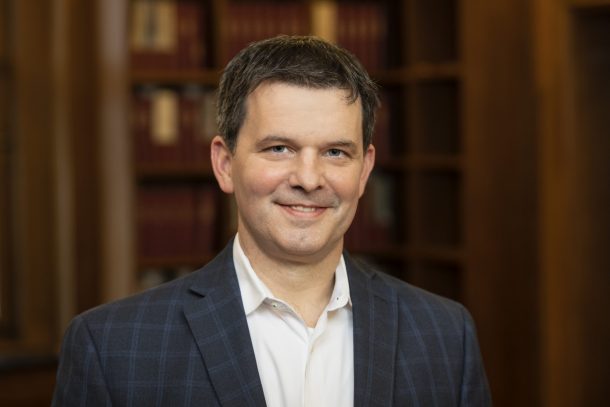
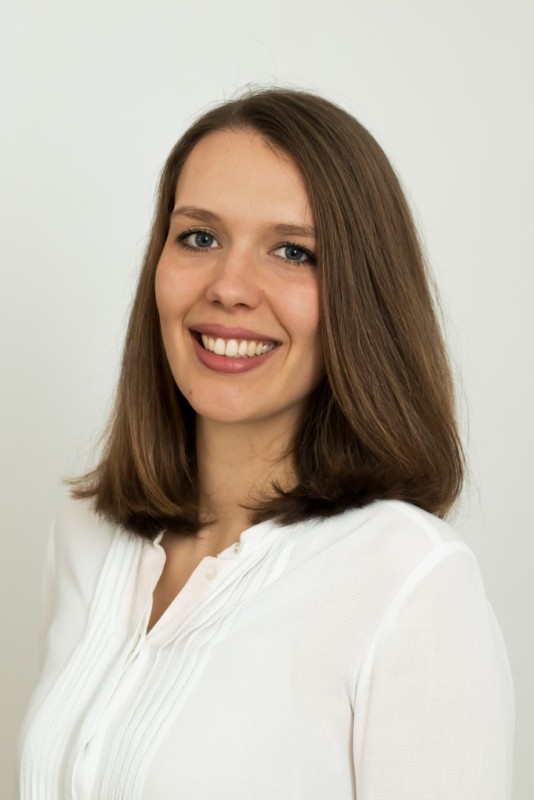
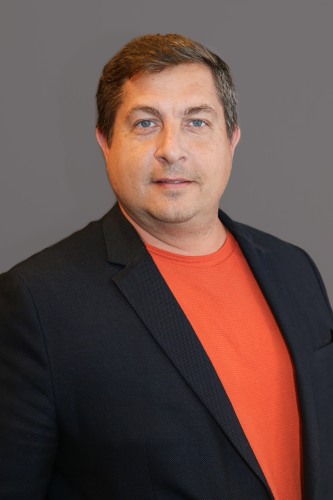
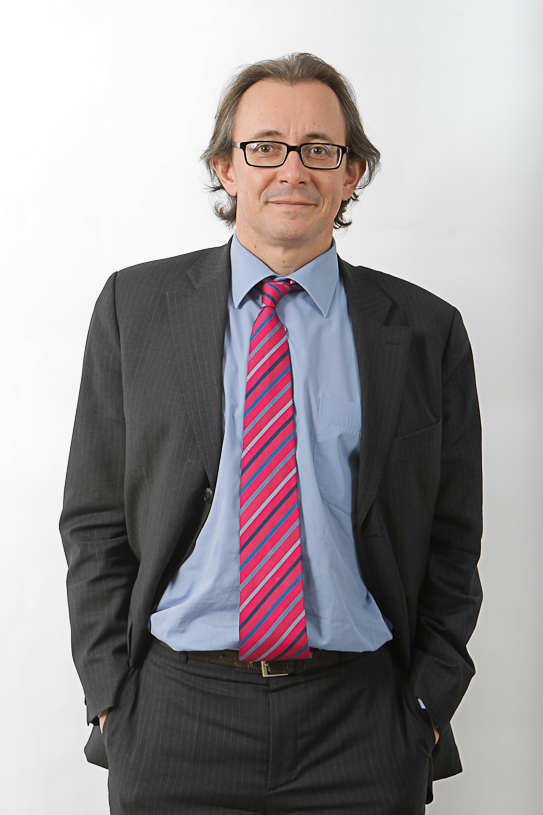
Jeffrey F. Brock is the Dean of the School of Engineering & Applied Science and the William S. Massey Professor of Mathematics at Yale University. He holds the Zhao and Ji Chair in Mathematics. His research focuses on low-dimensional geometry and topology, particularly hyperbolic geometry and its applications to data analysis. He completed his undergraduate studies at Yale and earned his Ph.D. from UC Berkeley. He held positions at Stanford, the University of Chicago, and Brown University, where he chaired the Mathematics Department from 2013 to 2017 and founded Brown’s Data Science Initiative in 2016. He joined Yale in 2018, serving as inaugural Dean of Science in the Faculty of Arts and Sciences until assuming his current role in 2022. He is a Guggenheim Fellow and Fellow of the American Mathematical Society. His research spans hyperbolic 3-manifolds, Teichmüller dynamics, and geometric methods in data science. Notable contributions include work on Thurston’s geometrization program, classification of hyperbolic manifolds, and applications of geometric topology to complex datasets. He co-authored foundational papers on ending laminations, Weil-Petersson geometry, and renormalized volume. His recent work bridges pure mathematics with applied challenges, such as algorithmic detection of medical imaging patterns. Awarded the Guggenheim Fellowship (2008) and AMS Fellow (2017), Brock has also led interdisciplinary initiatives at Brown and Yale. His administrative roles include overseeing engineering, natural sciences, and data science programs. Beyond academia, he co-founded the Vijay Iyer Trio, showcasing his passion for music performance and creativity.
Dr Andrew Rhead is a Senior Lecturer in the Department of Mechanical Engineering at the University of Bath, specializing in aerospace composites and damage tolerance analysis. His research focuses on impact damage detection, failure mechanism modeling, and Non-Destructive Evaluation (NDE) techniques for composite structures. MSci in Mathematical Sciences (Dynamical Systems) - University of Bristol (2006) PhD in Composite Damage Tolerance - University of Bath (2009) His work develops computationally efficient analytical models for compression after impact (CAI) strength prediction in composite laminates, surpassing traditional finite element methods. Key projects include hydrogen storage systems for aircraft, cryogenic composite testing, and steered fiber manufacturing optimization. Active in 10 projects including ASPIRE and HyFIVE Collaborates with Airbus, GKN Aerospace, and EPSRC Research trends show emphasis on sustainable aviation materials, structural battery integration, and advanced testing methodologies. Current affiliations include the Institute for Mathematical Innovation (IMI) and Centre for Integrated Materials, Processes & Structures (IMPS).
Prof. Harry Hyungryul Baik is a Tenured Associate Professor at KAIST's Department of Mathematical Sciences since 2017. He holds a PhD from Cornell University (2014) and a B.S. from KAIST (2009), advised by William Thurston, John Hubbard, and Dylan Thurston. His research focuses on geometric topology, geometric group theory, and low-dimensional topology, with notable contributions to mapping class groups, Kleinian groups, and Teichmüller theory. Education: PhD in Mathematics (Cornell, 2014), B.S. in Mathematics (KAIST, 2009). Key research areas include asymptotic translation lengths, laminar groups, and circular orders of groups. He co-leads the KAIST-KIAS joint research group 2K-GATE as Director, emphasizing collaboration between topologists. Research highlights: Characterization of Fuchsian groups via laminations, unsmoothability of mapping class group actions on 1-manifolds, and exponential torsion growth in random 3-manifolds. His work bridges topology with dynamical systems and geometric group theory, often involving collaborations with institutions like KIAS and MPIM. Awards include the Sangsan Prize (2018), Young-KAST membership (2020–2023), and multiple grants from Samsung and POSCO. He advises 7 PhD students and has mentored 15+ alumni, many of whom hold postdoc positions globally. His lab actively hosts conferences like the KAIST Geometric Topology Fair. Labs/Teams: Director of 2K-GATE (KAIST-KIAS), core member of the KAIST Topology Research Group, collaborator with international networks including the Harvard-MIT-Princeton topology axis.
Dr. Sophie Koch is a Lecturer at ETH Zürich's Department of Civil, Environmental and Geomatic Engineering. Her research focuses on bio-based composites, circular wood use, and enhancing wood properties. She leads the research streams 'Enhanced wood properties' and 'Resource-efficient wood utilization.' Education: PhD Candidate (2020-2023): ETH Zurich, Wood Materials Science Group MSc in Biobased Materials (2018-2020): Maastricht University BSc in Wood Technology (2013-2017): UAS Rottenburg Key Research Themes: Her work emphasizes sustainable material innovation through bio-based composites, wood recycling, and functionalization of wood for advanced applications like soft actuators and energy-harvesting systems. Recent publications highlight advancements in transparent wood films, triboelectric nanogenerators, and durable delignified composites. Professional Experience: Postdoctoral Researcher & Lecturer (2024-2024) Master’s Thesis at Swiss Wood Solutions AG (2019-2020) Research Assistant at UAS Rottenburg (2017-2018) Journalist at Holz-Zentralblatt (2014-2017) Labs & Teams: Active in the Professur Holzbasierte Materialien research group at ETH Zürich's HIF E 20.1 laboratory.
Professor Chunsheng Lu is a faculty member at Curtin University's School of Civil and Mechanical Engineering within the Faculty of Science and Engineering. He currently holds the position of Professor and serves as Editor-in-Chief of Mechanical Engineering Advances . His research focuses on fracture mechanics, multi-scale modeling, energy materials, nonlinear dynamics, and natural disaster risk analysis. Lu is actively involved in HDR (Masters/PhD) supervision, offering projects on advanced materials modeling and simulations. His research interests include mechanics of energy materials, multi-scale modeling, and fracture statistics. He has contributed to over 200 publications, with recent work emphasizing piezoelectric semiconductors, nanomaterials, and energy storage systems. Lu's teaching spans materials engineering, solid mechanics, and numerical methods.
Andres F. Arrieta is an Associate Professor of Mechanical Engineering at Purdue University's School of Mechanical Engineering in West Lafayette, Indiana. He leads the Programmable Structures Lab and holds affiliations with multiple research areas including dynamics, advanced materials, and robotics. His research focuses on adaptive structures, mechanical metamaterials, and programmable systems. Education: Mechanical Engineer, Universidad de los Andes, Bogotá, 2006 Ph.D., University of Bristol, United Kingdom, 2010 Postdoctoral Research Fellow, ETH Zurich, 2012 Research Interests: His work emphasizes multistable structures, structural nonlinearity, and elastic instabilities. He explores applications in energy harvesting, morphing wings, and mechanical metamaterials. Recent trends include bio-inspired designs and smart materials for adaptive systems. Awards: 2019 ASME Best Paper Award (Bioinspired Materials) 2018 Gary Anderson Early Achievement Award 2017 Journal Cover Feature (Chiral Metastructure) 2012 ETH Postdoctoral Fellowship Labs/Teams: Leads the Programmable Structures Lab, focusing on innovative metastructures and adaptive robotics systems.
Achim Menges is a Research Professor and Max Planck Fellow at the University of Stuttgart, where he directs the Institute for Computational Design and Construction (ICD). His work bridges architecture, engineering, and computational design, with a focus on developing innovative construction methods and materials. Menges leads the Cluster of Excellence IntCDC: Integrative Computational Design and Construction for Architecture, a major research initiative funded by the German Research Foundation. Menges' research centers on computational design, robotic construction, and biomimetic architecture, with particular emphasis on timber construction, adaptive building systems, and digital fabrication. His work integrates principles from bionics to create responsive, sustainable building systems that adapt to environmental conditions. Notable projects include the BUGA Wood Pavilion (2019), Urbach Tower, BUGA Fibre Pavilion, and the livMatS Biomimetic Shell, all demonstrating his commitment to material innovation and sustainable construction practices. His recent publications reveal a consistent focus on advancing timber construction techniques, developing bio-inspired responsive systems, and implementing robotic fabrication processes. The research shows a clear trajectory toward more sustainable, resource-efficient building methods that integrate digital design with physical construction processes. Menges' work increasingly addresses multi-story timber systems and circular construction principles. Bauwende Prize der Universität Stuttgart 2025 Menges leads numerous research initiatives through the Cluster of Excellence IntCDC, securing significant funding for projects exploring computational design and robotic construction. His work involves extensive collaboration with industry partners and interdisciplinary research teams. Menges directs the ICD research laboratory, which focuses on developing novel computational design methods, robotic fabrication processes, and innovative material systems for architecture. The institute maintains strong partnerships with industry leaders in construction technology and materials science, facilitating the translation of research into practical applications.
Andres Arrieta is an Associate Professor in the School of Mechanical Engineering at Purdue University. His research focuses on adaptive structures, mechanical metamaterials, and programmable systems. He holds a PhD from the University of Bristol and conducted postdoctoral research at ETH Zurich. Education: Mechanical Engineer, Universidad de los Andes, 2006 PhD in Mechanical Engineering, University of Bristol, 2010 Postdoctoral Research Fellow, ETH Zurich, 2012 Research Interests: Adaptive Structures Multistable Systems Structural Nonlinearity Robotics & Mechanosensing Origami Engineering Awards: 2019 ASME Best Paper Award 2018 Gary Anderson Early Achievement Award 2012 ETH Postdoctoral Fellowship Labs: Directs the Programmable Structures Lab , exploring smart materials and morphing systems.
Yuri Bazilevs is the E. Paul Sorensen Professor of Engineering at Brown University's School of Engineering and Co-Director of the Mechanics of Undersea Science and Engineering Center. His research focuses on computational mechanics, isogeometric analysis, fluid-structure interaction, and high-performance computing. Prior to Brown, he held positions at UC San Diego, where he advanced to Full Professor in 2014 after a rapid tenure. He earned his PhD in 2006 and postdoc training in computational engineering at UT Austin's ICES. Research interests span computational fluid dynamics, solid mechanics, and advanced discretization methods like isogeometric analysis (IGA) and meshfree approaches. He has developed novel formulations for complex phenomena such as underwater explosions, composite material failure, and hypersonic flow dynamics. His work integrates cutting-edge numerical methods with practical engineering applications in aerospace, energy, and biomedical systems. Recent publications highlight advancements in IGA for architected materials, RKPM-based crack modeling, and stabilized formulations for compressible flows. His contributions bridge theoretical mechanics with computational innovation, addressing challenges in multiphysics coupling and large-scale simulations. Collaborations span academia and industry, emphasizing practical validation and real-world impact. Bazilevs' expertise includes variational multiscale methods, peridynamics for fracture mechanics, and immersive particle methods for fluid-structure interaction. His work has been applied to wind turbine aerodynamics, gas turbine optimization, and cardiovascular flow analysis. He actively contributes to computational infrastructure development, such as the tIGAr software framework for IGA automation.
Grégoire Allaire is a Professor of Applied Mathematics at École Polytechnique, where he leads research in shape optimization , homogenization , and multi-scale modeling . His work bridges theoretical and applied domains, focusing on partial differential equations (PDEs), composite materials, and computational methods.
Suyi Li is an Associate Professor in the Department of Mechanical Engineering at Virginia Tech's College of Engineering, where he leads the Dynamic and Architected Robot and structurE (DARE) Lab. Previously, he served as an Assistant Professor at Clemson University from 2016-2022 after completing postdoctoral research at the University of Michigan. Ph.D. in Mechanical Engineering, University of Michigan, Ann Arbor (2014) M.Sc. in Mechanical Engineering, Pennsylvania State University (2008) B.S. Summa Cum Laude in Mechanical Engineering, University of Michigan, Ann Arbor (2006) Dr. Li's research focuses on pioneering new paradigms of intelligent robots and functional structures by exploiting the interplay between geometry, mechanics, actuation, and computation. His work spans origami-inspired morphing structures, physically computing materials that perform machine learning tasks without traditional electronics, and soft/reconfigurable robots that can move like animals or grow like plants. His innovative approach combines mechanical engineering principles with computational thinking to create systems with 'mechano-intelligence'. Analysis of Dr. Li's recent publications reveals a strong trajectory toward embodied intelligence and mechanical computing, where physical structures themselves perform computational tasks. His work increasingly integrates origami/kirigami principles with advanced materials to create systems that can sense, process information, and actuate without conventional electronics. The research shows progression from fundamental mechanics of adaptive structures to sophisticated applications in robotics and computing. Dean's Awards of Excellence – Faculty Fellow, Virginia Tech (2024) C.D. Mote Jr Early Career Award, ASME Design Engineering Division (2022) Gary Anderson Early Achievement Award, ASME Aerospace Division (2021) Junior Researcher of the Year Award, College of Engineering, Clemson University (2020) CECAS Dean's Faculty Fellow, Clemson University (2018) CAREER Award, National Science Foundation (2018) ASME Freudenstein Young Investigator Award Dr. Li has secured nearly two million dollars in research funding, including the prestigious NSF CAREER award and an NSF EFRI project to build mechano-bio hybrid reservoir computers. He advises multiple Ph.D. and Master's students in the DARE Lab, with recent successes including Vishrut Deshpande's Ph.D. defense. His research has generated close to 80 journal and conference papers, demonstrating significant impact in the fields of adaptive structures and materials systems. Dr. Li also serves on editorial boards for several prominent journals including Journal of Intelligent Material Systems and Structures and Philosophical Transactions of the Royal Society A. The DARE Lab at Virginia Tech comprises a multidisciplinary team of researchers working on origami-inspired meta-structures, physically computing materials, and soft robotics. Current projects include developing electronics-free crawling robots with mechanical central pattern generators, creating kirigami-based wearable medical devices, and engineering metamaterials with programmable mechanical properties. The lab actively collaborates with institutions across the country and has received recognition for its innovative approaches to combining mechanical design with computational capabilities.
Associate Professor Paola Leardini holds dual roles as Director (Research) and Associate Professor at the University of Queensland's School of Architecture, Design and Planning, within the Faculty of Engineering, Architecture and Information Technology. Her work bridges design and performance in built environments, focusing on net-zero targets, urban resilience, and circular economy strategies in construction. She is a key researcher in the Centre for Future Building Structures and advises on Queensland’s social/affordable housing through the Design Excellence Panel. Leardini earned a PhD in building energy efficiency and environmental quality from Politecnico di Milano, supervised by Prof. P. Ole Fanger. Her educational journey includes studies in Milan, Berlin, Leicester, and Copenhagen. Research highlights include eco-retrofitting of historical districts (e.g., Milan’s Quartiere Mazzini), Passive House adaptations for subtropical climates, and timber construction innovations with the ARC Advance Timber Hub. She co-founded Passive House Institute New Zealand (PHINZ) and collaborates globally on projects like water-sensitive cities and flood-resilient urban design. Her recent publications emphasize timber’s role in sustainable construction, circular economy frameworks, and climate-responsive building systems. Advising includes leading an ARC Linkage project on adaptable housing while fostering industry partnerships through projects like Norman Creek Catchment flood resilience studies. She actively contributes to labs/teams advancing timber use and urban resilience, aligning with UQ's mission for future-ready built environments.
David Gabai is the Hughes-Rogers Professor of Mathematics at Princeton University's Department of Mathematics. His research focuses on topology, hyperbolic geometry, and low-dimensional topology, particularly in the study of 3-manifolds and knot theory. He has collaborated extensively with leading researchers in the field, addressing foundational questions in geometric topology and hyperbolic structures. His work explores topics such as Heegaard splittings, ending laminations, hyperbolic volume minimization, and the classification of exceptional 3-manifolds. Recent contributions include advancements in shrinkwrapping techniques, knot covering problems, and the interplay between geometric and topological properties of manifolds. While no specific educational background is detailed in the provided text, his affiliations and publications indicate a deep engagement with geometric topology. Awards and grants are not explicitly listed here. He has advised no listed students in the given data, though his collaborations suggest mentorship in research groups. His research often intersects with geometric structures, manifold decompositions, and topological dynamics, reflecting a commitment to advancing foundational questions in topology and geometry.
Kurt Maute is a Professor and Palmer Engineering Chair at the University of Colorado Boulder’s College of Engineering and Applied Science (CEAS). He currently serves as Associate Dean for Undergraduate Education. His academic journey includes a PhD in Civil Engineering (University of Stuttgart, 1998) and a Dipl.-Ing. in Aerospace Engineering (University of Stuttgart, 1992). He has held progressively senior roles at CU Boulder, including Associate Dean for Research (2012–2014), Associate Professor (2006–2012), and Assistant Professor (2000–2006). Maute’s research focuses on structural topology optimization, multi-disciplinary optimization, and aeroelastic systems. He has pioneered methods integrating XFEM, level-set techniques, and isogeometric analysis for complex engineering problems. His work spans fluid-structure interaction, hypersonic vehicle design, and additive manufacturing. His notable contributions include advancements in immersed boundary methods, multi-material optimization, and uncertainty quantification. Awards include the NSF Career Award (2004) and Palmer Endowed Chair (2016–present). Maute’s lab (Aerospace Mechanics Research Center, AMREC) addresses challenges in computational mechanics and multi-physics systems. He has advised numerous students and led grants in battery modeling, topology optimization, and aerospace systems. His research bridges theory and application, emphasizing industrial relevance and computational innovation.
Dr. Bhavna Sharma is an Associate Professor and Director of the Chase L. Leavitt Master of Building Science Program at the USC School of Architecture. Her work focuses on decarbonization, bio-based materials innovation, and sustainable healthcare infrastructure. She leads the Keck USC Sustainable Healthcare Initiative (KUSHI) to advance environmentally conscious healthcare systems. Dr. Sharma holds a Ph.D. in Civil and Environmental Engineering from the University of Pittsburgh, with additional degrees in Art History and Architecture. Her research spans structural systems optimization from material harvesting to building-scale applications, emphasizing bio-composites like bamboo and timber. She co-chairs USC's Presidential Working Group on Sustainability, contributing to Assignment: Earth climate goals. Courses taught include seismic design, structural systems, and building science integration. Key research areas include lifecycle assessment in healthcare, seismic-resistant designs, and interdisciplinary standards for non-conventional materials. Her work bridges material science, architectural practice, and policy to address global sustainability challenges.