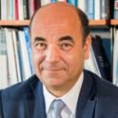
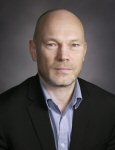
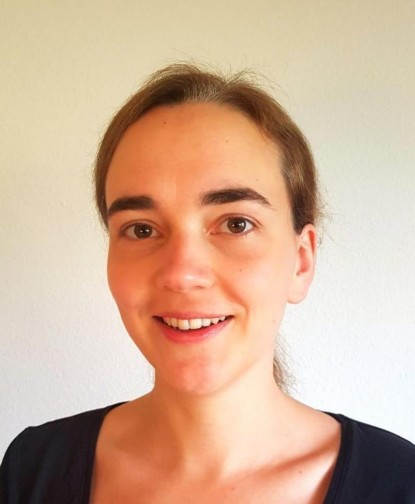
Mohamed Amara is a full-time Professor at the University of Pau and the Pays de l'Adour (UPPA) since 1996, affiliated with the Laboratory of Mathematics and their Applications (CNRS-UMR 5142). He served as its director (1999-2007), Director of the Doctoral School of Exact Sciences (ED211, 2007-2008), and UPPA's Scientific Council Vice-President (2008-2012). He has been UPPA's President since 2012 (re-elected until 2020). Education: Mathematics from University of Algiers (1973), Pierre and Marie Curie University (DEA 1974, Doctorate 1978, State Doctorate 1983) Academic Roles: Research Associate at Ecole Polytechnique (1978-1982), Algerian Electricity and Gas Company (1983-1992), Professor in Algiers (1988-1994), Tunis (1994-1995), and Associate Professor at Paris 6 (1995-1996) His research focuses on numerical simulation of partial differential equations for environmental/energy applications, including mechanics in porous media (petroleum engineering, geoscience), fluid mechanics (aerodynamics, estuarine hydrodynamics), non-Newtonian flows, and wave propagation. Articles highlight expertise in discontinuous Galerkin methods, Helmholtz problems, finite element discretization, and multiphysics systems. He managed 20 doctoral theses and led national mathematics programs at ANR (2007-2011). He chairs the Cocktail association for higher education IT systems and collaborates with INRIA's Magique 3D team (since 2006).
Svitlana Rogovchenko is a Professor at the Department of Engineering Sciences, University of Agder, Norway. Her academic work bridges pure mathematical research in differential equations with innovative pedagogical approaches in engineering and interdisciplinary education. Educational Background: Doctor of Philosophy in Differential Equations (1988), Institute of Mathematics, National Academy of Sciences, Kyiv, Ukraine Master of Science in Mathematics (1983), Kyiv State University, Ukraine Research Interests: Qualitative theory of ordinary and impulsive differential equations, asymptotic methods in nonlinear mechanics, mathematical modeling, and the intersection of mathematics education with engineering and biology curricula. She focuses on conceptual understanding, pedagogical challenges, and commognitive conflicts in learning differential equations. Recent Publications Trends: Her work spans mathematical modeling of vehicle crashworthiness, interdisciplinary education for biologists and engineers, and pedagogical innovations in ordinary differential equations. Articles emphasize assessment design, group work tensions, and bridging mathematical theory with applied contexts.
Mark Pollicott is a Professor of Mathematics at the University of Warwick, where he has held positions since 1992 and 2005. He previously served at Edinburgh, Porto, and Manchester Universities, including a Fielden Chair. His research focuses on Thermodynamic Formalism, Ergodic Theory, and Dynamical Systems, with applications to geometry, number theory, and fractal analysis. Pollicott earned his BSc (1981) and PhD (1984) in Mathematics and Physics from Warwick, under the supervision of William Parry. He has held prestigious fellowships, including Royal Society and ERC grants, and organized major programs at the Newton Institute, CIB-Lausanne, and ICERM. He serves on editorial boards for journals like Nonlinearity and Journal of Fractal Geometry . His research explores topics such as fractal dimensions, geodesic flows, and validated numerics. Notable contributions include studies on the Hausdorff dimension of Cantor sets and Bernoulli convolutions. He has supervised 19 PhD students and mentored 18 postdoctoral researchers. Recent grants include EPSRC funding for computational ergodic theory and dynamical zeta functions. His work bridges pure mathematics with applications in geometry, analysis, and number theory. Awards: ERC Advanced Grant, EPSRC Leadership Fellowship, Royal Society Fellowships, Jean Morlet Chair Grants: EPSRC (2019-2025, 2026-2030), ERC (2019-2025) Collaborations: Co-organized programs on Thermodynamic Formalism and Dynamics at CIRM and Warwick
Ming-Jun Lai is a Professor in the Department of Mathematics at the University of Georgia. His career spans decades, focusing on multivariate splines, sparse solutions of linear systems, wavelet theory, and their applications in numerical analysis and machine learning. Education: Lai received his Ph.D. from Texas A&M University and completed postdoctoral training at the University of Utah. He has supervised 22 Ph.D. students and two current Ph.D. candidates. Multivariate Splines: Applied to scattered data fitting, numerical PDE solutions, image enhancement, and surface design. Sparse Solutions: Used in compressed sensing, low-rank matrix recovery, and graph clustering. Wavelet Theory: Construction of biorthogonal and tight wavelet frames for image edge detection. Optimal Transport: Numerical solutions for Monge-Ampère equations. Research Trends (2025–2023): Recent work includes interpolating space curves with geometric continuity, spherical spline smoothing, and applications in machine learning, particularly graph clustering and optimal control in biological systems. Scientific Awards: UGA Research Medal (2002) McCay Award (2013) Advisees: Lai has mentored 24 Ph.D. students, including Zhaiming Shen (2024), Jinsil Lee (2023), and current students Valerio Palamra and Ye Tian. Laboratory & Collaborations: He collaborates with institutions like Georgia Tech, UCLA, and Zhejiang University, applying splines in aerospace engineering and biomedical imaging.
Lutz Warnke is a Professor of Mathematics at the University of California, San Diego, with prior affiliations at Georgia Institute of Technology (where he received tenure in 2021) and Peterhouse, Cambridge University (Junior Research Fellow until 2016). His research focuses on probabilistic combinatorics, random graphs, phase transitions, and combinatorial probability, with applications to extremal combinatorics and Ramsey theory. Education : Ph.D. in Mathematics from the University of Oxford (2012), supervised by Oliver Riordan. Dr. Warnke's research explores the structure and evolution of random graphs and processes, including Achlioptas processes, Ramsey numbers, and extremal problems. His work often bridges probabilistic methods with algorithmic applications and theoretical computer science. His publications from 2022–2025 reveal trends in random graph isomorphisms, clique coloring thresholds, extremal subgraph counts, and hardness of online algorithms. Key subfields include percolation, phase transitions, and probabilistic methods applied to combinatorial structures. Scientific Awards : Dénes König Prize (2016), Alfred P. Sloan Research Fellowship (2018), NSF CAREER Award (2020), Richard Rado Prize (2014). Dr. Warnke actively supervises PhD students and postdocs, including Matthew Cho (PhD ongoing), Erlang Surya (PhD 2025), Emily Zhu (PhD 2025), and He Guo (PhD 2021). He has received teaching accolades at Georgia Tech and contributes to graduate courses in probabilistic combinatorics, random graph theory, and stochastic processes.
Michele Rimoldi is an Associate Professor at the Department of Mathematical Sciences 'G. L. Lagrange' (DISMA) at Politecnico di Torino, specializing in geometric analysis and differential geometry. His research focuses on Riemannian geometry, mean curvature flow, and Ricci solitons. Research Interests: Differential geometry, geometric analysis, Ricci solitons, mean curvature flow, Sobolev spaces, and elliptic PDEs. Teaching: Courses in linear algebra, geometry, and mathematical analysis for biomedical, mechanical, and aerospace engineering students. Publications: 15 recent articles address topics like isoperimetric inequalities, stability of self-shrinkers, and density problems on manifolds.
Ilia Polushin is an Associate Professor at the Department of Electrical and Computer Engineering , Western University . His research focuses on Robotics, Teleoperation, Control Systems, and Biomedical Applications . Education : Ph.D. in Electrical Engineering (Carleton University), Cand. Sci. in Automatic Control (Saint-Petersburg Electrotechnical University) His work primarily addresses stability and control of teleoperation systems with communication delays, using scattering transformation techniques and projection-based force reflection algorithms . He has contributed to haptic systems, surgical robotics , and networked control applications , including drilling systems and cooperative teleoperation. Recent publications emphasize stabilization of conic systems , multi-agent synchronization , and nonlinear networked control . His research spans Robotics, Control Theory, Biomedical Engineering, and Industrial Automation . Scientific Awards : Best Conference Paper Award, IEEE International Conference on Mechatronics and Automation (2006) He has advised students and collaborated with researchers in Robotics , Control Systems , and Biomedical Applications . His laboratory focuses on teleoperation systems and haptic interfaces .
Prof. Dr. Elena Mäder-Baumdicker holds a Tenure Track position in Geometry at TU Darmstadt since 2019. She was previously a postdoc at KIT and conducted research at Princeton University. Currently, she is organizing conferences such as the BIRS workshop on Non-linear Critical Point Theory and the Women in Geometry 3 conference. Her research focuses on global and local questions in differential geometry, particularly geometric variational problems involving minimal surfaces and Willmore surfaces. She has supervised two active PhD students (Nils Neumann and Jona Seidel), along with several Master’s and Bachelor’s theses. She is a member of the SPP 2026 'Geometry at infinity' and actively engages in academic outreach, including the Meet&Math initiative and public lectures for school students. Her teaching includes courses on differential geometry and seminars on geometric analysis. Education: PhD in Mathematics (2014, Freiburg), Diploma in Mathematics (2010, Freiburg) Research Interests: Minimal Surfaces, Willmore Surfaces, Geometric Flows (e.g., Mean Curvature Flow), Alexandrov Spaces, Variational Problems in Geometry Recent Conferences: Co-organizer of the Ernst Kuwert 60th Birthday Conference (2021), Geometric Analysis meets Geometric Topology (2019), and multiple BIRS events (2023–2025) Grants & Fellowships: DFG-funded research position (2017–2019), Leopoldina Fellowship (2018–2019) Labs/Teams: Leads the 'Variational Problems in Geometry' team at Women in Geometry 3, co-runs the RMU Seminar 'Solution Concepts in PDEs' Her work emphasizes the interplay between geometric analysis and topology, with a focus on singularities in geometric flows and applications of variational methods. She actively participates in promoting gender equality in academia through her role in the AK-Gleichstellung committee.
Dr. Magdalena Chmara serves as an Assistant Professor at the Institute of Applied Mathematics, Gdańsk University of Technology (Gdańsk Tech), where she maintains her office in Building B, room 511. Her academic work spans both mathematical analysis and applied microbiological research, demonstrating interdisciplinary expertise across theoretical and experimental domains. Her research interests focus on advanced mathematical analysis with specialization in calculus of variations, partial differential equations, and Orlicz-Sobolev spaces. She investigates anisotropic operators, Euler-Lagrange systems, and critical point theory, while maintaining parallel research in microbiological applications including human milk analysis and rapid microbial quantification methods. Analysis of her publication record reveals a dual research trajectory: theoretical mathematics (2019-2023) focusing on variational methods and anisotropic operators, followed by applied microbiological research (2025). Her mathematical work consistently employs the Mountain Pass Theorem and examines boundary value problems, while her recent microbiological research evaluates rapid testing methodologies for human milk banks using bioluminescence, colorimetric methods, and flow cytometry. Dr. Chmara's collaborative work appears across multiple international journals including International Dairy Journal, Annales Mathematicae Silesianae, Taiwanese Journal of Mathematics, and Journal of Mathematical Analysis and Applications, demonstrating both disciplinary depth and interdisciplinary reach in her scholarly contributions.
Dong Han KIM is a Professor at the Department of Mathematics Education, Dongguk University, and an Associate Member of the Korea Institute for Advanced Study. He serves as an Editor for the Bulletin of the Korean Mathematical Society . His primary research interests include Ergodic theory, dynamical systems, Metric theory of numbers, Financial mathematics, and Random number generators. Research Contributions His recent work explores Diophantine approximation, particularly intrinsic approximation on circles/spheres and parity-constrained rational approximations. He has developed novel frameworks for Sturmian continued fractions and their Lévy constants, connecting number theory with dynamical systems. His Hausdorff dimension studies in inhomogeneous Diophantine approximation reveal deep metric properties of fractal sets. He investigates quasi-Sturmian tree colorings and Romik's dynamical system, bridging symbolic dynamics and number theory. Scientific Collaborations Collaborated with leading researchers like Yann Bugeaud, Seonhee Lim, and Stefano Marmi. Co-authored papers with Byungchul Cha, Seul Bee Lee, and Lingmin Liao on topics spanning continued fractions to market potential models. Academic Engagement Delivered invited talks at institutions across Japan, Italy, France, China, India, and Russia. Participated in international conferences on dynamical systems, number theory, and finance in Italy, France, China, and Singapore.
David Angeli is a Professor of Nonlinear Network Dynamics in the Department of Electrical and Electronic Engineering at Imperial College London's Faculty of Engineering. Affiliations: Control and Power Research Group Energy Futures Lab His research focuses on Economic Model Predictive Control, Stability of Nonlinear Systems, Chemical Reaction Networks Theory, Systems Biology, and Control of Smart Grids. He develops theoretical frameworks for networked systems with applications in energy infrastructure and biological processes, emphasizing robustness and scalability in distributed settings. Recent publications (2023-2025) highlight work on distributed control algorithms, Lyapunov-based stability certification, and small-gain theorems for interconnected systems. His research bridges control theory, game theory, and machine learning to solve problems in cyber-physical systems, particularly in resilient consensus protocols and economic optimization for heterogeneous networks. As a core member of the Control and Power Research Group and Energy Futures Lab, he contributes to sustainable energy solutions and advanced control methodologies for complex networked systems.
Prof. Dr. Thomas Schmidt is a full-time Professor for Geometric PDEs at the University of Hamburg , affiliated with the Department of Mathematics under the Faculty of Mathematics, Informatics and Natural Sciences . He leads the research group on Geometric Partial Differential Equations , focusing on calculus of variations, nonlinear PDEs, geometric measure theory, and regularity theory. Education: Diplom in Mathematics (2004, HHU Düsseldorf), Doctor in Mathematics (2006, HHU Düsseldorf), Habilitation in Mathematics (2015, FAU Erlangen-Nürnberg). Career: Appointed as W2 Professor at University of Hamburg since 2016; postdoctoral positions at SNS Pisa, University of Zurich (2011–2013), and FAU Erlangen-Nürnberg (2008–2016). His research investigates boundary/obstacle problems for BV functions, currents near the Plateau problem, least gradient problems, Mumford-Shah functionals, quasiconvex integrals, and PDEs with degenerate ellipticity. Recent work includes existence theory for linear-growth functionals with signed measures, optimal Hölder exponents in Massari-type theorems, and duality frameworks for BV minimizers. Publications span journals like Advances in Calculus of Variations , Mathematische Annalen , and J. Lond. Math. Soc. . Key trends in his publications involve geometric measure theory, regularity analysis, and convex duality. His group addresses existence/uniqueness of generalized solutions, L p estimates, and partial regularity. He has collaborated with researchers such as Eleonora Ficola, Jule Helena Schütt, and Christoph Scheven. For administrative support, contact his team assistant Katrin Kopp at the department office.
Peter Michael Robinson holds the Tooke Professorship of Economic Science and Statistics at the London School of Economics and Political Science (LSE), where he maintains an active research profile in advanced econometric theory. His institutional affiliation centers on LSE's Department of Economics, though the departmental structure is not explicitly detailed in available materials. Robinson's research program focuses on cutting-edge econometric methodologies, particularly long-memory processes, spatial dependence structures, and nonstationary time series analysis. His work bridges theoretical rigor with practical applications in panel data and spatial econometrics, emphasizing semiparametric and nonparametric approaches for complex dependency patterns. Key innovations include refined inference techniques for spatial autocorrelation and fractional integration models. Analysis of his recent publications (2012-2018) reveals a sustained emphasis on spatial econometrics and time-series methodology, with significant contributions to panel data modeling, long-range dependence theory, and nonparametric estimation under cross-sectional dependence. His work consistently advances asymptotic theory while addressing real-world data challenges in economics and statistics. No scientific awards or honors were explicitly documented in the source materials. Available records contain no information regarding doctoral students, grant funding, or academic advising activities. Research infrastructure details such as laboratories or collaborative teams were not specified in the provided documentation.
Dr. Martin Bohner is the Curators' Distinguished Professor in the Department of Mathematics and Statistics at Missouri University of Science and Technology. He is a leading expert in difference equations and dynamic equations on time scales, with extensive contributions to mathematical analysis and applied mathematics. University: Missouri University of Science and Technology Department: Department of Mathematics and Statistics Academic Rank: Professor His research interests include difference equations, dynamic equations on time scales, oscillation theory, stability analysis, and interdisciplinary applications in biology and economics. He has pioneered the unification of continuous and discrete analysis through time scales calculus, influencing both theoretical and applied domains. The recent publications highlight a sustained focus on qualitative behavior of dynamic equations, nonlinear systems, boundary value problems, and applications across disciplines. His work consistently bridges pure mathematical theory with real-world modeling challenges. President of the International Society of Difference Equations (ISDE), 2017–2019 Curators' Distinguished Professor Recognized among the top 2% most cited scientists globally (2021–2024) Dr. Bohner has advised numerous graduate students and collaborates widely across international institutions. He has secured significant research recognition and leadership roles. He is actively involved in organizing conferences and editorial work, including founding and editing major journals in his field. He leads research initiatives connecting dynamic modeling with practical systems in engineering and natural sciences.
Ada Boralevi is an Associate Professor in the Department of Mathematical Sciences "G. L. Lagrange" (DISMA) at Politecnico di Torino, Italy. She is a prominent researcher in algebraic geometry, specializing in vector bundles, tensor decomposition, determinantal representations, and related algebraic structures. Her work bridges pure mathematics with applications in numerical analysis, mathematical physics, and computational algebra. PhD in Mathematics, University of Florence, 2008 MA in Mathematics, UCLA, 2006 Laurea in Mathematics, University of Florence, 2004 Her research interests lie at the intersection of algebraic geometry, commutative algebra, and multilinear algebra. She investigates homogeneous vector bundles, secant varieties, constant rank matrices, and tensor decompositions, with a focus on geometric and algebraic properties. Her work often involves moduli spaces, stability conditions, and equivariant constructions. She is particularly known for her contributions to the theory of instanton bundles and determinantal representations. The analysis of her recent publications reveals a sustained focus on algebraic structures derived from matrices and tensors. Her work spans from foundational algebraic geometry (e.g., sections of homogeneous bundles) to applied topics such as uniform determinantal representations and tensor decomposition. A recurring theme is the interplay between geometry and linear algebra, especially in the context of rank constraints and symmetry. Her collaborations with leading mathematicians highlight her active role in the international research community. She is actively involved in the mathematical community through service and leadership. She is a member of the European Women in Mathematics and the Unione Matematica Italiana. She has organized numerous conferences and summer schools, including the TAGSS series, which promotes women in mathematics. She has also served on organizing committees for MEGA 2017, Vector Bundles Days, and several workshops on tensors and algebraic geometry. Ada Boralevi mentors PhD students, including Stefano Canino, and participates in the doctoral college in Pure and Applied Mathematics at Politecnico di Torino. She has secured research contracts with institutions such as SISSA, TU Eindhoven, and IMPAN. Her teaching includes undergraduate courses in linear algebra and geometry, as well as advanced PhD-level topics on spaces of matrices and their applications. She is a key organizer of algebraic geometry activities in Turin, jointly between Politecnico di Torino and the University of Turin. She co-founded the TAGSS (Trieste Algebraic Geometry Summer School) with Valentina Beorchia and Barbara Fantechi, a series of schools taught by outstanding women mathematicians. Her leadership in these initiatives underscores her commitment to education and gender equity in mathematics.