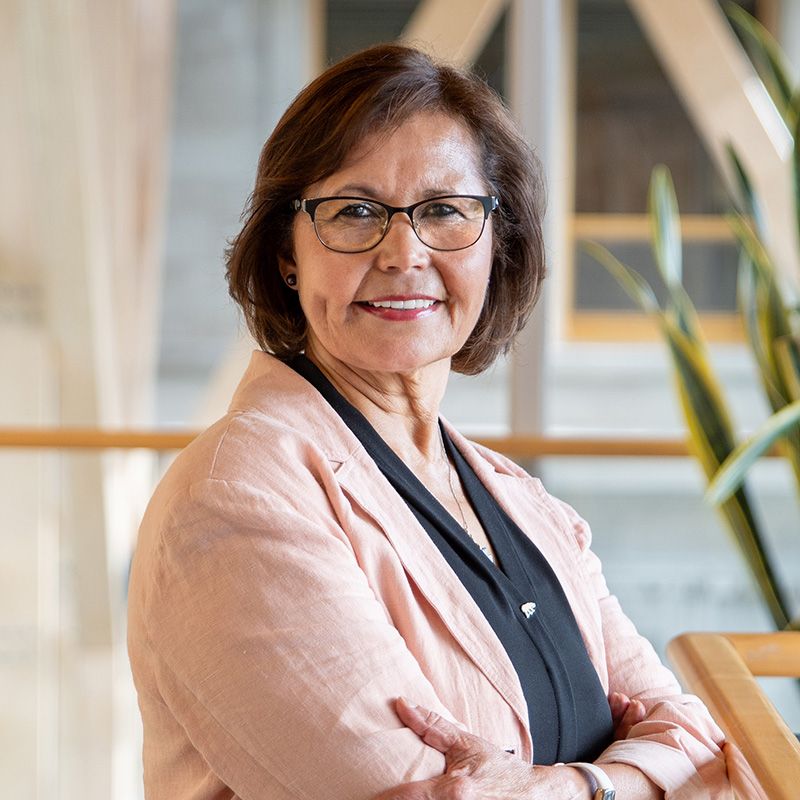
Rainer Baehre is a Professor in the Department of Historical Studies at Memorial University of Newfoundland's Grenfell Campus. His research bridges environmental, Indigenous, and colonial history, with cross-listed affiliations in Social/Cultural Studies. A graduate of York University (Ph.D.) and the University of Waterloo (M.Phil., M.A., B.A.), he focuses on Newfoundland's environmental history, the Mi'kmaq resurgence, and Upper Canada's social/political past. Educational Background: Ph.D., York University M.Phil., University of Waterloo M.A., University of Waterloo B.A. (History), University of Waterloo Research Interests center on the environmental history of Newfoundland's fisheries and forest industries, Indigenous decolonization efforts, and the legal/political dynamics of colonial governance in Upper Canada. His work often examines intersections between natural resources, cultural identity, and imperial policy. Publications span maritime studies, colonialism, and Indigenous studies, with recent projects including book contracts for Woodland Echoes: A History of Newfoundland’s Forest Industries (UBC Press) and Empire and Colony: Newfoundland 1763-1832 (Memorial University Press). He is also contributing a chapter on Newfoundland forest industries to New History of Canada’s Forests . Scientific Awards: Community Engagement Award (2023) Baehre actively collaborates with the CABOX initiative on UNESCO Global Geopark development in the Bay of Islands. His work emphasizes community-based historical research and cross-disciplinary approaches to environmental and Indigenous histories.
Kristina Fagan Bidwell is a Full Professor in the Department of English at the University of Saskatchewan, holding a Tier 2 Canada Research Chair in Indigenous Storytelling since 2001. She served as the inaugural Associate Dean of Aboriginal Affairs in the College of Arts and Science from 2011 to 2018 and currently serves as President of the Indigenous Literary Studies Association. Her research program investigates how stories interact across cultural boundaries—between Indigenous communities and between Indigenous and settler communities—with particular focus on how narratives create meaning, circulate, and influence actions in high-stakes conflicts over land, identity, and knowledge. Bidwell conceptualizes storytelling broadly to include oral narratives, literary texts, and everyday personal/public narratives, operating on the principle that stories both 'mean' and 'do' things by shaping cognition, emotion, and behavior. Current SSHRC-funded projects examine Indigenous-led literary collaborations and inter-Indigenous conflicts regarding territory and identity. Her publication portfolio demonstrates consistent engagement with Indigenous literary theory, Métis identity, Cree storytelling traditions, and Labrador Inuit literary heritage. Recurring analytical frameworks include narrative sovereignty, intercultural communication, and the political dimensions of storytelling. Methodologically, her work emphasizes community-based, collaborative approaches that center Indigenous perspectives and knowledge systems. Her primary recognition is the Tier 2 Canada Research Chair in Indigenous Storytelling. Bidwell has supervised twelve graduate students across PhD and MA programs, with research spanning ethical settler engagements with Indigenous literature, Anishinaabe sense of place, Indigenous erotica, and Aboriginal realism. Her SSHRC-funded research on Indigenous literary collaborations represents significant grant achievement. She leads research teams focused on narrative analysis and intercultural communication, maintaining active partnerships with Indigenous communities and organizations through community-based participatory research frameworks.
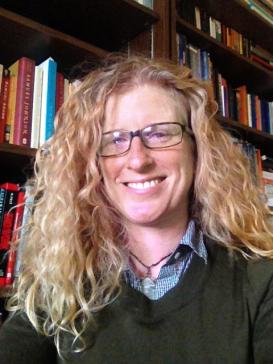
Vicki S. Hallett is an Associate Professor in Gender Studies at Memorial University of Newfoundland, within the Faculty of Humanities and Social Sciences. Her research focuses on intersections of identity, place, and gender in Newfoundland and Labrador, particularly centering Indigenous and marginalized voices. She explores life writing, autoethnography, and postcolonial theory through projects like her study of the floater fishery’s overlooked women workers. Teaching specialties include courses on masculinities, feminist theory, and life narratives. She has been recognized with the 2018 Dean of Humanities and Social Sciences Award for Teaching Excellence. Current research investigates settler-colonial spaces through Labrador’s fishing history and cultural production. Publications span peer-reviewed journals (e.g., Acadiensis , a/b: Auto/Biography Studies ), edited volumes, and a monograph shortlisted for the Newfoundland and Labrador Book Awards. Her work bridges literary analysis with decolonial methodologies, emphasizing interdisciplinary approaches to gender and place.
Lisa Rankin is a Professor in the Department of Archaeology at Memorial University, cross-appointed to the School of Arctic and Subarctic Studies. She holds the Memorial University Research Chair in Northern Indigenous Community Archaeology and has served as Past-Director of the Institute of Social and Economic Research and Past-President of the Canadian Archaeological Association. Her academic background includes a Ph.D. from McMaster University (1998), an M.A. from Trent University (1994), and a B.A. (Hons.) from the University of British Columbia (1991). Rankin's research explores post-medieval cultural encounters between Labrador Inuit and Europeans, Indigenous interactions across millennia, ethnicity, identity formation, landscapes, and settlement patterns in the eastern Sub-Arctic. Her current focus examines how Labrador Inuit transformed from small egalitarian households to large communal structures led by trader-shamans during 16th–19th centuries, investigating their integration into global economic networks through seal oil, baleen, and fur trade. Her publications emphasize Inuit-European contact dynamics, gender roles in cultural exchange, community archaeology methodologies, and heritage preservation. Recent work analyzes shifts in domestic power structures, Indigenous agency in colonial contexts, and the application of archaeological data in contemporary Indigenous governance. Awards & Honors: Fellow of the Royal Society of Canada (2024) Smith-Wintemberg Award for Canadian Archaeology (2024) Fellow of the Royal Canadian Geographical Society (2021) Geoffrey Marshall Mentoring Award (2016) Memorial University Dean’s Awards for Scholarship (2018) and Supervision (2012, 2013) President’s Award for Public Engagement (2016) Rankin directs major research initiatives including the SSHRC-funded partnership Tradition and Transition among the Labrador Inuit (collaborating with the Nunatsiavut Government) and previously led the CURA project Understanding the Past to Build the Future . She has secured grants including SSHRC Insight Development Grants, CFI JELF funding, and multiple Partnership Grants. Her lab and field teams involve interdisciplinary researchers across archaeology, ethnography, and genetics. She has supervised over 35 graduate students (PhD and MA) researching Inuit archaeology, heritage policy, and colonial encounters. Current doctoral projects include Inuit whale hunting practices, Beothuk settlement patterns, and heritage commodification.
Mark Igloliorte is an Assistant Professor in the Audain Faculty of Art at Emily Carr University of Art and Design. Of Inuit ancestry from Nunatsiavut, Labrador, his interdisciplinary practice spans painting, sculpture, and performance, exploring themes of cultural identity, colonial history, and hybridity. He holds a BFA from Nova Scotia College of Art and Design, an MFA from Concordia University, and a Bachelor of Education from Memorial University. His work has been exhibited nationally and internationally, including at the Musée national des beaux-arts du Québec and the Quebec Triennial. Notable projects include Beat Nation and Komatik Skatebox , which merge Inuit cultural heritage with skateboarding. Awards include the 2017 REVEAL Indigenous Art Award and a Sobey Art Award longlist in 2012. Igloliorte teaches graduate and senior studio courses, emphasizing observational practice and community engagement. His research intersects art, education, and Indigenous cultural preservation. Outside academia, he is an avid skateboarder and has contributed to outreach initiatives in Labrador.
Najat Bhiry is a Full Professor in the Department of Geography within the Faculty of Forestry, Geography and Geomatics at Université Laval. She maintains her office at the Abitibi-Price Pavilion (office 3115) and serves as President of the Student Affairs Commission. Her research is closely affiliated with the Centre for Nordic Studies (CEN), where she is a regular member, and she actively participates in multiple research initiatives focusing on northern environments and Indigenous communities. Dr. Bhiry's educational background includes a PhD in Quaternary Geology from Pierre and Marie Curie University in Paris, a Master's degree in Quaternary Geology, and a Bachelor's degree in Geology and Biology. Her academic journey has positioned her at the intersection of earth sciences, environmental studies, and archaeology. Her research interests span Quaternary geology and geomorphology (including stratigraphy, sedimentology, and micromorphology), natural hazards and risks, plant paleoecology, geoarchaeology, and paleoenvironments. She applies these interests to understanding Arctic and subarctic landscapes, with particular attention to the impacts of climate change on northern ecosystems and Indigenous cultural heritage. Her work often integrates geological, archaeological, and environmental perspectives to reconstruct past landscapes and human-environment interactions. Dr. Bhiry's recent publications reveal a strong focus on Arctic and subarctic research, with particular emphasis on permafrost dynamics, geoarchaeology, climate change impacts, and Indigenous knowledge systems. Her work frequently involves international collaborations and addresses critical questions about northern landscape evolution, cultural heritage preservation, and environmental change. She demonstrates expertise in both field-based methodologies and advanced analytical techniques including remote sensing and micromorphological analysis. Dr. Bhiry serves on several important committees and editorial boards: Member of the First Peoples Committee of the Nordic Institute of Quebec Member of the Editorial Board of the Nordicana D platform Member of the Steering Committee of the Ecoscience journal Member of the Steering Committee of the journal Études Inuit Studies Dr. Bhiry currently supervises multiple graduate students including Rachid Addou (postdoctoral fellow), Sabrina Bujold, Laura Brassard, Vincent Filion, Danielle Chiasson, and Laurence Côté (all master's students with thesis). In the past five years, she has successfully guided Josuah Tremblay, Guillaume Pouliot, Jérémy Grenier, Rachel Labrie, Frédéric Mansau, and Sarah Robert to completion of their degrees. Her research is supported by numerous grants from organizations including Fonds de recherche du Québec, Ressources naturelles Canada, CNRS (France), MITACS Inc., and the Natural Sciences and Engineering Research Council of Canada. Her laboratory work primarily occurs through the Centre for Nordic Studies (CEN), where she collaborates with interdisciplinary teams studying northern environments. Her research often involves fieldwork in Arctic regions including Nunavik (northern Quebec), Nunatsiavut (Labrador), and international sites in Morocco and Iceland. These teams integrate geological, archaeological, and environmental science perspectives to address complex questions about landscape evolution and human adaptation in northern environments.
Peter J. Whitridge is a Professor in the Department of Archaeology at Memorial University of Newfoundland, within the Faculty of Humanities and Social Sciences. His research focuses on the archaeology of the body, spatial dimensions of embodied experience, and Inuit colonization processes in Nunavut and Labrador, with recent work extending to contemporary Newfoundland. He has conducted extensive fieldwork in northern Labrador, including sites in Nachvak, Saglek, Hebron Fiords, and the Okak area, often collaborating with students and institutions like Université Laval. Whitridge’s work examines Inuit interactions with landscapes, non-human entities, and European colonial influences. His recent projects include drone-mapping of Inuit sites and studies on contemporary archaeological phenomena like graffiti at Cold War sites. He actively supervises PhD, MA, and undergraduate students exploring topics such as Inuit gender relations, architecture, and animal use. His publications span Arctic archaeology, zooarchaeology, and theoretical frameworks, with a focus on material culture, spatial scales, and interdisciplinary methods. Notable contributions include analyses of Inuit sled dog diets, iron sourcing in artifacts, and the role of dogs in social systems.
Arn Keeling is a Professor and Department Head in the Department of Geography at Memorial University of Newfoundland (MUN), with a cross-appointment to the School of Arctic and Subarctic Studies. His research focuses on the environmental-historical geography of Northern Canada, particularly the intersection of Indigenous communities and large-scale resource developments. NSERC Postdoctoral Fellow (2005-06) SSHRC Postdoctoral Fellow (2004-05) PhD, University of British Columbia (2004) MA, University of British Columbia (1999) BA Hons., Carleton University (1996) Keeling’s work examines the historical and contemporary impacts of mining and resource extraction on Indigenous communities, including abandoned mines, pollution legacies, and environmental justice. He leads projects like the SSHRC-funded historical-geography of pollution in Northern Canada and participates in international networks focused on Indigenous mine closure perspectives. His publications span journals like Journal of Political Ecology and BC Studies , with notable books including Mining Country (2021) and Mining Encounters and Indigenous Sustainable Livelihoods (2024). Keeling also co-edits the journal Historical Geography (2015-20) and contributes to policy discussions on remediation and sustainable development. Current projects include NSERC TERRE-NET collaboration and the international Indigenous Voices initiative on mine closure governance. His research integrates historical analysis, political ecology, and Indigenous knowledge to address environmental legacies and promote equitable transitions in resource-extraction contexts.
Susan Kaplan is a Professor of Anthropology and Director of the Peary-MacMillan Arctic Museum and Arctic Studies Center at Bowdoin College. She specializes in Arctic anthropology and archaeology, focusing on Inuit responses to environmental change and contact with Western societies, Arctic exploration history, and material culture studies. Her work spans northern Labrador, Ellesmere Island, and Newfoundland, supported by grants from the National Science Foundation and other institutions. Education: PhD and MA from Bryn Mawr College; BA from Lake Forest College. Research interests include: Inuit archaeology and environmental adaptation History of Arctic exploration and indigenous collaboration Material culture analysis and museum outreach Community-based heritage preservation Recent grants include projects on Peary's expeditions, Arctic marine mammals, and digitizing historical documents. She has organized conferences like 'North By Degree' and collaborates with northern communities to document cultural histories. The Arctic Museum under her leadership hosts exhibitions and educational programs. Key publications explore Labrador Inuit resilience, Arctic exploration narratives, and interdisciplinary methods in anthropology.
Amanda Crompton is an archaeologist specializing in the history of French colonialism in Newfoundland and Labrador, with a focus on inter-cultural interactions and maritime landscapes. She earned her PhD in 2012 at Memorial University of Newfoundland and has held postdoctoral research fellowships at Memorial University and Brown University’s John Carter Brown Library. Currently, she is a Researcher at the Max Planck Institute for the History of Science, where she contributes to the Body of Animals Working Group in Department III. Her work integrates documentary, archaeological, and digital humanities methods, including UAV-based aerial surveys. Her research examines the transatlantic French cod fishery, colonial land concessions in Labrador, and the use of maritime technology in French-Inuit encounters. She has published in Historical Archaeology , Études/Inuit/Studies , and International Journal of Heritage and Sustainability . Notably, she co-edited a special edition of Études/Inuit/Studies (2015) on Inuit-European relations in southern Labrador. Amanda also serves on the Executive Board of the Council for Northeastern Historical Archaeology and has presented at conferences on topics like gender in North Atlantic colonization and colonial memory landscapes. Her recent work involves UAV-based site mapping in coastal archaeology analysis of anthropogenic soil chemistry multidisciplinary collaborations with Indigenous communities digital humanities applications for historical topography
John Jacobs is a Professor of Geography at Memorial University of Newfoundland, where he has served since 1989. Previously, he taught at the University of Windsor (1974–1989). He holds an honorary title of Honorary Research Professor (2004). His research focuses on climate variability in northeastern Canada, alpine and boreal ecosystems, and community-based climate monitoring with Labrador Innu and Inuit. Education: PhD in Physical Geography (University of Colorado, 1973), specializing in climatology and arctic environments. His graduate fieldwork included Alaska, Antarctica, and the Canadian Arctic. Research interests include highland climates in Newfoundland/Labrador, snow-covered watershed hydrology, and glacial dynamics. He has led studies under the International Polar Year Program and contributed to the Glaciers of North America atlas. His work bridges environmental science and indigenous community resilience. Publications highlight climate-glacier interactions, Arctic vegetation dynamics, and remote sensing applications. Awards include the Honorary Research Professor title recognizing his contributions to geographical research. He has held administrative roles as Department Head of Geography and Deputy Chair of the Environmental Science Graduate Program. His work emphasizes interdisciplinary approaches to climate change impacts in northern regions.
Glenn Gear is an Adjunct Lecturer in the Department of Film and Media at Queen's University under the Faculty of Arts and Science. He is an Indigiqueer filmmaker and multidisciplinary artist of Inuit and settler descent, based in Montréal. His work integrates Inuit and Indigenous methodologies with animation, photo archives, painting, beading, and traditional materials like sealskin. He explores themes of land, animals, history, and archives through installations, films, and collaborations with Indigenous youth. Education: BFA, Memorial University of Newfoundland, Newfoundland & Labrador MFA, Concordia University, Montréal, Quebec Research & Practice: Glenn employs low-budget and experimental techniques in mentoring Indigenous youth and first-time filmmakers. His artistic residency roles include the Inuit Futures in Arts Leadership program (2020-2021) with Concordia University and the University of Winnipeg, and visiting artist positions at Queen's University in 2021 and 2022. He collaborates with the Aabijijiwan New Media Lab. Awards: 2021 Sobey Art Award Longlist 2023 Kenojuak Ashevak Memorial Award Longlist Labs/Teams: Collaborates with the Aabijijiwan New Media Lab and institutions like the National Film Board of Canada.