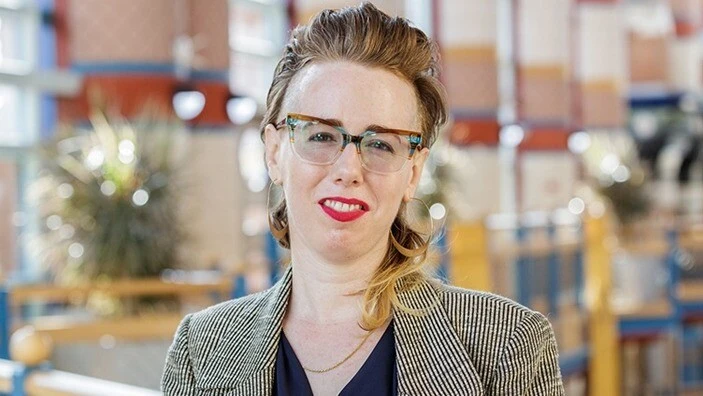
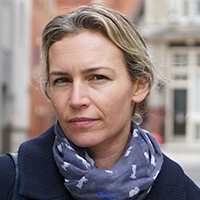
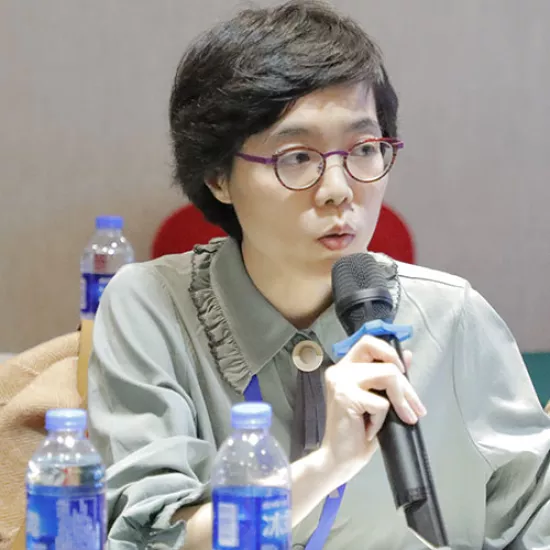
Ingjerd Hoëm is a Professor at the Department of Social Anthropology, University of Oslo, and serves as Vice-Dean for Education at the Faculty of Social Sciences. She holds a Magister (1990) and PhD (1996) from the University of Oslo. Her research focuses on communication, political change, labor dynamics, and performance in Pacific Island societies, particularly Tokelau and New Zealand. Education: Magister (1990), PhD (1996), University of Oslo Her work examines governance conflicts, identity formation through performance, and the interplay between state structures and kinship-based labor systems. Recent publications analyze democratic negotiations in Tokelau and the role of theatre in political processes. She directed NFR-funded projects 'Anthropos and the Material' and 'Identity Matters: Movement and Place'. Her research combines ethnographic fieldwork with theoretical frameworks in political anthropology and Pacific studies.
Virginia Leavell serves as Assistant Professor in Organisational Theory and Information Systems at Cambridge Judge Business School, University of Cambridge. Her research investigates how organisations anticipate technological change through digital prediction systems, AI, and infrastructure transformation, drawing on her decade-long background in political organising for non-profits and labour groups across the US and Thailand. Her academic credentials include: BA in Interdisciplinary Studies, Georgetown University MA in Sociology, University of California Santa Barbara PhD in Technology Management, University of California Santa Barbara Leavell's scholarly work centers on organisational anticipation of technological futures, employing ethnographic and social network analysis methods to examine digital transformation in critical infrastructure contexts. She explores how predictive technologies reshape organisational structures and actions before technological change fully materializes, with particular focus on water systems, urban planning, and labor industries where digital twins and simulation technologies create new governance challenges. Analysis of her 2017-2024 publications reveals consistent examination of prediction performativity across sectors, demonstrating how digital models influence physical realities in infrastructure management. Her research trajectory shows increasing emphasis on sociomaterial dimensions of anticipatory organising, with recent work interrogating the equalization of human and technological agency in digital transformation processes. No scientific awards were specified in source materials. Leavell actively contributes to the Organisational Theory and Information Systems subject group at Cambridge Judge Business School, which engages cross-disciplinary leadership themes. Information regarding student advising and research grants remains unspecified in available documentation.
Dr Jamie Woodcock is a Senior Lecturer in Digital Economy at King's College London, based in the Department of Digital Humanities within the Faculty of Arts & Humanities. He holds a PhD in sociology from Goldsmiths, University of London, and has held academic positions at institutions including the University of Leeds, University of Manchester, LSE, and the Open University. His research focuses on labour processes, platform work, gig economy dynamics, and worker organizing, with a particular emphasis on critical global capitalism and digital culture. Woodcock’s research interests include the games industry, unionization strategies, and resistance to algorithmic management. He is an editorial board member of Notes from Below and Historical Materialism , and contributes to interdisciplinary initiatives such as the Research Centre for Digital Culture and the Critical Global Capitalism Studies Collective at King’s. His work has been widely covered in media and he frequently speaks on digital labour issues. He has authored influential books like The Fight Against Platform Capitalism and The Gig Economy: A Critical Introduction , co-authored Guerrilla Democracy: Mobile Power and Revolution in the 21st Century , and published extensively on topics ranging from delivery platform strikes to gamification critiques. His recent recognition includes a 2025-26 Digital Futures Institute Fellowship.
Dr. Sarah Smith is a Lecturer (Teaching & Scholarship) in the Business School at the University of Aberdeen, appointed in June 2020. She previously served as Reader at the University of Stirling from 2015 and as Senior Lecturer in Accounting, following a lectureship at Heriot-Watt University from 2001 to 2008. Education: BAcc in Accountancy, University of Stirling (1996, First Class Honours) MSc by Research, University of Stirling (1998) PhD, University of Stirling (2003) Her research centers on accounting and finance, with a strong focus on intellectual capital disclosure, corporate financing decisions, leasing, and academic labor in UK higher education. She employs empirical and methodological approaches, including content analysis and survey research, to explore disclosure practices and financial decision-making. Her work addresses both corporate reporting behavior and the sociology of accounting academia. Her recent publications (2018) analyze academic labor shortages in UK accounting departments and the role of social capital in PhD assessment, reflecting her dual interest in financial reporting and academic practice. Earlier works from the 2000s examine leasing, lease-debt substitutability, and the impact of disclosure on equity risk, establishing a long-standing contribution to financial accounting research. Scientific Awards: Best thesis on leasing across Europe (2003, Leaseurope) Carnegie Trust PhD Scholarship Dr. Smith has advised on research and contributed to academic discourse through extensive publishing, though no formal PhD or Master’s students are listed. She has not been associated with specific grants in the text, but her PhD was externally funded. Her teaching qualification (PGCAP) underscores her commitment to scholarship in education. She has not been affiliated with any named research labs or collaborative teams in the provided text, but her frequent co-authorship with Valerie Urquhart and Vic Beattie indicates strong research collaborations.
Dr. Tracy Hecht is an Associate Professor of Management and Graduate Program Director of the PhD Program in Business Administration at the John Molson School of Business, Concordia University . She earned her PhD in Industrial and Organizational Psychology from the University of Western Ontario. Her research focuses on the interplay between work, family, and other life roles, particularly how these interactions influence job search behaviors, career trajectories, and well-being. Key themes include work-family boundary management, career procrastination, and the impact of multi-role dynamics on professional outcomes. As an Associate Editor at the Journal of Organizational Behavior , Dr. Hecht contributes to advancing scholarly discourse in her field. Her work has been published in top-tier journals such as Journal of Applied Psychology and Journal of Occupational and Organizational Psychology . Recent research highlights include studies on gender differences in job search intensity and the psychological mechanisms behind career decision delays. Her teaching and supervision span the Management (MSc) and Business Administration (PhD) programs. While no specific grants or labs are explicitly noted, her research consistently addresses contemporary challenges at the intersection of work and personal life, offering actionable insights for organizations and policymakers.
Olivia Khoo is Professor of Film and Screen Studies and Head of Film, Screen and Culture in the Faculty of Arts at Monash University. She is a leading scholar in Asian Australian and Asian cinema studies, with extensive contributions to media diversity, gender and sexuality in media, and streaming technologies. She is actively involved in national research leadership, including roles in the Australian Research Council College of Experts and the Screen Diversity and Inclusion Network. PhD in Cultural Studies – University of Melbourne LL.B. (Hons) – University of New South Wales B.A. (Hons) in English Literature – University of Western Australia Graduate Certificate in Higher Education – Monash University Her research centers on screen media diversity, streaming platforms, and transnational Asian and Asian Australian cinema. She explores how gender, sexuality, and race intersect in media representation, with a strong focus on diasporic identities and cultural citizenship. Her work bridges cultural studies, legal frameworks, and media industry practices to advocate for inclusive screen ecosystems. The recent publications reflect a sustained engagement with streaming technologies, racial representation, leadership in Asian Australian communities, and policy development for media diversity. Her work spans academic monographs, journal articles, and influential policy reports, demonstrating both theoretical depth and real-world impact in shaping equitable media landscapes. Special Commendation for the Dean’s Award for Postgraduate Research Supervision (2022) Three-time nominee, Monash Graduate Association Supervisor of the Year Award Founding Series Editor, Gender, Sexualities and Cultures in Asia (Springer) Founding Associate Editor, Studies in World Cinema: A Critical Journal (Brill) Olivia has supervised 18 PhD and MA students to completion and has led major research projects, including two ARC Discovery Projects. She is currently leading interdisciplinary collaborations across Law, Business, and Arts at Monash, particularly on the Incentivising Australian Screen Diversity report. She also co-founded the Asian Australian Studies Research Network and has held fellowships at the Asia Research Institute (NUS) and the University of California Humanities Research Institute. She leads the Film, Screen and Culture program at Monash and is central to initiatives like the Streaming Industries & Genres Network. Her collaborative projects involve national and international institutions, focusing on media flows between Australia and East Asia, and the transformation of cultural identity through digital platforms.
Lea Ypi is a Professor of Political Theory at the London School of Economics and Political Science (LSE) and an Honorary Professor of Philosophy at the Australian National University. She holds degrees from the University of Rome La Sapienza and a PhD from the European University Institute, followed by postdoctoral research at Nuffield College, Oxford. Her work spans political theory, the history of philosophy, Marxism, critical theory, and Kantian philosophy. Notable publications include Global Justice and Avant-Garde Political Agency , The Meaning of Partisanship (with Jonathan White), and Free: Coming of Age at the End of History . Ypi’s research has been recognized with the British Academy Prize and a Leverhulme Prize. She is a Fellow of the British Academy, Academia Europea, and the Albanian Academy of Sciences. Her research interests include revolutionary theory, Kantian philosophy, structural injustice, and global justice. Key publications address topics like Kant’s views on colonialism, the ethics of migration, and the role of partisanship in democracy. Ypi’s academic contributions bridge normative political theory with critical engagement in contemporary social and political issues. Awards include the British Academy Prize for Excellence in Political Science (2015), Leverhulme Prize (2014), and fellowships in leading academic institutions. Her interdisciplinary approach integrates historical, philosophical, and contemporary analyses to address urgent political questions.
Professor Timo Fleckenstein is a Professor of Social Policy at the London School of Economics and Political Science (LSE), Department of Social Policy. He previously held a Lecturer (Assistant Professor) position after completing his DPhil at the University of Oxford. His research focuses on comparative welfare state analysis, emphasizing Western Europe and East Asia, particularly South Korea. Key areas include labour market policies, family policies, skills development, and political economy dynamics. Teaching responsibilities include undergraduate courses on 'Comparative and International Social Policy' and postgraduate 'Politics of Social Policy', except during sabbatical periods like 2023/24. His expertise spans comparative political economy, policy-making processes, and institutional change, with a regional emphasis on Germany, South Korea, and Japan. Research highlights include analyses of labour market dualisation, welfare reforms, and social investment policies. His work bridges political science and social policy, exploring how institutional frameworks and policy ideas shape welfare systems in diverse contexts. He actively supervises PhD students in areas like comparative political economy, family policy, and labour market reforms. Publications span journals such as World Politics , Comparative Political Studies , and Journal of Contemporary Asia , reflecting his interdisciplinary approach to policy analysis and institutional transformation.
Dr Anita Hammer is a Reader in International Employment Relations at King’s Business School, King’s College London. She specializes in comparative and international work and employment relations, focusing on the Global South, informal/precarious work, and the impact of technology/climate change on labor markets. Her research addresses socio-economic inequalities, sustainability, and the future of work through interdisciplinary approaches combining history, political economy, and labor process theory. Education: PhD, MSc, PGCHE (University of London); MPhil in History (Jawaharlal Nehru University), MA Area Studies (SOAS), BA History (St Stephen’s College, Delhi University). She is a Senior Fellow of the Higher Education Academy (SFHEA). Research Interests: Automation’s impact on work in India, migrant labor in Saudi Arabia, just transitions for informal workers, and climate change’s labor implications. She collaborates with civil society, trade unions, and policy bodies like ACAS and the ILO. Her recent books include *Global Rupture* (2023) and *The Political Economy of Work in the Global South* (2020). Publications span peer-reviewed journals (*Work, Employment and Society*, *Journal of Labor and Society*) and edited volumes. She leads the CRIMT international research project on work improvement and is affiliated with King’s India Institute and Climate Research Hub. Editor roles include *Work Employment and Society* and *Journal of Industrial Relations*. Awards: 2019 Outstanding Doctoral Supervisor, Thomas Holloway Fellowship (2002). She supervises PhD students and examines theses at Cardiff Business School and SOAS. Labs/Teams: Part of the Critical Global Capitalism Studies Collective at King’s, fostering collaborations on global capitalism research and activism.
Tamsin Barber is a Senior Lecturer in Sociology at the Oxford Brookes University , where she leads the Migration and Refugees Research Network. She holds a PhD in Sociology from the University of Roehampton (2011), an MA in Social Science from Oxford Brookes University, and a BA in Sociology and French. Education PhD in Sociology, University of Roehampton (2011) MA in Social Science, Oxford Brookes University BA in Sociology and French Her research focuses on 'race', ethnicity, youth identity , and migration studies , particularly examining inclusion/exclusion dynamics and identity formation among UK Vietnamese and East/Southeast Asian communities. She has conducted extensive work on superdiverse contexts, racial categorization, and migrant agency. Recent research projects include: "Vietnamese migrants and UK bordering processes" (Leverhulme Trust Fellowship, 2024-2025) "New Labour Migrations Between Vietnam and the UK" (Newton Mobility Grant, 2016) "Becoming East Asian: Youth Politics of Belonging" (British Academy/Leverhulme Grant, 2017-2019) She has received recognition for her work including a BSA Philip Abrams Memorial Prize nomination (2016) for her monograph Oriental Identities in Super-Diverse Britain: Young Vietnamese in London . Her publications explore topics spanning: International education mobility regimes Migrant categorization in policy Transnational belonging Post-refugee generation identities Border politics and agency Racialized embodiment She supervises PhD projects on Vietnamese migration, refugee labor market transitions, and migrant vulnerability frameworks, with collaborations across Canada, France, Vietnam, and the UK.
Kevin Banks is an Associate Professor of Law at Queen's University and the Director of the Queen's Centre for Law in the Contemporary Workplace. He holds appointments as Associate Dean (Faculty and Academic Policy) and Editor-in-Chief of the Canadian Labour and Employment Law Journal . His research focuses on labour arbitration efficiency, globalization's impact on workplace law, and the intersection of international trade agreements with labour standards. He is a part-time member of the Ontario Grievance Settlement Board and has served on dispute panels for trade agreements like the US-Mexico-Canada Agreement and Canada-EU CETA. Education: S.J.D., Harvard Law School (2003) LL.B., University of Toronto (1989) B.A. (Economics), University of Toronto (1986) Research Interests: Banks explores constitutional collective bargaining rights, gaps in disability accommodation at work, and the enforcement of employment standards. He critiques trade agreement labour chapters and examines third-party liability for wage violations. His work bridges domestic law with global economic policies, emphasizing equitable labour practices in transnational contexts. Professional Achievements: He chaired the first-ever labour rights dispute arbitration panel under a free trade agreement (US-Central America FTA) and advised Ontario’s Changing Workplaces Review. His edited casebook, Labour and Employment Law , is Canada’s leading text in the field. Labs/Teams: Director of the Centre for Law in the Contemporary Workplace, coordinating interdisciplinary research on modern workplace legal challenges.
Nando Sigona is Professor of International Migration and Forced Displacement and Director of the Institute for Research into Superdiversity (IRiS) at the University of Birmingham, UK. He serves within the School of Geosciences Human Geography and Spatial Planning in the Urban Geography department, where he leads significant research on migration policy and forced displacement. His research spans critical areas including undocumented migration, the migration-citizenship nexus, naturalisation and denaturalisation processes, Romani politics and anti-Gypsyism, EU asylum systems, Brexit impacts on European mobility, and child and youth migration. Sigona's work is characterized by its policy relevance and theoretical innovation in understanding contemporary migration governance. His recent publications demonstrate a clear trend toward examining the intersection of migration enforcement, digital platforms, and labor markets, particularly evident in his 2025 research on migrant food delivery riders in Birmingham. His scholarly output spans foundational theoretical works like The Oxford Handbook of Superdiversity (2022) to urgent contemporary analyses of migration enforcement in the gig economy. Sigona has received significant research funding including Horizon Europe support for the I-CLAIM project (Improving the living and labour conditions of irregularised migrant households in Europe), where he serves as co-Investigator and Scientific Director. His work has been published across leading journals including Sociology, Social Anthropology, Antipode, Journal of Ethnic and Migration Studies, and Ethnic and Racial Studies. Founding editor of Migration Studies (Oxford University Press) Lead editor for Global Migration and Social Change book series (Bristol University Press) Director of the Institute for Research into Superdiversity (IRiS) His recent blog posts and media commentary reveal active engagement with contemporary policy debates, particularly regarding Labour's immigration enforcement strategies targeting migrant workers in the gig economy. Sigona's research team has documented a 79% increase in immigration raids in Birmingham since Labour came to office, based on Freedom of Information data (FOI2025 07429).
Dr. Yujie (Julie) Chen is an Associate Professor (on leave) at the University of Toronto's Faculty of Information, affiliated with the Department of Communication, Culture, Information & Technology (CCIT). Her work focuses on digital media's political economy, platform capitalism, and digital labour studies. She authored Super-Sticky WeChat and Chinese Society , analyzing WeChat's societal integration and platform power dynamics in China. Her research critiques how labour is marginalized in datafication discourse, particularly in platform-mediated sectors like ride-hailing (DiDi) and food delivery. Key themes include algorithmic control, worker resistance, and the interplay between technology, state policies, and labour conditions in China. Dr. Chen’s work bridges sociotechnical systems analysis with critical political economy frameworks. Her recent studies explore temporal exploitation in platform labour (e.g., food delivery workers’ time management), gamification of work processes, and the 'digital utility' concept deployed by platforms to justify market dominance. She frequently presents at conferences like AoIR and ICA, emphasizing global platform capitalism’s socio-economic impacts. Dr. Chen is completing a book manuscript examining labour’s erasure in datafication narratives and advocating for analytical frameworks that foreground embodied labour experiences. Her research also intersects with global South labour comparisons, notably between China and the Philippines in platform economies.
Claire Maxwell is a Professor in the Department of Sociology at the University of Copenhagen, affiliated with the Faculty of Social Sciences. She joined the department in 2018 from University College London. Her research focuses on elites, global mobility, education systems, and social inequality, with a particular emphasis on how internationalization and mobility shape class dynamics and family practices. Education: PhD in Sociology (University of London, 2005) MSc in Applied Social Studies and Social Work (University of Oxford, 1999) MA(Hons) in Politics, Philosophy and Economics (2005) Research Interests: Maxwell’s work examines global middle-class families, elite education systems, and the interplay between mobility and nationalism. She pioneered the concept of 'cosmopolitan nationalism' to analyze how global agendas are re-purposed by elites. Current projects include SkillsINCORP (funded by the Independent Research Fund Denmark), studying high-skilled professionals' incorporation into Danish workplaces, and Onboard Denmark (Innovation Fund Denmark), developing tools for SMEs to recruit international talent. Grants & Projects: SkillsINCORP (2022-2025): Investigating professional integration in Danish firms Onboard Denmark (2021-2024): Digital tools for SMEs Israeli Science Foundation-funded study on mobile Israeli families (2020-2023) Labs/Teams: Leads cross-disciplinary teams collaborating with industry partners on global mobility challenges. Co-edits the International Studies in Sociology of Education (until 2024) and the Education in Global Perspectives book series.
Dr. Navid Izady is a Reader in Operations & Supply Chain at Bayes Business School, part of City St George's, University of London. His academic career includes a PhD from Lancaster University Management School (2010), and prior roles at the University of Southampton. He specializes in stochastic modelling for healthcare and manufacturing operations, collaborating with hospitals and healthcare organizations on sponsored research and consultancy projects. Dr. Izady holds qualifications in Industrial Engineering from Sharif University of Technology (BSc and MSc) and a PhD in Management Science. He teaches operations management, stochastic modelling, healthcare modelling, and decision analysis across BSc, MSc, and MBA programs. His research focuses on optimizing healthcare logistics, patient flow management, and resource allocation in hospitals. He has developed frameworks for managing pandemic and non-pandemic demand, reconfiguring inpatient services, and optimizing staffing and patient admission/discharge processes. His work bridges theoretical stochastic models with practical healthcare challenges, emphasizing operational efficiency and resilience. Notable contributions include studies on inpatient bed pressure reduction, sample pooling techniques for pandemic testing, and queueing theory applications in emergency departments and specialty clinics. His publications highlight innovations in healthcare operations management and simulation methods. Dr. Izady's expertise includes operations research, simulation, statistics, and stochastic processes. He supports industry partnerships and has supervised numerous research students, contributing to both academic and applied knowledge in healthcare and manufacturing systems.