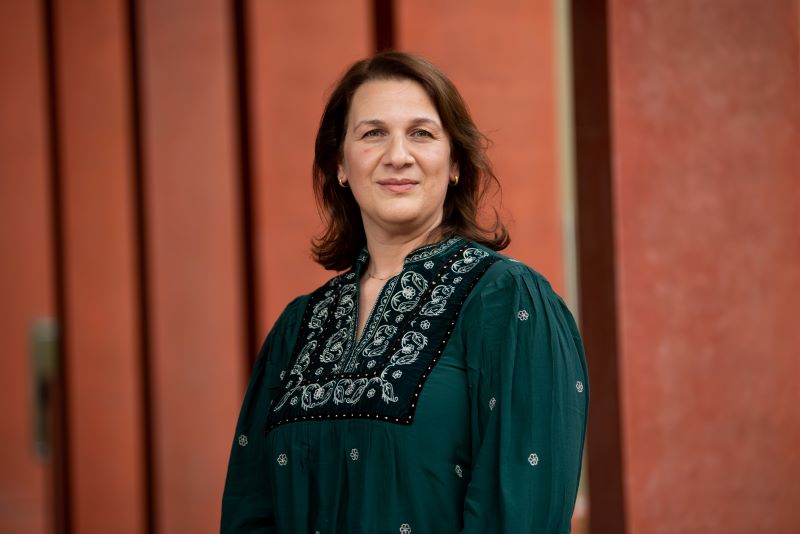
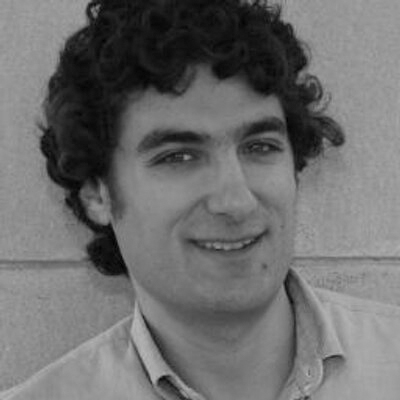
Alejandro Jose Castillo Larrain is a PhD researcher at the Work and Equalities Institute (WEI) within the Alliance Manchester Business School. He is also affiliated with the Digital Futures at Work Research Centre (Digit) and the Interuniversity Research Centre on Globalization and Work (CRIMT). His academic background includes an MSc and BA in Social Sciences from the University of Chile. PhD Researcher, Alliance Manchester Business School, University of Manchester Member, Digit Research Centre Member, CRIMT His research focuses on Labour and Organizational Studies , Industrial Relations , and Political Economy , particularly examining socio-technical transformations in multinational retail operations. Recent work addresses collective bargaining during crises, gender inequalities in labor, and algorithmic control in platform labor. Collaborations span institutions like the International Labour Organization (ILO) and Economic Commission for Latin America and the Caribbean (ECLAC). His publications emphasize Global South perspectives, leveraging methodologies such as semi-structured interviews , content analysis , and case studies . Key themes include labor resilience, regulatory frameworks, and technological disruption in the retail sector.
Carmen Yago Alonso is a Professor in the Department of Psychiatry and Social Psychology at the Faculty of Labour Sciences, University of Murcia. She holds a permanent faculty position and contributes to research in applied social psychology and mental health. Education: Doctorate in Social Psychology from the University of Murcia (2011), with the thesis: 'Palabras femeninas que nombran la injusticia en los cuidados familiares' (supervised by Dr. María del Carmen Martínez Martínez). Research focuses on social psychology applications, particularly mental health challenges among university students and systemic injustice in family caregiving dynamics. She collaborates with the GIPSA (Applied Social Psychology Research Group) and the 'Salud Mental en Estudiantes Universitarios' research group. No scientific awards or grant details are explicitly mentioned in the provided text. Supervised at least one doctoral thesis, though student names are not listed here. Labs/Teams: Active member of the GIPSA and the university student mental health research group, focusing on interdisciplinary social psychology interventions.
Gabrielle A. Slowey is an Associate Professor in the Department of Politics at York University's Faculty of Liberal Arts & Professional Studies. She specializes in Indigenous self-determination, political economy, and resource extraction impacts. Formerly Director of the Robarts Centre for Canadian Studies (2015–2021), she also held the inaugural Fulbright Chair in Arctic Studies at Dartmouth College. Her research emphasizes community-driven approaches to Indigenous rights, environmental security, and reconciliation. Slowey holds a PhD from the University of Alberta, an MA from the University of New Brunswick, and a BA from the University of Toronto. Research Focus : Her work examines treaties, land claims, and self-government agreements in northern Canada, particularly in contexts of resource extraction. She explores how Indigenous communities navigate colonial legacies and climate change while advocating for equitable labor practices and unionization in resource sectors. Recent projects include SSHRC-funded studies on Inuit-worker union partnerships in Nunavut and Yukon treaty knowledge preservation. Awards & Leadership : 2024 SSHRC Connection Grant for labor-inuit unionization research 2018 SSHRC Indigenous Research Capacity Grant for Yukon treaty studies Fulbright Canada Alumni Advisory Council member Board Member, Association of Canadian Universities for Northern Studies Teaching & Outreach : Supervises graduate students in Politics and Socio-Legal Studies programs. Engages in knowledge mobilization projects bridging academic research with community needs, particularly in northern Indigenous contexts.
Wojdan Omran is a Lecturer in the Organisation, Work and Leadership (OWL) department at Queen's Business School, Queen's University Belfast. Her research focuses on addressing epistemic injustice and intersectionality in entrepreneurship, particularly for marginalised communities such as Palestinian women entrepreneurs, displaced groups, and individuals with disabilities. She holds a PhD from Cardiff University and teaches organisational behaviour, HRM, and organisation theory. Her work critiques mainstream research paradigms that perpetuate systemic subjugation and advocates for inclusive frameworks. Key research areas include epistemic resistance, gender norms in patriarchal societies, and entrepreneurial ecosystems in conflict zones. She advises students on Level Three BSc Business Management with Placement. Publications highlight topics like gaslighting’s impact on Palestinian women entrepreneurs, gendered entrepreneurship in Kazakhstan, and resilience strategies among displaced populations. Her interdisciplinary approach integrates sociology, feminist theory, and decolonial methodologies.
Rhenish Friedrich Wilhelm University of BonnGermany
Dr. Johannes Theodor Aalders is a Postdoctoral Researcher in the Department of Geography at the University of Bonn, affiliated with the Faculty of Mathematics and Natural Sciences. He is a key member of the AG Müller-Mahn research group and contributes to the Collaborative Research Centre 'Future Rural Africa' (CRC228), focusing on the geographies of future-making in East Africa. His research explores unfinished infrastructure projects , particularly hydropower dams, and investigates how anticipation, labor, and sabotage shape development trajectories. He employs collaborative visual methods , including co-creating comics with local communities and artists, to make marginal futures visible and to engage critically with the politics of development. His methodological approach is deeply interdisciplinary, drawing from human geography, political ecology, and more-than-human research. Dr. Aalders' recent publications, including articles in Futures , Antipode , and Journal of Political Ecology , reflect a strong thematic focus on Kenya, especially the LAPSSET Corridor and proposed dams. His work critically examines temporalities, colonial legacies, and the non-economies of anticipation in large-scale development projects. He emphasizes participatory and creative methodologies that challenge conventional research paradigms. He is actively engaged in research with no mention of awards or formal teaching responsibilities. His collaborative work suggests strong engagement with interdisciplinary teams and local stakeholders, though no formal advisees are listed. His email is aalders@uni-bonn.de , and he is based at the Geozentrum in Bonn.
Meena Dhanda is Professor of Philosophy and Cultural Politics at the University of Wolverhampton, Faculty of Arts, Business and Social Sciences. She has been a leading academic at the institution since 1992, progressing from Lecturer to Professor, and is internationally recognized for her work in diaspora Dalit studies and casteism as racism. Her research is empirically informed and transdisciplinary, connecting philosophy with social justice, gender, race, and caste. DPhil, Philosophy, University of Oxford MA, Philosophy, Panjab University, Chandigarh BA (Hons), Economics and Mathematics, Panjab University, Chandigarh Her research interests center on social and political philosophy, ethics, cultural politics, feminist philosophy, and anti-racist/anti-caste theory. She explores identity through the lenses of caste, class, gender, and race, drawing on thinkers like Ambedkar, Beauvoir, Fanon, and Sartre. Her work bridges academic philosophy with real-world justice issues. The most recent publications reflect a strong trend in examining caste discrimination in Britain, the philosophical foundations of anti-casteism, and the intersection of caste with gender and migration. Her articles frequently appear in journals such as Proceedings of the Aristotelian Society , Economic and Political Weekly , and Radical Philosophy , demonstrating a consistent engagement with both theoretical and empirical dimensions of oppression and resistance. Scientific awards and recognitions include: Commonwealth Scholarship Rhodes Junior Research Fellowship Leverhulme Research Fellow ERAS Fellowship Senior Fellow of the Higher Education Academy She has supervised numerous PhD students across diverse topics including African feminism, disability studies, animated autobiography, and philosophical analyses of Rousseau and Kant. Her grant leadership includes projects funded by the Equality and Human Rights Commission, The Leverhulme Trust, and the European Commission, such as 'Caste in Britain' and 'Freedom from Caste: the political thought of Periyar'. She is also co-editing the Routledge Handbook of Punjab Studies and writing Caste: A Very Short Introduction for Oxford University Press. Meena Dhanda is engaged in public philosophy through media appearances (BBC, Lotus TV, Philosophy Now Radio) and advisory roles with organizations like Amnesty International and King Edward's School on decolonizing curricula. She is a member of the British Philosophical Association’s Diversity and Inclusion Working Group and serves on editorial boards including Religions and Racism By Context .
Jacob A. C. Remes is a Clinical Associate Professor at New York University's Gallatin School of Individualized Study and associated faculty in the Department of History. He serves as Director of the Initiative for Critical Disaster Studies and has held teaching positions at Harvard University, Columbia University, Duke University, Meiji University in Tokyo, and SUNY Empire State College. His academic career reflects a deep commitment to interdisciplinary scholarship at the intersection of labor history, disaster studies, and North American social history. Remes' research focuses on working-class and labor history of North America, with particular emphasis on urban disasters, working-class organizations, and migration. His scholarship challenges conventional approaches to disaster by highlighting how community solidarity and informal networks often prove more effective than top-down bureaucratic responses. His work connects historical analysis to contemporary issues in labor movements, urban planning, and disaster preparedness, arguing that communities with strong social networks and greater equality demonstrate greater resilience during crises. His publications demonstrate consistent engagement with critical questions about power, citizenship, and community response. His book Disaster Citizenship: Survivors, Solidarity, and Power in the Progressive Era (2016) examines community responses to the Salem Fire of 1914 and Halifax Explosion of 1917, while his co-edited volume Critical Disaster Studies (2021) has helped define an emerging interdisciplinary field. His most recent work continues to explore the political dimensions of disaster, labor organizing in higher education, and transnational approaches to historical crises. Among his notable recognitions are awards from the Canadian Committee on Labour History, the Labor and Working-Class History Association, Duke University, and Yale University. He has held prestigious fellowships including the William Lyon Mackenzie King Research Fellowship at Harvard, the Josephine de Karman Fellowship, and the American Council of Learned Societies/Andrew W. Mellon Recent Doctoral Recipients Fellowship. Remes actively bridges academic scholarship and public engagement through popular writing in Time , The Atlantic , The Nation , and other outlets, as well as through his role as an elected member of the bargaining committee for Contract Faculty United – UAW since Spring 2024. His teaching at NYU encompasses disaster studies, labor history, food studies, the history of the welfare state, and environmental history, reflecting the interdisciplinary nature of his scholarly interests.