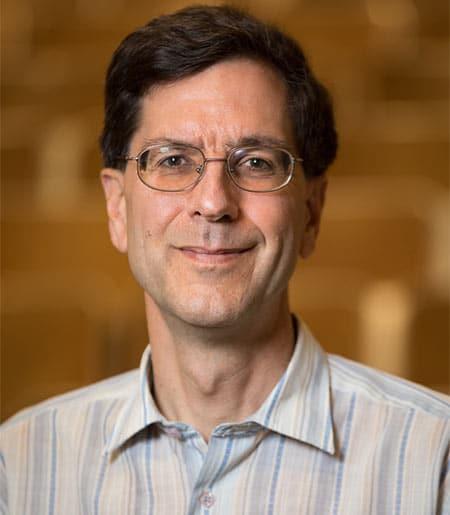
David Jensen is a Professor in the College of Information and Computer Sciences (CICS) at the University of Massachusetts Amherst. He directs the Knowledge Discovery Laboratory and the Computational Social Science Institute. His research focuses on machine learning, causal modeling, and analyzing large social, technological, and computational systems. Jensen's work is supported by organizations like the National Science Foundation and DARPA. Education: DSc in Engineering and Policy, Washington University in St. Louis (1992) MS in Engineering and Policy, Washington University in St. Louis (1988) BS in Mechanical Engineering, University of Nebraska (1986) Research Interests: Causal inference in relational and dynamic systems Machine learning applications in security and privacy Computational social science Large-scale network analysis Achievements: Recipient of teaching awards from UMass College of Natural Sciences (2011) and CICS (2022) 2017 IEEE INFOCOM Test of Time Paper Award Leadership roles in conferences and journals, including action editor for the Journal of Machine Learning Research Labs and Affiliations: Founder of the Knowledge Discovery Laboratory (2000) Director of the Computational Social Science Institute (2018-2022) Member of the Computing Community Consortium (CCC) Council
Benjamin Hayes is a research scientist at Sony Computer Science Laboratories Paris and a PhD candidate in Artificial Intelligence and Music at Queen Mary University of London's Centre for Digital Music (C4DM). His research focuses on neural audio synthesis, generative models, and perceptual aspects of sound design. He has held internships at Spotify, Sony CSL, and Bytedance, and previously worked as a music producer and lecturer in Electronic & Produced Music at the Guildhall School of Music & Drama. His work bridges digital signal processing, deep learning, and creative sound exploration. Education: PhD in AI and Music (Queen Mary University of London), Master’s/Undergraduate qualifications not explicitly stated but inferred from professional roles. Research Interests: Neural audio synthesis, differentiable digital signal processing, timbre perception, generative models, and psychoacoustics. Current project explores perceptually motivated deep learning approaches for sound synthesis, emphasizing semantic associations in timbre. Professional Experience: Over 10 years in music production, internships at leading tech firms, and academic collaborations across institutions like IRCAM, CNRS, and KTH. Key Contributions: Developed frameworks for end-to-end sound synthesis, addressed challenges in unordered neural network targets, and pioneered gamified systems for crowdsourcing timbre semantics (e.g., timbre.fun). Active in conferences such as ICLR, ICASSP, and DMRN workshops.
Dr. Barbara Ann Hofmann is a Professor in the School of Education at Trinity Western University (TWU), specializing in science and mathematics education with a focus on inquiry and project-based learning. She holds a PhD in Geotechnical Engineering from the University of Alberta (1997) and has 15 years of teaching experience across elementary, middle, and high school levels. Her expertise includes proactive problem-solving in education and geotechnical design solutions. Education: Bachelor of Education (BEd), Middle Years - University of British Columbia (2004) PhD, Geotechnical Engineering - University of Alberta (1997) MSc (Distinction), Civil Engineering - University of Alberta (1989) BSc (Distinction), Civil Engineering - University of Alberta (1985) Research Interests: Dr. Hofmann’s research bridges geotechnical engineering and education. Her doctoral work focused on in-situ ground freezing techniques to obtain undisturbed soil samples for liquefaction assessment during earthquakes. She advocates for innovative teaching methods like project-based learning to engage students in STEM fields. Awards: Andrew Stewart Graduate Prize for PhD Students Province of Alberta Graduate Fellowship and Scholarship Alexander Rutherford Scholarship Teaching and Affiliations: Dr. Hofmann teaches courses such as EDUC 456B (Curriculum and Pedagogy: K-07 Mathematics) , EDUC 458B (Curriculum and Pedagogy: K-8 Science) , and EDUC 472 (Curriculum and Pedagogy: An Introduction to Teaching the Natural and Mathematical Sciences Grades 8-12) . She is a member of the British Columbia Teachers Federation.
Prof. Jan-Niklas Voigt-Antons is a Professor of Applied Computer Science specializing in Immersive Media at Hamm-Lippstadt University of Applied Sciences. His work focuses on Extended Reality (XR), Virtual Reality (VR), Augmented Reality (AR), and their applications in healthcare, education, and human-machine interaction. He holds a Dr.-Ing (Engineering Doctorate) and has extensive industry experience with organizations like Daimler AG, Telekom Innovation Laboratories, and the German Research Center for Artificial Intelligence (DFKI). Research interests include user experience (UX) design, emotion analysis in virtual environments, and accessibility for aging populations. He has led projects on wearable health tech, AR/VR usability, and immersive training systems. Notable areas of impact include developing guidelines for inclusive XR interfaces and advancing telemedicine through immersive technologies. Prof. Voigt-Antons has collaborated with Charité – Universitätsmedizin Berlin on healthcare applications and has contributed to standardization efforts in telecommunications. His technical competencies include agile project management, statistical analysis, and mobile application development for iOS/Android. He advises on UX evaluations, usability testing, and physiological data analysis for industry partners. Key achievements include creating the Story Time Dataset for video quality research and developing the ColorTable system for flavor perception studies. His work emphasizes real-world deployment, with projects addressing mobility challenges for seniors in rural areas and improving dementia care through tablet-based interventions.
Taeyong Kim serves as an Assistant Professor of Business Analytics in the College of Business at Lewis University, leveraging extensive industry experience from executive roles including Chief Strategy Officer at an ad-tech company and CEO of an e-commerce enterprise managing 50+ employees. Education: M.S., Purdue University (2018) MBA, University of Michigan (2017) B.A., Yonsei University (2011) His research integrates Business Analytics with strategic business operations, specializing in Marketing Technology, Advertising Technology, and Blockchain applications. He develops data-driven solutions using advanced statistical methodologies for corporate strategy, mergers and acquisitions, and post-merger integrations. No scientific awards were documented in the source material. Information regarding student advising, research grants, laboratory facilities, or collaborative teams was not provided in the available text.
Tingting Ding is an Assistant Professor of Economics at the College of Business, James Madison University (JMU). She holds a Ph.D. in Economics from New York University. Her research focuses on Behavioral Economics and Experimental Economics, with a particular emphasis on mechanism design, bargaining dynamics, and school-matching algorithms. Ding’s work explores how communication networks, information asymmetry, and intergenerational advice influence decision-making processes in economic systems. She has published in top journals such as Games and Economic Behavior and Economic Journal . Her research interests include experimental methods to analyze market mechanisms, particularly in educational and labor contexts. Recent studies examine reproducibility in management science, the role of news in bargaining scenarios, and the impact of network communication on school-matching outcomes. Ding’s contributions bridge theoretical models with empirical evidence, offering insights into practical policy design. While her profile does not explicitly list awards or grants, her academic positions and publications reflect a strong focus on advancing experimental economics methodologies. No advising or lab affiliations are detailed in the provided texts.
Greg Cutter is a Professor in the Department of Ocean and Earth Sciences at Old Dominion University, serving as Interim AVP for Research Compliance. His research focuses on biogeochemical processes linking biology and chemistry in aquatic systems, with expertise in trace element cycling, sulfur gas dynamics, and global change impacts. He holds a Ph.D. in Chemistry from the University of California, Santa Cruz (1982) and a B.A. in Chemistry from UC San Diego (1977). Education: Ph.D. Chemistry, University of California, Santa Cruz (1982) B.A. Chemistry, University of California, San Diego (1977) Research Interests: Dr. Cutter investigates processes affecting trace element speciation (e.g., arsenic, selenium, hydrogen sulfide) in marine and estuarine systems. Key areas include air-sea exchange of trace elements, paleoceanographic tracers, and analytical methodologies for aquatic chemistry. His work integrates field studies, lab experiments, and computer modeling. Grants & Awards: Recipient of the R&D 100 Award (2013) for innovative technologies and the ASLO Sustaining Fellow designation (2015). Over 50 grants include leadership in the international GEOTRACES program, studying trace element distributions in ocean basins. Labs & Collaborations: Directs the Cutter Laboratory, advancing research on biogeochemical cycles. Collaborates globally on projects like the Pacific Meridional Transect (GP15) and Arctic GEOTRACES studies. Engages in educational initiatives to diversify ocean science.
Jörg Müller is a Professor in the Department of Computer Science at the University of Bayreuth, Germany. His research focuses on Human-Computer Interaction (HCI), Virtual Reality (VR), and Augmented Reality (AR), with a strong emphasis on interaction techniques, public displays, and multimodal interfaces. He has held academic positions at multiple institutions including Aarhus University, HIIG, and RWTH Aachen University. His work spans technical contributions in haptic interfaces, biomechanical modeling, and user behavior analysis in VR environments. Notable projects include OptiTrap for acoustic levitation displays, SIM2VR for biomechanical testing in VR, and the boomRoom system for mid-air sound interaction. Müller collaborates extensively with industry partners like Telekom Laboratories and Siemens. Research interests include: interaction design for immersive environments, embodied interaction, and the social impact of extended reality technologies. His publications demonstrate leadership in CHI, UIST, and IEEE Visualization venues, with over 120 peer-reviewed articles since 2006. Current research priorities include optimizing VR workspace ergonomics, developing tactile feedback systems for mid-air interaction, and exploring public display networks for urban environments. Müller leads the Interactive Systems group at Bayreuth, supervising PhD students in VR engineering and spatial computing.
Elena Panteley is a Research Director at the CNRS and a member of the Laboratoire des Signaux et Systèmes (L2S) at CentraleSupélec. She holds a PhD in Applied Mathematics from Saint Petersburg State University (1997) and has extensive experience in research, including roles at the Institute of Problems in Mechanical Engineering, Russian Academy of Sciences (1986–1998). She co-chairs the International Graduate School of Control at the European Embedded Control Institute (EECI-IGSC) and serves as a Book-reviews Editor for Automatica and Associate Editor for IEEE Control Systems Letters . Education: PhD in Applied Mathematics, Saint Petersburg State University, 1997 MSc/BSc in relevant fields (implied by career progression) Research Interests: Focuses on stability and control of nonlinear dynamical systems, networked systems, multi-agent systems, and their applications. Her work emphasizes robust control, consensus algorithms, synchronization, and distributed control strategies for autonomous systems. She explores theoretical frameworks like Lyapunov methods and adaptive control, with practical applications in robotics and communication networks. Publications: Over 100 peer-reviewed articles in top journals like IEEE Transactions on Automatic Control and Automatica . Recent trends include advancements in consensus algorithms for multi-agent systems, synchronization of nonlinear oscillators, and control under communication delays. Awards: No specific awards mentioned, but contributions to control theory and networked systems are widely recognized. Grants/Advising: Leads research on adaptive control, network synchronization, and robotics. Collaborates internationally and advises on projects involving autonomous vehicles and distributed systems. Labs/Teams: Active in L2S and affiliated with CNRS, contributing to teams like MODESTY, COMEDY, and SYCOMORE. Engaged in transverse research on energy, industry automation, and healthy systems.
Glenn Case is a Senior Lecturer in the Physics department at Cornell University, holding the position since 2015. He has extensive academic experience, including roles as a Teaching Associate in Chemistry (1993-2001) and Physics (2000-2006, 2011-2015) at Cornell, and adjunct/visiting roles at Yonsei University and Pohang University of Science and Technology. His educational background includes a B.S. and M.S. in Nuclear Engineering from MIT (1987). He has held diverse positions such as Engineer at EGG Idaho, Inc. (1986-1987), Teacher Research Associate at Argonne National Laboratory (1992), and Research Professor in Physics at POSTECH (2010-2011). His current focus includes teaching courses like PHYS 2207 and 4490. Research interests are inferred to include physics education, nuclear engineering applications, and interdisciplinary methodologies, given his academic trajectory and affiliations.
André-Anne Parent is an Associate Professor at the École de travail social, part of the Faculté des arts et des sciences at the Université de Montréal. She holds a PhD in Community Health from Université Laval and a postdoctoral fellowship from the Université du Québec en Outaouais. Research Expertise: Her work focuses on collective and proximate intervention practices, addressing socio-ecological transition and overdose prevention. She also studies social inequalities, community development, professional practices for health equity, urban/rural health, and environmental justice. Her research is qualitative and transdisciplinary. Education: BSc in Anthropology (Université Laval), BSc in Social Work (McGill University), MSc in Anthropology (Université Laval), PhD in Community Health (Université Laval), Postdoctoral Fellowship in Community Organization (UQO). Recent Projects: Leads initiatives like the 'Clinic Mauve' LGBTQIA+ health project and overdose prevention networks. Collaborates on intersectoral tools for regional development and the Malakit Project combating malaria among gold miners in Guyana. Active in funding from IRSC, CRSH, and MSSS. Teaching: Teaches SVS-2108 (Laboratory of Intervention) and SVS-3356 (Proximate Intervention). Oversees practical training in the master's program. Labs & Affiliations: Member of CReSP (Public Health Research Center), InterActions Research Lab, and the Institut universitaire sur les dépendances.
Eric Breton is a Professor of Health Promotion at the French School of Public Health (EHESP) in Rennes, where he conducts research at the Arènes laboratory (UMR CNRS 6051) and the Research on Health Services and Management team (RSMS: INSERM U1309). Holding a Doctorate in Public Health, he brings extensive international research experience from Canada, Australia, and the UAE to his work on health promotion systems and social determinants of health. His educational background includes a Master of Arts and Doctorate in Public Health, with professional development through the Santé publique France Chair (2010-2018) and co-authorship of the seminal reference manual Health Promotion: Understanding to Act in the French-speaking World (Presses de l'EHESP, 2017). Dr. Breton's research focuses on strengthening local health promotion capacities to address upstream social determinants of health inequalities, with expertise in realist evaluation methods and policy analysis. His work examines community health systems, tobacco control advocacy, sugary drink taxation impacts (SODA-TAX project), and intergenerational addiction prevention (PATTERN project), emphasizing intersectoral action and health equity. His recent publications reveal dominant trends in community-based health promotion evaluation, Health in All Policies implementation, and local health contract mechanisms for reducing social inequalities. Key themes include realist program evaluation frameworks, health equity impact assessment methodologies, and contextual factors influencing policy transfer in public health. PATTERN 2 project (2022-2023, €64k): Prevention of intergenerational transmission of addictive behavior through "A Family Affair!" program PATTERN project (2020-2021, €98k): Intervention research on addictive behavior transmission SODA-TAX project (2019-2023, €164k): Analysis of France's sugary drink tax implementation and effects CLoterreS project (2017-2020, €200k): Local health contracts as mechanisms for territorializing regional prevention policies National Cancer Institute projects (2017, €29k; 2012-2016, €400k): Reducing social inequalities in cancer prevention As Educational Manager of EHESP's Population Health Promotion Certificate and coordinator of multiple Master of Public Health modules (including "Health promotion and disease prevention program planning"), Dr. Breton shapes public health education internationally. He contributes to national health governance through the High Council for Public Health (HCSP), serves on the Supervisory Board of Brittany's Regional Health Agency, and was Associate Editor for Health Education & Behavior (2018-2021). His research operates within the Arènes laboratory (CNRS) and RSMS team (INSERM), focusing on health services organization and policy implementation. He co-organizes the annual Global Community Health Workshop with UNESCO's Chair in Health & Education, fostering international collaboration on community-based health promotion strategies.
Dr. Shawn Clark is a Professor and Head of the Department of Civil Engineering at the University of Manitoba's Price Faculty of Engineering. He holds a B.Sc. (2002) and Ph.D. (2007) in Civil Engineering from the University of Manitoba. His research focuses on river ice engineering and hydraulics, combining field monitoring, laboratory experiments, and numerical modeling. Current research interests include supercooling analysis, ice roughness estimation via drones, and freeze-up jamming dynamics. Education: Ph.D. Civil Engineering, University of Manitoba (2007) B.Sc. Civil Engineering, University of Manitoba (2002) Research emphasizes cold regions engineering challenges, such as ice formation prediction, river hydraulics under ice cover, and advanced modeling techniques. His work bridges theoretical models with practical field applications, leveraging technologies like remotely piloted aircraft for data collection. Publications reflect a focus on numerical simulations of ice processes, energy budgets in supercooling, and experimental hydraulics. No scientific awards are explicitly listed in the provided text. Dr. Clark actively advises students seeking opportunities in water resources engineering, prioritizing applicants with fieldwork enthusiasm and problem-solving skills. His research group collaborates on projects involving river ice dynamics and environmental fluid mechanics.
Professor Stefano Moretti holds a Professorship at the University of Southampton's Department of Physics & Astronomy and is a Full Professor at Uppsala University's Theoretical Particle Physics group. He is a member of the Southampton High Energy Physics (SHEP) group and the Southampton Theory Astrophysics and Gravity (STAG) Research Centre. His research focuses on particle phenomenology, particularly collider physics, with over 550 publications and 34,000 citations. He is also a Visiting Staff at RAL PPD and part of the CMS experiment at CERN. Education: PhD from the University of Torino, followed by postdoctoral roles at the University of Cambridge, Rutherford Appleton Laboratory (RAL), and the University of Oxford. He joined Southampton in 2003 via an STFC Advanced Fellowship. Research Interests : Standard Model (QCD/EW interactions), Supersymmetry, Non-minimal Higgs Models, Monte Carlo Event Generators, and Higher Order Corrections. He authored textbooks on Supersymmetry and SM Phenomenology. Awards : 2024 Lilly and Sven Thuréus Prize (Sweden), 2018 Honorary Doctorate from Uppsala University, and 2025 Breakthrough Prize in Fundamental Physics (shared with LHC experiments). Teaching : Coordinates the UG module PHYS2006 (Classical Mechanics) and teaches the PG Phenomenology course within the NExT PhD School. Grants/Projects : Lead researcher on multiple STFC, Royal Society, and EU-funded projects. Active in Horizon Europe evaluations and UK REF2021 panel work. Labs/Teams : Director of the NExT Institute, member of SHEP and STAG, collaborates with CMS at CERN, and advises on policy for science assessment frameworks.
Marta Koronkiewicz-Kaczmarska , PhD, is a researcher at the Institute of Polish Philology at the University of Wrocław. Her work centers on modernist and contemporary poetry, literary anthropology, and the socio-political contexts of poetic texts. Research Interests : Her scholarship explores intersections between poetry and everyday life, with a focus on anthropological approaches to literary experience and the political dimensions of poetic form. She has contributed to debates on Polish modernism, including works by Andrzej Sosnowski and Adam Ważyk. Editorial Roles : She serves as deputy editor-in-chief of Przerzutnia. Magazine of Literature and Research on Everyday Life and co-edits the Odra journal series. She is also on the editorial board of WIDMA , a journal of American and Polish verse. Scientific Awards : Second Prize, Czesław Zgorzelski Competition (2011) for master's thesis Nominated for WARTO Award in Literature (2012, 2014, 2015) Academic Activities : She co-organized the Microfestiwal (Festival of Young Poetry) and participated in seminars at Adam Mickiewicz University, including the Laboratory of Anthropofiction . She actively contributes to the Kreacje Krytyczne discussion series on contemporary humanities.