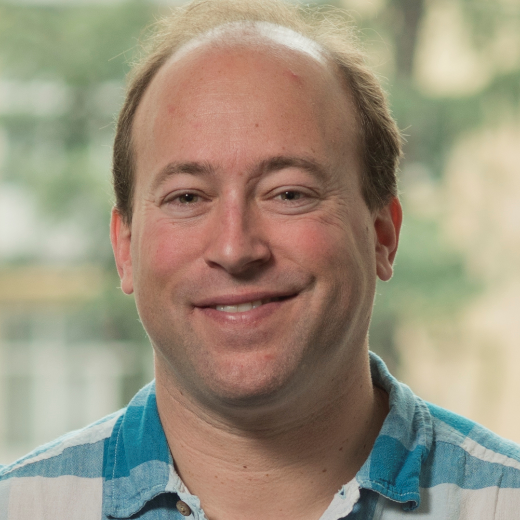
Professor Amanda Pyman serves as Dean of Deakin Business School and Head of the Department of Management at Deakin University. She holds a PhD from Monash University and has held academic roles in Australia and internationally, including as a Teaching Fellow at Warwick Business School. Her research focuses on employee voice, engagement, and workplace participation in both domestic and international contexts. Her professional activities include editorial roles for the Human Resource Management Journal and affiliations with organizations like the Australian Human Resources Institute (CAHRI). She has secured significant grants, including a $1.15 million project for the Australian Bureau of Statistics and a DFAT-funded initiative on women's entrepreneurship in Australia and Vietnam. Professor Pyman's research spans strategic HRM, employment relations, and union dynamics. Her work emphasizes the intersection of labor policies and organizational performance, with notable contributions to understanding employee voice mechanisms in SMEs and the impact of digital tools on workplace regulation. She has advised numerous doctoral candidates across management and marketing disciplines.
Associate Professor Marnie Badham is an Associate Professor at the School of Art, RMIT University. Her research focuses on socially engaged art, cultural policy, and participatory methods, emphasizing relational ethics and community partnerships. She leads interdisciplinary projects like the 'Public Art and its role in connecting people and place' initiative with iMOVE and co-leads frameworks such as 'Listening to Country' for Indigenous-settler-migrant relations. Marnie holds adjunct roles at Thompson Rivers University and consults for global cultural bodies. Her education includes a PhD in Creative Arts and Cultural Policy (University of Melbourne, 2012), a Master's in Community Cultural Development (2008), and undergraduate degrees in Fine Arts and Art History (University of Regina, 1996). She co-edits books on art and policy, including Visual Arts Work (Springer, 2025) and Tastes of Justice (Springer, 2025). Marnie's research spans 15+ articles on art economics, cultural value, and hybrid careers. She advises on public art policies and has led evaluations for projects like Sydney Metro and All the Queens Men. Her work addresses climate anxiety, food-art-politics, and Indigenous cultural frameworks through artist residencies and collaborations.
Charlie Gillon is a Research Fellow at the City Futures Research Centre, UNSW Sydney. With a PhD and BSci (Adv Hons Class I) from the University of Wollongong, he specializes in human geography, focusing on housing and urban studies. PhD in Human Geography (University of Wollongong, 2018) BSci (Adv Hons Class I) (University of Wollongong) His research interrogates housing challenges in Australian cities, integrating cultural, emotional, and material geographies. Current projects funded by the Australian Research Council include resident-led collective property sales, apartment building redesign, and construction professionalism. His publications span topics like ontological security in urban redevelopment, collective sales ethics, and emotional dynamics in coastal housing markets. While no formal awards are listed, his work informs policy and practice in affordable housing and urban sustainability.
Dr. Leonie Schulte is an Assistant Professor of Anthropology at the University of Wisconsin-Madison and a Research Fellow at the School of Anthropology and Museum of Ethnography, University of Oxford . Her work bridges migration studies, linguistic anthropology, and policy analysis, focusing on how integration requirements shape newcomers' socioeconomic trajectories. Research Focus: Intersections of migration, language, and time; temporal uncertainty in integration policies; linguistic barriers in labor markets. Projects: Interdisciplinary study on 'Migration and Memory in Postwar and Contemporary Europe' (funded by DAAD Excellence Scholarship). Publications: Recent articles examine Germany's integration policies, pandemic impacts on refugees, and temporal dimensions of language learning. Her scholarship emphasizes temporal disruption , bureaucratic procedures , and linguistic integration , with collaborations across history and political science. Key journals include the Journal of Refugee Studies and B/Orders in Motion . Scientific Awards DAAD Excellence Scholarship for interdisciplinary migration research Leonie's advising and grant work highlight interdisciplinary methodologies, blending ethnographic and policy-driven approaches to migration studies and linguistic integration.
Marion Crain serves as the Wiley B. Rutledge Professor of Law at Washington University School of Law, holding courtesy appointments with the George Warren Brown School of Social Work and the Department of Women, Gender & Sexuality Studies in the College of Arts & Sciences. Her administrative leadership includes Interim Provost & Executive Vice Chancellor for Academic Affairs (2019-2020), Vice Provost (2012-2019), and Leader of University Libraries (2016-2017). She directs interdisciplinary initiatives including the Bring Your Own Idea program and Beyond Boundaries Cross-School Teaching Grant, while serving as provost liaison to centers such as the Danforth Center on Religion & Politics and Gephardt Institute for Civic Engagement. Her educational background features a J.D. from UCLA School of Law (1983) and B.S. from Cornell University (1980). Prior to academia, she practiced labor and employment law at Latham & Watkins and clerked for the U.S. Court of Appeals for the Ninth Circuit. She previously held the Paul Eaton Professorship at UNC Chapel Hill, directing the Center on Poverty, Work & Opportunity and serving as Associate Dean for Faculty Research. Professor Crain's research examines gender-work-class intersections through collective action frameworks, focusing on labor relations, social movements, and economic justice. Her scholarship reveals how labor law structures both constrain and enable worker solidarity, particularly regarding the working poor and sexual harassment as collective harm. She pioneers reconceptualizing antidiscrimination rights as collective entitlements and analyzes corporate branding's impact on worker identity and autonomy. Her feminist legal theory work challenges individualized approaches to workplace inequality. Her publication trends demonstrate consistent focus on labor law's evolution in post-industrial contexts, with increasing emphasis on non-union worker solidarity, intersectional discrimination, and legal strategies for economic justice. Recent work explores protest at work, corporate mission statements' legal implications, and reassembling labor movements through digital and cross-sectoral organizing. Her scientific recognition includes: David M. Becker Professor of the Year Award (2009) Israel Treiman Research Fellow (2010-11) National Science Foundation grant (1992-93) Fund for Labor Relations Studies grant (1993) Professor of the Year, West Virginia University College of Law (1988) ABA Rookie Program of the Year (1988) Through the Labor Law Group (which she chaired 2011-2015), she develops pedagogical resources while serving on the Employee Rights and Employment Policy Journal editorial board. Her grant-funded research includes NSF-supported interdisciplinary projects and the Fund for Labor Relations Studies initiative. She has directed the Center for the Interdisciplinary Study of Work & Social Capital (2010-2014) and UNC's Center on Poverty, Work & Opportunity (2006-2008), fostering collaborations across law, social work, and social sciences. Her current leadership involves interdisciplinary research hubs including the Bring Your Own Idea program and Beyond Boundaries initiatives, while her scholarship increasingly addresses gig economy challenges and legal frameworks for 21st-century worker solidarity through the Danforth Center and Gephardt Institute networks.
Sarah Abdelnour is a Lecturer in sociology at IRISSO (Research Institute on Social Issues of Globalization), affiliated with Université Paris Dauphine - PSL. Her academic work focuses on the sociology of work, with particular expertise in new forms of independent work including self-employment and digital platform workers. She has established herself as a leading researcher on the transformation of work in the digital economy, examining how platform-based work challenges traditional employment frameworks and labor protections. Dr. Abdelnour's research interests center on the sociology of work, specifically examining new forms of independent work in the digital economy. Her work investigates the social, economic, and political implications of platform-based labor, self-employment, and the blurring boundaries between employment and entrepreneurship. She has made significant contributions to understanding how digital platform workers organize collectively, assert their rights, and navigate the legal frameworks designed for traditional employment relationships. Her research combines theoretical insights from labor sociology with empirical studies of emerging work arrangements. Her extensive publication record demonstrates a consistent focus on the evolving nature of work in contemporary society. Over the past decade, her research has traced the development of platform work from its early manifestations to its current widespread adoption across multiple sectors. A key theme throughout her work is the tension between the rhetoric of independence and autonomy promoted by platform companies and the practical realities of income insecurity and limited worker protections experienced by platform workers. Her recent publications increasingly address regulatory responses to platform work and the potential for redefining social protection systems for non-traditional work arrangements. Dr. Abdelnour has actively engaged with policy makers, having participated in senate hearings on platform work regulations. Her book "Les nouveaux travailleurs des applis" (2019), co-authored with Dominique Méda, has become an important reference in French academic and policy discussions about digital platform labor. Through her research, she contributes to broader debates about the future of work, labor rights in the digital age, and the social implications of technological transformations in the economy.
Stig Vinberg is a Professor at the Department of Health Sciences , Mid Sweden University. With over 30 years of experience, his career spans research, project leadership, and consultancy in Occupational Health Science , focusing on leadership behaviors , workplace health promotion , and small business development . He supervises Master/Bachelor theses and co-supervises PhD students, while teaching courses in Working Environment Strategist programs. His research explores organizational determinants of health outcomes, including Leadership in activity-based workplaces Small enterprise resilience during crises Food insecurity and metabolic disease linkages Work-life balance in public/private sectors Crisis management in mining industry Gender-based health disparities in SMEs Recent publications examine Covid-19 impacts on self-employed individuals, hybrid work environments , and health equity in urban populations. His work integrates salutogenic theory, policy analysis, and cross-cultural comparisons, with significant contributions to workplace health metrics and municipal organizational development. Professor Vinberg collaborates internationally, with fieldwork in Sweden, Canada, and Mozambique. Current projects include Attractive Municipal Workplaces and ABW transition studies . He maintains affiliations with research consortia across Europe and Northern Africa, emphasizing practical applications for organizational stakeholders.
Lisa A. Keister is a Professor of Sociology and Public Policy at Duke University, with affiliations at the Sanford School of Public Policy, Duke Network Analysis Center, and the Population Research Center. Her research bridges wealth inequality, financial markets, and social stratification, focusing on elite households, intergenerational asset transfers, and racial disparities in wealth and health outcomes. Ph.D., Cornell University (1997) M.A., Cornell University (1995) M.A., University of Oklahoma (1991) Her work explores how religion, migration, and family structures influence wealth accumulation and inequality. Recent projects analyze net worth poverty's societal impacts, including food insecurity and child well-being, while comparative studies examine wealth dynamics in China and the U.S. She co-edited the Oxford Handbook of Religion and Economic Ethics and authored books on American wealth and business groups in transitional economies. Key trends in her 2023-2025 articles include wealth inequality's intersection with health disparities, gender dynamics in elite finance, and cross-national comparisons of wealth portfolios. These works emphasize policy implications for economic security and stratification. Scientific Awards: Bass Fellow She has secured grants for studies on inheritance, social networks, and pandemic-era economic disparities. Her courses at Duke, such as "Getting Rich: Financial Markets, Household Finance, and Wealth," reflect her expertise in stratification and economic sociology. As Faculty Research Scholar at DuPRI, she contributes to interdisciplinary projects on wealth and population dynamics.
Dr. Susanne Heeger-Hertter is an Assistant Professor in the Department of Law at Utrecht University's Faculty of Law, Economics and Governance. She specializes in International and European Law with a focus on Labour Law and Social Security Law. She is actively involved in the "Future of Work" research program and the research program "Familie en Recht" (Family and Law). Her educational background includes a part-time study of Dutch Law at Utrecht University from 1997 to 2004. She has been working at Utrecht University since 2004 in various capacities, including as a University Lecturer in Social Law since 2011. Dr. Heeger-Hertter's research focuses on labor law aspects of flexible employment relationships and platform work, with particular attention to workers with care responsibilities. Her work examines how legal frameworks can better accommodate the evolving nature of work while protecting workers' rights and supporting those who balance employment with care duties. She conducts comparative research between the Netherlands and Germany, particularly regarding policies for workers with care responsibilities. Her scholarly contributions span labor law, social security law, and the legal implications of new work arrangements. She has published extensively on topics including on-call work, platform economy regulations, work-life balance policies, and comparative approaches to care-related leave in the Netherlands and Germany. Dr. Heeger-Hertter has been actively involved in numerous research activities and conferences, presenting her work at international venues. She has collaborated with various institutions including the ILO (International Labour Organization) on projects related to decent work and has contributed to policy discussions at the Ministry of Social Affairs and Employment. She has teaching responsibilities in labor law and social security law at Utrecht University. Her practical experience includes a secondment to the Department of Legislation, Administrative and Legal Affairs at the Ministry of Social Affairs and Employment (2012-2013).
Kirsty Newsome is a Professor in Employment Relations at the Sheffield University Management School , University of Sheffield. Previously, she served as a Senior Lecturer at the University of Strathclyde. Her affiliations include the Centre for Decent Work at Sheffield and visiting roles at the Institute for Research on Labor and Employment (UCLA) and the Centre for Sustainable Work and Employment Futures (University of Leicester). Research Interests focus on employment regulation, the politics of production, and global value chains. She explores how these intersect in sectors like retail distribution, logistics, and parcel delivery. Her work examines workplace dignity, precarious employment, and the impacts of technological and policy changes on job quality. Scientific Awards : University of Strathclyde Teaching Excellence Award (2011, 2013, 2014) Grants and Projects : Coordinated the Marie Curie ITN network on European employment changes (2012-2016), secured funding from the Carnegie Trust (2010) and Nuffield Foundation (2008-2009) for studies on grocery distribution and employment restructuring.
Professor Jennifer Sherman is a leading sociologist at Washington State University's Department of Sociology, specializing in poverty, rural communities, and inequality. She holds a PhD from the University of California, Berkeley (2006). Her work employs qualitative methods like ethnography and in-depth interviews to study intersections of economic conditions, cultural norms, gender, and family outcomes in rural settings. Key research areas include rural incarceration trends in Washington State, gentrification impacts on housing insecurity, and symbolic boundaries influencing social stratification. Sherman has authored influential books such as Dividing Paradise: Rural Inequality and the Diminishing American Dream (2021), which won the CHOICE Award and Rural Sociological Society honors. She also co-edited Rural Poverty in the United States (2017), recognized with the Frederick H. Buttel Award. Her recent work analyzes legal deserts' effects on rural criminal justice systems and explores class blindness in social inequality reproduction. As Past-President of the Rural Sociological Society, she advocates for re-conceptualizing rurality through her 2024 presidential address. Sherman’s interdisciplinary approach bridges sociology with public policy, emphasizing spatial inequality and community resilience. Education: PhD in Sociology, UC Berkeley (2006) Key Awards: CHOICE Award (2022), RSS Buttel Award (2023 & 2018) Current Projects: Rural jail expansion, pandemic-era justice systems, and gentrification dynamics
Helmut Rainer is a Professor of Economics at Ludwig Maximilian University of Munich (LMU), specializing in Social Policy and Labor Markets. He leads the ifo Center for Labor and Population Economics, a research institute focused on providing evidence-based policy solutions. His academic career includes roles as Reader (Associate Professor) and Lecturer (Assistant Professor) at the University of St. Andrews, and teaching positions at the University of Essex. Rainer holds a Ph.D. from the University of Essex and a diploma in Economics from Karl-Franzens-University Graz. Education : Ph.D. in Economics, University of Essex (2005) Volkswirtschaftslehre Diploma, Karl-Franzens-Universität Graz (1999) Research Interests : Rainer’s work focuses on family economics, population dynamics, labor market policies, and their intersections with social welfare. He explores topics such as domestic violence, immigration integration, climate activism impacts, and gender disparities. His research combines theoretical frameworks with empirical analysis to inform policy design. Recent Trends in Articles : Rainer’s recent work examines the societal impacts of climate activism (e.g., Fridays for Future), evaluates policy effects on immigrant integration (birthright citizenship, child care access), and analyzes crisis-driven social issues like domestic violence during the pandemic. His studies often leverage novel data sources (e.g., internet search trends, emergency calls) to quantify hidden societal challenges. Grants & Projects : Bill & Melinda Gates Foundation-funded study on climate change impacts in Sub-Saharan Africa German Research Foundation (DFG) project on custody rights post-divorce Leibniz-funded initiatives addressing domestic violence and female empowerment Scientific Awards : Includes the Graduate Teaching Assistant Prize (University of Essex, 2002) and recognition for exceptional diploma work at Karl-Franzens-Universität (1999). Labs & Teams : He oversees the ifo Center for Labor and Population Economics, collaborating with researchers on projects like the ‘Deutschland 2017’ study on societal attitudes and policy evaluations for family benefits (e.g., child allowances, parental leave).
Dr Penny O'Donnell is a Senior Lecturer in International Media and Journalism at the University of Sydney's Discipline of Media and Communications. She holds a BA (Hons) from the University of Melbourne, an MA (Comm) from Iberoamericana University (Mexico City), and a PhD from the University of Technology, Sydney. Her research focuses on journalism theory, professional identity, and the socioeconomic impacts of job loss in global media industries. She is a Chief Investigator on the ARC-funded New Beats Project, a multi-year study analyzing post-redundancy trajectories of journalists. Key affiliations include the Sydney Southeast Asia Centre and editorial roles with the Global Media Journal (Australian Edition). Her research outputs include the 2021 Routledge book *Journalists and Job Loss* and numerous articles in *Journalism Practice*, *Media International Australia*, and *Journalism Studies*. Notable awards include the 2020 Anne Dunn Scholar Award. Teaching and supervision focus on journalism ethics, media industry analysis, and professional practice. Completed PhD students include Birhanu Olana Dirbaba (Ethiopian journalism identity) and Rachel Rowe (social movement media). Grants include ARC Discovery and Linkage projects totaling AUD 2.5M+ since 2013. Active in policy advocacy through submissions to parliamentary inquiries on media sustainability and workers' rights.
Professor Charles Umney is an academic specializing in International Work and Employment at the University of Leeds, specifically within the Leeds University Business School and the Work and Employment Relations Division (WERD). He has held this position since 2022, following roles at the University of Greenwich Business School and completing his PhD at WERD in 2012. Education: PhD in Work and Employment Relations, Leeds University Business School MA International Studies BA(Hons) Jazz Studies Research Interests: Technological change and its impact on warehousing jobs and the future of work. Market competition dynamics affecting healthcare, welfare-to-work services, and cultural industries. Global analysis of worker protests, particularly in the context of platform economies and precarious work. Professor Umney's recent research focuses on the intersection of digitalization, marketization, and global labor dynamics. His work examines how technological advancements and platform economies reshape labor markets, with studies on food delivery workers, healthcare, and cultural sectors. He critiques platform capitalism and explores strategies for a just transition in renewable energy sectors. His analyses highlight the persistence of industrial relations regimes and the evolving nature of labor unrest in a digital age. Scientific Awards: None explicitly mentioned in the provided texts. Advising and Grants: Current postgraduate researchers: Kiril Pasevin, Victoria Antonio, Aditya Lal, Yunus Emre Oztas. Former role as Co-Investigator on the European Research Council-funded project "The Effects of Marketization on Societies" (2012-2015). Labs/Teams: Centre for Employment Relations, Innovation and Change.
Steven Stillman is a Professor of Economics at the Faculty of Economics and Management, Free University of Bozen-Bolzano. He holds a PhD in Economics from the University of Washington (2000) and previously served as a Professor at the University of Otago, New Zealand. His research focuses on empirical labor economics, public policy, and migration, examining how government policies influence individual and household behavior. Key areas include migration's impact on families, voting behavior, minimum wage effects, and healthcare policy. He teaches Advanced Quantitative Methods, Labor Economics, and Public Economics at the undergraduate and graduate levels. His work often employs quasi-experimental methods, with notable contributions on migration lotteries and policy evaluation. Research interests span labor markets, health economics, political decision-making, and development economics. Recent studies analyze refugee integration dynamics, populism drivers, and the obesity epidemic's economic roots. His articles emphasize policy relevance, using rigorous methodologies to assess real-world impacts. Though no scientific awards are explicitly listed, his extensive publication record and methodological contributions highlight academic impact. He advises students but no specific advisee list is provided. His work integrates interdisciplinary approaches, addressing complex issues like pandemic policy responses and socioeconomic inequality.