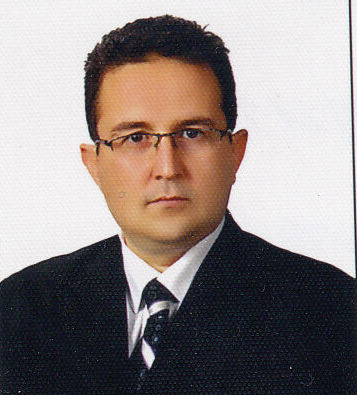
Mesut Şöhret is an Associate Professor at Gaziantep University's Faculty of Economics and Administrative Sciences, Department of International Relations, specializing in Turkish foreign policy, migration studies, and geopolitical security. His academic career spans faculty positions at Gaziantep University since 2012, including roles as Department Chair and Dean's Assistant. PhD in International Relations from Kocaeli University (2014) MA in International Relations from Cyprus International University (2009) His research focuses on the intersection of climate change, migration, and security, with significant contributions to understanding Turkey's geopolitical positioning. Recent work examines Arctic security implications of global warming, Syrian refugee dynamics in the EU, and the impacts of industrial automation on labor markets. His publications demonstrate a multidisciplinary approach bridging international law, political science, and environmental studies. Professor Şöhret has supervised 14 master's theses on topics ranging from cyber intelligence to migration push factors in Syria. His editorial work includes serving as editor for Gaziantep University Journal of Social Sciences since 2018. Current teaching responsibilities include Migration Policies, Geopolitics, and International Security Theories at both undergraduate and graduate levels.
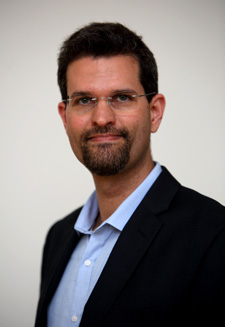
Hugo Westerlund is Professor of Epidemiology at the Stress Research Institute, Department of Psychology, Stockholm University. He serves as project leader of the SLOSH (Swedish Longitudinal Occupational Survey of Health) cohort and director of the national REWHARD infrastructure consortium. His research focuses on how social and psychological exposures in and outside of working life affect health, mortality and quality of life over the life course, with particular emphasis on aging workers, retirement, and extended working life. Westerlund's research interests center on occupational health epidemiology, stress-related illnesses, and the impact of working conditions on long-term health outcomes. His work integrates large-scale longitudinal cohort studies from multiple countries, including the French GAZEL, British Whitehall II, and Swedish SLOSH studies. He has pioneered research on post-retirement work patterns, workplace stress and cognitive dysfunction, and the mental health impacts of pandemic-related work changes. His recent work has expanded to include younger populations through the Y-SLOSH study, examining mental health trajectories from adolescence into adulthood. Analysis of Westerlund's recent publications reveals consistent themes in occupational health epidemiology, with particular focus on the relationship between work conditions and health outcomes across the lifespan. His research employs sophisticated longitudinal methodologies to examine retirement transitions, working life expectancy, and the impact of psychosocial workplace factors on physical and mental health. The studies frequently employ multi-cohort designs and advanced statistical techniques to establish causal pathways between workplace exposures and health outcomes. Westerlund leads significant research infrastructure through the SLOSH study and REWHARD consortium, which provide critical data resources for occupational health research. His work has practical implications for workplace policy, retirement planning, and mental health interventions in working populations. The international scope of his collaborations enhances the generalizability of findings across different welfare state contexts.
Stephanie Bernell serves as an Associate Professor in the Department of Health Management and Policy within the School of Public Policy at Oregon State University. Based in Waldo Hall 452, Corvallis, Oregon, she maintains contact through email (Stephanie.Bernell@oregonstate.edu) and phone (541-737-9162), and holds affiliation with the Master of Public Policy program. Her research focuses on critical intersections of health and socioeconomic policy, specifically: Labor market effects of physical and mental health status Geographical determinants of obesity Etiology of hunger and food insecurity This work establishes her expertise in health economics and population-level policy analysis, bridging clinical outcomes with social determinants of health.
Sean O'Brady serves as Assistant Professor in Human Resources and Management at McMaster University's DeGroote School of Business, while holding associate membership at McMaster's School of Labour Studies. He maintains active research affiliations as a Cornell University Ithaca Co-Lab researcher and Inter-University Research Centre on Globalization and Work (CRIMT) co-researcher. His educational trajectory includes a PhD from Université de Montréal followed by Cornell University postdoctoral research, establishing foundations for his comparative labor studies. O'Brady's research centers on technological disruption in service work, specifically examining algorithmic management's impact on call center job quality, employer responses to minimum wage hikes, and remote work dynamics. His methodology blends institutional analysis with frontline worker perspectives across North America and Europe, revealing how digital platforms reshape labor relations and worker well-being. Recent publications (2023-2025) demonstrate escalating focus on AI-driven workplace transformations, with 60% of articles analyzing call center automation, outsourcing consequences, and algorithmic control mechanisms. Geographic scope spans Canada, Germany, Norway, and the US, highlighting transnational policy implications for precarious work. His scientific recognition includes awards from four major labor associations: Labor and Employment Relations Association Society for the Advancement of Socio-Economics Canadian Industrial Relations Association Confédération des syndicats nationaux O'Brady secures competitive grants including SSHRC funding for COVID-19 employment impact studies, with current projects investigating technological change in call centers and minimum wage policy effects. His advisory role extends to Tompkins County Living Wage Working Group feasibility research. He operates within Cornell's Ithaca Co-Lab ecosystem and CRIMT networks, coordinating multinational teams studying digital labor transformations, while contributing to McMaster's Strategic Plan for Operational Excellence through human resources research.
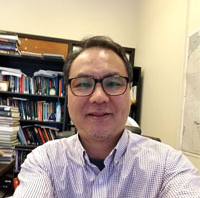
Wanki Moon serves as Professor and Graduate Program Director in the Department of Agribusiness Economics at Southern Illinois University. His expertise centers on global agricultural trade governance, WTO frameworks, and the political economy of international food systems. His educational qualifications include: Ph.D. in Food and Resource Economics from the University of Florida M.S. in Agricultural Economics from SungKyunKwan University, Korea B.S. in Agricultural Economics from SungKyunKwan University, Korea Dr. Moon's research explores multifunctional agriculture paradigms, trade negotiation dynamics, and global food security challenges. His work critically examines how agricultural trade rules intersect with national food sovereignty and sustainable development goals across diverse geopolitical contexts. His publication portfolio reveals consistent focus on agricultural trade liberalization impacts, multifunctional value assessment, and political economy drivers of protectionism. Key thematic threads include Northeast Asian trade dynamics, US agricultural policy preferences, and climate-food security-trade governance linkages. While no scientific awards are documented in available sources, his research demonstrates sustained engagement with high-impact agricultural economics journals spanning trade policy, food security, and sustainability domains. Dr. Moon directs graduate programs and maintains active research leadership, though specific student advisement records and grant details remain unpublicized. His scholarly contributions operate at the nexus of agricultural economics and international political economy without documented laboratory or team affiliations.
Amanda Bosky serves as a Lecturer in the Department of Sociology at the College of Liberal Arts, University of Texas at Austin, teaching Criminology (SOC 325K) across multiple semesters including Fall 2024 in both in-person and online formats. Education: Ph.D. from The University of Texas at Austin Research Focus: Dr. Bosky investigates gendered economic inequality through life course perspectives, examining how high school training in blue-collar communities perpetuates workplace disparities. Her work integrates labor economics with sociology of education to analyze midlife outcomes from adolescent experiences, while also exploring public health policy impacts such as tobacco legislation. Publication Patterns: Recent scholarship (2016-2022) employs longitudinal methodologies to track gendered school-to-work transitions, revealing systemic mechanisms that convert educational experiences into economic insecurity. Earlier research includes public health policy analysis, demonstrating methodological range across social science subfields. Teaching Profile: She delivers Criminology courses in diverse modalities including synchronous/asynchronous online instruction and traditional classroom settings, maintaining consistent course structure across semesters with Tuesday/Thursday or Monday/Wednesday schedules.
Nele De Cuyper is a Professor in the Work, Organizational and Personnel Psychology department at the Faculty of Psychology and Educational Sciences, KU Leuven. She serves as Head of both Work, Organizational and Personnel Psychology and Professional Training and Development and Lifelong Learning units. Her research focuses on employability, precarious employment, job insecurity, and labor market activation policies. Key affiliations: DigiSoc – KU Leuven Institute for Digital Society Projects: Labor market activation of migrant women, disability inclusion, NEET youth support Her research explores: Professional identity development during internships Impact of temporary employment on well-being Critical discourse analysis of activation policies Intersectionality in labor market integration (gender, migration, disability) Psychosocial factors in career transitions Recent publications examine: Disability inclusion in policy discourse Embodiment in job coaching Work-life balance for persons with multiple sclerosis Gender dynamics in labor market activation
Lucas Walsh is Professor of Education Policy and Practice and Youth Studies at Monash University's School of Education Culture & Society, where he serves as Director of the Monash Centre for Youth Policy & Education Practice (CYPEP). His influential research includes The Australian Youth Barometer and studies on youth food insecurity, exclusion, careers education, and transitions to working life. Walsh's research spans early years through post-compulsory education, with focus on youth transitions to employment, citizenship experiences, teacher professional learning, and evidence-based policy. His work examines the political, economic, cultural, social, and technological dimensions of young people's participation in society. Current projects address school-to-work transitions, emotional labor of principals during crises, and civic engagement. His recent publications reveal strong trends in youth policy analysis, with emphasis on food insecurity among international students, electoral engagement of young voters, and character education. These works consistently integrate mixed-methods approaches across sociology, political science, and public health disciplines to address real-world educational challenges. Dean's Award for Excellence in Research Engagement and Impact (2023) ICSEI / JPCC Innovation Award (2025) Walsh has secured major funding from the Australian Research Council, Paul Ramsay Foundation, and multiple government departments. He actively advises federal and state ministers while leading collaborations with NGOs, private sector partners, and international organizations. His current ARC-funded project 'Invisible Labour' examines principals' emotional labor during volatile times. He chairs the Reach Foundation Research Advisory Council and serves as Deputy Chair of the Australian Youth Affairs Coalition, while contributing to Monash University's Food Security Working Group and National Climate Risk Assessment committees.
Tadayoshi Otsuka is a Professor at Waseda University’s Graduate School of Accountancy , specializing in actuarial science, insurance economics, and risk management . He holds a PhD in Economics from Musashi University and has held academic positions at Meiji University and Osaka University. His research focuses on public economics, labor economics, actuarial mathematics, and risk theory , with a strong emphasis on life insurance, pension systems, and financial insecurity among low-income and aging populations . Education: PhD in Economics, Musashi University (2011–2013) Bachelor in Mathematics, Waseda University (1977–1981) Research Interests: Otsuka’s work bridges actuarial science and public policy , focusing on economic value-based pricing in life insurance , risk preparedness in low-income households , and quantitative analysis of financial anxiety in aging populations . He has developed novel actuarial models that explicitly incorporate profitability and risk, addressing limitations of traditional equivalence principle-based pricing. Recent Article Trends: His recent publications emphasize risk behavior of vulnerable populations , regional disparities in long-term care certification , and economic valuation of insurance systems . He employs statistical modeling, simulations, and exploratory data analysis to inform public policy and insurance practices. Scientific Awards: Conference Chairman's Award, Society of Life Economics (2018) Grants & Projects: Otsuka has led multiple funded projects, including studies on low-income household risk preparedness , retirement financial anxiety , and healthy life expectancy projections , supported by institutions such as the Life Insurance Cultural Center and Japan Post Insurance Foundation. Professional Roles: He serves as Director of the Institute of Actuaries of Japan and holds editorial and executive roles in several academic societies, including the Japan Association of Insurance and Pension Risk Studies and the Asia-Pacific Risk and Insurance Association .
Zhixiu Yu serves as Assistant Professor in the Department of Economics at Louisiana State University's E. J. Ourso College of Business, with additional research affiliation through the Human Capital and Economic Opportunity Working Group (HCEO) Markets Network at the University of Chicago's Becker Friedman Institute. Her scholarly work bridges macroeconomic theory with empirical policy analysis in labor, public finance, and health economics. Her educational foundation includes: PhD in Economics, University of Minnesota (2022) BS in Economics (with honors), University of Washington (2015) BA in Mathematics, University of Washington (2015) Yu's research program investigates how social insurance programs and taxation influence household economic decisions, particularly regarding labor supply and saving behavior. She employs structural modeling integrated with microdata analysis to examine health inequality, social insurance systems, digital currencies, and aging populations. Her methodological rigor combines econometric techniques with large-scale simulations to address policy-relevant questions in public economics. Recent publications (2023-2024) reveal consistent focus on economic policy impacts: analyzing Social Security's effect on older workers' labor supply, cryptocurrency-fiat money coexistence, and SNAP's role during the pandemic. This trajectory demonstrates growing expertise in evaluating how economic shocks and policy interventions affect vulnerable populations through rigorous quantitative frameworks. Current research includes EC-READ 2025 Project 4: 'The Hidden Costs of Care,' examining parental dementia's impact on work and retirement decisions. Her prior postdoctoral work at NBER and Harvard Medical School established foundations for this policy-oriented research agenda focused on health-economics intersections. Affiliation networks extend beyond LSU through active participation in the HCEO Markets Network, maintaining collaborative channels with leading economics research institutions while advancing her independent research program in economic policy analysis.
Professor Hermann Laßleben is a distinguished faculty member at Reutlingen University's ESB Business School, where he serves as Professor of Human Resource Management and Programme Director for the MBA International Management Full-Time program. With over two decades of academic service since joining in 2000, he has established himself as a leading expert in international and comparative human resource management. Professor of Human Resource Management at Reutlingen University since 2000 Programme Director: MBA International Management Full-Time Member of Reutlingen Research Institute (RRI) Visiting Professor at universities in China, Canada, Croatia, and Russia Fellow of the Academy for Global Business Advancement (AGBA) Professor Laßleben's academic journey began with studies in Sociology at the Universities of Regensburg and Bielefeld, followed by a doctorate (Dr. rer. soc.) from the University of Konstanz. Before entering academia, he gained valuable industry experience as an Organization Designer at Wacker-Chemie GmbH and as an HR Business Partner at Intel GmbH. His research focuses on International HRM, Comparative HRM, Sustainable HRM, and addressing current challenges in human resource management. Recent work examines Gen Z talent attraction, job insecurity effects on innovative behavior, and employer branding strategies of multinational companies. Professor Laßleben maintains an active publication record with multiple articles in 2023-2024 in respected journals such as Gender in Management , Current Psychology , and Behavioral Sciences . Professor Laßleben serves on the editorial boards of several prestigious journals including Human Resource Management Review and Journal for Global Business Advancement. He is a regular reviewer for major HR conferences and journals, and has presented research at international conferences across Europe, North America, and Asia. His extensive network includes visiting professorships at institutions in China, Canada, Croatia, and Russia, reflecting his global perspective on human resource management. Fellow of the Academy for Global Business Advancement (AGBA) Editorial board member for 5 international journals Reviewer for DAAD scholarship selections and AQAS accreditation processes Extensive international conference participation across 10+ countries As an educator, Professor Laßleben teaches Human Resource Management, Advanced Human Resource Management, International Human Resource Management, and Business Research Methods. His practical industry experience at Intel and Wacker-Chemie informs his teaching approach, ensuring students receive relevant, real-world knowledge applicable to multinational business environments. Through his role as Programme Director for the MBA International Management program, he shapes the educational experience for future global business leaders.
Oliver Arránz Becker serves as Professor of Quantitative Methods in the Social Sciences at the Institute of Sociology, Faculty of Philosophy I, Martin Luther University Halle-Wittenberg since 2015. His academic career includes professorships at the University of Cologne (2014-2015), University of Mannheim (2013-2014), and TU Chemnitz (2012-2013), where he completed his habilitation in Sociology. His research focuses on quantitative methodology (specializing in dyad and panel analysis), family sociology (lifestyle choices, fertility, partnership dynamics), and health inequality (medical sociology, health disparities). His methodological expertise drives innovative approaches to studying demographic processes and social homogenization. Recent publications reveal strong thematic consistency in applying advanced quantitative techniques to family formation, migration, and health outcomes. His work frequently utilizes German longitudinal datasets like GSOEP, demonstrating expertise in complex survey methodology and causal inference in social research. Prof. Arránz Becker actively contributes to academic governance as Scientific Board Member of 'Aufwachsen in Deutschland', Chair of Zentrum für Sozialforschung Halle, and External Fellow at MZES. He serves as co-editor of the 'Familienforschung' book series and regularly reviews for top sociology journals including Journal of Marriage and Family and Demographic Research . His teaching portfolio includes core methodology courses: 'Methods of Descriptive Data Analysis', 'Data Analysis with Stata', and 'Inferential Statistics and Regression Analysis' at both BA and MA levels, alongside empirical research colloquia.
Peter Eibich is a Professor of Economics at Université Paris Dauphine-PSL and a Research Affiliate at IZA. Previously, he served as Deputy Head of the Research Group on Labor Demography at the Max Planck Institute for Demographic Research in Rostock, Germany (2017-2022) and as Senior Researcher in Health Economics at the Health Economics Research Centre at the University of Oxford (2015-2017). Dr. Eibich's primary research focuses on the economics of aging and retirement, examining social and economic determinants of health and health behavior in old age with particular attention to the transition from work to retirement. He also has strong expertise in the economics of preventive care, studying individuals' decisions regarding preventive health services such as breast cancer screening and HPV vaccination. His interdisciplinary approach has led to collaborations with researchers in medicine, psychology, demography, and sociology. His recent publications (through 2025) demonstrate continued active research in areas including grandparental childcare effects, mental health consequences of bereavement, economic precariousness in partnerships, and the relationship between retirement and health behaviors. His work often employs large-scale demographic datasets to analyze patterns across the life course. Dr. Eibich received his Ph.D. from the University of Hamburg, Germany, for his dissertation titled 'Regional Variation and Aging in Health Economics.' During his doctoral studies, he worked part-time as a research associate at the German Institute for Economic Research (DIW), where he was responsible for the socio-economic module of the Berlin Aging Study II (BASE-II).
Cégolène Frisque is a Lecturer in Sociology at IUT de la Roche-sur-Yon (University of Nantes) and researcher at Arènes Laboratory (UMR 6051), with affiliations to CENS (UMR 6025). She holds leadership roles including co-heading research axes on public spaces/media and serving on the RT 25 bureau of the French Sociology Association. Her research examines: Journalism precarity and labor instability Gender inequalities in media professions Local political communication and urban policies Ecological transitions in governance She has authored books like Journalistes de la précarité (2011) and co-edited works on gender in journalism. Teaching responsibilities include: Undergraduate courses: Sociological Environment, Psychosocial Risks Master's modules: Occupational Health Diagnostics Supervision of internships and group projects She actively contributes to public discourse via media interviews (e.g., Euradio, Le Monde) and conferences on media democratization and professional equality.
Fanny Darbus is a Lecturer in Sociology at the University of Nantes's Faculty of Sociology (UFR Sociology), where she researches occupational health, economic alternatives, and employment structures. She holds dual affiliations: as a core researcher at CENS (Nantes Center for Sociology, UMR 6025) and associate researcher at CESSP-CSE (University of Paris 1, UMR 8209). She leads the Master's program in Health and Working Conditions, shaping graduate education in labor-related health policies. Her research examines: Health/work intersections, especially in small businesses Social and solidarity economies Precarious employment forms Class-based ethical dispositions Recent publications analyze emotional labor in service industries, prevention strategies in micro-enterprises, and public sector reorganization. She earned her PhD in Sociology from École des Hautes Études en Sciences Sociales (EHESS) in 2009, with a thesis on solidarity economy practices. Her research group CENS focuses on contemporary sociological analysis, though specific grant information isn't provided. No awards are documented, but her leadership role and consistent scholarly output demonstrate significant academic contributions.