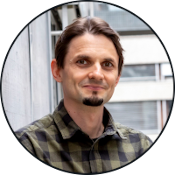
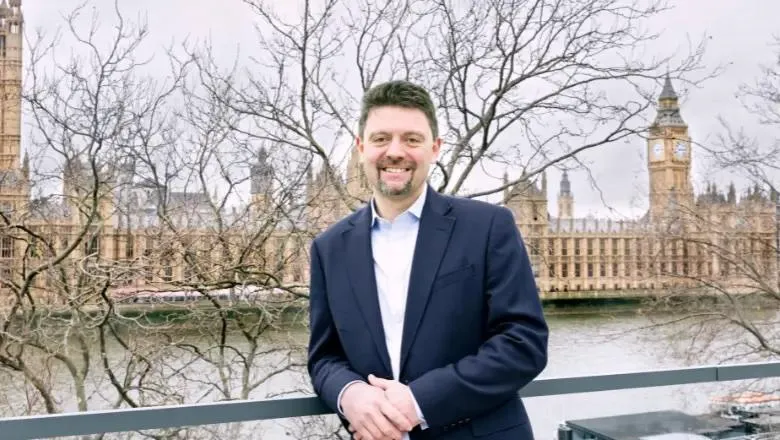
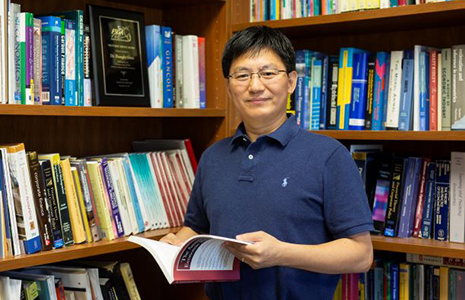
Erik Schultheis is a Doctoral Student and Visitor (Faculty) in the Department of Computer Science at the School of Science. His research focuses on extreme multi-label classification, algorithm design, and optimization challenges in machine learning. He holds a Master of Science in Physics from Georg-August-Universität Göttingen (2019). Key research interests include scalable classification systems, label correlation learning, and addressing long-tail and missing label problems in large-scale datasets. His work emphasizes practical solutions for commodity hardware limitations and memory efficiency in training models with millions of labels. Notable contributions include the Dismec++ software tool for extreme classification, and he has presented at conferences such as NeurIPS, ICML, and KDD. His 2021 NeurIPS Outstanding Reviewer Award highlights his peer-review contributions to the field. Recent publications explore dynamic sparsity in large output spaces, online algorithm generalizations, and label calibration in extreme classification scenarios. His research bridges theoretical algorithm development with practical implementation challenges in real-world systems.
David Schinagl is affiliated with the Institute of Visual Computing at TU Graz. His research focuses on LiDAR-based 3D object detection , explainable AI , and autonomous driving technologies . He has contributed to methods like OccAM's Laser for model interpretability and MAELi for large-scale LiDAR processing. His work emphasizes sensor data analysis and geometric confidence enhancement. Publications span top venues including CVPR, ICCV, and WACV (2018–2024). His GitHub repository demonstrates implementations like the OccAM's Laser demo for LiDAR attribution maps.
Dr. Le Duc Trong is an Assistant Professor (equivalent to Lecturer) at the University of Engineering and Technology (UET), Vietnam National University (VNU) in Hanoi, where he currently serves as Head of the Computer Science Department . He holds a PhD from Singapore Management University (2019) and a Bachelor's in Information Technology from VNU-UET (2011). He leads the Reliable Machine Learning research group , focusing on AI robustness and real-world applications. His research spans web/social mining, recommender systems, multimodal learning, and reliable ML , with emphasis on fairness-aware algorithms, emotion recognition, and healthcare AI. Recent work integrates graph networks, causal inference, and curriculum learning to address challenges like modality imbalance and catastrophic forgetting. Publication analysis (2019-2025) reveals three dominant themes: (1) Multimodal emotion recognition (5+ papers), advancing fusion techniques for conversational/clinical settings; (2) Reliable recommendation systems addressing fairness, causality, and user intent modeling; (3) Medical/healthcare AI including bronchoscopy datasets and mental disorder detection frameworks. His work consistently appears in premier venues (e.g., ACM MM, IJCAI, AAAI). Awards & Service: IJCAI Student Travel Award (2017) Program Committee: AAAI, IJCAI, PAKDD (2020-2022) Co-Session Chair: KSE 2023 Administrative Roles: Head, Computer Science Department (2022–present) Deputy Head, Computer Science Department (2022)
Galadrielle Humblot-Renaux is a Research Fellow at Aalborg University's Technical Faculty of IT and Design, affiliated with the Department of Architecture, Design and Media Technology and the Section for Media Technology in Aalborg, Denmark. Her work focuses on AI-driven solutions for computer vision, robotics, and uncertainty quantification in machine learning systems. Key Research Areas Out-of-Distribution Detection and Robustness Testing 3D Semantic Segmentation and Point Cloud Processing Uncertainty Quantification in Renewable Energy Systems Human-Robot Interaction and Speaker Identification Marine Ecology Image Analysis via Multi-Annotator Datasets Scientific Contributions She has created two influential datasets: JAMBO (2024) for underwater benthic habitat classification and Why Talk to People When You Can Talk to Robots? (2021) for far-field speaker identification challenges. Her publications across 2018-2025 demonstrate interdisciplinary expertise bridging AI theory with practical applications in robotics, automotive systems, and ecological monitoring.
Prof. Ning Zhang is a tenured Professor in the Department of Electrical and Computer Engineering at the University of Windsor's Faculty of Engineering. He holds a Tier 2 Canada Research Chair in Edge Computing and the Internet of Vehicles (since 2022) and has been recognized as a 2024 Clarivate Highly Cited Researcher. His research focuses on edge computing, vehicular networks, cybersecurity, federated learning, and 6G systems. He is affiliated with the Centre for Engineering Innovation, where cutting-edge labs were recently established under his leadership. Dr. Zhang's academic achievements include membership in the Royal Society of Canada's College of New Scholars (2024) and the IEEE Rising Star Award (2021). His work bridges theoretical innovations with practical applications in autonomous systems, digital twin technology, and metaverse infrastructure. He advises students like Pegah Mansourian and Mina Zamanirafe, whose research on automotive cybersecurity won international acclaim. His lab explores edge computing optimizations for low-light video analytics, federated learning frameworks, and secure vehicular communication systems. Key Research Themes: V2X security, digital twins, 6G edge infrastructures, AI-driven network optimization Lab Affiliations: Centre for Engineering Innovation Grants: Canada Research Chairs Program funding, NSERC grants (implied via research outputs)
Associate Professor Jacob Wood serves as Associate Dean of Research at James Cook University (Singapore Campus) and specializes in international trade negotiation, non-tariff barriers, and employee engagement in HRM. He holds a PhD in International Studies from Sogang University, a Master of Management (Banking) from Massey University, and dual Bachelor degrees from Otago University. Doctor of Philosophy (PhD), Sogang University Master of Management (Banking), Massey University Bachelor of Commerce (Management), Otago University Bachelor of Tourism, Otago University Graduate of Australian Institute of Company Directors (GAICD) His research examines the intersection of economic development and sustainability in the Tropics, with a focus on trade policy impacts, digital transformation in tourism, and carbon emission mitigation. His recent work includes studies on low-carbon tourism models, blockchain applications in fishery supply chains, and trade war effects on global value chains. Key trends in his publications include: Trade Policy Analysis (US-China, Belt and Road Initiative) Sustainable Tourism and Carbon Pricing Technology Adoption in Logistics Digital Transformation in Manufacturing Environmental Resilience in Developing Economies Trade Facilitation and Economic Growth Previously, he held academic roles at Korea University of Technology and Education and Chungnam National University (South Korea). His work appears in journals such as Journal of Cleaner Production , Sustainability , and World Trade Review .
Dr. Bryan Williams is a Senior Lecturer in the Department of Computing and Communications at Lancaster University. His research focuses on advanced computer vision techniques applied to medical imaging and biometric identification. Key areas include AI-driven glaucoma diagnosis, hand-based biometric systems, and optical coherence tomography (OCT) applications in healthcare. He leads projects like H-Unique, exploring anatomical hand variation for forensic identification, and has contributed to improving pharmaceutical quality control using terahertz imaging. Williams has authored over 60 publications, with recent works addressing knuckle recognition, glaucoma detection via fundus imaging, and continual learning in computer vision. His work bridges clinical medicine and engineering, emphasizing real-world applications. Awards include the FHLS Public Engagement Award and Staff Award for Outreach, reflecting his commitment to public science engagement. He collaborates widely, engaging in conferences and workshops on AI in healthcare and forensic biometrics. Williams supervises PhD students Wayil Alanazi and Zhaonian Zhang, and is affiliated with research groups like the Artificial Intelligence Digital Health Group and the Lancaster Intelligent, Robotic and Autonomous Systems Centre. His research spans medical diagnostics, biometric security, and advanced imaging technologies, with grants supporting projects until 2024.
Thomas Pock is a Professor of Computer Science at Graz University of Technology, holding the AIT Stiftungsprofessur for Mobile Computer Vision. He is affiliated with the Institute for Computer Graphics and Vision (ICG) within the Faculty of Computer Science and serves as a principal scientist at the Austrian Institute of Technology (AIT), Center for Vision, Automation & Control. He leads the Vision, Learning and Optimization (VLO) research group, which focuses on mathematical modeling and optimization in computer vision. His research interests lie at the intersection of computer vision, image processing, and mathematical optimization. Specifically, he develops mathematical models for computer vision and efficient convex and non-smooth optimization algorithms , particularly for mobile scenarios. His recent work increasingly integrates variational methods with deep learning, especially in solving inverse problems in imaging such as medical reconstruction and deblurring. The trends in his recent publications show a strong emphasis on deep learning for inverse problems , variational networks , and learned optimization . His group explores how to combine classical mathematical models with data-driven deep learning approaches to achieve stable, interpretable, and high-performance solutions in image reconstruction and processing. His scientific achievements have been recognized with several prestigious awards: START Prize, Austrian Science Fund (FWF), 2013 German Pattern Recognition Award, DAGM, 2013 ERC Starting Grant, European Research Council, 2014 Thomas Pock actively mentors students and leads a research group of 10 PhD students and 2 postdocs. He has secured significant research grants, including the ERC Starting Grant, which supports his foundational work. He is also engaged in scientific communication, giving invited talks at international venues such as SIAM and co-organizing the IMAGINE One World seminar series to foster global collaboration in imaging and inverse problems. He leads the Vision, Learning and Optimization (VLO) group at the Institute for Computer Graphics and Vision. The group develops mathematical models and efficient algorithms for computer vision and image processing, with a focus on mobile applications. The team includes multiple PhD students and postdoctoral researchers and has produced notable software and publications in top venues.
Prof. Urszula Markowska-Kaczmar is a distinguished academic at the Faculty of Information and Communication Technology , Wroclaw University of Science and Technology , where she has been active since 1988. Her research focuses on deep learning , neural networks , and computational intelligence , with applications in computer vision , medical diagnostics , and natural language processing . Current role: Full Professor in Department of Artificial Intelligence Key collaboration: Organized Poland's first deep learning workshop DArViN2015 with speakers like Ruslan Salakhutdinov Editorial work: Guest editor for Applied Artificial Intelligence (2014) and managing editor for International Journal of Computational Intelligence Research (2007-2008) Her research explores neural network interpretability through evolutionary algorithms, semi-supervised learning frameworks, and multi-modal data analysis . She pioneered deep learning applications in Poland and maintains active involvement in international conferences like IEEE IJCNN and ACIIDS . The 15 most recent publications reveal trends in medical imaging analysis (2025), generative adversarial networks (2022), style transfer (2021), and foundational neural architecture comparisons (2015). Her work balances theoretical advancements in learning algorithms with real-world implementations in healthcare and document analysis. Key grants include: Framework for Visual Information Retrieval (2008-2011) Adaptive Problem-Solving System (POIG.01.01.02-14-013/09-00, 2010-2013) ENGINE European Research Centre (2013-2015) She supervises PhD and master's students in neural network implementations and maintains active program committee memberships for conferences like IEEE IJCNN and ICPRAM . Her lab focuses on deep learning for healthcare and intelligent document systems .
Grégory Mermoud is an Associate Professor at HES-SO Valais-Wallis, School of Engineering, specializing in Machine Learning, Artificial Intelligence, and large-scale distributed systems. He teaches computer networks, machine learning, and distributed computing. His research focuses on the intersection of ML, simulation, software systems, and data science. Affiliations: HES-SO Valais-Wallis (current), Cisco Systems (former Distinguished Engineer) Gregory holds a BSC in Computer Science and Communication Systems from HES-SO Valais-Wallis. With over a decade of industry experience at Cisco, he led teams developing flagship enterprise products and holds over 200 U.S. patents. His work spans network optimization, predictive modeling, and application-driven routing. Research Interests: Machine Learning applications in networking, Quality of Experience (QoE) prediction, network path optimization, and adaptive systems. His contributions include groundbreaking work on AI-driven network monitoring, QoE prediction models, and SD-WAN optimization. Advising & Grants: Oversaw recruitment of over 50 engineers at Cisco, many from HES-SO. His research has been supported by industry collaborations and academic grants. Labs/Teams: Engaged in collaborative projects with Cisco’s R&D teams and academic institutions, focusing on network intelligence and distributed systems innovation.
Zhi Zhang is a Lecturer in the Department of Computer Science and Software Engineering at the University of Western Australia (UWA), affiliated with the UWA Defence and Security Institute. Prior to this role, he worked as a Research Scientist at CSIRO’s Data61. He holds a PhD in Computer Science from the University of New South Wales, focusing on 'Software-only Rowhammer Attacks and Countermeasures.' His research expertise spans system security, rowhammer exploits, adversarial AI, and federated learning security. He has contributed to UN Sustainable Development Goals related to education and innovation. His research focuses on hardware-software co-design vulnerabilities, including rowhammer-based attacks, adversarial machine learning defenses, and data poisoning in federated learning. Notable areas of contribution include interrupt side-channel attacks, thermal event exploitation, and model unlearning mechanisms. He has published extensively in top-tier journals/conferences like IEEE Transactions on Information Forensics and Security, and has received Distinguished Paper Awards in 2023 and 2024. Education: PhD in Computer Science (UNSW, 2021) Key Research Areas: Rowhammer Exploits & Mitigations Adversarial Attacks on DNNs Federated Learning Security Interrupt-Based Side Channels His work bridges theoretical computer security with practical system implementations, addressing critical vulnerabilities in modern architectures. Collaborations span academia and industry, with impactful contributions to hardware-software security domains.
Dragan Jankovic is a prominent researcher at the University of Niš, Faculty of Electronic Engineering , Department of Computer Science and Informatics. His work spans multiple disciplines with a focus on Medical Information Systems , IoT for Healthcare , and Multi-Valued Logic applications. Collaborating extensively with researchers like Petar Rajkovic and Aleksandar Milenkovic, Jankovic has contributed to the evolution of resource-aware systems, software development methodologies, and digital logic optimization.
Dr. Mieke Massink is a Senior Researcher at the Institute of Information Science and Technologies 'Alessandro Faedo' (ISTI) under the Consiglio Nazionale delle Ricerche (CNR) in Pisa, Italy. Her career spans over three decades with key roles in formal verification, human-computer interaction (HCI), and collective adaptive systems. Research Interests: Formal specification & verification of concurrent systems Spatial/spatio-temporal model checking Collective adaptive systems analysis Stochastic models in user interaction Quantitative extensions of process algebras Recent Publications focus on hybrid AI integration with spatial model checking, polyhedral logic minimization, and scalable verification techniques. Her work bridges formal methods with applications in healthcare and smart environment systems. Projects: Leads EU-NG MUR-PRIN 2022 Stendhal (spatio-temporal logic), MUR-PNRR THE (health ecosystems), and CNR-SRNSF bilateral collaborations. Previously involved in EU-FET QUANTICOL, PRIN CINA, and FP7 ASCENS projects. Teaching: Regularly lectures on Stochastic Model Checking for the PhD Program in Smart Computing (Florence/Pisa/Siena) and has taught formal verification courses at the University of Florence.
Professor Sebastien Ourselin is Head of the School of Biomedical Engineering & Imaging Sciences at King's College London , where he also serves as Assistant Principal (Innovation). He directs the London Institute for Healthcare Engineering and co-leads the St Thomas’ MedTech Hub, fostering collaboration between academia, industry, and the NHS. His research focuses on AI-driven healthcare engineering , medical robotics , and digital health technologies . Scientific awards: Fellow of the Royal Academy of Engineering (FREng) Fellow of the Academy of Medical Sciences (FMedSci) His recent publications span medical imaging , AI in surgery , and clinical robotics , with applications in neurosurgery, oncology, and geriatric care. He leads major initiatives like the Wellcome/EPSRC Centre for Medical Engineering and the London Medical Imaging and Artificial Intelligence Centre for Value Based Healthcare.
Zhengfei Guan is an Associate Professor in the Food and Resource Economics Department at the University of Florida , affiliated with the Citrus Research and Education Center . His work focuses on production economics , labor economics , and agricultural trade and policy , particularly addressing challenges in the US specialty crop industry through economic modeling and policy analysis. Research emphasizes agribusiness strategies under changing production, market, and policy environments. Testified at USTR and USITC hearings on seasonal/perishable product trade . Has secured over $3 million in research grants , with collaborative grants exceeding $30 million . Recent publications span commodity markets (corn, avocados, citrus), international trade , labor dynamics , and risk management , including studies on Mexico’s agricultural expansion and its impact on US producers. Highlights include: Environmental economics (greenhouse energy efficiency, biofuel policy). Risk modeling (heterogeneous risk preferences, volatility spillovers). Labor market analysis (H-2A guest workers, wage trends). Policy evaluations (Conservation Reserve Program, trade agreements). Awards include the Outstanding Extension Program Award from the Southern Agricultural Economics Association and the University Term Professor title (2018–2021) from the University of Florida. Collaborations with Feng Wu and others reflect a sustained focus on agricultural sustainability and global market dynamics .