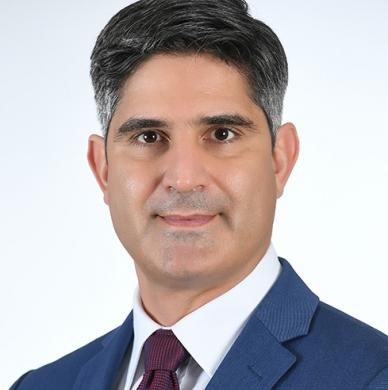
Lucia Napione is a Fixed-Term Tenure-Track Assistant Professor at the Department of Applied Science and Technology (DISAT) of Politecnico di Torino , and a member of the PolitoBIOMed Lab - Biomedical Engineering Lab . She holds a BIOS-07/A - Biochemistry scientific disciplinary sector under Area 0005 - Biological Sciences , with expertise spanning Biochemistry , Biomaterials , Diagnostic Tools , Surface Modification , and Synthetic Biology . Research focuses on 3D Bioprinting , Organ-on-a-Chip , and Biosensors for biomedical applications. Teaching roles include Course Collaborator for Sensors and Data Transmission/IoT for Agriculture , Frontiers in Bioengineering Enabling Nanotechnologies , and Models of Tissues and Physiological Processes since 2019/20. Her recent publications emphasize 4D printing , electrostimulation effects , and 3D skin models for drug screening. She supervises four PhD students and has contributed to patents like the CoV-Ab2 SARS-CoV-2 test .
Alberto Tagliaferro is a Tenured Associate Professor in the Department of Applied Science and Technology (DISAT) at the Polytechnic University of Turin. His academic career spans over two decades with continuous involvement in teaching and research activities. He serves on Doctoral Colleges for Electrical, Electronics and Communications Engineering programs and teaches Physics I, Physics II, Solid-State Physics, and Nanoscale Investigation and Manipulation courses. Dr. Tagliaferro's research focuses on carbon-based materials, nanotechnology, and sustainable materials engineering. His work encompasses biochar and carbon nanostructured materials production and characterization, bismuth-based materials for photocatalysis and biotechnology applications, development of biomolecule sensors, and Raman spectroscopy of carbon materials. His research aligns with multiple UN Sustainable Development Goals including Good Health and Well-being, Clean Water and Sanitation, Responsible Consumption and Production, Climate Action, and Partnerships for the Goals. His recent publications demonstrate a strong trend toward sustainable materials development, particularly in carbon fiber recycling, biochar applications for composites, and electrochemical interfaces for energy applications. The research spans fundamental science to practical industrial applications, with a focus on environmental sustainability and technological innovation. First level qualification awarded by the Ministry of Education, University and Research of the Italian Republic (2013) Fellow of IUVSTA (International Union for Vacuum Science, Technique and Applications) (2010-2016) Chair of Thin Film Division, Specialist Meeting Amorphous Carbon - SMAC 2000 Dr. Tagliaferro has supervised numerous PhD students and secured substantial research funding through competitive EU, national, and regional grants. His research portfolio includes projects like FIBRALSPEC, PHOCSCLEEN, BISNANO, and several initiatives focused on hydrogen technologies, carbon nanomaterials, and sustainable manufacturing processes. He has also led commercial research projects with industry partners, demonstrating strong academic-industry collaboration. He is affiliated with the Institute of Fundamental Physics and Materials for Nanotechnology (DISAT) and works in the Carbon Materials Synthesis Laboratory and Nanomaterials for Composites and Photocatalysis Laboratory, where his team develops innovative materials for environmental, energy, and biomedical applications.
Paolo Canepa is a Researcher at the University of Genoa's Department of Physics (DIFI), specializing in nanotechnology and biomedical applications. He focuses on biomaterial design, nanovesicle-based therapies, and advanced microscopy techniques like AFM. His research includes developing novel strategies for cancer treatment, antimicrobial nanomaterials, and plasmonic nanostructures for biosensing. Canepa actively participates in academic governance as a member of the Commissione paritetica docenti-studenti di scuola. He teaches courses such as Elementi di Fisica per le Professioni Tecniche and Fisica Applicata alla Biomedicina e ai Biomateriali , integrating his research expertise into education. His work bridges physics, biology, and medicine, with applications in oncology, biomaterials, and nanomedicine. Recent projects include designing cell membrane-derived nanovesicles for targeted therapy and optimizing AFM-based nanolithography for DNA-functionalized surfaces.
Roberto Fiammengo is an Associate Professor of Organic Chemistry at the University of Verona's Department of Biotechnology. His research focuses on the design of biofunctionalized nanomaterials for biomedical applications, including nanomedicine, bioimaging, and clinical diagnostics. He leads the 'Organic Chemistry and Nanobiointeractions' research group, investigating nanoparticle-biological system interactions and their exploitation in diagnostics and therapy. Education includes a PhD from the University of Twente and postdoctoral work at the University of Heidelberg and the Max Planck Institute for Intelligent Systems. He has held roles at the IIT Center for Biomolecular Nanotechnologies before joining the University of Verona in 2020. Recent projects include the EU-funded SynMech (mechanogenetic technology for brain connectivity) and DIRNANO (immune response modulation via nanomaterials). He teaches Organic Chemistry and biotechnology-related courses, including 'Synthesis of Bioactive Molecules' and 'Catalysis and Green Chemistry.' His research integrates organic synthesis, nanoparticle functionalization, and interdisciplinary collaboration to address challenges in targeted drug delivery, cancer vaccines, and biomarker detection. Collaborations include national and international partners in academia and industry.
Mario Bragaglia is a Researcher at the University of Rome Tor Vergata’s Department of Enterprise Engineering ‘Mario Lucertini’, specializing in polymeric composites and additive manufacturing. His work focuses on multifunctional materials, 3D printing, sustainable composites, and coating technologies. He holds a Ph.D. in Industrial Engineering from the same university and has conducted postdoctoral research at Luxottica SPA and the Politecnico di Milano. In 2019, he won the AIRI Oscar Masi Prize for technology transfer in multifunctional polymeric nanocomposites for additive layer manufacturing. Education: Bachelor’s Degree in Mechanical Engineering (2010) Master’s Degree in Mechanical Engineering (2012) Ph.D. in Industrial Engineering (2016) Research Interests: Dr. Bragaglia’s research spans design, manufacturing, and characterization of polymeric composites, additive layer manufacturing, self-healing materials, and sustainable materials. He explores applications in construction, energy, and biomedical fields through projects like the ESA OSIP and I3 CLOSER initiatives. His work emphasizes eco-friendly materials and industrial collaboration. Recent Projects: Project I3 CLOSER: 14M€ investment for sustainable material recovery from microchip waste. ESA OSIP Project: Space-related materials innovation. Development of biodegradable resins and recycled material composites. Key Awards: AIRI Oscar Masi Prize (2019) Lab & Team: Collaborates within Prof. Francesca Nanni’s group on multifunctional materials for additive manufacturing. Engages in interdisciplinary projects at the intersection of material science, engineering, and sustainability.
Cesare Stefanini is a Professor at the Scuola Superiore Sant'Anna (SSSA) in Pontedera, Italy, where he serves as Director of the BioRobotics Institute and Head of the Creative Engineering Design Lab. His research spans bioinspired robotics, biomimetics, and technology transfer, with a focus on medical and environmental applications. M.Sc. in Mechanical Engineering (1997, SSSA, with honors) Ph.D. in Microengineering (2002, SSSA, with honors) Research Interests Bioinspired Robotics Biomimetics Prostheses and Micro-Prosthetics Tissue Engineering Energy Harvesting Sensors and Actuators Technology Transfer Scientific Awards Intuitive Surgical Research Award Patents and Memberships Inventor of 17 international patents, 10 industrially exploited Member of UAE Academy of Scientists, IEEE Societies RAS, and EMBS
Valeria Vetrì is a Full Professor in the Department of Physics and Chemistry at the University of Palermo's School of Medicine and Surgery. Her research focuses on biophysics and nanotechnology, particularly the molecular mechanisms of neurodegenerative diseases and structure-property correlations of nano- and bio-materials. Her applied work spans nanotechnologies for lab-on-a-chip systems, drug delivery, biomaterials, and technologies for cultural heritage and agri-food quality control. She leads advanced laboratories including the Advanced Fluorescence Microscopy Laboratory and Microscopy and Bioimaging Laboratory . Recent publications highlight her expertise in protein aggregation, amyloid formation, and fluorescence microscopy. She participates in PON, POR, and PRIN projects and collaborates with national and international research groups. She holds office hours on Mondays from 3:00 PM to 5:00 PM at Viale delle Scienze Building 18 and can be contacted at valeria.vetri@unipa.it or via phone at +3909123891782.
Clara Mattu is an Associate Professor at the Department of Mechanical and Aerospace Engineering (DIMEAS) within Politecnico di Torino , actively contributing to the College of Biomedical Engineering and the PolitoBIOMed Lab . With expertise in Cancer Nanomedicine and Targeted Drug Delivery , her research focuses on creating in vitro cancer models and advanced implant technologies through biofabrication techniques . Specializes in polymer-based nanosystems and biomimetic scaffolds Member of BIOINSIDE LAB and multiple EU/H2020 funded projects Recipient of 2016 Marie Curie International Global Fellowship and 2011 Working Capital PNI Her 15 recent publications (2019-2025) demonstrate leadership in 3D bioprinting , green nanomedicine , and clinical translation through advanced hydrogel systems and targeted nanoparticle designs . Collaborative work with PhD students spans cardiac regeneration , pancreatic cancer models , and eco-biomedical technologies . Current projects include the HYDROHEAL initiative for bone healing hydrogels and the 3DPathoSkin platform for precision dermatology.
Mario Baldi is an Associate Professor (on leave) of Information Processing Systems at the Department of Control and Computer Engineering , Politecnico di Torino , and concurrently a Fellow in the Office of the CTO, Adaptive and Embedded Computing Group, at AMD, San Jose, CA. His career blends deep academic research with extensive industry R&D leadership. Education M.Sc. (Summa Cum Laude) in Electrical Engineering, Politecnico di Torino, 1993 Ph.D. in Computer and System Engineering, Politecnico di Torino, 1998 Research Focus Baldi’s research spans programmable data planes, software-defined networking, big-data analytics for network management, network security, high-performance switching architectures, optical networking, QoS mechanisms, and multimedia/voice-over-IP systems . He is especially known for pioneering work on P4 -based programmable networks and SmartNIC architectures. Publication & Patent Impact Across 150+ refereed papers and 35+ US patents (plus European filings), his recent output concentrates on machine-learning-driven network data-plane functions , disaggregated stateful network services , and cloud-grade DPUs . The 2021–2024 articles emphasize real-time inference directly in the network data plane and modular SDN programming. Awards & Honors Best Paper Award, IEEE ICC 2007 Best Paper Award, IEEE ISCC 2008 Best Paper Award, IEEE GreenComm 2009 Best Paper Award, ACM/IEEE WI/IAT 2014 Grants & Projects Baldi has served as Principal Investigator or Scientific Coordinator on numerous EU Framework and Italian national projects (PRIN, FAR), leading consortia on energy-efficient packet networks, trusted software execution, wireless mesh architectures, and streaming media delivery. Teaching & Mentoring He has taught graduate courses on Enterprise Network Technologies, Computer Network Technologies and Services, Networks/Cloud/Application Security at Politecnico di Torino since 2003. He has also supervised PhD collegi for the Computer and Systems Engineering doctoral program (cycles 19–23) and held visiting/adjunct positions across four continents. Labs & Teams Previously headed the NetGroup (Computer Networks Group) at Politecnico di Torino (2001–2007) and co-chairs the p4.org Architecture Workgroup , driving open standards for programmable networking.
Anna Grazia Monteduro is a Researcher at the Department of Mathematics and Physics "Ennio De Giorgi" of the University of Salento. She graduated in Physics (magna cum laude) in 2009 and earned her Ph.D. in Bio-molecular Nanotechnologies (NanoPhysics focus) in 2013. Her research spans three key areas: Nanoelectronics (functional oxides for semiconductor devices), Nanomagnetism (magnetic nanoparticles), and RF sensing technologies . She has collaborated with the National Institute of Research in Gastroenterology "Saverio De Bellis" on biosensor development for personalized medicine. Education Ph.D. in Bio-molecular Nanotechnologies (University of Salento, 2013) Physics Laurea (University of Salento, 2009) Research Focus Functional oxides for electronic/spintronic devices Hybrid magnetic nanoparticle characterization RF technologies for sensing applications Teaching Lead instructor for Physics (Viticulture and Oenology degree) Co-teacher for Laboratory I (36/60 hours) and Laboratory IV (12/60 hours) in Physics degree programs Her scientific work integrates advanced materials research with practical applications in agrarian sciences and medical diagnostics. Current projects include developing Lab-on-chip devices for liver cancer therapy and exploring UN 2030 Agenda sustainability goals through physics education. Teaching methods emphasize experimental validation and mathematical modeling across mechanics, thermodynamics, and electromagnetism.
Gianluca Percoco is a Full Professor at the Department of Mechanics, Mathematics & Management, Politecnico di Bari (Poliba), specializing in manufacturing technologies and systems. His research focuses on advancing 3D printing methodologies for soft robotics, sensors, and biomedical applications. Department: Mechanics, Mathematics & Management Research Themes: Additive manufacturing, material extrusion, bioinspired structures His recent work explores ironing process optimization for improved sensor sensitivity, electromagnetic assistance in silicone-based soft robotics, and machine learning for predicting interlayer adhesion in multi-material printing. Publications from 2023-2025 highlight innovations in 3D printed sensors , self-healing polymers , and microfluidic devices . Contact: gianluca.percoco@poliba.it | Tel: +39 080 596 3267
Paolo Rech is an Associate Professor in the Department of Industrial Engineering at the University of Trento, Italy, teaching core courses including Informatica (DISPARI) and Advanced Programming and Artificial Intelligence for Industrial Engineering students. His research spans hardware-software reliability under radiation exposure with emphasis on real-world applications. His primary research domains feature: Reliability Engineering : Pioneering fault-tolerance methodologies for radiation-prone environments Radiation Effects : Quantifying neutron/gamma impacts on GPUs, TPUs, and quantum devices Computer Architecture : Designing hardened RISC-V systems and post-CMOS accelerators AI Reliability : Developing fault-aware neural networks for safety-critical deployment Quantum Vulnerability : Characterizing error mechanisms in quantum circuits Analysis of his 15 most recent publications reveals a dominant focus on radiation-hardened computing systems, with 83% of works addressing neutron-induced faults in GPUs/TPUs and quantum devices. His methodology consistently integrates neutron beam experiments, fault injection frameworks, and architectural hardening techniques across space, medical, and autonomous systems applications. Scientific Awards: None documented in available sources. His teaching directly feeds into research supervision, with course content on C++ programming, object-oriented design, and quantum computing foundations forming the basis for student projects in fault-tolerant system development. Current grants likely support neutron irradiation testing and quantum reliability initiatives given publication patterns, though specific funding details aren't publicly itemized. He operates within University of Trento's engineering research ecosystem, collaborating with teams specializing in radiation testing and quantum computing through projects like ARCHYTAS and Trikarenos, though no dedicated lab name is specified in source materials.
Marco Cecchini is a Senior Researcher at the Nanoscience Institute of the Italian National Research Council (CNR) and Lecturer of Biomaterial Science at the University of Pisa's Biology Department. He also serves as CTO of INTA srl, a CNR-Scuola Normale Superiore spin-off company. His multidisciplinary roles span fundamental research, academic teaching, and applied technology development. His research focuses on two interconnected domains: Biomedical Nanotechnology : Developing nanomaterials for brain pathology treatment and nerve regeneration, including nanoparticle-based enzyme replacement therapies for rare diseases Microsystems Engineering : Designing surface-acoustic-wave (SAW) devices for microfluidics and biosensing applications, particularly lab-on-chip diagnostic platforms Recent funded projects demonstrate translational impact: FISR 2019: Remote-connected Lab-on-Chip for wine/oil analysis Regione Toscana grants: Omics approaches for osteosarcoma (TOSCANO) and autophagy biomarkers for neurodegeneration (DEMAGING) European Leukodystrophy Association grants: Nanoparticle therapy for Krabbe disease (nanoERT) and autophagy modulation strategies His research advances diagnostic and therapeutic tools through cross-disciplinary integration of physics, biology, and engineering principles.