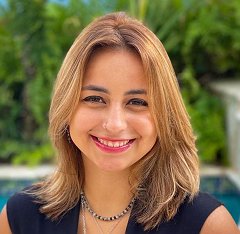
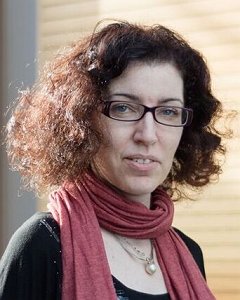
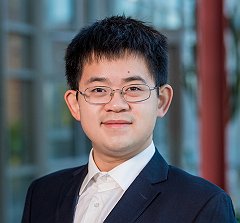
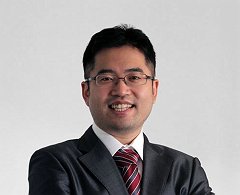
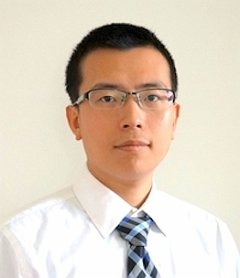
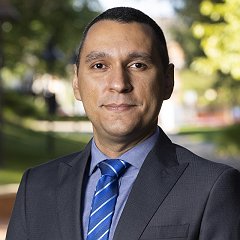
Tatiana Castro Vélez serves as an Assistant Professor at the University of Puerto Rico, Río Piedras Campus, following her Ph.D. completion at the City University of New York (CUNY) Graduate Center where she was affiliated with the PONDER lab at Hunter College. Her doctoral research centered on software engineering solutions for deep learning systems evolution, specifically developing automated refactoring techniques to transition imperative DL code to graph execution models while ensuring safety and reliability. Dr. Castro Vélez's work bridges programming languages and software engineering, focusing on static analysis, program transformation, and tool development for scalable DL system maintenance. Her research addresses critical industry challenges in adapting rapidly evolving deep learning frameworks. Her publication record demonstrates consistent contributions to major software engineering venues, with a research trajectory emphasizing empirical validation of refactoring approaches and practical tool support for DL developers. She actively participates in the research community through artifact evaluation committees for conferences including ISSTA and ‹Programming›, reflecting her commitment to research reproducibility in software engineering.
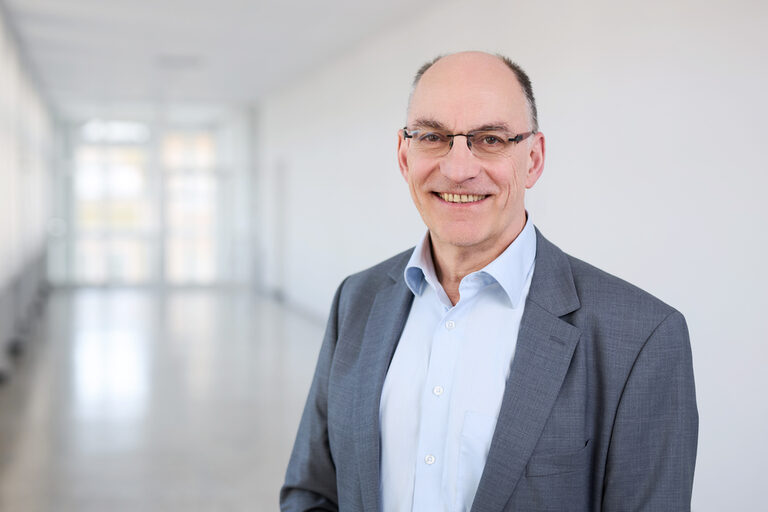
Alessio Ferrari is a Senior Research Scientist at the Institute of Information Science and Technology 'Alessandro Faedo' (ISTI), part of the Italian National Research Council (CNR) in Rome, Italy. His research focuses on the intersection of software engineering, requirements engineering, and natural language processing, with particular emphasis on applying computational techniques to improve requirements analysis and specification processes. Dr. Ferrari received his Ph.D. in Computer Engineering from the University of Florence in 2011. Prior to his research career, he gained valuable industry experience working as a system engineer at General Electric Transportation Systems during his doctoral studies, which has informed his practical approach to research problems. Primary Research Areas: Applications of NLP to Requirements Engineering User and customer interviews in requirements engineering Requirements engineering education and training Empirical formal methods and empirical software engineering Formal methods applied to railway systems Dr. Ferrari's recent research shows a strong trend toward leveraging large language models for requirements engineering tasks, including requirements classification, traceability, and modeling. His work increasingly explores the intersection of formal methods and AI approaches in software engineering, particularly in safety-critical domains like railway systems. His publications demonstrate a consistent focus on practical applications of theoretical concepts, with numerous case studies in industrial settings. Dr. Ferrari has been actively involved in several European research projects, including DESIRA and CODECS on sustainability, ASTRail (where he served as Work Package leader), Learn PAd, and 4SecuRail. He has made significant contributions to the requirements engineering community through his service as Program Chair of REFSQ 2023, founder of the NLP4RE workshop series, and Artifact Evaluation Chair for multiple conferences including FormaliSE 2023, RE 2022, and iFM 2022. As leader of the Formal Methods and Tools lab at CNR-ISTI, Dr. Ferrari oversees research on applying formal methods to railway systems and developing innovative tools for requirements engineering. He is highly committed to open science initiatives and has been instrumental in promoting replication studies in requirements engineering research. His educational contributions include the SaPeer approach for training requirements analysts and the ModeLLer tool for supporting requirements elicitation in co-design environments.
Einat Couzin-Fuchs is an Affiliated Scientist and IMPRS Lecturer in the Department of Collective Behavior at the University of Konstanz, Germany, affiliated with the Centre for the Advanced Study of Collective Behaviour and Konstanz Neurobiology. Her research focuses on neural mechanisms of social plasticity in locusts, examining rapid transitions between solitary and gregarious states through sensory integration and decision-making processes. She employs neurophysiology, virtual reality, and quantitative behavior analysis to study odor representation in changing social environments and the emergence of collective behavior. Recent work reveals how crowding alters antennal lobe processing and how personal/social experiences integrate to drive foraging decisions. The Couzin-Fuchs Lab develops advanced calcium imaging and computer vision protocols for automated pose tracking, uncovering sensorimotor transformations underlying swarming behavior and group decision dynamics in locusts.
Prof. Dr. Torsten Füg is a Professor specializing in renewable energy systems and sustainable fuel technologies, affiliated with the Cloud Energy Lab (CBEN). His research focuses on integrating digital solutions with energy infrastructure to address global sustainability challenges. His primary research domains include Renewable Energy Optimization, IoT-driven Energy Systems, Carbon Capture Technologies, Sustainable Fuel Development, and Net Zero Energy Pathways. Current work emphasizes scalable IoT implementations in energy laboratories and innovative approaches to decentralized fuel production through carbon capture. Recent publications reveal a concentrated research trajectory toward digital-physical integration in energy systems, with dual emphasis on technological scalability (IoT solutions) and environmental impact reduction (carbon-neutral fuels). This work bridges engineering pragmatism with climate action imperatives. No scientific awards were documented in the source material. Information regarding student supervision, doctoral advising, or research grant acquisitions was not provided in available documentation. Prof. Füg operates within the Cloud Energy Lab (CBEN), a research unit dedicated to cloud-computing applications in energy management, renewable integration, and sustainable fuel synthesis. The lab serves as an experimental hub for testing decentralized energy solutions and carbon capture methodologies under real-world conditions.
Marius Faber serves as an Economist at the Swiss National Bank and Research Fellow at the University of Basel, with a recent visiting appointment at CESifo (June 20–July 1, 2022) for supply chain uncertainty research. His academic credentials include: PhD in Applied Economics (University of Basel) MA in Economics (University of Zurich) BA in Economics (University of Zurich) Research centers on International and Labor Economics with specialization in Technological Change. Key projects analyze how robotics enable firms to reshore production during developing-world uncertainty shocks, and empirically measure AI's real-world impacts on German labor markets through matched employer-employee data. His work demonstrates that automation adoption critically determines firms' vulnerability to global supply chain disruptions. Current affiliations reflect dual engagement in central banking and academic research, with no indication of lab leadership or student supervision roles. His empirical approach focuses on generating policy-relevant insights about technology's role in economic resilience.
Bernhard Meussen is a full Professor of Mechanical Engineering at NORDAKADEMIE, serving as Head of the Master of Science in Industrial Engineering program since October 2013. His academic leadership spans teaching core engineering courses while driving innovation in digital product development and educational technology. Education Background: Undergraduate studies in Mechanical Engineering at Ruhr-Universität Bochum Graduate studies in Design Engineering at Technische Universität Hamburg-Harburg with international stays in Kingston-Upon-Thames (UK) and University of Victoria (Canada) PhD in Continuum Mechanics from Technische Universität Hamburg-Harburg (Thesis: "Deformation behavior of snow under multi-axial loading") Research Focus: Professor Meussen's work centers on product development theory, digitization of engineering processes (Industry 4.0), and simulation of technical systems. His research bridges academic theory and industrial applications through projects in wind turbine load simulation, CAD-supported tool development, and driverless transport systems. Current initiatives explore collaborative robotics in component assembly and additive manufacturing applications in industrial contexts. Publication Trends: Recent publications (2017-2024) demonstrate a strategic pivot toward educational technology and cyber-physical laboratories. While maintaining industrial engineering applications, his work increasingly addresses digital transformation in STEM education through cross-reality labs, remote laboratory design, and model-based systems engineering pedagogy. This reflects a dual commitment to advancing industrial practices and reimagining engineering education. Research Infrastructure: Lead investigator for Cyber Physical Laboratories project (2018-2021, funded by NORDAKADEMIE Foundation) Principal developer of CrossLabs: Flexibly combinable cross-reality labs (funded by Foundation for Innovation in Higher Education) Director of projects implementing automated cylinder production and lithium-ion battery industrial trucks Professional Integration: Active in VDI Hamburg Working Group Development and Construction, and Society for Applied Mathematics and Mechanics (GAMM). His industrial experience as simulation group leader at wind turbine manufacturers and development manager at industrial truck companies directly informs his academic work, creating strong industry-academia linkages in mechanical engineering education.
Sarah Nadi is an Associate Professor of Computer Science at New York University Abu Dhabi and holds an adjunct professor position at the University of Alberta. She co-directs the SANAD lab where she leads research on developing automated support tools to enhance software developer productivity and effectiveness. Dr. Nadi's research program centers on mining software repositories to extract insights from version control systems, issue trackers, and developer Q&A sites. Her work specifically addresses critical challenges in software library usage including selection processes, API misuse prevention, and migration to alternative libraries. Recent projects demonstrate increasing integration of AI techniques with traditional software engineering problems, particularly in understanding developer workflows around third-party libraries. Analysis of her recent publications reveals a strong methodological focus on empirical software engineering with particular expertise in Python ecosystem analysis. Her research trajectory shows evolution from foundational API usage studies toward sophisticated library migration frameworks and LLM applications in developer tooling, maintaining consistent emphasis on empirical validation through large-scale repository analysis. Dr. Nadi actively contributes to the software engineering community through leadership roles including ASE 2025 Area Chair, program committee service for major conferences (ICSE, ESEC/FSE, ICSME), and keynote presentations such as at ESEC/FSE 2021 Doctoral Symposium. She maintains active supervision of research students and regularly hires fully funded PhD candidates for the SANAD lab at NYUAD. The SANAD lab under her co-direction develops practical tooling for software developers with current projects focused on library migration benchmarking (PyMigBench), API misuse detection, and evaluating LLM impacts on development workflows. The lab maintains international collaborations and publishes consistently in top-tier software engineering venues.
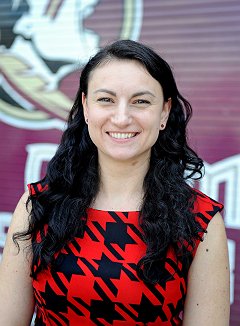
Sonia Haiduc is an Associate Professor in the Department of Computer Science at Florida State University, where she leads the SERENE (Software Engineering: Evolution and Maintenance) research lab. Her academic career spans over a decade of contributions to software engineering research, with particular expertise in software maintenance, evolution, and program comprehension. Education: Ph.D. in Computer Science, Wayne State University (2013) M.Sc. in Computer Science, Wayne State University (2009) B.Sc. in Computer Science, Babes-Bolyai University, Cluj-Napoca, Romania (2006) Her research focuses on innovative approaches to assist software developers in understanding and maintaining complex software systems. Key areas include software evolution, program comprehension, concept location, source code search, empirical software engineering, and the application of information retrieval and natural language processing techniques to software engineering problems. Her work bridges theoretical foundations with practical applications to improve developer productivity and software quality. Recent publications demonstrate a growing interest in AI-assisted software development, particularly the application of large language models to program repair, commit message assessment, and code search. Her research shows a consistent trajectory from traditional software engineering topics toward integrating modern AI techniques to solve longstanding challenges in software maintenance and evolution. Scientific Awards: ACM SIGSOFT CAPS Travel award (2012, 2010) Google Anita Borg Scholarship (2011) Wayne State University Travel Awards (multiple years) Outstanding Graduate Research Assistant in Computer Science (2010) Dr. Haiduc actively mentors doctoral students, currently advising three Ph.D. candidates while serving on committees for additional graduate students. She has secured research funding including an NSF SHF grant for 'Text Retrieval in Software Engineering 2.0' and an FSU CRC grant for 'Query-Specific Source Code Search Engine Configuration.' She founded and leads the SERENE lab at Florida State University, which focuses on novel approaches to software maintenance, evolution, program comprehension, mining software repositories, and applications of natural language processing in software engineering.
Anita Raja is a Professor of Computer Science at Hunter College and a member of the doctoral faculty in Computer Science at the Graduate Center, City University of New York (CUNY). She previously served as Acting Chair of the Department (2024-2025), Associate Dean of Research and Graduate Programs at The Cooper Union's Albert Nerken School of Engineering (2014-2019), and Associate Professor at The University of North Carolina at Charlotte (2003-2014). Her educational background includes a B.S. Honors in Computer Science with a minor in Mathematics summa cum laude from Temple University (1996), and M.S. and Ph.D. in Computer Science from the University of Massachusetts Amherst (1998, 2003). Anita Raja's research focuses on the intersection of bounded rationality, distributed problem-solving, and artificial intelligence. Her work particularly emphasizes designing and controlling rational agents in real-time, multi-agent environments under uncertainty and limited computational resources. She directs the Distributed Artificial Intelligence Research (DAIR) Lab, which has produced significant work in areas such as deep learning program refactoring, health data analysis using generative algorithms, and technical debt in machine learning systems. Her recent publications demonstrate a strong focus on improving deep learning systems through automated refactoring techniques and addressing challenges in migrating imperative deep learning programs to graph execution models. Her work bridges theoretical AI concepts with practical software engineering applications in machine learning systems. 2006 UNCC College of Computing Essam El-Kwae Student-Faculty research award Best Paper Award at the 2010 IEEE Intelligent Agent Technology Conference Distinguished Paper award at FASE 2025 2021 National Institutes of Health's Decoding Maternal Morbidity Challenge prize Named one of 75 "Notable Women in Tech" by Crain's New York Business in 2019 Elected to serve on the Executive Council of AAAI in 2022 Anita Raja has successfully advised multiple graduate students including Jeffrey Hsu (Masters thesis on "Intuiting Interaction: Meta-Reasoning and Meta-Learning as Foundations for Intelligent User Interfaces") and Dylan Dominguez. Her research is supported by grants from NSF, NIH, ONR, DARPA, DHS and PNNL. She serves as a co-investigator at the Civic-Led Urban Adaptation Research Center (CIVIC-UARC) at the Cornell Mui Ho Center for Cities. She directs the Distributed Artificial Intelligence Research (DAIR) Lab which has been actively working on projects related to deep learning systems, health informatics, and multi-agent systems. The lab has received funding from multiple prestigious sources including NSF and NIH, and has produced award-winning research in both academic conferences and real-world challenges.
Dominik Wermke is an Assistant Professor in the Department of Computer Science at North Carolina State University. He is affiliated with the Secure Computing Institute (SCI), the Wolfpack Security and Privacy Research (WSPR) Lab, and the Secure Software Supply Chain Center (S3C2). Dr. Wermke's research focuses on computer security with an emphasis on human-centered security and usable security. His work investigates how security mechanisms interact with the needs, practices, and limitations of both software professionals and end users. His primary research areas include: Human-Centered Security and Privacy: Examining how developers and security professionals understand and respond to security concerns in complex environments Software Supply Chain Security: Studying how software is packaged, built, and distributed with focus on reproducibility, dependency management, and vulnerability metadata Open Source Security and Trust: Analyzing practices in distributed development environments, including contribution workflows and vulnerability handling His research employs mixed-methods approaches including interviews, large-scale software ecosystem analyses, user experiments, and surveys to identify behavioral patterns and systemic risks in security practices. Dr. Wermke's publications demonstrate consistent focus on understanding security challenges at the intersection of technical systems and human factors, particularly in software development processes and supply chain contexts. He actively mentors students at NC State, encouraging prospective PhD candidates to explore research opportunities through internships and coursework. Students interested in working with him should contact him after applying to the graduate program. As a member of multiple research centers, Dr. Wermke collaborates across the Secure Computing Institute, Wolfpack Security and Privacy Research Lab, and Secure Software Supply Chain Center to advance security research with practical applications for software professionals.
Julia Rubin is an Associate Professor in the Department of Electrical and Computer Engineering at the University of British Columbia, Canada, holding the prestigious Canada Research Chair in Trustworthy Software. She leads the UBC Research Excellence Cluster on Trustworthy ML and serves as an Associate Faculty Member in the Department of Computer Science. Her academic journey includes a PhD from the University of Toronto and postdoctoral research at MIT, complemented by nearly a decade of industry experience at IBM Research where she worked as a research staff member and group manager. PhD in Computer Science, University of Toronto Postdoctoral Research, MIT Department of Electrical Engineering and Computer Science Research Staff Member and Group Manager, IBM Research (10 years) Professor Rubin's research centers on quality, security, and reliability of software and AI systems. Her work develops automated solutions for analyzing, auditing, and improving these systems, with particular focus on reliable approaches for malware detection, code management techniques combining generative AI with program analysis, and technology for regulatory compliance of AI systems. Her research spans mobile security, smart contract vulnerabilities, program analysis techniques, and trustworthy machine learning. Analysis of her 15 most recent publications reveals strong emphasis on software security (particularly in mobile and blockchain applications), program analysis techniques (especially slicing methods), and microservice architecture. Her work consistently bridges theoretical foundations with practical applications, often involving empirical studies and tool development. The publications demonstrate evolution from traditional software analysis toward AI-integrated approaches while maintaining rigorous methodology. 2023 Alexander von Humboldt Research Fellowship for Experienced Researchers 2023 Killam Faculty Research Fellowship 2022 CS-Can | Info-Can Outstanding Early Career Computer Science Researcher Award Multiple Distinguished/Best Paper Awards at major conferences Canada Research Chair, Tier II IBM CAS Project of the Year Award Professor Rubin actively mentors students and contributes to the academic community through program committee roles, including serving as Program Co-Chair for ASE 2022. She has secured significant research funding through fellowships and industry partnerships, including IBM collaborations. Her research group (ReSeSS Research Lab) focuses on developing practical solutions for software trustworthiness challenges. She leads the ReSeSS Research Lab at UBC, which focuses on developing automated solutions for analyzing, auditing, and improving software and AI systems. The lab's work spans multiple projects in trustworthy software, with particular emphasis on reliable and explainable approaches for security analysis, code management, and regulatory compliance of AI systems.
Linyi Li is an Assistant Professor in the School of Computing Science at Simon Fraser University, where they direct the TAI (Trustworthy Artificial Intelligence) Lab. Their research focuses on advancing the trustworthiness of artificial intelligence, particularly deep learning models that power state-of-the-art generative AI systems like language models. Dr. Li received their PhD in Computer Science from the University of Illinois Urbana-Champaign in 2023, advised by Bo Li and Tao Xie. Prior to that, they earned their bachelor's degree from the Department of Computer Science and Technology at Tsinghua University in 2018, where they conducted research on Web API Automated Testing under the supervision of Xiaoying Bai. Between 2023 and 2024, Dr. Li worked as a senior research scientist at ByteDance. Dr. Li's research centers on trustworthy deep learning, with a focus on certifiably trustworthy deep learning and trustworthy foundation models. They aim to enable certifiable and verifiable trustworthiness guarantees such as robustness, fairness, and numerical reliability for large-scale deep learning systems. Their work spans both machine learning and computer security domains, seeking to understand and analyze the mechanisms of deep learning and foundation models, particularly their root causes of trustworthiness issues. Dr. Li also works on scientifically and comprehensively evaluating foundation models. Dr. Li has published over 30 papers in flagship machine learning and computer security conferences including ICML, NeurIPS, ICLR, IEEE S&P, and ACM CCS. Their research output shows a consistent focus on certified trustworthiness in machine learning systems, with particular emphasis on robustness certification, fairness guarantees, numerical reliability, and verification techniques. Recent work has expanded to include evaluation frameworks for code large language models, reflecting the growing importance of trustworthy foundation models in practical applications. Rising Stars in Data Science AdvML Rising Star Award Wing Kai Cheng Fellowship 4th International Verification of Neural Networks Competition (VNN-COMP'23) 2022 Qualcomm Innovation Fellowship (Finalist) 2022 Two Sigma PhD Fellowship (Finalist) Dr. Li serves as a Principal Investigator of the TAI Lab at SFU, which is actively recruiting PhD students. They have received an NSERC Discovery Grant with Launch Supplement. Dr. Li also serves on program committees for major conferences, including as an Area Chair for NeurIPS 2025 and ICLR 2026, and has been involved in conference organization such as co-organizing the workshop on Trustworthy and Socially Responsible Machine Learning at NeurIPS 2022. The TAI Lab, located on the beautiful Burnaby campus of Simon Fraser University in the greater Vancouver area, conducts research aimed at delivering AI technologies that are reliably aligned with human values to minimize negative impacts of powerful AI systems. The lab's research specifically focuses on understanding AI in a principled way through scientific benchmarks and theoretical frameworks, and delivering certifiable mitigations for deep learning models to provide practical guarantees of trustworthiness.
Sang Kil Cha is an Associate Professor at KAIST (Korea Advanced Institute of Science and Technology) where he holds positions in both the Graduate School of Information Security and the School of Computing. He serves as the director of the Cyber Security Research Center (CSRC) at KAIST and leads the SoftSec Lab. Dr. Cha received his Ph.D. and M.S. degrees from Carnegie Mellon University and his B.S. degree from Korea University. Current Position: Associate Professor, KAIST Leadership: Director of Cyber Security Research Center (CSRC) Laboratory: Head of SoftSec Lab Education: Ph.D. and M.S. from CMU, B.S. from Korea University Dr. Cha's research focuses on the intersection of computer security and software engineering, with particular emphasis on building and evaluating systems that can analyze programs. His work spans software security, software engineering, software systems, and program analysis. He has made significant contributions to binary code analysis, fuzzing techniques, and reverse engineering. His research has practical applications in vulnerability detection, malware analysis, and secure software development. His publication record demonstrates consistent high-impact contributions to the field, with numerous papers in top-tier security and software engineering conferences including IEEE S&P, USENIX Security, ISSTA, and ICSE. His recent work shows a continued focus on advancing fuzzing methodologies, binary analysis techniques, and security applications for blockchain technologies. Dr. Cha's research group has produced influential tools such as B2R2 (a binary analysis framework) and ofuzz (a fuzzing framework). ACM Distinguished Paper Award USENIX Distinguished Paper Award Best Paper Award NDSS Best Paper Award As an educator, Dr. Cha has taught courses including Binary Code Analysis and Secure Software Systems, Advanced Software Security, and Introduction to Information Security. His research group has mentored numerous students who have become co-authors on his publications. His work is supported by various research grants focused on software security and analysis techniques. The SoftSec Lab maintains active collaborations with both academic and industry partners in the security research community.
Xusheng Xiao is an Associate Professor in the School of Computing and Augmented Intelligence at Arizona State University, where he leads the Reliable, Intelligent, Secure, and Efficient (RISE) Software and System lab. Previously, he was an Assistant Professor at Case Western Reserve University (2017-2022) and a researcher at NEC Labs America (2014-2017). He received his Ph.D. in Computer Science from North Carolina State University in 2014 under the supervision of Prof. Tao Xie and Prof. Laurie Williams. Dr. Xiao's research spans software engineering and computer security, with emphasis on AI-enhanced software analysis approaches that combine software analysis and artificial intelligence to improve software reliability and security. His lab focuses on Large Language Model enhanced software analysis, mobile app analysis, cyber threat detection and investigation, blockchain/smart contract security, and software testing and debugging. His work has resulted in significant industry impact, including research integrated into NEC's security product (which won the Grand Prix award at CEATEC 2016) and a static analysis technique deployed at Microsoft Research that was granted a US patent. His recent publications reveal a strong trend toward applying Large Language Models to security challenges, with numerous papers on LLM-powered security analysis, mobile app security, and blockchain security. His work demonstrates a consistent focus on practical security solutions that address real-world threats while advancing theoretical foundations in program analysis. NSF CAREER Award NSF CRII Award Samsung GRO Award 2021 Case School of Engineering Faculty Research Award Grand Prix award at CEATEC Award 2016 Multiple US patents from industry collaborations Dr. Xiao has secured significant research funding from NSF, DOE-ARPA-E, and Samsung, and recently received API credits from the OpenAI Cybersecurity Grant Program and a grant from TensorBlock for collaboration on Forge. He actively mentors PhD students and has numerous advisees including Zichen Liu, Shang Ma, Liangyi Huang, Pengcheng Fang, and Fei Shao who have co-authored multiple publications with him. His RISE lab represents a comprehensive research ecosystem focused on developing advanced analysis techniques to analyze complex software behaviors for improving software reliability and security. The lab's work spans multiple security domains with particular emphasis on applying cutting-edge AI techniques to traditional security challenges.
Thiago Ferreira is an Assistant Professor in the College of Innovation & Technology at the University of Michigan-Flint, where he has been employed since October 2021. He holds a PhD in Computer Science from the Federal University of Paraná (2019) and a Master's from Ceará State University (2015). His research integrates optimization algorithms, artificial intelligence, and user preferences to solve software engineering challenges including requirements engineering, testing, and refactoring. Dr. Ferreira's education includes: PhD in Computer Science, Federal University of Paraná (2015-2019) Master's in Computer Science, Ceará State University (2013-2015) Bachelor's in Computer Science, Ceará State University (2007-2012) His research spans three core domains: Search-Based Software Engineering : Developing optimization frameworks like Nautilus for product line testing AI-Driven Refactoring : Creating intelligent change operators for code quality improvement Interdisciplinary Applications : Applying AI to assistive technology and STEM education equity projects Recent publications demonstrate a strong focus on Large Language Model applications in optimization, refactoring pattern analysis, and interdisciplinary STEM projects. His work consistently combines empirical validation with practical tool development. Awards and recognitions include: Hagerman Faculty Innovation Award (2024) Lois Matz Rosen Junior Faculty Excellence in Teaching Award Early Career Award (2023) Best Paper Award at SBCARS'24 Multiple Golden Apple Teaching Recognitions (2022-2024) He actively advises graduate students through thesis supervision (CSC 595/596) and independent studies. His Software Engineering and Artificial Intelligence Lab (SEAIL) focuses on AI-driven solutions for software engineering challenges. Current interdisciplinary collaborations include occupational therapy projects developing adaptive technologies.