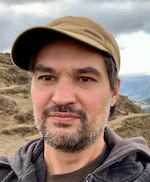
Ju Hyoung Mun is an Assistant Professor of Computer Science at the Michtom School of Computer Science, Brandeis University. He holds a Ph.D., M.Sc., and B.Sc. in Computer Science from Ewha Womans University. His research focuses on data systems, database management, computer networks, algorithms, memory management, and networking protocols. His work spans topics such as relational fabric, in-memory accesses, LSM-trees, and packet classification techniques. Key research trends include optimizing data locality in systems (2024), real-time data transformation (2023), and memory-efficient database architectures (2021–2023). Earlier contributions addressed network efficiency via Bloom filters (2014–2017) and high-speed IP lookup algorithms (2007). No scientific awards are explicitly mentioned in the provided text. No advising relationships or grants are listed. His research homepage and email (jmun@brandeis.edu) are publicly accessible for further inquiries.
Ramnatthan Alagappan is an Assistant Professor at the Siebel School of Computing and Data Science, University of Illinois. His research focuses on distributed systems, storage systems, and fault tolerance in modern datacenter environments. He leads projects investigating high-performance storage abstractions, replication strategies, and reliability engineering for distributed infrastructure. Key research areas include filesystem design, crash consistency mechanisms, and optimizing storage hierarchies for hybrid NVM environments. His work emphasizes practical implementations of theoretical models, such as the LazyLog shared log abstraction and IONIA replication framework for disk-based key-value stores. Alagappan has received the NSF CAREER Award (2024) for his research on datacenter-aware storage systems. His recent publications address challenges in disaggregated datacenters, fault tolerance for modern workloads, and automated reliability testing for cluster management systems. He collaborates extensively on projects involving distributed storage protocols, log-based systems, and performance optimization for large-scale infrastructures. His research spans theoretical contributions (e.g., consistency models) to applied systems work (e.g., implementing fault-tolerant storage stacks), with a focus on bridging gaps between hardware capabilities and software system design.
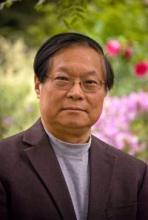
David Hung-Chang Du is a Professor and Qwest Chair Professor in the Department of Computer Science and Engineering at the University of Minnesota, Twin Cities. He served as the Center Director of the NSF multi-university I/UCRC Center of Research in Intelligent Storage (CRIS) from 2009-2021, which was sponsored by 18 companies with $3.35M industrial membership funding. Prior to that, he organized an Intelligent Storage Consortium at Digital Technology Center with industrial funding from 2002-2009. He was also a Program Director at the National Science Foundation CISE/CNS Division from March 2006 to August 2008. Dr. Du received his B.S. degree in Mathematics from National Tsing-Hua University (Taiwan) in 1974 and M.S. and Ph.D. degrees from University of Washington (Seattle) in 1980 and 1981 respectively. He joined University of Minnesota as a faculty member in 1981 and has been there for over 40 years. He has also been a visiting professor in Germany, Korea, Singapore, Hong Kong and Taiwan. Dr. Du's research focuses on intelligent storage systems, sensor/vehicular networks, and cyber physical systems. His early career work included parallel processing and database design, followed by Computer-Aided Design for VLSI circuits in the 1980s and 1990s. From the late 1980s to present, he has worked on computer networking and its related applications including multimedia computing. Starting from 2000, his research has focused on new memory and storage technologies for handling extremely large volumes of available data and long-term data preservation. His current research focuses on hyper-converging infrastructure, recognizing that the Internet has become the largest existing computer system where data collection, storage, and networking must be integrated. His recent publications (2019-2022) demonstrate continued innovation across multiple domains including DNA storage technologies, hybrid storage systems, key-value store optimization, and edge computing. These works reflect his ability to adapt to emerging technological landscapes while maintaining focus on fundamental storage and systems challenges. The publications show strong industry collaboration, particularly with major technology companies like Facebook, where his team has characterized and optimized key database workloads. IEEE Fellow (since 1998) Fellow of the Minnesota Supercomputer Institute ACM Recognition of Service Award (2013) IEEE Certificate of Appreciation (2012, 2007) NSF Director's Award for Collaborative Integration (2008) Best Paper Award, International Conference on Internet of Vehicles (2015) Best Paper Award, International Conference on Computer Design (1998) Dr. Du has been highly active in professional service, serving as Editor of IEEE Transactions on Computers (1993-1998), member of several editorial boards, and holding leadership positions in numerous conferences including General Chair for IEEE Security and Privacy Symposium (2009), Program Committee Co-Chair for International Conference on Parallel Processing (2009), and General Chair for IEEE International Conference on Distributed Computing Systems (2010-2011). He has graduated 67 Ph.D. students (58 as single adviser and 9 jointly supervised) and 109 Master's students over his 40+ year career. His research has been supported by substantial grants from NSF, industry partners, and other funding sources totaling millions of dollars.
Shahram Ghandeharizadeh is a Professor at the University of Southern California , specializing in Computer Science with a focus on databases, distributed systems, and multimedia. His research spans caching middleware, flying light specks for 3D displays, and swarm robotics. Recent work includes CAMP (cache eviction policies), Disaggregated Database Management Systems , and Flight Patterns for Swarms of Drones , reflecting his expertise in data management and swarm-based technologies. He has collaborated extensively with researchers like Hamed Alimohammadzadeh and Hieu Nguyen . His scientific awards include the ACM Software System Award (2008) , recognizing long-term contributions to software systems. Publications since 2021 highlight advancements in cache management, graph databases, and swarm robotics, with a strong emphasis on non-volatile memory and decentralized frameworks.
Walid G. Aref is a Professor at Purdue University, West Lafayette, USA, specializing in database systems, spatial data processing, and big data technologies. His work focuses on adaptive indexing, LSM trees, and graph data systems. 2025: Research on skiplists, GTX graph systems, and BMTree indexing 2024: Contributions to trajectory indexing and HTAP-optimized data systems 2023: Editorial roles in ACM Transactions on Spatial Algorithms and Systems His research spans scalable spatial-keyword query processing, distributed streaming systems, and hardware-aware database optimization. Notable collaborations include Ahmed R. Mahmood and Mourad Ouzzani. Recent publications highlight trends in machine learning for indexing , NUMA-aware optimization , and multi-dimensional data structures . He has no listed scientific awards in this dataset. Walid actively contributes to transactional graph systems , load balancing , and spatiotemporal data management , with a 2021 IEEE Transactions paper on attack-resilient load balancing.
Prof. Dr. Alexander Keller is a Professor at Ludwig Maximilian University of Munich (LMU), based at the LMU Biocenter in Planegg-Martinsried, Germany. He leads the "Cellular and Organismic Networks" research group within the Graduate School Life Science Munich (LSM), integrating field ecology, bioinformatics, and next-generation sequencing technologies to study ecological networks. His research centers on biodiversity dynamics within the plant-microbe-pollinator triangle , examining mutualistic interactions, microbiome compositions, and genomic-level molecular processes. Key methodologies include DNA metabarcoding, phylogenetic reconstructions, and computational workflow development. His work addresses ecosystem resilience, biodiversity loss, and conservation strategies under environmental change, with emphasis on land-use impacts, urbanization, and climate gradients across tropical and temperate ecosystems. Recent publications (2025) demonstrate strong trends in pollination ecology, microbiome analysis, and biodiversity monitoring using advanced sequencing . His studies reveal how landscape heterogeneity affects bee-pollen networks, how host identity shapes microbiomes, and how urban bees adapt foraging strategies. Notable methodological contributions include the LEPY pipeline for morphological analysis and MetAnoDe for metabarcoding quality control, alongside extensive work on tropical forest regeneration and undescribed species cataloging. Scientific Awards: No awards were mentioned in the provided text. Information regarding student advising and research grants was not provided in the available text. The "Cellular and Organismic Networks" group develops open computational pipelines and laboratory protocols for ecological data analysis. They conduct fieldwork across Ecuadorian rainforests, European grasslands, and urban environments, maintaining databases for trait analysis and sequence curation while adhering to open science principles. Current projects investigate microbiome transmission in bee-flower networks, forest succession dynamics, and the molecular basis of ecological resilience under global change.
Stratos Idreos is a Gordon McKay Professor of Computer Science at Harvard University's John A. Paulson School of Engineering and Applied Sciences (SEAS). He leads the Data Systems Laboratory (DASlab), focusing on self-designing systems, adaptive data structures, and high-performance key-value stores. His research bridges theoretical foundations with practical implementations to enhance data processing efficiency. Education: Ph.D. in Computer Science, University of Amsterdam (Netherlands) Research Interests: Idreos explores systems that automate design decisions for optimal performance. His work includes the Periodic Table of Data Structures , self-tuning storage engines like Cosine , and machine learning integration into database systems. Recent efforts focus on cloud-optimized systems, ensemble learning techniques, and image-AI acceleration. Key Contributions: Developed the Data Calculator for automated system design Pioneered self-designing key-value stores (e.g., Cosine) Advanced adaptive indexing and LSM-tree optimizations Awards & Recognition: ACM SIGMOD Jim Gray Dissertation Award (2011) IEEE TCDE Rising Star Award (2015) Sloan Research Fellowship (2023) McDonald Mentoring Award (2023) Grants & Leadership: Holds NSF and DOE grants, chairs the ACM Symposium on Cloud Computing steering committee, and co-directs the Harvard Data Science Initiative. His lab collaborates with Microsoft, IBM, and academic institutions globally. Labs & Teams: DASlab fosters interdisciplinary projects, offering courses like CS165 (Data Systems) and CS265 (Big Data Systems). The lab emphasizes reproducible research and industry-relevant solutions.
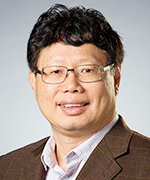
Cong Gao is a Professor and Head of the Division of Data Science at Nanyang Technological University's College of Computing & Data Science. He also holds a courtesy appointment with the School of Physical & Mathematical Sciences. Previously, he served as an Assistant Professor at Aalborg University, Denmark, and worked as a researcher at Microsoft Research Asia. He co-directs the Singtel Cognitive and Artificial Intelligence Lab for Enterprises@NTU (SCALE@NTU). His educational background includes: Ph.D. in Computer Science from National University of Singapore (2004) Master of Engineering from Tianjin University, China (1999) Bachelor of Engineering from Tianjin University, China (1996) Professor Gao's research focuses on Data Science, with particular expertise in geospatial data management, spatio-temporal data mining, recommendation systems, and social media data analysis. His work has significantly impacted areas like spatial-textual indexing, point of interest recommendation, and mining social networks. He has published extensively in top venues including VLDB, SIGMOD, ICDE, KDD, and WSDM, with over 14,000 citations and an H-index of 61. His recent publications demonstrate strong trends in applying machine learning to database systems, with particular focus on spatial and trajectory data management. Key research directions include learned indexing techniques, trajectory data analysis, and integrating large language models with database systems for improved query optimization. Professor Gao has received notable scientific recognition including: Best paper runner-up award at WSDM'22 Best paper award runner-up at WSDM 2020 He has advised numerous students who have become significant contributors in their own right, including Xin Cao, Lisi Chen, Kaiyu Feng, and Kaiqi Zhao. His research has been supported by substantial grants from Ministry of Education, NRF, IAF, Singtel/NCS, Roll-Royce, Alibaba, and Microsoft, including a S$42.4 million funding over 5 years for the SCALE@NTU lab. Professor Gao leads the Data Management Research Group (DANTE) and co-directs the Singtel Cognitive and Artificial Intelligence Lab for Enterprises@NTU (SCALE@NTU), which develops market-leading AI and data science technologies.
Calton Pu is a Professor and John P. Imlay, Jr. Chair in Software at Georgia Tech's College of Computing. He leads the Center for Experimental Research in Computer Systems (CERCS) and the GRAIT-DM project on disaster management analytics. His research focuses on distributed systems, cloud computing, and misinformation detection. He holds a PhD from the University of Washington (1986) and previously taught at Columbia University and Oregon Graduate Institute. Research Interests: Service computing and cloud computing Dynamic analytics on big data Millibottleneck analysis in microservices Fake news detection (e.g., EDNA-COVID dataset) System survivability and performance optimization Teaching includes courses like Real-Time Embedded Systems and Enterprise Computing. He has advised over 30 PhD students and published extensively in systems and database research. Current projects include automated cloud deployment (WISE/Elba) and disaster information management (GRAIT-DM). Labs/Teams: CERCS (Center for Experimental Research in Computer Systems) GRAIT-DM (Global Research on Applying IT for Disaster Management)
Ihab Francis Ilyas is a Professor at the University of Waterloo , affiliated with the Cheriton School of Computer Science . He currently holds the Thomson Reuters Research Chair in Data Quality and is on leave while serving as a Distinguished Engineer, Proactive Intelligence at Apple Inc. . He has co-founded two successful startups— Inductiv (acquired by Apple) and Tamr —and is a Fellow of the Royal Society of Canada , IEEE Fellow , and ACM Fellow . Research Interests : AI for Data Quality and Curation Knowledge Graphs Large-Scale Data Integration Information Extraction Managing Uncertain Data Data Cleaning Error Detection and Repair Probabilistic and Uncertain Data Management Scientific Awards and Recognitions : C.C. Gotlieb Computer Award, 2024 IEEE Fellow, 2021 ACM Fellow, 2020 NSERC-Thomson Reuters Industrial Research Chair, 2018 Google Faculty Award, 2014 Ontario Early Researcher Award, 2008 IBM CAS Faculty Fellow, 2006–2010 Taha Hussein Medal (Egyptian Ministry of Education), 1990 Leadership and Service : Board of Trustees, VLDB Endowment (2016–2021) Vice Chair, ACM SIGMOD (2016–2021) Co-founder, Inductiv (acquired by Apple) and Tamr Co-author of the leading text Data Cleaning (ACM Books) Lead developer of the HoloClean open-source data repair system Contributor to Saga , a next-generation knowledge construction platform at Apple Publications and Trends : His recent research focuses on AI-driven data cleaning, knowledge graph construction, and scalable data integration systems. Collaborative works span probabilistic inference, differentially private data synthesis, error detection, and HTAP workloads. His publications appear in top venues like SIGMOD , VLDB , and ICDE .
Lukasz Golab is a Professor in the Department of Management Science and Engineering at the University of Waterloo, cross-appointed to the David R. Cheriton School of Computer Science. He holds a BSc from the University of Toronto (2001) and a PhD from the University of Waterloo (2006, Alumni Gold Medal recipient). Previously, he was a Senior Member of Research Staff at AT&T Labs (2006–2011) and held the Canada Research Chair (2014–2024). His research focuses on data-centric systems with societal impact, including explainable AI, blockchain systems, and applications in sustainability and education. Key research areas include: Explainable AI and model transparency High-speed data systems (blockchains, stream processing) Hate speech detection via multi-modal analysis Education data mining (co-op programs, mental health) Sustainability analytics (climate policy, energy systems) Notable achievements include Best Demo Award at EDBT 2025 and Best Short Paper at SSDBM 2023. His work spans 180+ publications in top venues like VLDB, ICDE, and AAAI. Current projects emphasize societal impact through data-driven solutions.
Martin Weise is a PreDoc Researcher at the Data Science Research Unit (DS-IFS) within the Department of Information Systems Engineering at Vienna University of Technology (TU Wien). His work focuses on secure data infrastructures, virtual research environments, FAIR data principles, and research data repositories. MSc in Software Engineering & Internet Computing (2022) BSc in Software & Information Engineering (2019) Research interests include: FAIR Data Implementation Trusted Research Environments Secure Data Infrastructures Virtual Research Environments Data Preservation Interoperability Solutions Recent publications highlight his contributions to: DBRepo: Semantic Repository Systems Trusted Research Environments Cyber Situational Awareness FAIR Principle Implementation Secure Data Visiting Data Preservation Frameworks
Dr. Steven Wright is a Senior Lecturer in Computer Science at the University of York, specializing in High Performance Computing (HPC), Parallel Computation, and Novel Architectures. He joined the Department of Computer Science in 2018 and is a member of the Real-Time and Distributed Systems research group. His research focuses on optimizing supercomputers and scientific applications for performance, energy efficiency, and programmability. He collaborates with national laboratories, universities, and industry partners such as the UK Atomic Energy Authority and Intel. Prior to York, he was a Research Fellow at the University of Warwick, working on projects involving fusion physics and Rolls-Royce collaborations. Dr. Wright holds a Ph.D. (2014) and M.Eng. from the University of Warwick, where his doctoral thesis addressed I/O optimization in parallel applications. His teaching responsibilities include leading the High-Performance Parallel and Distributed Systems (HIPC) module and serving as Programme Lead for on-campus Undergraduate CS Programmes. He has also contributed to the Software Testing (SOTE) module and departmental roles such as Chair of the Board of Examiners. Research interests span HPC, energy-efficient computing, and application optimization. Recent work emphasizes performance portability, fusion simulations, and parallel I/O systems. His projects, such as the P3 Explorer database and EMPIRE-PIC framework, highlight contributions to HPC software and simulation tools. Collaborations with institutions like Sandia National Laboratories and industry partners like NVIDIA reflect his interdisciplinary approach to advancing computational science.
Faisal Nawab is a Professor at the University of California, Irvine , where he leads the EdgeLab (established in 2018). His research focuses on enabling technologies for Edge-Cloud Data Management and Blockchain Systems in Internet of Things (IoT) applications. The lab addresses challenges in distributed coordination, decentralization, and energy efficiency for edge environments. His work emphasizes hierarchical localization for distributed consensus, asymmetric transaction processing across edge-cloud boundaries, and memory-aware data structures to optimize edge device energy consumption. Publications span top venues in distributed systems and database research , including studies on Byzantine fault tolerance and blockchain-based trust mechanisms. Scientific contributions include foundational research on consensus protocols, as detailed in the co-authored monograph "Consensus in Data Management: From Distributed Commit to Blockchain" (Now Publishers, 2023). The lab has produced innovations like the AnyLog database , which integrates edge-cloud dynamics with blockchain immutability for real-world IoT deployments.
Ashvin Goel is a Professor in the Department of Electrical and Computer Engineering and Department of Computer Science at the University of Toronto , where he leads research at the intersection of Operating Systems , Reliability Engineering , and Computer Security . His work focuses on ensuring software systems can withstand bugs and vulnerabilities, with publications in top venues like SOSP , OSDI , and FAST . He received his PhD in Computer Science and Engineering from Oregon Graduate Institute in 2003, with prior degrees from UCLA (MS) and IIT Kanpur (BS). Current research projects include runtime verification systems like Recon and intrusion recovery frameworks such as Taser , often in collaboration with Professor Angela Demke Brown. His team explores kernel instrumentation, file system consistency, and security recovery methods. NSERC Discovery Accelerator Award 2012 FAST Best Paper Award 2012 Google Faculty Research Award 2011 Netapp Faculty Award 2008 Ontario Early Researcher Award Professor Goel's recent publications address deterministic concurrency control, distributed graph mining, and storage system reliability. He teaches graduate courses in Dependable Software Systems and Distributed Systems , with prior course development in operating systems security and time-sensitive applications.