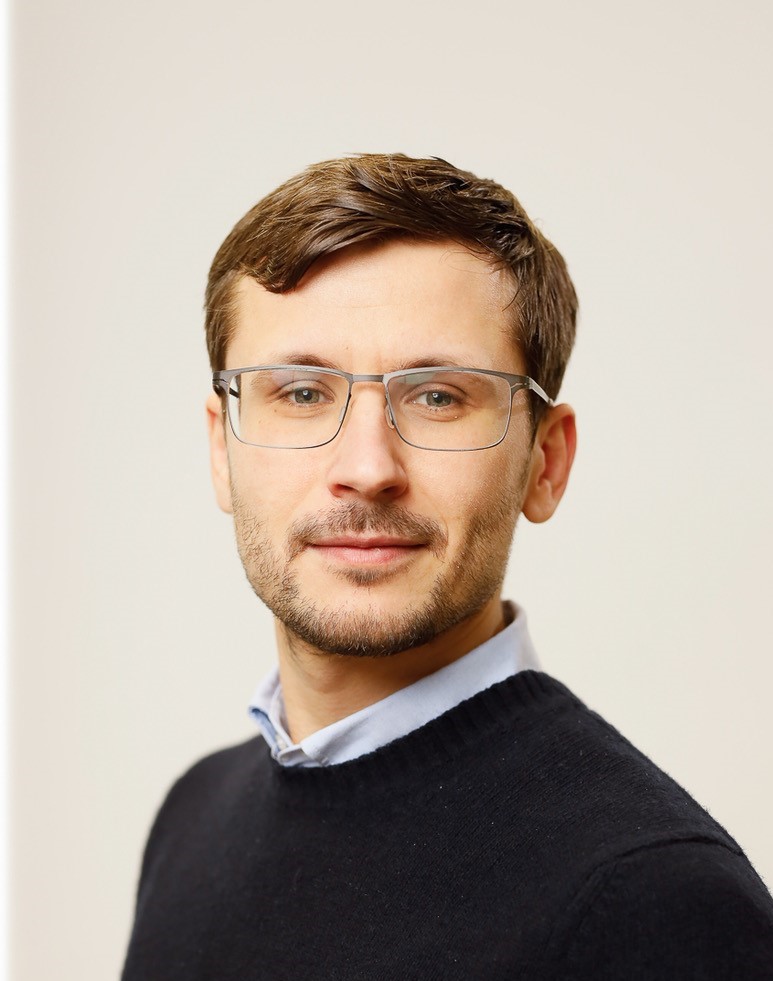
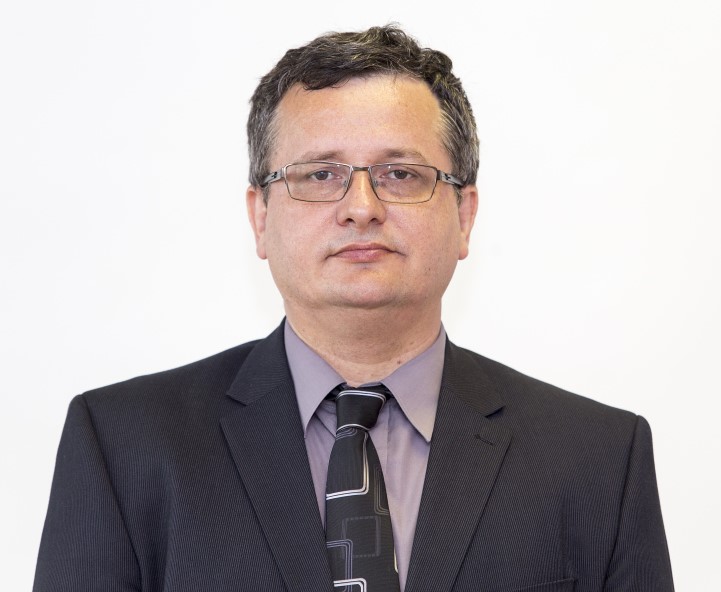
Takao Nakagaki is a Professor at the School of Creative Science and Engineering , Waseda University, with a focus on Catalyst and resource chemical processes , Energy chemistry , and Thermal engineering . Holding a Dr.Eng. from Waseda University, he contributes to academic societies as a member of the Japan Society of Mechanical Engineers (JSME) and the Society of Chemical Engineers, Japan (SCEJ). Research interests center on carbon capture and utilization (CCU) , chemical looping processes , exergy analysis , and thermal energy systems . His work explores innovative methods for CO2 mineralization using industrial byproducts, high-temperature CO2 separation with lithium silicate, and integration of nuclear and chemical processes for ironmaking. Scientific awards include the Gas Turbine Society of Japan Technology Award (2008) JSME Encouragement Award (1999) Key projects involve numerical modeling of CO2 absorption in porous sorbents, development of chemically recuperated gas turbines for DME fuel, and Aspen Plus simulations for active carbon recycling systems. His collaborations span institutions like Osaka University and Toshiba Corporation, with a focus on energy system design and industrial ecology .
Dr. Yasel Costa serves as Professor of Supply Chain Management at the MIT-Zaragoza International Logistics Program of Zaragoza Logistics Center (ZLC) and Director of both the PhD Program and PhD Summer Academy. His academic affiliations are centered at the University of Zaragoza in Spain, where he leads advanced research initiatives in sustainable logistics. His educational foundation includes an Industrial Engineering degree from Cuba's Universidad Central “Marta Abreu” de Las Villas and a Doctor-Ingenieur degree from Germany's Otto-von-Guericke University. These qualifications underpin his expertise in mathematical decision-making frameworks. Dr. Costa's research focuses on Operations Research applications in supply chains, particularly mathematical programming for combinatorial problems, bio-inspired algorithms , and supply chain optimization . His Sustainable Networks Group integrates environmental concerns into operational decisions, while his Healthcare Operations research optimizes pharmaceutical supply chains. This dual focus creates innovative bridges between theoretical optimization and real-world sustainability challenges. Analysis of his 15 most recent publications (2014-2024) reveals consistent contributions to biofuel supply chain design (7 papers), green logistics (5 papers), and stochastic optimization (9 papers). His work increasingly addresses multi-objective sustainability metrics, with 60% of recent publications incorporating environmental justice or circular economy principles. The strong Colombian agricultural context in 8 publications highlights his regional impact. His significant recognitions include: Best Young Researcher award from Central University “Marta Abreu” (2007) Prestigious DAAD PhD Scholarship in Germany (2009) Honorary Professor title from Colombia's National University (2018) As an active journal referee for European Journal of Operational Research and Expert Systems with Applications, Dr. Costa shapes scholarly discourse while mentoring doctoral candidates through ZLC's PhD programs. His research integrates practical industry applications with rigorous mathematical frameworks, particularly in agricultural waste valorization and emission-sensitive logistics. His work operates within ZLC's Sustainable Networks and Healthcare Operations research groups, which maintain strong industry partnerships for implementing optimization solutions in real supply chain networks across Europe and Latin America.
Haoshui Yu is an Associate Professor in the Department of Chemistry and Bioscience at Aalborg University’s Faculty of Engineering and Science in Esbjerg, Denmark. His research focuses on sustainable energy systems, decarbonization, and process systems engineering with a strong emphasis on energy storage, waste heat recovery, and renewable integration. He holds a visiting researcher experience at KU Leuven (June–August 2019) and has led significant projects like the 2022 initiatives on zero-emission energy systems and methane production using offshore infrastructure. His work bridges chemical engineering with environmental sustainability, addressing challenges in energy efficiency, carbon capture, and system optimization. Key research interests include Organic Rankine Cycles, compressed air energy storage (CAES), LNG cold energy utilization, and AI-driven process modeling. Over 68 publications since 2014 highlight contributions to energy systems, with recent work emphasizing machine learning applications in reactor design and system integration. Yu received the 2019 Excellent Researcher Award and has been actively involved in interdisciplinary collaborations, including visits to SLB (Schlumberger) in 2025. His lab’s projects often involve multi-objective optimizations and sustainability assessments, aiming to transition energy systems toward net-zero emissions.
Gary Howorth is a Research Fellow in the Department of Electronic and Electrical Engineering at the University of Strathclyde, Faculty of Engineering. With a PhD in Power Aggregation Business Models and extensive industry experience across BP, Arthur Andersen, PA Consulting, and PFC Energy, he brings a unique blend of technical and economic expertise to energy systems research. His work bridges industry practice and academic inquiry, focusing on next-generation energy solutions. His educational background includes a PhD (2023) and MBA from the University of Strathclyde, and a BSc in Electronic Engineering from the University of Southampton. Doctor of Philosophy, Power Aggregation Business Models, University of Strathclyde (2023) Master of Business Administration (MBA), University of Strathclyde (1990) Bachelor of Science, Electronic Engineering, University of Southampton (1982) Dr. Howorth's research focuses on Virtual Power Plants (VPPs) , agent-based modeling , energy market dynamics , and business model innovation in distributed energy systems. His work integrates technical modeling with economic and behavioral analysis, particularly in the context of smart grids and decarbonization. His recent publications (2023–2025) reveal a strong trend toward modeling DSO risk, optimizing VPP operations, and analyzing human and corporate behavior in energy markets. These works emphasize forecasting accuracy , flexibility markets , and real-world implementation challenges of VPPs, contributing to the transition toward net-zero energy systems. His scientific recognition includes the EE Zepler Prize (1981). He has contributed to major research projects, including an EPSRC-funded Doctoral Training Partnership, and is actively involved in professional activities such as CIRED 2025. Dr. Howorth has advised doctoral researchers and served as a Research Co-investigator on funded projects. He has collaborated with industry and international bodies, including part-time work with the World Bank on carbon financing and clean energy initiatives. His research is supported by grants from EPSRC and contributes to UN Sustainable Development Goals in energy and sustainability. He is involved in the development of VPP platforms and participates in professional networks such as the Energy Institute, where he served as Secretary for the Southern Scotland Branch until 2024.
Corey Baker is an Adjunct Lecturer in the Department of Chemical Engineering at the University of Western Australia (UWA), affiliated with the School of Engineering. His research focuses on cryogenic engineering, liquefied natural gas (LNG) production optimization, phase equilibrium in hydrocarbon systems, and thermodynamic modeling. He holds a Doctoral Thesis from UWA (2018) and has authored/co-authored multiple peer-reviewed articles in journals such as Fluid Phase Equilibria and Journal of Chemical Thermodynamics . Key research areas include predicting solidification in cryogenic systems, optimizing LNG processing via advanced phase equilibrium measurements, and developing rapid analysis techniques for hydrocarbon mixtures. His work bridges applied chemical engineering with fundamental thermodynamics, addressing challenges in both industrial LNG plants and theoretical studies of extraterrestrial cryogenics (e.g., Saturn’s moon Titan). Baker’s publications emphasize practical applications of cryogenic technology, with notable contributions to LNG safety, process efficiency, and interplanetary cryogenics. His doctoral work provided foundational insights into optimizing LNG production through advanced modeling and experimental validation.
Victor Bolbot serves as a Postdoctoral Researcher in the Department of Energy and Mechanical Engineering at Aalto University, Finland, affiliated with the Marine and Arctic Technology research group. His work focuses on advancing safety, reliability, and cybersecurity frameworks for autonomous maritime systems through rigorous systems engineering approaches and data-driven methodologies. He maintains active collaborations with international researchers and institutions, evidenced by extensive co-authorship across high-impact publications. Dr. Bolbot's research centers on autonomous ships, marine systems safety, ship propulsion cybersecurity, and risk modeling. He employs systems-theoretic process analysis (STPA), Bayesian networks, and association rule mining to address critical challenges including maritime accident causation, cybersecurity vulnerabilities in dual-fuel engines, safety acceptance criteria for autonomous vessels, and socio-technical implications of maritime automation. His methodological innovations bridge theoretical safety engineering with practical applications in Arctic navigation, inland waterways, and regulatory compliance, emphasizing the integration of cyber-physical risk assessment. Analysis of his 2023-2025 publications reveals three dominant research trajectories: (1) Development of cyber-physical risk frameworks like STPA-Cyber for maritime cybersecurity; (2) Real-time Bayesian modeling for dynamic operations including remote pilotage and ice navigation; and (3) Socio-technical investigations into regulatory frameworks, educational needs, and workforce skill transformations for autonomous shipping. His work consistently addresses the interplay between technological innovation and safety assurance, with growing emphasis on cybersecurity as a critical maritime safety component. As an active member of Aalto University's Marine and Arctic Technology research group, Dr. Bolbot contributes to interdisciplinary projects tackling complex challenges in marine safety engineering, Arctic operations, and sustainable maritime technologies. The group's collaborative environment supports the development of safer, more efficient, and environmentally conscious maritime systems through experimental validation, computational modeling, and industry partnerships.
Prof. Dr. Marcus Bentin serves as Professor of Ship Technology and Dean of the Faculty of Maritime Sciences at the University of Applied Sciences Emden/Leer, Germany. He actively represents the institution through memberships in the Shipbuilding Technology Society and its Education Committee, while leading research initiatives across ship technology, offshore engineering, and sustainable maritime systems. Research Focus: Bentin specializes in wind-assisted ship propulsion systems and route optimization for fuel efficiency, with significant contributions to offshore wind decommissioning logistics. His work bridges theoretical modeling and practical implementation through projects like DecomTools (Interreg, 2018-2023) for sustainable wind park dismantling and GreenSAILER (EFRE, 2016-2019) for innovative sailing vessel design. Current leadership includes the EFRE-funded cleaning robot development for offshore wind turbines (2024-2025). Publication Trends: His scholarly output (2005-2020) demonstrates consistent advancement in renewable energy integration for maritime transport, with emphasis on wind propulsion efficacy, operational optimization under environmental constraints, and shipbuilding process innovation. Key themes reveal strategic progression from foundational CAD/PDM systems research toward contemporary sustainability challenges in offshore wind logistics and emission reduction. Scientific Awards: No awards are documented in available institutional records. Research Leadership: Bentin has secured substantial funding from EFRE, Interreg, and MWK programs, directing projects including ROBUST (2010-2015) for ship resistance modeling and MarTIM (2011-2015) for LNG vessel performance measurement. His industry collaboration with Blohm & Voss Nordseewerke (2003-2009) focused on material flow simulation and PLM system optimization, demonstrating strong industry-academia translation. Research Infrastructure: As Dean, he oversees the Faculty of Maritime Sciences research ecosystem while personally leading the GreenShipping Niedersachsen Competence Center initiatives. His current EFRE-funded cleaning robot project (2024-2025) exemplifies hands-on development of specialized maritime technology solutions through interdisciplinary engineering teams.
Dr. Attila Imre is a Full-Time Professor in the Department of Power Machines and Systems at Budapest University of Technology and Economics (BME) . He also serves as a Part-Time Scientific Advisor at the MTA Energy Research Center . His research spans thermodynamics, energetics, physical chemistry, and ecology, with a focus on working fluids, phase transitions, and energy systems. Doctor of Science (DSc), Hungarian Academy of Sciences (2015) PhD in Physics, ELTE (1996) DrUniv in Solid-State Physics, ELTE (1994) MSc in Physics, ELTE Faculty of Physics (1990) Imre’s research integrates theoretical and applied studies in thermodynamic cycles, metastable fluids, and supercritical systems. He has pioneered work on working fluid selection, cycle efficiency, and cold energy utilization, particularly in organic Rankine cycles and power-to-methane technologies. His 15 most recent publications emphasize artificial intelligence in energy systems, economic analyses of sustainability, and thermodynamic modeling of extreme-state fluids. Key trends include AI-driven performance mapping, techno-economic evaluations of waste heat recovery, and ecological applications of fractal geometry. Scientific Awards : Humboldt Scholarship, Johannes Gutenberg University, Mainz, Germany (1999) Imre has held prestigious postdoctoral roles at the University of Tennessee and senior research positions in Hungarian institutions. His work bridges energy engineering, computational modeling, and interdisciplinary challenges in translation and cultural studies.
Flavio Caresana is an Associate Professor at the Department of Industrial Engineering and Mathematical Sciences (DIISM) within the Faculty of Engineering at Università Politecnica delle Marche (UNIVPM) in Ancona, Italy. His academic work focuses on energy systems with particular emphasis on sustainable technologies and environmental applications. Professor Caresana's research spans multiple areas of energy engineering, with primary focus on heat pump systems , hydrogen storage technologies , renewable energy integration , and energy recovery systems . His work combines theoretical modeling with experimental validation, particularly in the areas of thermal engineering and sustainable energy systems. He has developed methodologies for multi-objective optimization of energy systems, techno-economic analysis of emerging technologies, and dynamic control strategies for energy storage solutions. His recent publications demonstrate a strong trend toward addressing climate change mitigation through technological innovation. Key research themes include the integration of renewable energy sources into building systems, carbon-neutral urban planning, and the development of efficient energy storage solutions. Professor Caresana's work often bridges theoretical engineering principles with practical applications in the energy sector. Professor Caresana maintains an active research profile with numerous publications in international journals and conference proceedings. His work contributes significantly to the fields of thermal engineering, sustainable energy systems, and environmental technology.
Dr Gongkui Xiao is an Adjunct Research Fellow in the Department of Chemical Engineering at the University of Western Australia . His research focuses on adsorption science, pressure swing adsorption (PSA) processes, and their applications in carbon capture, helium separation, and hydrogen purification. He collaborates with industry partners on projects like upgrading landfill gas to renewable natural gas and sustainable mining tailings utilization. Dr Xiao has secured over $2.8 million in research funding since 2016, leading projects in zeolite synthesis, low-cost helium production, and biogas upgrading. He holds a PhD in Chemical Engineering from Monash University (2012) and degrees from Dalian University of Technology. Teaching roles include coordinating courses such as Gas Processing Technologies and supervising engineering design projects. His work aligns with UN SDGs related to affordable and clean energy, industry innovation, and responsible consumption. Key research outputs span advanced adsorbent materials, non-cryogenic helium recovery, and phase-change mechanisms in CO₂ capture systems. Grants: Over $1.4M as Lead CI and $1.4M as Co-CI since 2016. Collaborations: North American/European industry partnerships, Future Energy Exports CRC. Labs/Teams: Focus on adsorption technology, sustainable resource recovery, and process optimization.
Graeme White is a Professor at the School of Engineering & Physical Sciences, Heriot-Watt University, and a professorial fellow within the Institute of Mechanical, Process & Energy Engineering. His research focuses on fluid dynamics, multiphase flow modeling, and their applications in offshore engineering and pharmaceutical crystallization. He has led roles such as Head of Teaching and Academic Head of Department, and currently heads the Multiphase Research Group. His work addresses critical industrial challenges, including optimizing offshore floating production systems (e.g., gas/oil/water separation on moving platforms) and improving CFD models for pharmaceutical crystallization. Collaborations with industry and EPSRC-funded projects underscore his translational research. Key facilities include oscillating column labs simulating platform motion and Large Eddy Simulation modeling for industrial-scale systems. Recent research trends reflect his dual focus on offshore gas processing (e.g., acid gas removal on FLNG units) and crystallization dynamics. His contributions span over 40 publications, emphasizing fluid mechanics and sustainability-aligned energy systems. Expertise: Computational Fluid Dynamics (CFD), Multiphase Systems, Offshore Engineering Industry Collaboration: Oil & Gas, Pharmaceutical sectors Key Projects: EPSRC-Industry crystallization models, FLNG acid gas removal
Georgios Papadopoulos is an Associate Professor at the Department of Materials Science and Engineering, School of Chemical Engineering, National Technical University of Athens (NTUA). His work bridges engineering, technology, and interdisciplinary applications, with a focus on supply chain optimization, blockchain technologies, and sustainable systems. He holds office C.301 and can be reached at gkpap@chemeng.ntua.gr . Research interests span advanced logistics systems, AI integration in manufacturing, and healthcare engineering solutions. Recent explorations include blockchain-driven supply chain traceability for food and wine industries, predictive maintenance in reverse logistics, and decarbonization strategies in maritime fuels. His work also addresses societal challenges like food waste mitigation and pediatric cardiomyopathy diagnostics. Publications reflect a multi-disciplinary approach: 2024 studies include AI applications in supply chains and digital health interventions, while 2023 papers focus on blockchain systems and carbon emissions verification. Earlier works (2022-2003) cover cybersecurity in maritime systems, gear mechanics, and surgical prosthetics. He collaborates with industry partners on Lean Six Sigma methodologies and public sector process optimization. His academic contributions span 40+ peer-reviewed articles across chemical engineering, logistics, and medical fields. Active in professional communities, he advises on EU-funded projects and participates in institutional committees at NTUA. Ongoing research emphasizes smart manufacturing ecosystems and climate resilience frameworks for supply chains.
Mesfin Woldetensay is an Associate Professor in the School of Engineering & Physical Sciences at Heriot-Watt University, United Kingdom. His research focuses on natural gas processing, optimization, and energy systems, contributing to sustainable energy solutions aligned with UN Sustainable Development Goals. His research interests lie in the optimization and reliability of natural gas processing systems, particularly in liquefaction, NGL recovery, and refrigeration plant design. He applies advanced modeling techniques such as polynomial chaos expansion and sensitivity analysis to improve process efficiency and robustness. His work bridges engineering and economic evaluation, aiming to enhance energy sustainability and system reliability. The trend in his recent publications shows a strong focus on uncertainty quantification, risk-based optimization, and techno-economic analysis of natural gas systems. His work spans from fundamental thermodynamic modeling to practical retrofitting and offshore applications, demonstrating both theoretical depth and industrial relevance. There are no scientific awards explicitly mentioned in the provided text. Mesfin Woldetensay has collaborated extensively on research projects related to energy systems and gas processing. While no formal students are listed, his role as a researcher and academic suggests advisory and mentorship activities. No specific grants are mentioned, but his research output implies active project involvement. There is no explicit mention of laboratories or research teams led by Mesfin Woldetensay in the provided content.
Adam Brandt is a Professor of Energy Science Engineering at Stanford University and a Senior Fellow at the Precourt Institute for Energy. His research focuses on reducing environmental impacts of energy systems, particularly greenhouse gas emissions from fossil fuels. He employs life cycle assessment (LCA) and process optimization to analyze energy systems at large scales. His work addresses emissions from transportation energy supply, power systems with carbon capture, and methane leakage reduction. Brandt holds a Ph.D., M.S., and B.S. from UC Berkeley and UC Santa Barbara, respectively. **Education:** Ph.D., Energy and Resources, UC Berkeley (2008) M.S., Energy and Resources, UC Berkeley (2005) B.S., Environmental Studies (Physics emphasis), UC Santa Barbara (2003) His research interests emphasize actionable solutions for decarbonization, including: Methane emissions mitigation strategies Life cycle assessment frameworks for energy systems Optimization of energy system efficiency Climate policy design for fossil fuel industries Aircraft-based emission monitoring technologies Recent work highlights advancements in carbon intensity mapping, satellite-based methane detection, and policy mechanisms for low-cost emission reductions. His projects often involve interdisciplinary collaboration across engineering, environmental science, and economics. Brandt is affiliated with the Environmental Assessment and Optimization (EAO) Group and contributes to Google Scholar publications on energy transitions and climate mitigation.
Pietro Lubello is a Research Fellow in Energy System Modelling at the Bartlett School of Environment, Energy & Resources, University College London (UCL). He holds a PhD in Energy Engineering from Università degli Studi di Firenze, Italy, where his research focused on demand-side flexibility in the residential sector. Prior to joining UCL, he served as a teaching assistant in Florence, worked as a visiting researcher at Université de Liège in Belgium, and provided part-time consulting services in the energy sector. Dr. Lubello's educational background includes: PhD in Energy Engineering, Università degli Studi di Firenze, Italy (2019-2024) Visiting PhD Researcher, Université de Liège, Belgium (2021-2022) Postgraduate Teaching Assistant, Università degli Studi di Firenze (2019-2022) Postgraduate Research Assistant, Università degli Studi di Firenze (2019) Dr. Lubello's research focuses on energy system modeling for policy advisory, with particular emphasis on both the Global South context and Europe. Since joining UCL, he has been actively involved in developing national integrated energy models and strategies for Kenya. His specific areas of interest include power sector development, clean cooking solutions, transport sector transformation, and future hydrogen applications. Prior to his work at UCL, his research primarily centered on the European residential sector, investigating demand flexibility and energy communities. His work combines technical energy modeling with socio-economic considerations to inform practical policy solutions for sustainable energy transitions. Dr. Lubello's publication record demonstrates a strong focus on energy modeling applications, particularly in Kenya and other developing contexts. His recent work shows increasing emphasis on geospatial energy modeling, hydrogen applications, and integrated sectoral approaches to energy planning. He has developed expertise in both residential energy systems and large-scale national energy planning, with a consistent thread of applying modeling to inform real-world policy decisions. Dr. Lubello actively contributes to teaching at UCL, supporting the 'Introduction to Modelling Methods and Scenarios' module. Previously, he assisted teaching activities for graduate courses at Università degli Studi di Firenze, including 'Industrial energy management' and 'Advanced energy systems,' where he delivered lectures on energy storage technologies and LNG supply chain.