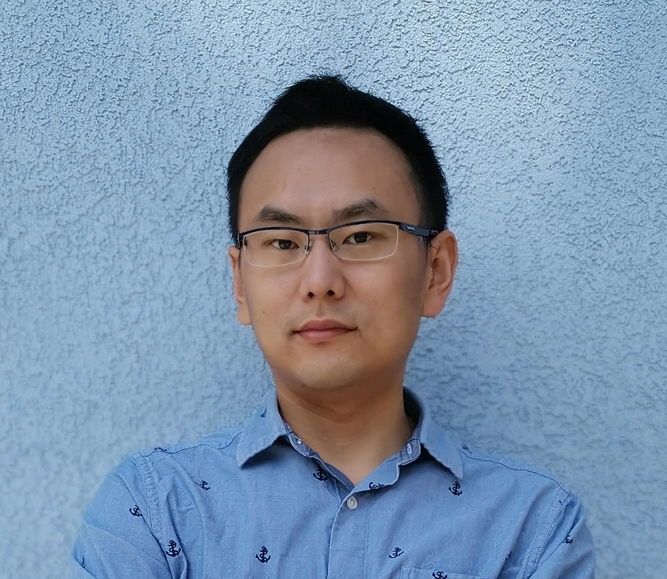
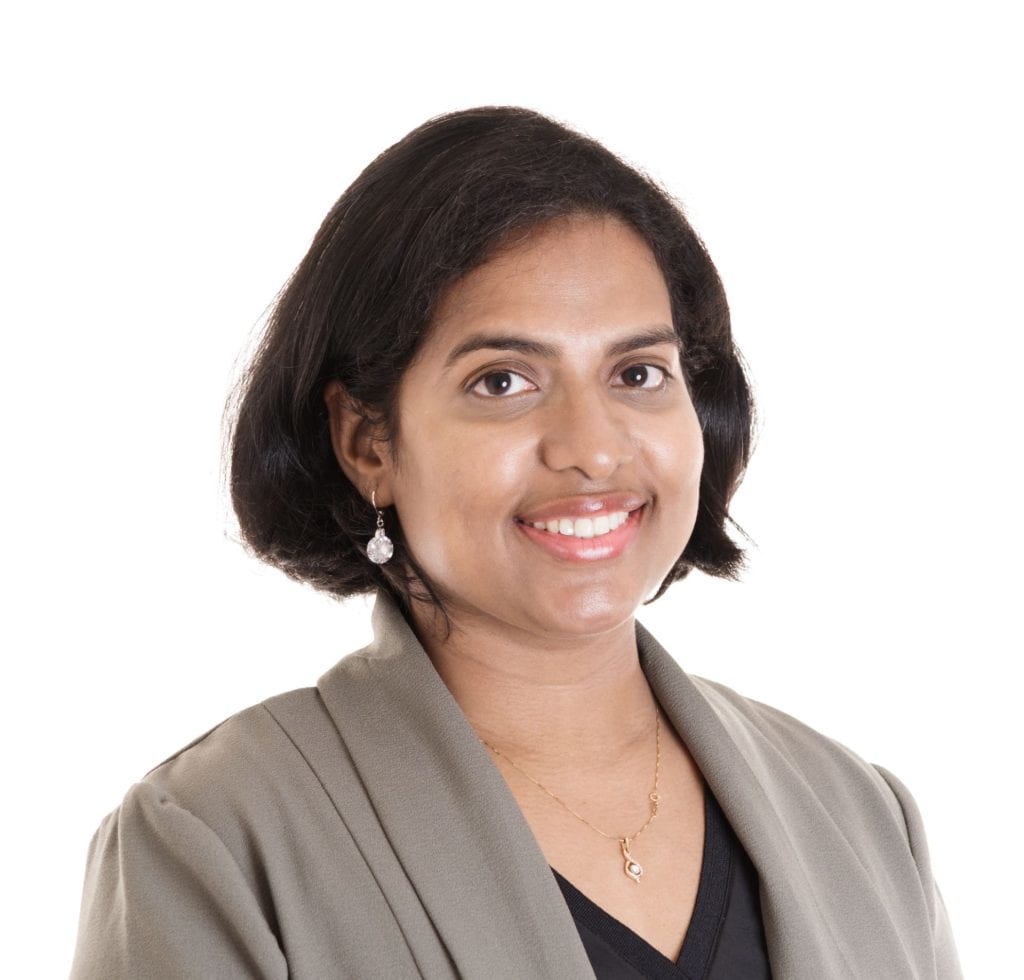
Santosh Nagarakatte is a Professor and Undergraduate Program Director in the Department of Computer Science at Rutgers University. His research focuses on hardware-software interfaces, compilers, formal verification, and numerical methods. He has contributed to projects like the RLIBM math library and verified eBPF ecosystems, emphasizing robustness and security in software systems. Education: PhD in Computer Science from the University of Pennsylvania. His work has been recognized with awards including the ACM Distinguished Member (2023), NSF CAREER Award (2015), and multiple distinguished paper awards at top conferences like PLDI and POPL. Research interests include compiler optimizations, verified compilers, memory safety, and high-performance computing. He has advised numerous PhD students and leads projects funded by Intel, NSF, and the eBPF Foundation. His lab focuses on practical formal methods and math library correctness.
Wolfgang Banzhaf is the John R. Koza Endowed Chair in Genetic Programming and a Professor in the Department of Computer Science and Engineering at Michigan State University. He previously served as University Research Professor at Memorial University of Newfoundland, holding leadership roles including Department Head. His research focuses on bio-inspired computing, evolutionary computation, complex adaptive systems, and artificial life, with recent emphasis on network research applications. Education: Dr.rer.nat (Ph.D.) from Karlsruhe Institute of Technology (KIT), Diplom in Physik (M.Sc.) from Ludwig-Maximilians-University, Munich. Research Interests include genetic programming, evolutionary algorithms, self-organization, and computational models of biological systems. He has pioneered work in genetic programming, founding the Genetic Programming and Evolvable Machines journal and co-founding the European Genetic Programming conference series. Notable awards include the EvoStar Award (2007), ACM SIGEVO Outstanding Contributions Award (2023), and ISAL Lifetime Achievement Award (2022). His work spans 200+ publications, with recent contributions in symbolic regression, protein engineering, and evolutionary machine learning. Advising: Supervised over 20 graduate students and postdocs, including Jorden Schossau, Kenneth Reid, and Mark Kocherovsky. Active in interdisciplinary projects like NIH-funded genomic prediction and MRI reporter gene engineering. Labs/Teams: Leads research groups at MSU collaborating on evolutionary computation, artificial life, and computational biology. Collaborates with institutions globally on theoretical and applied projects.
John Regehr is a Professor in the School of Computing at the University of Utah. His research focuses on compilers, formal verification, software testing, and embedded systems. He has contributed to tools like Alive2, YARPGen, and ARMor, which address compiler correctness, fuzz testing, and secure isolation. His work emphasizes uncovering compiler bugs, optimizing low-level code, and ensuring system reliability. Key collaborations include Eric Eide, Yang Chen, and Nuno P. Lopes. His articles span compiler verification, fuzzing techniques, and embedded system safety, reflecting a strong commitment to both academic rigor and practical impact. Research interests include compiler optimization validation, undefined behavior analysis, and program synthesis. His work on peephole optimizations and formal methods has influenced LLVM and industry practices. He also explores scheduling algorithms for real-time systems and memory safety in constrained environments like TinyOS. Notable contributions include foundational papers on compiler bug detection (e.g., 'Finding and understanding bugs in C compilers') and tools like Minotaur for SIMD optimization. His lab's work often bridges theory and practice, with applications in security, performance, and embedded software reliability.
Qirun Zhang is the Catherine M. and James E. Allchin Early Career Associate Professor in the School of Computer Science at Georgia Institute of Technology. His research focuses on program analysis, compiler optimization, and formal language theory, with numerous publications in top-tier programming language and software engineering conferences including PLDI, POPL, OOPSLA, and FSE. He teaches courses on compilers, program analysis, and software testing. Dr. Zhang's research interests center on improving software reliability and security through advanced program analysis techniques. He approaches problems from perspectives including computational complexity, analytic combinatorics, graph theory, and formal languages. His work often bridges theoretical foundations with practical applications in compiler design and program verification. His recent publications show a strong focus on context-free language reachability, Dyck-language based analyses, and SMT solving techniques. His research demonstrates consistent innovation in making program analysis more precise while maintaining scalability, with applications ranging from debug information validation to software debloating and type inference. PLDI Distinguished Paper Award (2020) SIGSOFT Distinguished Paper Award (2023) OOPSLA Distinguished Artifact Award (2022) Dr. Zhang actively mentors PhD and MS students, with current advisees including Camille Bossut and Benjamin Mikek. His service to the academic community includes Artifact Evaluation Co-Chair roles for PLDI 2025 and 2026, and program committee membership for numerous top conferences including PLDI, POPL, and OOPSLA. He leads research projects including SLOT, Context-Free Language Reachability with Transitive Redundancy Elimination, and Debug Information Validation.
Prof. Dr.-Ing. Steffen Helke serves as a full Professor in the Department of Electrical Engineering & Information Technology at University of Applied Sciences Südwestfalen. His academic roles include Senate membership, evaluation officer for the department, program coordinator for Media Informatics, and spokesperson for the GI Specialist Group Automotive Software Engineering. Current affiliations span committee work in electrical engineering bachelor programs and leadership in safety-critical software research. His research focuses on functional software security , safety-critical system verification , and model-based quality assurance . Key areas include information flow control languages, automotive software security, hierarchical statechart validation, and requirements delta analysis for efficient development estimation. Methodologies emphasize formal verification, static analysis, and tool-supported refactoring to ensure robustness in embedded systems. Teaching encompasses advanced courses in Software Engineering, IT Security, Ethical Hacking, and Competitive Programming. Thesis supervision occurs in research areas like NLP-based requirements analysis, refactorings for security languages (Jif), and model checking for Statecharts. Industrial collaborations facilitate project/bachelor theses with real-world security applications. Research trends from publications show consistent focus on bridging formal methods with industrial software development. Dominant disciplines include Software Engineering (72% of works) and Formal Verification (58%), with emerging subfields like NLP-assisted requirements engineering (2019) and automotive security frameworks. Keyword analysis reveals sustained emphasis on verification (100% of works), security (80%), and automotive applications (40%). Administrative contributions include leadership in the combined Electrical Engineering bachelor program and active participation in university governance through department councils. Tools developed in his research (e.g., Delta Analyzer, R2BC) are integrated into curricula using ReqView, Matlab/Simulink, and Enterprise Architect for systematic requirement engineering and UML modeling.
David Lie is a Professor in the Department of Electrical and Computer Engineering at the University of Toronto. He holds additional appointments in the Department of Computer Science and the Faculty of Law. He is a Tier 1 Canada Research Chair in Secure and Reliable Systems, a research lead at the Schwartz Reisman Institute for Technology and Society, an Associate Director at the Data Sciences Institute, a Vector Faculty Affiliate, and a Senior Massey College Fellow. His educational background includes: BASc from the University of Toronto (1998) MS from Stanford University (2001) PhD from Stanford University (2004) David Lie's research spans computer security, privacy, and cybersecurity. He is renowned for pioneering the XOM architecture—a foundational model for modern trusted execution environments like ARM TrustZone and Intel SGX—and developing the widely adopted PScout Android permission mapping tool. His current work emphasizes program analysis, fuzzing, and symbolic execution to enhance software security and reliability, addressing critical vulnerabilities in mobile and system software. His recent publications reveal a strong trajectory in integrating machine learning with program analysis techniques. Key themes include optimizing symbolic execution for Android apps, leveraging LLVM IR for bug detection, and using predictive models to guide test generation. These contributions underscore a practical focus on scalable, automated security tools that bridge theoretical advances with real-world software vulnerabilities. His notable awards include: Best Paper Award at SOSP Tier 1 Canada Research Chair in Secure and Reliable Systems Senior Massey College Fellow No specific information on student advising or research grants was provided in the available text, though his extensive program committee service for top security conferences (OSDI, IEEE Security & Privacy, CCS, etc.) indicates significant academic leadership. David Lie actively contributes to interdisciplinary research ecosystems through his roles at the Schwartz Reisman Institute for Technology and Society (as research lead), the Data Sciences Institute (as Associate Director), and the Vector Institute for Artificial Intelligence (as Faculty Affiliate), fostering collaborations between security research, law, and societal impact studies.
Steve Zdancewic is the Schlein Family President's Distinguished Professor and Associate Chair in the Department of Computer and Information Science at the University of Pennsylvania. His research spans programming languages, computer security, formal verification, and type theory, with significant contributions to LLVM verification, program synthesis, and quantum programming. He co-leads Penn's Programming Languages Research Group with Benjamin Pierce and Stephanie Weirich. His research focuses on: Programming language foundations (type theory, linear logic, semantics) Formal verification (Coq, LLVM, interaction trees) Security (information-flow control, memory safety) Emerging paradigms (quantum programming, secure distributed systems) Publication trends reveal deep engagement with formal methods (67%), programming language design (20%), and systems security (13%), primarily using Coq for mechanized verification. Recent works demonstrate increased focus on parallel/streaming computation and synthesis techniques. Awards Distinguished Paper Awards (ECOOP 2023, POPL 2020) Schlein Family President's Distinguished Professor (2021) Lindback Distinguished Teaching Award (2018) IEEE MICRO Top Picks (2013) Sloan Fellowship (2009-2010) NSF CAREER Award (2004) Best Paper Awards (SOSP 2001, ICFP 1999) Research Leadership Directs multiple NSF-funded projects including DeepSpec (verified systems infrastructure), Vellvm (LLVM semantics), and ExCAPE (program synthesis). Advises 5 PhD students and 31 former advisees/postdocs. Served as General Chair for POPL 2025 and associate chair for PLDI/ICFP/POPL. Infrastructure Leads the Vellvm project developing Coq-based LLVM semantics, the Interaction Trees framework for recursive/impure programs, and Qwire for quantum circuit verification. Maintains active collaborations with Galois Inc. and INRIA.
Klaus von Gleissenthall is a tenured Assistant Professor in Computer Science at Vrije Universiteit Amsterdam, affiliated with the Theory Group and VUSec security lab. He holds a joint appointment with CWI's Computer Security group. Previously, he was a post-doc at UCSD and completed his PhD at TUM under a Microsoft Research scholarship. His research integrates programming languages , security , and systems to develop formally verified, low-overhead solutions for hardware/software correctness. Key focus areas include: Side-channel attack mitigation via leakage contracts Refinement-type systems for hardware verification Byzantine fault tolerance in distributed systems Publications demonstrate strong emphasis on hardware security (45% of recent papers), formal methods (30%), and distributed systems (25%), with consistent appearances in top-tier venues (S&P, CCS, OOPSLA). Awards & Honors: ERC Starting Grant (€1.5M, 2024) Intel Hardware Security Award Honorable Mention (2020, 2024) Distinguished Paper Awards: CCS'23, OOPSLA'23, POPL'21 He advises four PhD students and two post-docs, supported by his ERC grant. Current projects include refinement types for hardware and pre-silicon leak detection. His lab collaborates with VUSec and CWI, focusing on scalable verification tools like LLVM Blade and methodologies for constant-time execution guarantees.
Zhiyun Qian is the Everett and Imogene Ross Professor in the Department of Computer Science and Engineering at the University of California Riverside. His research bridges academic security research with practical hacking techniques, focusing on vulnerability discovery and analysis across operating systems, networks, and mobile platforms. His primary research interests include: System security: Automated cyber attacks/defenses, kernel vulnerability discovery, and security tool development Network security: TCP side channels, multi-path TCP flaws, and firewall evasion techniques AI/ML applications for security: LLM-integrated static analysis and reinforcement-learning-based fuzzing His work has led to critical discoveries including unfixable TCP side channel vulnerabilities (CVE-2016-5696) recognized with GeekPwn awards. His research methodology combines program analysis, reverse engineering, fuzzing, model checking, and machine learning to build practical security systems. Notable scientific awards include: GeekPwn 2016 most creative idea award Geekpwn 2017 winner award Applied Networking Research Prize Professor Qian actively mentors students in security competitions including Pwn2Own and GeekPwn. He serves on prestigious program committees including IEEE Security and Privacy (Oakland), ACM CCS, and USENIX Security. His teaching portfolio includes graduate courses CS 254 (Network Security) and CS 255 (Computer Security), along with undergraduate courses CS 153 (Operating Systems) and CS 165 (Computer Security). He leads the SecLab research group at UCR (GitHub: seclab-ucr, 3824★) developing security tools for kernel and Android ecosystems. Current projects focus on LLM-enhanced static analysis, precise vulnerability detection, and automated patch testing.
Anitha Gollamudi is an Assistant Professor in the Department of Computer Science at the Miner School of Computer and Information Sciences, University of Massachusetts Lowell. She teaches core courses including Systems Security (COMP 5300), Compiler Construction (COMP 4060/5340), and Organization of Programming Languages (COMP 3010). Her research focuses on language-based security through hardware-assisted mechanisms, cryptography, and formal methods. Current projects include: Automatic compartmentalization of Trusted Execution Environment (TEE) programs Formal foundations of Fully Homomorphic Encryption (FHE) compilers Privacy-preserving machine learning with encrypted learning Analysis of her 8 recent publications (2016-2025) reveals dominant themes in TEE security and secure compilation. Key contributions address memory safety in WebAssembly, authorization logic for computation principals, and formal verification of cryptographic systems. Her work consistently bridges theoretical foundations with practical implementations for real-world security challenges. No scientific awards were mentioned in the available information. Professor Gollamudi actively mentors students across levels, currently advising PhD candidates Wesley B. Nuzzo and Samuel Dodson alongside undergraduate Benjamin Houle. Her former students include Nam Bui, James Chen, Yuka Akiyama (honors thesis), and Andrew Eggleston. She emphasizes collaborative research and encourages prospective students to contact her with research interests and academic background. She leads a research group focused on applying programming language techniques to security problems, with ongoing projects targeting enclave placement optimization, FHE correctness verification, and encrypted machine learning frameworks.