Cristina Lopes is a Professor of Informatics at the Donald Bren School of Information and Computer Sciences , University of California, Irvine. She holds administrative roles including Director of the Master of Software Engineering Program and former Director of the Institute for Software Research . Her research focuses on software engineering, programming languages, and distributed systems, with contributions to open-source projects like OpenSimulator and AspectJ. She has authored the influential book Exercises in Programming Style . Education: PhD from Northeastern University, MS/BS from Instituto Superior Técnico (Portugal). Awards include IEEE Fellow (2019), ECOOP Test of Time Award (2017), and ACM Distinguished Scientist (2011). She co-founded a virtual reality company for urban redevelopment and leads NSF-funded projects, including the prestigious CAREER Award. Research Interests: Large-scale software systems, aspect-oriented programming, code clone detection, and applying AI to programming challenges. Her work bridges theory and practice, with applications in urban simulation and healthcare systems. Awards and Grants: Over 15 awards including national and international distinctions. Grants focus on scalable software tools and environmental sustainability in computing. Labs/Teams: Leads the Software Engineering Research Group and collaborates with industry partners on open-source infrastructure and AI-driven development tools.
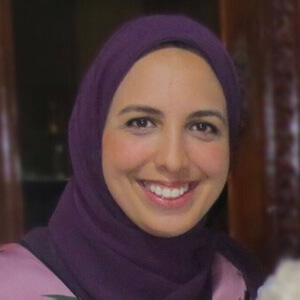
Crista Lopes is a Professor in the Department of Computer Science at the University of California, Irvine (UCI), affiliated with the Donald Bren School of Information and Computer Sciences. She serves as Director of the Master of Software Engineering Program and previously led the Institute for Software Research. Her research focuses on software engineering, programming languages, and distributed virtual environments. Dr. Lopes holds editorial roles as Editor-in-Chief of The Art, Science, and Engineering of Programming and on the Advisory Board of PACMPL . She has received notable awards including IEEE Fellow (2019), ECOOP Test of Time Award (2017), and ACM Distinguished Scientist (2011). Her teaching spans courses like INF 212 Programming Languages II and INF 225 Information Retrieval . Recent research includes AI-assisted programming tools, code analysis frameworks like Sourcerer , and studies on climate-conscious conference practices. She actively mentors students in UCI’s Software Engineering doctoral program.
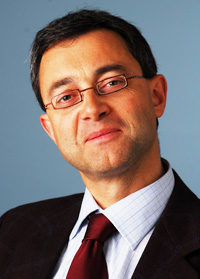
James Allan is a Distinguished Professor and Associate Dean of Research & Engagement in the Manning College of Information and Computer Sciences at the University of Massachusetts Amherst. He joined the Computer Science Department in 1994 and has been a Professor since 2008. He also directs the Center for Intelligent Information Retrieval (CIIR) and holds a part-time joint appointment as a GI-CoRE Affiliated Professor with the Faculty of Information Science and Technology at Hokkaido University, Japan. Dr. Allan received his PhD and MS in Computer Science from Cornell University in 1995 and 1991, respectively, and an AB in Mathematics from Grinnell College in 1983. Prior to his academic career, he spent five years as a systems programmer/analyst at Dickinson College and co-founded a startup selling email software in the 1980s. Professor Allan's research focuses on information retrieval, with particular emphasis on interactive information retrieval systems, automatic information organization, and evaluation methodologies. His work explores how novelty can be incorporated into retrieval algorithms, techniques for querying across languages, and methods for recognizing controversial or misleading information in text on the internet. His recent work has expanded into understanding large language models for information retrieval tasks, including mechanistic analysis of ranking LLMs and explainability in search results. His research has significant implications for improving user experience in search systems and addressing challenges in misinformation detection. Dr. Allan has received numerous prestigious awards, including Best Paper awards at SIGIR in 2001 and 2006, a Best Student Paper from CHIIR in 2017, and Best application paper from ECIR in 2019. He received the SIGIR Test of Time Award for a 1998 paper on event detection and tracking and the ECIR Test of Time Award for a 2009 paper on topic models in IR. In 2021, he was elected to the SIGIR Academy and elevated to Fellow of the ACM. He has served on the CRA Board of Directors since 2018, including as Treasurer. As Associate Editor of ACM's Transactions on Information Systems (TOIS) and Elsevier's Information Processing and Management (IPM), and as a member of the editorial board of Foundation and Trends in Information Retrieval, Dr. Allan has significantly shaped the field. He has served on organizing and program committees for major conferences including SIGIR, CIKM, and WSDM, and chaired the SIGIR organization. His leadership extends to directing the CIIR, which has been instrumental in shaping the International Conference on the Theory of Information Retrieval (ICTIR). The Center for Intelligent Information Retrieval (CIIR), which Dr. Allan directs, is a leading research center focused on advancing information retrieval technologies. The center has been at the forefront of research in interactive information retrieval, cross-lingual information retrieval, and novel evaluation methodologies. Under his leadership, CIIR researchers have made significant contributions to understanding user behavior in search systems and developing more effective and transparent retrieval algorithms.
Professor Ian Harris is a faculty member in the Department of Computer Science at the University of California, Irvine (UCI), affiliated with the School of Information and Computer Sciences. His research focuses on secure hardware/software systems, natural language processing for security, and AI-driven solutions for cybersecurity challenges. He holds a B.S. (1990), M.S. (1992), and Ph.D. (1997) in Computer Science from the Massachusetts Institute of Technology and UC San Diego, respectively. His work spans AI/ML, natural language understanding, cybersecurity, and privacy. Key projects include developing cyber test ranges for IoT security, detecting social engineering attacks via scam signatures, and creating empathy-driven conversational models for mental health support. Notable achievements include UCI's fourth-place finish in the eCTF competition (2022) and the Embedded Security Team's 11th global ranking (2024). He also contributes to diversity initiatives in tech, emphasizing equitable access to STEM fields. Recent publications highlight advancements in adversarial AI defense (e.g., jailbreak attack detection) and distributed LLM inference systems for mobile devices. His research bridges theoretical computer science with practical applications in embedded systems security and healthcare technology.
Emanuele Panizzi is an Associate Professor in Computer Science at Sapienza University of Rome, Italy. He is affiliated with the Department of Computer Science within the Faculty of Information Engineering, Computer Science, and Statistics. His research focuses on AI-driven Human-Computer Interaction (HCI), particularly in smart parking systems and earthquake early warning systems. Previously, he explored usability testing, compiler design, and parallel computing. Panizzi teaches HCI and Software Architecture courses in Sapienza’s AI and Computer Science programs. He advises four Ph.D. students and over 10 master’s/bachelor’s students, having supervised 350+ theses. His consulting experience includes firms like Telepass and Immobiliare.it, emphasizing technology transfer and team leadership in R&D. Research interests span AI applications in urban mobility, disaster response, and cultural heritage. He coordinates interdisciplinary projects and has led teams of 4–80 people, emphasizing practical innovation. His work bridges academia and industry through collaborative frameworks and prototyping. Panizzi’s contributions include over 50 publications, with recent work addressing LLMs in design, implicit interaction systems, and AI ethics. His labs focus on HCI innovations and IoT-based solutions for societal challenges.
Dongoh Park is a Senior Policy Advisor at Google’s Trust and Safety Team and a Visiting Policy Fellow at the Oxford Internet Institute (University of Oxford) since April 2023. At OII, he collaborates with the Governance of Emerging Technologies (GET) program and Professor Mittelstadt, focusing on AI alignment challenges and the impact of large language models (LLMs) on the web ecosystem. His work bridges AI policy, sociotechnical systems, and historical perspectives on computing. Ph.D. in Social Informatics, Indiana University Bloomington MSc in History of Science and Technology, Seoul National University BSc in Computer Science and Engineering, Chung-Ang University His research explores the intersection of AI policy , technology ethics , and the historical development of computing . Current work emphasizes responsible AI frameworks , the social consequences of generative AI , and policy implications of LLMs . Earlier publications focus on sociotechnical aspects of public-key infrastructure, digital standardization disputes, and innovation policy in Asia. Recent publications highlight trends in digital governance , technological sovereignty , and historical analysis of digital systems . Themes include managing uncertainty in innovation, ethical AI development, and sociopolitical dimensions of technology policy. His work spans theoretical and applied perspectives, linking historical case studies with contemporary AI governance challenges. Dongoh Park’s affiliations include the Digital Economic Security Lab and Governing in the Age of AI research groups at OII. He contributes to policy discussions on digital security, standardization, and the sociotechnical evolution of internet infrastructure.
Amitava Datta is a Professor in the Department of Computer Science and Software Engineering at The University of Western Australia. His research focuses on areas such as bioinformatics, computer graphics, mobile networks, optical computing, and medical imaging. He holds a BSc from Calcutta University, an MSc from Kanpur University, and an MTech and PhD from IIT Madras. His expertise includes developing algorithms for medical image segmentation (e.g., pancreas and tumor detection), misinformation detection using BERT models, and social network analysis. He has contributed to projects like the BeeDAS data acquisition system for beehive monitoring and collaborated on cancer research targeting glioblastoma and osteosarcoma. His work aligns with UN Sustainable Development Goals, particularly in health and environmental sustainability. Awarded the Best Demo Paper Award at the 2017 WWW Conference, his research spans grants from organizations like the CRC for Honey Bee Products and NHMRC. He has supervised 37 research works, focusing on AI applications in healthcare, cybersecurity, and computational biology. His lab explores innovations in deep learning, medical informatics, and smart systems for environmental monitoring.
Kasimir Forth is a Researcher at ETH Zurich's Department of Civil, Environmental and Geomatic Engineering, affiliated with the Professorship for Circular Engineering for Architecture. He is completing his PhD at Technical University of Munich (TUM) on BIM-based semantic enrichment using Large Language Models under Prof. André Borrmann. His research focuses on automating environmental assessments for sustainable buildings using digital methods like BIM and LLMs, particularly in early design stages. Currently, he contributes to the SWIRCULAR project, developing automated Digital Product Passports via BIM. Education: B.Sc. in Engineering Science (TUM) M.Sc. in Energy-Efficient and Sustainable Building (TUM, Distinction) Research Interests: BIM integration in sustainability analysis AI-driven semantic enrichment for environmental metrics Disassembly potential and circular economy applications Automated material passport generation Professional Experience: Former Managing Director of TUM’s Leonhard Obermeyer Center (Digital Methods for Built Environment) Consultant at Drees & Sommer (Energy Design/Sustainable Building) Key Projects: SWIRCULAR (automated Digital Product Passports), BIM4EarlyLCA (uncertain LCA visualization). Labs/Teams: Active in ETH Zurich’s Circular Engineering group and TUM’s Computational Modeling & Simulation lab.
Md Ferdous Alam is a Postdoctoral Associate at the Massachusetts Institute of Technology School of Engineering , affiliated with the Department of Mechanical Engineering. Previously, he earned his Ph.D. from Ohio State University and worked at Autodesk AI Lab as a research intern and collaborator. Academic Affiliations: Current: MIT (Postdoctoral Associate) Ph.D.: Ohio State University Research Collaborator: Autodesk AI Lab Research Interests focus on generative AI, reinforcement learning, and optimal control theory for manufacturing automation. His work integrates AI with hardware for real-time autonomous systems, particularly in 3D CAD/CAM and robotic manufacturing. Key projects include: Developing GenCAD for image-conditioned CAD generation Building a universal manufacturing operating system with AI at its core Advancing data-efficient reinforcement learning algorithms Creating multimodal benchmarks like DesignQA Scientific Awards include the Google Research Scholar Award 2024 in Applied Science and Best Paper Award at MSEC 2020. His publications span journals like Journal of Mechanical Design and conferences including IDETC-CIE. He is active in open-source development, maintaining repositories for autonomous manufacturing and machine learning frameworks.
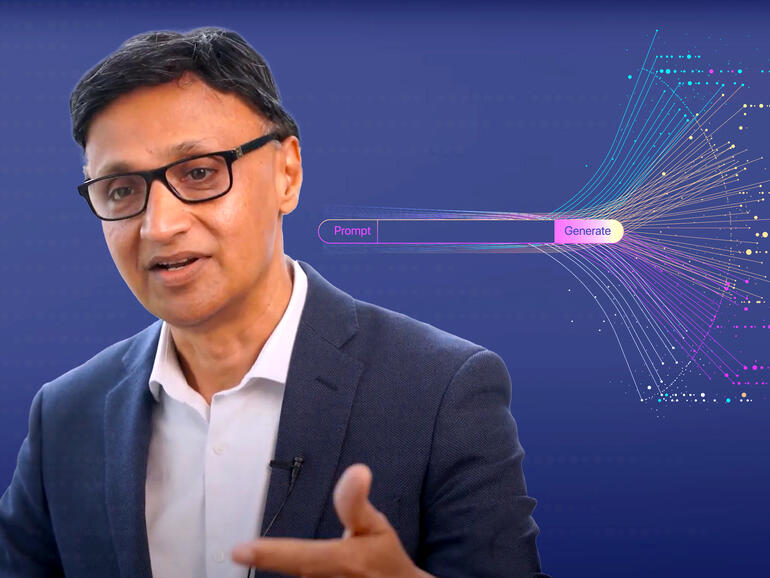
Rama Ramakrishnan is a Professor of the Practice in AI/ML at MIT Sloan School of Management, specializing in the practical application of Predictive and Generative AI. He holds a BTech from IIT Madras and MS/PhD from MIT. His career spans over 20 years as a tech entrepreneur and executive, including leadership roles at Salesforce and Oracle. He co-founded CQuotient (acquired by Demandware/Salesforce), developing the Einstein for Commerce platform. Recognized with the 2025 Jamieson Prize and a 2024 MIT teaching award, Rama also contributes to MIT Sloan's Executive Education programs, focusing on bridging AI technology and business leadership. His research emphasizes accessible AI solutions and ethical considerations, with frequent contributions to MIT Sloan Management Review and Scientific American .
Youmna Farag is a Research Fellow in the Department of Computer Science and Technology at the University of Cambridge. Her work focuses on Machine Learning and Natural Language Processing (NLP), with a particular emphasis on dialogue systems, discourse coherence, and adversarial NLP challenges. She is affiliated with the William Gates Building and contributes to interdisciplinary research in computational linguistics and AI applications. Her research interests span neural approaches to discourse analysis, automated essay scoring, and the ethical implications of dialogue systems. Recent projects include developing Speech-LLM frameworks (e.g., WHISMA) for zero-shot spoken language understanding and feature-based models for dialogue constructiveness assessment. Publications highlight her contributions to coherence modeling, multi-task learning, and adversarial robustness in NLP. She has also explored hardware-software integration in safety systems, such as an Arduino-based vehicle accident reduction system. No academic awards or supervised students are explicitly mentioned in the provided materials. She is part of a vibrant research community at the University of Cambridge, collaborating on cutting-edge projects in AI and computational linguistics.
Prof. Thies Pfeiffer holds a professorship in Computer Science with a specialization in Human-Machine Interaction at the University of Applied Sciences Emden/Leer. His work focuses on Mixed Reality technologies (AR/VR) applied to healthcare training, industrial assistance systems, and educational innovation. He leads the research group exploring immersive learning environments and has developed tools like TrainAR for procedural training. Key areas include: Eyetracking for interaction design XR accessibility standards Multi-user VR simulations for nursing training Virtual patient avatars in psychiatry education Research initiatives include the DiViFaG project for digital health training frameworks and the Mixality platform showcasing current projects. He serves on the COGAIN Association board, advancing assistive technology research. His work bridges human factors engineering with practical applications across healthcare, education, and industry.
Jens Mache is a Full Professor of Computer Science at Lewis & Clark College, where he has held roles including Chair of the Mathematical Sciences Department (2013–2016). He earned a Vordiplom from the University of Karlsruhe (1992), an M.S. from Southern Oregon University (1994), and a Ph.D. from the University of Oregon (1999). His research focuses on parallel/distributed systems, cybersecurity, cloud computing, and high-performance computing. Supported by NSF, W. M. Keck, and John S. Rogers Program grants, he has collaborated with Intel, Sandia National Laboratories, and German institutions. Mache has received the Guanajuato Award and a Konrad-Adenauer-Stiftung scholarship. He is a proponent of hands-on cybersecurity education, leading initiatives like EDURange and LIBRE-ary. His work emphasizes student success through machine learning, log analysis, and scalable frameworks. Research Interests: Parallel and Distributed Systems Cybersecurity (including cloud, network security, and pedagogy) High-Performance Computing Educational Technology and Assessment Grants & Collaborations: NSF-funded research on cybersecurity education and parallel computing W. M. Keck Foundation support for interdisciplinary projects Industry partnerships with Intel and Sandia National Labs Awards: Guanajuato Award (Southern Oregon University) Konrad-Adenauer-Stiftung Scholarship Projects: EDURange: Cybersecurity competition platform LIBRE-ary: Open-source digital archiving system
Olga Saukh is an Associate Professor at TU Graz's Institute of Computer Engineering, leading the Embedded Learning and Sensing Systems (ELSS) group. Her research focuses on resource-efficient AI, on-device learning, and robust sensing systems for IoT and environmental monitoring applications. She holds a Dr.rer.nat. and MSc in Computer Science, with expertise in embedded systems and wireless sensor networks. Her work integrates machine learning with hardware constraints, addressing challenges in energy efficiency, real-time adaptation, and adversarial robustness. Notable projects include PCDCNet for air quality forecasting and SensorFormer for sensor calibration. She has contributed to OpenSense Zurich's air pollution monitoring and automated pollen sensing systems. Her research spans over 50 publications since 2006, emphasizing practical deployments in structural health monitoring, smart agriculture, and urban environmental sensing. She leads interdisciplinary projects combining AI, embedded hardware, and data-driven decision-making.
Alain Strowel is a Professor at Saint-Louis University in Brussels, specializing in Intellectual Property (IP), Media Law, and the intersection of IP with competition law. He teaches in LLM programs at institutions including the University of Liège and Maastricht University. As an attorney (Of Counsel) at Covington & Burling LLP since 2001, he focuses on digital copyright and trademark issues, and serves as a panelist for WIPO and .be domain disputes. Academic and legal expert in IP law Active in EU and international IP policy Author/editor of 15+ books and 200+ articles since 1989 His research emphasizes copyright in digital environments, comparative IP enforcement, and the balance between IP and free speech. He co-edits the blog ipdigit.eu , which provides interactive tools for IP/IT law education. Scientific awards include the Max Planck Gesellschaft stipend (1988-1991) and a European University Institute scholarship (1985). Recent publications analyze Google’s legal challenges, secondary liability in P2P sharing, and IP enforcement directives. His work is cited in EU Court of Justice opinions and spans books like Droit d'auteur et numérique (2001) and Peer-to-Peer File Sharing (2009). He contributes to comparative studies on database protection and EU-US IP frameworks.