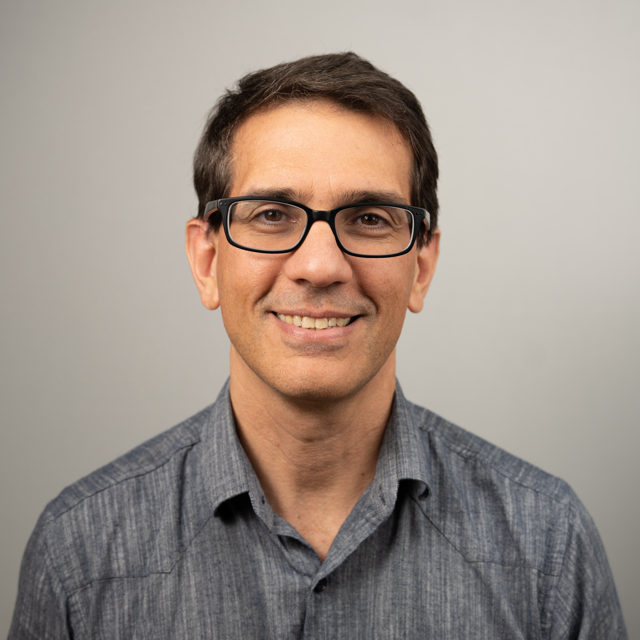
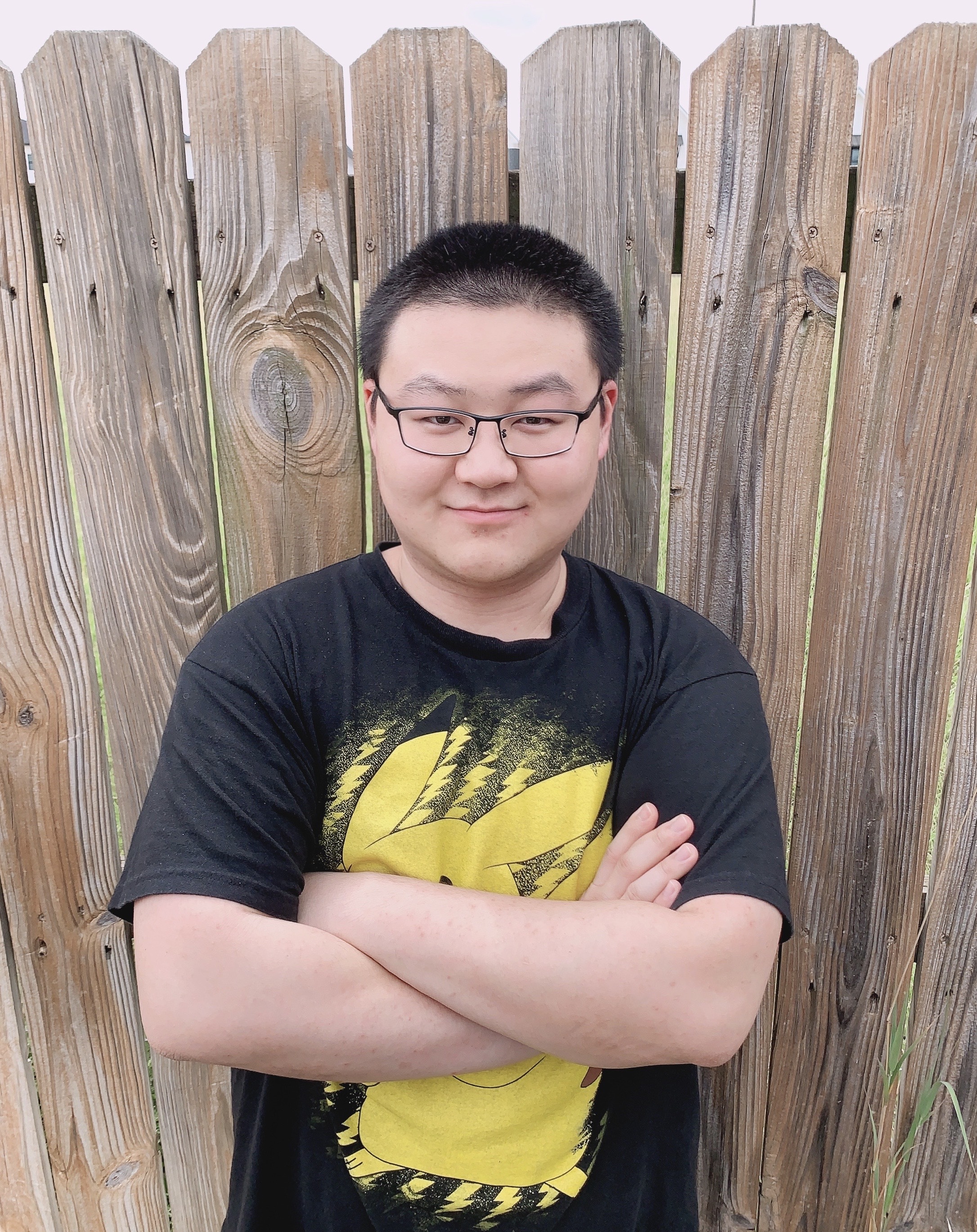
Joy Arulraj is an Associate Professor at Georgia Institute of Technology, affiliated with the School of Computer Science and the Database group. His research focuses on developing innovative data systems for video analytics, non-volatile memory optimization, and self-driving database management systems. Research Interests: Database systems Machine learning Non-volatile memory Self-driving databases Query optimization Geo-distributed data management Notable Research Contributions: Developed EVA , a video analytics system using deep learning Created APOLLO for automated database debugging Designed EQUITAS to minimize SQL computation overlap Explored NVM-based database architectures ( BzTree , Write-Behind Logging ) Investigated self-tuning databases Key Awards: IEEE Rising Star Award Students: Co-advised multiple graduate students including Pramod Chunduri, Gaurav Tarkok Kakkar, and Jiashen Cao Graduated students: Xinyu Liu, Qi Zhou, Jinho Jung Labs & Teams: Member of Georgia Tech's Database group Collaborates with international institutions (MIT, Stanford, Microsoft Research, etc.)
Prof. Dr. Mario Fritz is a Professor at Saarland University and faculty member at CISPA Helmholtz Center for Information Security. He serves as a Fellow at the European Laboratory for Learning and Intelligent Systems (ELLIS). His research focuses on Trustworthy Information Processing at the intersection of AI & Machine Learning with Security & Privacy. Mario Fritz leads numerous significant research initiatives including the European Large Open Multi-Modal Foundation Models for Robust Generalization (ELLIOT), European Lighthouse on Secure and Safe AI (ELSA), and multiple projects on privacy-preserving AI applications in healthcare. His work spans security and privacy aspects of large language models, foundation models, and medical AI applications. He has established himself as a leading researcher in trustworthy AI through his extensive publication record and leadership in major collaborative projects. His recent research (2025 publications) demonstrates a strong focus on the security and safety challenges of large language models, including model stealing attacks, causal reasoning capabilities, sampling methods, and privacy risks. His work bridges theoretical foundations with practical applications across multiple domains, particularly in healthcare and cybersecurity. Mario Fritz actively mentors PhD students and Post-Docs, seeking new researchers to join his group. He has been involved in numerous grants and collaborative projects, including those funded by BMBF and the Helmholtz Association, demonstrating his ability to secure substantial research funding and lead large interdisciplinary teams.
Marcelo D'Amorim is an Associate Professor in the Department of Computer Science at North Carolina State University's College of Engineering. His research focuses on improving software reliability through advanced program analysis and systematic testing methodologies. With a Ph.D. from the University of Illinois Urbana-Champaign (2007), he has established himself as a leading researcher in software engineering and programming languages. Dr. D'Amorim's educational background includes a Master's and Bachelor's degree from Universidade Federal de Pernambuco (2001 and 1996 respectively), providing him with a strong foundation in computer science before his doctoral studies in the United States. His research interests center on Software Engineering and Programming Languages , with specific focus on improving software reliability through program analysis and systematic testing. He investigates practical methods to prevent, detect, and fix bugs in code, developing tools to automate software testing and debugging activities. His recent work has increasingly incorporated machine learning approaches, particularly large language models, to address longstanding challenges in software quality assurance. His research spans areas including software testing, bug detection, program analysis, and security analysis, with applications in various domains including deep learning libraries and cryptographic APIs. Analysis of his recent publications reveals a clear trend toward leveraging artificial intelligence to solve traditional software engineering problems. His work increasingly focuses on LLM applications for test oracle generation, vulnerability repair, and code quality improvement, while maintaining strong foundations in traditional program analysis techniques. The research spans both theoretical foundations and practical tool development, with many of his publications including publicly available implementations. Dr. D'Amorim has secured significant research funding, including an NSF grant for 'eSLIC: Enhanced Security Static Analysis for Detecting Insecure Configuration Scripts' (2020-2025, $199,978). This project aims to develop automated techniques to identify security weaknesses in configuration scripts to prevent large-scale security attacks and data breaches. His academic service includes roles on program committees for major conferences including ASE'25 and ICSE'26. He teaches courses such as 'Software Testing and Reliability' at NC State University, connecting his research directly to classroom instruction. His research group appears to focus on practical software engineering tools with real-world applications, particularly in the areas of software testing, debugging, and security analysis.
Arya Mazaheri is a Research Leader at PanocularAI, affiliated with the Technische Universität Darmstadt. His work bridges high-performance computing (HPC) and machine learning, focusing on optimizing large-scale computational systems. Based at Hochschulstr. 10, Darmstadt, Germany, he contributes to GPU acceleration, neural network pruning, and parallel processing. PhD in Performance Engineering of Data-Intensive Applications (2022) Key areas: HPC, Machine Learning, GPU Computing, Neural Network Pruning Research Trends: Mazaheri's publications from 2015-2024 reveal expertise in: Accelerating LLM inference through pipelined speculation Topology-aware network pruning with reinforcement learning GPU-based spacecraft trajectory simulations Performance portability in tensor operations Hardware-independent communication metrics for parallel systems
Deming Chen is the Abel Bliss Professor of Engineering at the University of Illinois at Urbana-Champaign, holding appointments in the Electrical and Computer Engineering Department within the Grainger College of Engineering. He serves as a research professor in the Coordinated Science Laboratory and an affiliate professor in the Computer Science department. Additionally, he is the Director of the AMD-Xilinx Center of Excellence and the Co-Director of the IBM-Illinois Discovery Accelerator Institute. Dr. Chen earned his B.S. in Computer Science from the University of Pittsburgh in 1995, followed by his M.S. and Ph.D. in Computer Science from UCLA in 2001 and 2005, respectively. After working as a software engineer during two periods (1995-1999 and 2001-2002), he joined the University of Illinois at Urbana-Champaign in 2005 and became a full professor in 2015. His research spans reconfigurable computing, AI hardware acceleration, high-level synthesis, cloud computing, and hardware security. Dr. Chen's work has significant industry impact, with open-source solutions like Medusa being integrated into NVIDIA's TensorRT-LLM, improving LLM execution speed by 1.9-3.6x. His research group pursues system-level and high-level design automation, machine learning and cognitive computing, hybrid cloud systems, hardware/software co-design, and FPGA and GPU computing. His recent publications show a strong trend toward AI acceleration and large language model optimization, with projects like SnapKV and Medusa addressing critical challenges in LLM efficiency. His work consistently bridges theoretical innovation with practical implementation, as evidenced by numerous open-source projects that have been adopted by industry. IEEE Fellow (2019) Abel Bliss Professor of Engineering (2020-present) Google Faculty Award (2020) IBM Faculty Award (2014, 2015) NSF CAREER Award (2008) Ten Best Paper Awards TCFPGA Hall-of-Fame paper award DAC International System Design Contest wins (2017, 2019) Dr. Chen has served as PI/Co-PI on over 40 research grants from US Federal agencies and industry partners. He has led numerous open-source projects including FCUDA, DNNBuilder, SkyNet, ScaleHLS, and Medusa, many of which have been adopted by industry. As Editor-in-Chief of ACM TRETS (2019-2025), he increased the journal's impact factor by 3.8x. He actively mentors students and has been recognized as an excellent teacher by UIUC students in 2008 and 2017. His research group operates at the intersection of hardware and AI, with projects spanning from low-level hardware design to high-level AI applications. The AMD-Xilinx Center of Excellence and IBM-Illinois Discovery Accelerator Institute provide substantial infrastructure for his team's research in hybrid cloud systems and AI acceleration.
Tianlong Chen is an Assistant Professor in the Department of Computer Science at The University of North Carolina at Chapel Hill , starting in Fall 2024. His research focuses on AI trustworthiness, efficiency, and scientific applications , particularly through sparsity, multimodal learning, and large language model (LLM) innovations. Research Interests include: Sparsity techniques for LLM optimization Multimodal learning and graph neural networks AI safety and privacy preservation Quantum computing applications Biological-informed AI systems Recent Trends in his publications emphasize Mixture-of-Experts (MoE) , LLM safety mechanisms , and lifelong learning architectures . Awards highlight recognition from Amazon, UNC Provost, NAIRR, and AAAI. Scientific Awards : Amazon Research Award (2025) UNC Accelerating AI Awards (2025) NAIRR Pilot Award (2025) CPAL/KAUST Rising Star Awards (2025) AAAI New Faculty Highlights (2025) Advising : Mentors 19 Ph.D. students across UNC Chapel Hill and remote collaborations, focusing on AI4Science, LLMs, and quantum computing. Grants include Cisco Research funding and UNC Provost AI support.
Emma Söderberg is a Senior Lecturer in the Department of Computer Science at Lund University's Faculty of Engineering with key roles as Project Manager for ELLIIT (Linköping-Lund IT initiative), Coordinator of the LTH AI and Digitalization Profile Area, and Researcher in the NEXTG2COM competence centre. She earned her academic credentials from Lund University: M.Sc. (2007), Licentiate (2011), and Ph.D. (2013) in Computer Science and Engineering, with doctoral research on semantic editors using reference attribute grammars. After a Google tenure (2013-2018) developing Chromium infrastructure, she returned to Lund to pioneer human-centered software engineering research. Her work focuses on the intersection of programming tools, software engineering, and human-computer interaction, specifically how tools can support human needs in development workflows. Recent investigations examine cognitive aspects of code review, AI augmentation (not replacement) of developer judgment, and gamification for tool feedback collection. Analysis of her 2025 publications reveals a cohesive research trajectory centered on developer behavior modeling—spanning cognitive code review frameworks, AI-supported quality assurance, educational program analysis applications, and gamified static analysis feedback systems—all emphasizing human-tool symbiosis over full automation. She actively supervises four PhD candidates: N. Korkakakis on continuous automotive software engineering (CASE-SDV) N. Hagatulah on safeguards for LLM-assisted refactoring (REFORGE) P. Palesetti on AI-driven DevOps for cyber-physical systems A. Bexell on semi-automatic code improvement (SACI) Her leadership extends to organizing NEXTG2COM workshops, delivering industry outreach talks (e.g., 'This thing called programming & AI and programming'), and contributing to UN Sustainable Development Goals through software engineering advancements. Current projects funded through 2030 address critical challenges in automotive software and AI-enhanced development environments.
Professor Qiang Ni is an esteemed academic at Lancaster University , affiliated with the School of Computing and Communications , Data Science Institute , and Security Lancaster Center . Currently serving as Head of Communication Systems Research Group , School Director of International Partnership , and Theme Lead in Security and Defence at the Lancaster Intelligent, Robotic and Autonomous Systems (LIRA) Research Centre , he has previously held roles as School Director of Postgraduate Studies and Deputy Director of Research . Research focus areas include Wireless Networks/Communications , IoT , Cyber Security , AI , Digital Twins , and Quantum Communication Key projects involve INTACT (secure IoT-to-Cloud), CoGNETs (swarm intelligence), SustainAIRA6G (AI-driven resource allocation), and TRACE-V2X (multi-RAT traffic steering) Recent publications address 6G communication design , quantum neural networks , blockchain-based border control systems , and intelligent vehicular networks As an IEEE Senior Member and IEEE Communications Society Distinguished Lecturer , he chairs editorial boards for IEEE Transactions on Green Communications and JSAC Machine Learning Series . His supervision spans Wireless Communication , Big Data Analytics , and Quantum Machine Learning PhD research topics. Active in H2020 , Horizon Europe , and UKRI funded projects, he also contributes to IEEE standard committees.
Pierre Maier is a Researcher at the University of Duisburg-Essen , affiliated with the Faculty of Computer Science and the Information Systems and Integrated Information Systems department. His research explores the intersection of information systems and software languages, with a focus on multi-level modeling (MLM), natural language generation (NLG), and the application of large language models (LLMs) in organizational problem-solving. Maier's work investigates automation techniques to enhance the usability of multi-level software languages and addresses challenges in transitioning from traditional two-level languages. He supervises theses on topics like Machine Learning-Assisted Domain Modeling , LLM-Driven Semantic Matching , and Flexible Modeling , reflecting his interest in bridging conceptual modeling with AI advancements. His recent publications analyze the integration of generative language models with UML, the evolution of low-code platforms, and the role of multi-level modeling in improving software artifacts. Maier teaches courses in Object-Oriented Modeling , Robotic Process Automation , and Data Integration , combining technical rigor with practical applications for enterprise environments.
Joseph Attieh is a Doctoral Researcher at the University of Helsinki , affiliated with the Faculty of Arts and the Department of Digital Humanities . He is part of the Doctoral Programme in Language Studies , focusing on interdisciplinary research at the intersection of Languages and Computer and Information Sciences . PhD candidate in Digital Humanities ORCID: 0000-0001-6841-9877 Email: joseph.attieh@helsinki.fi His research spans Natural Language Processing (NLP) , Machine Translation , and Artificial Intelligence , with a particular emphasis on multilingual systems , sustainable language technology , and privacy-preserving methods . Key themes include: Modular translation architectures and their generalization Federated learning for privacy in face recognition Embedding isotropy optimization in text classification Low-resource language processing and synthetic data generation His recent work, including collaborations with teams like NordicsAlps and GreenNLP, highlights contributions to open-source frameworks and ethical AI. While no specific scientific awards are mentioned, his projects are supported by major grants from the Research Council of Finland and European Research Council .
Professor Gabriele Taentzer serves at Philipps University of Marburg within the Department of Mathematics and Computer Science, holding key roles as Professor of Software Engineering and Deputy Executive Director of the Marburg Center for Digital Culture and Infrastructure (MCDCI). She leads the Software Engineering research group and contributes significantly to academic governance as a member of the MArburg University Research Academy Board and the Cooperative Doctoral Platform. Her research centers on Model-Driven Software Development with specialized expertise in Model Transformation, Software Quality Assurance, and Graph Transformation systems. She investigates formal methods for ensuring model consistency, developing rule-based approaches for graph repair, and integrating data quality perspectives into software engineering processes. Her work bridges theoretical computer science with practical applications in distributed systems and mobile application development. Professor Taentzer has demonstrated exceptional leadership in the academic community through extensive committee service. She chaired the ETAPS-conference 'Fundamental Approaches to Software Engineering (FASE)' Steering Committee (2011-2021), served as General Conference Chair for STAF 2017, and held PC chair positions for major conferences including MODELS 2023 and FASE 2010. Her editorial contributions include membership on the SoSym journal editorial board and reviewing for top-tier publications like IEEE TSE and ACM Computing Surveys. Philipps-Universität Marburg Teaching Award 2020 She actively mentors students and researchers in software engineering methodologies while leading collaborative projects through the Marburg Center for Digital Culture and Infrastructure. Her research group maintains strong connections with international conferences and workshops, particularly in graph transformation and model-driven engineering domains.
Danny Dig is an Associate Professor of Computer Science at the University of Colorado and an Adjunct Professor at the University of Illinois and Ohio State University. He leads the NSF IUCRC Center on Pervasive Personalized Intelligence for IoT Systems. His research focuses on software engineering, particularly automated program transformations and Gen-AI integration to enhance developer productivity and software quality. He earned his Ph.D. from UIUC, where his dissertation won the Best Dissertation Award, and completed a postdoc at MIT. Education: Ph.D. in Computer Science from the University of Illinois at Urbana-Champaign (2007), Postdoc at MIT. Research Interests: Interactive program transformations, LLM-powered refactoring, concurrency, mobile computing, and software evolution. His work has been recognized through numerous awards, including the NSF CAREER Award and Google Faculty Research Awards. He has released tools like RefactoringMiner and LambdaFicator, widely adopted in development environments like Eclipse and IntelliJ. Awards include IoT Innovator of 2021 and Best Reviewer Award at ICSME'19. His grants total over $7.4M, with collaborations from NSF, Boeing, IBM, and others. He advises students and leads industry partnerships through the PPI Center. His courses, such as 'GenAI-powered Software Engineering,' emphasize practical impact and industry engagement.
Yufei Li is a Professor at Xi'an Jiaotong University's School of Computer Science and Technology, Department of Computer Science. With an extensive publication record spanning from 2007 to 2025, Dr. Li has established himself as a prominent researcher in database systems, software engineering, and machine learning applications. His work demonstrates strong interdisciplinary connections between computer science and electrical engineering, particularly in power systems applications. Dr. Li's research interests span multiple domains of computer science and engineering. His primary focus is on database systems, where he has pioneered work in LLM-based database tuning systems like GPTuner. He also has significant contributions in software configuration and performance optimization, as evidenced by his CSAT framework. His research extends to computer vision applications for security screening and medical diagnostics, as well as electrical engineering applications in power systems and UAV control. This diverse portfolio demonstrates his ability to bridge theoretical computer science with practical engineering applications across multiple domains. Analysis of Dr. Li's recent publications (2023-2025) reveals a strong trend toward integrating large language models with traditional computer science domains. His work on GPTuner represents a significant advancement in applying LLMs to database tuning, while his research on QUITE demonstrates innovative approaches to query rewriting using LLM agents. There's also a clear pattern of applying advanced machine learning techniques to solve domain-specific problems across electrical engineering, medical diagnostics, and industrial quality control. The interdisciplinary nature of his work positions him at the forefront of AI integration across multiple engineering disciplines. Dr. Li has established a productive research group with numerous doctoral students and collaborators, particularly Jiale Lao, Yibo Wang, and Jianguo Wang who frequently appear as co-authors on his recent publications. His research has been consistently funded, as evidenced by the steady stream of publications across multiple high-impact venues including IEEE Access, Journal of Systems and Software, and CVPR. His work demonstrates strong industry relevance with applications in database management, software configuration, security screening, and power systems. Dr. Li leads a research team focused on database systems and AI integration, with strong connections to both computer science and electrical engineering domains. His group appears to specialize in applying cutting-edge machine learning techniques, particularly large language models, to solve longstanding problems in database management and software engineering. The team maintains active collaborations with researchers across multiple institutions, as evidenced by the diverse author lists on his publications.
Zhaohan Xi is an Assistant Professor in the School of Computing at Binghamton University, SUNY, focusing on AI security/privacy and clinical AI in the context of large language models (LLMs). His research spans cybersecurity strategies, healthcare applications, and advanced AI techniques like graph learning and AutoML. He holds a PhD from Pennsylvania State University, with a visiting scholar stint at Stony Brook University's Computer Science Department. Education: PhD: Pennsylvania State University (2020–2024) Visiting Scholar: Stony Brook University (2023–2024) Master’s: Lehigh University (2016–2018) Bachelor’s: Nanjing University of Aeronautics and Astronautics (2012–2016) Research interests include: AI Security/Privacy: Backdoor attacks, adversarial defense, and LLM vulnerabilities Clinical AI: Cardiologist-level diagnostics, drug repurposing, and ECG analysis Cybersecurity: Threat hunting, red/blue teaming, and threat intelligence Graph Learning: Knowledge graphs, GNNs, and decision-making systems Recent publications emphasize LLM robustness (e.g., standardized testing benchmarks), adversarial knowledge extraction (e.g., stealing knowledge graphs via APIs), and cybersecurity applications (e.g., LLMs as threat intelligence tools). His work bridges theoretical AI security with practical healthcare and defense systems. Notable awards include ICLR Notable Reviewer (2025) and Binghamton’s Outstanding Service and Support Award (2025) . He has served as a NSF panelist (AI/cybersecurity) and reviewer for venues like ARR/EMNLP, ACL, and KDD. Internships include roles at Sony AI (2024), Microsoft (2023), and Uber (2022), focusing on AI research and software engineering. No advising details or grants are explicitly mentioned in the provided texts.
Mariana Teixeira Silva is a Teaching Associate Professor in the Department of Computer Science and affiliated with the Siebel School of Computing and Data Science at the University of Illinois at Urbana-Champaign. She also holds an affiliation with the College of Liberal Arts & Sciences. Previously, she served as a lecturer in Mechanical Science and Engineering at the same institution from 2012 to 2017. Education: PhD in Theoretical and Applied Mechanics, University of Illinois at Urbana-Champaign (2009) MS in Mechanical Engineering, Federal University of Rio de Janeiro (2003) BS in Mechanical Engineering, Federal University of Rio de Janeiro (2001) Her research focuses on educational technology innovations, particularly in computer-based assessments, collaborative learning, and scalable teaching methods. She pioneered tools like PrairieLearn, a platform for randomized question generation and automated grading using LLMs, and co-founded PrairieLearn Inc. to commercialize these technologies. Her work emphasizes equity, accessibility, and pedagogical scalability in STEM education. Current grants include the NSF IUSE Grant on enhancing equity via digitally-mediated learning. Past grants include NSF Cyberlearning projects on collaborative engineering education tools. Labs/Teams: Co-founder and CEO of PrairieLearn Inc., actively involved in the Illinois Global Institute and Lemann Center for Brazilian Studies. Collaborates with institutions like FAPESP on collaborative research initiatives.