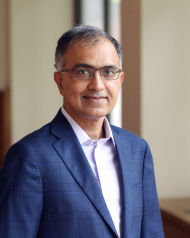
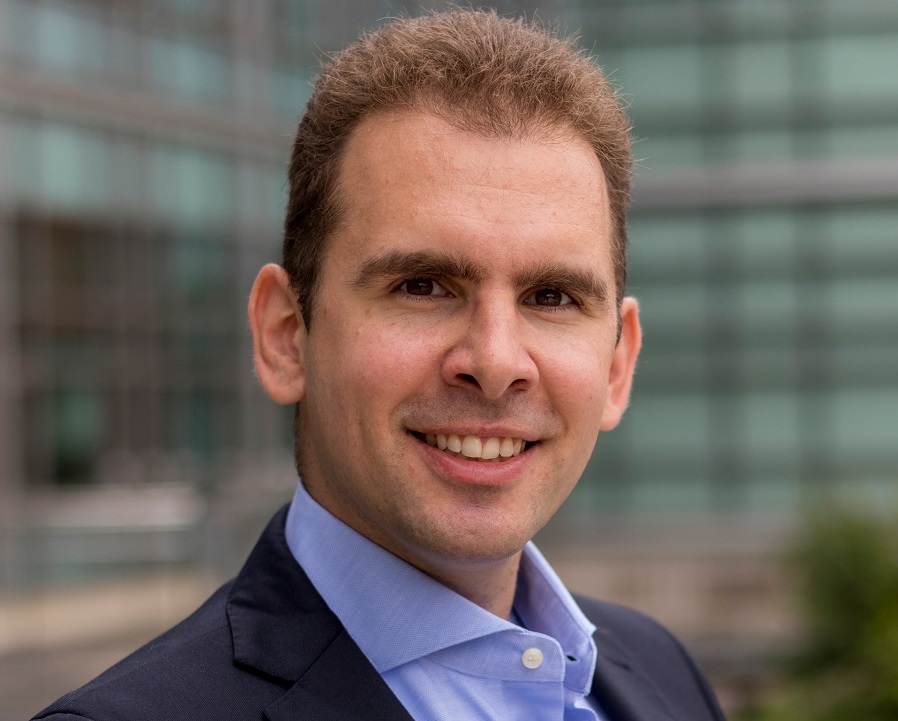
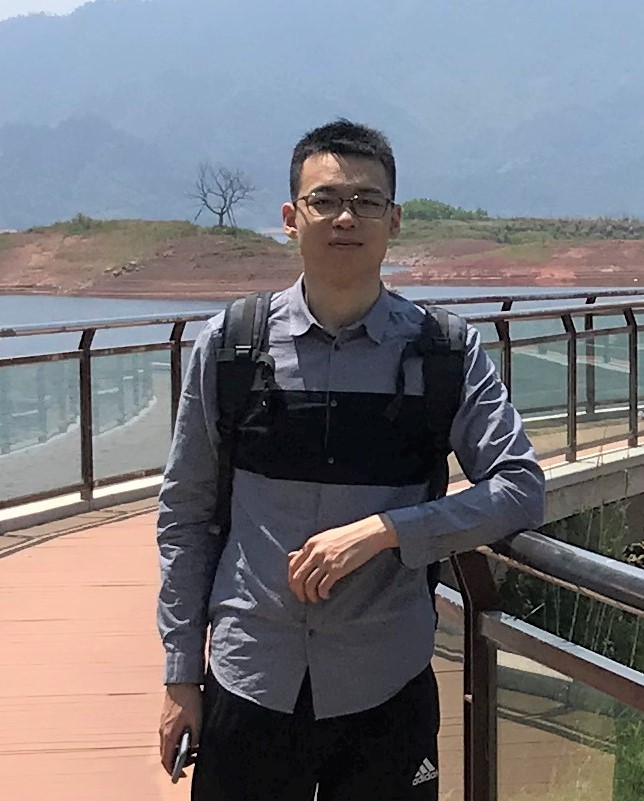
Sanjeev Arora is the Charles C. Fitzmorris Professor in the Department of Computer Science at Princeton University, where he has been since 1994. He earned his Ph.D. from UC Berkeley in 1994 and holds a B.S. in Math with Computer Science from MIT. His research focuses on Machine Learning Theory , Natural Language Processing , and Computational Complexity . Education SB in Math with Computer Science, MIT (1990) PhD in Computer Science, UC Berkeley (1994) Recent research explores emergence of skill compositionality in LLMs, context-enhanced learning , and provably safe AI techniques . His lab has published 15 papers since 2023 on topics like automated theorem proving , visual reasoning , and mathematical reasoning in AI. Key scientific awards include: Fulkerson Prize (2012) ACM Prize in Computing (2011) Twin Gödel Prizes (2001, 2010) Packard Fellowship (1997) ACM Doctoral Dissertation Award (1995) He has advised numerous Ph.D. students including Subhash Khot and Tengyu Ma, and led the NSF-funded Center for Computational Intractability (2008-13). His work spans approximation algorithms , probabilistically checkable proofs , and AI model interpretability .
Jason Eshraghian is an Assistant Professor at the Department of Electrical and Computer Engineering, University of California, Santa Cruz. He leads the UCSC Neuromorphic Computing Group, focusing on brain-inspired circuits for AI acceleration and spiking neural networks. His work bridges biological principles with hardware implementation to solve computational challenges in AI efficiency. Assistant Professor, Electrical and Computer Engineering UCSC Neuromorphic Computing Group leader Research intersections: Neuromorphic engineering, AI hardware, spiking networks Research Interests: Dr. Eshraghian's work centers on neuromorphic computing and spiking neural networks for AI acceleration. His lab explores Hardware-software co-design for ultra-low-power systems Memristor-based neural architectures Event-driven medical diagnostics Spiking language models (e.g., SpikeGPT) Closed-loop neurostimulation Article Trends: Recent publications emphasize Scalable neuromorphic architectures for AI (2025: Ising machines, FPGA implementation) Medical applications including cytometry and brain-computer interfaces Energy-efficient designs for language models and tracking systems Hybrid attention mechanisms and temporal learning frameworks
Salman Avestimehr is a Dean’s Professor at the University of Southern California (USC) in the Viterbi School of Engineering, jointly affiliated with the Electrical and Computer Engineering and Computer Science Departments. He is the co-founder and CEO of FedML, an open-source framework for federated learning, and serves as director of both the USC-Amazon Center on Secure & Trusted ML and the vITAL Research Lab. His research focuses on information theory, decentralized machine learning, and secure/privacy-preserving computing. His recent research explores federated learning for healthcare applications, uncertainty estimation in LLMs, multimodal distillation for heterogeneous systems, and secure aggregation techniques. The vITAL Lab under his leadership has produced numerous publications in 2024-2025 across top conferences like ICLR, CVPR, PETS, and NAACL. Notable achievements include the Andrea Goldsmith Young Scholars Award received by his lab member Batu. His work spans practical frameworks (FedML), theoretical advances (coded computing), and interdisciplinary applications (LANTERN for biomedical prediction, CryptoMamba for cryptocurrency modeling).
Xiaorui Liu is an Assistant Professor in the Department of Computer Science at North Carolina State University's College of Engineering, where he joined the faculty in August 2022. He also holds a courtesy appointment in the Department of Electrical and Computer Engineering. His research focuses on large-scale machine learning, trustworthy artificial intelligence, and deep learning on graphs, with applications across various domains including networking, cybersecurity, manufacturing, biology, and healthcare. He has established himself as a leading researcher in graph neural networks and scalable machine learning systems. Dr. Liu's educational background includes: Ph.D. in Computer Science from Michigan State University (2022) M.S. in Computer Science from South China University of Technology (2017) B.S. in Computer Science from South China University of Technology (2015) Dr. Liu's research interests span several cutting-edge areas in artificial intelligence and machine learning. His primary focus is on developing scalable and trustworthy machine learning systems , with particular emphasis on graph neural networks, large language models, and robust AI. His work addresses fundamental challenges in large-scale optimization , distributed machine learning , and adversarial robustness . He explores how to make AI systems more reliable, efficient, and applicable to real-world problems across diverse domains including social networks, biological systems, and industrial applications. His research group is actively investigating how to integrate graph learning with generative AI, enhance model robustness against attacks, and develop efficient training methods for massive datasets. His recent publications demonstrate a clear trend toward integrating traditional graph machine learning with emerging AI paradigms, particularly large language models. His work spans both theoretical foundations and practical applications, with increasing focus on real-world deployment challenges. The research covers diverse subfields including robustness certification, efficient model training, and application-specific adaptations for domains like manufacturing, healthcare, and cybersecurity. Dr. Liu has received numerous prestigious awards recognizing his research excellence: NSF CAREER Award (2025) AAAI-2025 New Faculty Highlights National AI Research Resource Pilot Award (2024) ACM SIGKDD Outstanding Dissertation Award (Runner-up, 2023) Amazon Research Award (2023) NCSU Data Science Academy Award (2023) NCSU Faculty Research and Professional Development Award (2023) Chinese Government Award for Outstanding Students Abroad (2022) Best Paper Honorable Mention Award at ICHI (2019) MSU Cloud Computing Fellowship (2021) MSU Engineering Distinguished Fellowship (2017) Dr. Liu actively mentors students at all levels, currently advising multiple PhD and Master's students including Zhichao Hou, Weizhi Gao, Xingyue Shi, and Daniel Buchanan. His research is supported by significant funding from organizations including NSF, Amazon Research, Snap Research, and internal university grants such as the NCSU Data Science Academy seed grant and the Faculty Research and Professional Development Program. He is expanding his lab to address emerging challenges in AI safety, large-scale graph learning, and trustworthy foundation models, with plans to recruit additional PhD and Master's students for Fall 2025 and 2026. Dr. Liu leads the Network and Data Science research group at NC State, focusing on large-scale graph neural networks and trustworthy AI. The group collaborates with institutions including Oak Ridge National Laboratory and industry partners like Amazon. They have developed innovative approaches such as LazyGNN for efficient large-scale graph learning and ProTransformer for enhancing transformer robustness. The lab maintains strong connections with the broader research community through tutorials at major conferences and active participation in standard-setting research venues.
Bowen Xu is an Assistant Professor in the Department of Computer Science at North Carolina State University, where he leads the SoftMax Lab within the College of Engineering. Previously, he was a postdoctoral researcher at Singapore Management University (SMU), where he also earned his PhD from the School of Computing and Information Systems. His research spans the intersection of machine learning and software engineering, with particular focus on securing AI models for software engineering tasks from both model and data perspectives. Key research interests include AI for Code, Backdoor Attack and Defense on Large Code Models, Code Data Interpretation and Quality, Code Representation Learning, Model Compression, Vulnerability Detection and Repair, and Safety of AI-enabled Software Systems. Xu's publication record shows a strong focus on the security aspects of AI code models, with several recent papers examining backdoor attacks and defenses. His work also explores the application of large language models to software engineering tasks like vulnerability repair, API documentation, and technical question answering. His publications appear in top venues including IEEE Transactions on Software Engineering (TSE), ACM Transactions on Software Engineering and Methodology (TOSEM), and International Conference on Software Engineering (ICSE). Highly Commended Full Paper Award at ESEM 2018 Honorable Mention Award at ACSAC 2022 Nominated for ACM SIGSOFT Distinguished Paper Award at ASE 2022 Xu actively serves the software engineering community through editorial and program committee roles, including serving as Paper Review Co-chair for ICSE 2025 and FSE 2025, and as a member of the Editorial Board for Empirical Software Engineering Journal. He has advised numerous graduate and undergraduate students who have gone on to positions at companies like Microsoft, Marvell Semiconductor, and Barclays.
Sasa Misailovic is an Associate Professor at the Siebel School of Computing and Data Science, University of Illinois at Urbana-Champaign. He earned his PhD from MIT in Summer 2015 and was promoted to tenured Associate Professor in 2022. His research focuses on programming languages, compilers, software engineering, and formal verification, particularly for improving performance, energy efficiency, and resilience in systems with approximation or probabilistic components. PhD: MIT, Summer 2015 His work spans probabilistic programming, LLMs, and compiler design for approximate/hardware-aware systems. Recent publications highlight trends in structured LLM generation (Syncode, IterGen), static analysis for automatic differentiation, and verification of neural networks. He has received the NSF CAREER Award and multiple Best Paper Awards (OOPSLA '13, '14). Notable graduates include Jacob Laurel (Georgia Tech), Zixin Huang (NVIDIA), Keyur Joshi (Google), Saikat Dutta (Cornell), and Vimuth Fernando (Amazon AWS). Current projects include the StructuredLLM initiative with papers accepted at ICLR'25, ICML'25, and TMLR'25. NSF CAREER Award Best Paper OOPSLA '14, '13 SIGPLAN Research Highlight Test-of-Time SEAMS '15 Distinguished Paper ICSE NIER '20 He leads tools like AxProf, ProbFuzz, HPVM, and Syncode. His teaching includes advanced compiler courses and topics in approximate/probabilistic programming.
Abhijit Mishra is an Assistant Professor at the University of Texas School of Information, where he teaches courses in Applied Machine Learning, Natural Language Processing (NLP), Deep Learning, and Human-Centered Data Science. He holds a Ph.D. in Computer Science and Engineering from the Indian Institute of Technology Bombay and has previously worked as a research scientist at Apple and IBM Research, focusing on Siri and IBM Watson. Education: Ph.D. in Computer Science and Engineering (IIT Bombay) Bachelor of Technology in Computer Science and Engineering Research Interests: Machine Learning for NLP Large Language Models Cognition-Inspired NLP Multimodal Systems Conversational AI His recent publications focus on privacy-preserving AI, EEG-based text generation, hallucination detection in code summaries, and multimodal reasoning. He has received recognition for outstanding reviewing at EMNLP 2020 and ACL 2017. Abhijit mentors students in projects involving NLP, machine learning, and cognitive science applications, with recent theses on EEG-driven dialog systems and multilingual multimodal models.
Ayush Pandey is an Assistant Teaching Professor in the Department of Electrical Engineering at the University of California Merced. His work bridges synthetic biology, cyber-physical systems, and robotics, with a focus on modeling, formal verification, and education. Academic Rank: Assistant Teaching Professor Department: Electrical Engineering Email: ayushpandey@ucmerced.edu His research spans three primary domains: Synthetic Biology: Developing modeling frameworks (e.g., BioCRNpyler) for modular biological circuit design, analyzing gene circuits subject to context effects, and characterizing biomolecular components in cell-free systems. Cyber-Physical Systems: Advancing assume-guarantee contracts (Pacti) for scalable system verification and robustness guarantees in model reduction of dynamical systems. Autonomous Robotics: Designing autonomous two-wheeler locomotion models, three-wheeled mobile robots, and low-cost bicycle navigation systems. Recent trends in his publications highlight interdisciplinary integration of AI/ML with biological systems, including tools for high school students to engage with neural networks and methods for classifying large language model hallucinations.
Dr Anne Cori is a Researcher at Imperial College London's School of Public Health, specializing in infectious disease epidemiology and mathematical modeling. Her work bridges data science and public health policy, with significant contributions to the Imperial College COVID-19 Response Team's global impact. Her research focuses on epidemic data quality (notably the Typo Challenge for improving epidemic date entry accuracy), HIV transmission dynamics in sub-Saharan Africa through the HPTN 071 (PopART) trial, and methodological innovations in outbreak forecasting. Recent publications emphasize health equity in transmission modeling, systematic reviews of emerging pathogens (Zika, Ebola), and cost-effectiveness of vaccination strategies. Analysis of her 2025 publications reveals three dominant trends: (1) refinement of real-time epidemic parameter estimation techniques, (2) evaluation of spatial targeting in outbreak response, and (3) critical examination of equity dimensions in epidemic modeling. Her work consistently integrates genomic, epidemiological, and demographic data to improve intervention precision. Scientific contributions include: Development of the Typo Challenge for epidemic data validation Key modeling inputs for Ebola and HIV policy decisions Critical assessments of pandemic response frameworks As a core member of Imperial's infectious disease modeling community, she contributes to advancing methodological standards while addressing implementation challenges in resource-constrained settings. Her leadership in examining gender/ethnic disparities in scientific authorship highlights commitment to equity in academia.
Arya Mazumdar is the HDSI Endowed Chair Professor in AI at the Halıcıoğlu Data Science Institute (HDSI) , Computer Science and Engineering , and Electrical and Computer Engineering departments at University of California San Diego. She co-leads NSF's AI Institute for Learning-enabled Optimization at Scale (TILOS) and serves as UCSD Site Lead for EnCORE: Institute for Emerging CORE Methods of Data Science. Her research bridges machine learning , information theory , and optimization with applications in distributed learning, clustering, and data science. Distinguished Lecturer, IEEE Information Theory Society (2023-2024) Co-PI, NSF AI Institute for Learning-enabled Optimization at Scale Formerly: Associate Professor at University of Massachusetts Amherst (2015-2021) Research focus areas include: Learning-enabled optimization algorithms Communication-efficient distributed systems Neural auto-associative memory Locally repairable codes Key scientific recognitions: ECE Distinguished Alumni Award, University of Maryland (2025) EURASIP JASP Best Paper Award (2020) NSF CAREER award
Andrew M. Perlman serves as Vice President for Academic Innovation at Suffolk University and Dean of the Suffolk University Law School, where he holds a professorship. Nationally recognized for shaping legal education and ethics, he was named one of the top-20 most influential people in legal education by National Jurist in 2024. BA, Yale University JD, Harvard University LLM, Columbia University His research pioneers the convergence of law, technology, and ethics, with groundbreaking work on AI's impact on legal practice, regulatory reform for access to justice, and modernizing professional responsibility standards. He examines how generative AI challenges traditional ethical frameworks while advocating for innovative pathways to legal licensure and services delivery. Recent publications reveal a decisive shift toward analyzing AI-driven transformations in legal scholarship and practice, emphasizing ethical guardrails for emerging technologies. His work consistently bridges theoretical rigor with practical solutions for the justice gap, highlighting civil procedure reforms and behavioral ethics insights. National Jurist Top-20 Most Influential (2024) Fastcase 50 Honoree (2015) Warren E. Burger Society Induction (2019) College of Law Practice Management Fellow (2014) As Dean and Professor, Perlman mentors law students while leading national initiatives through the ABA Center for Innovation and Massachusetts Supreme Judicial Court committees. His advocacy for alternative bar admission pathways and police practice reforms demonstrates commitment to systemic change, supported by extensive grant-funded collaborations across judicial and academic institutions. He directs Suffolk University's Academic Innovation portfolio while chairing the ABA's governing council for innovation, building cross-sector teams that integrate technology experts, legal practitioners, and policymakers to redesign legal education and expand justice access globally.
Prof. Dr. Alan Akbik is a Professor at the Humboldt University of Berlin , leading the Chair of Machine Learning within the Institute of Computer Science . His research focuses on Natural Language Processing (NLP) and the development of open-source tools like Flair NLP . Research Interests: LLM architecture, knowledge distillation, zero-shot evaluation, named entity recognition, synthetic data analysis, and model robustness. Articles Trends: Recent work spans NLP tasks (entity disambiguation, fact learning), LLM applications (code generation for 3D geometry), and benchmarking tools (MastermindEval, LM-Pub-Quiz). Grants: Funded by BMBF for industry collaboration, EXIST startup grant for FactorizeBio , and IBB Forschungstransfer project. Lab Members: New PhD student Piet Wagner (2025) and researcher Pieter Delobelle (2024), focusing on German/Dutch LLMs.
M.Sc. Fabian Lehmann is a scientific collaborator at the Humboldt University of Berlin , affiliated with the Faculty of Mathematics and Natural Sciences and the Institute of Computer Science . His research focuses on knowledge management in bioinformatics and scientific workflows, particularly in areas like resource management, workflow scheduling, and energy-efficient computing. His recent work includes: Carbon-aware execution strategies for scientific workflows (2025) Runtime prediction techniques for heterogeneous infrastructures (2024-2022) Performance prediction and resource recommendation systems (2025-2022) Community-driven workflow standardization initiatives (2024-2022) Applications in environmental data analysis and earth observation (2023-2021) Contact: fabian.lehmann@informatik.hu-berlin.de Phone: 030 2093-41285 Address: Unter den Linden 6, 10099 Berlin
Nicholas Montfort is a Professor at the Department of Linguistic, Literary and Aesthetic Studies at the University of Bergen. His work bridges computational methods with literary and aesthetic practices, focusing on digital narrative systems and electronic literature. Affiliation: University of Bergen Key Research Areas: Computational Narrative, Text Generation, Digital Humanities Projects: Center for Digital Narrative (NFR grant #332643) Montfort's research explores computational models for understanding narrative (MEXICA and Curveship-js), digital text technologies, and the intersection of free software practices with literary scholarship. He investigates narrative theory, creative coding, and the materiality of digital works. Recent publications analyze computational language art, teaching with LLMs, and the 70-year history of computer-generated literature. His exhibitions like Hops Ahead and Mark of Help showcase interactive digital narratives and critical technology art. Montfort advocates for Free (Libre) Software through workshops and lectures, emphasizing digital sovereignty and ethical computing practices.
Jiawei Chen is a "Hundred Talent" Research Fellow at Zhejiang University's College of Computer Science and Technology, with over 60 publications in top-tier venues including WWW, SIGIR, KDD, and NeurIPS. His research focuses on advancing recommender systems through innovative approaches to debiasing, graph-based learning, and large language model integration. His educational background includes: Ph.D. in Computer Science, Zhejiang University (2017-2020) Master's in Computer Science, Zhejiang University (2014-2017) Bachelor's in Micro-electronic, University of Electronic Science and Technology of China (2010-2014) Chen's research centers on solving fundamental challenges in recommender systems, particularly addressing popularity bias through spectral analysis and causal inference. His work bridges graph mining, knowledge representation, and large language models to develop robust recommendation frameworks. Recent contributions include pioneering graph transformers for ranking optimization and counterfactual reasoning to burst filter bubbles. His influential surveys on recommendation debiasing and deep clustering have established foundational taxonomies for the field. Analysis of his 2023-2025 publications reveals three dominant trends: (1) Deepening causal approaches to bias mitigation through counterfactual interventions and distributionally robust optimization, (2) Advancing graph-based architectures with sign-aware transformers and uncertainty-aware structure learning, and (3) Integrating large language models through knowledge distillation techniques to enhance sequential recommendation. His work consistently targets high-impact solutions to popularity bias while maintaining strong theoretical grounding. His research excellence has been recognized with: Best Paper Award at WSDM 2025 for spectral analysis of popularity bias amplification Best Paper Honorable Mention at SIGIR 2023 for offline reinforcement learning in recommendation Chen actively mentors future researchers and seeks self-motivated graduate students for projects in recommendation systems, LLMs, and graph mining. His extensive service as program committee member for WWW, AAAI, KDD, and SIGIR—along with reviewing for IEEE TNNLS, TKDE, and TOIS—demonstrates significant community leadership. He has released valuable community resources including the KuaiRec and KuaiRand datasets for unbiased recommendation research. While specific lab affiliations aren't detailed, Chen maintains strong collaborative ties with researchers across institutions, particularly with Prof. Xiangnan He's group. His work frequently involves large-scale industrial datasets and open-source tools like EasyRL4Rec, indicating leadership in practical recommendation system development and community resource sharing.