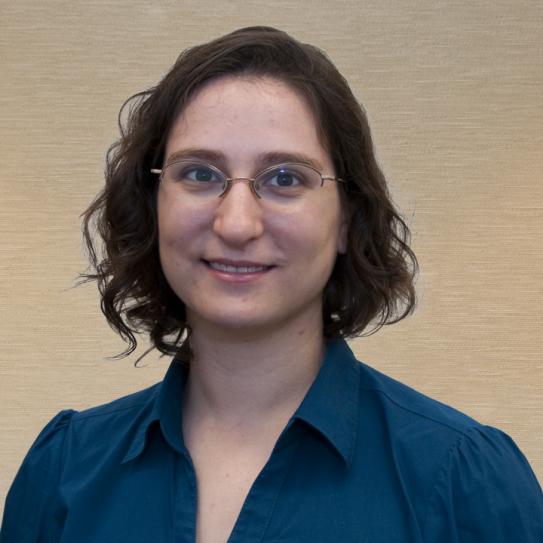
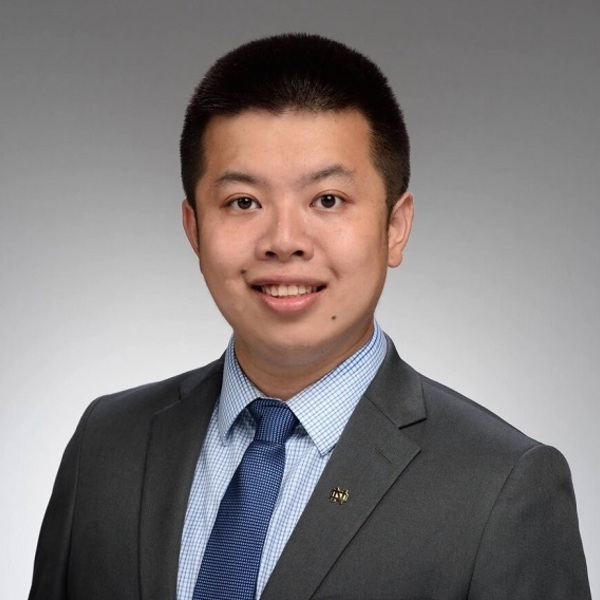
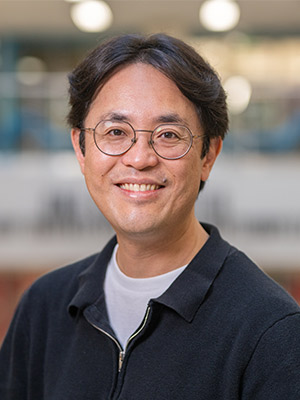
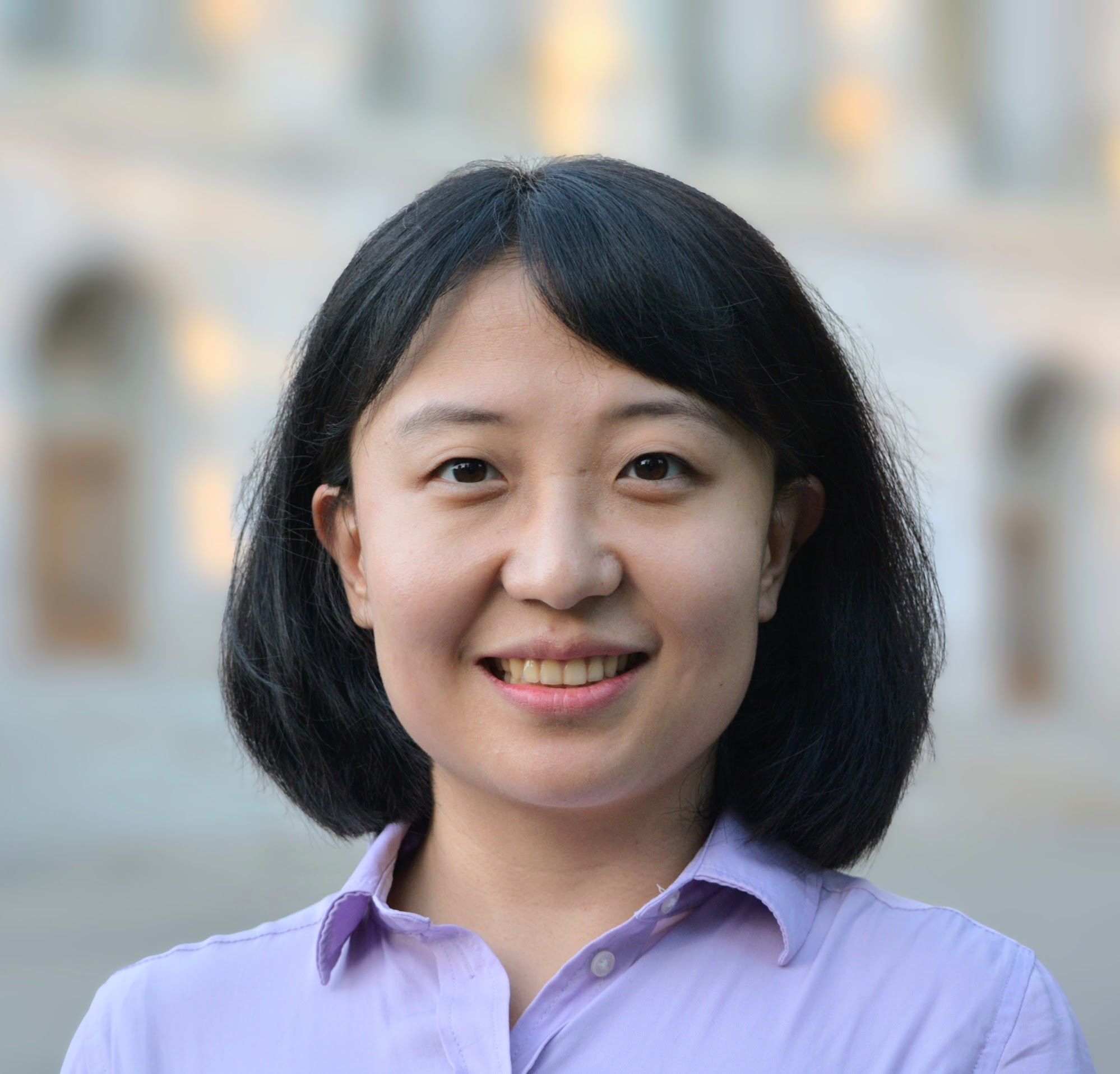
Sarah Nadi is Associate Professor of Computer Science at NYU Abu Dhabi and Adjunct Professor at the University of Alberta. She directs the SANAD Lab developing automated tools for software development/maintenance, with focus on API usage patterns, library migration, and AI-assisted programming. Research spans software product lines, code recommenders, build systems, and security. Recent work evaluates LLMs for test generation and characterizes Python library migrations. She serves as Associate Program Head for Undergraduate Studies at NYUAD. Education includes PhD (Waterloo, 2014) and postdoc at TU Darmstadt. Tools include CogniCrypt for cryptographic API validation and LibComp for library comparisons.
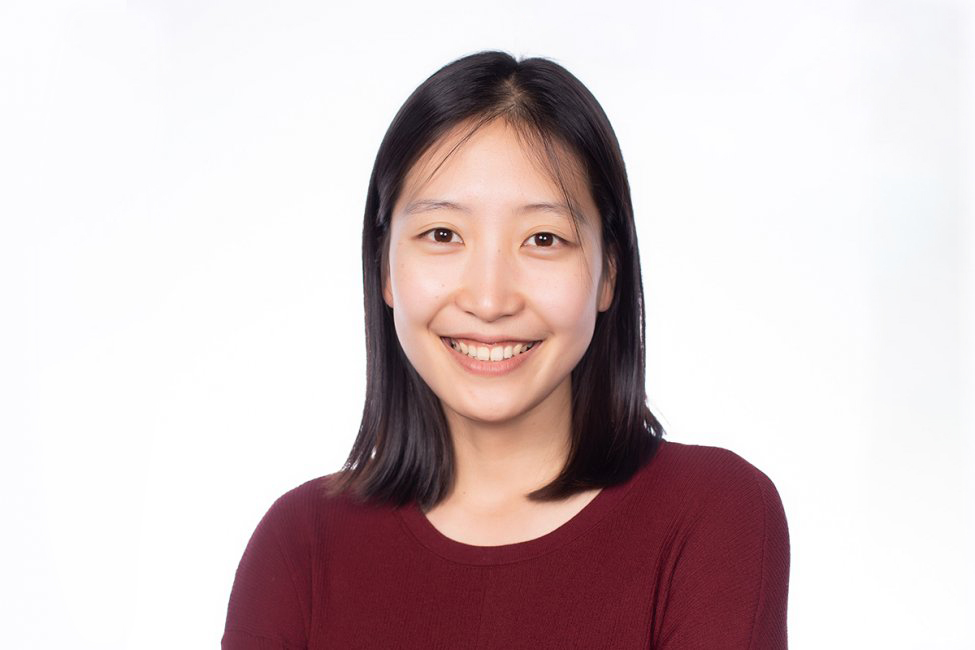
Yuekang Li is a Lecturer in the School of Computer Science and Engineering at UNSW, part of the Faculty of Engineering. Previously, he worked as a Research Assistant Professor at Nanyang Technological University (NTU), where he contributed to the Continental-NTU cooperative lab. He holds a Ph.D. and bachelor’s degree from NTU, awarded in 2020 and 2016 respectively. His research focuses on software engineering, particularly software testing and quality assurance techniques, with an emphasis on applying these methods to diverse scenarios such as cybersecurity and artificial intelligence systems. His work explores innovative approaches to address challenges in testing large language models (LLMs), fuzzing protocols, and detecting vulnerabilities in software systems. Recent publications highlight his contributions to CAPTCHA design using visual illusions, logic reasoning validation in LLMs, and metamorphic testing for identifying hallucinations. His research also spans cybersecurity domains like protocol fuzzing, jailbreak attack mitigation, and adversarial AI testing. Yuekang’s articles reflect a strong focus on advancing software reliability through automated testing frameworks, formal verification methods, and AI-driven solutions. His work bridges theoretical software engineering principles with practical applications in security and AI ethics.
Alexander Ilin is a Visiting Professor and part-time teacher in the Department of Computer Science at Aalto University, specializing in Artificial Intelligence and Machine Learning. He holds roles in both the Computer Science - Artificial Intelligence and Machine Learning (AIML) research area and the Professors of Practice group. His research focuses on Machine Learning, Reinforcement Learning, and Deep Learning applications, with contributions to areas like neural networks, generative models, and healthcare informatics. Dr. Ilin earned a Doctoral degree in Engineering and Technology from Helsinki University of Technology in 2006. His work aligns with UN Sustainable Development Goals, particularly in advancing education and innovation. Key projects include the Finnish Center for Artificial Intelligence (FCAI) and the APPIA project on privacy-aware AI applications. His research explores cutting-edge topics such as diffusion models for dynamical systems, reinforcement learning for robotics, and self-supervised forecasting in healthcare. He has led projects like APPIA (2020–2021) and FCAI (2020–2026), securing grants from the Academy of Finland and Business Finland. His work bridges theory and practice, with applications in autonomous systems, nanotechnology, and medical diagnostics. Notable activities include visiting research at the UK Met Office Hadley Centre and presentations at top conferences like NeurIPS and AAMAS. His lab focuses on scalable AI solutions for real-world challenges, emphasizing ethical AI and privacy-preserving techniques.
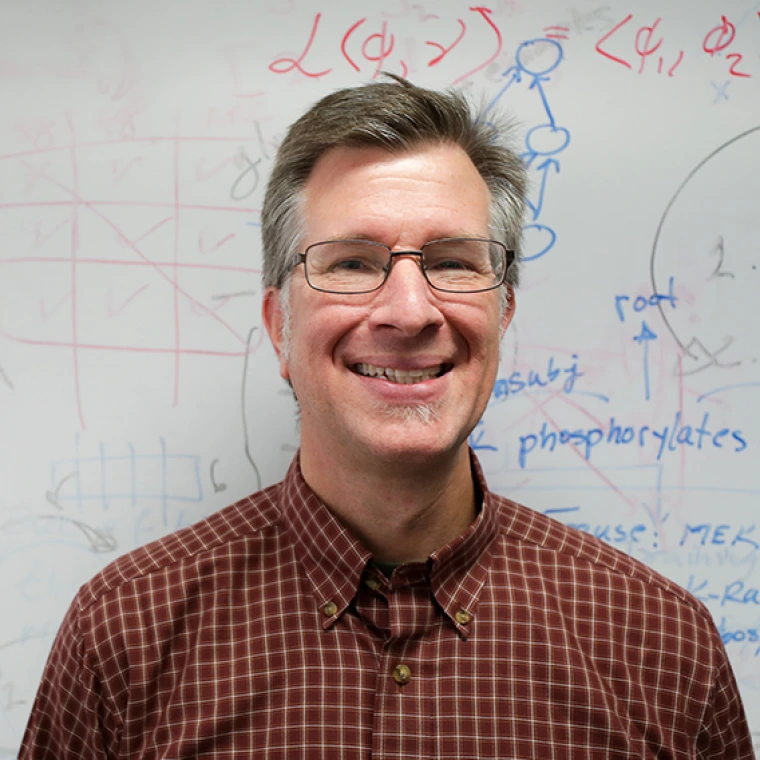
Dr. Iftekhar Ahmed is an Associate Professor in the Department of Informatics at the University of California, Irvine’s Donald Bren School of Information & Computer Sciences. His research focuses on software engineering methodologies, emphasizing software testing, analysis, and accessibility. He holds a Ph.D. in Computer Science from Oregon State University (2018) and a B.S. in Computer Science and Engineering from Shahjalal University of Science and Technology, Bangladesh (2007). Education: Ph.D., Computer Science, Oregon State University, 2018 B.S., Computer Science and Engineering, Shahjalal University of Science and Technology, Bangladesh, 2007 His research integrates artificial intelligence, data mining, and empirical software engineering to improve software quality and safety. Key areas include: Automated testing frameworks for large systems Bug prediction models for code vulnerabilities Accessibility testing tools (e.g., Ma11y mutation framework) Safety-critical systems like autonomous vehicles Recent work explores AI-driven code generation, prompt engineering, and mitigating biases in software tools. His team received a $1.2M grant in 2022 to enhance accessibility testing tools. Ahmed also investigates human factors in software development, including developer mental health and tool adoption challenges. His publications address critical issues like code smells in quantum computing, commit message quality, and Jupyter notebook bug patterns. He actively participates in industry-academia collaborations, such as the 2023 Southern California Software Engineering Symposium.
Rachel Greenstadt is Professor of Computer Science at NYU Tandon School of Engineering and core faculty at NYU Center for Cybersecurity. Her research develops trustworthy intelligent systems at the intersection of AI, privacy, and security. Education: B.S. in Computer Science, MIT (2001) M.S. in Electrical Engineering and Computer Science, MIT (2002) Ph.D. in Computer Science, Harvard University (2007) Research Focus: Designs systems that balance autonomy with integrity through: Privacy-enhancing technologies and anonymity systems Detection of AI-generated content and deepfakes Analysis of online harassment and disinformation ecosystems Adversarial attacks on machine learning systems Leadership: Founded and directs the Privacy, Security, and Automation Laboratory (PSAL). Serves on editorial boards for Proceedings on Privacy Enhancing Technologies and organizes ACM AI & Security workshops. Recent studies examine limitations of large language models for propaganda detection and usability challenges in privacy tools.
Eunsol Choi is an Assistant Professor in Computer Science at New York University's Courant Institute and the Data Science program. Previously, she held an Assistant Professor position at the University of Texas at Austin (2020–2023) and was a researcher at Google AI (New York City). She earned her Ph.D. in Computer Science from the University of Washington, advised by Luke Zettlemoyer and Yejin Choi. Her research focuses on advancing NLP and machine learning, particularly in areas like continual learning, long-form question answering (QA), and spoken language processing. Key projects include developing benchmarks like PropMEND, SituatedQA, and AmbigDocs, as well as exploring model robustness and human-LM interaction. Her work emphasizes practical applications, such as improving QA systems, reducing model hallucinations, and scaling style-prompted TTS datasets. Research Interests : Continual Learning & Knowledge Editing Long-form QA and Multimodal Reasoning Human-Machine Interaction in NLP Spoken Language and Speech-to-Speech Translation Benchmark Design for NLP Evaluation Her lab's research has been supported by grants from Google, Open Philanthropy, Cisco, Sony, Home Depot, Apple, and the NSF. Notable awards include the Outstanding Paper Award at EMNLP 2021 for SituatedQA. Key Contributions : Proposed frameworks for knowledge propagation in LLMs. Designed datasets addressing ambiguity in QA (e.g., AmbigDocs). Advanced TTS systems with rich style annotations (e.g., ParaSpeechCaps). Lab & Students : Her research group (nicknamed by students as the (E)xplaining and (U)nderstanding (N)ature and (S)tructure/Synthesis (O)f (L)anguage lab) has produced over 20 Ph.D. and undergraduate researchers, many advancing to roles at top tech companies and academia.
Dr. Donghwan Shin is a Lecturer in Software Testing at the School of Computer Science, University of Sheffield since 2022. He holds a BSc (2006-2010), MSc (2010-2012), and PhD (2012-2018) from KAIST, South Korea. Prior to joining Sheffield, he was a Research Associate (2018-2020) and Research Scientist (2020-2022) at SnT, University of Luxembourg. Education PhD in Computer Science - KAIST (2012-2018) MSc in Computer Science - KAIST (2010-2012) BSc in Information Technology - KAIST (2006-2010) Research Interests His research focuses on mutation testing, testing for ML-enabled cyber-physical systems (e.g., automated driving systems), and log analysis including model inference and anomaly detection. He develops novel testing methodologies for complex AI systems and reliability engineering solutions. Publication Trends Recent publications demonstrate a strong focus on testing machine learning systems, autonomous driving validation, log-based failure prediction, and novel testing methodologies. His work consistently appears in top venues including ICSE, ICST, and IEEE Transactions on Software Engineering. Grants & Projects PI for UKRI grant: "SimpliFaiS: Simplification of Failure Scenarios for Machine Learning-enabled Autonomous Systems" (2024-2026, £464,344) Professional Activities Leads research in the Software Testing Lab and collaborates with industry partners on testing autonomous systems. Serves as School Student Experience Lead.
Dr. Diego Perez-Liebana is a Senior Lecturer in Computer Games and Artificial Intelligence at Queen Mary University of London (QMUL), within the School of Electronic Engineering and Computer Science. He holds a PhD from the University of Essex (2015) and a Master's from Universidad Carlos III de Madrid (2007). His research focuses on AI applications in games, including Monte Carlo Tree Search, Evolutionary Computation, and General Video Game Playing. He has authored over 90 papers, organized major conferences like IEEE CoG 2020, and competitions such as GVGAI and MARLO. His work bridges academia and industry, with experience as a game programmer and software engineer at Revistronic and Game Brains. Teaching: He instructs postgraduate modules in Advanced Game Development, AI in Games, and Multi-platform Game Development, emphasizing practical C++ programming and AI techniques. His courses cover game engines, procedural content generation, and modern game development practices. Research Highlights: Over 1,900 citations, 2 Best Paper Awards, and the BCS Intelligence Prize. Industry Collaboration: Developed AI tools for leading game engines and advised on game design via IGGI industry liaison roles. Labs & Affiliations: Active in the Digital Environment Research Institute (DERI) and the Centre for Multimodal AI at QMUL.
Clayton Morrison is an Associate Professor at the University of Arizona, specializing in artificial intelligence and machine learning. His research focuses on machine learning, probabilistic modeling, causal inference, knowledge representation, and automated planning. He is affiliated with the Core Faculty and PhD Faculty in Artificial Intelligence and Machine Learning programs. His recent work emphasizes information extraction from scientific literature, legal documents, and code binaries, leveraging neural networks and generative models. Notable projects include the Eidos, INDRA, and Delphi systems for causal model recovery and the Tomcat dataset for benchmarking. His research bridges theoretical advancements with practical applications in 3D texture generation, lightweight object detection, and code synthesis. He has contributed to over 60 peer-reviewed articles spanning machine learning, computer vision, and computational linguistics. His work often addresses interdisciplinary challenges such as linking mathematical formulas to textual descriptions (MathAlign) and modeling biological event contexts in biomedical texts. Morrison's lab focuses on creating AI systems that can autonomously learn from complex data, with applications in automated model assembly (Automates) and federated learning frameworks. His research has been supported by grants exploring reinforcement learning, multi-hop inference, and explainable AI.
Liang Zhang is a Researcher at the University of Arizona, specializing in text- and image-based scientific knowledge extraction, deep reinforcement learning, network security, and signal processing. His work focuses on integrating large language models (LLMs) into building energy modeling, automation, and predictive systems. He leads efforts in developing automated workflows for energy analysis, fault detection, and data-driven decision-making in smart building systems. His research bridges AI, computational physics, and building science to enhance energy efficiency and sustainability. Key projects include the EPlus-LLM platform for automated building simulations, ComStock™ energy data releases, and studies on sensor impacts in building controls. His methodologies combine physics-informed models with machine learning to address challenges in energy systems. Zhang collaborates across disciplines to advance AI applications in energy sectors, emphasizing scalable solutions and interpretability in control systems. His publications highlight innovation in LLM-based automation, feature selection for predictive models, and energy load profiling for sustainable urban systems. He actively engages in developing open data standards and simulation testbeds for energy research communities.
Toby Jia-Jun Li is an Assistant Professor in the Department of Computer Science and Engineering at the University of Notre Dame, leading the SaNDwich Lab and directing the Human-Centered Responsible AI Lab at the Lucy Family Institute for Data & Society. He holds a Ph.D. in Human-Computer Interaction from Carnegie Mellon University (2021) and a B.S. in Computer Science from the University of Minnesota (2015). His research focuses on empowering end-users through human-centered AI systems, particularly in areas like human-AI collaboration, end-user software engineering, and ethical AI integration into work environments. Education: - Ph.D., Human-Computer Interaction, Carnegie Mellon University, 2021 - B.S., Computer Science (Distinction), University of Minnesota, 2015 Research Interests : - Human-AI collaboration in work systems - Ethical AI design - Generative AI co-creation tools - Sociotechnical implications of automation - Privacy-aware interfaces Grants & Awards : - NSF grants for AI in gig work and privacy education - Google Research Scholar Award (2022) - Multiple best paper awards at CHI/UIST/CSCW Lab & Teams : - SaNDwich Lab (Social-AI-Not-Dumb-Computing) - Human-Centered Responsible AI Lab - Collaborations with industry (IBM, Microsoft, J.P. Morgan) and academia
Dr. Byung-Jun Yoon is a Professor in the Department of Electrical & Computer Engineering at Texas A&M University and a Scientist at Brookhaven National Laboratory's Computing and Data Sciences division. His research focuses on AI-driven scientific discovery, optimal experimental design under uncertainty, and bioinformatics. Yoon holds a joint appointment at BNL since 2019 and has served as a founding faculty member at Hamad bin Khalifa University (2014–2016). He earned his Ph.D. from Caltech (2007) and has received awards including the NSF CAREER Award and multiple best paper recognitions. Education: B.S.E. (summa cum laude) from Seoul National University (1998), M.S. and Ph.D. in Electrical Engineering from Caltech (2002, 2007). His theoretical interests include objective-based uncertainty quantification, machine learning, and signal processing. Application areas span bioinformatics, computational network biology, and AI-driven drug/materials discovery. Key contributions include advancements in optimal experimental design, Bayesian optimization, and neural network applications in scientific contexts. His work is published in top venues like IEEE Transactions and ACM conferences. He serves as an associate editor for multiple journals and chairs major bioinformatics conferences. Current projects include ARPA-H-funded vaccine design platforms and quantum chemistry benchmarking.
Claudio Di Sipio is a Post-doctoral Researcher at the Department of Information Engineering Computer Science and Mathematics, University of L'Aquila, within the SWEN research group. His research focuses on recommendation systems for software engineering, mining open-source software (OSS) repositories, and applying machine learning (ML) techniques to SE tasks. He has explored low-code platforms, fairness in recommenders, IoT development, and Large Language Models (LLMs) for SE. Professional Services: Served as a reviewer for journals like ACM TOSEM, IEEE TSE, and KAIS, and on program committees for conferences like FSE, ICSE, and MODELS. Awards: Recipient of COLA 2023 Best Paper Award, SoSyM-First Paper Award, and Best Foundation Paper Award. Organizing Activities: Co-organized workshops such as MDEIntelligence 2025, GenSyn 2025, and EQUISA 2025. Guest Editor for a special issue on Model-Based SE with Foundation Models. His advising includes co-supervising bachelor's theses on topics like AI for data science pipelines, LLMs in pull request generation, and model-based recommendation systems.
Sherry Yang is an Assistant Professor of Computer Science at NYU Courant Institute of Mathematical Sciences and a Staff Research Scientist at Google DeepMind. She leads the Computational Intelligence, Vision, and Robotics Lab (CILVR) at NYU, focusing on cutting-edge research at the intersection of machine learning, robotics, and AI for science. Dr. Yang received her B.S. and M.Eng. from MIT, followed by a Ph.D. from UC Berkeley under the supervision of Pieter Abbeel. She then completed a postdoctoral fellowship at Stanford University working with Percy Liang. Her research focuses on machine learning with particular emphasis on reinforcement learning and generative modeling. Recently, she has been exploring problems at the intersection of foundation models and decision making, including learning world models and agents, with applications in robotics and AI for science. Her work bridges theoretical advances with practical implementations in real-world scenarios. Dr. Yang's publications demonstrate significant contributions across multiple AI domains, showing an evolution from foundational reinforcement learning techniques to their application in complex domains like materials science and robotics, with particular emphasis on video understanding, world models, and agent systems. Outstanding Paper Award at ICLR 2024 for UniSim: Learning Interactive Real-World Simulators As an advisor, Dr. Yang mentors multiple PhD, Master's, and undergraduate students across various research projects. She has served on program committees for major conferences including NeurIPS, ICML, and ICLR, and has organized influential workshops on foundation models for decision making. Her research has attracted significant funding supporting innovation in machine learning engineering and scientific discovery. Dr. Yang leads the Computational Intelligence, Vision, and Robotics Lab (CILVR) at NYU, which maintains strong collaborations with Google DeepMind and other leading AI research institutions, creating a vibrant research ecosystem that spans academia and industry.
Aseem Rastogi is a Senior Principal Researcher at Microsoft Research India specializing in programming languages, type systems, program verification, and software security. He is a core designer and developer of F*, a language for program verification, and has made significant contributions to Project Everest, which builds verified secure communications components including cryptographic libraries and parsers. Dr. Rastogi earned his PhD from the University of Maryland, College Park under Michael Hicks and completed his M.S. at Stony Brook University with Rob Johnson. His research spans formal methods, programming language theory, and practical security applications, with recent work focusing on integrating Large Language Models with formal verification techniques. His publication record demonstrates expertise across multiple domains including concurrent separation logic, secure multi-party computation, and verified systems programming. Recent work shows a clear trend toward applying LLMs to traditional verification challenges, with publications on memory safety, Rust compilation error fixing, and loop invariant generation. Dr. Rastogi has served on numerous conference program committees including as PC co-chair for ISEC 2024 and Diversity, Equity, and Inclusion co-chair for POPL 2024. He has organized workshops such as VeriCrypt and taught F* at multiple summer schools, demonstrating strong commitment to academic community building. As part of Project Everest, he collaborates across Microsoft Research labs to develop verified security-critical components. His work on EverParse has hardened attack surfaces through formally proven parsers, while CrypTFlow enables secure medical image analysis through privacy-preserving machine learning techniques.