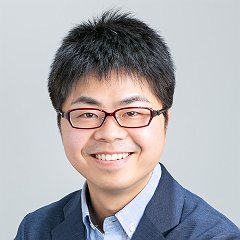
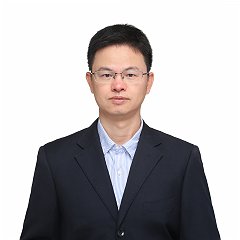
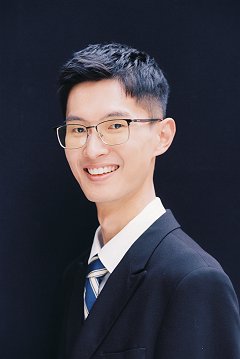
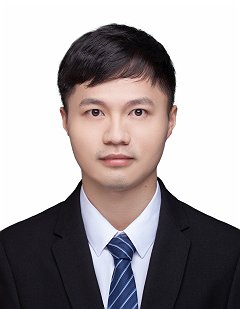
Rolf Drechsler is a Full Professor and Head of the Group of Computer Architecture at the University of Bremen's Institute of Computer Science since 2001, and Director of the Cyber-Physical Systems Group at DFKI Bremen since 2011. He holds an adjunct professorship at the Indian Statistical Institute and has been affiliated with Duke University. Education: Diploma (1992) and Dr. phil. nat. (1995) in Computer Science from Goethe University Frankfurt Academic Leadership: Dean of Mathematics and Computer Science Faculty (2018-2025), Vice Rector for Research (2008-2013) His research focuses on formal verification , RISC-V architectures , and quantum/in-memory computing . Recent work explores LLM integration in hardware testing and polynomial-based verification techniques. Publications from 2024-2025 span IEEE Transactions , DATE , and DAC , emphasizing automated verification , quantum circuit mapping , and LLM-driven testbench generation . Scientific Awards IEEE/ACM Best Paper Awards (2013, 2018) Berninghausen-Preis for Innovative Teaching (2018) IEEE Fellow (2015) Founder Award for Solvertec (2013) He has served on program committees for DAC, ICCAD, DATE, and founded graduate schools in Embedded Systems and System Design under Germany's Excellence Initiative.
Yasutaka Kamei is a Full Professor at Kyushu University's Graduate School and Faculty of Information Science and Electrical Engineering, where he leads the POSL Lab (Process-Oriented Software Laboratory). He was promoted from Associate Professor to Full Professor in January 2024 after serving as Associate Professor from March 2015 to December 2023. He is also an InaRIS Fellow (2023-2033), receiving 10 million yen annually for his research on 'New paradigm for software development styles based on machine-human interaction.' Dr. Kamei's research focuses on Empirical Software Engineering (ESE) and Open Source Software Engineering (OSSE), with particular expertise in software reliability, testing, defect prediction, code review analysis, and mining software repositories. His work bridges empirical methods with practical software engineering challenges, emphasizing how data-driven approaches can improve software quality assurance processes. His recent publications demonstrate a strong trend toward understanding human factors in software development processes, analyzing modern code review practices, investigating technical debt, and exploring the application of large language models in software engineering tasks. His research spans both traditional software engineering challenges and emerging AI-driven approaches to software development. IPSJ/ACM Award for Early Career Contribution to Global Research (2019) Best industry paper award at ESEM 2018 Distinguished Paper Award at MSR 2014 InaRIS Fellow (2023-2033) Dr. Kamei actively serves the software engineering community as Tutorials Chair for ASE 2025 and has been a program committee member for numerous top-tier conferences including ICSE, FSE, ASE, ESEC/FSE, SANER, and MSR. He has secured multiple competitive grants from MEXT (Ministry of Education, Culture, Sports, Science and Technology) to support his research on test case generation, automated software testing for deep learning systems, technical debt engineering, and mining software repositories. His POSL Lab at Kyushu University serves as a hub for empirical software engineering research, focusing on data-driven approaches to improve software development processes and outcomes through rigorous analysis of software repositories and developer activities.
Matteo Camilli is an Associate Professor in the Department of Electronics, Information and Bioengineering (DEIB) at Politecnico di Milano, Italy, where he leads research in software engineering and verification. His academic journey includes positions as Assistant Professor at Free University of Bozen-Bolzano and postdoctoral research at the University of Milan and University of Bergamo. His educational background includes a PhD in Computer Science (2015), MSc in Computer Science (2012), and BSc in Computer Science (2009), all from the University of Milan. His doctoral research focused on combining advanced abstraction techniques and big data approaches to address state explosion problems in formal verification. Camilli's research primarily centers on software verification, testing, and methods to improve dependability of autonomous, cyber-physical, service-based, and ML-enabled critical systems. His work spans formal methods, model-based testing, uncertainty quantification, and design-time/runtime verification with applications to complex distributed systems. His recent publications reflect a growing focus on explainable self-adaptation, quality assurance for LLM-based systems, and managing uncertainty in adaptive systems. His publication record includes papers in top journals (TOSEM, TAAS, JSS, EMSE) and conferences (ICSE, ISSRE, ICST, ICSA). He serves on program committees for prestigious conferences including ICSE, ICSA, ICST, and ECSA, and is on the steering committee for the International Workshop on Formal Approaches for Advanced Computing Systems (FAACS). Camilli actively contributes to the academic community through conference organization, including serving as Program Committee Member for numerous conferences and as Program Co-Chair for the Software Architecture track at ACM SAC. He also serves as guest editor for special issues on automated testing and dependable AI systems. His teaching portfolio at Politecnico di Milano includes Software Engineering 2, Software Engineering for Automation, and Distributed Software Development. Previously at Free University of Bozen-Bolzano, he taught Systems Engineering and Verification and Reliability for Dependable Systems.
Marianne Huchard is Full Professor of Computer Science at the University of Montpellier, Faculty of Sciences since 2004, serving as Director of LIRMM (Laboratory of Informatics, Robotics and Microelectronics at Montpellier) and head of its Computer Science Department. She also participates in the human resources committee of the MIPS scientific department. She earned her PhD in Computer Science in 1992 researching algorithmic aspects of multiple inheritance in object-oriented programming languages. Her primary research domains are Formal Concept Analysis (theoretical and applied, including Relational Concept Analysis) and Software Engineering (model-driven engineering, component-based development, and software product line migration), with recent work integrating Large Language Models for innovative solutions. Analysis of her 2024-2025 publications reveals a strong interdisciplinary trend: Relational Concept Analysis enhanced by LLMs is being applied to software engineering challenges like user-story generation, class model restructuring, and product line migration, demonstrating significant methodological innovation. Scientific awards: None documented in provided sources. She actively supervises doctoral research: Thomas Georges (defended January 2023): 'Agile Engineering of Software Product Lines for Agricultural Decision Support' Austin Waffo-Kouhoué (defended November 2024): 'Web Accessibility for People with Visual Impairments' Her research is supported by projects including RCAviz (funded by #DigitAg), FCA4J toolkit development, and Web Iris accessibility extension. As leader of the MAREL team (Models And Reuse Engineering, Languages) at LIRMM, she drives research at the formal methods/software engineering intersection and co-created Montpellier's Master's program in Software Engineering.
Yiling Lou is an incoming Assistant Professor at the Siebel School of Computing and Data Science, University of Illinois Urbana-Champaign (starting Spring 2026), currently serving as a Pre-tenure Associate Professor at Fudan University. Previously a Postdoctoral Fellow at Purdue University under Prof. Lin Tan, Dr. Lou holds a Ph.D. and B.S. in Computer Science from Peking University supervised by Prof. Lu Zhang and Prof. Dan Hao. Research interests span Software Engineering synergized with Artificial Intelligence and Programming Languages , specifically focusing on LLM4Code, Agent&SE, Vulnerability Detection, and Software Testing/Debugging. Current projects include AgentIssue-Bench for agent system maintenance and INFERROI for enhancing static analysis with LLMs. Research trends show increasing integration of LLMs with traditional SE techniques, particularly in code generation (ClassEval, CodeGen4Libs), debugging (interactive runtime comparison), and vulnerability detection. Recent work emphasizes practical applications in agent systems and resource leak detection. ACM SIGSOFT Distinguished Paper Award (ESEC/FSE 2023) IEEE TCSE Distinguished Paper Award (ICSME 2021) Advises a large research group including 7 Ph.D. and 8 MS students at Fudan University, actively recruiting for UIUC starting Fall 2026. Leads the LLM4Code workshop series and serves on numerous program committees including ICSE, ASE, and FSE. Currently organizing research on Code Agents, Code LLMs, and AI&Security with strong industry relevance. Coordinates the Siebel School research group at UIUC focusing on the intersection of AI and Software Engineering, with particular emphasis on developing robust agent systems for code maintenance and security applications.
Dr. Sven Hertling serves as Substitute Professor at the University of Mannheim while maintaining a reduced research role at FIZ Karlsruhe's Information Service Engineering group. His career spans institutional affiliations including DFKI GmbH and the University of Mannheim's Data and Web Science Group. His educational background includes: PhD from University of Mannheim (2017-2023) Master of Science in Computer Science from TU Darmstadt (2012-2015) Bachelor of Science in Computer Science from TU Darmstadt (2009-2012) Dr. Hertling's research integrates Knowledge Graphs, Semantic Web, and Machine Learning with Natural Language Processing. His work transitions from foundational contributions like SPARQL endpoint discoverability (ISWC 2013 Best Poster) to contemporary applications including LLM-based climate data extraction and ontology alignment systems, consistently targeting practical implementations in GUI search and knowledge engineering. His 2024-2025 publications reveal a strategic shift toward leveraging large language models for standardizing scientific repositories while advancing core Semantic Web techniques through machine learning datasets. This evolution demonstrates both technical depth in graph algorithms and responsiveness to emerging AI paradigms. Major recognitions include: ESWC 2021 Best Demo (kgextension package) AICA 2017 Best Paper (GUI search engine) ESWC 2016 Top-K Shortest Paths Challenge Winner ISWC 2013 Best Poster (SPARQL endpoints) As an emerging supervisor, Dr. Hertling leverages his Software Campus leadership training and active conference participation (serving on 12+ ESWC/ISWC program committees) to foster student development. His current roles at Mannheim and FIZ Karlsruhe indicate robust institutional support for his research trajectory, though specific grant details remain undisclosed in the source material. He operates within FIZ Karlsruhe's Information Service Engineering framework and maintains ties to Mannheim's Data and Web Science ecosystem, facilitating interdisciplinary work at the intersection of knowledge representation and AI-driven data analysis.
Michael Pradel is a full professor in the Computer Science Department at the University of Stuttgart and faculty member at CISPA Helmholtz Center for Information Security (effective September 2025), where he leads the Software Lab. He is also affiliated with the International Max Planck Research School for Intelligent Systems and the Stuttgart ELLIS Unit, reflecting his interdisciplinary research approach. His research interests focus on software engineering, particularly program analysis, bug detection, and the application of machine learning to developer tools. Pradel's recent work increasingly explores LLM-based approaches for program repair, code analysis, and automated software development, as evidenced by projects like RepairAgent and ExecutionAgent. Pradel's publication record shows a clear trend toward integrating AI techniques with traditional software engineering methods, with recent papers focusing on LLM applications for program repair, change validation, and quantum software analysis. His work bridges theoretical foundations with practical tool development, as seen in frameworks like DyLin for Python analysis and LintQ for quantum programs. Ernst-Denert Software Engineering Award Emmy Noether grant (1.3 million Euro) by the DFG ERC Starting Grant (1.5 million Euro) Multiple ACM SIGSOFT Distinguished Paper Awards ACM Distinguished Member recognition Pradel actively mentors PhD students, with recent graduates including Matteo (specializing in quantum software) and Luca (focusing on software evolution). His group has received significant funding and maintains strong industry connections, including past sabbaticals at Facebook. He serves in leadership roles for major conferences, including PC co-chair for FSE 2027, demonstrating his standing in the software engineering community. The Software Lab maintains active collaborations with institutions worldwide, including CMU, Google, KAIST, and several European universities.
Ali Mesbah is a Professor in the Department of Electrical and Computer Engineering at the University of British Columbia (UBC), where he leads the SALT lab. His research focuses on software engineering with emphasis on AI-driven software analysis, software testing, and software evolution. Previously, he was a Visiting Research Scientist at Google during 2017-2018. Dr. Mesbah received his BSc/MSc (2003) and PhD (2009) degree cum laude in Computer Science from the Delft University of Technology (TUDelft). After completing a postdoctoral fellowship with the Software Engineering Research Group at TUDelft and a Visiting Researcher position at Fujitsu Laboratories of America, he joined UBC in 2011. His research interests span software engineering with particular focus on AI-driven software analysis, software testing, software evolution, program comprehension, fault localization and repair. His work has significant applications in web application testing, JavaScript analysis, and automated program repair. He has pioneered techniques for testing modern web applications, analyzing JavaScript code, and leveraging AI for software maintenance tasks. His recent publications demonstrate a clear evolution toward integrating large language models with traditional program analysis techniques, focusing on test generation, bug repair, and understanding multi-hunk patches. His work bridges theoretical software engineering concepts with practical applications, particularly in web technologies and AI-assisted development. Amazon Research Award (2023) Killam Accelerator Research Fellowship (KARF) (2020) Killam Faculty Research Prize (2019) NSERC Discovery Accelerator (DAS) award (2016) ACM Distinguished Paper Awards at ICSE (2009, 2014) IEEE Distinguished Paper Award at ICST (2018) Best Paper Award at ESEM (2015) Best Paper Award at ICWE (2013) Dr. Mesbah has advised numerous PhD and MASc students, many of whom have gone on to positions at leading technology companies including Google, Amazon, Apple, Microsoft, and SAP. His research has been supported by various grants including the Amazon Research Award and NSERC funding. He leads the SALT lab at UBC, which focuses on software analysis, testing, and learning, with current research directions including AI-driven software engineering, web application testing, and program repair. The lab maintains active collaborations with industry partners and academic institutions worldwide.
Hui Liu is a Professor in the School of Computer Science and Technology at Beijing Institute of Technology, where he leads research in AI-based software development with a focus on LLM applications. His work spans software refactoring, quality improvement, and maintenance, funded by the National Natural Science Foundation of China and the National Key Research and Development Program of China. PhD from Peking University (2008) Former graduate student at Software Engineering Institute, Peking University Distinguished member of China Computer Federation Secretary-General of CCF Technical Committee on Software Engineering Professor Liu's research centers on LLM-based program generation, evaluation and testing of large language models, software refactoring techniques, and automatic construction of software engineering datasets. His work bridges artificial intelligence and software engineering, with particular emphasis on improving code quality through empirical studies and machine learning techniques. Current projects include code contamination detection, context-aware naming recommendations, and refactoring validation using LLMs. His research has evolved from traditional code smell detection to cutting-edge applications of large language models in software development. Liu's publication record shows a strong trend toward LLM applications in software engineering, with recent work focusing on code review generation, commit message generation, and refactoring validation using large language models. His research combines empirical methods with machine learning approaches, often analyzing large code corpora from open-source projects. The work spans both theoretical foundations and practical tool development, with several contributions merged into Eclipse as part of the open-source community. ACM Distinguished Paper Award (ESEC/FSE 2023) ACM Distinguished Paper Award (ICSE 2022) RE'2021 Best Research Paper Award IET Software Premium Award (2018) New Century Excellent Talents in University (2013) Beijing Higher Education Young Elite Teacher (2013) Professor Liu actively mentors PhD and Master's students, with recent graduates including Waseem Akram (awarded Outstanding Graduate) and several students publishing at top venues. His research is supported by major Chinese funding agencies, and he serves on program committees for leading software engineering conferences including ASE, ICSE, and FSE. He maintains strong industry connections through contributions to Eclipse and studies of open-source ecosystems like Rust. Liu leads a research group focused on AI for software engineering, with active projects on code generation, refactoring, and quality improvement. The group collaborates extensively with international researchers and contributes directly to open-source tools, particularly in the Eclipse ecosystem where multiple refactoring improvements have been merged.
Shangwen Wang is an Assistant Professor in the School of Computer Science at National University of Defense Technology (NUDT) in Changsha, China. He earned his Bachelor's degree in June 2017, Master's degree in December 2019, and Ph.D. in December 2023, all from NUDT. During his graduate studies, he was supervised by Professor Xiaoguang Mao. From May 2022 to July 2023, he was a visiting student at Southern University of Science and Technology under Professor Yepang Liu. His educational background includes: Ph.D. in Software Engineering, NUDT (2020.3-2023.12), supervised by Prof. Xiaoguang Mao Visiting Scholar, SUSTech (2022.5-2023.7), supervised by Prof. Yepang Liu M.A. in Software Engineering, NUDT (2017.9-2019.12), supervised by Prof. Xiaoguang Mao B.A. in Software Engineering, NUDT (2013.9-2017.6) Wang's research focuses on program repair, program comprehension, mining software repositories, software maintenance and evolution, software testing, and AI for Software Engineering. His work bridges traditional software engineering techniques with modern AI approaches, particularly leveraging large language models for various software engineering tasks. He has made significant contributions to automated program repair, fault localization, vulnerability detection, and code generation. His research demonstrates a strong emphasis on empirical validation and practical applicability to real-world software development challenges. His recent publications show a clear trend toward integrating large language models with traditional software engineering tasks. The 15 most recent articles reveal a focus on applying LLMs to program repair, fault localization, vulnerability detection, and code generation, while maintaining strong empirical foundations. His work spans both theoretical advancements and practical tool development, with applications in software security, testing, and maintenance. His notable achievements include: CCF Outstanding Doctoral Dissertation (CCF优博) 2024 Outstanding Doctoral Graduates, NUDT, 2023 Multiple distinguished paper awards including ACM SIGSOFT Distinguished Paper Award (ISSTA'24) and IEEE TCSE Distinguished Paper Awards (ICSME'22, SANER'22) Prestigious scholarships from NUDT throughout his academic career As an active member of the software engineering community, Wang serves on numerous program committees for top conferences including ICSE, ASE, ESEC/FSE, and ISSTA. He has also contributed to teaching as a teaching assistant for courses such as Compiler, Python Programming, Discrete Mathematics, and C++ Programming. His research group appears to be actively mentoring students, as evidenced by his role as corresponding author on multiple student-led publications. Wang maintains an active research presence with collaborations across multiple institutions in China. His work demonstrates a clear trajectory from traditional program analysis techniques toward integrating cutting-edge AI approaches, particularly large language models, into software engineering practices.
Xiao Yu is a Research Fellow (Assistant Research Professor) at the State Key Laboratory of Blockchain and Data Security, Zhejiang University, Hangzhou, China. Previously, they were a Postdoctoral Researcher at Huawei under Prof. Xin Xia. They hold dual PhD degrees: from Wuhan University's School of Computer Science (December 2020) supervised by Prof. Jin Liu, and from City University of Hong Kong's Department of Computer Science (March 2021) supervised by Prof. Qing Li and Prof. Jacky Wai Keung. Research focuses on three interconnected domains: LLMs Data Governance and Evaluation addressing hallucination phenomena and task-specific LLM evaluation in software engineering; Intelligent Software Engineering leveraging deep learning for code generation, annotation, and maintenance; and Software Security and Reliability investigating vulnerability detection, log anomaly identification, and security bug classification. Their work bridges theoretical advancements with industrial applications, particularly in blockchain and data security contexts. Recent publications demonstrate strong trends in realistic LLM evaluation (RealisticCodeBench), vulnerability detection using semi-supervised learning, and industrial anomaly detection. Key thematic areas include effort-aware defect prediction, code smell detection, and the practical application of large language models in software engineering tasks, with increasing emphasis on data quality and privacy considerations. Xiao Yu actively contributes to the academic community through extensive service roles including journal reviewing for ACM Transactions on Software Engineering and Methodology, IEEE Transactions on Dependable and Secure Computing, and serving on program committees for major conferences like APSEC 2025 and ASE 2025. They have supervised numerous graduate students as evidenced by authorship patterns in publications. Based at Zhejiang University's State Key Laboratory of Blockchain and Data Security, their research operates at the intersection of academic rigor and industrial relevance, with strong collaborations spanning multiple institutions including Huawei, Wuhan University, and City University of Hong Kong.
Tristan Coignion is a researcher at University of Lille affiliated with Inria (French National Institute for Research in Digital Science and Technology), actively contributing to software engineering and artificial intelligence research. His work bridges theoretical AI advancements with practical software development challenges, particularly through conference publications at ASE and EASE. His research interests center on Large Language Models in programming contexts , with specific focus on code optimization efficiency , environmental impacts of AI-generated code , and empirical performance validation . Coignion investigates critical trade-offs between computational speed and energy consumption in LLM-optimized code, while also analyzing real-world effectiveness of AI-generated solutions through platforms like Leetcode. Recent publications reveal two interconnected research thrusts: the 2025 ASE paper exposes hidden energy costs in LLM-based optimization, challenging assumptions about computational efficiency, while the 2024 EASE study establishes empirical baselines for LLM code performance in competitive programming environments. Together, these works form a cohesive investigation into the sustainability and practicality of AI-assisted software development, highlighting previously overlooked environmental dimensions in the field.
Lars Grunske is a Professor in the Department of Computer Science at Humboldt University of Berlin, Germany. His academic career spans multiple institutions across Germany, Australia, and internationally, with a strong focus on research and conference participation in software engineering. His educational background includes a PhD in computer science from the University of Potsdam (Hasso-Plattner-Institute for Software Systems Engineering) in 2004. Professor Grunske's research interests center on modeling and verification of systems and software, with particular emphasis on automated analysis techniques. His work primarily focuses on probabilistic and timed model checking and model-based dependability evaluation of complex software intensive systems. He has made significant contributions to software testing, program repair, formal methods, and the application of machine learning techniques to software engineering problems. His publication record shows consistent contributions to top software engineering conferences over the past decade, with recent work exploring the intersection of AI/ML with traditional software engineering challenges. His research demonstrates an evolution from foundational model checking techniques toward more practical applications in software testing and repair. Boeing Postdoctoral Research Fellow Professor Grunske actively mentors through conference activities including chairing mentoring circles at ICSE 2021. He serves on numerous program committees for major software engineering conferences including ASE, ICSE, ESEC/FSE, and others, demonstrating his standing in the academic community. His involvement spans multiple roles from committee member to track chair and award committee positions. He maintains an active research laboratory focused on software verification and testing, as indicated by his departmental affiliation and research website.
Professor Marcos Kalinowski is a faculty member in the Department of Informatics at Pontifical Catholic University of Rio de Janeiro (PUC-Rio), Brazil. He serves as Professor of Software Engineering with an active research program focused on the intersection of software engineering and artificial intelligence. His research interests span: Software Engineering Machine Learning in Software Engineering Empirical Software Engineering Requirements Engineering for AI/ML Systems Trustworthy AI Systems Software Engineering Education Professor Kalinowski's recent work has concentrated on Large Language Models (LLMs) applications in software engineering processes, emphasizing empirical validation and practical relevance. His publications reveal a strong commitment to understanding how AI technologies can be effectively integrated into software development while maintaining quality standards and addressing human factors. He leads the international "Naming the Pain in Requirements Engineering" (NaPiRE) initiative, which investigates requirements engineering challenges across global organizations. His scientific contributions include: Framework development for trustworthy AI systems Empirical studies on LLMs in software engineering research Investigations of human factors in software development Analysis of machine learning code quality and technical debt Requirements engineering methodologies for AI-enabled systems Professor Kalinowski holds leadership positions in major software engineering conferences including General Co-Chair for ICSE 2026 and Program Co-Chair for ESEM 2021. His work appears consistently in top-tier venues such as ICSE, ESEC/FSE, EASE, and SANER, demonstrating significant recognition within the software engineering research community.
Yao Wan is an Associate Professor at the School of Computer Science and Technology, Huazhong University of Science and Technology (HUST) in Wuhan, China. He leads the ONE Lab, focused on empowering machines to interact with the physical world through unified natural language interfaces (Language + X paradigm). He obtained his Ph.D. from Zhejiang University and has research visiting experience at Chinese University of Hong Kong, University of Technology Sydney, and University of Illinois Chicago. His research bridges Artificial Intelligence and Software Engineering, with core interests in: Natural Language Processing for code intelligence Large Language Model applications Multimodal learning across code, vision, and UI domains Program analysis and code generation Software engineering automation His publications demonstrate strong focus on applying transformer-based models to software engineering challenges, with recent work expanding into multimodal applications. Research spans code model security, GUI generation, data visualization, and compiler understanding, predominantly using deep learning approaches. Awards: IEEE TCSE Distinguished Paper Award for SANER 2025 publication He actively mentors students through the ONE Lab and serves on program committees for top conferences including ASE, ISSTA, and ICSE. He is seeking highly-motivated undergraduate researchers to join his team. The ONE Lab conducts cutting-edge research at the intersection of programming languages and artificial intelligence, with ongoing projects in code intelligence, multimodal learning, and LLM applications for software engineering.