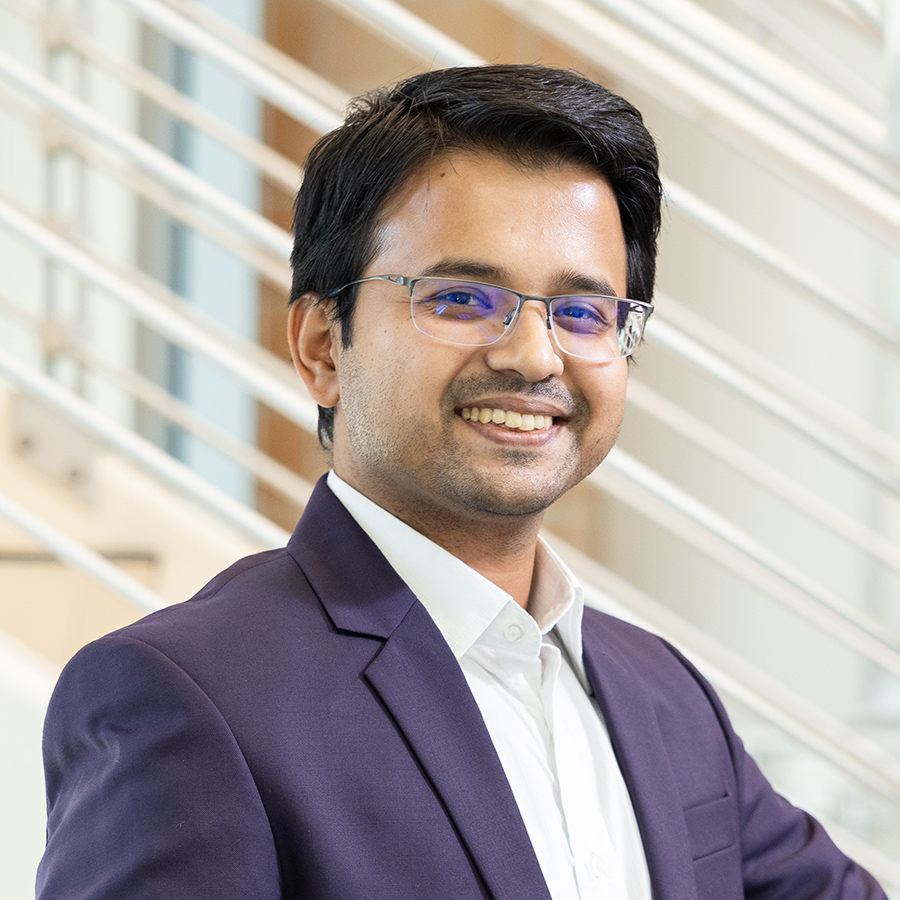
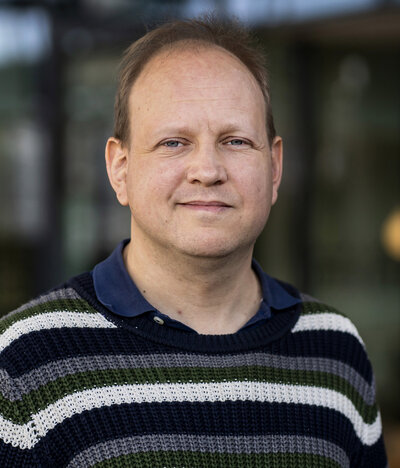
Xavier Devroey is an Assistant Professor of Software Engineering at the Faculty of Computer Science , University of Namur , where he co-leads the SNAIL Team . His research focuses on test automation for search-based and model-based software testing , test suite augmentation , DevOps , and variability-intensive systems . PhD in Computer Science (University of Namur, 2017) Master in Computer Science (University of Namur, 2010) Recent research highlights include: Automated Android safety/security audits (A3S3, 2025) REST API benchmarking infrastructure (2025) Energy consumption analysis through test execution (2025) Fuzzing approaches for Odoo integration testing (FuzzE, 2025) Scientific recognitions: 1st place Java Test Case Generation Tool Competition (2025) VAMOS 2024 Ten-Year Most Influential Paper SSBSE 2020 Best Paper Award ICST 2024 Distinguished Reviewer AST 2023 PC Reviewer Star He actively supervises PhD and master's students while organizing international conferences like ISSTA (2025) and Belgium-Netherlands Software Evolution Workshops (2024).
Ben Greenman is a Researcher at Brown University , specializing in Gradual Typing , Formal Methods , and Programming Language Design . He has developed tools like Forge for teaching formal methods FlowFPX for floating-point exception debugging CnD for specification visualization His work bridges theoretical advancements and practical software engineering challenges. Research Trends: Recent publications focus on Temporal logic misconceptions (2024-2025) Gradual typing performance (2023-2025) Tool-driven formal methods education (2023) Language design for macro systems (2023) Numerical computation reliability (2023) Key Contributions: Unified deep/shallow type systems Blame assignment strategies Collapsible contracts Corpus studies for type analysis Visual debugging frameworks
Alberto Bacchelli is an Associate Professor of Empirical Software Engineering at the University of Zurich (UZH), leading the Zurich Empirical Software Engineering Team (ZEST). He joined UZH in 2017, having previously worked as an Assistant Professor at Delft University of Technology (Netherlands), where he earned tenure. His research focuses on improving software quality, developer effectiveness, and code review practices through empirical studies and tool development. Bacchelli holds a PhD from the University of Lugano, with internships at Microsoft Research. He has received prestigious awards, including the MSR Ric Holt Early Career Achievement Award (2020) and the 10-year Most Influential Paper Award from SANER. His work spans code review efficiency, software security, and developer tools. In his personal life, he balances family time with a passion for photography, particularly through his sister Chiara’s wedding photography work. Affiliations: University of Zurich (since 2017), Delft University of Technology (2013–2017), Microsoft Research (internships 2012–2013). Education: PhD in Computer Science (University of Lugano, 2013), Master/BS in Computer Science (University of Bologna), studies at Université Libre de Bruxelles. His research interests center on understanding software engineering challenges and designing tools/methods to enhance practices. Notable projects include studies on code review strategies, developer cognition, and security in collaborative environments. He emphasizes bridging theory and practice, aiming for real-world impact through tools like PyDriller and frameworks for mining software repositories. Awards highlight his contributions to code review and software engineering education. He actively engages in teaching, mentoring, and advancing open-source practices. His team, ZEST, explores topics such as code review dynamics, developer productivity, and empirical methods to improve software processes.
Pooja Rani is a Senior Researcher at the Software Evolution and Architecture Lab (SEAL), Department of Informatics, University of Zurich. She holds a PhD from the University of Bern (2022) and an M.E. in Software Systems from BITS Pilani (2017). With industry experience at Samsung, VMware, and People Interactive Ltd., she bridges theoretical and practical software engineering. Her research focuses on: Empirical Software Engineering, particularly developer practices in code comprehension and maintenance. Green Software Engineering, including energy anti-patterns and sustainability tooling. NLP and machine learning applications in software evolution, documentation quality, and polyglot environments. AI-driven approaches for debugging, testing, and optimization. Her publications emphasize energy efficiency in software systems, AI-assisted development tools, code comment analysis, and metamorphic testing. Recent work explores LLMs for sustainable coding, object-centric debugging, and autonomous system validation. She actively advises students, with ongoing supervision of 15+ BSc/MSc theses on topics like comment quality, energy anti-patterns, and polyglot development. She collaborates internationally with institutions including TU Delft, Inria, and the University of Victoria.
Sazadur Rahman is an Assistant Professor in the Department of Electrical and Computer Engineering at the University of Central Florida (UCF), affiliated with both ECE and Computer Science departments under the Cyber Security and Privacy Cluster. He holds a Ph.D. and M.Sc. from the University of Florida and a B.Sc. from Bangladesh University of Engineering and Technology. Previously, he worked as a Security Architecture Engineer at Intel Corporation, focusing on processor security hardening and threat modeling. His research interests include hardware security, semiconductor supply chain security, and AI-assisted chip design. He has published over 20 peer-reviewed papers and contributed to patents and textbooks. Education Ph.D. Electrical Engineering, University of Florida, 2022 M.Sc. Electrical and Computer Engineering, University of Florida B.Sc. Electrical and Electronic Engineering, Bangladesh University of Engineering and Technology Research Interests His work centers on securing electronic design automation (EDA) tools, semiconductor supply chains, and hardware systems against reverse engineering, piracy, and attacks. Key areas include: Hardware obfuscation techniques (e.g., logic locking, watermarking) CAD tools for security assessment and mitigation Machine learning applications in secure chip design Secure heterogeneous integration and FHE acceleration Professional Activities Technical Program Committee Member: IEEE HOST Conference (2024) Reviewer: Top journals/conferences like IEEE Transactions on CAD, ACM TODAES, and DAC Awards 2022 IEEE/ACM DAC PhD Forum Finalist 2023 IEEE/ACM DATE Best Paper Nomination 2022 IEEE VTS TTTC Best Thesis Runner-Up Research Contributions His publications focus on innovative solutions like LLE for IC piracy mitigation, iPROBE for probing attack protection, and ReTrustFSM for RTL obfuscation. He has developed tools for threat modeling using NVD databases and evaluated cloud-based EDA platforms' security.
Shaowei Wang is an Assistant Professor in the Department of Computer Science at the University of Manitoba's Faculty of Science. His research focuses on software engineering and data mining, aiming to develop algorithms that leverage big software data (e.g., code repositories, developer social media) for efficient and effective software development. Key interests include recommendation systems, data-driven software engineering, software debugging, program comprehension, and secure software development. He leads the Mamba Lab, which explores these areas through empirical studies and tool development. His work spans topics such as large language model (LLM) applications in code analysis, vulnerability detection, graph fairness, and automated evaluation frameworks for API-oriented code generation. Recent studies address challenges like input order bias in LLMs, silent vulnerability fixes, and fair graph learning. He has contributed to over 50 peer-reviewed publications, emphasizing practical and theoretical advancements in software engineering and data science. Teaching interests include software engineering, data-driven software engineering, and data mining. His research has been recognized through collaborations with industry and academic partners, though no specific awards are listed. Advising and grant details are not explicitly mentioned in available texts.
Ion Androutsopoulos is a Professor in the Department of Informatics at Athens University of Economics and Business (AUEB), where he leads the AUEB NLP Group. With over 180 publications spanning three decades, he is a prominent figure in Natural Language Processing research, particularly known for his work bridging NLP with legal informatics, Greek language processing, and biomedical applications. His research interests focus on several interconnected areas of Natural Language Processing: Legal Informatics : developing NLP systems for legal document analysis, legal judgment prediction, and legal reasoning, with recent work including GreekBarBench and Archimedes-AUEB systems Greek Language Technology : creating specialized tools for Modern Greek processing, including GR-NLP-TOOLKIT and Greeklish transliteration systems Biomedical Text Mining : working on diagnostic captioning and medical image analysis through participation in ImageCLEFmedical challenges Financial NLP : developing systems like EDGAR-CRAWLER for financial document analysis and XBRL tagging His recent publications (2023-2025) show an increasing focus on Greek-specific NLP resources and practical applications of large language models in legal reasoning. His work often combines theoretical NLP advances with practical implementations, particularly through his leadership of the AUEB NLP Group which regularly participates in international evaluation campaigns. Professor Androutsopoulos has supervised numerous PhD students who have become active researchers in their own right, including John Pavlopoulos, Prodromos Malakasiotis, and Ilias Chalkidis. His collaborative network spans multiple institutions and disciplines, reflecting the interdisciplinary nature of modern NLP research.
Francesco Zanichelli is an Associate Professor at the Department of Engineering and Architecture, University of Parma, where he teaches Information Systems for Master's in Computer Engineering and Operating Systems for Bachelor's in Computer, Electronics, and Telecommunications Engineering. He also teaches Industrial Software Development Technologies in Information Systems Engineering. PhD in Information Technology (University of Parma, thesis: Programming Autonomous Robots) Industrial Robotics experience (IBM Fellow) Mobile Robotics research (University of Florida) His research spans: Intelligent robotic systems: software architectures, sensor-based interaction, real-time scheduling algorithms Distributed systems: peer-to-peer middleware, cloud-IoT integration, predictive maintenance Location-based services: blockchain-secured privacy, network-aware distribution Performance evaluation via simulation, PlanetLab testbed, and prototyping He leads the DSG distributed systems research group and participates in national/international projects (FP7, NATO, CNIT). He co-founded spin-offs for vehicle multimedia systems (Etheria Srl) and digital payment solutions (Simplycity Srl).
Manling Li is an Assistant Professor at the Department of Computer Science, Northwestern University. She previously served as a postdoc at Stanford University's Vision and Learning Lab under Prof. Jiajun Wu and received her Ph.D. from the University of Illinois at Urbana-Champaign (advisor: Prof. Heng Ji). Her research spans Language + Vision + Robotics with applications in Embodied AI and AI for Science . Key Research Areas : Knowledgeable Foundation Models, Reasoning & Planning, Compositionality, Multimodal Knowledge Extraction, Factuality & Trustworthiness in AI Leadership Roles : Organizing Committee for ACL 2025, NAACL 2025, EMNLP 2024 Research Trends in her 15 most recent publications show: Advancing Embodied AI through structured reasoning and planning frameworks Developing Vision-Language Models for 3D layout optimization and video understanding Addressing LLM Hallucinations via knowledge shadowing and mechanistic interpretability Creating collaborative agent systems with out-of-sync recovery mechanisms Scientific Recognition : ACL 2024 Outstanding Paper SoCal NLP 2024 Best Paper Microsoft Research Fellowships (PhD & Postdoc) DARPA Riser & EE CS Rising Star Advising Impact : Mentored 19 students in developing the UIUC information extraction system. Currently advising 12 students across PhD, Master's, and undergraduate levels, with particular emphasis on supporting underrepresented groups. Led teams to rank 1st in DARPA AIDA evaluations.
Pierre Maier is a Researcher at the University of Duisburg-Essen , affiliated with the Faculty of Computer Science and the Information Systems and Integrated Information Systems department. His research explores the intersection of information systems and software languages, with a focus on multi-level modeling (MLM), natural language generation (NLG), and the application of large language models (LLMs) in organizational problem-solving. Maier's work investigates automation techniques to enhance the usability of multi-level software languages and addresses challenges in transitioning from traditional two-level languages. He supervises theses on topics like Machine Learning-Assisted Domain Modeling , LLM-Driven Semantic Matching , and Flexible Modeling , reflecting his interest in bridging conceptual modeling with AI advancements. His recent publications analyze the integration of generative language models with UML, the evolution of low-code platforms, and the role of multi-level modeling in improving software artifacts. Maier teaches courses in Object-Oriented Modeling , Robotic Process Automation , and Data Integration , combining technical rigor with practical applications for enterprise environments.
Cristina Lopes is a Professor of Informatics at the Donald Bren School of Information and Computer Sciences , University of California, Irvine. She holds administrative roles including Director of the Master of Software Engineering Program and former Director of the Institute for Software Research . Her research focuses on software engineering, programming languages, and distributed systems, with contributions to open-source projects like OpenSimulator and AspectJ. She has authored the influential book Exercises in Programming Style . Education: PhD from Northeastern University, MS/BS from Instituto Superior Técnico (Portugal). Awards include IEEE Fellow (2019), ECOOP Test of Time Award (2017), and ACM Distinguished Scientist (2011). She co-founded a virtual reality company for urban redevelopment and leads NSF-funded projects, including the prestigious CAREER Award. Research Interests: Large-scale software systems, aspect-oriented programming, code clone detection, and applying AI to programming challenges. Her work bridges theory and practice, with applications in urban simulation and healthcare systems. Awards and Grants: Over 15 awards including national and international distinctions. Grants focus on scalable software tools and environmental sustainability in computing. Labs/Teams: Leads the Software Engineering Research Group and collaborates with industry partners on open-source infrastructure and AI-driven development tools.
Dr. Shengyao Zhuang is an Adjunct Lecturer at the School of Electrical Engineering and Computer Science, University of Queensland. His research focuses on advancing information retrieval systems, particularly leveraging neural networks, large language models (LLMs), and adversarial machine learning to enhance robustness and efficiency. He specializes in dense retrievers, query processing with typos, and federated search frameworks. His recent work explores vulnerabilities in retrieval systems, cross-modal applications, and optimization of retrieval models through techniques like Matryoshka training and reinforcement learning. Dr. Zhuang is affiliated with the IELAB research group, evident in collaborative TREC track submissions. His publications span conferences such as SIGIR and ACM venues, addressing challenges in zero-shot search, pseudo relevance feedback, and multimodal document processing. Notable contributions include developing the Tevatron toolkit and investigating the impact of adversarial attacks (e.g., pixel poisoning) on retrieval systems. He has also explored environmental considerations of IR models, emphasizing sustainable computing practices.
Pedro Hugo De Queirós Alves is an Associate Professor in the Department of Computer Engineering at Universidade Lusófona de Humanidades e Tecnologias, Lisbon, Portugal. He is also a researcher at COPELABS, focusing on software engineering, programming education, and context-aware systems. He previously served as Director of the first-cycle Computer Engineering program. PhD in Computer Engineering and Computers, Instituto Superior Técnico, Universidade de Lisboa (2014) Licenciatura in Computer Engineering and Computers, Instituto Superior Técnico, Universidade de Lisboa (1999) Postgraduate: PAEGI - Advanced Program in Entrepreneurship and Innovation Management His research focuses on automated assessment tools for programming education , integration of large language models in software development , and smartphone-based structural health monitoring . He explores how AI can support, but not replace, student learning in programming, advocating for hybrid human-AI approaches. His work in human-computer interaction includes privacy-preserving social network tools and efficient context-aware messaging systems. His recent publications show a strong trend toward leveraging AI and LLMs in educational technology, particularly in detecting limitations of models like GPT-3.5 and GPT-4 in handling object-oriented programming tasks. He also investigates multimodal learning (diagrams, videos) to reduce student dependency on AI. Earlier work includes context-aware distributed systems and anonymous feedback mechanisms in social networks. Scientific Awards: No awards listed in the provided text. He has advised students in programming education and software development, though specific names are not listed. He developed the Drop Project , an automatic assessment tool for programming assignments. While no grants are explicitly mentioned, his sustained research output suggests active project involvement. His work bridges academia and practical software tools, with applications in education and infrastructure monitoring. He is affiliated with COPELABS, a research lab focused on cognitive and people-centric computing, where he contributes to projects integrating AI, education, and mobile technologies. His future work appears to center on the evolving role of AI in software engineering and education, particularly in fostering responsible and effective human-AI collaboration.
Dr. Riccardo Coppola is a post-doctoral researcher at Politecnico di Torino's Department of Control and Computer Engineering. With a PhD in Control and Computer Engineering (2021), his work focuses on automated GUI testing, gamification mechanics in software engineering, and non-functional property evaluation. He actively contributes to conferences like ICSE, ESEM, and A-TEST as organizer, chair, and author. M.Sc. & PhD: Politecnico di Torino Current Role: Researcher Research spans: Automated GUI testing for web & mobile applications Software metrics for gamification effectiveness Non-functional property evaluation (maintainability, accessibility) Integrating gamification mechanics into testing frameworks His publications demonstrate trends in gamification-driven testing tools, visual element identification algorithms, and LLM applications for UML modeling. Conference contributions show interdisciplinary focus bridging gamification, accessibility, and traditional software engineering. Roles include: 2025 Gamify Workshop Organizer & Session Chair 2024 A-TEST Programme Committee 2023 INTUITESTBEDS Organizing Committee
Sybren de Kinderen serves as an Assistant Professor in the Information Systems group within the Industrial Engineering and Innovation Sciences department at Eindhoven University of Technology. His academic journey began with a PhD in Computer Science from the Free University of Amsterdam in 2010, followed by postdoctoral research positions at the Luxembourg Institute of Science and Technology, University of Luxembourg, and University of Duisburg-Essen before securing his current faculty position. Dr. de Kinderen's research spans multiple interconnected domains with a consistent focus on enterprise modeling methodologies. His primary research interests include enterprise architecture modeling, future energy systems, and cognitive linguistics for discourse analysis in information systems. He has developed significant expertise in formal methods for model verification, particularly through integrating the ADOxx modeling platform with Alloy formal language. His recent work demonstrates an innovative pivot toward applying Large Language Models for Legal Goal-oriented Requirements Language (Legal GRL) modeling, showing how prompt templates can structure LLM output for regulatory compliance analysis. His research consistently bridges theoretical modeling approaches with practical applications in complex domains like energy systems and cybersecurity. Analysis of Dr. de Kinderen's publication record reveals a clear evolution in research focus over time. Early work centered on service bundling and value modeling, while more recent publications demonstrate increasing sophistication in multi-level modeling approaches, formal verification techniques, and the integration of AI technologies with traditional modeling paradigms. His research shows particular strength in applying enterprise modeling to energy sector challenges, with numerous publications addressing smart grid initiatives, energy community development, and regulatory compliance in energy systems. The most recent publications indicate growing interest in leveraging AI capabilities while maintaining rigorous formal modeling foundations. Dr. de Kinderen actively contributes to the academic community through editorial roles, including guest editing special sections on enterprise architecture research trends. While no specific awards are mentioned in the available information, his consistent publication record in reputable venues and his role as corresponding author on significant works indicates recognition within his research community. His research appears to be supported by institutional affiliations rather than explicitly mentioned external grants. Within the Information Systems group at Eindhoven University of Technology, Dr. de Kinderen contributes to multiple research initiatives focused on enterprise modeling, particularly through the EIRES Research group. His work intersects with several collaborative projects in energy systems analysis and cybersecurity, suggesting participation in interdisciplinary research teams addressing complex societal challenges through advanced modeling approaches.