

Taylor Berg-Kirkpatrick is an Associate Professor in the Department of Computer Science and Engineering at the University of California, San Diego. They lead the BergLab, focusing on natural language processing (NLP), machine learning, and unsupervised methods for analyzing diverse data types, including historical documents, music, and early modern books. Their work bridges computational techniques with interdisciplinary domains such as music information retrieval, paleography, and cultural heritage analysis. Taylor has been awarded an NSF CAREER grant for research on language evolution via probabilistic models. The BergLab develops tools like Klavier (music transcription), Ocular (historical document recognition), and Puck (constituency parsing). Taylor's research emphasizes deciphering hidden structures in human data, from handwritten texts to musical patterns. Their teaching includes courses on algorithms for NLP at CMU and UC Berkeley. Taylor advises numerous PhD students, many of whom have contributed to impactful projects such as compositor attribution in Shakespeare's works, music separation algorithms, and climate text understanding benchmarks like ClimaBench. Their work is featured in top venues like ACL, NeurIPS, and ICML, with applications spanning from improving AI safety to enhancing cultural preservation efforts.
جستوجوی استاد و پژوهشگر
استاد راهنما، استاد دانشگاه یا پژوهشگر مناسب برای مسیر پژوهشیتان را پیدا کنید و با او ارتباط بگیرید.
نمایش ۷۳۶-۷۵۰ از ۱٬۰۵۵ استاد راهنما
اطلاعات این پروفایلها از صفحات عمومی دانشگاهها جمعآوری شده و ممکن است بهروز نباشد.
Anna Rogers is a leading researcher in Natural Language Processing (NLP), known for her foundational and critical work on language model interpretability, dataset quality, and the ethics of AI systems. She has published extensively at top-tier venues including ACL, EMNLP, and NAACL, often collaborating with prominent researchers like Anna Rumshisky and Isabelle Augenstein. Her research interests center on data curation , model generalization , responsible data use , and transparency in large language models . She has conducted influential surveys on community perspectives regarding intelligence in AI and has contributed to improving peer review practices in NLP conferences. Her work on BERTology, including papers like A Primer in BERTology and Revealing the Dark Secrets of BERT , has become key reading in the field. Recent publications highlight her focus on data transparency (e.g., the ROOTS Search Tool), synthetic content detection , and temporal annotation frameworks like NarrativeTime. She also investigates the robustness of models, probing techniques, and the limitations of current benchmarks. Her work consistently emphasizes methodological rigor and ethical considerations in NLP research. She has advocated for better data practices and more thoughtful evaluation paradigms across the community. Natural Language Processing Computational Linguistics Language Model Interpretability Dataset Curation and Quality Ethics in NLP Peer Review in Academic Conferences Anna Rogers has played a key role in shaping meta-discussions in the NLP field, including peer review reform and the societal impact of language technologies. She has co-organized workshops on negative results and contributed to tutorials on reviewing and data use. Her work bridges technical depth with critical reflection on the direction of the field. She has advised or collaborated with numerous researchers, though specific students are not listed in the available data. She has not received any explicitly mentioned scientific awards in the provided text. Anna Rogers leads or contributes to several open-source initiatives and shared resources, including the DECAF framework, the ROOTS Search Tool, and various datasets such as TimeBankNT and RuSentiment. Her work often includes released code and tools to promote reproducibility and further research.
Youngjin Kwonمشاهده پروفایل
دانشیار
Youngjin Kwon is an Associate Professor at the School of Computing, KAIST, and a member of the Computer Architecture and Systems Lab (CASYS). His work bridges systems research with practical applications in memory management, concurrency debugging, and energy-efficient computing. Recipient of Best Paper Awards at ACM SOSP'24, SOSP'21, and USENIX ATC'18 Honored with KAIST's EWON Endowed Chair Professor (2021) and Soo-Young Lee Teaching Innovation Award (2021) Awarded KAIST Breakthrough (2023) and Technology Innovation Award (2023) Research focuses on: Processing-in-Memory (PIM) and DRAM architectures Concurrency bugs in kernel and hypervisor systems Energy-efficient frameworks for large language models Memory disaggregation and tiered memory systems Trusted Execution Environments (TEE) for secure computing SmartNIC offloading and eBPF-based optimizations His recent publications highlight innovations in speculative decoding, memory safety, and system scalability. Awards reflect both technical excellence and pedagogical impact. He actively mentors graduate and undergraduate students in his lab, emphasizing hands-on research in cutting-edge system design.
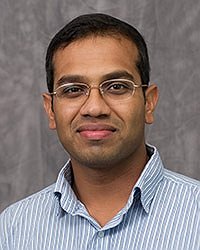
Mayur Naik is the Misra Family Professor in the Department of Computer and Information Science at the University of Pennsylvania’s School of Engineering and Applied Science. His research lies at the intersection of programming languages and artificial intelligence, with a current focus on neurosymbolic programming, trustworthy AI for healthcare, and AI-enabled software engineering tools. Education & Career: Ph.D. in Computer Science, Stanford University (2008) – advisor Alex Aiken M.S. in Computer Science, Purdue University (2003) – advisor Jens Palsberg B.E. in Computer Science, BITS Pilani (1999) Former faculty at Georgia Institute of Technology and researcher at Intel Labs, Berkeley Research Interests: Naik’s group develops languages, algorithms, and compilers for neurosymbolic programming, an emerging paradigm that unites symbolic reasoning with data-driven learning. Their flagship system is the open-source Scallop language and toolchain, applied to computer vision, cybersecurity, medicine, and bioinformatics. He also investigates AI-assisted programming tools that boost productivity and software quality by marrying traditional program analysis with modern machine learning. Recent Highlights: In 2024 he was named Misra Family Professor; his former student Elizabeth Dinella received the 2025 ACM SIGSOFT Outstanding Dissertation Award; his team released IRIS , an LLM-assisted static analysis framework for security vulnerabilities, and published the first comprehensive book on Neurosymbolic Programming in Scallop . Teaching: He regularly teaches CIS 5470 (Software Analysis) every Fall and CIS 5500 (Database Systems) every Spring, both of which are also delivered in Penn’s MCIT Online and Georgia Tech’s OMSCS programs. Advising & Service: Naik has graduated 8 Ph.D. students and mentored numerous postdocs and undergraduates; many alumni now hold faculty or research positions worldwide. He has served on organizing, program, and steering committees for premier venues such as PLDI, POPL, OOPSLA, SPLASH, ESEC/FSE, ISSTA, SAS, and others.
Prateek Mittal is a Professor in the Department of Computer Science at Princeton University's School of Engineering and Applied Science. His research spans multiple critical areas at the intersection of security, privacy, and machine learning, with a particular focus on developing robust and privacy-preserving AI systems. Dr. Mittal's research interests center on machine learning security and privacy, with specific expertise in adversarial machine learning, differential privacy, backdoor attacks and defenses, and network security. His work addresses fundamental challenges in ensuring that AI systems remain secure against sophisticated attacks while preserving user privacy. He has made significant contributions to certifiable defenses against adversarial examples, privacy-preserving machine learning techniques, and security mechanisms for large language models. His recent publications demonstrate a strong trend toward addressing emerging security challenges in large language models and foundation models, including privacy auditing, safety alignment, and robustness against novel attack vectors. His work shows increasing focus on practical applications of theoretical security concepts to real-world AI systems. Dr. Mittal has mentored numerous PhD students who have become active contributors to the security and machine learning research community. His lab has received significant research funding from various sources to support their innovative work at the security-privacy-ML intersection. He leads research efforts in multiple labs and collaborative projects focused on building trustworthy AI systems, with strong connections to both theoretical computer science and practical security applications. His team regularly publishes in top-tier venues including IEEE S&P, USENIX Security, NeurIPS, ICML, and ICLR.
Isaac Kohaneمشاهده پروفایل
استاد پژوهشی
Isaac Kohane is a Research Professor at Boston Children's Hospital , leading the Computational Health Informatics Program. His work bridges genomics, biomedical informatics, and machine learning to diagnose rare diseases and advance precision medicine. He co-leads large-scale collaborations like the Undiagnosed Diseases Network and 4CE Consortium , focusing on electronic health record analysis and neurodevelopmental disorders . Research Interests include: Genomic discovery of rare neurodevelopmental syndromes (e.g., variants in PPFIA3 , SDHA , ZBTB47 ) Machine learning for clinical risk prediction (e.g., suicide attempt modeling, type 2 diabetes subtyping) Ethical challenges in genomic research and AI implementation Health disparities in genetic variant interpretation International multi-institutional data harmonization Recent Publications emphasize genotype-phenotype mapping , AI-driven biomarker discovery , and repurposing real-world data for long COVID and autoimmune disease studies. His work highlights cross-modal data integration and multi-omics approaches in rare disease diagnostics.
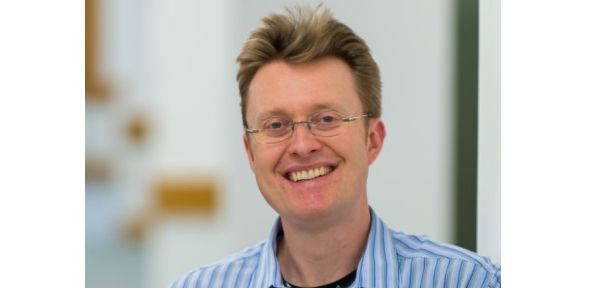
Professor Nigel Collier is a leading academic in Natural Language Processing at the University of Cambridge, holding positions as Professor of Natural Language Processing, Fellow of the Alan Turing Institute, Co-Director of the Language Technology Lab, and Professorial Fellow of Murray Edwards College. He serves within the Faculty of Modern and Medieval Languages and Linguistics, Department of Theoretical and Applied Linguistics. His educational background includes a BSc in Computer Science from the University of Leeds (1992), MSc in Machine Translation (1994), and PhD in Computational Linguistics (1996) from the University of Manchester. His doctoral research focused on English-Japanese Lexical Transfer using Hopfield Neural Networks. Professor Collier's research spans core machine learning for NLP with particular expertise in Information Extraction, Text Mining, Social Media Analysis, Textual Inference, and Generation. His work integrates text with knowledge graphs, addresses fact verification challenges, and explores applications in biomedicine, epidemiology, and public health. Recent research focuses on LLM evaluations including adversarial attacks, policy violations, uncertainty modeling, and synthetic personalities. His publication record demonstrates consistent contributions to top-tier venues including ACL, EMNLP, and CoNLL, with research themes evolving from early biomedical text mining systems like BioCaster to contemporary large language model research. His work shows strong interdisciplinary connections between linguistics, computer science, and healthcare applications. Fellowship, Alan Turing Institute for data science and artificial intelligence (2017) EPSRC Experienced Research Fellow (2014) Marie Curie International Research Fellowship (2012) Japan Science and Technology Agency Research Fellowship (2008) Japan Society for the Promotion of Science Visiting Fellowship (2002) Toshiba Corporation Research Fellowship (1996) Professor Collier actively supervises PhD students and has mentored numerous researchers who now hold prominent positions at institutions including Google DeepMind, Cohere, Amazon Alexa, and academic posts worldwide. His research has been funded by major agencies including EPSRC, ESRC, MRC, EU FP7, and JST. He co-founded Trismik, a spinout company launched in May 2025, serving as Chief Scientist. The Language Technology Lab, which he co-directs, serves as the primary research hub for his team's work in computational linguistics and NLP. The lab maintains strong connections with the Alan Turing Institute and focuses on both theoretical advances and real-world applications of language technology.

Yan Zhang is a Professor at the University of Texas at Austin's School of Information, specializing in information systems and consumer health informatics. His research focuses on user perceptions of web-based information retrieval systems and the design of consumer health information systems. He teaches courses such as Information Architecture and Design, Survey of Information Studies, and Consumer Health Informatics. His work spans cutting-edge topics in artificial intelligence, including vision-language models, 3D reconstruction, and large language model optimization. Recent research includes advancements in dataset distillation, diffusion models, and neural rendering techniques like Gaussian splatting. He actively explores applications in healthcare, such as AI-driven echocardiography interpretation and medical privacy in generative models. Publications highlight contributions to model efficiency (e.g., sparse transfer learning, rank-aware pruning) and multimodal systems (e.g., fusion of biometric data for person recognition). His work often addresses practical challenges in deploying AI systems across domains like autonomous driving, robotics, and clinical decision support. Zhang's research is supported by collaborations involving advanced visualization techniques, long-tailed disease classification, and multimodal SLAM systems. His courses reflect a commitment to bridging theory and practice in information science education.
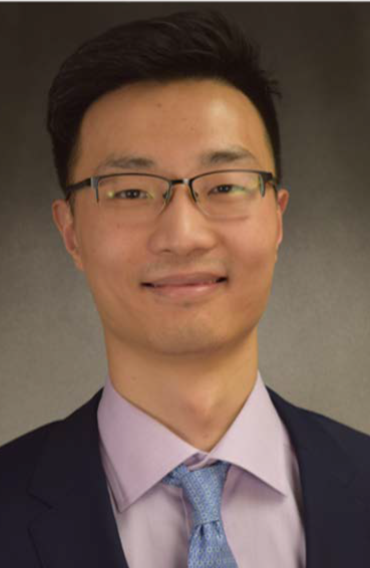
Boran Gaoمشاهده پروفایل
استادیار
Boran Gao is an Assistant Professor in Biological Sciences at Purdue University, affiliated with the College of Science. His research focuses on machine learning, artificial intelligence, and their applications in healthcare informatics, natural language processing, and federated learning. He explores topics like knowledge editing in large language models (LLMs), fairness in AI, and causal inference. Recent work emphasizes scalable solutions for copyright compliance in LLMs, efficient federated learning frameworks, and bias mitigation strategies. His contributions span both theoretical advancements and practical implementations, including frameworks like Suv and Roselora. Despite no listed awards, his prolific publication record highlights impactful contributions to AI ethics and distributed learning.
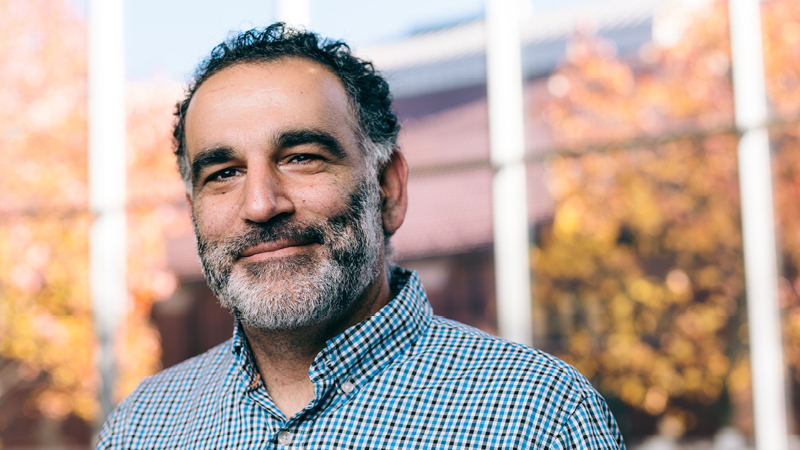
Dan Goldwasserمشاهده پروفایل
دانشیار
Dan Goldwasser is an Associate Professor of Computer Science at Purdue University's Department of Computer Science (College of Science). He joined the faculty in 2014 and focuses on Artificial Intelligence, Machine Learning, and Natural Language Processing. His work emphasizes analyzing social media discourse, political communication, and integrating large language models (LLMs) into interactive systems. Education: PhD in Computer Science from the University of Illinois (2012). Research interests include multimodal understanding, ethical reasoning in AI, and social context modeling. Recent work explores LLMs' roles in uncovering latent arguments, cultural context grounding, and morality frame analysis in social media debates (e.g., vaccination campaigns, climate policy). Notable projects include VIBE (visual language model analysis), EmoGist (visual emotion understanding), and frameworks for political discourse analysis. His work frequently addresses fairness, bias detection, and contextual reasoning in AI systems.
Abulhair Saparovمشاهده پروفایل
استادیار
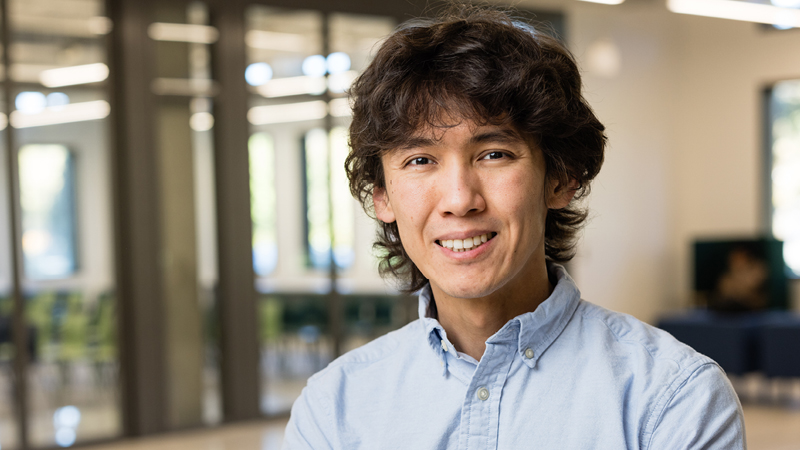
Abulhair Saparov is an Assistant Professor in the Department of Computer Science at Purdue University, joining in Fall 2024. He holds a Ph.D. and M.S. in Machine Learning from Carnegie Mellon University (2022 and 2017 respectively), and a B.S.E. in Computer Science from Princeton University (2013). His research focuses on Artificial Intelligence , Machine Learning , Natural Language Processing , Computational Science , Bioinformatics , and Distributed Systems . Notable projects include Neuro-Symbolic Learning, alignment of Large Language Models, and cognitive bias analysis in AI systems. Recent work examines LLM fallacies in causal inference, robustness via noisy exemplars, and deductive reasoning capacity testing. His publications span mechanisms of transformer-based models and foundational challenges in AI safety.
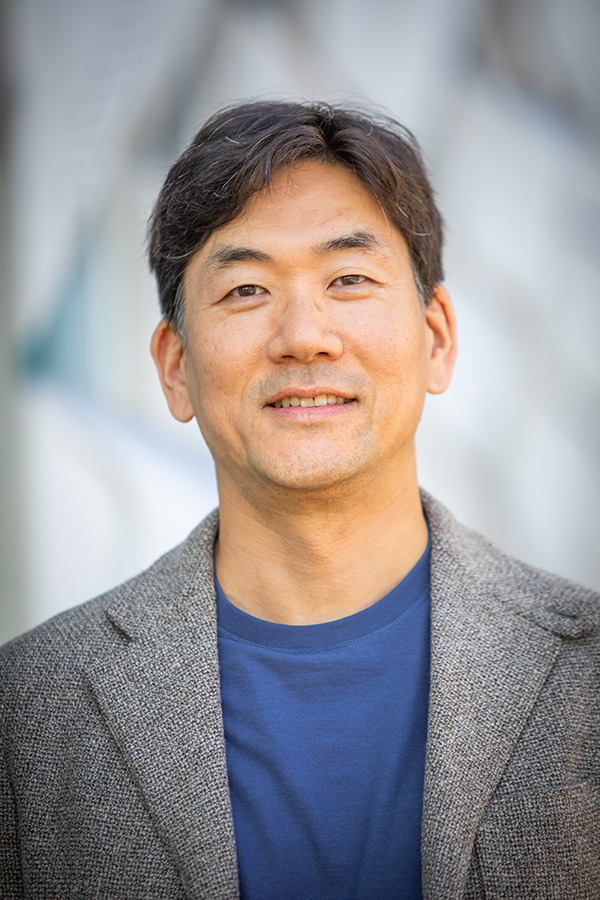
Gu-Yeon Wei is the Robert and Suzanne Case Professor of Electrical Engineering and Computer Science at Harvard University's John A. Paulson School of Engineering and Applied Sciences. He also serves as Area Chair for Electrical Engineering and Director of Undergraduate Studies for the department. His research focuses on sustainable computing, VLSI systems, hardware-software co-design, and quantum computing. Wei leads initiatives like the NSF-funded $12M sustainable computing project to reduce computing's carbon footprint by 45% within a decade. His work emphasizes energy-efficient architectures, fault-tolerant systems, and emerging memory technologies. Education details are not explicitly listed, but his academic roles suggest advanced qualifications in electrical engineering. Research interests include computer architecture, AI accelerators, and environmental impact analysis of computing systems. Recent projects explore carbon-efficient design frameworks, PFAS material modeling, and quantum computing performance modeling. Notable grants include multi-institution NSF funding for sustainability in computing. He advises on heterogeneous SoC design, edge AI inference, and noise-resilient systems. His lab (vlsiarch.eecs.harvard.edu) develops agile design methodologies for custom hardware, including open-source tools like SODA for accelerating chip development. Future work targets scalable machine learning inference, cryogenic memory systems, and end-to-end system resilience in autonomous machines.
Nada Aminمشاهده پروفایل
استادیار
Nada Amin is an Assistant Professor of Computer Science at the Harvard John A. Paulson School of Engineering and Applied Sciences (SEAS). She leads the metareflection lab, focusing on neuro-symbolic programming, program synthesis, and meta-programming techniques. Her research combines programming languages (PL) with AI, particularly leveraging LLMs for verified program and proof synthesis. Education: PhD from EPFL (2016), MEng and BS from MIT (2008). Previous roles include University Lecturer at the University of Cambridge (2017–2019) and software engineering at Google (2009–2011). Awards include Distinguished Paper Awards at PLDI 2023 and an Outstanding Paper Award at NeurIPS’24. Research interests span neuro-symbolic systems, meta-programming, probabilistic reasoning, and precision medicine applications. Current projects include VerMCTS, Persimmon, and collapsing towers for secure compilation. She teaches courses like CS152 (Programming Languages) and CS252R (Advanced PL Seminars). Labs/Teams: Harvard PL Group; Metareflection Lab. Collaborates widely on PL+AI, drug repurposing for medicine, and multi-stage relational programming. Supervises ~40 researchers including PhD students, postdocs, and undergraduates.
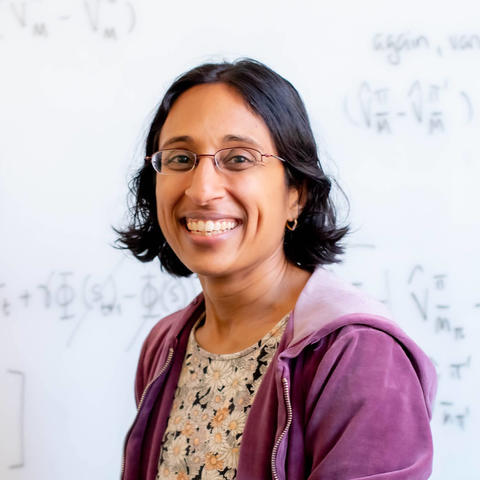
Finale Doshi-Velez is the Herchel Smith Professor of Computer Science at the Harvard John A. Paulson School of Engineering and Applied Sciences. She holds a MSc from the University of Cambridge (as a Marshall Scholar) and a PhD from MIT, followed by a postdoc at Harvard Medical School. Her research focuses on probabilistic methods for human-AI decision-making, spanning healthcare applications, AI interpretability, and socio-technical AI policy. Her DtAK group develops tools for accountable AI systems, including Bayesian models, decision-making frameworks, and validation techniques. Key research areas include: Probabilistic Modeling: Uncertainty quantification in heterogeneous data, Bayesian inference, and model reliability. Decision-Making: Reinforcement learning for clinical policies, inverse reinforcement learning, and sequential decision support. Interpretability: Explanations for AI policies, concept bottleneck models, and human-AI collaboration. Notable awards include the Sloan Fellowship, AFOSR YIP, NSF CAREER Award, and the Everett Mendelsohn Excellence in Mentoring Award. Her work bridges technical innovation with ethical AI governance, including contributions to regulatable AI systems and procurement checklists. She also explores creative writing, with fantasy novels centering South Asian perspectives.
Alireza Akhondi-Asl is an Assistant Professor of Anesthesia at Harvard Medical School and Boston Children's Hospital, specializing in pediatric critical care medicine. His work focuses on integrating advanced analytical techniques with clinical practice to improve outcomes in critically ill children. He leads research in neurophysiological monitoring, machine learning applications for clinical decision support, and optimizing protocols for pediatric ICU care. His affiliations include Harvard Catalyst, where he contributes to translational research initiatives. Research interests include EEG-based sedation monitoring, causal inference methodologies in healthcare, and predictive modeling for organ dysfunction. He has developed automated clinical tools like the Pediatric Sequential Organ Failure Assessment (PSOFA) calculator and explored in silico models for cerebral hemodynamics in sepsis. His studies often address practical challenges in nutrition support, fluid management, and surgical outcomes for congenital disorders. Key contributions include advancing understanding of brain connectivity through dynamic Bayesian models and evaluating the impact of emerging evidence on clinical practices. His work bridges computational methods with real-world pediatric critical care challenges, aiming to enhance both diagnostic accuracy and patient management strategies.
فقط ۷۵۰ نتیجه اول نمایش داده میشود. برای رسیدن به نتایج دقیقتر، جستوجو را با فیلترها محدودتر کنید.