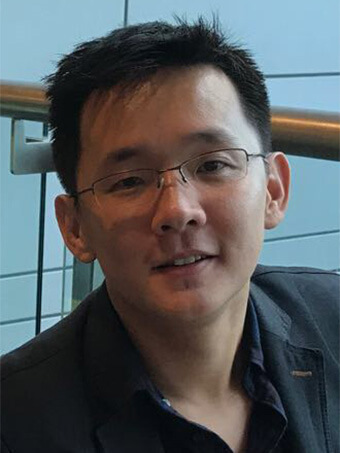
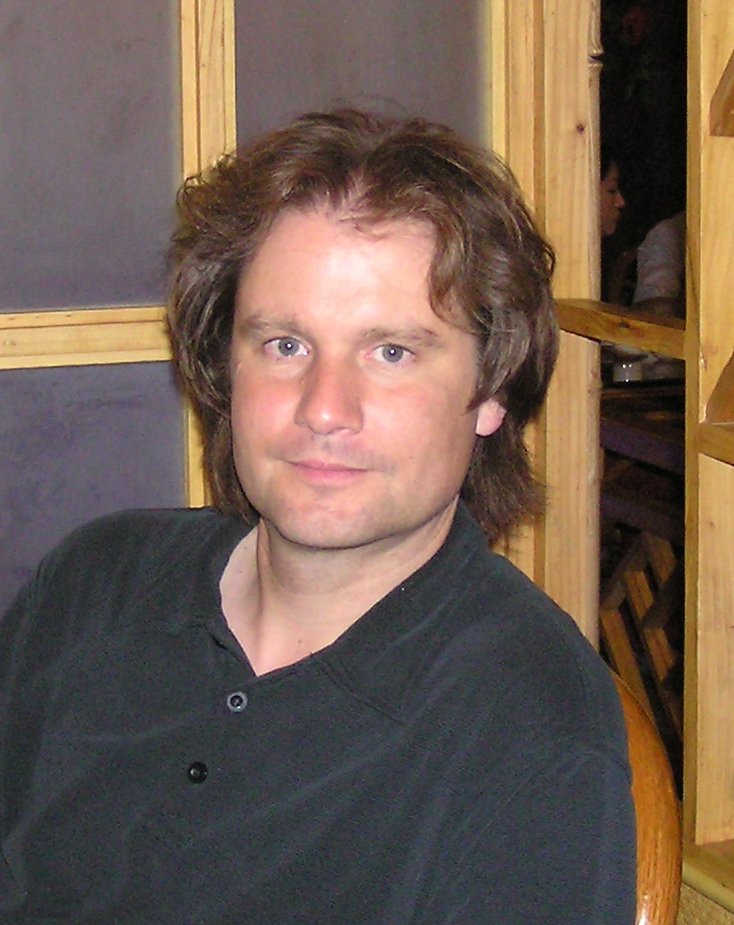
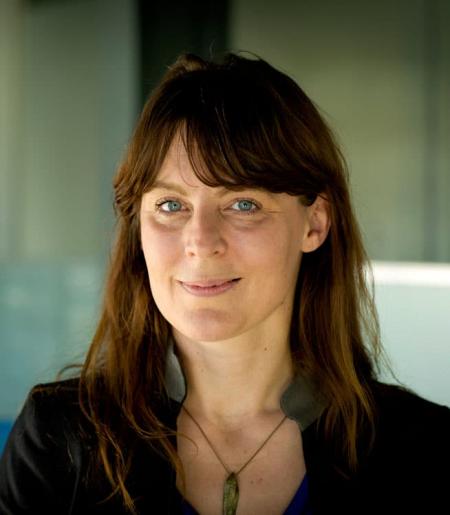
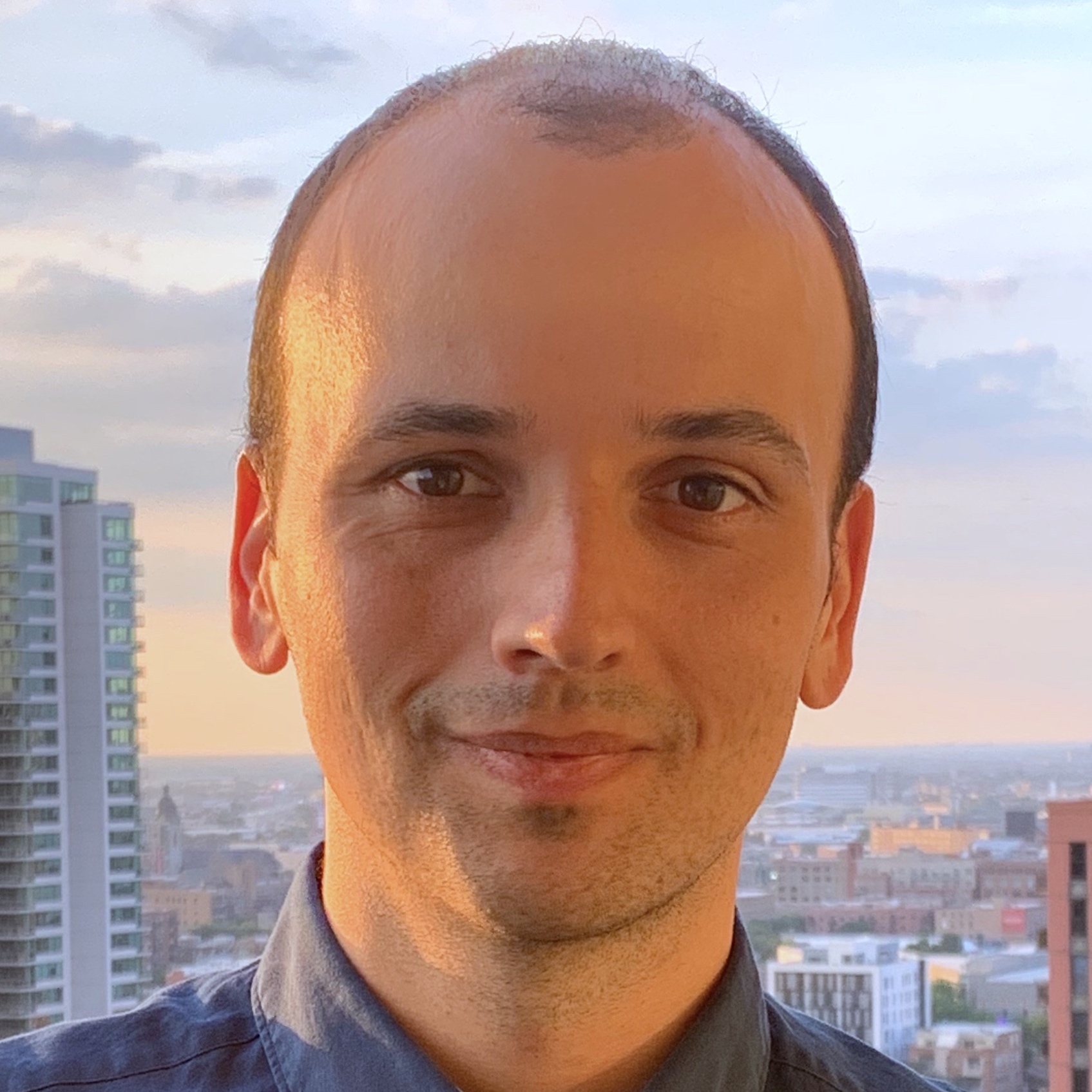
Dr. Alvin J. K. Chua is an Assistant Professor at the National University of Singapore (NUS) under the NUS Presidential Young Professorship. He holds a joint appointment in the Department of Mathematics and a courtesy appointment in the Department of Statistics and Data Science. His research focuses on gravitational-wave astronomy , particularly extreme mass ratio inspirals (EMRIs) as key sources for the LISA mission. He develops computational and statistical methods for modeling GW sources and analyzing detector data, with recent work on machine learning and Bayesian inference techniques. His selected publications highlight advancements in modeling beyond-vacuum-GR effects in EMRIs non-local parameter degeneracies rapid relativistic waveform generation neural networks for GW inference statistical sampling on manifolds These works span gravitational-wave astrophysics , computational relativity , and applied statistics . Scientific recognition includes the NUS Presidential Young Professorship. He collaborates with the LISA Consortium and the North American Nanohertz Observatory for Gravitational Waves (NANOGrav).
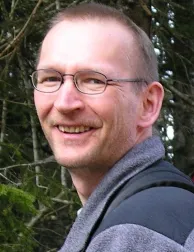
Dr. Jonathan Gair is a Group Leader in the Astrophysical and Cosmological Relativity Division at the Max Planck Institute for Gravitational Physics (Albert Einstein Institute) in Potsdam, Germany. Previously, he served as Professor of Astrostatistics at the University of Edinburgh (2018-2019) and as Reader (Associate Professor) in Statistics at the same institution (2015-2018). Dr. Gair's research focuses on gravitational wave data analysis and its applications to cosmology and fundamental physics. His work spans multiple areas of gravitational wave astronomy, with particular emphasis on: Developing and applying new methodologies for gravitational wave data analysis Using gravitational wave observations to derive cosmological parameters, particularly the Hubble constant Developing data analysis tools for the LISA space-based gravitational wave detector Exploring the scientific potential of gravitational wave observations for testing general relativity Creating computationally efficient techniques for parameter inference in gravitational wave astronomy Dr. Gair plays a leading role within the LIGO/Virgo collaboration in deriving cosmological constraints from gravitational wave observations. He currently chairs the LISA Science Group, overseeing the development of data analysis tools for the planned ESA-led LISA mission. His research has significantly contributed to our understanding of how gravitational wave observations can serve as "standard sirens" for measuring cosmic distances and probing the expansion history of the universe. Dr. Gair's work involves both theoretical development and practical application of data analysis techniques. He has developed methods for handling selection effects in rate estimation of gravitational wave events, techniques for mapping gravitational wave backgrounds using methods adapted from cosmic microwave background analysis, and approaches for incorporating model uncertainties into gravitational wave parameter estimation.
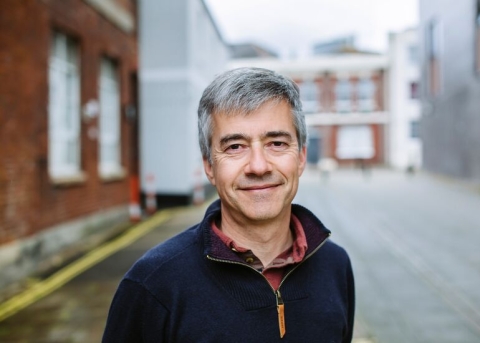
Kari Rummukainen is a Professor at the Department of Physics, Faculty of Science, University of Helsinki. His research focuses on theoretical particle physics and cosmology , particularly using computational methods . He leads the Computational Field Theory research group . Research keywords include: Physical sciences High Energy Physics Cosmology Lattice Gauge Theory Scientific awards: Finnish Academy of Sciences and Letters: 2008 Vaisala prize (awarded in Dec 2006) Current projects: Avaruuden ja kosmologian tutkimus (2024–2030) - University of Helsinki Funds CoCoS AdG (2024–2029) - European Research Council Particle cosmology and gravitational waves (2024–2027) - Academy of Finland
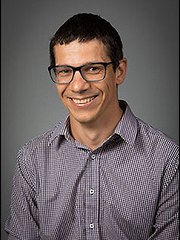
Hari Sundar is an Associate Professor in the Department of Computer Science at Tufts University, holding the Ada Lovelace Associate Professorship. Previously, he served as an Associate Professor at the Kahlert School of Computing, University of Utah. His research focuses on developing parallel algorithms for computational sciences and high-performance computing, addressing challenges in biosciences, geophysics, computational fluid dynamics, and computational relativity. He leads efforts in adaptive mesh refinement, geometric multigrid methods, and scalable scientific computing frameworks like Dendro-GR for numerical relativity. Education: Ph.D. in Computer Science from the University of Pennsylvania (2009), and a Bachelor of Engineering from the University of Delhi (2000). Postdoctoral work at the Oden Institute, University of Texas at Austin. Research Interests: Parallel algorithms, high-performance computing architectures, computational relativity (binary black hole simulations), multiphase flow modeling, and domain-specific languages for scientific computing. His work emphasizes scalability and efficiency on modern supercomputers. Key Contributions: Development of the Dendro-GR platform for gravitational wave simulations, scalable PDE solvers, and GPU-optimized algorithms for phonon transport and genomic sequence alignment. His recent work includes advancements in gravitational waveform modeling for LISA space missions and thermodynamically consistent two-phase flow simulations. Grants & Collaborations: Active in NSF-funded projects on computational relativity, multiphase flow algorithms, and scalable PDE solvers. Collaborates across disciplines in astrophysics, materials science, and bioinformatics.
David Wands is a Professor of Cosmology at the University of Portsmouth, affiliated with the Faculty of Technology and the Institute of Cosmology and Gravitation (ICG). His research focuses on theoretical cosmology, particularly the physics of the early universe, primordial perturbations, gravitational waves, and dark energy. He has held leadership roles, including Director of the ICG from 2010 to 2020. Wands earned his DPhil in astrophysics from the University of Sussex in 1993 and has been a Royal Society University Research Fellow. He is a Fellow of the Royal Astronomical Society and the Institute of Physics. His work bridges fundamental physics with observational cosmology, including contributions to the study of inflation, large-scale structure formation, and gravitational-wave signatures. Wands has published over 150 papers and organized major conferences like the 30th Texas Symposium on Relativistic Astrophysics. He teaches advanced cosmology modules and contributes to editorial roles in prestigious journals, such as the Philosophical Transactions of the Royal Society A. Education: Bachelor's in Natural Sciences (Physics) and Mathematics at the University of Cambridge DPhil in Astrophysics at the University of Sussex (1993) Key Roles: Board Member, Gravitational Physics Division, European Physical Society Member, Particle Data Group collaboration Research Highlights: Primordial black hole formation and gravitational-wave detection Stochastic inflation models and quantum diffusion Non-linear cosmological perturbations and relativistic effects His research outputs span interdisciplinary topics such as modified gravity predictions using N-body simulations, CMB constraints on inflationary parameters, and applications of artificial neural networks in cosmology. Awards include the Daiwa-Adrian Prize for UK-Japan collaboration (2010).
Lisa Rosenblum is a Lecturer at the School of Information, San José State University, where she teaches courses in information professions and library science. She brings extensive leadership experience from major public library systems across the United States, including as former Executive Director of the King County Library System and Chief Librarian at Brooklyn Public Library. Executive Director, King County Library System (2018–2023) Chief Librarian, Brooklyn Public Library (2015–2017) Director of Library and Community Services, Sunnyvale, CA (2009–2015) Lecturer, SJSU School of Information (2008–2014, and currently affiliated) Adjunct Faculty, Pratt Institute (2016–2017) Her research and teaching interests focus on public libraries, library administration and management, facilities planning, and literacy promotion. She emphasizes strategic leadership and innovative service delivery in public information institutions. The recent publications in her portfolio reflect a strong trend in practical library management, strategic planning, and organizational development. Her work often addresses real-world challenges such as budget constraints, service efficiency, leadership transitions, and the integration of library services within broader community frameworks. Topics include performance metrics, reference service models, and the philosophical underpinnings of merged library collections. Distinguished Alumni, College of Arts and Sciences, San José State University (2009) Mover and Shaker, Library Journal (2009) Fellow, Urban Libraries Council Executive Leadership Institute Participant, Stanford Institute on 21st Century Librarianship Lisa Rosenblum has advised and mentored numerous library professionals through her teaching and leadership roles. She has served on advisory boards for the University of Washington Information School, Metropolitan New York Library Council, and Pratt Institute School of Information. While specific grant details are not listed, her leadership roles involved overseeing large-scale public library budgets and initiatives. Her professional service demonstrates a deep commitment to advancing the field through education, policy, and organizational innovation. She has contributed significantly to the development of future library leaders through her teaching in MLIS programs at SJSU, Pratt, and the University of Washington. Her courses, such as INFO 204 – Information Professions Education, are designed to prepare students for leadership and administrative roles in information institutions.
Dr. Sonja Isabel Veith is a Scientific Staff member at the Institute for Special Education, Faculty of Philosophy, Leibniz University Hannover. Her work focuses on research and teaching in the fields of scientific and technical education, with a strong emphasis on phenomenography and inclusive didactics. Phenomenographic Research Science Education Physics & Computer Science Teaching Biomedical Optics Artificial Intelligence Applications Educational Background: M.Sc. in Physics (minor: Meteorology), Leibniz University Hannover B.Sc. in Physics (minor: Computer Science), Leibniz University Hannover Fellow of the International Max Planck Research School on Gravitational Wave Astronomy Dr. Veith's research explores children's perceptions of physics concepts like sound, interdisciplinary science education, and racism-critical teaching methods. She has developed innovative didactic approaches for visualizing sound and integrating computational thinking in elementary education. Her publications show a consistent focus on: Phenomenographic analysis of science concepts Physics education in elementary schools Interdisciplinary teaching methods AI applications in sensor data analysis Historical and societal contexts in science Inclusive didactic frameworks Scientific Honors: Fellow of the International Max Planck Research School on Gravitational Wave Astronomy Dr. Veith has collaborated extensively across disciplines, working with institutions such as the Albert Einstein Institute and Laser Zentrum Hannover. Her career spans multiple domains including physics, computer science, biomedical optics, and educational theory.
Prof. Dr. Thomas Kupfer is a Professor of Stellar Astrophysics at the Hamburg Observatory, part of the Department of Physics in the MIN Faculty at the University of Hamburg. He leads a research group focused on compact binary systems and gravitational wave sources relevant to the LISA mission. University: University of Hamburg School: MIN Faculty Department: Department of Physics Position: Professor of Stellar Astrophysics Email: thomas.kupfer@uni-hamburg.de His research centers on the late stages of stellar evolution, particularly ultracompact binaries such as AM CVn systems, white dwarfs, and hot subdwarfs. He is deeply involved in time-domain astronomy through his leadership in the Zwicky Transient Facility (ZTF), where he served as calibration scientist, communication coordinator, and lead of the Galactic Plane science working group. He currently leads a high-cadence survey of the inner Galactic Plane using ZTF data. Prof. Kupfer is an active contributor to the LISA Consortium, having chaired the Early Career Scientist Working Group and currently leading the Galactic binaries effort in the Multi-messenger Working Group. His work bridges observational astronomy, data quality assurance, and future space-based gravitational wave detection. He has supervised multiple PhD students including Sumari Barocci-Faul, Corey Bradshaw, Eric Stringer, and Weitian Yu, and leads a team of postdoctoral researchers. His academic career includes an Assistant Professorship at Texas Tech University and postdoctoral positions at Caltech and the Kavli Institute for Theoretical Physics (UCSB).
Dr. Andrew L. Miller is a postdoctoral researcher at Utrecht University and the National Institute for Subatomic Physics (Nikhef), focusing on gravitational wave detection and dark matter studies. His work bridges theoretical physics and computational methods within the LIGO/Virgo collaborations. PhD from Sapienza University of Rome and University of Florida MS in Physics from University of Florida BS in Physics from The College of New Jersey Andrew's research centers on gravitational waves from neutron stars , primordial black holes , and dark matter interactions . His methodological innovations include: Machine learning algorithms for detector noise classification Pattern-recognition techniques for continuous wave detection Semicoherent analysis for ultralight boson clouds Frequency-Hough transforms for binary inspirals His publications cover LIGO/Virgo data analysis, Einstein Telescope design, and LISA Pathfinder applications for dark matter detection. He has delivered tutorials on: Machine learning classification Parameter estimation in gravitational waves Frequency-Hough transforms Generalized search frameworks
Matthias Holschneider serves as a Professor in the Department of Mathematics at the University of Potsdam, maintaining active research and teaching roles with contact details including office space 2.09.1.20, phone +49 331 977-1663, and dual email addresses. His research integrates wavelet analysis with geophysical applications, specializing in geomagnetism, magnetic satellite mission data modeling (CHAMP and Swarm), and earthquake physics. This work bridges advanced mathematical techniques with real-world Earth science challenges, particularly in interpreting complex geophysical datasets through signal processing frameworks. Prof. Holschneider supervises academic projects for Diploma, Master's, and PhD candidates as indicated by his project propositions. His recent teaching includes Wavelet Analysis and Java programming courses, with documented instruction during Winter Semester 2014/15. The Department of Mathematics secretariat, managed by Lisa Franz (lfranz@uni-potsdam.de, +49 331 977-1500), handles administrative coordination for his activities.
Daniela Doneva, Ph.D., is a Lecturer at the Institute for Astronomy and Astrophysics (IAAT) , University of Tübingen. Her work spans theoretical and computational astrophysics, focusing on nonlinear gravitational phenomena in modified theories of gravity. Key affiliations: Institute for Astronomy and Astrophysics (IAAT), University of Tübingen Degree: Ph.D. in Physics Research interests include: Black Hole Scalarization : Spin-induced and curvature-induced scalarization mechanisms in black holes and neutron stars. Modified Gravity Theories : Einstein-Gauss-Bonnet, scalar-tensor theories, and teleparallel gravity extensions. Gravitational Wave Physics : Modeling waveforms, stability analysis, and LISA mission applications. Numerical Relativity : Simulations of compact object mergers and nonlinear evolutions. Her publications emphasize computational methods (e.g., neural network surrogates), stability analysis, and observational constraints from gravitational wave detectors like LISA. No scientific awards or student advisement details were found in the provided texts.
Lisa Kaltenegger serves as Associate Professor in the Department of Astronomy within Cornell University's College of Arts and Sciences, and is the Founding Director of the Carl Sagan Institute (CSI). Her interdisciplinary work bridges astrophysics and astrobiology, focusing on modeling habitable worlds and developing techniques to detect life beyond Earth. She maintains affiliations as Research Associate at Harvard-Smithsonian Center for Astrophysics and the American Museum of Natural History. Her research centers on exoplanet atmospheric modeling , biosignature detection , and habitable zone characterization . Kaltenegger pioneered methods for analyzing light fingerprints of alien worlds, creating evolutionary spectra of Earth through geological time to identify life indicators. Her work with NASA's TESS mission and JWST's NIRISS instrument drives observational strategies for future telescopes. She leads the CSI's development of a forensic toolkit for life detection across diverse planetary environments. Notable publications trends show increasing focus on machine learning applications for exoplanet characterization, temporal biosignatures through Earth's evolutionary history, and specialized detection techniques for challenging environments like volcanic exoplanets and icy worlds. Recent work emphasizes practical observational strategies for JWST and future missions. Award highlights include: Heinz Maier-Leibnitz Prize for Physics (Germany) Doppler Prize for Innovation in Science (Austria) Beatrice Tinsley Lecturer (Royal Astronomical Society of New Zealand) IAU Invited Discourse lecture at General Assembly Selection as pioneering woman scientist by Annual Reviews Kaltenegger mentors numerous graduate students in exoplanet research, with current advisees including Li, Payne, and Gomes-Barrientos. She serves on NASA senior review panels and NSF's Astronomy and Astrophysics Advisory Committee, securing significant research funding for exoplanet science. As CSI Director, she leads interdisciplinary teams developing spectral libraries and observational frameworks for life detection. Her upcoming book 'Alien Earths' (April 2024) synthesizes decades of research on finding life in the cosmos, reflecting her commitment to science communication through IMAX films, TED talks, and public lectures reaching six continents.
Luke Zoltan Kelley is an Adjunct Assistant Professor of Astronomy at the University of California, Berkeley . He holds a PhD from Harvard University (2018) and previously served as a Lindheimer Prize Postdoctoral Fellow (Northwestern University) and Cottrell Fellow (CIERA). His research focuses on theoretical astrophysics at the intersection of gravitational waves and cosmological environments, particularly using pulsar timing arrays (PTAs) to study massive black hole binaries (MBHBs). He chairs the Astrophysics Working Group in the NANOGrav Pulsar Timing Array collaboration. Research Interests: Multi-messenger astrophysics, low-frequency gravitational waves from MBHBs, stellar tidal disruption events, active galactic nuclei dynamics, and LISA mission science. He also develops software tools like kalepy and holodeck for analyzing gravitational wave signals and simulating MBHB populations. Key Achievements: Lead author on 13 papers including breakthroughs in Pulsar Timing Array analysis Advises 15 student-led studies on MBHB dynamics and gravitational wave detection Recipient of prestigious postdoctoral fellowships (Cottrell, Lindheimer) Publications: Over 87 papers with 8,926 total citations. Recent work includes detecting gravitational wave signals in NANOGrav data and modeling MBHB evolution in cosmological simulations. Labs/Teams: Leads the NANOGrav Astrophysics Working Group and collaborates with teams at NASA, CERN, and international observatories.
Elisa Maggio is a Research Fellow at the Max Planck Institute for Gravitational Physics (Albert Einstein Institute) in Potsdam, Germany. She holds a PhD from Sapienza University of Rome, where her thesis, Probing new physics on the horizon of black holes with gravitational waves , earned multiple awards including the Amaldi Research Center Prize, Giulio Rampa Prize, and Fubini Prize. Her work focuses on testing general relativity in extreme environments using gravitational waves, particularly investigating the nature of black hole horizons and alternative theories of gravity. As a Marie Curie Fellow, she contributes to the ThorGW project, exploring horizon properties with future detectors like LISA and the Einstein Telescope. Her research involves modeling gravitational wave signals from compact object mergers, analyzing ringdown phases, and developing parametrized waveform models for precision tests. Notable contributions include studies on horizonless compact objects and their gravitational wave signatures. Maggio’s position is supported by grants from the Leibniz Prize (DFG) and Marie Skłodowska-Curie Actions. Elisa has been recognized with prestigious honors such as the Laura Bassi Prize for early-career women in physics (2024) and the Sapienza University of Rome’s thesis prize (2025). Her work bridges theoretical physics with observational challenges, advancing our understanding of gravity’s limits in strong-field regimes.
Karsten Danzmann is a Professor at Leibniz Universität Hannover and Director of the Max Planck Institute for Gravitational Physics (Albert Einstein Institute) since 2002. He leads the Laser Interferometry and Gravitational Wave Astronomy department, focusing on advanced technologies for gravitational wave detection. Education : Diploma in Physics (1977), Universität Hannover PhD in Atomic and Molecular Physics (1980), Universität Hannover His research interests span gravitational wave astronomy, laser interferometry, quantum measurement, and space-based detector technology. He pioneered key innovations at the GEO600 detector, including squeezed light implementation and high-power lasers, now used in LIGO, Virgo, and KAGRA. He also leads the LISA space mission consortium for low-frequency gravitational wave detection in space. Scientific awards : Honorary Doctorate (RWTH Aachen, 2025) Edison Volta Prize (2018) Princess of Asturias Award (2017) Gruber Prize (2016) Hall of Fame der deutschen Forschung (2019)