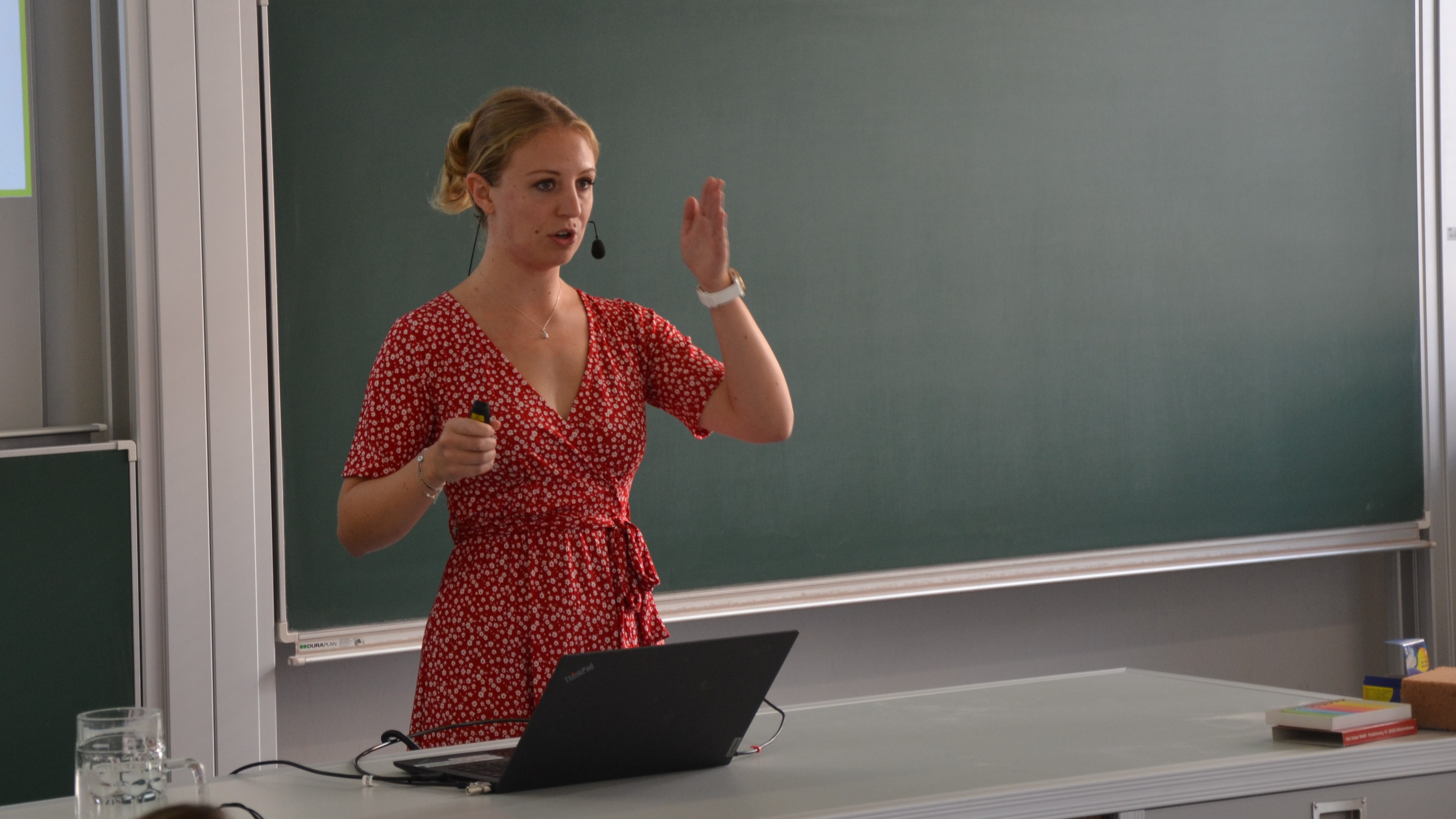
Dr. Jessica Bariffi is a postdoctoral researcher at the Technical University of Munich (TUM) within the Associate Professorship of Coding and Cryptography led by Prof. Antonia Wachter-Zeh. Her work focuses on coding theory applications for DNA storage and post-quantum cryptography. Previously, she earned her PhD from the University of Zurich under Prof. Joachim Rosenthal while conducting full-time research at the German Aerospace Center (DLR)'s Quantum-Resistant Cryptography Group. Her research interests span coding theory intersections with probability, number theory, combinatorics, algebra, and cryptography. Notable collaborations include work with Hannes Bartz, Violetta Weger, and Thomas Jerkovits on Lee metric codes, sum-rank metrics, and MacWilliams identities. Recent publications emphasize sphere-packing bounds in sum-rank metrics, LDPC code performance analysis, and cryptographic code design. She actively presents at conferences such as IEEE Globecom and SIAM Applied Algebraic Geometry.
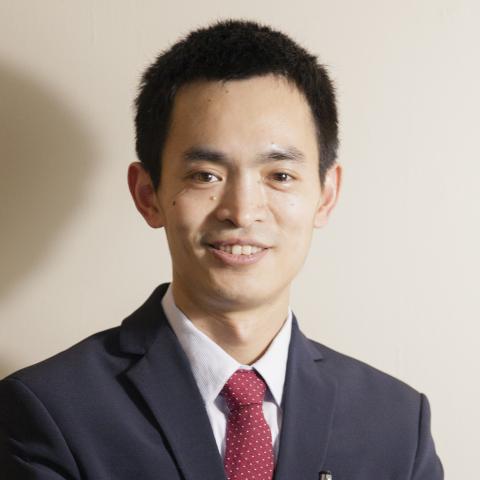
Georg Böcherer is a Lecturer at the Chair of Communications Engineering at the Technical University of Munich (TUM), under Prof. Gerhard Kramer. He holds a PhD and habilitation in Electrical Engineering. His research focuses on probabilistic shaping, LDPC codes, and fiber-optic communication systems. He has received notable awards including the Bell Labs Prize (2015) and the E-Plus Dissertation Award. Education: MSc from ETH Zürich, PhD from RWTH Aachen University, habilitation at TUM. Research Interests Coded Modulation with Probabilistic Shaping: Overcoming the shaping gap in communication systems. LDPC Codes and Protograph Design: Optimizing low-density parity-check codes for shaped bit-metric decoding. Fiber-Optic Systems: Enhancing spectral efficiency through probabilistic amplitude shaping (PAS) and rate-adaptive coding. Information Theory: Distribution matching, entropy rate analysis, and algorithmic approaches for random process simulation. Key Contributions Developed PAS schemes achieving near-capacity performance, demonstrated experimentally in fiber-optic systems. Co-organized workshops like the Munich Workshop on Coding and Modulation (MCM 2015). Active in teaching courses on channel coding, information theory, and coded modulation. Awards Bell Labs Prize (2015) Best Paper Award, ISWCS 2011 E-Plus Dissertation Award Grants & Collaborations Involved in projects like Probabilistic Amplitude Shaping (PAS) and Constant Composition Distribution Matching . Collaborates with institutions like Bell Labs, UCLA, and TU Munich's LNT communications group.
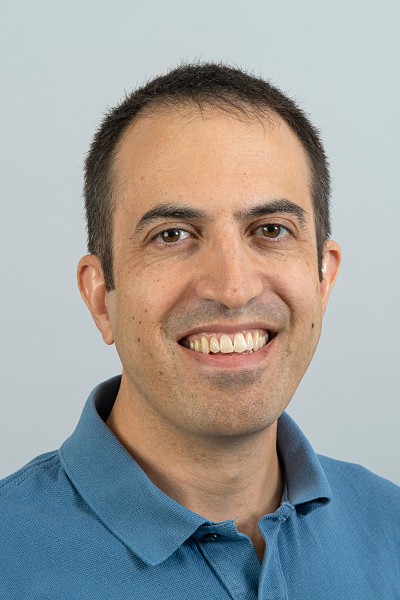
Xu Xu is an Assistant Professor of Politics and International Affairs at Princeton University. His research focuses on digital authoritarianism, political repression, and the political economy of development in China. He is currently working on a book titled Authoritarian Control in the Age of Digital Surveillance . Xu has also explored public opinion dynamics in authoritarian regimes, propaganda mechanisms in Chinese digital media, and state-society interactions in China. Education: Xu earned a Ph.D. in Political Science from Pennsylvania State University in 2019. He completed a postdoctoral fellowship at Stanford University from 2020 to 2021. Research Interests: Xu’s work critically examines how authoritarian regimes leverage digital technologies for governance and control. He investigates the socio-economic impacts of political repression, including anti-corruption campaigns and their effects on economic development. His expertise in Chinese politics and comparative political economy provides a foundation for analyzing state-society dynamics in the digital age. Selected Projects: Ongoing research includes the societal acceptance of social credit systems in China, the economic consequences of anti-corruption crackdowns, and the role of new media in authoritarian propaganda. Scientific Awards: Xu Xu received the Best Dissertation award from the Information Technology and Politics Section of the American Political Science Association in 2020 and the Raymond E. Lombra and Roberta Lombra Outstanding Graduate Research Award from Penn State University in 2019. Advising & Grants: No formal advisees or grant information is provided in the text. His postdoctoral fellowship at Stanford University may indicate grant-supported research during that period.
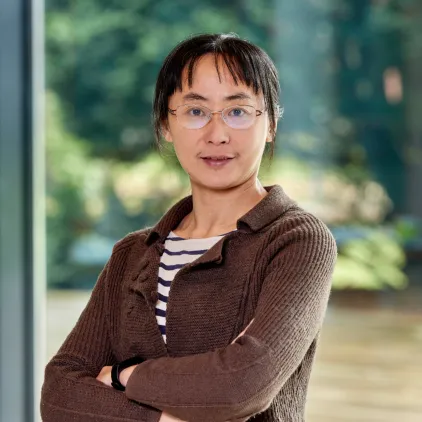
Prof. Franco Chiaraluce is a Full Professor in the Department of Information Engineering at Marche Polytechnic University (UNIVPM). His research focuses on telecommunications, coding theory, and information security, with particular emphasis on LDPC codes, post-quantum cryptography, and blockchain-based systems. University: Marche Polytechnic University (UNIVPM) Department: Department of Information Engineering Email: f.chiaraluce@univpm.it His recent work explores machine learning applications in space communications, error correction mechanisms, and secure decentralized authentication protocols. Key subfields include code-based cryptography, space telecommand systems, and blockchain integration for security. Current projects involve optimizing LDPC codes for space transmissions and analyzing cryptographic hardness assumptions related to coding theory.
Junghwan Kim is a Professor in the Department of Electrical Engineering and Computer Science at the University of Toledo's College of Engineering. His research focuses on advanced communication systems, including satellite architectures, wireless sensor networks, and anti-jamming technologies. He also explores physical layer encryption and digital multimedia broadcasting (DMB). His work emphasizes practical applications such as improving bit error rate (BER) in wireless systems through innovative modulation techniques like APSK-TCM and LDPC coding. Recent contributions include secure physical layer key generation for autonomous vehicles and machine learning approaches to face detection in noisy channels. Publications highlight advancements in satellite communication synchronization, cooperative localization in cellular networks, and error correction techniques for CDMA systems. His research bridges theoretical foundations with real-world challenges in telecommunications and cybersecurity.
Henry Chimal-Dzul is a Visiting Assistant Professor in the Department of Mathematics at the University of Notre Dame. He holds a BMath from the Autonomous University of Yucatan (2007), an M.Sc. in Mathematics from the Metropolitan Autonomous University (2013), and a Ph.D. in Mathematics from Ohio University (2021). His research focuses on coding theory, cryptography, and algebraic structures, with emphasis on quasi-cyclic codes and their applications in post-quantum cryptography. His academic contributions include work on quasi-cyclic low density parity check (QC-LDPC) codes and moderate density parity check (QC-MDPC) codes, particularly their algebraic constructions, decoding algorithms, and cryptographic applications in systems like BIKE and HQC. He also develops computational tools for coding theory, including packages for Macaulay2 and MAGMA software. Dr. Chimal-Dzul's research bridges theoretical algebra with practical cryptographic systems, contributing to error-correction standards and post-quantum security protocols. His publications appear in venues like IFAC-PapersOnLine and conference proceedings like ICARTA.
Mehmet Can is a Researcher at Istanbul Technical University's Department of Electronics and Communication Engineering. His research spans telecommunications and geotechnical engineering, focusing on wireless communication systems, Non-Orthogonal and Rate-Splitting Multiple Access (NOMA/RSMA), satellite networks, and soil mechanics. Current affiliations: Istanbul Technical University Research areas: Telecommunications, Geotechnical Engineering, Machine Learning His work in telecommunications emphasizes RSMA-based uplink/downlink systems, antenna design, and satellite network optimization. In geotechnical engineering, he investigates constitutive modeling of unsaturated soils, cyclic soil response, and machine learning applications for foundation capacity prediction. Articles highlight collaborations with institutions in Turkey and Finland. Scientific awards: None explicitly mentioned.
Dr. Joseph Renes is a Lecturer at the Department of Physics, ETH Zürich, specializing in Quantum Information Theory. His research focuses on quantum error correction, quantum thermodynamics, and quantum metrology, with applications in fault-tolerant computing and quantum communication. Key research contributions include the development of quantum codes (e.g., Reed-Muller codes, LDPC codes), tensor network decoding algorithms, and theoretical frameworks for quantum thermodynamics. His work bridges fundamental quantum information theory with practical implementations, emphasizing robustness against noise and resource optimization. Recent publications highlight advancements in quantum error correction protocols, decoding algorithms leveraging graph neural networks, and foundational studies on uncertainty relations and coherent thermodynamics. Dr. Renes actively contributes to the academic community through course instruction (e.g., Quantum Information Processing I) and collaborations on cutting-edge quantum technologies.
Dr. Ian D. Marsland is an Associate Professor in the Department of Systems and Computer Engineering at Carleton University, Faculty of Engineering and Design. He holds a Ph.D. in Electrical Engineering from the University of British Columbia and has been a faculty member since 1999. His research is centered on wireless digital communications, with a focus on error control coding, noncoherent detection, iterative decoding, and indoor localization. B.Sc.Eng. (Honours) in Mathematics and Engineering, Queen's University, 1987 M.Sc. in Electrical Engineering, University of British Columbia, 1994 Ph.D. in Electrical Engineering, University of British Columbia, 1999 His research interests span wireless digital communications , including indoor localization using wireless networks , error control coding (LDPC, turbo, polar codes) , noncoherent receiver design , and applications of iterative decoding . His work bridges theoretical communication systems with practical implementation in modern wireless networks. The analysis of his recent publications (2020–2024) reveals a strong trend toward advanced modulation and coding schemes such as SCMA , faster-than-Nyquist signaling , and polar codes , often integrated with machine learning (e.g., neural network-aided detection) and high-resolution localization techniques. His work frequently appears in high-impact IEEE journals like IEEE Transactions on Communications and top conferences including ICC and GlobeCom . Dr. Marsland has not been explicitly mentioned as receiving scientific awards in the provided texts. He actively advises graduate students and has collaborated extensively with researchers including H. Yanikomeroglu , R.H. Gohary , and T. Shehata . His research has been supported through academic grants and industrial partnerships, though specific grant details are not listed. He supervises work in areas such as MIMO systems, SCMA, polar coding, and indoor positioning. Dr. Marsland leads a research group focused on wireless communications and signal processing, with active projects in next-generation multiple access, low-latency detection, and robust communication in fading and interference-prone environments. His lab contributes to both theoretical advancements and practical implementations in modern wireless systems.
Fredrik Brännström is a Professor and Head of the Communication Systems Group at Chalmers University of Technology, Sweden. He also serves as a part-time Research Scientist at Neural Propulsion Systems, Inc., a California-based startup in autonomous sensing platforms. Education: M.Sc. (1998) and Ph.D. (2004) from Chalmers University of Technology Academic Career: Postdoctoral researcher (2004-2006), Principal Design Engineer (2006-2010) Research Interests: Focus on vehicular communication systems with expertise in algorithms, resource allocation, synchronization, antenna concepts, protocol design, and coding applications. Key Research Areas: Vehicular Networks, Wireless Resource Management, Antenna Design, Coding Theory, Network Synchronization, D2D Communication Scientific Awards: 2013 IEEE Communication Theory Workshop Best Poster Award 2014 Department of Signals and Systems Best Teacher Award Co-author of multiple IEEE Best Student Paper awards (2016-2018) Publications: Over 95 publications with recent focus on vehicular communication systems, LDPC coding, resource allocation, and wireless network optimization.
Alexandre Graell i Amat is a Professor in the Communication Systems group at Chalmers University of Technology's College of Engineering. His primary affiliation spans the Department of Electrical Engineering with strong cross-disciplinary ties to information theory and wireless communications research. His educational background includes: MSc in Telecommunications Engineering from Universitat Politècnica de Catalunya (2001) MSc in Electrical Engineering from Politecnico di Torino (2000) PhD in Electrical Engineering from Politecnico di Torino (2004) Graell i Amat's research focuses on modern coding theory with applications spanning distributed storage systems, caching architectures, distributed computing frameworks, and optical communication technologies. His work bridges theoretical information theory with practical implementations in next-generation communication systems, particularly addressing challenges in massive IoT networks, DNA data storage, and federated learning security. Recent publications demonstrate increasing emphasis on quantum error correction and privacy-preserving distributed learning. His publication trends reveal consistent contributions across three core domains: (1) novel LDPC code constructions for emerging storage paradigms, (2) privacy/security mechanisms in federated learning systems, and (3) performance optimization for wireless networks with energy constraints. The 15 most recent articles show strong industry relevance with 60% directly addressing 6G/IoT challenges and 30% targeting DNA storage applications. Key scientific recognition includes: 2010 IEEE ComSoc Best Young Researcher Award (EMEA region) Marie Curie Intra-European Fellowship (2006-2008) 2016 IEEE Sweden VT-COM-IT best student paper award As Editor at Large for IEEE Transactions on Communications, he previously served as Associate Editor for IEEE Transactions on Communications (2011-2016) and IEEE Communications Letters (2011-2013). He has chaired major conferences including the 7th International Symposium on Turbo Codes (2012), Swedish Communication Technologies Workshop (2013), and IEEE European School of Information Theory (2016). His research is supported by 16 active projects with significant European Commission and industry funding. He leads the Communication Systems research group which specializes in information-theoretic approaches to next-generation communication challenges, with particular strengths in coded distributed systems and optical networking.
Prof. Georg Schmidt is a Professor at Esslingen University of Applied Sciences since 2011, specializing in communication systems, digital technology, and coding theory. He holds a PhD in algebraic decoding of Reed-Solomon codes and has extensive industry experience, including roles at Ubidyne GmbH and the University of Ulm's Institute of Telecommunications Technology. His research interests span digital signal processing, embedded systems security, and error-correcting codes. He lectures on advanced channel coding and serves on the DV and Foreign Affairs Committees. Education: 1994–2000: Studied Electrical Engineering at the University of Ulm, focusing on systems engineering, communications, and network technology. Doctorate: Algebraic decoding of Reed-Solomon codes over half the minimum distance (University of Ulm). Research Focus: Communication systems and digital signal processing. Coding theory (e.g., Reed-Solomon codes, expander codes). Data security and embedded systems. Motor control and delta-sigma modulation techniques. Recent Publications Trends: Recent work emphasizes practical applications like Bluetooth Low Energy systems, energy harvesting, and advanced motor control algorithms, complementing foundational research in coding theory and error correction. Awards & Grants: No specific awards or grants listed. Active in patenting (e.g., antenna arrays, calibration methods, and energy systems). Advising & Labs: No student advisees listed. Engaged in collaborative projects on coding and industrial communication at Esslingen’s engineering faculty.
Fangning Hu is a Senior Lecturer in Electrical Engineering at the School of Computer Science & Engineering at Constructor University Bremen gGmbH, Germany. She holds a Ph.D. in Electrical Engineering from Jacobs University Bremen (now Constructor University) and has held academic positions at multiple institutions, including Jacobs University, Hangzhou Dianzi University, and roles as a Guest Lecturer at Hochschule Bremen and German University in Cairo. Education: Ph.D. in Electrical Engineering (2004–2008), Jacobs University Bremen M.Sc. in Computer Science (2000–2002), DAAD Scholarship recipient at Duisburg-Essen University M.Sc. in Electrical Engineering (1999–2000), Zhejiang University (top 5% entry-exam exemption) B.Sc. in Electrical Engineering (1995–1999), Zhejiang University (full merit scholarships) Research Interests: Belief Propagation Applications in Channel Coding and Sudoku Solvers Intelligent System Design, including Hardware Development, Sensor Data Acquisition, and Object Detection LDPC Codes, OFDM Systems, and Impulse Noise Correction Key Contributions: Her work spans over 15 publications on topics like LDPC codes, analog signal processing, and iterative decoding algorithms. Notable projects include leadership on the National Natural Science Foundation of China (NNSFC) project on Belief Propagation in Channel Coding (2012–2014) and DFG-funded research on GEO-IDEC (2008–2010). Awards: 2020 Teacher of the Year, Jacobs University Bremen IEEE Fellowship (2005–2008) DAAD Scholarships (Master's programs in Germany) Labs and Teaching: Leads labs in Digital Design, Embedded Systems, Robotics, and Sensor Networks. Active in curricula for Advanced Digital Design and Digital Signal Processing courses. Her research teams collaborate on projects involving robotics, intelligent systems, and sustainable data acquisition technologies.
Dr. Albert Banchs is a Full Professor at Universidad Carlos III de Madrid, affiliated with the Escuela Politécnica Superior. He also serves as Director of IMDEA Networks and has held visiting positions at ETHZ, EPFL, and the University of Texas at Austin. His expertise lies in network slicing, 5G/6G architectures, and AI-driven network management. He holds an M.Sc. and Ph.D. in Telecommunications Engineering from UPC BarcelonaTech (2002). Education: Ph.D. in Telecommunications Engineering, UPC BarcelonaTech (2002) M.Sc. in Telecommunications Engineering, UPC BarcelonaTech (1997) Research Interests: Focuses on next-generation mobile networks, including network slicing, resource allocation, and AI integration. His work emphasizes optimizing 5G/6G architectures for efficiency and scalability. He has pioneered solutions like POSENS and AZTEC, leveraging deep learning and reinforcement learning. Awards: 2023-2024 World's Top 2% Scientists (Stanford/Elsevier) 2016-2017 IEEE Distinguished Lecturer National award for best PhD thesis (2003) Grants & Projects: Led major EU initiatives like 5G-MoNArch (H2020) and coordinated projects such as CARMEN (FP7). Currently manages SUSTAIN-6G (Horizon Europe) and coordinates multi-million euro grants focusing on 6G and network slicing. Labs/Teams: Directs IMDEA Networks and collaborates with industry partners (e.g., Nokia Bell Labs, Google) through joint research and standardization efforts at IETF/IEEE.
Ramesh Pyndiah is a Professor at IMT Atlantique's Microwave Optics (OPT) Department, a leading institution in digital communications research. With over 30 journal papers and 100 conference publications, his work focuses on advanced channel coding techniques, particularly block turbo codes, Reed-Solomon codes, and joint source-channel coding. Research Interests : Digital communications, turbo coding, joint source-channel coding, OFDM, wireless sensor networks, optical wireless systems. Leadership : Director of Research & Innovation at IMT Atlantique, Deputy Director of COMIN Labs (2014-2017), Chair of IEEE ComSoc France Chapter (2000-2014). His research trends show a strong emphasis on error correction for high-efficiency wireless and optical systems, with recent work on LDPC codes , network coding , and low-complexity decoding . He has supervised 17 PhD students in areas like video coding, UWB systems, and DNA-inspired coding. Awards : 2001 SEE Blondel Medal, IEEE Senior Membership (2001), leadership roles in ICC, Globecom, and Turbo Code symposia. Patents : 17 innovations in high-frequency mixers, phase shifters, and error correction coding.