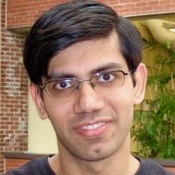
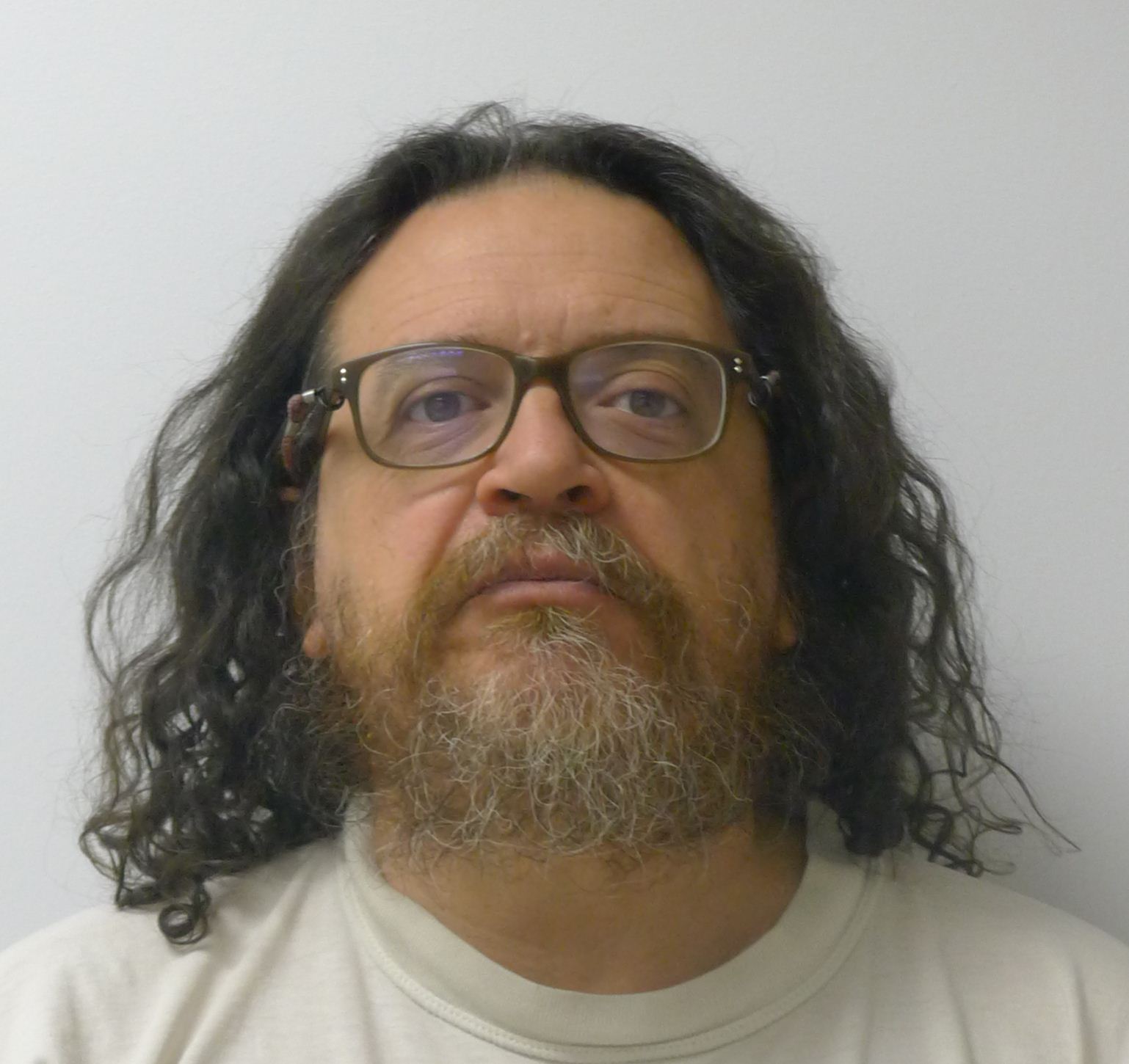
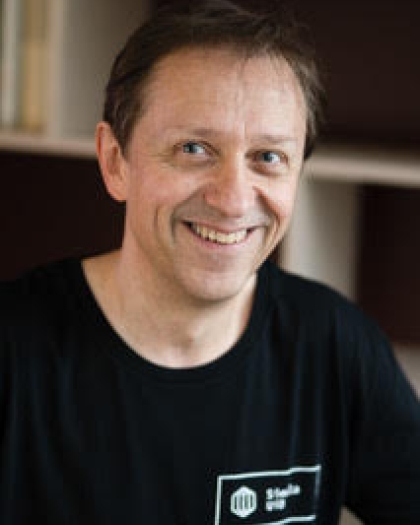
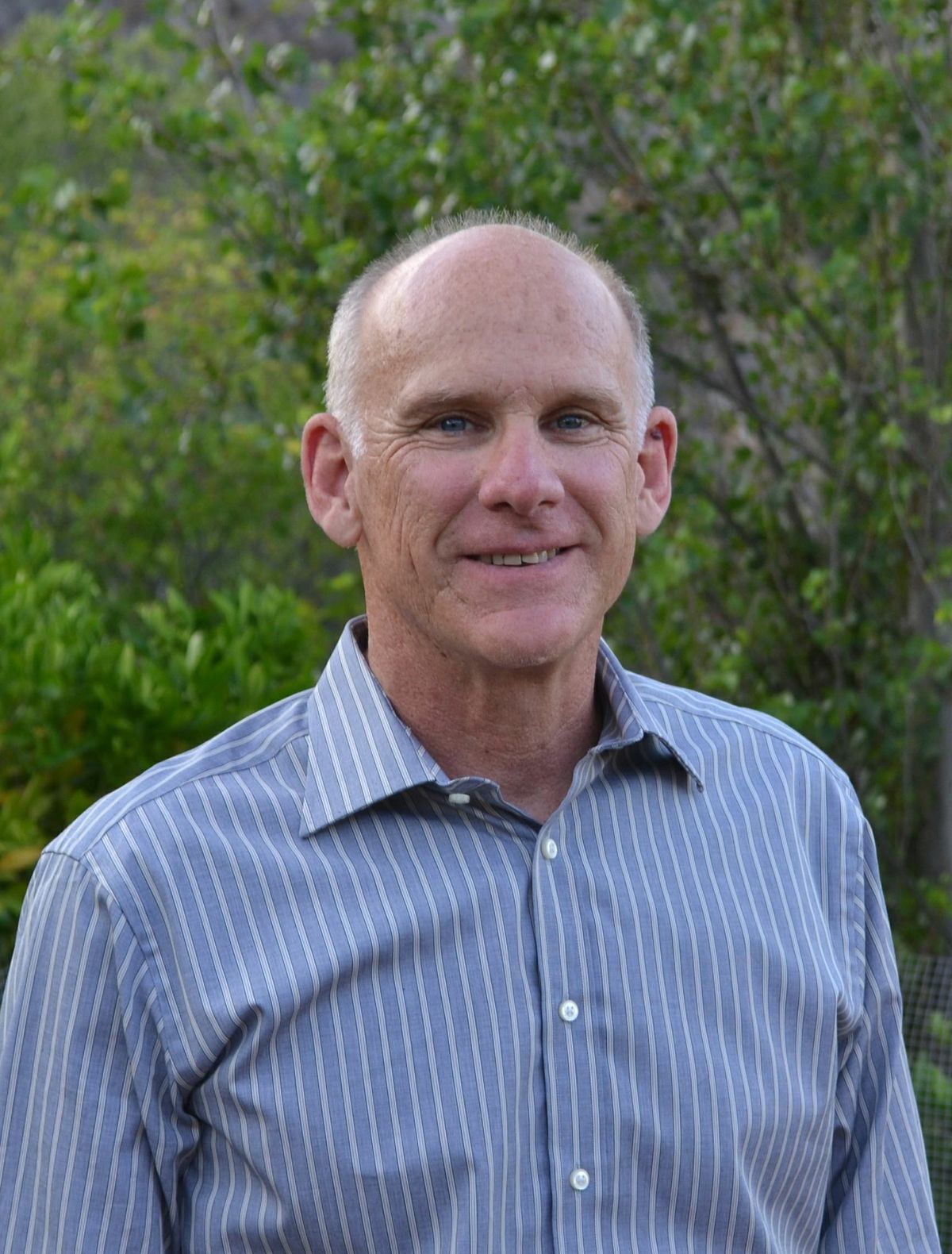
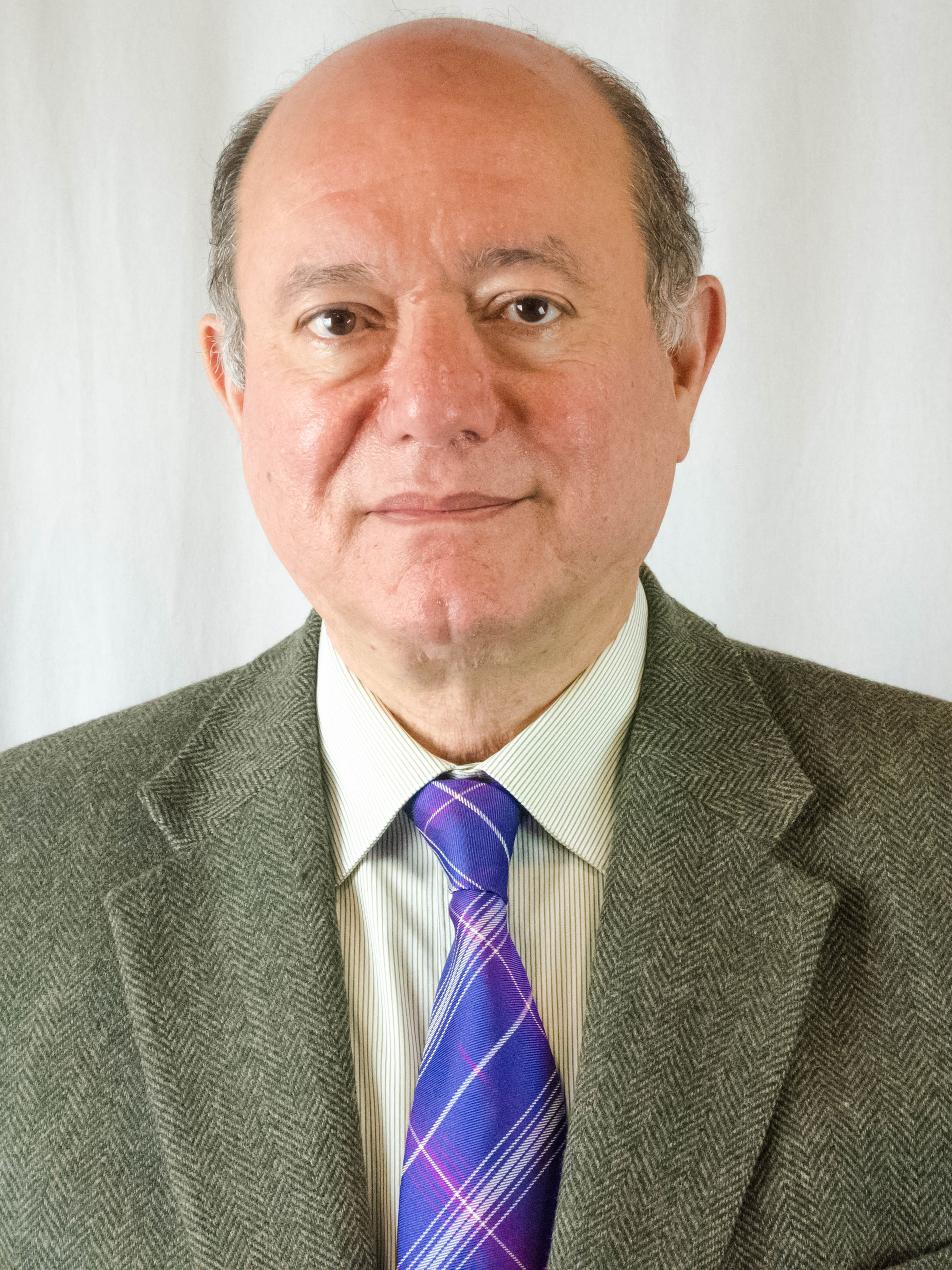
Peter Jax is a Full Professor at RWTH Aachen University , leading the Chair of Communication Systems . His research focuses on speech and audio processing , with expertise in active noise control , spatial audio , and machine learning applications for acoustic systems. Diploma in Electrical Engineering (1997), RWTH Aachen University PhD (2002), RWTH Aachen University Research areas include binaural direction-of-arrival estimation , MIMO acoustic system identification , and adaptive filtering for consumer and medical audio applications. Recent articles highlight innovations in ambisonics upscaling , noise control for UAVs , and data-driven uncertainty modeling in headphones. Scientific honors : Distinguished Member of Technicolor Fellowship Network (2010) Johann-Philipp-Reis Preis Borchers Medal E-Plus Award for Best Dissertation With over 25 patents in speech/audio processing and leadership roles in industry (Deutsche Thomson OHG, 2005–2015), he bridges academic research and industrial innovation.
Madhur Tulsiani is a Professor at the University of Chicago's Department of Computer Science and a researcher at the Toyota Technological Institute at Chicago (TTIC). His research focuses on theoretical computer science, particularly complexity theory and algorithm design, with applications in coding theory and information theory. He has been supported by NSF grants 1254044, 1816372, and 2326685. Education: Bachelor’s in Computer Science, IIT Kanpur (2001-2005) Ph.D. in Computer Science, UC Berkeley (2005-2009), advised by Luca Trevisan Postdoctoral fellowships at the Institute for Advanced Study (IAS) and Princeton University Research Interests: Mathematical foundations of computation Complexity theory and algorithm design Coding theory and error-correcting codes Sum-of-Squares hierarchies and approximation algorithms Recent Contributions: Pioneering work on list decodable codes and expander-based constructions Advances in approximation algorithms for high-dimensional expanders Lower bounds for Sum-of-Squares algorithms using high-dimensional expanders Teaching: Information and Coding Theory Mathematical Toolkit (linear algebra/probability) Summer REU programs in theoretical computer science Students: Advised PhD students including Fernando Granha Jeronimo, Goutham Rajendran, and Shashank Srivastava Co-advised students with Sasha Razborov, Janos Simon, and others Labs/Groups: Member of the Theoretical Computer Science Group at TTIC and UChicago, contributing to cross-disciplinary research in algorithms and complexity.
Professor Daniel Panario is a faculty member at Carleton University's School of Mathematics and Statistics. He holds the rank of Professor and specializes in areas such as Finite Fields, Combinatorics, and Cryptography. His research focuses on the analysis of algorithms, computational number theory, and applications in cryptography and coding theory. Education: PhD in Computer Science from the University of Toronto, postdoctoral research at the University of Waterloo, and further academic roles at institutions in Brazil and Uruguay. His expertise spans theoretical and applied mathematics, with contributions to discrete mathematics and algorithmic research. Research Interests: Finite Fields and their applications, combinatorics, cryptography, coding theory, and computational algebra. He has supervised numerous students and postdoctoral researchers, contributing to over 200 publications and holding editorial roles in top journals. Grants and Editorial Work: Editor for journals like Applicable Algebra in Engineering and Cryptography and Communications. He has organized international conferences and workshops, advancing the field of finite fields and discrete mathematics. Labs/Teams: Active member of the Ottawa-Carleton Discrete Mathematics Group, collaborating on combinatorial and algebraic research projects.
Alastair Kay is a Quantum Dynamics Reader at the Department of Mathematics, Royal Holloway, University of London . His research focuses on theoretical Quantum Information , aiming to bridge quantum theory with experimental quantum technologies, particularly quantum computers . Known for pioneering work on perfect quantum state transfer Contributed extensively to quantum memories (e.g., Toric code), quantum cloning , and entanglement detection Active in collaborations across quantum computing and information theory Research Interests span: Quantum Communication : Optimizing state transfer protocols Quantum Error Correction : LDPC codes and fault tolerance Quantum Cryptography : Blind computation frameworks Quantum Network Design : Encoding and memory architectures Grants : Principal Investigator for EPSRC-funded projects on Quantum LDPC Codes (2023-2025) and Synthesis of Quantum States (2016-2018).
Xiaoyu Ai is a Researcher at the School of Electrical Engineering and Telecommunications at the University of New South Wales (UNSW Kensington). His work bridges telecommunications engineering with quantum communication technologies. Bachelor of Engineering (Xidian University, 2013) Master of Engineering Science (UNSW, 2015) PhD in Telecommunications (UNSW, 2022) A specialist in quantum key distribution (QKD), Xiaoyu Ai focuses on channel coding for satellite-based QKD systems, including the development of LDPC codes and multithreaded reconciliation algorithms. His research extends to wireless communication protocols for mining IoT applications and scalable LoRa mesh networks. Recent work includes quantum emitter integration in hexagonal boron nitride for secure communication hardware. Key publications highlight his contributions to quantum cryptography, satellite communication, and industrial IoT. Notable projects include the CRC-P initiative for LoRa-based backup systems in the mining industry and collaborations in quantum networking with institutions like University of Technology Sydney. His technical expertise spans secure communication protocols, photonic device optimization, and low-light multimedia algorithms, as evidenced by recent conference presentations.
Ramy H. Gohary is an Assistant Professor in the Department of Systems and Computer Engineering at Carleton University. His research focuses on advanced wireless communication systems, including machine-to-machine communications, Internet-of-Things (IoT), MIMO systems, convex optimization, differential geometry applications in signal processing, and information-theoretic aspects of multiuser systems. Principal Investigator for Ericsson-Carleton Strategic Partnership projects on 5G+ wireless networks Research emphasizes fairness, cross-layer design, cooperative communications, and jamming-resistant detection techniques His recent work explores direction-of-arrival estimation, non-coherent communication in jamming environments, and distributed MIMO architectures. Publications highlight applications of differential geometry, optimization techniques, and sparse signal recovery in modern wireless systems. He actively contributes to advancements in channel modeling, beamforming, and energy-efficient network design.
Lei Wang is the F. L. Castleman Associate Professor in Engineering Innovation at the University of Connecticut's School of Engineering, Department of Electrical and Computer Engineering. He holds a PhD from the University of Illinois at Urbana-Champaign (2001), an MS (1996) and BS (1992) from Tsinghua University, China. His research focuses on cyber-physical systems , embedded computing with renewable energy , and nanoscale integrated circuit design . Key areas include microbial fuel cells , memristor-based hardware security , and low-power signal processing architectures . Recent work trends involve Quantum-dot transistor applications for in-memory computing Adaptive LDPC decoder optimization Hardware security leveraging memristor properties Energy-efficient power management systems for underwater sensors Scientific recognition includes National Science Foundation CAREER Award (2010) F. L. Castleman Term Professorship in Engineering Innovation Professional roles encompass editorial and committee positions at IEEE and ACM journals. His work spans interdisciplinary domains in renewable energy integration , VLSI design , and bio-inspired computing systems .
Dr. Zhiyuan Tan is an Associate Professor in the School of Computing at Edinburgh Napier University (ENU), specializing in cybersecurity research. He holds a PhD in Computer Systems from the University of Technology Sydney (UTS), Australia (2014), an MEng from Beijing University of Technology, China (2008), and a BEng with high distinction from North-eastern University, China (2005). Before joining ENU in 2016, Dr. Tan held research positions at the University of Twente (Netherlands), University of Technology Sydney (Australia), and La Trobe University (Australia). Dr. Tan's research focuses on cybersecurity, machine learning, data analytics, virtualisation, and cyber-physical systems. His work has resulted in over 44 scholarly publications with an H-Index of 13 and more than 830 citations according to Google Scholar. His recent publications demonstrate a continued focus on network security, intrusion detection systems, and the application of machine learning techniques to cybersecurity challenges, with publications spanning from 2022-2025 in top venues including IEEE Transactions and international conferences. Dr. Tan has received significant research funding, including AUD 27,800 from CSIRO and UTS for autonomous network intrusion detection research and £6,987 from ENU for securing future 5G health care systems. His research has been recognized with awards including the National Research Award 2017 from the Research Council of the Sultanate of Oman, a Best Paper Award, and the Kaspersky Lab's Annual Student Cyber Security Conference Finalist Award. National Research Award 2017 from the Research Council of the Sultanate of Oman Best Paper Award Kaspersky Lab's Annual Student Cyber Security Conference Finalist Award Dr. Tan has mentored 9 PhD students over the past 5 years, with 6 successfully completing their studies. His students have produced 12 journal and 10 conference publications. He has also served as an editorial board member for international journals, organized special issues, and participated as a technical program committee member for major international conferences. Dr. Tan is currently recruiting PhD students for research projects on network security, adversarial machine learning for anomaly/malware detection, virtualization security, and IoT security.
Dr. Beeshanga Abewardana Jayawickrama is a Senior Lecturer and Data Science Engineering Course Director at the School of Electrical and Data Engineering, University of Technology Sydney (UTS). He holds a BEng in Telecommunications Engineering (Hons I) and a PhD in Electronic Engineering (Wireless Communications) from Macquarie University, Sydney, Australia, completed in 2011 and 2015 respectively. As a Senior Member of the Institute of Electrical and Electronics Engineers (IEEE), he maintains active research and industry collaborations. His educational background includes: BEng in Telecommunications Engineering (Hons I), Macquarie University (2011) PhD in Electronic Engineering (Wireless Communications), Macquarie University (2015) Dr. Jayawickrama's research focuses on cutting-edge wireless communication technologies with particular emphasis on 5G/6G Physical Layer signal processing algorithms, Machine Learning techniques for Physical Layer signal processing, Ultra-Reliable Low-Latency Communications, Non-Terrestrial Networks, Compressed Sensing (Sub-Nyquist Sampling), and spectrum sharing. His work bridges theoretical innovation with practical implementation, evidenced by numerous patents and industry collaborations. He has published over 40 prestigious conference and journal papers while developing algorithms that have been incorporated into commercial 5G base stations. Analysis of his recent publications reveals a strong focus on satellite communications, particularly cognitive GEO-LEO satellite networks, where he explores spectrum sharing, beam design, and interference management. His research increasingly integrates machine learning techniques with traditional signal processing approaches, especially for spectrum sensing and channel estimation in next-generation wireless systems. The trend shows growing emphasis on practical implementation and experimental validation of theoretical concepts. His scientific recognition includes: Macquarie University Medal in Engineering Vice-Chancellor's Commendation for Academic Excellence Outstanding Teacher Award (2021) Multiple competitive scholarships from Macquarie University and CSIRO In terms of teaching and supervision, Dr. Jayawickrama has taught numerous undergraduate and postgraduate subjects including Advanced Telecommunication Engineering, 4G/5G Mobile Technologies, Communication Systems, and Engineering Research Thesis. His current research is supported by significant grants including the AI-SSPCAS project (CSIRO), Smart Flood and Storm Intelligence Sensing Initiative (NSW Department), and CogSat: Cognitive Satellite Radio (SmartSat CRC). Previously, he has secured research funding from Intel Corporation and Nokia Research Centre. Dr. Jayawickrama has held leadership roles including Course Director for Data Engineering since 2021 and UTS IEEE Student Branch Counsellor from 2017-2020. His industry experience includes research positions at Ericsson in Sweden (working on 5G New Radio receiver algorithms) and Intel Labs in the USA (working on Licensed Shared Access and Citizens Broadband Radio Service).
Mohsin Abbas is an Assistant Professor (Tenure Track) in the Computing Sciences department at Tampere University, Finland. His research focuses on high-throughput, low-latency, and energy-efficient VLSI architectures for baseband processing systems, particularly channel code decoders. He has held roles including Research Assistant Professor at HKUST, Postdoctoral Fellow at McGill University, and Lead Engineer at ASTRI. Education: PhD in Electronics and Computer Engineering (2017), HKUST, under Prof. Chi-Ying Tsui MSc in Computer Science and Engineering (2011), Hanyang University, South Korea BSc in Computer Engineering (2007), University of Engineering and Technology Taxila, Pakistan Research Interests: VLSI Design (ASIC/FPGA) Wireless Communications (5G/6G) Massive MIMO and Compute-In-Memory (CiM) Channel Coding and Hardware Architecture Low-Latency Decoding Algorithms (e.g., GRAND) Energy-Efficient Systems and Green Communication Teaching Experience: HKUST: Digital Circuits and Systems (ELEC 2200), VLSI Design Automation (EESM 5020) Labs/Teams: Integrated Systems for Information Processing (ISIP) Lab, McGill University (2019–2022) HKUST’s ECE Department and ISIP Lab collaborations
Øyvind Ytrehus is a Professor at the Department of Informatics, Faculty of Mathematics and Natural Sciences, University of Bergen (UiB), Norway. He is actively engaged in research and academic supervision, with a focus on coding theory and its applications in communication systems. Research Interests: His primary research areas include Coding Theory , Error-Correcting Codes , Information Theory , Network Coding , Cryptography , and RFID Communication . His work bridges theoretical foundations with practical implementations in wireless and networked systems. The recent publications (2024–2008) reflect a consistent trajectory in coding for communication security, RFID systems, and iterative decoding. Key trends include the use of formally unimodular lattices for secrecy gain, LDPC and turbo codes for erasure channels, and network coding for multicast and delay optimization. His work frequently intersects with physical-layer security and energy-efficient communication. Scientific Contributions: Co-edited special issues on coding theory and applications. Authored foundational work on convolutional codes, stopping sets, and generalized Hamming weights. Contributed to RFID and inductively coupled channel modeling. Advising and Grants: He has supervised several PhD candidates, including Bjørn Møller Greve, Christian W. Otterstad, and Mohsen Toorani. While specific grants are not listed, his extensive publication record and editorial roles suggest active grant involvement in coding and communication research. Labs and Teams: While no specific lab name is mentioned, his collaborations with researchers at Simula UiB, University of Valladolid, and Lancaster University indicate participation in interdisciplinary research networks focused on coding and communication systems.
Michael E. O'Sullivan is a Professor and Chair in the Department of Mathematics and Statistics at San Diego State University. He has taught advanced courses such as Commutative Algebra and Algebraic Geometry (Math 621) and Groups, Rings, and Fields (Math 620), with a focus on integrating computational tools like Sage, Maple, and Magma into his teaching. Research Focus: His work centers on Coding Theory , particularly Algebraic Geometry Codes , Hermitian Codes , and LDPC Codes . His research includes developing decoding algorithms (e.g., Groebner basis methods, Sudan's list decoding), analyzing code properties (e.g., minimum distance, redundancy), and optimizing code constructions. Publications: His most recent articles (2014–2006) address unique decoding of AG codes, list decoding techniques, and applications of algebraic structures to code optimization. These span journals like IEEE Transactions on Information Theory and Designs, Codes and Cryptography , as well as conferences such as IEEE International Symposium on Information Theory and Canadian Workshop on Information Theory . Emails: Contact him at mosullivan@mail.sdsu.edu or m.osullivan@math.sdsu.edu .
Paul Stankovski Wagner is an Associate Professor and Senior Lecturer at Lund University's Faculty of Engineering (LTH), Department of Electrical and Information Technology. He serves as a Project Manager for the Department and is affiliated with several research initiatives including ELLIIT: the Linköping-Lund initiative on IT and mobile communication, LTH Profile Area: AI and Digitalization, and the Secure and Networked Systems research group. His research focuses on cryptography and information security , with particular expertise in post-quantum cryptography, lattice-based cryptographic systems, and side-channel analysis. His work spans theoretical foundations of cryptographic security as well as practical implementations for real-world applications. Key research areas include: Learning with Errors (LWE) problem and related algorithms BKW algorithm optimization for lattice-based cryptography Key management systems and secure communication protocols Anonymous credentials and privacy-preserving technologies Post-quantum cryptographic implementations Stream cipher analysis and nonrandomness detection Analysis of his recent publications (2023-2025) reveals a strategic expansion of his research from theoretical cryptography into applied security domains. While maintaining strong contributions to lattice-based cryptography (particularly the LWE problem and BKW algorithm), he has increasingly focused on practical applications in healthcare technology, pharmaceutical research, and vehicle networks. His 2025 paper on hospital-at-home security architecture demonstrates this applied direction, while his 2024 work on NFT frameworks for pharmaceutical R&D shows interdisciplinary innovation at the intersection of blockchain technology and healthcare. Dr. Stankovski Wagner has supervised 8 graduate students and has been involved in multiple significant research projects: SMARTY (2018-2024): A major project on secure software updates for smart cities funded by the Swedish Foundation for Strategic Research Side channels on post-quantum cryptographic algorithms (2017-2023): Dissertation project as assistant supervisor Developing tools for secure software patch deployment (2018-2022): Dissertation project as assistant supervisor Artificial Persons (2021): Advanced study group at Pufendorf IAS He is a core member of the Secure and Networked Systems research group at Lund University, which focuses on developing robust security solutions for emerging networked technologies. The group maintains strong collaborations with industry partners working on IoT security, healthcare technology, and smart city infrastructure.
Oana AMĂRICĂI-BONCALO is a Professor at the Computer and Information Technology Department of University Politehnica Timisoara. She holds a Dr. Habil. Eng. degree and has served as Assistant Professor, Lecturer, and Associate Professor since 2009. Her research focuses on reconfigurable systems, system reliability, embedded systems, and forward error correction with FPGA applications. Education: Engineering Degree (2006) and PhD in Computer Engineering (2009), both from University Politehnica Timisoara. She was an invited researcher at University College Cork (2012) and University of Cergy-Pontoise (2016). Since 2017, she has been an Editor for Microprocessor and Microsystems (Elsevier). Research projects include GEMSCLAIM (green energy management in mobile systems). She supervises PhD student Andrei-Bogdan MIHĂILESCU. Recent publications emphasize LDPC decoding architectures, FPGA-based solutions, and reliability assessment in quantum circuits. Notable contributions include innovations in layered decoding algorithms, memory optimization for LDPC decoders, and one-hot data representation techniques. Her work intersects VLSI design, digital signal processing, and embedded systems reliability. Event organization includes a 2024 workshop on audio-video technical solutions and participation in IEEE symposiums. She contributes to academic events like the Mobile Applications Student Contest (SCMUPT).
Dr. Masoud Salehi is an Associate Professor and Associate Chair for Graduate Studies in the Department of Electrical and Computer Engineering at Northeastern University, USA. He holds a BS (Summa Cum Laude) from Tehran University and MS/PhD from Stanford University. Previously, he worked at Isfahan University of Technology and Tehran University. His research focuses on error-correcting codes, information theory, digital communications, and physical-layer security. He has authored influential textbooks including Communication Systems Engineering (Prentice-Hall) and Contemporary Communication Systems Using MATLAB . Education: BS (Tehran U.), MS/PhD (Stanford U.). Visiting Professor at Eindhoven University of Technology (1988-1989). Research Interests : Network information theory, source-channel matching, data compression, turbo coding, coding for fading channels, digital watermarking. Recent work emphasizes physical-layer security in multi-user wireless networks and jamming mitigation strategies. Grants & Industry : Supported by NSF, GTE, NUWC, CenSSIS, Analog Devices. Consulted for Teleco Oilfield Services and AT&T. Awards : 2024 Outstanding Faculty Service Award. Editorial Board member of International Journal of Electronics and Communications . Key Contributions : Developed precoding techniques for MIMO systems, game-theoretic jamming mitigation, and LDPC decoding algorithms. Active in the Institute of Information Assurance (IIA) and Communications, Control & Signal Processing research group at Northeastern.