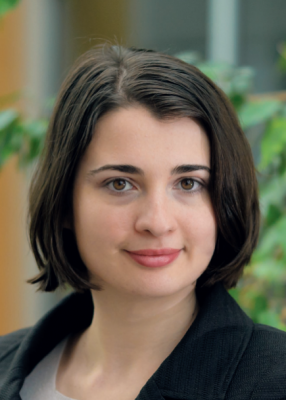
Roxana Geambasu is an Associate Professor at Columbia University's Department of Computer Science, with affiliations to the Software Systems Lab and the Cybersecurity Committee . She specializes in systems security, differential privacy, and resource management for modern computing environments. PhD: University of Washington (2011) Undergraduate: Polytechnic University of Bucharest, Romania Her research focuses on integrating differential privacy as a first-class computing resource in infrastructure systems, with key contributions in: Privacy Budget Management (PrivateKube, DPack, Turbo) Web & Mobile Privacy (Cookie Monster, Big Bird) Security Abstractions (POSIX, Vanish, XRay) Article trends show a strong emphasis on differential privacy (8/15), resource scheduling (5/15), and privacy-preserving advertising (3/15). Key subfields include budget optimization, browser APIs, and ML pipeline privacy. Scientific awards include: Alfred P. Sloan Fellowship NSF CAREER Award Google Ph.D. Fellowship in Cloud Computing Best Paper Awards at SOSP, EuroSys She advises M.S. and undergraduate students, teaching courses in Distributed Systems and Privacy Curriculum . Her lab develops tools like PixelDP and Sunlight for operationalizing privacy in real-world systems.
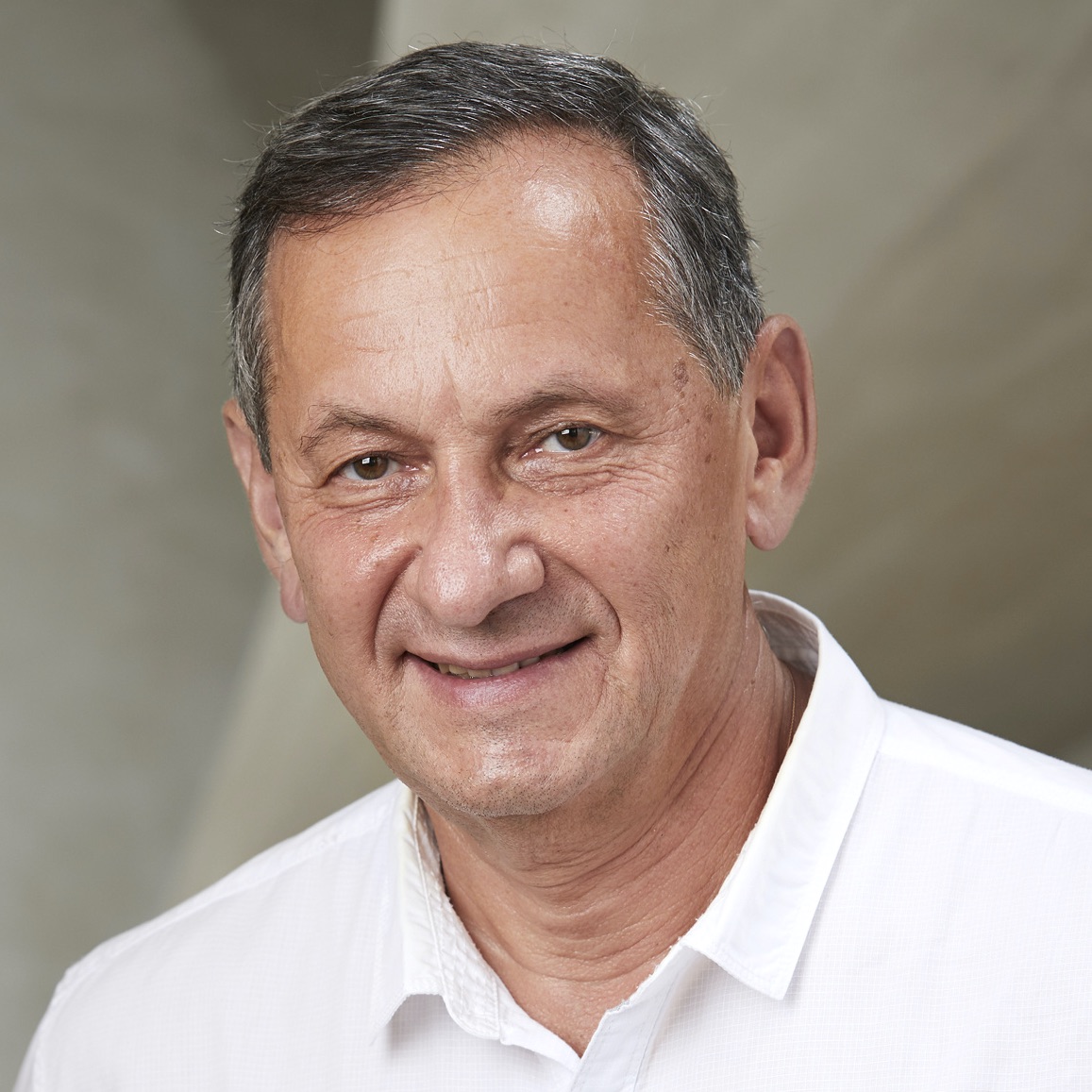
Jim Dowling is a distributed systems researcher at KTH Royal Institute of Technology, focusing on large-scale distributed systems, machine learning, and big data. His work emphasizes improving system dependability, performance, security, and scalability through middleware, peer-to-peer systems, and cloud-native solutions. He leads courses such as Advanced Course in Large Scale Machine Learning and Deep Learning and Scalable Machine Learning and Deep Learning , demonstrating his commitment to education in AI and distributed computing. His research spans topics like feature stores, Kubernetes integration, and AI-driven environmental analytics (e.g., ANIARA project for edge infrastructure automation and ExtremeEarth for Copernicus data analysis). He has contributed to scalable ML pipelines, cloud storage systems (HopsFS-S3), and hyperparameter optimization tools like Maggy. Key projects include the Hopsworks platform for machine learning operations and the development of cloud-native tools for big data analytics. His work bridges theoretical distributed systems research with practical applications in AI, healthcare, and environmental science. He has advised on numerous collaborative initiatives but no formal students are listed. His grants and lab activities are centered around Hopsworks and the ANIARA project, reflecting his focus on scalable, self-managing systems.
Jordi Guitart Fernández is a Professor at the Department of Computer Architecture, Barcelona School of Informatics (FIB), Universitat Politècnica de Catalunya (UPC). He is also affiliated with the Barcelona Supercomputing Center (BSC-CNS), a leading national supercomputing facility. He leads the CROMAI research group, focusing on Computing Resources Orchestration and Management for AI. His work bridges high-performance computing, cloud systems, and artificial intelligence. Research Interests: Cloud Computing and Edge Computing Green and Energy-Efficient Computing Containerization and Virtualization for HPC Resource Orchestration and Management Autonomic and Self-Adaptive Systems Machine Learning Workflow Management AI-Driven System Optimization His recent publications reveal a strong focus on intelligent management of computing resources across cloud, edge, and HPC environments using machine learning and agent-based frameworks. He investigates performance, efficiency, and reliability in containerized AI and HPC workloads, particularly within Kubernetes and distributed infrastructures. His work increasingly integrates human-in-the-loop and trustworthiness aspects into AI systems. Scientific Awards: CLOUD Conference 2025 Best Paper Award VISIGRAPP 2025 Best Student Paper Award Premi Extraordinari de Doctorat 2025 - Àmbit d'Enginyeria de les TIC Test of Time Award Honorable Mention (e-Energy) Reconeixement als Mèrits Docents d'Especial Qualitat Top reviewers for Polytechnic University of Catalonia (Computer Science) - September 2017 Advising and Grants: He has advised doctoral students, including Peini Liu. He leads and participates in numerous competitive R+D+i projects, such as CROMAI and DALEST, funded by national and European programs like HORIZON 2020 and the Spanish State Research Plans. His work is supported by grants focused on knowledge generation and industrial leadership in computing technologies. Labs and Teams: He is the leader of the CROMAI - Computing Resources Orchestration and Management for AI research group at UPC. He also collaborates closely with the Barcelona Supercomputing Center (BSC-CNS), contributing to large-scale computing initiatives and strategic research agendas in Europe.
Guillaume Pierre is a Professor and research leader at Univ Rennes, affiliated with Inria, CNRS, and IRISA, where he leads the Magellan research team. He is based at the Institute of Science and Technology of Information and Communication (ISTIC), Department of Computer Science and Electronics. His research focuses on fog computing, cloud computing, and large-scale distributed systems, with applications in scalable web hosting and edge intelligence. Research Interests: Fog and Edge Computing Cloud Computing and Resource Management Scalable Web Application Hosting Peer-to-Peer and Decentralized Systems Stream Processing and Kubernetes Orchestration Elasticity and Energy Efficiency in Distributed Environments His recent publications highlight a strong trend in geo-distributed systems, particularly focusing on Kubernetes cluster federation, fog-based environmental monitoring, and elasticity in stream processing. His work bridges theoretical advances with practical implementations in real-world fog and cloud infrastructures. Scientific Awards: Best Paper Award, IEEE International Symposium on Applications and the Internet (2005) Best Paper Award, IEEE International Conference on Cloud Engineering (IC2E 2014) Guillaume Pierre has advised numerous PhD students, many of whom now hold positions at Google, Amazon, Ericsson, and Ansys. He has coordinated major research projects such as the H2020 FogGuru initiative and the DiPET project on distributed data stream processing. His work is supported by EU funding and institutional collaborations. Labs and Teams: He leads the Magellan research team at the INRIA/IRISA lab, which is at the forefront of innovation in fog and cloud computing technologies.
Suryadipta Majumdar is an Associate Professor at the Concordia Institute for Information Systems Engineering (CIISE), part of Concordia University. His primary research interests focus on Cloud Computing Security and Privacy, Internet of Things (IoT) Security and Privacy, and Software-Defined Network (SDN) Security. He has contributed extensively to proactive security measures in containerized systems and Kubernetes environments, alongside developing tools like ACE-WARP and PerfSPEC to address real-time threats. In terms of education, he holds a PhD in a relevant field, though specific details about his academic background (e.g., institutions, thesis topics) are not explicitly mentioned in the provided text. His work bridges theoretical cybersecurity frameworks with practical implementations, emphasizing automated translation, differential privacy, and compliance auditing across cloud and IoT ecosystems. Majumdar’s research trends highlight a focus on layered security analysis, anomaly detection in IoT networks, and mitigating vulnerabilities in network functions virtualization (NFV). He has explored topics such as resilient in-band OpenFlow networks, runtime security policy enforcement in OpenStack, and privacy-preserving network data anonymization via tools like SegGuard. His recent publications reflect collaboration with international conferences and workshops, including contributions to Digital Forensics and Applied Cryptography. No scientific awards are explicitly mentioned in the text. His advising activities and grant history remain unlisted, though he has developed notable security frameworks and tools. He is affiliated with CIISE and likely contributes to its research initiatives in emerging technologies like 5G and edge-core environments.
Adlen Ksentini is a Professor at EURECOM, a leading graduate school and research center in Sophia Antipolis, France, specializing in digital science and communication systems. His extensive research focuses on next-generation mobile networks (5G/6G), network management, and the integration of artificial intelligence with telecommunications infrastructure. Dr. Ksentini actively contributes to major EU research initiatives including 6G-BRICKS and AC3, serving as a key researcher and project leader in the development of future network architectures. Dr. Ksentini's research interests center around network slicing, intent-based networking, edge computing, and the application of machine learning to network management problems. His work bridges theoretical advancements with practical implementations in 5G/6G systems, with particular emphasis on zero-touch network management, energy efficiency optimization, quality of service assurance, and the integration of large language models with network operations. His research has significantly contributed to the development of O-RAN (Open Radio Access Network) frameworks and the evolution of network automation. His recent publication trends reveal a strategic shift toward AI-native network architectures, with increasing focus on integrating large language models (LLMs) with network management systems. His work demonstrates a clear progression from traditional network management approaches to more autonomous, AI-powered systems capable of intent-based configuration, self-optimization, and predictive maintenance. The publications show strong emphasis on practical implementations within the 6G research ecosystem, addressing critical challenges in network slicing, resource allocation, and energy efficiency. As a research supervisor, Dr. Ksentini mentors several PhD students including Abdelkader Mekrache, Karim Boutiba, Bouziane Brik, and Houda Hafi, who frequently appear as co-authors on his publications. His research is primarily funded through major EU research projects such as 6G-BRICKS (Building Reusable Testbed Infrastructures for Cloud-to-Device Breakthrough Technologies) and AC3 (which focuses on Cloud Edge Continuum). Dr. Ksentini is actively involved with the 6G-BRICKS project consortium and the AC3 project team, where he contributes to developing next-generation network architectures that integrate communication, computing, and sensing capabilities. His work within these projects focuses on creating reusable testbed infrastructures and addressing security and trust management challenges in the cloud-edge continuum.
Professor Wes Armour is a Professor of Scientific Computing at the University of Oxford and serves as the Associate Head of Department for Research in the Department of Engineering Science. He previously directed the Oxford e-Research Centre, an interdisciplinary research center within the Engineering Science Department. With over £31 million secured as PI or Co-I, his work spans supercomputing, signal processing, machine learning, computational fluid dynamics, and protein crystallography. Professor Armour's research focuses on extracting science from data through fundamental challenges in modeling, simulation, and data processing. His work draws from numerical analysis, signal processing, and machine learning to develop technologies enabling future scientific discoveries, particularly for the Square Kilometre Array (SKA) telescope. Key interests include GPU computing, high performance computing, and machine learning applications across diverse domains from radio astronomy to finance. As Director and Principal Investigator of JADE and JADE2, a 700-GPU machine, he established the UK's first national High Performance Computer facility dedicated to advancing Artificial Intelligence and Machine Learning. His research group has pioneered GPU applications across multiple fields, including Square Kilometre Array data processing, protein crystallography, and graphene simulations. Current projects span energy-efficient machine learning, stock price prediction in finance, prime number prediction in cryptography, and multi-modal CCTV data analysis. Professor Armour has been instrumental in developing real-time signal processing techniques for astronomical observations, including the ARTEMIS system for millisecond radio transient detection. His publications demonstrate consistent innovation in GPU-accelerated computing dating back to early work in 2008 on accelerating conjugate gradient routines for electron transport in graphene.
Tuomas Aura is a Professor at the Department of Computer Science , Aalto University , and a member of the Helsinki Institute for Information Technology (HIIT) and the Helsinki-Aalto Institute for Cybersecurity (HAIC) . His expertise spans information security , privacy , pervasive computing , and communications . Research Trends: His recent work focuses on securing Kubernetes clusters , TLS identity binding , SIM provisioning protocols , and IoT authentication , with a strong emphasis on network security and cryptographic protocols . Key sub-fields include microservice connectivity , threat modeling , and EAP-based authentication . Publications: His 2025 work on Kubernetes misconfigurations and TLS identity binding addresses critical cloud and protocol vulnerabilities. Earlier studies (2024-2020) explore SIM transparency, HTTP/2 security, and formal verification of device-pairing flaws, reflecting a consistent focus on IoT security and network protocols .
Jayson Boubin is an Assistant Professor of Computer Science at Binghamton University's School of Computing. He joined in 2022 and focuses on autonomous systems, particularly UAVs, edge computing, and machine learning applications in agriculture and infrastructure. His work emphasizes solving real-world challenges through innovative engineering and software solutions. Education: PhD in Computer Science (Ohio State University), BA (Miami University) Research Interests: Autonomous systems, UAVs, edge computing, robotics, and machine learning. Projects include SoftwarePilot (an open-source UAV testing platform), Fleet Computer (Kubernetes-based edge architecture), and PROWESS (a testbed for constrained edge workloads). Key Achievements: NSF Graduate Research Fellowship Developed open-source tools like SoftwarePilot and PROWESS Focus on UAV applications in precision agriculture, search-and-rescue, and infrastructure inspection Labs/Teams: Active in edge computing and UAV research groups, contributing to both academic and open-source communities.
Brian Mitchell is a Teaching Professor in the Department of Computer Science at Drexel University's College of Computing & Informatics (CCI). He brings over two decades of combined industry and academic experience, transitioning fully into academia in 2022 after serving as a Distinguished Engineer at a Fortune 15 company. His work bridges cutting-edge research and practical innovation in software systems. Drexel University, College of Computing & Informatics, Department of Computer Science Education: PhD in Computer Science, Drexel University MS in Computer Science, Drexel University BS in Computer Science, Drexel University ME in Computer & Telecommunication Engineering, Widener University Brian Mitchell's research centers on the intersection of Software Engineering, Software Architecture, Cloud Native Computing, and AI . His early foundational work helped establish the field of Search-Based Software Engineering (SBSE) , particularly in automated software clustering and architecture recovery. Recently, his focus has shifted to modern challenges in cloud-native environments , including misconfiguration detection, malware analysis, and resilient system design. He integrates security, scalability, and intelligent automation into software engineering practices. His recent publications reflect a clear trend toward AI-enhanced cloud-native systems , emphasizing automated analysis, security, and architectural robustness. These works appear in AI and cloud computing venues, showing interdisciplinary engagement. The evolution from source code clustering to cloud-native engineering illustrates his adaptability and leadership in emerging domains. Scientific Awards: Best Paper Award, GECCO'03 Best Paper Award, WCRE'01 Brian is actively involved in mentoring students and encourages research collaboration, particularly with those seeking deeper engagement beyond coursework. He emphasizes hands-on learning and uses modern tools like GitHub and Discord in his teaching. While no specific grants are listed, his industry leadership in digital innovation and open-source contributions suggests strong applied research support. He previously led large engineering teams and drove disruptive technological adoption in enterprise settings. Though no formal lab name is mentioned, his research group appears focused on software architecture, cloud systems, and AI-driven engineering , likely operating under informal or course-based research initiatives. His website and GitHub presence (@ArchitectingSoftware) suggest an active, open, and collaborative environment for student research.
Dr. Jordan Shropshire is the Lawrence Minto Sylvestre Endowed Chair in Computing and a Professor in the Information Systems and Technology Department at the University of South Alabama's School of Computing. His academic journey includes a Ph.D. in Management Information Systems from Mississippi State University (2008) and a B.S. in Business Administration from the University of Florida (2004). Dr. Shropshire's research focuses on cybersecurity, data center management, cloud computing, IoT ecosystems, and systems architecture. His work addresses critical challenges such as post-quantum cryptography, embedded system vulnerabilities, and compliance frameworks for autonomous systems. He has also contributed to studies on developer platform risks, real-time operating system security, and AI-driven systems hardening. Education: Ph.D. – Management Information Systems, Mississippi State University, 2008 B.S. – Business Administration, University of Florida, 2004 His teaching career spans roles at the University of South Alabama (2008–present) and Georgia Southern University, where he held tenure (2008–2014). His publications emphasize practical cybersecurity solutions, including tools for drone compliance and frameworks for secure cloud infrastructure. He has also explored behavioral aspects of security policy adherence and IT professional retention. Dr. Shropshire's work often bridges theoretical research and real-world implementation, with a focus on mitigating emerging threats in cloud systems, IoT, and embedded devices. His research has been supported by grants such as the NSF TWC Small Grant for hypervisor security detection techniques.
Dr. Vladimir Vlassov is a full Professor in Computer Systems at the Division of Software and Computer Systems (SCS) , Department of Computer Science (CS) , School of Electrical Engineering and Computer Science (EECS) , KTH Royal Institute of Technology , Stockholm, Sweden. He leads the AVA project in ALEC2, an AI-powered system for mental health care. He is a member of the Distributed Computing research group (DC@KTH) . Education & Roles: Holds a PhD and is a member of ACM and IEEE. Previously visited MIT (1998) and UMass Amherst (2004). Teaches courses on Data Mining , Distributed Systems , and Concurrent Programming . Research Interests: Focus on scalable AI, Cloud computing, distributed systems, and NLP for mental health. Projects include ExtremeEarth (Copernicus data analytics) and EMJD-DC (distributed computing PhD program). Grants & Projects: Principal Investigator in ALEC2 (adaptive mental health care) and ExtremeEarth (EU H2020). Led EU projects like ENCORE (manycore systems) and PaPP (embedded systems). Labs & Teams: Directs the Distributed Computing group, contributing to Hopsworks (machine learning feature store) and Maggy (hyperparameter optimization).
Professor Javid Taheri is a leading academic at Karlstad University (2019–present), previously serving as Associate Professor (2015–2019) and Senior Lecturer (2015). His research focuses on cloud computing, edge computing, distributed systems, and AI-driven networking. He holds a Ph.D. in Information Technologies from The University of Sydney (2007) and an M.Sc./B.Sc. in Electrical Engineering from Sharif University of Technology (2000/1998). Research interests include cloud-edge continuum systems , resource optimization , 5G/6G networking , and AI for IoT . Notable contributions include frameworks like PerfSim (microservice performance simulation) and MultiScaler (auto-scaling for cloud applications). Publications highlight innovations in edge computing optimization, security for distributed systems, and machine learning for resource management. He has co-authored over 150 papers across top venues like IEEE Transactions and ACM conferences. Academic leadership includes roles as conference chair (IC2E 2023) and editorial work for journals on cloud and edge computing.
Antonio Corradi is a Full Professor of Computer Networks and Infrastructures supporting Cloud and Big Data at the University of Bologna's School of Engineering, within the Department of Computer Science - Science and Engineering. His roles include President of the regional CLUSTER RER for service innovation, President of the Alma Mater FAM Foundation, and Director of the UNIBO High Studies Center in Buenos Aires. He previously served as Director of the DISI department (2018–2021) and International Delegate for Latin America (2014–2018). His research focuses on distributed systems, middleware for pervasive computing, cloud solutions, mobile systems, smart cities, Industry 4.0/5.0, and 5G communication standards. Education: Laurea cum laude in Electrical Engineering (University of Bologna, 1979) and a Master's in Computer Engineering from Cornell University (1981, supported by a Fulbright-Hayes grant). He joined the University of Bologna as a Researcher in 1983 and became Full Professor in 2000. Research interests span distributed/parallel systems, middleware for mobile agent systems, cloud computing, smart city monitoring, and Industry 4.0 protocols. He emphasizes QoS-aware solutions, edge computing, and IoT integration. His work includes designing frameworks for big geospatial data and novel architectures for serverless and fog computing environments. Selected scientific awards include the 1980 'Cavalieri del Lavoro' prize for his thesis. He actively contributes to institutional duties, including the CCIB (Computer Services Centre of the Engineering School) and CINI Bologna University Section (Italian Interuniversity Consortium). In advising and grants: He coordinates PhD programs and has led projects funded by MIUR, CNR, and European initiatives. Notable collaborations include industry grants with Jakala, OTConsulting, ENAV-Sicta, and the Zefiro Consortium. His projects address challenges in energy efficiency, smart manufacturing, and healthcare management during crises. Labs/Teams: Developed platforms like SOMA and REDMAN middleware. Involved in initiatives such as ParticipAct (mobile crowdsensing), COLOMBO (vehicular traffic monitoring), and the Audit4Cloud platform for cloud performance auditing.
Anil Somayaji is an Associate Professor in the School of Computer Science at Carleton University, serving as Associate Director of the Carleton Internet Security Lab (CISL). He holds a Ph.D. from the University of New Mexico (2002) and a B.S. in Mathematics from MIT. His research integrates biological principles with computer security, focusing on software diversity, Linux technologies like eBPF, and adaptive defense mechanisms inspired by the human immune system. Teaching responsibilities include courses such as Fundamentals of Web Applications (COMP 2406), Operating Systems (COMP 3000), and Distributed Operating Systems (COMP 4000/5102). He also leads graduate courses on Operating System/Web Security and Biological Approaches to Computer Security. Current advisees include Lavesh Kamalesh (MHCI), Savannah Sidle (MHCI), and John Shortt (PhD, co-supervised). Research interests span computer security, operating systems, intrusion detection, complex adaptive systems, and artificial life. Notable projects include ebpH (a Linux security tool) and contributions to program committees for the New Security Paradigms Workshop. His work emphasizes practical applications of theoretical concepts, such as using eBPF for runtime process confinement and developing context-aware authentication systems. He collaborates with the Carleton Cyber Security Lab (CCSL) and maintains active engagement in interdisciplinary cybersecurity initiatives. His lab focuses on mitigating vulnerabilities through diversity-based approaches and advancing secure system design principles.