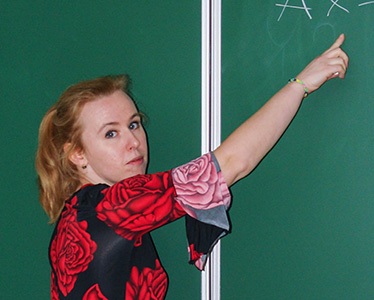
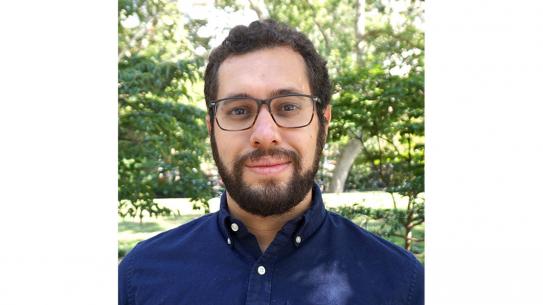
Iveta Hnetynkova is an Associate Professor at the Department of Numerical Mathematics, Faculty of Mathematics and Physics, Charles University in Prague. She specializes in numerical linear algebra, inverse problems, and regularization methods, with applications in image processing and scientific computing. Education: Doctor of Natural Sciences (RNDr.) from Charles University (2003) Ph.D. in Scientific Computations from Charles University (2006) Habilitation thesis on error-contaminated linear approximation (2019) Research Interests: Krylov subspace methods Total Least Squares (TLS) formulations Noise revealing in discrete inverse problems Tensor generalizations and structured matrices Applications in image processing and jewelry defect analysis Scientific Awards: Visegrad Group Young Researcher Award (2014) J. Jirsa Prize for textbook excellence (2013) I. Babuska Prize (2nd place) (2007) SVOČ Prize in mathematics (2003)
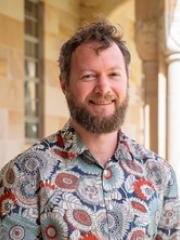
Associate Professor Rowan Gollan serves as Director of HDR Students and faculty member at the School of Mechanical and Mining Engineering , University of Queensland. His work focuses on hypersonics and computational fluid dynamics with applications to spacecraft re-entry systems. Research Highlights: Developing Eilmer - an open-source hypersonic flow solver Advancing magnetohydrodynamic aerobraking for planetary entry Optimizing air intake systems for next-gen launch vehicles Investigating boundary layer transition in hypersonic flows Scientific Achievements: Awarded ARC DECRA (2014) for hypersonic propulsion research Recipient of John Simmons Prize (2010) and Dean's Award (2010) Secured over 10 research grants from institutions like DSTO and ARC Academic Leadership: Currently supervises 8 PhD students as Principal/Associate Advisor Authored 108 publications (33 journal + 69 conference papers) Active in hypersonic facility development (T6 Stalker Tunnel, X2/X3 expansion tubes)
Dr. Toni Volkmer is a researcher affiliated with the Faculty of Mathematics at Chemnitz University of Technology. His work focuses on computational mathematics and signal processing, particularly in high-dimensional data analysis and sparse Fourier transforms. His research intersects numerical analysis, approximation theory, and algorithm design for efficient data processing. Key research areas include Sparse spectral estimation Rank-1 lattice sampling Multivariate function approximation High-dimensional data analysis Fast matrix-vector operations Graph Laplacian computations His publications demonstrate expertise in developing sublinear-time algorithms for harmonic analysis and creating efficient numerical methods applicable to modern data science challenges. While no formal awards are listed, his contributions to scientific computing have been documented in multiple peer-reviewed publications since 2012.
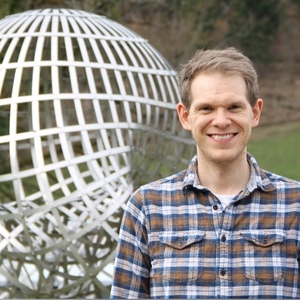
Jon Cockayne is an Associate Professor at the University of Southampton specializing in Bayesian Numerical Methods , Probabilistic Numerical Methods , and Uncertainty Quantification . His research focuses on integrating probabilistic approaches into numerical algorithms, particularly for solving linear systems , differential equations , and MCMC output analysis . He has contributed to BayesCG (Bayesian Conjugate Gradient) and Computation-Aware Gaussian Processes . Notable collaborations include work on Statistical Finite Element Methods , Probabilistic Iterative Methods , and Calibrated Numerical Algorithms for industrial applications like Hydrocyclone Equipment state estimation.
Zoran Tomljanović is an Associate Professor and Vice-Dean for Teaching and Students at the School of Applied Mathematics and Informatics, Josip Juraj Strossmayer University of Osijek. His research focuses on numerical linear algebra, damping optimization in mechanical systems, control theory, and matrix equations, with significant contributions to model reduction and parametric system optimization. His work includes novel approaches to $H_{\infty}$ norm analysis for multi-agent systems, dimension reduction techniques for damped vibrational systems, and parametric dominant pole algorithms for semi-active damping optimization. These methods have been applied to problems in mechanical engineering, synchronization, and high-dimensional data partitioning. Key projects led by Tomljanović include Accelerated solution of optimal damping problems (DAAD 2021–2022), Vibration Reduction in Mechanical Systems (Croatian Science Foundation 2020–2023), and Robustness optimization of damped mechanical systems (DAAD 2017–2018). He has also contributed to educational initiatives through publications like Metode optimizacije (2014), a textbook on optimization methods. Professional activities include co-organizing the 8th Croatian Mathematical Congress (2024), Winter School on Model Reduction (2024), and multiple international workshops on optimal control and model reduction. Teaching responsibilities include courses on linear algebra and control theory applications.
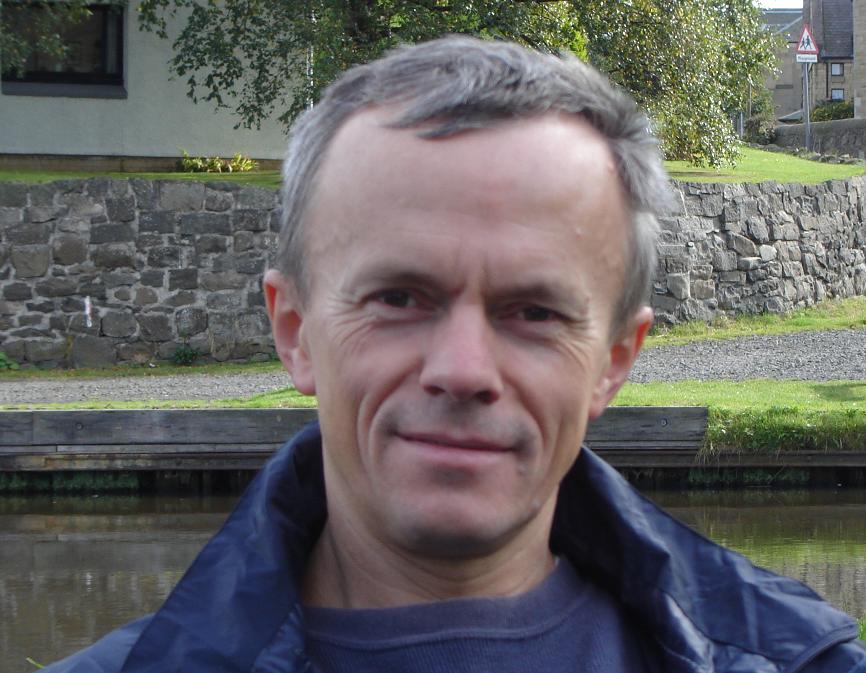
Jacek Gondzio is a Professor in the School of Mathematics at the University of Edinburgh. He received his M.Eng. in Electronics (1983) and PhD in Automatic Control and Robotics (1989) from Warsaw University of Technology. His career includes positions at the Polish Academy of Sciences (1989–1993), University of Geneva (1993–1998), and the University of Edinburgh since 1998, where he progressed from Lecturer to Professor. Research Interests: Gondzio's work spans large-scale optimization techniques, including interior point methods, sparse matrix computations, parallel algorithms, and applications in finance and engineering. Key focus areas include: Development of efficient solvers (HOPDM, OOPS) for linear/quadratic/nonlinear programming Matrix-free methods and preconditioning for massive-scale problems Applications in quantum information, tomography, structural design, and financial planning Publication Trends: His recent articles emphasize scalable algorithms for optimization, including proximal methods for semidefinite programming, interior-point innovations, and applications in medical imaging and transport. Work frequently integrates regularization, decomposition techniques, and structure-exploiting linear algebra. Awards: EUROPT Fellow (2019) for contributions to continuous optimization Grants & Advising: Current projects include EPSRC-funded work on building structure optimization (EP/N019652/1), Google-funded LP solvers, and risk modeling with Standard Life Investments. He has supervised 16+ PhD students on topics ranging from interior point methods to machine learning optimization. Software includes HOPDM, PDCGM, and the parallel solver OOPS. Leadership: Organizes workshops on optimization (e.g., COA, Advances in Preconditioners series) and serves on editorial boards for Mathematical Programming Computation , Computational Optimization and Applications , and other leading journals.
Artur Izmaylov is a Professor of Theoretical Chemistry at the University of Toronto with dual departmental appointments: the Department of Chemistry at the St. George campus and the Department of Physical and Environmental Sciences at the University of Toronto Scarborough (UTSC). He leads the Izmaylov Research Group and is affiliated with the Center for Quantum Information and Quantum Control. His offices are located at EV356 (UTSC) and LM420C (St. George), and he can be contacted at artur.izmaylov@utoronto.ca or via phone at 416-208-2951 (UTSC) / 416-946-8405 (St. George). Professor Izmaylov's research develops novel theoretical and computational approaches to quantum dynamics in complex systems. Key focus areas include: Quantum processes in organic photovoltaics, biomolecules, and catalytic surfaces Hybrid quantum-classical methodologies for subsystem-environment interactions Renormalization techniques for efficient quantum dynamics simulations Quantum computing applications for chemical problems and electronic structure Nonadiabatic dynamics near conical intersections and spin-charge transfer His recent publications (2023-2025) demonstrate strong emphasis on quantum algorithm development for chemical applications, particularly: Advancements in variational quantum eigensolver (VQE) methodologies Quantum resource optimization and error mitigation strategies Novel Hamiltonian decomposition techniques for efficient simulation Applications in molecular vibrations, electronic structure, and materials science Hybrid quantum-classical approaches for scalable computations The Izmaylov Research Group actively recruits graduate students and postdoctoral researchers, with opportunities through NSERC USRA, CQIQC, CHMD90/91, CHM499Y/PHY479Y courses, and Mitacs Globalink programs. Current research directions emphasize quantum computing implementations for chemical dynamics and surface interactions.
Weihua Geng is a Professor and Director of Undergraduate Studies in the Department of Mathematics at Southern Methodist University. He earned his Ph.D. from Michigan State University in 2008 and completed postdoctoral research at the University of Michigan. His research focuses on numerical methods for partial differential equations and integral equations, with applications in structural and systems biology. Professor Geng develops advanced computational techniques including matched interface and boundary methods, boundary integral formulations, and treecode-accelerated algorithms for electrostatics and biomolecular simulations. His work combines mathematical modeling with high-performance computing to study protein interactions, chromatin folding, and circadian rhythm systems. His recent publications demonstrate a strong focus on enhancing Poisson-Boltzmann solvers through machine learning integration, parallel computing optimizations, and novel regularization techniques. These developments advance computational capabilities for electrostatic analysis in biological systems. Professor Geng has mentored numerous graduate and undergraduate researchers in computational mathematics. His collaborative projects involve researchers from multiple institutions including University of Michigan, Pacific Northwest National Laboratory, and University of Alabama.
Mikhail Zaslavskiy is an Assistant Professor at Southern Methodist University, holding a PhD from Lomonosov Moscow State University. His computational mathematics research focuses on forward and inverse PDE solutions through model reduction and multi-scale methods. Applications span geophysical exploration, radar/medical imaging, NASA propellant tank analysis, and unsupervised machine learning techniques for clustering large datasets in bioinformatics, finance, and social networks. Research pillars include Krylov subspace methods for wave propagation problems, homogenization techniques, and data-driven nonlinear inverse problem solutions.
Yunkai Zhou is an Associate Professor at the Department of Mathematics , Southern Methodist University. His research spans Numerical Linear Algebra , Scientific Computing , and Electronic Structure Calculations with applications in Materials Science and Electrical Engineering . Education : Ph.D. in Computational Mathematics (2002) from Rice University , B.S./M.S. from Xi'an Jiaotong University . Research Focus : Developing polynomial filtered subspace methods for generalized eigenvalue problems, improving mixing schemes in self-consistent field calculations, and extending subspace techniques to time-dependent DFT. His work addresses challenges in dimensionality reduction , machine learning , and high-performance computing . Key Contributions include algorithms for solving large-scale eigenvalue problems in Density Functional Theory and Density Functional Tight Binding . His students include Zheng Wang (recipient of multiple SMU awards) and Iranga Nagasinghe. Contact : Office in Clements Hall 133, Southern Methodist University, Dallas, TX. Email: yzhou@smu.edu . Website: http://faculty.smu.edu/yzhou .
Tristan van Leeuwen is a Professor of Computational Inverse Problems at Utrecht University's Faculty of Science, within the Mathematical Institute's Department of Mathematical Modeling. He holds a MSc in Computational Science (2006) and a PhD in Geophysics (2010). His career includes postdoctoral roles at the University of British Columbia and Centrum Wiskunde & Informatica (CWI), followed by faculty positions at Utrecht University and group leadership at CWI. His research focuses on inverse problems, scientific computing, imaging reconstruction, and computational methods for geophysics and medical imaging. Key areas include wave-equation inversion, tomographic reconstruction, and uncertainty quantification. Notable contributions span seismic inversion techniques, convex optimization frameworks for tomography, and deep learning applications in imaging. His publications emphasize methodologies like wavefield reconstruction inversion, convex programming for shape sensing, and Bayesian approaches for uncertainty analysis. He collaborates with institutions like CWI and the University of British Columbia, contributing to open-source tools like Tomosipo for tomography. His work bridges theoretical mathematics with practical applications in geophysics, medical diagnostics, and industrial inspection.
Yu Wang is a Doctoral Candidate and Tutor at the Technical University of Munich (TUM), affiliated with the TUM School of Computation, Information and Technology and the Department of Computer Science. Based in Garching, Germany, Wang contributes to the Chair of Scientific Computing in Computer Science (SCCS) under Univ.-Prof. Dr. Hans-Joachim Bungartz since 2022. Education: Doctoral Candidate, Technical University of Munich, since 2022 M.Sc. in Physics, Technical University of Munich, 2022 B.Sc. in Physics, Lanzhou University, 2018 Wang's research focuses on quantum computational methods, specifically tensor network techniques for quantum chemistry simulations. Key interests include optimizing molecular Hamiltonian calculations through tensor hypercontraction and matrix product states to reduce memory costs and computational complexity. This work bridges theoretical physics and practical quantum algorithm development. Recent publications demonstrate a clear trend toward efficient quantum chemistry solvers, leveraging tensor networks to address scalability challenges in molecular simulations. These contributions target real-world applications in quantum computing where resource constraints are critical. Scientific Awards: No scientific awards mentioned in source material Teaching activities include tutoring the "Introduction to Quantum Computing" course for Winter Semesters 2023/2024 and 2024/2025, plus organizing and tutoring "Advanced Topics of Quantum Computing" seminars continuously from Spring 2023 through Spring 2025. No student advisees or research grants are documented. Wang operates within TUM's SCCS chair infrastructure, utilizing specialized computational resources for quantum algorithm development. Current work emphasizes practical implementations of tensor network methods in quantum chemistry frameworks.
Laura Grigori is a Full Professor and Chair of High Performance Numerical Algorithms and Simulations at EPFL's School of Basic Sciences (SB) Department of Mathematics (MATH). Her research focuses on numerical linear algebra, high performance computing, and tensor computations, with applications in astrophysics and molecular simulations. She leads the HPNalgs lab and teaches courses in numerical analysis and HPC. Her awards include the SIAM Supercomputing Career Prize (2024) and SIAM Fellow distinction (2020). She advises four PhD students and has authored numerous papers on communication-avoiding algorithms, randomized methods, and parallel linear algebra techniques. Her work addresses scalability challenges in scientific computing and large-scale data analysis. Labs/Teams: HPNalgs Lab (https://www.epfl.ch/labs/hpnalgs/) Grants: ERC Synergy Grant (2019) for Extreme-scale Computational Chemistry
Christopher Musco is an Assistant Professor in the Department of Computer Science and Engineering at New York University’s Tandon School of Engineering. His research focuses on the algorithmic foundations of data science and machine learning, integrating theoretical computer science, numerical linear algebra, and optimization. He holds a Ph.D. from MIT and B.S. degrees in Applied Mathematics and Computer Science from Yale University. Education: Ph.D. in Computer Science, MIT B.S. in Applied Mathematics & Computer Science, Yale University Research Interests: Scalable machine learning, numerical linear algebra, randomized algorithms, sketching/streaming methods, and matrix approximation. His work emphasizes efficient processing of large datasets through algorithmic innovation and theoretical analysis. Publications: Over 50 peer-reviewed articles, including contributions to NeurIPS, SODA, COLT, and ICML, focusing on matrix approximation, spectral methods, and graph algorithms. Recent work includes breakthroughs in hierarchical matrix approximation and provably accurate nearest neighbor search. Awards & Funding: NSF CAREER Award Google Research Scholar Award Funding from NSF, DOE, and NYU grants Labs & Groups: Member of NYU’s Theoretical Computer Science Group and Visualization Imaging and Data Analysis Center (VIDA). Active in organizing the CS Theory Seminar and mentoring over 15 Ph.D. students and postdocs.
Professor Ekkehard Sachs is affiliated with the Department of Mathematics at the University of Trier . His research focuses on optimization, numerical analysis, control theory, and their applications in fields such as partial differential equations (PDEs), mathematical finance, and engineering. He has made significant contributions to PDE-constrained optimization, Riccati feedback control, and reduced-order modeling techniques. His work spans theoretical developments and computational methods, with a strong emphasis on interdisciplinary applications. Notable areas include the analysis of non-monotone line search algorithms, the study of Ramsey models in economics, and the numerical solution of complex systems such as integro-differential equations. Sachs has also contributed to the calibration of financial market models and the design of efficient numerical algorithms for optimal control problems. His publications highlight advancements in optimization theory, numerical methods for PDEs, and computational techniques for high-dimensional problems. While no specific scientific awards or grants are explicitly mentioned, his extensive publication record reflects a prolific and impactful academic career. His involvement in organizing international conferences and editing proceedings underscores his influence in the optimization community.