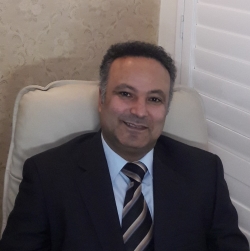
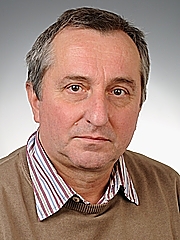
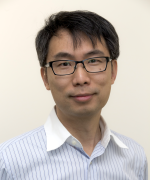
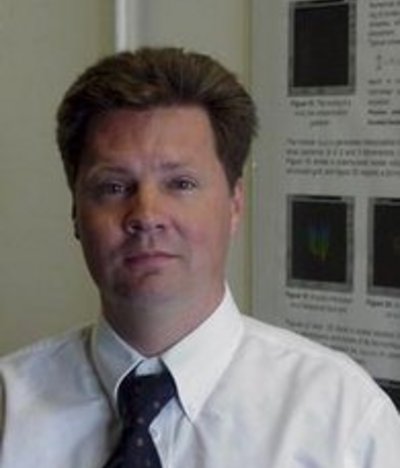
Reza Taheri is an Associate Professor in the Department of Energy & Petroleum Engineering at the University of Wyoming. He holds affiliations with the Center of Innovation for Flow through Porous Media at UW. His academic background includes a Ph.D. in Petroleum Engineering from Curtin University (2008), a Master’s in Geoinformation Science from ITC, University of Twente (2001), and a BSc from Tehran Polytechnic University (1997). His research focuses on CO2 geostorage, laser-enhanced oil recovery, petroleum economics, and remote sensing applications in the energy sector. Notable areas include nanotechnology for CO2 mineralization, thermal EOR using laser technology, and environmental impact assessments of oil industry practices. He teaches courses such as Production Engineering, Reservoir Petrophysics, and Petroleum Economics. His publications span topics like satellite-based hydrocarbon exploration and numerical methods for fluid dynamics. Affiliated with the Center of Innovation for Flow through Porous Media, his work bridges academia and industry through collaborative research initiatives.
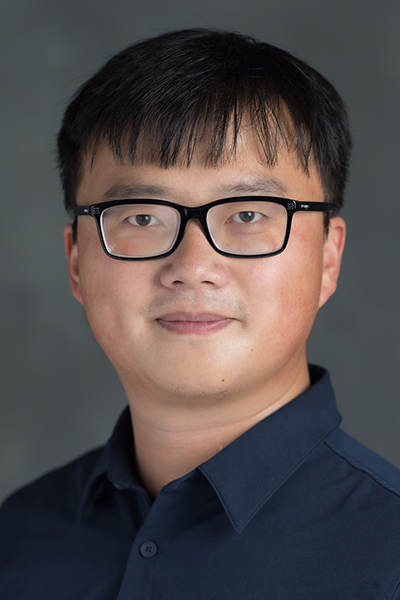
Sicheng He is an Assistant Professor in the Department of Mechanical, Aerospace and Biomedical Engineering at the University of Tennessee, Knoxville since August 2023. He previously held postdoctoral research positions at MIT (2022-2023) and the University of Michigan, Ann Arbor (2020-2021), where he focused on computational aeroelasticity and multidisciplinary design optimization (MDO). Education: PhD in Aerospace Engineering (2020), University of Michigan, Ann Arbor MS in Applied Math (2015), University of Michigan, Ann Arbor MSE in Aerospace Engineering (2015), University of Michigan, Ann Arbor BSE in Aerospace Engineering (2013) and Mechanical Engineering (2013), Joint Institute, Shanghai Jiao Tong University Research Interests: Sicheng He specializes in optimization techniques for large-scale dynamical systems, with emphasis on PDE-constrained optimization, mixed integer programming, and machine learning-based surrogate models. His work includes applications in wind energy systems, aircraft design (particularly transonic buffet analysis), and stability-constrained optimization frameworks. Publication Trends: His research output focuses on computational physics and optimization, with recurring themes in aerospace engineering, wind energy, and multidisciplinary design. Key methodologies include algorithmic differentiation, time-spectral solvers, and gradient-enhanced neural networks for aerodynamic shape optimization. Awards: Best student paper in MDO, 2nd place, AIAA Aviation Conference 2019 Professional Involvement: Active in AIAA and ICAO CAEP Working Group 3. Developed educational workshops on figure visualization and Git version control at MIT. Serves as reviewer for journals including AIAA Journal, Structural and Multidisciplinary Optimization, and International Journal for Numerical Methods in Fluids.
Nima Rabiei is an Assistant Professor at the International University of Sarajevo in the Department of Applied Mathematics . His research focuses on computational mathematics, numerical analysis, and their applications to engineering and environmental systems. Education: PhD in Applied Mathematics (2014) from Universitat Politècnica de Catalunya-BarcelonaTech (UPC) His work spans population balance modeling , non-linear optimal control , integro-differential equations , and limit analysis decomposition methods . He has developed numerical schemes for crystallizers and explored statistical methods for hyper-ellipsoids. Recent publications highlight his contributions to adjoint methods , Monte Carlo techniques , and meshless computational approaches .
Prof. Dr. Gert Lube is a faculty member at the Institute for Numerical and Applied Mathematics (NAM) within the Faculty of Mathematics and Computer Science at Georg-August-University Göttingen. His research focuses on numerical methods for partial differential equations , with emphasis on stabilized finite element methods , turbulence modeling , and magnetohydrodynamics (MHD) . Workshops Organized : Calibration of Viscosity Models for Turbulent Flows (2010), Variational Multiscale Methods (2008), Local Projection Stabilization (2008), BAIL Conferences. His academic contributions include 15+ publications since 2010 on topics like Navier-Stokes simulations , LES/VMS methods , stabilized FEM , and FEM-BEM coupling . Collaborations span institutions like TU Graz, Saarbruecken University, and DLR Göttingen. Key Research Areas : Finite Element Methods, Turbulence Modeling, MHD, Incompressible Flows, Singularly Perturbed Problems, Parallel Computing. Advisees include PhD candidates working on topics such as non-isothermal flows , mass conservation , hybrid RANS/LES , and domain decomposition .
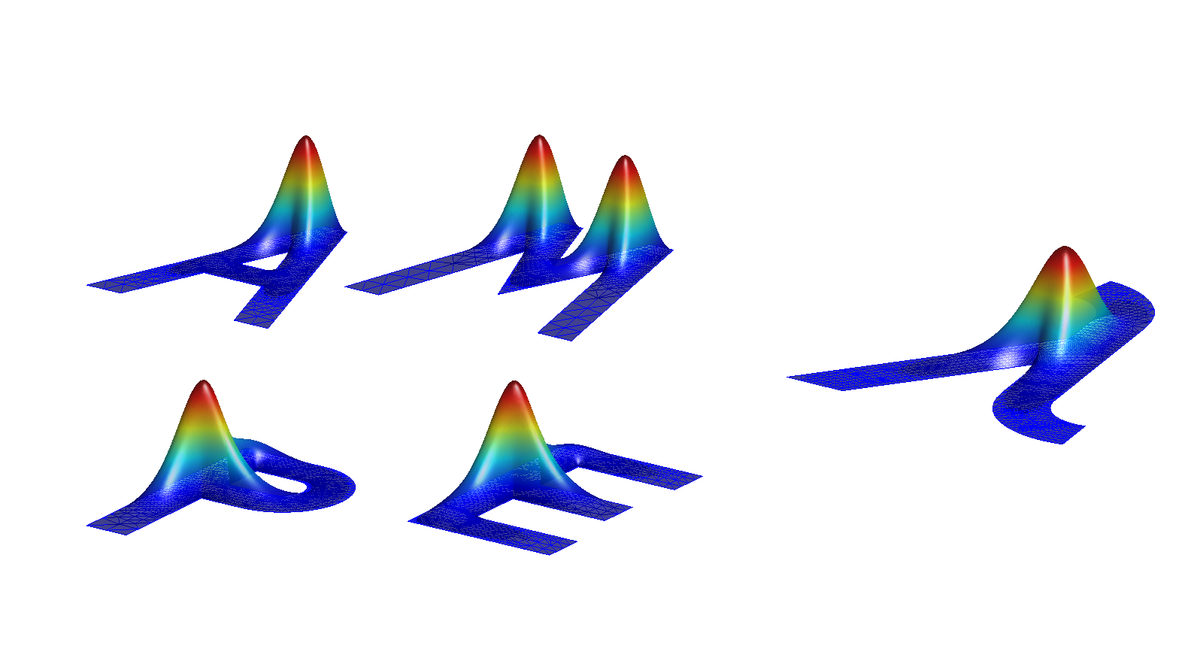
Ming Zhou is a Senior Lecturer at the Institute of Mathematics, University of Rostock, Germany. His research focuses on numerical linear algebra, eigenvalue problems, and adaptive finite elements. He is known for contributions to convergence theory of preconditioned eigensolvers and iterative methods. Zhou co-developed the AMP Eigensolver, a software tool for solving elliptic partial differential operator eigenvalue problems in 2D domains. His work emphasizes robust bounds for Ritz values, block preconditioned gradient methods, and restarted Krylov subspace iterations. Collaborations with researchers like K. Neymeyr and A.V. Knyazev have produced influential studies in numerical analysis. Zhou’s recent publications (2023–2024) address cluster-robust estimates and angle-free Ritz value bounds, advancing eigensolver algorithms. He is based at the Institute of Mathematics in Rostock, with office 332. His email is ming.zhou@uni-rostock.de . Office hours are by appointment.
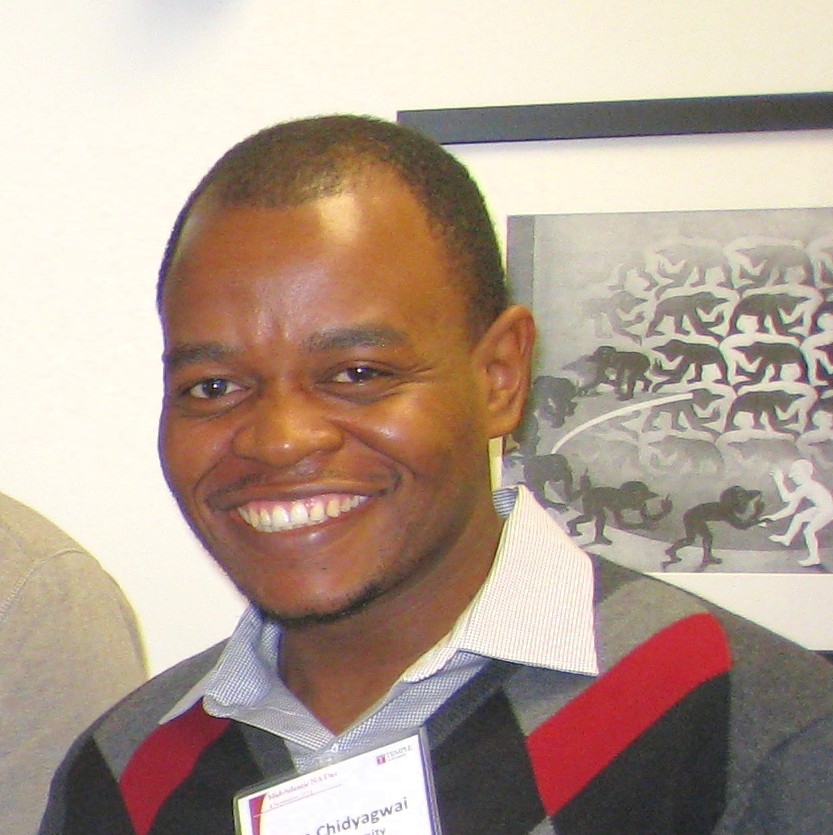
Prince Chidyagwai is an Associate Professor of Mathematics at Loyola University Maryland, specializing in Numerical Analysis and Scientific Computing. His primary affiliation is the Department of Mathematics and Statistics. He holds a Ph.D. in Computational and Applied Mathematics from Rice University (2010), an M.A. in Mathematics from the University of Pittsburgh (2006), and dual B.S./B.A. degrees in Mathematics (Honors) and Computer Science from Lafayette College (2005). His research focuses on advanced numerical methods for coupled flow systems, including discontinuous Galerkin (DG) methods, finite element methods, and finite volume techniques applied to problems in porous media, fluid dynamics, and radiative transfer. Key areas include Stokes-Darcy coupling, multiphase flow, and the development of efficient multirate and decoupling algorithms for complex systems. Chidyagwai's publications span topics such as multilevel decoupling methods, constraint preconditioning for coupled systems, and high-order schemes for radiation transport. His work emphasizes practical applications in reservoir simulation, environmental flow modeling, and industrial fluid dynamics. Despite his prolific output, no scientific awards are explicitly mentioned in the provided materials. Teaching responsibilities include courses like Ordinary Differential Equations and Programming in Mathematics. His academic contributions extend to collaborative projects at the interface of computational mathematics and engineering, though no specific lab affiliations or grant details are disclosed.
Carl-Martin Pfeiler is affiliated with TU Wien's Research Group Numerics of PDEs (E101-02-2). He holds academic qualifications including Dipl.-Ing. (Master of Engineering) and Dr.techn. (PhD in Technical Sciences). His research focuses on computational micromagnetics, numerical methods for partial differential equations (PDEs), and magnetic skyrmion dynamics. Key contributions include developing the mass-lumped midpoint scheme for skyrmion dynamics simulations and advancing IMEX-type integrators for the Landau-Lifshitz-Gilbert equation. Education: Dipl.-Ing. (Engineering) from TU Wien Dr.techn. (Technical Sciences PhD) from TU Wien Research interests emphasize computational approaches to magnetic phenomena , with a focus on: Numerical analysis of micromagnetic models Algorithm development for efficient simulations (e.g., Commics software) Study of topological spin textures like magnetic skyrmions Stability and convergence of numerical schemes Publications highlight advancements in: Nonlinear dynamics of skyrmions Efficient finite element methods Preconditioning strategies for iterative solvers Chiral skyrmion simulations Collaborations include work with Dirk Praetorius, Michele Ruggeri, and the Commics development team. His work bridges applied mathematics and materials science, addressing challenges in spintronics and nanomagnetism.
Ilse C.F. Ipsen is a Distinguished Professor in the Department of Mathematics at North Carolina State University, with a joint appointment in the Department of Statistics. She is a Fellow of the American Mathematical Society and the Society for Industrial and Applied Mathematics (SIAM), and delivered the Olga Taussky-Todd Lecture at ICIAM 2023. Institution: North Carolina State University School: College of Sciences Department: Department of Mathematics Rank: Professor Email: ipsen@ncsu.edu Her research centers on numerical linear algebra, randomized algorithms, and probabilistic numerical analysis. She has made significant contributions to error analysis in floating-point computation, matrix perturbation theory, and the development of randomized methods for large-scale data problems. Her work bridges theoretical foundations with practical applications in data science, quantum physics, and computational statistics. She is the author of the textbook Numerical Matrix Analysis (SIAM, 2009) and serves as Editor-in-Chief of the SIAM Book Series on Data Science. The recent publications highlight a strong trend toward probabilistic numerical methods, uncertainty quantification, and randomized matrix algorithms. Themes include error analysis for inner products and summation, Bayesian solvers for linear systems, and scalable methods for trace and diagonal estimation. Applications span biobank data analysis, quantum physics, and PageRank computation. Scientific Awards: Fellow of the American Mathematical Society (AMS) Fellow of the Society for Industrial and Applied Mathematics (SIAM) Olga Taussky-Todd Lecture, ICIAM 2023 She has advised multiple graduate and undergraduate students, including J.T. Holodnak, T. Wentworth, and R. Rehman. Her collaborative research has been supported by interdisciplinary grants, particularly in quantum physics and data-intensive computing. She has served on editorial boards of leading journals such as SIAM Review , Acta Numerica , and Numerische Mathematik , and chaired SIAM activity groups, reflecting her leadership in the applied mathematics community. She is actively involved in the development of software and algorithms, including the MATLAB package kappa_SQ for randomized sampling, and has contributed to discussions on communicating applied mathematics through case studies.
Professor Efstratios Gallopoulos is a faculty member at the Department of Computer Engineering & Informatics , University of Patras, where he holds the Division of Computer Software . He currently serves as Deputy Department Chair and Director of the High Performance Information Systems Laboratory (HPCLab) . His academic career spans multiple institutions including the University of Illinois at Urbana-Champaign, University of California Santa Barbara, and collaborations with INRIA Rennes and NASA Goddard Space Flight Center. Education : B.Sc. in Mathematics (First Class Honours) from Imperial College London (1979) Ph.D. in Computer Science from University of Illinois at Urbana-Champaign (1985) Research Focus : His work centers on Large-scale Scientific Computing with emphasis on Computational Linear Algebra , Parallel/Distributed Processing , and Data Mining . Recent publications highlight innovations in Randomized Numerical Linear Algebra , Heterogeneous Cluster Scheduling , and GPU-Accelerated Inversion Techniques . Article Trends : His research bridges High-Performance Computing with Data Science , focusing on scalable algorithms for Matrix Computations , Recommender Systems , and Biomarker Analysis . The work spans theoretical advancements (e.g., Givens Rotations ) and practical implementations (e.g., pylspack library). Scientific Awards : NASA Group Achievement Award for Massively Parallel Processor (MPP) development ACM SIGWEB Hypertext Ted Nelson Newcomer Award (2012) Advising and Grants : He has advised numerous research projects funded by European Research Council , Hellenic Foundation for Research and Innovation (HFRI) , and international bodies like the US National Science Foundation. Notably, he co-organized the 2015 Gene Golub SIAM Summer School and served as Chair of the SIAM Gene Golub Summer School Committee (2020-24). Labs and Teams : He leads the High Performance Information Systems Laboratory (HPCLab) and co-directs the interdisciplinary graduate program Data Driven Computing and Decision Making . His teams have contributed to the Cedar vector multiprocessor project at UIUC and Text-to-Matrix Generator (TMG) tools for data mining.
Zhaojun Bai is a Distinguished Professor in the Department of Computer Science and Department of Mathematics at the University of California, Davis, and a Faculty Scientist at Lawrence Berkeley National Laboratory's Scalable Solver Group. He obtained his PhD from Fudan University, China, and completed postdoctoral training at the Courant Institute of New York University. Research Interests Professor Bai's research spans several key areas of computational mathematics: Numerical Linear Algebra and Matrix Computations : Developing algorithms for eigenvalue problems and matrix functions Mathematical Software Engineering : Creating high-performance libraries like LAPACK Scientific Computing : Applications in circuit simulation, MEMS, and quantum systems Information-based Computing : Methods for data clustering and image segmentation Quantum Simulations : Development of QUEST software for quantum Monte Carlo methods Publication Trends His recent publications (2015-2020) primarily focus on advanced numerical methods for eigenvalue problems, quantum Monte Carlo simulations, and high-performance computing. Research themes include nonlinear eigenvalue solvers, model reduction techniques, quantum system simulations, and applications in materials science and data science. Awards and Honors SIAM Fellow Research Teams and Labs Professor Bai leads significant collaborations including the PETAMAT project for next-generation quantum simulation software and contributes to the LBL Scalable Solver Group. He has supervised multiple software development projects including LAPACK, QUEST quantum simulation toolbox, and various numerical algorithm implementations.
Dr. Hussam Al Daas is a Postdoctoral Research Fellow at the Max Planck Institute for Dynamics of Complex Technical Systems since January 2019, specializing in numerical algorithms for large-scale scientific computing. His work bridges theoretical numerical analysis and high-performance implementation. Education: PhD in Applied Mathematics, Inria-Paris and Sorbonne University (2015-2018), funded by TOTAL Master in Fundamental and Applied Mathematics, Paris-Sud University (2012-2014) His research centers on developing communication-avoiding algorithms for sparse linear systems and tensor computations, with emphasis on robust preconditioners (algebraic two-level Schwarz, domain decomposition), Krylov subspace methods, and low-rank approximations. He addresses critical challenges in parallel scalability through rigorous complexity analysis and memory-efficient implementations, particularly for distributed-memory architectures. Analysis of his 2022-2025 publications reveals three dominant trends: (1) Algebraic multilevel preconditioners achieving robustness for ill-conditioned sparse systems, (2) Theoretical communication lower bounds with optimal algorithm design for tensor/matrix operations, and (3) Novel extensions of Krylov methods for sequences of shifted systems and tensor train decompositions. These contributions target reservoir simulation, PDE-constrained optimization, and high-dimensional data problems. Funded by TOTAL during his PhD and currently by the Max Planck Society, his work shows no evidence of student advisement or external grant leadership. He contributes to the Computational Methods in Systems and Control Theory group, focusing on scalable solvers for complex dynamical systems through collaborative software development and algorithmic innovation.
Dr. Andreas Alvermann is a researcher at the Institute of Physics , University of Greifswald, Germany. His work spans quantum physics, condensed matter theory, and computational methods, with a focus on non-Hermitian systems, Floquet dynamics, and polaronic effects. Develops advanced numerical techniques for eigenvalue problems and quantum transport Investigates symmetry-protected topological phases in photonic systems Applies Chebyshev expansions to quantum impurity problems and disordered systems His research areas include: Non-Hermitian quantum mechanics Topological materials and edge states Quantum-classical crossover phenomena Optomechanical stability and chaos Electron-phonon coupling in polarons Stochastic Green's function methods Recent publication trends emphasize non-Hermitian topological phases (2021-2020), Floquet system engineering (2019-2020), and quantum transport in nanostructures (2015-2010). His collaborations with H. Fehske and G. Wellein highlight interdisciplinary computational physics efforts.
Rüdiger Weiner is a Professor of Scientific Computing at the Institute of Mathematics, Faculty of Natural Sciences II - Chemistry, Physics and Mathematics, Martin-Luther-Universität Halle-Wittenberg. He specializes in numerical methods for differential equations and leads teaching in numerical mathematics across all mathematical programs. His research focuses on linearly implicit methods, Krylov subspace techniques, parallel methods, and peer methods for solving ODEs, DAEs, PDEs, and DDEs. He co-organizes the international NUMDIFF conference series and contributes to projects such as the Saxony-Anhalt Research Portal. Further details are available on his personal website.
Edmond Chow is a Professor and Associate Chair in the School of Computational Science and Engineering at Georgia Institute of Technology. His research focuses on numerical methods, high-performance computing, and scientific computing applications in quantum chemistry, molecular dynamics, and machine learning. He holds awards including the 2009 ACM Gordon Bell Prize and 2002 PECASE. He leads the Intel Parallel Computing Center, advancing computational chemistry algorithms for Intel architectures. Education: Ph.D., Computer Science (minor in Aerospace Engineering), University of Minnesota, 1997 Honors B.A.Sc., Systems Design Engineering, University of Waterloo, 1993 Research Interests: Parallel algorithms for sparse linear systems and preconditioning High-performance quantum chemistry simulations Asynchronous iterative methods for extreme-scale computing Kernel-based methods and hierarchical matrices for Gaussian processes Applications in biological macromolecule dynamics and machine learning Awards & Recognition: ACM Gordon Bell Prize (2009) PECASE (2002) SIAM Fellow (2021) SC23 Test of Time Award Advising & Grants: Advised 11+ PhD/MSc students in numerical methods and HPC Funded by NSF, DOE, DARPA, and Intel Developed software tools like H2Pack (hierarchical matrices), GTFock (quantum chemistry), and Simint (electron integrals) Labs & Teams: Leads the Intel Parallel Computing Center and collaborates with institutions like LLNL, Sandia, and Temple University on asynchronous computing and quantum chemistry projects.
Jos Maubach is an Assistant Professor at Eindhoven University of Technology (TU/e), affiliated with the Department of Mathematics and Computer Science. He is part of the Centre for Analysis, Scientific Computing, and Applications (CASA). His research focuses on numerical methods, scientific computing, and computational science and engineering, particularly in iterative methods for partial differential equations and model order reduction. Education: MSc in Mathematics (cum laude, Radboud University Nijmegen, 1986); PhD in Mathematics (Radboud University Nijmegen, 1991). Joined TU/e in 1998. Research Interests: Numerical analysis, nonlinear dynamical systems, computational methods for engineering applications, and model reduction techniques. Publications Highlight Trends: Recent work emphasizes model order reduction for bilinear systems, H2 optimization in electronics reliability, and mechanics of materials (e.g., moisture-induced buckling in paper sheets). No scientific awards explicitly mentioned. Teaches courses such as Programming and Modelling, Scientific Programming, Analysis 1, and Advanced Calculus II. No ancillary activities reported. Collaborations: Works with groups like the Computational Quantum & Molecular Dynamics team and the High Tech Systems Center.