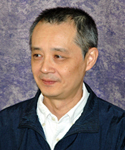
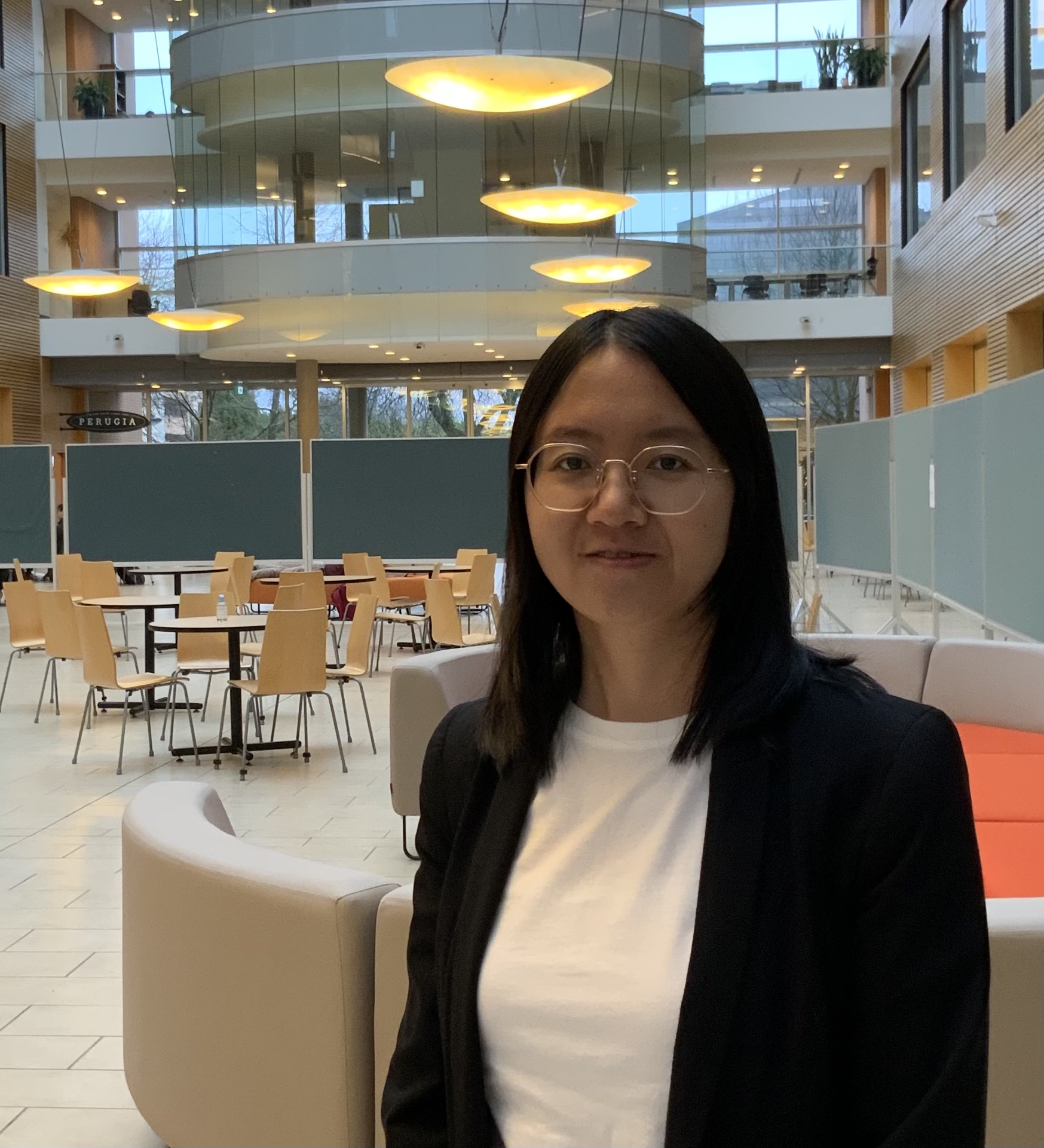
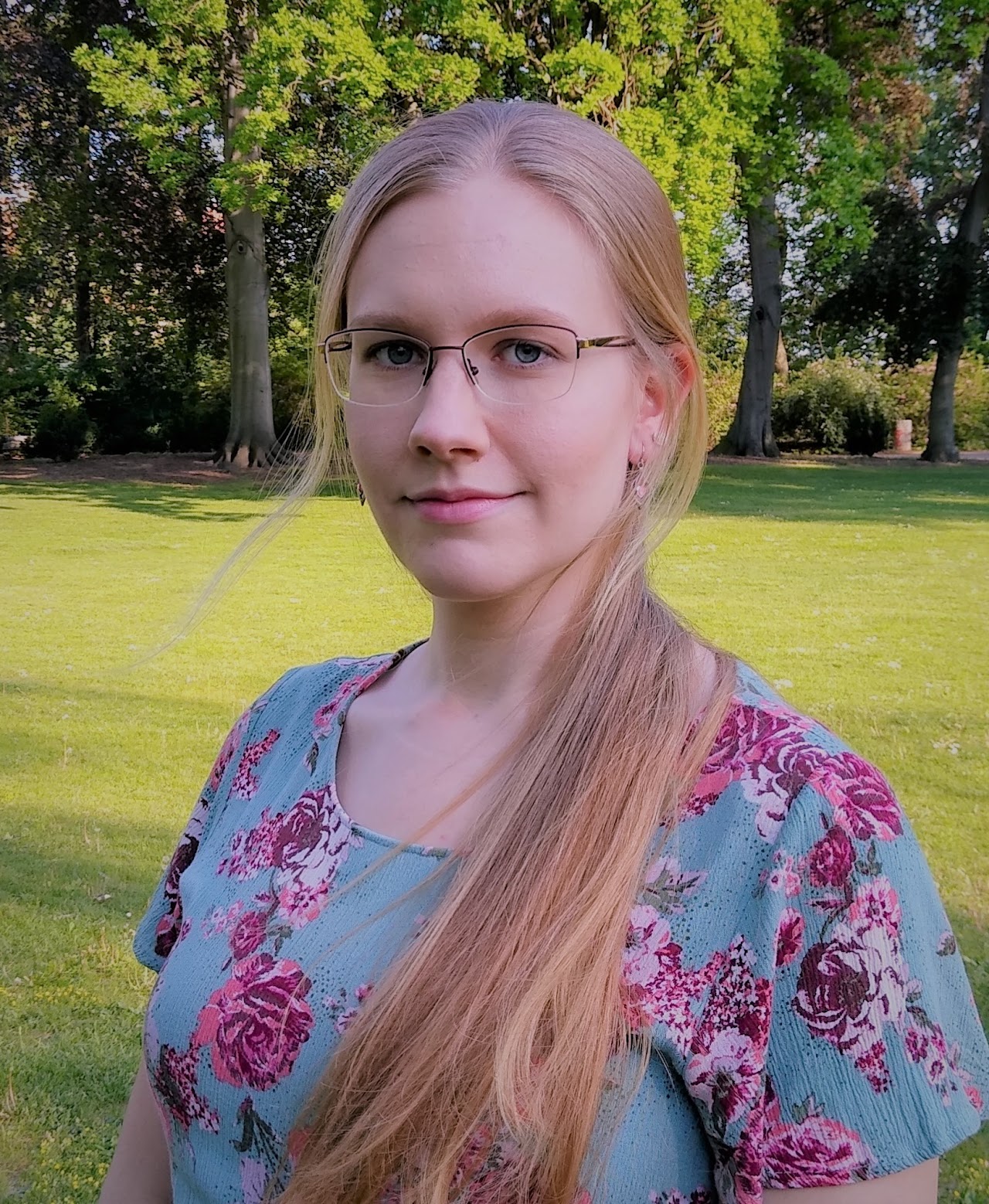
Jérôme Creuze is a Professor of Chemistry at Université Paris-Saclay, affiliated with the Institute of Molecular Chemistry and Materials of Orsay (ICMMO - UMR 8182) under the SP2M unit. He co-leads the Synthesis, Properties and Modeling of Materials team, focusing on thermodynamics of metallic nanoalloys , environmental effects on alloy surfaces , and metal-on-metal heteroepitaxy using atomic-scale simulations. Research Themes : Nanoalloys Thermodynamics, Surface Segregation, Heteroepitaxy, Ab Initio Modeling, Defects and Diffusion in Solids Recent Publications : 15+ studies on nanoalloy surface energy, dislocation loops, Vegard’s rule deviations, and environmental impacts on alloys. Collaborations : Partners include teams from ONERA (Châtillon), CEA Saclay, IWD-SINAP (Shanghai), and universities in Marseille, Montpellier, and Paris. Teaching : Coordinates CPGE L'Essouriau chemistry program and leads courses on thermodynamics, defects, and diffusion in crystalline solids at Master's level.
Oliver G. Ernst is a Professor of Numerical Analysis at Technische Universität Chemnitz . His research focuses on Numerical Analysis , Uncertainty Quantification , and Inverse Problems , with applications in Thermo-Hydro-Mechanical (THM) processes , Electromagnetics , and Stochastic Partial Differential Equations . He is associated with the Numerical Analysis group at TU Chemnitz. Key Research Areas : Efficient numerical methods for PDEs Krylov subspace techniques Stochastic finite element methods Multi-physics modeling Geoscientific applications Recent Publications (2025-2010): THM simulations under uncertainty Neural network PDE solvers Bayesian inversion frameworks Rational Krylov algorithms Deflated restarting strategies Collaborations : TU Bergakademie Freiberg University of Manchester Technical University of Munich University of Maryland University of Geneva Software Development : Contributor to OpenGeoSys platform Developer of FEMALY MATLAB library Academic Recognition : h-index 32, i10-index 66, with over 4423 citations since 2020.
Davide Palitta is an Assistant Professor (tenure track) at the Department of Mathematics of the University of Bologna. His research focuses on numerical linear algebra, matrix equations, and their applications in fields like data assimilation, deep learning, and parallel computing. He holds a PhD in Mathematics from the University of Bologna (2018) and has held postdoctoral positions at the Max Planck Institute in Magdeburg (2018–2021) and a visiting fellowship at Brown University (2020). His work emphasizes the development of efficient numerical algorithms for large-scale matrix equations, including Sylvester, Lyapunov, and Riccati equations. Key contributions include Krylov subspace methods, randomized techniques, and time-parallel integration strategies. His recent publications span topics such as sketched Krylov methods, tensor-based solvers, and preconditioning strategies for weak-constraint data assimilation. Palitta collaborates actively with international institutions and organizes seminars like the Scube series on numerical linear algebra. He is involved in upcoming conferences on matrix equations, data assimilation, and parallel computing. No scientific awards are explicitly mentioned in the provided materials.
Dr. QUAN Chen is an Associate Professor at the School of Microelectronics, Southern University of Science and Technology (SUSTech), holding this position since May 2025 after serving as Assistant Professor (2019-2025) and Research Assistant Professor at the University of Hong Kong (2012-2018). A Shenzhen high-level overseas talent, he earned his PhD from the University of Hong Kong and conducts cutting-edge research in electronic design automation. His academic credentials include: Ph.D. from The University of Hong Kong (2010) Master's degree from The University of Hong Kong (2007) Bachelor's degree from Sun Yat-Sen University (2005) Dr. Chen's research pioneers advanced EDA algorithms for large-scale analog/RF circuit simulation, post-Moore multi-physics analysis, and AI-assisted design technologies. His work addresses critical challenges in nanodevice modeling and quantum computing circuits, resulting in over 50 publications in top venues like IEEE TCAD and DAC, plus four Chinese patents. Analysis of his recent publications reveals dominant trends in exponential integrator methods for transient simulation, model order reduction techniques, and physics-informed machine learning for reliability analysis. His work bridges numerical mathematics with practical EDA applications across analog circuits, quantum hardware, and emerging memory technologies. Key recognitions include: Wu Wenjun Artificial Intelligence Science and Technology Award, Second Prize (2020) ICCAD Best Paper Award Nomination (2012) Dr. Chen actively recruits Postdoctoral Fellows, Research Assistants, and Graduate Students while leading major funded projects including NSFC key/general programs and Guangdong Provincial R&D initiatives. His industry partnerships with Huawei, Empyrean, and Guowei Group translate theoretical advances into real-world EDA solutions. He directs a specialized research group at SUSTech focused on computational methods for next-generation circuit design, fostering innovation in simulation algorithms and multi-physics analysis through academic-industry collaboration.
Simone Riva is a Postdoctoral researcher affiliated with the Faculty of Informatics at the Università della Svizzera italiana . He is also associated with the Euler Institute and the Istituto ricerche solari Aldo e Cele Daccò (IRSOL) . His contact information includes simone.riva@usi.ch and offices located at East Campus, Sector D, Office D5.13 (Lugano) and Via Patocchi 57 (Locarno). His research focuses on astrophysics , particularly in the modeling of solar radiation transfer and polarization phenomena . Key areas include computational methods for solving radiative transfer equations, partial frequency redistribution effects, and high-performance computing techniques applied to stellar atmospheres. He has contributed to studies involving the Ca I 4227 Å line and the development of scalable numerical solvers for 3D transfer of polarized radiation. Recent work emphasizes the application of parallel preconditioned Krylov solvers and HPC techniques to address challenges in radiative transfer with angle-dependent partial redistribution. His research bridges computational physics with observational astrophysics, aiming to advance our understanding of solar magnetic fields and chromospheric dynamics. While no scientific awards are explicitly listed, his contributions to funded projects and collaborations with institutions like IRSOL underscore his active role in advancing solar and stellar physics research. He is affiliated with labs including the Euler Institute and IRSOL, which provide critical computational and observational infrastructure for his work.
Man-Chung Yeung is an Associate Professor of Mathematics at the University of Wyoming specializing in numerical analysis. His research develops iterative methods and preconditioning techniques for high-performance computing applications. Publications include novel algorithms for eigenvalue computation and linear system solutions. MATLAB implementations of his methods are available for research use.
Sou-Cheng Terrya Choi is a Research Associate Professor at the Department of Applied Mathematics, College of Computing, Illinois Institute of Technology. Her work bridges computational mathematics, algorithms, and software development for scientific applications. Education: Ph.D., Stanford University M.S., National University of Singapore B.S. (Honors), National University of Singapore Her research focuses on applied and computational mathematics, numerical analysis, and algorithm design. She actively contributes to data sciences and computational social sciences, emphasizing reproducible and sustainable scientific software. Recent publications highlight her expertise in Krylov subspace methods (e.g., MINRES-QLP) for solving symmetric systems and least-squares problems, alongside initiatives in sustainable research software practices. These works intersect numerical analysis, linear algebra, and computational economics. Scientific Awards: SIAM Activity Group on Linear Algebra Prize Silicon Valley Engineering Council Scholarship C. Gary & Virginia Skartvedt School of Engineering Fellowship Choi leads projects like GAIL (Guaranteed Automatic Integration Library), MINRES-QLP Pack, and OSCEF (Open-Source CIM-EARTH Framework). She is affiliated with SIAM, American Statistical Association, and Hong Kong Mathematical Society.
Lothar Nannen is an Associate Professor at Vienna University of Technology's Institute of Analysis and Scientific Computing. His research focuses on finite element methods, scattering and resonance problems in open systems, and transparent boundary conditions for wave propagation modeling. Key research areas: Computational Waves, Hardy space infinite elements, time-harmonic systems Current work: 2024 publications on Krylov eigenvalue solvers for wave problems Nannen contributes to teaching through courses on numerical analysis and differential equations, with oral exams conducted by appointment. He actively publishes in journals like Computers & Mathematics with Applications and Numerische Mathematik , emphasizing numerical methods for wave scattering and resonance analysis.
Dr. Malena Sabate Landman is a Research Fellow at the Mathematical Institute of the University of Oxford, where she is a member of the Numerical Analysis research group. Her office is located in the Andrew Wiles Building at the Radcliffe Observatory Quarter in Oxford. Her primary research areas are: Numerical Analysis Inverse Problems Bayesian Methods Optimization Computational Mathematics Medical Imaging Recent publications in 2025 highlight her contributions to the development of flexible Krylov subspace methods for Bayesian inverse problems, inner-product free iterative methods for large-scale inverse problems, and robust optimization techniques. She has also developed the TIGRE v3 toolbox for computed tomography reconstruction. As a member of the Numerical Analysis group at the Mathematical Institute, she collaborates on advancing computational methods for scientific and medical applications.
Yunhui He is an Assistant Professor in the Department of Mathematics at the University of Houston. His research focuses on numerical analysis and scientific computing, with expertise in finite element methods, multigrid methods, and local Fourier analysis. He has held postdoctoral positions at institutions like the University of British Columbia and the University of Waterloo. His work includes contributions to preconditioning techniques, acceleration methods, and the numerical solution of partial differential equations. Education: PhD in Mathematics (2018), Memorial University of Newfoundland MSc in Computational Mathematics (2015), Chinese Academy of Sciences BSc in Mathematics and Applied Mathematics (2012), Capital Normal University Research Interests: Dr. He’s research emphasizes numerical methods for PDEs, multigrid algorithms, and iterative solvers. He explores topics like finite element methods, preconditioning strategies, and local Fourier analysis to enhance computational efficiency in fluid dynamics and optimal control problems. His work bridges theoretical analysis and practical implementation, with applications in engineering and physics. Articles Trends: Recent publications highlight advancements in multigrid relaxation schemes, Anderson acceleration for nonlinear PDEs, and preconditioners for coupled flow systems. His work often integrates local Fourier analysis to optimize solver performance, with applications to Stokes-Darcy equations and optimal control problems. Grants & Awards: He co-organized the 2025 NSF-funded CBMS Conference on Applied Mathematics and Machine Learning (DMS-2430460), demonstrating leadership in academic collaboration. Teaching: Taught courses including Linear Algebra, Partial Differential Equations, and Numerical Analysis at the University of Houston and other institutions. His pedagogical focus aligns with computational mathematics and scientific computing. Lab/Team: Hosts Santolo Leveque as a postdoctoral fellow (2024–present), advancing collaborative research in numerical methods and multigrid theory.
Kathryn Lund is a Senior Computational Mathematician at the STFC Rutherford Appleton Laboratory in Didcot, UK, and a guest member of the Numerical Linear and Multilinear Algebra Team at the Max Planck Institute for Dynamics of Complex Technical Systems in Magdeburg, Germany. Her work aligns with the Mathematical Research Data Initiative (MaRDI) and focuses on numerical linear algebra, scientific computing, and high-performance computing. Education: Joint PhD in Mathematics (2015-2018) from Temple University and Bergische Universität Wuppertal. Her research interests include: Rounding-error analysis of algorithms Krylov subspace methods Matrix functions applied to multiple vectors Tensor t-product operations Recent work highlights advancements in reorthogonalized block Gram-Schmidt methods, with publications in SIMAX and arXiv. She also contributes to software development, including the BlockStab project. Active in international collaborations, Kathryn held postdoctoral positions at EPFL, Charles University, and the Max Planck Institute. She joined STFC in June 2024 after a career break in Zurich.
Christopher Sittl is a Researcher at the Chair of Vibroacoustics of Vehicles and Machines within the Department of Engineering Physics and Computation at the TUM School of Engineering and Design, Technical University of Munich. Pursuing an External PhD, his work focuses on developing efficient computational methods for acoustic optimization in automotive applications. His research interests span computational acoustics, vehicle noise control, and advanced numerical methods: Computational Acoustics Vehicle Acoustics and Noise Optimization Boundary Element Method applications Finite Element Method for vibroacoustic problems Matrix-Padé-via-Lanczos Method implementation Sound quality engineering for automotive powertrains Sittl's research addresses the computational challenge of solving large linear systems in acoustic scattering tasks, moving beyond traditional frequency-by-frequency approaches to develop more efficient Padé-approximation methods applicable across frequency ranges. His work bridges theoretical numerical methods with practical automotive engineering needs, particularly in creating customer-pleasant noise profiles rather than merely minimizing sound pressure levels. His primary publication demonstrates application of Krylov subspace methods for efficient acoustic transfer function solutions. Collaborating with Ostbayerische Technische Hochschule Regensburg, Otto von Guericke University of Magdeburg, and CHP Messtechnik GmbH, his research contributes to the department's focus on computational vibroacoustics and automotive noise control.
Dr Jon Cockayne is a Lecturer in Statistics at the University of Southampton's Mathematical Sciences Department. His research focuses on probabilistic numerical methods, Bayesian computation, and statistical computing, particularly in numerical analysis and uncertainty quantification. He co-leads the second-year Statistical Modelling module (MATH2010). Education: Bachelor's in Mathematics from Imperial College London. PhD in Statistics at the University of Warwick under Prof. Mark Girolami, titled Bayesian Probabilistic Numerical Methods . Research Interests: Jon develops probabilistic numerical methods that integrate statistical principles into computational algorithms for uncertainty quantification. His work spans Bayesian linear solvers, radiative transfer modeling, and calibration of machine learning procedures. He collaborates on EPSRC-funded projects like Unifying Probabilistic Computation for PDEs and Linear Systems . Grants & Projects: EPSRC grant for Unifying Probabilistic Computation for PDEs and Linear Systems . Postdoctoral research at the Alan Turing Institute (2017–2019). Advising: Supervises PhD students Zoe Abbott (iPhD AI for Sustainability) and Disha Hegde (Mathematical Sciences). Labs & Teams: Member of the Statistics group and the Statistical Sciences Research Institute (S3RI) at Southampton.
Tony F. Chan is currently President and Professor of Mathematics and Computer Science and Engineering at the Hong Kong University of Science and Technology (HKUST). He holds the title of Professor Emeritus in the Department of Mathematics at the University of California, Los Angeles (UCLA), where he previously served as Professor with joint appointments in Computer Science and Bioengineering. He was Dean of the Division of Physical Sciences at UCLA (2001–2006) and Assistant Director at the National Science Foundation (NSF) for Mathematics and Physical Sciences (2006–2009). President, HKUST Professor, Mathematics & Computer Science and Engineering, HKUST Professor Emeritus, Mathematics, UCLA Assistant Director, NSF (2006–2009) Dean, Division of Physical Sciences, UCLA (2001–2006) His research interests are centered around mathematical image processing, computer vision, computational brain mapping, and numerical algorithms. He has made seminal contributions to variational methods, total variation regularization, level set methods, and multiscale computational techniques. His work bridges pure mathematics with applications in biomedical imaging, VLSI design, and scientific computing. His recent publications focus on image segmentation, inpainting, brain surface mapping, and nonlocal filtering. These works demonstrate a strong trend toward geometric and variational models for image analysis, with increasing emphasis on medical and biological applications such as neuron tracking and cortical mapping. One of the most cited mathematicians (ISI Highly Cited) Chan has mentored over 25 PhD students and 15 postdoctoral fellows, contributing significantly to the training of next-generation researchers in applied mathematics and computational science. He has led major research initiatives including the Institute for Pure & Applied Mathematics (IPAM) and has been involved in numerous professional services at national and international levels. His work has been supported by major funding agencies including the NSF. He leads the Image Processing Group at UCLA and has been instrumental in advancing interdisciplinary research at the intersection of mathematics, engineering, and neuroscience.
Fei Xue is Associate Professor in the Department of Mathematical Sciences at Clemson University. His research specializes in numerical linear algebra and scientific computing, particularly developing efficient algorithms for large-scale eigenvalue problems and linear systems. Research focuses on preconditioned iterative methods, Krylov subspace techniques, and numerical solutions to partial differential equations. Recent work has developed novel algorithms for eigenvalue computation, including the Block Preconditioned Harmonic Projection method for nonlinear eigenproblems and a Chebyshev-based Locally Optimal Block Preconditioned Conjugate Gradient method. Applications span quantum physics, materials science, and computational finance. Dr. Xue has received sustained NSF funding since 2011 for his work on eigenvalue solvers and matrix computations. Teaching responsibilities include graduate courses in numerical linear algebra and scientific computing.