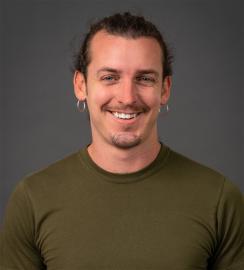
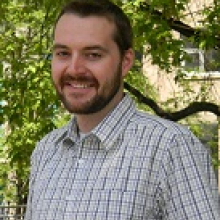
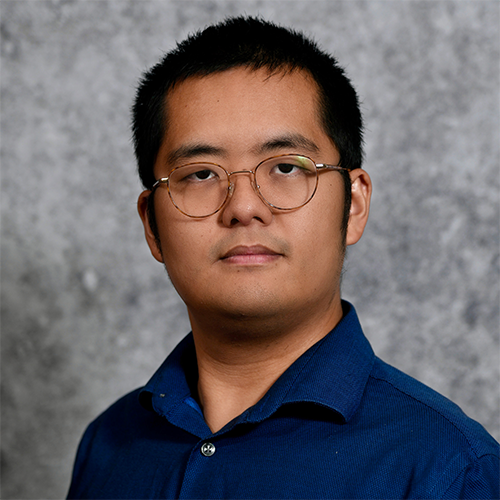
Brandon Seward is an Associate Professor of Mathematics at the University of California San Diego (UC San Diego), where they conduct research and teach in the Department of Mathematics. They use the pronouns they/them or he/him . Education Ph.D. in Mathematics, University of Michigan , 2015 Research Interests Their work lies at the intersection of ergodic theory, topological dynamics, descriptive set theory, and group theory . They investigate geometric, combinatorial, and entropic properties of actions of countable groups, with special emphasis on the divide between amenable and non-amenable groups. Publications & Research Impact Across 27 refereed papers (2014-2024), Seward has advanced entropy theory for non-amenable groups, Borel combinatorics of group actions, and structure theorems for measure-preserving actions. Their work has appeared in top journals such as Inventiones Mathematicae , Journal of the American Mathematical Society , and Duke Mathematical Journal . Scientific Awards Michael Brin Dynamical Systems Prize for Young Mathematicians (2018) – awarded for outstanding contributions to dynamical systems. Teaching & Mentorship Seward regularly teaches core undergraduate courses (e.g., Math 142A Introduction to Analysis) and organizes the UC San Diego Group Actions Seminar , a weekly research forum featuring international speakers. They serve as a faculty mentor and are actively involved in graduate student supervision and seminar coordination. Contact & Office Email: bseward@ucsd.edu Office: AP&M 5739, 9500 Gilman Drive, La Jolla, CA 92093-0112
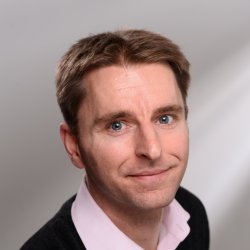
Scientia Professor Gary Froyland is a Professor at the University of New South Wales (UNSW), affiliated with the School of Mathematics & Statistics. He leads the ARC Laureate Centre for Dynamical Systems and Data and holds an Einstein Visiting Fellowship from the Einstein Foundation Berlin. His academic credentials include a BSc (Hons 1, Medal) in Pure and Applied Mathematics from the University of Queensland and a PhD in Mathematics from the University of Western Australia. Professor Froyland's research spans two primary domains: dynamical systems and optimization. In dynamical systems, he investigates the interplay of probability and geometry in nonlinear and chaotic systems, employing tools from ergodic theory, functional analysis, and differential geometry. His work extends to applications in oceanography, atmospheric science, and granular flows. In optimization, he focuses on decision-making in complex systems with uncertain information, developing novel approaches in mathematical programming that have been applied to mining, logistics, and medical treatment planning. His recent publications demonstrate a strong focus on coherent structures in dynamical systems, linear response theory, and applications to geophysical phenomena. The research shows increasing interdisciplinary collaboration, particularly with climate scientists and data analysts, reflecting a trend toward applying advanced mathematical techniques to real-world problems in environmental science and engineering. J.D. Crawford Prize (2025) Elected Member of the Academy of Europe / Academia Europaea (2024) ARC Laureate Fellow (2024-2029) Fellow of the Society for Industrial and Applied Mathematics (SIAM) (2021) Fellow of the Australian Academy of Science (2020) Vice-Chancellor's Award for Teaching Excellence - Postgraduate Research Supervision (2015) Professor Froyland actively supervises PhD and honors students, with current advisees including Kevin Felipe Kühl Oliveira, Nicholas Peters, and Kathrin Völkner. His research is supported by multiple grants, including an ARC Laureate Fellowship (2024-2029) for "Breakthrough mathematics for dynamical systems and data," an Einstein Visiting Fellowship (2022-2026), and several ARC Discovery Projects. His work has practical applications in climate science, mining optimization, and medical treatment planning, particularly in radiotherapy. He leads the ARC Laureate Centre for Dynamical Systems and Data, which brings together researchers to develop new mathematical approaches for analyzing complex dynamical systems. The center focuses on creating methods to identify coherent structures in spatiotemporal data, with applications spanning environmental science, social science, health science, and engineering.
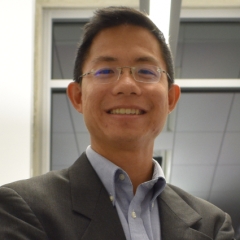
Nicola Marzari is a Professor of Theory and Simulation of Materials at EPFL, where he also serves as Director of the National Centre for Computational Design and Discovery of Novel Materials (NCCD). He is Chairman of Psi-k, an international network for advanced materials' computational design. Previously, he held the Toyota Chair of Materials Engineering at MIT and leadership roles at the University of Oxford, including Director of the Materials Modeling Laboratory and a Statutory Chair in Materials Modeling. His education includes a Laurea in Physics (summa cum laude) from the University of Trieste, a PhD in Physics from the University of Cambridge under Prof. Michael C. Payne, and postdoctoral work at Rutgers University with Prof. David Vanderbilt. Marzari's research focuses on computational materials science, electronic structure theory, and high-throughput simulations. He develops methods for predicting material properties using first-principles approaches, machine learning, and quantum espresso software. Key areas include energy materials (batteries, thermoelectrics), magnetic materials, and optoelectronic systems. His work bridges fundamental physics and practical material design, emphasizing reproducible workflows and open-source tools like koopmans and AiiDA . His recent articles highlight advancements in machine learning for materials interfaces, dynamical Hubbard functionals, and thermal conductivity modeling. He actively contributes to EuroHPC initiatives for exascale materials design and OPTIMADE standards for materials data exchange. Marzari leads interdisciplinary teams at EPFL and collaborates globally on projects ranging from defect engineering in semiconductors to AI-driven materials discovery. His research aims to accelerate the development of sustainable energy and electronic technologies through computational innovation.
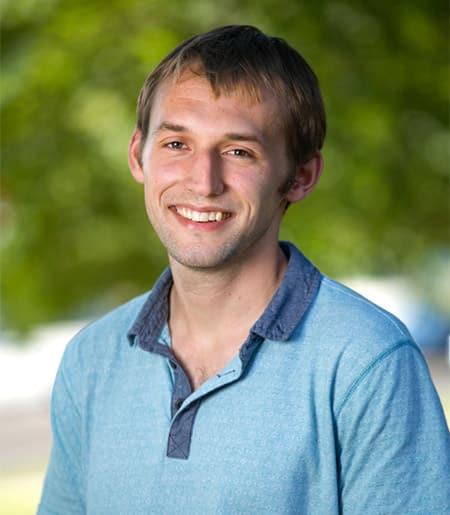
Dr. Stefan Klus is a Lecturer at the School of Mathematics and Physics, University of Surrey. His research focuses on data-driven model reduction, transfer operator approximation, and kernel-based machine learning applied to dynamical systems. He specializes in interdisciplinary applications across quantum physics, fluid dynamics, and computational biology. Education: PhD in Industrial Mathematics (2011, Paderborn University) and Habilitation (2020, Freie Universität Berlin). Research Interests : Data-driven modeling and reduced-order methods Koopman operator theory and transfer operators Machine learning for dynamical systems (e.g., Deeptime library) Tensor decompositions and quantum systems analysis Graph-based analysis (e.g., microbiome dynamics) Publications : Klus has contributed to over 50 peer-reviewed articles, with recent work emphasizing: Kernel methods for quantum chemistry and physics Tensor-based approaches for high-dimensional systems Applications in climate science (e.g., Pacific SST modeling) Agent-based modeling and social systems Technical Contributions : Co-developer of the Deeptime Python library for dynamical modeling Pioneer in Koopman operator-based model reduction Advanced graph kernel methods for microbiome analysis
Enoch Yeung is an Associate Professor in the Department of Mechanical Engineering at the University of California, Santa Barbara (UCSB). His research focuses on systems biology, control systems, machine learning, and data mining, with a particular emphasis on understanding how mechanical forces in DNA regulate gene dynamics and cell fate. He leads projects on distributed biological computing, data-driven control architectures, and synthetic biological systems design, supported by funding from DARPA, NSF, and the U.S. Army. Yeung holds a PhD in Control and Dynamical Systems from the California Institute of Technology and a BS in Mathematics from Brigham Young University. His work integrates methods from DNA biophysics, synthetic biology, microfluidics, and control theory to study genome organization and cellular decision-making. Recent projects include the DARPA Living Foundries program, the NSF Molecular Programming Project, and the AFOSR Biological Research Initiative. He has received numerous awards, including the NSF Early CAREER Award and Young Investigator Award from the U.S. Army. His lab conducts interdisciplinary research, including a 2024 Summer Synthetic Biology Workshop for high school students. Key research themes include DNA supercoiling dynamics, biophysical feedback control in cells, and scalable Koopman operator methods for analyzing complex biological systems. Lab Focus: Biological Control Lab explores DNA mechanics, synthetic biology, and data-driven modeling. Grants & Collaborations: PI on multi-institutional programs involving PNNL, DARPA, and NSF. Advisory Roles: Served on panels for DARPA, NIST, and the National Defense University.
Patrick Desrosiers serves as an Adjunct Professor in the Department of Physics, Physical Engineering and Optics within Université Laval's Faculty of Science and Engineering, while conducting neuroscience research at the CERVO Brain Research Center. He co-directs Dynamica, a multidisciplinary complex systems research group, and participates in UNIQUE (neuroscience-AI integration) and CIMMUL (mathematical modeling applications). His academic training spans physics and mathematics at Université Laval, the University of Melbourne, and CEA-Saclay. Dr. Desrosiers' research centers on mathematical and computational neuroscience , with signature contributions in dimensionality reduction and network resilience analysis . His work bridges biological and artificial neural networks , zebrafish brain mapping , and neurovascular coupling using advanced techniques from spectral graph theory , random matrix theory , and dynamical systems . Current investigations focus on neural decoding under chronic stress and structural-functional relationships in brain networks. Analysis of his 2023-2025 publications reveals three dominant trajectories: (1) Low-dimensional representations for predicting cognitive decline and neural dynamics, (2) Network reconstruction methodologies applied to neuroscience and biodiversity, and (3) Development of computational tools like NeuroTorch for neural data analysis. His work consistently integrates mathematical rigor with biological relevance across species and scales. His recognition includes: Professeur étoile prize for exceptional teaching (Faculty of Science and Engineering, Université Laval, 2018) As Dynamica co-director, he mentors a research team comprising Antoine Légaré, Arthur Légaré, Benjamin Claveau, Jordan Charest, Marziyeh Pourmousavi, Pierre-Luc Larouche, Vincent Savard, Vincent Thibeault, and Zahra Yazdani. His collaborative framework connects physics, mathematics, and neuroscience to address fundamental questions in neural network organization, with funding evident through sustained publication output and lab operations. Dynamica Lab ( https://dynamicalab.github.io/ ) serves as the operational hub for his interdisciplinary research, maintaining active collaboration with CERVO Brain Research Center and international institutions.
Alex Townsend is an Associate Professor of Mathematics at Cornell University, affiliated with the College of Arts and Sciences. He holds the Stephen H. Weiss Junior Fellowship and has been recognized for both research and teaching excellence. His research focuses on numerical analysis, scientific computing, and theoretical aspects of deep learning, with contributions to spectral methods, low-rank techniques, and computational algebraic geometry. Education: Townsend earned a DPhil (PhD) in Mathematics from the University of Oxford in 2014. Research Interests: Townsend's work spans several areas: novel spectral methods for differential equations, low-rank matrix and tensor techniques, theoretical foundations of deep learning, and computational algebraic geometry. His research emphasizes developing fast, accurate, and robust numerical algorithms with applications in science and engineering. Teaching & Mentoring: Townsend is a dedicated educator, having taught courses at MIT and Cornell on topics ranging from linear algebra and numerical analysis to advanced graduate-level subjects like kernel-based learning and top-ten algorithms of the 20th century. He has mentored numerous PhD students and postdocs, many of whom now hold academic and industry positions. Awards & Honors: 2022 Stephen H. Weiss Teaching Award 2022 Simons Fellowship in Mathematics 2018 SIAG/LA Early Career Prize 2015 Leslie Fox Prize in Numerical Analysis Grants & Funding: Townsend has secured significant funding, including an NSF CAREER grant (2021), to support his work on operator learning and spectral methods. Labs & Collaborations: While not tied to a specific lab, his research frequently intersects with computational mathematics and machine learning communities. He collaborates widely, contributing to open-source tools like Chebfun and Diskfun.
Siamak Ravanbakhsh is an Associate Professor at McGill University's School of Computer Science and a Canada CIFAR AI Chair at Mila. His research focuses on machine learning, particularly representation learning with an emphasis on geometry, symmetry, and probabilistic inference. He has held academic positions at the University of British Columbia and was a postdoctoral fellow at Carnegie Mellon University. Education: B.Sc. in Computer Science, Sharif University of Technology M.Sc. and Ph.D. in Computer Science, University of Alberta (supervised by Russ Greiner) Postdoctoral Fellowship at Carnegie Mellon University (with Barnabás Póczos and Jeff Schneider) His research interests span geometric deep learning, equivariant networks, reinforcement learning, and AI for scientific applications. Notable contributions include work on symmetry-aware models, diffusion processes, and equivariant representation learning. Publications highlight advancements in causal abstraction, diffusion-based anomaly detection, and equivariant architectures for crystals and hierarchical structures. His work often bridges theory and application, emphasizing symmetry principles. Advising & Grants: Supervised over 20 graduate students and postdocs, including recent PhD graduates Daniel Levy and Mehran Shakerinava Active in mentoring M.Sc. and internship students He contributes to academic leadership roles at Mila and McGill, fostering interdisciplinary collaborations in AI research.
James Forbes is an Associate Professor in the Department of Mechanical Engineering at McGill University. He holds the title of William Dawson Scholar and is affiliated with the Dynamics Estimation & Control of Aerospace & Robotics Systems research group. His primary research focus is on Dynamics and Control, with emphasis on navigation, guidance, and control (GNC) techniques for robotic systems. He teaches courses such as MECH 309 (Numerical Methods), MECH 412 (System Dynamics), and advanced topics in control systems. Forbes earned his Ph.D. in Aerospace Science and Engineering from the University of Toronto, following an M.A.Sc. from the same institution and a B.A.Sc. in Mechanical Engineering from the University of Waterloo. His research interests include nonlinear state estimation (batch methods, filtering), control synthesis via optimization (LQR, LMI approaches), and data-driven modeling using Koopman operator techniques. Applications span unmanned aerial vehicles (UAVs), autonomous underwater vehicles (AUVs), and SLAM systems. He has developed the navlie Python package for state estimation on Lie groups. Notable awards include the William Dawson Scholar distinction. His recent work focuses on multi-UAV localization, robust control algorithms, and sensor fusion techniques. He collaborates on projects involving UWB-based positioning and inertial navigation systems.
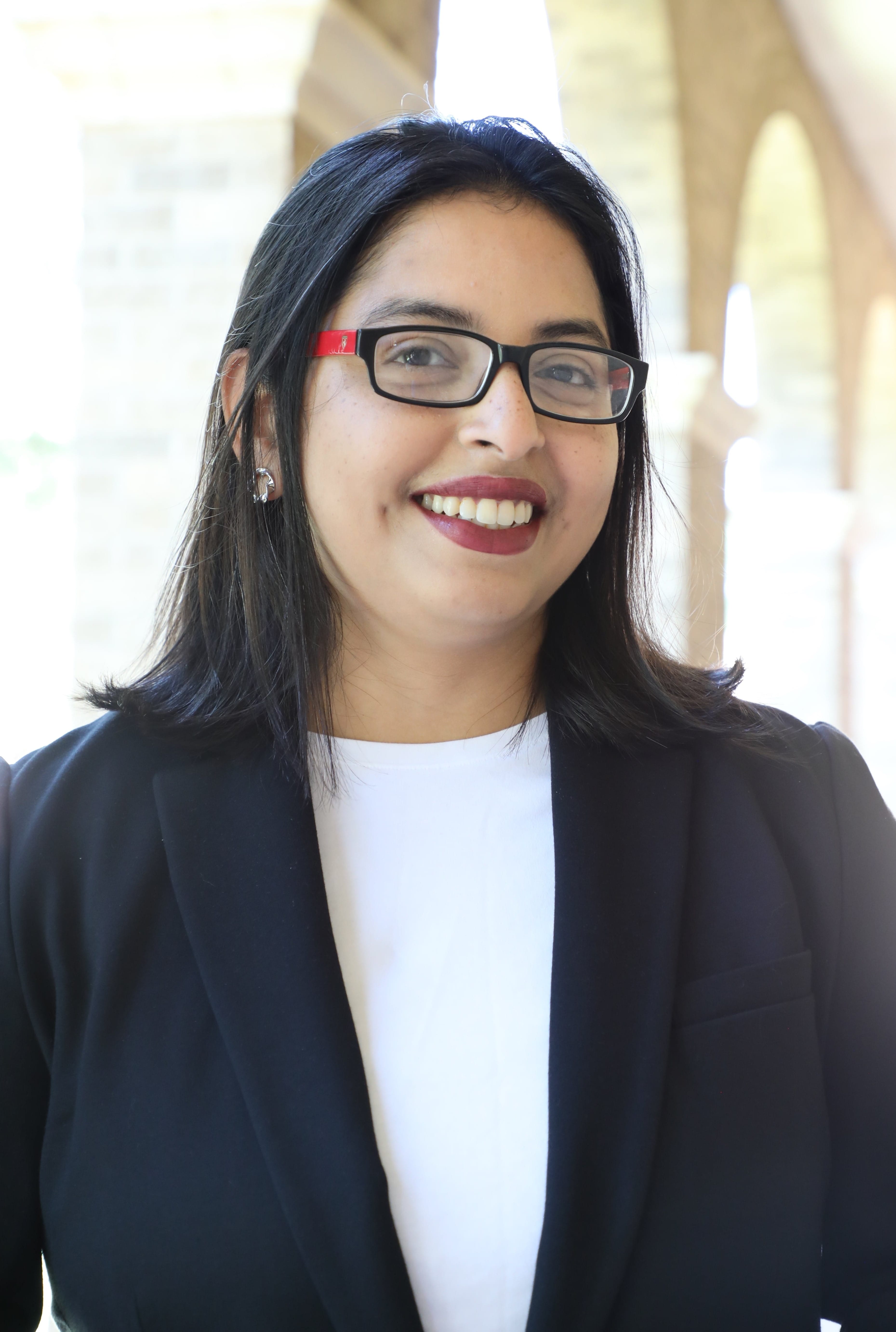
Dr. Tanushree Roy serves as an Assistant Professor in the Department of Mechanical Engineering at Texas Tech University's Whitacre College of Engineering and is an Affiliate Faculty member at the National Wind Institute. Her research pioneers resilient human-centric smart city infrastructures through the integration of control theory, mathematical modeling, and machine learning to address critical challenges in safety, security, and resource optimization for urban systems. Her academic foundation includes: Ph.D. in Mechanical Engineering from The Pennsylvania State University (2022) M.S. in Mathematics from University of Central Florida (2015) M.E. in Electrical Engineering from Indian Institutes of Engineering Science and Technology, India (2011) B.Tech in Applied Electronics and Instrumentation from Maulana Abul Kalam Azad University of Technology, India (2009) Dr. Roy's research centers on cybersecurity , fault diagnostics , and socio-technical systems with specialized applications in smart transportation networks and battery energy storage systems. She develops innovative frameworks that merge human-centric sensing with technical measurements to combat cyberattacks and physical faults in cyber-physical-social systems, emphasizing safety-critical resilience for urban citizens. Her methodology uniquely combines model-based control with data-driven machine learning to address challenges like social data integrity, human behavior modeling, and multi-scale anomaly characterization. Analysis of her 15 most recent publications (2021-2025) reveals dominant trends in cyberattack detection for connected vehicles, thermal fault tolerance in battery systems, and socio-technical traffic modeling. Key technical approaches include Koopman operator theory for secure estimation, control barrier functions for safety certification, and redundancy-based data fusion techniques. These works consistently bridge theoretical control systems with practical smart city implementation, demonstrating strong interdisciplinary connections between transportation engineering, energy systems, and cybersecurity. No scientific awards are documented in the provided information. Dr. Roy actively mentors three PhD students—Sanchita Ghosh (since 2022), Faysal Ahamed, and Soumyoraj Mallick (both since 2024)—alongside undergraduate researcher Mercedes Hernandez. Her research is executed through the Smart Human-centric Automation Resilience (SHARE) Lab, which has secured projects including the secure autonomous mobility testbed and participates in workforce development via Texas Tech's Engineering Research Internship Experience (ERIE) program for high school students. The SHARE Lab operates at the intersection of transportation and energy systems, maintaining two primary research thrusts: resilient human-centric transportation networks and safeguarding battery energy storage infrastructure. Current projects include SUMO-based cyberattack validation for connected vehicle platoons, self-learning voltage estimation under sensor attacks, and thermal fault-tolerant battery management. The lab maintains active collaborations with national conferences (ACC, CCTA) and industry partners to advance real-world implementation of resilient smart city technologies.
William Heath is a Professor and Head of the School of Computer Science and Engineering at Bangor University. He holds the position of Chair of the UKACC from 2024 to 2027. His research focuses on feedback control theory, particularly addressing actuator nonlinearities such as saturation, rate constraints, backlash, and hysteresis. He employs multiplier theory within absolute stability frameworks to analyze model predictive control and antiwindup strategies. His research interests include nonlinear control systems design, stability criteria for Lur’e systems, and discrete-time extensions of classical control methodologies. He has contributed to foundational work on O’Shea-Zames-Falb multipliers and their applications in robust control. Key collaborations involve international researchers in control systems and applications, though specific partnerships are not detailed. His work bridges theoretical advancements with practical implementations, such as in biomedical BCIs and industrial systems like wind turbines and diesel engines. No awards or grants are explicitly listed, but his extensive publication record (105+ outputs) reflects sustained academic engagement. As Head of School, he leads a team advancing interdisciplinary research in computer science and engineering.
Jugal Garg is an Associate Professor in the Department of Industrial and Enterprise Systems Engineering at the University of Illinois at Urbana-Champaign, with an affiliate appointment in the Department of Computer Science. His work bridges theoretical computer science, economics, and operations research, focusing on fundamental problems in market design and resource allocation. Dr. Garg earned his BTech and PhD in Computer Science from IIT-Bombay. Following his doctoral studies, he completed postdoctoral research at the Algorithms and Randomness Center at Georgia Tech and the Algorithms and Complexity group at Max-Planck-Institut für Informatik in Saarbrücken. His academic journey has positioned him at the forefront of research at the intersection of computation and economics. His research focuses on the computational aspects of economics and game theory, with particular emphasis on fair division problems and market equilibrium computation. Dr. Garg has made significant contributions to understanding envy-free allocation mechanisms, maximin share guarantees, and competitive equilibrium computation in various market settings. His work combines deep theoretical insights with practical algorithmic approaches, addressing fundamental questions in resource allocation where computational complexity meets economic efficiency. Analysis of Dr. Garg's recent publications reveals a strong focus on fair division problems, particularly envy-free allocation (EFX), maximin share (MMS) approximations, and market equilibrium computation. His research spans both goods and chores allocation, with increasing attention to more complex settings involving mixed manna (both goods and chores), heterogeneous agents, and specialized utility functions. A notable trend is his development of combinatorial algorithms for market equilibrium computation and his work on improving approximation guarantees for fairness concepts in resource allocation. NSF CAREER Award (2020) - Recognizing his potential for leadership in research and education INFORMS Koopman Prize (2021) - For the paper 'Multi-Agent UAV Routing: A Game Theory Analysis with Tight Price of Anarchy Bounds' Exemplary Theory Paper Award (2020) - For 'EFX Exists for Three Agents' at ACM EC Dean's Award for Excellence in Research (2022) James Franklin Sharp Outstanding Teaching Award (2019) NSF CRII Award (2018) Dr. Garg has successfully advised numerous PhD students including Peter McGlaughlin, Timothy Murray, Setareh Taki, John Qin, Eklavya Sharma, Yuang (Eric) Shen, Pooja Kulkarni, and Aniket Murhekar. He has also mentored postdoctoral researchers such as Bhaskar Ray Chaudhury (now an assistant professor at UIUC) and Vishnu V. Narayan. His research has been supported by prestigious grants including the NSF CAREER and CRII awards, and he serves on program committees for leading conferences in theoretical computer science, artificial intelligence, and operations research including EC, STOC, SODA, and AAAI. Dr. Garg maintains active collaborations with researchers across institutions worldwide, as evidenced by his frequent invited talks at international venues including the University of Bonn, LSE, and TIFR Mumbai.
Viktor N. Staroverov is a Professor in the Chemistry department at Western University, where he leads research in quantum chemistry and electronic structure theory. His work develops advanced computational methods for studying molecular and solid-state systems, with emphasis on density-functional theory and wavefunction techniques. His educational background includes: M.Sc. from Brock University (1997) Ph.D. from Indiana University (2001) Postdoctoral Fellowship at Rice University Staroverov's research focuses on theoretical foundations of quantum chemistry, particularly bridging density-functional theory with wavefunction methods to create more accurate computational models. His group investigates exchange-correlation functionals, ionization energies, and electronic structure properties, applying these insights to practical problems in chemistry and materials science. This work combines rigorous mathematical analysis with computational implementation. Recent publications (2019-2023) reveal a cohesive research trajectory centered on fundamental DFT advancements, including v-representability, Koopmans' theorem extensions, and unified potential constructions. These studies consistently address core challenges in electronic structure theory while enabling new applications. His scientific recognition includes: Keith Laidler Award, Canadian Society for Chemistry (2017) Florence Bucke Science Prize (2016) Faculty Scholar Award (2016) NSERC Discovery Accelerator Supplement (2015) Early Researcher Award (2010) Professor Staroverov actively mentors graduate students and teaches courses ranging from introductory chemistry (1301, 1302) to advanced quantum chemistry (4474, 9648). He is currently recruiting graduate students for 2025 with research interests in electronic structure theory, supported by major grants including the NSERC Discovery Accelerator Supplement which funds high-impact theoretical development. He directs a research group developing specialized quantum chemistry software, with ongoing projects focused on improving the accuracy and efficiency of electronic structure calculations for complex molecular systems.
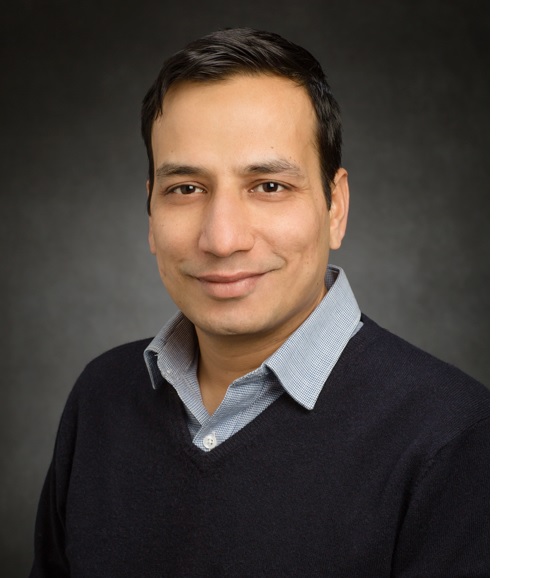
Rishikesh Yadav is a postdoctoral researcher at the Department of Mathematics and Mathematical Statistics, Umeå University, Sweden , and previously held a postdoctoral position at the Namur Institute for Complex Systems (naXys), University of Namur, Belgium . He earned his Ph.D. in Approximation Theory from Sardar Vallabhbhai National Institute of Technology Surat, India. His research focuses on Approximation Theory, Functional Analysis, Dynamical Systems, Operator Theory, and Optimization Theory. Notable contributions include work on Koopman operators, control theory, and compressed sensing. He has received awards such as the V. M. Shah Prize (2020) and Best Oral Presentation Award (2019). Recent research emphasizes developing algorithms for convex optimization on measure spaces, supported by the Kempe Foundation (2024–2026). His work bridges approximation theory with dynamical systems, including publications on Szász-Mirakjan operators, statistical convergence, and Koopman operator approximations via Bernstein polynomials. Grants/Fellowships: Kempe Foundation (2024–2026) Labs/Teams: naXys Institute (Belgium), Umeå University's Department of Mathematics
Wentao Tang is an Assistant Professor in the Department of Chemical and Biomolecular Engineering at North Carolina State University. His research focuses on data-driven control algorithms integrating nonlinear control theory with machine learning, optimization of complex systems, and network topology-based decomposition for distributed control. He received his B.S. in Chemical Engineering and Mathematics from Tsinghua University (2015) and his Ph.D. in Chemical Engineering from the University of Minnesota (2020), followed by work as a process control engineer at Shell Global Solutions. His research group, DISCO (Data-Informed Systems Control & Optimization), explores topics such as distributed optimization, dissipativity learning control, and network structure analysis for industrial processes. Notable contributions include methods for optimal decomposition of large-scale systems and development of Lyapunov envelope algorithms for distributed MPC. Recent group additions include Ph.D. student Jarod Morris and postdoctoral researcher Dr. Xiuzhen Ye. His work emphasizes bridging theoretical control advancements with practical applications, particularly in plantwide control systems and resilient industrial automation. The group actively collaborates on projects funded by startup grants and industry partnerships, with publications spanning control theory, optimization, and machine learning.