Joaquim Massana Raurich is a Senior Lecturer at the Department of Electrical, Electronic and Automatic Engineering , University of Girona. As a member of the Research Group in Control Engineering and Intelligent Systems (EXIT) , his work bridges Smart Cities , Energy Forecasting , and Healthcare Technology through Machine Learning and Automation Systems . Research Interests: Control Engineering, Smart Cities, Energy Forecasting, Healthcare AI Key Contributions: Development of public software for EEG-based disease detection, advanced load forecasting models, and AI-driven diabetes management systems His teaching spans Physics and Electronics , Automatic Regulation , and Control Systems at both undergraduate and master's levels. He has supervised internships and final projects while contributing to European/national projects like HIT2GAP and Pepper .
Victor Bolbot serves as a Postdoctoral Researcher in the Department of Energy and Mechanical Engineering at Aalto University, Finland, affiliated with the Marine and Arctic Technology research group. His work focuses on advancing safety, reliability, and cybersecurity frameworks for autonomous maritime systems through rigorous systems engineering approaches and data-driven methodologies. He maintains active collaborations with international researchers and institutions, evidenced by extensive co-authorship across high-impact publications. Dr. Bolbot's research centers on autonomous ships, marine systems safety, ship propulsion cybersecurity, and risk modeling. He employs systems-theoretic process analysis (STPA), Bayesian networks, and association rule mining to address critical challenges including maritime accident causation, cybersecurity vulnerabilities in dual-fuel engines, safety acceptance criteria for autonomous vessels, and socio-technical implications of maritime automation. His methodological innovations bridge theoretical safety engineering with practical applications in Arctic navigation, inland waterways, and regulatory compliance, emphasizing the integration of cyber-physical risk assessment. Analysis of his 2023-2025 publications reveals three dominant research trajectories: (1) Development of cyber-physical risk frameworks like STPA-Cyber for maritime cybersecurity; (2) Real-time Bayesian modeling for dynamic operations including remote pilotage and ice navigation; and (3) Socio-technical investigations into regulatory frameworks, educational needs, and workforce skill transformations for autonomous shipping. His work consistently addresses the interplay between technological innovation and safety assurance, with growing emphasis on cybersecurity as a critical maritime safety component. As an active member of Aalto University's Marine and Arctic Technology research group, Dr. Bolbot contributes to interdisciplinary projects tackling complex challenges in marine safety engineering, Arctic operations, and sustainable maritime technologies. The group's collaborative environment supports the development of safer, more efficient, and environmentally conscious maritime systems through experimental validation, computational modeling, and industry partnerships.
Julien Perret is a senior researcher at the National Institute of Geographic and Forest Information (IGN) in France, affiliated with the LASTIG laboratory and STRUDEL research team. His work spans geographical information science, urban dynamics, and historical cartography. Current Affiliation: National Institute of Geographic and Forest Information (IGN) Research Team: LASTIG, STRUDEL Academic Rank: Senior Researcher (Directeur de Recherche) Education Habilitation (HDR) in Geographical Information Science, Université Paris-Est (2016) PhD in Computer Science, Université Rennes 1 (2006) Engineering Degree in Computer Science, INSA Rennes (2002) Research Interests Perret's research focuses on urban dynamics through computational approaches, including agent-based modeling and 3D urban simulation . He investigates historical cartographic data like the Napoleonic land registry and Cassini Carte de France to understand long-term urban evolution. His work integrates geospatial data with epidemiological modeling using digital twins, particularly for pandemic simulations. Scientific Contributions Key publications include: 2025: Building change models for urban densification studies 2024: Historical map vectorization benchmarks 2017: Scalable point cloud management systems 2015: 3D analysis of urban regulation impact 2005: Procedural geometry modeling with FL-systems Advising and Collaborations Perret has supervised multiple PhD students and collaborated on projects like SoDUCo (1789-1950 Paris urban dynamics) and iSpace&Time (4D GIS for city modeling). He contributes to open-source GIS tools like GeOxygene .
Dr. Ip-Shing Fan is a Senior Lecturer in Enterprise Systems at Cranfield University's IVHM Centre, with academic career spanning over three decades. His work bridges technology implementation, organizational behavior, and complex system interactions across aerospace, manufacturing, and healthcare domains. Dr. Fan leads the Digital MRO and Hangar laboratories at Cranfield's DARTeC Initiative and serves as Course Director for the MSc in Aviation Digital Technology Management. PhD in Computer Integrated Manufacturing from Cranfield University BSc in Industrial Engineering (First Class Honours) from Hong Kong Commonwealth Scholarship recipient His research focuses on socio-technical systems in technology implementation, with specialization in Digital Twin applications for aircraft health management, Industrial Automation in aerospace contexts, and Human Factors in maintenance operations. He established the European BEST research consortium for enterprise system implementation knowledge and develops solutions for Predictive Maintenance , Robotic Inspection systems, and Agile Manufacturing frameworks. Key publication trends show expertise in Aerospace Informatics (2022-2025), Enterprise System Implementation (1995-2010), and Supply Chain Knowledge Modeling (2008-2010). Recent work addresses AI Document Reconciliation , Autonomous Inspection Systems , and 3D Printing Applications in aviation maintenance. Dr. Fan chairs the BCS Beds Bucks Northants Branch and has consulted for industry leaders including Boeing, BAE Systems, and SAP. His career combines academic research with practical implementation across Digital Transformation in aviation, Operational Optimization in healthcare, and Knowledge Engineering standards development.
Kevin Boudreau is a Research Fellow at Harvard University's Institute of Quantitative Social Science (IQSS) and a Research Associate at the National Bureau of Economic Research (NBER) Program on Productivity, Innovation, and Entrepreneurship. He serves as an Associate Editor for Management Science in Innovation and Entrepreneurship and Business Strategy, and as an editorial board member for the Strategic Management Journal . His expertise centers on platform design and innovation systems leveraging open innovation, multi-sided markets, and crowdsourcing approaches. PhD in Behavioral and Policy Sciences, MIT MA in Economics, University of Toronto BASc in Engineering, University of Waterloo Boudreau's research combines large-scale field experiments and econometric analysis of observational data to study knowledge production in science, tournament design in innovation systems, and platform governance. His work spans digital innovation strategies, intellectual property protection, and gender dynamics in competitive environments. His recent publications examine artificial intelligence platform competition, freemium strategies, and gender differences in STEM fields. Supported by grants from Google, Microsoft, the Kauffman Foundation, and the National Science Foundation, his studies explore digital competition, crowdfunding models, and platform ecosystem dynamics. Research Support: Google, Microsoft, NBER, Kauffman Foundation, National Science Foundation Collaborations: Harvard Medical School, NASA, Canadian Space Agency, TopCoder Boudreau contributes to academic communities through editorial roles and collaborations, including field experiments on engineering students' professional exposure and digital innovation at Harvard Medical School.
Dr. Enayat Rajabi is an Associate Professor of Data Analytics at the Shannon School of Business , Cape Breton University , Canada. He also serves as an Adjunct Professor at Dalhousie University and is affiliated with Nova Scotia Health as a scientist. His academic journey included a Ph.D. in Information and Knowledge Engineering from the University of Alcalá, Spain, and he has contributed extensively to machine learning and semantic web domains. Education: Ph.D. in Information and Knowledge Engineering, University of Alcalá, Spain (2015) Master of Software Engineering, Ferdowsi University of Mashhad, Iran (2004) Bachelor of Software Engineering, Razi University, Iran (2001) Dr. Rajabi's research focuses on machine learning , knowledge engineering , and semantic web applications in healthcare and smart cities. His work explores explainable AI frameworks, knowledge graph construction, and data-driven solutions for sustainable transportation and clinical decision support systems. His recent publications highlight trends in knowledge graph integration with large language models for healthcare, graph neural networks , and predictive analytics in urban environments. He has secured significant grants, including the NSERC Discovery Grant and Mitacs Research Training Award , to advance these domains. Scientific Contributions: NSERC Discovery Grant (2020-2025) - Semantic Web Analysis over Nova Scotia Open Data ($156,000) New Health Investigator Grant (2022-2024) - Machine Learning for ALC Patients ($97,418) Mitacs Globalink ($4,250) - Graph Neural Networks CBU RISE grants for Explainable Clinical Decision Support Systems and Multi-Label Text Classification Dr. Rajabi has mentored numerous research assistants across projects and maintains active collaborations with institutions in Canada, Spain, and Iran. His technical expertise spans Python, Tableau, Databricks, and PySpark, with teaching responsibilities in Predictive Analytics , Data Visualization , and Quantitative Methods .
Philippe CHEREAU is an Associate Professor at SKEMA Business School (France) specializing in Strategic Management , Innovation Management , and Entrepreneurship Education . He has held academic positions at SKEMA since 2009 and serves as Director of SKEMA Advisory since 2024. His research focuses on strategy-business model alignment, innovation dynamics in SMEs, and entrepreneurial confidence measurement. Education: Ph.D. in Management Science (2012, Aix-Marseille University/SKEMA Business School) Key Appointments: Visiting Professor at University of Naples Federico II (Italy, since 2016), Mines ParisTech (France, 2012-2019), and IAE Aix-Marseille (France, 2011-2017) His research spans strategic posture theory , business model innovation , and entrepreneurial learning frameworks . He co-authored influential works on SME strategy-implementation alignment and developed the INNOSTRA™ Method for strategic transformation. His 2023 cross-cultural study on French/Chinese consumer responses to masstige strategies and 2025 research on corporate environmental commitment through performance feedback theory represent his latest contributions. Scientific Awards: Executive Education Excellence Award (2022, SKEMA) EFMD Case Writing Competition winner (2016) FNEGE-certified textbook recognition (2015) As Scientific Director for SKEMA's incubator (2012-2017) and co-author of the annual Entrepreneur Confidence Index for Challenges magazine (2021-2023), he bridges academic research with practical entrepreneurial support. His case studies (published in Harvard Business Publishing, Ivey, and CCMP) analyze strategic conflicts in luxury, agri-food, and fragrance industries.
Carsten Rohde serves as Professor and Head of the Department of Accounting at Copenhagen Business School (CBS), where he oversees academic operations while maintaining active research in management control systems, cost accounting, and information systems. His leadership position has temporarily suspended his CBS teaching duties, though he remains qualified in core accounting disciplines. Rohde's research centers on management control systems under crisis conditions—particularly in banking—and cross-cultural control design, with significant contributions to public sector accounting (especially university cost calculation) and multinational transfer pricing. His work consistently bridges theoretical frameworks with practical organizational challenges, emphasizing empirical analysis of control system adaptation during economic disruptions and cultural transitions. Recent publications reveal strong thematic continuity: banking sector controls during/after financial crises (2016-2021), cultural influences on management control (2020), and public sector cost management (2019-2021). His scholarship demonstrates methodological diversity—from large-scale cross-cultural studies to banking crisis case analyses—with consistent focus on how organizations reconfigure control systems in response to external pressures. As an academic leader, Rohde actively supervises PhD candidates at Reykjavik University while teaching part-time at Copenhagen and Aalborg Universities. His external engagements include subject consultation for DJØF Forlag and executive education through CBS Executive, reflecting commitment to both scholarly advancement and practical knowledge dissemination across Scandinavian academic and professional communities.
Andreas Papasalouros is an Associate Professor at the Department of Mathematics, University of the Aegean. He holds a Ph.D. in Engineering from NTUA (2004), a Diploma in Electrical and Computer Engineering (2000), and a BSc in Physics (1992). His research focuses on Educational Technology , Adaptive Hypermedia , and Ontology Engineering . Education Ph.D. in Mechanics, School of Electrical and Computer Engineering, NTUA (2004) Diploma in Electrical and Computer Engineering, NTUA (2000) BSc in Physics, National and Kapodistrian University of Athens (1992) Research Interests Papasalouros's work centers on leveraging UML and Ontologies for designing Educational Software . He explores Automated Assessment systems, Accessibility solutions (e.g., TeX-to-Braille), and Mobile Learning applications. His studies often intersect with Collaborative Learning and Semantic Web technologies. Key Contributions His publications span Adaptive Hypermedia , Ontology-Driven Learning , and Accessibility Tools . Notable works include Ob-AHEM (2002), Grid4All Ontology (2008), and TeX-to-Braille Transcribing (2017). Recent trends emphasize Game-Based Learning and Query Log Analysis for ontology creation. Courses Taught New Technologies in Education (3rd semester) Introduction to Computer Science (2nd semester) Advanced Programming Languages (6th semester) Postgraduate Course in New Technologies in Education
Pedro Cabalar is Full Professor at the Department of Computer Science of the University of Corunna, Galicia, Spain, and current coordinator of the inter-university Master in Artificial Intelligence (Universities of A Coruña, Santiago de Compostela and Vigo). He also serves as Area Editor (Theory Foundations) for Theory and Practice of Logic Programming and as Standard Editor for the Artificial Intelligence journal. Education: PhD in Computer Science, University of Corunna, 2001 Master in Computer Science, Politéchnic University of Madrid, 1993 Bachelor in Computer Science (3-year degree), University of Santiago de Compostela / University of Corunna, 1989 Research interests revolve around Knowledge Representation & Reasoning , especially Answer Set Programming , non-monotonic reasoning , temporal and modal logics , and causal reasoning . He investigates theoretical foundations (equilibrium logic, temporal extensions, deontic operators) and practical systems (telingo, eclingo, aspBEEF), with applications ranging from planning and diagnosis to explainable AI and healthcare decision support. His recent articles (2023-2025) exhibit a clear trend toward temporal and metric extensions of ASP , explainability , and hybrid reasoning systems , often combining logic programming with deontic or probabilistic features. Scientific awards & recognition: University of Corunna Dissertation Award, 2003 Best Paper Award at LPNMR 2019 Best Student Paper at ICLP 2020 Best Student Paper at JELIA 2019 Grants & projects: He currently leads or co-leads nationally funded Spanish projects (GEISER 2024-2028, ARLEKIN 2021-2024) and has coordinated EU COST actions (DigForASP) as well as earlier MINECO projects on temporal ASP and medical reasoning (TARDIS, MERLOT, FEAST, etc.). PhD supervision: He has successfully supervised three PhD theses (Martín Diéguez, Jorge Fandiño, Brais Muñiz) and continues to advise students within the Information Retrieval Laboratory (IRLab) and the Spanish node of Potassco Solutions.
Fabrizio Russo is a postdoctoral Department of Computing researcher at Imperial College London , specializing in AI systems that integrate causal reasoning and computational argumentation frameworks. His work focuses on enhancing decision-making processes through transparent causal discovery techniques and explainable machine learning architectures. PhD in Safe and Trusted AI (2025) from Imperial College London via UKRI CDT Former Head of Data Science at 4most Europe (2014-2020) Co-organizer of Imperial College's Explainable AI Seminars Series (2020-present) His research combines causal inference with argumentation-based reasoning to create contestable AI systems that enable human-machine collaboration in critical decision-making scenarios. Key methodologies include: Constraint-based causal structure learning Shapley value-based feature selection Causal graph injection into neural networks Interactive argumentation frameworks Recent publications demonstrate applications in financial risk assessment (FICO HELOC), socioeconomic modeling (Adult dataset), and housing market predictions (Boston/California datasets). His work emphasizes regulatory compliance and transparency in AI deployments. Scientific contributions include: 2023 AISTATS Top-Reviewer Award Foundational work on causal injection techniques Development of argumentation-based explanation systems As a Graduate Teaching Assistant for Introduction to Machine Learning (2021-2022), he mentored students in algorithmic foundations and supervised implementation of explainable AI systems. His GitHub repositories contain open-source implementations of causal injection frameworks.
Dr. Frank Soboczenski is a Lecturer in the Department of Computer Science at the University of York, with an affiliate scientist position at King's College London supported by the NVIDIA GPU Grant Program. His research spans multiple domains including healthcare, space research, and quantum machine learning applications. He serves as a STEM scientist for NASA's and NOAA's GLOBE program and is actively involved in various NASA initiatives including the Frontier Development Lab. Dr. Soboczenski's primary research interests include Transformers and Large Language Models, Machine Learning with focus on Uncertainty Quantification and Explainability, and advanced applications of Quantum Machine Learning in Healthcare/Biomedicine and Space Research domains. His work on the RobotReviewer project applies Deep Learning and Natural Language Processing to healthcare. Previously, he has worked in Human-Computer Interaction, Cyber-Security, and Real-Time Systems in cooperation with organizations including the German Police Force, GCHQ, Rapita Systems, INRIA, Barcelona Supercomputing Center, and Airbus. His recent publications demonstrate a strong focus on applying machine learning techniques to healthcare informatics and space research, with particular emphasis on systematic reviews, clinical decision support, atmospheric retrieval for exoplanets, and medical data analysis. His work bridges the gap between theoretical AI advancements and practical applications in critical domains. NASA TechLeap Prize - Quantum Machine Learning NASA/NOAA/U.S. Department of State Outstanding Efforts to Mentor and Support Students (2019-present) NASA Frontier Development Lab AI Research Award of Merit Data Samaritan Award Steely Eyed Operator Award NASA Kennedy Space Center OsirisREx launch invitation SpaceApps 3M Thesis Competition UK National Winner (2013) Deggendorf Institute of Technology Robotics Challenge Award Dr. Soboczenski actively mentors students, as evidenced by his NASA/NOAA award for mentoring. His research is supported by the NVIDIA Corporation through the GPU Grant Program. He serves on multiple program committees including NeurIPS (2019-present), AAAI (2019-present), and various specialized workshops at major AI conferences. He is also involved in organizing NASA Space Apps challenges and serves on the NASA GeneLab Analysis Working Group on AI/ML. As an active member of the academic community, Dr. Soboczenski participates in numerous professional organizations including the NASA Nancy Grace Roman Spacecraft Science Working Group, NASA Technosignatures research group, IBM Quantum Researchers Program, PolarAI Research Group of the ACM, Huggingface BigScience Team, International Astronomical Union, and several others focused on AI and space research.
Alessandro Russo is a researcher at the Institute of Cognitive Science and Technologies (ISTC) of the National Research Council (CNR) in Italy, where he contributes to the Semantic Technology Laboratory (STLab). Since 2015, he has been engaged in EU-funded projects like MARIO (Managing active and healthy aging with caring service robots), SMART VORTEX, and WORKPAD, focusing on knowledge-driven cognitive robot architectures, ontology engineering, and process-aware systems. He earned a PhD in Engineering in Computer Science from Sapienza Università di Roma (2010–2015), where he explored data-centric methodologies for Business Process Management. His research spans semantic technologies, assistive robotics, and healthcare informatics, with a strong emphasis on ontology-based knowledge management for geriatric assessment and reminiscence therapy. Alessandro has authored influential works in these domains, including foundational articles on social robot architectures and ontology design patterns for cognitive agents. His work often intersects with applications in emergency management, clinical workflows, and financial systems. Recent projects highlight his expertise in neurosymbolic AI, multimodal data integration, and software quality modeling. While no formal awards are listed, his involvement in high-impact EU initiatives underscores his role in advancing semantic and robotic technologies for societal benefit. He collaborates with interdisciplinary teams and contributes to tools like the Text2AMR2FRED pipeline for knowledge graph generation.
Benjamin Lough is a Professor of Business Administration and Director of Social Innovation at the Gies College of Business, University of Illinois Urbana-Champaign. He holds a PhD from Washington University in St. Louis, and B.A. and MSW degrees from Brigham Young University. Prior to his current role, he served as Senior Researcher at the United Nations Volunteers (UNV) in Bonn, Germany. His research focuses on transnational voluntary organizations, community development, and social innovation, with particular emphasis on gender equity, nonprofit management, and global volunteer practices. Professor Lough teaches courses on nonprofit management, social entrepreneurship, and social enterprise. His work bridges academia and practice, emphasizing stakeholder engagement and systemic approaches to social challenges. Recent research highlights include analyzing funding disparities in startups, the role of international volunteers in fostering gender equality, and the impact of volunteering on community resilience.
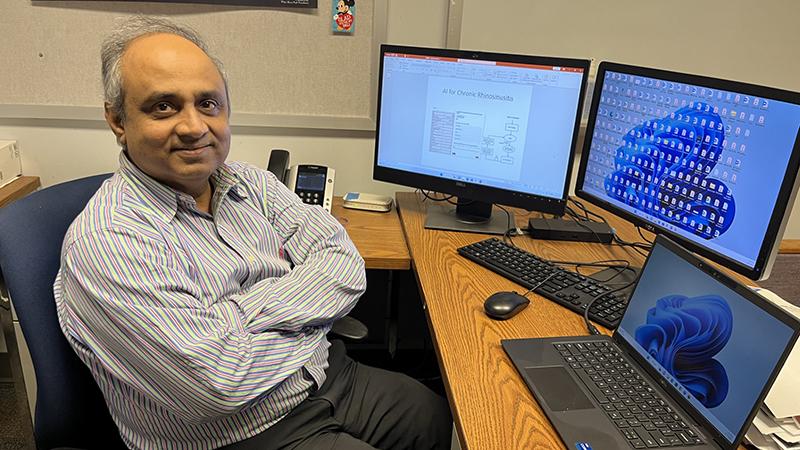
Dr. Snehasis Mukhopadhyay is a Professor of Computer Science at Purdue University, Indianapolis. He holds a Ph.D. from Yale University and a Master's from the Indian Institute of Science, Bangalore. His research focuses on Artificial Intelligence, Machine Learning, Interactive Data Science, and AI in Medicine, with over 100 peer-reviewed publications. He has received continuous research funding from NSF, NIH, NOAA, and USDA. He has been recognized with the NSF CAREER Award and two Indiana University Trustees’ Teaching Awards (2014, 2017). His professional service includes NSF panel roles, General Chair for the 2016 ACM CIKM Conference, and National Academies Panel membership (2023). His recent work emphasizes interactive machine learning, reinforcement learning in dynamic systems, and environmental data science applications. His publications span AI methodologies, healthcare applications, and environmental decision-support systems. Key achievements include developing participatory watershed optimization tools and sampling-based pattern mining techniques for hidden datasets. His research bridges theoretical advancements with practical applications in medicine and environmental conservation.