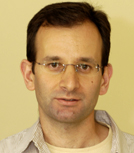
Dr. George Stamou is a Professor at the School of Electrical and Computer Engineering of the National Technical University of Athens (NTUA), serving as Director of the Artificial Intelligence and Learning Systems Laboratory (AILS). His expertise spans knowledge representation, machine learning, neural networks, and semantic technologies. He leads interdisciplinary initiatives such as the postgraduate program 'Data Science and Machine Learning' (2018–2022). Research Interests: Focuses on knowledge graphs, interpretable AI, semantic web applications, and multimodal learning. His work integrates formal logic systems (e.g., description logics) with modern deep learning techniques, addressing challenges in explainability, bias detection, and ethical AI applications. Publications: Over 150 articles in AI journals/conferences with an h-index of 34 (Google Scholar). Notable contributions include datasets like CHORDONOMICON (music analysis), GOSt-MT (gender bias in MT), and methodologies for counterfactual explanations in machine learning. Awards & Committees: Active in W3C and RuleML standardization bodies. Co-organized major AI conferences. Recognized for contributions to semantic interoperability and knowledge-based systems. Labs & Teams: Directs AILS-NTUA lab and collaborates with CISRI (Computer & Information Systems Research Institute). Engages in EU projects like CultureLabs (cultural heritage digitalization) andsmarty4covid (health data analysis).
John Psarras is a Professor at the National Technical University of Athens (NTUA) in the School of Electrical and Computer Engineering, specifically within the Division of Industrial Electric Devices and Decision Systems. He serves as the Director of the Decision Support Systems Laboratory (DSSlab) and the University Research Institute of Communication and Computer Systems. He holds a Diploma in Mechanical Engineering (1982) and a Ph.D. in Electrical and Computer Engineering (1989), both from NTUA. His research specializes in decision support systems with applications in energy management, environmental analysis, and information systems. Key areas include: Multi-criteria analysis for energy policy and renewable integration AI-driven optimization of smart grids and building efficiency Sustainable finance mechanisms for green projects Blockchain applications in education and data security His recent publications (2023–2025) demonstrate a strong focus on AI-enhanced decision tools for energy transitions, smart infrastructure, healthcare diagnostics, and cross-border renewable cooperation, reflecting interdisciplinary innovation. He has supervised 22 PhD theses and coordinates EU-funded projects in energy policy, clean technology, and capacity building. No scientific awards are listed in available sources. He leads the Decision Support Systems Laboratory (DSSlab), advancing research in energy analytics, and directs the University Research Institute of Communication and Computer Systems, facilitating large-scale interdisciplinary collaborations.
Ion Androutsopoulos is a Professor of Artificial Intelligence in the Department of Informatics at Athens University of Economics and Business (AUEB), where he also serves as Head of Department. He is founder and co-director of AUEB's Natural Language Processing Group and an Adjunct Researcher at the Digital Curation Unit and "Archimedes" Research Unit of the Research Centre "Athena". His research spans multiple dimensions of Artificial Intelligence with a focus on Natural Language Processing. Key interests include: Machine learning in NLP, particularly deep learning and large language models Question answering and retrieval augmented generation for document collections Dialog systems for new languages and knowledge domains Sentiment analysis and emotion recognition from text and speech Detecting toxic posts and disinformation online Image-to-text generation for medical diagnostics NLP applications in biomedical, legal, and financial domains His recent publications demonstrate strong activity across medical AI (particularly ImageCLEFmed Caption competitions where his group consistently ranks 1st-2nd), legal NLP (LexGLUE benchmark), financial NLP (EDGAR-CRAWLER), and multilingual challenges. His work shows increasing emphasis on large language models, explainability, and practical applications. Notable awards include: Top 2% scientist worldwide (Stanford University database, 2023) Multiple AUEB Excellent Teaching Awards (2017-18, 2021-22, 2023-24) Three consecutive BioASQ awards (2018-2020) Multiple 1st/2nd place rankings in ImageCLEFmed Caption competitions (2021-2025) He actively organizes major events including the Athens Natural Language Processing Summer School (AthNLP) and SemEval tasks. His group maintains strong industry and research collaborations, particularly in medical AI applications where they've developed systems that generate diagnostic captions from medical images with state-of-the-art performance.
Pavel Panchekha is an Assistant Professor in the School of Computing at the University of Utah, where he holds the Warnock Chair for Junior Faculty. His research spans programming languages, web browsers, and numerical analysis, with a focus on developing programming language techniques to address challenges across computer science. Dr. Panchekha received his educational training at prestigious institutions: PhD in Computer Science from the Paul G. Allen School for Computer Science and Engineering at the University of Washington, advised by Michael D. Ernst and Zachary Tatlock BS in Mathematics from MIT Panchekha's research program has two major thrusts. First, he works on web browser internals , with projects including fuzzing layout invalidation, multi-tenant garbage collection, and optimizing 2D graphics. He is also authoring a textbook on web browsers that informs much of this research. Second, he focuses on automatic numerical analysis , with projects such as automatic accuracy improvement, synthesis via term rewriting, scalable static accuracy analysis, and math library implementation. He leads the FPBench and Herbie projects, which are major deployments of his research. His scholarly output demonstrates consistent contributions across programming languages, verification, and numerical methods. Recent work shows a growing emphasis on bidirectional typing systems, layout invalidation in browsers, and robust floating-point error analysis. His publications reveal a trajectory from foundational work on floating-point accuracy (notably the Herbie tool that won a Distinguished Paper Award at PLDI 2015) toward more comprehensive systems for program synthesis, verification, and browser optimization. Panchekha has received significant recognition for his research contributions: NSF Fellowship ARCS Foundation Fellowship Adobe Research Fellowship Wissner-Slivka Foundation Fellowship 2015 PLDI Distinguished Paper Award for work on the Herbie numerical analysis and repair tool As an advisor, Panchekha mentors a substantial group of students across multiple levels. He currently advises six students: Marisa Kirisame (PhD), Bhargav Kulkarni (PhD), Yumeng He (PhD), Artem Yadrov (MS), Jesus Ponce (BS), and Jonas Regehr (BS). Previously, he has advised over twenty students including PhD candidates like Ian Briggs and numerous MS and BS students. His advising spans theoretical topics in programming languages and practical applications in web browsers and numerical computing. Panchekha leads research groups focused on programming languages applications to web browsers and numerical analysis. His work on the Herbie tool for floating-point accuracy improvement has become influential in the programming languages community, and his more recent work on browser internals is shaping how researchers understand and optimize modern web rendering engines. He is currently developing a textbook on web browsers that aims to synthesize knowledge about browser architecture and implementation.
Christos Makris is an Associate Professor in the Department of Computer Engineering and Informatics at the University of Patras, Greece. His academic career spans over two decades with significant contributions to computer science, particularly in data structures, algorithms, and information systems. He maintains active research collaborations and supervises graduate students in his areas of expertise. Dr. Makris's research spans several key areas in computer science with a strong focus on efficient data organization and processing. His work encompasses Data Structures , Information Retrieval , Data Mining , String Management and Processing Algorithms , Computational Geometry , Internet Technologies , Bioinformatics , and Multimedia Databases . His interdisciplinary approach bridges theoretical computer science with practical applications across various domains including web technologies, bioinformatics, and emergency response systems. Analysis of Dr. Makris's publication record reveals a consistent research trajectory focused on efficient algorithms for information management. His work demonstrates evolution from foundational data structure research in the 1990s to more applied work in web technologies, social media analysis, and machine learning applications in recent years. A notable pattern is his ability to adapt core algorithmic techniques to emerging application domains while maintaining theoretical rigor. Dr. Makris maintains an impressive scholarly record with over 3,000 citations, an h-index of 29, and an i10-index of 71 according to Google Scholar metrics. These indicators reflect the significant impact of his research within the computer science community. As an active faculty member, Dr. Makris maintains regular office hours on Tuesdays from 18:00-20:00 and Thursdays from 12:00-14:00. He is accessible via email at makri@ceid.upatras.gr or makri@upatras.gr for academic inquiries and student supervision.
Chrisanthi Avgerou is Professor of Information Systems at the London School of Economics and Political Science (LSE), affiliated with the Department of Management Science and Technology in the School of Business. She chairs IFIP Technical Committee 9 on Social Implications of Information Technology and serves as Associate Editor for Information Systems Research Journal and The Information Society Journal. Her educational background includes: Ph.D. in Information Systems, London School of Economics, 1989 M.Sc. in Computer Science, Loughborough University of Technology, 1978 B.Sc.(Hons) in Mathematics, University of Athens, Greece, 1977 Professor Avgerou's research examines ICT's relationship with organizational transformation and socio-economic development, with emphasis on critical perspectives and developing country contexts. Her work bridges technical implementation with social theory, exploring power dynamics in socio-technical change and institutional barriers to ICT adoption. She pioneered studies on computers in developing countries through IFIP WG 9.4 leadership (1996-2003). Analysis of her 1998-2007 publications reveals consistent focus on three interconnected domains: (1) socio-technical change in organizations using institutional theory, (2) ICT's role in development contexts through critical policy analysis, and (3) philosophical foundations of information systems research. Her editorial work in The Oxford Handbook of ICT (2007) synthesizes global perspectives on digital transformation. Her scientific recognition includes: Fellow of the British Computer Society Fellow of the Association for Information Systems She coordinates the BSc Information Systems and Management program for the University of London External Programme and teaches Social Study of IS (IS470) and Information Society, Theory and Policy (IS412/478). Her research is conducted through LSE's Information Systems and Innovation Group, which examines technology's societal impacts through interdisciplinary collaboration. She currently organizes the Human Choice and Computers conference series, advancing discourse on technology ethics.
George Vouros is a Professor in the Department of Digital Systems at the University of Piraeus, Greece. He is the head of the AI Lab (http://ai-group.ds.unipi.gr/ai-group/) and director of the MSc in Artificial Intelligence program in collaboration with the Institute of Informatics and Telecommunications at NCSR Demokritos. He completed his BSc in Mathematics (1986) and PhD in Artificial Intelligence (1992) at the University of Athens. His research focuses on Expert Systems, Knowledge Management, Multi-Agent Systems, Reinforcement Learning, and Mobility Analytics. He has served as program chair and committee member for major conferences (AAMAS, AAAI, IJCAI) and editorial roles in journals like Discover Artificial Intelligence (Springer Nature) and Information (MDPI). He has supervised 13 PhD students and currently oversees 4. His work spans EU-funded projects and national initiatives, emphasizing scalable mobility analytics, air traffic management automation, and ontology engineering. He is also President of the Hellenic A.I. Society and actively promotes interdisciplinary applications of AI in healthcare, transportation, and environmental monitoring. Recent research highlights include deep reinforcement learning for tactical air traffic conflict resolution, LLM-integrated ontology engineering, and multimodal generative adversarial imitation learning for flight trajectory modeling. His work bridges theoretical advancements with real-world applications in critical infrastructure systems.
Ioannis Tsaknakis is an Associate Professor at the Department of Electrical & Computer Engineering, School of Engineering, University of Peloponnese. He holds a PhD in computational geometry and multidimensional data structures from the University of Patras (2004) and has been actively involved in software systems research since 2004. His work spans Database Information Management , Big Data Systems , and Knowledge Mining , with a focus on data structures and computational geometry. Research Interests : Information Management in Databases Big Data Management Systems Computational Geometry Knowledge Mining in Databases/Web Publications highlight his contributions to IoT-driven educational frameworks, machine learning applications, and cryptographic systems for data security. He has taught courses on software design and data management since joining the University of Peloponnese in 2019. Contact : jtsaknakis@uop.gr . Office hours are in Building K (Monday & Tuesday, 8:00-9:00).
Maria Virvou serves as Professor and Chair of the Department of Informatics at the University of Piraeus, where she also directs the Graduate Program in Informatics and leads the Research Laboratory 'Software Technology'. She holds significant institutional leadership roles including membership in the University Senate and has chaired the Department of Informatics for multiple terms. As Editor-in-Chief of Springer book series 'Learning and Analytics in Intelligent Systems' and 'Artificial Intelligence-Enhanced Software and Systems Engineering', she maintains substantial academic influence across international scholarly platforms. Dr. Virvou earned her PhD in Computer Science and Artificial Intelligence from the University of Sussex with a scholarship from the State Scholarships Foundation, a Master of Science in Computer Science from University College London, and her undergraduate degree from the Department of Mathematics at the National and Kapodistrian University of Athens. Her educational background in both mathematics and computer science has provided a strong foundation for her interdisciplinary research approach. Professor Virvou's research spans Software Technology, Artificial Intelligence, Educational Software and Games, User Modeling, and Human-Computer Interaction. She has pioneered work in personalized interactive software systems, applying fuzzy logic and machine learning techniques to create adaptive educational environments. Her recent work demonstrates a strategic expansion into AI applications for healthcare, with significant contributions to medical diagnostics using large language models and multimodal AI systems. She has also made notable advances in smart tourism applications through personalization techniques. With over 400 publications to her name, Professor Virvou's scholarly output shows a clear progression from foundational work in user modeling toward increasingly sophisticated AI applications across multiple domains. Her publication trends reveal a strategic focus on explainable AI, multimodal systems, and practical implementations that bridge theoretical advances with real-world applications, particularly in healthcare and education sectors. Ranked #1 worldwide in 'User Modelling' publications (147,450 total publications) according to Scopus Ranked #1 worldwide in 'Educational Software' publications according to both Scopus and Microsoft Academic Search Recognized among the top 2% of most influential Artificial Intelligence scientists worldwide by Stanford University General Co-Chair at the 14th IISA Conference 2023 Invited Keynote Speaker at the 35th IEEE International Conference on Software Engineering Education and Training (CSEE&T 2023) As Director of the Research Laboratory 'Software Technology', Professor Virvou has built a robust research team focused on AI applications across multiple domains. She co-founded and co-chairs the IEEE Intelligent Information Systems and Applications international conference series, creating a significant platform for scholarly exchange. Her leadership extends to editorial roles with major academic publishers and active participation in international research collaborations that have secured substantial funding for innovative projects in AI and software engineering.
Professor Gregoris Mentzas is a faculty member at the National Technical University of Athens, School of Electrical and Computer Engineering, where he directs the Division of Industrial Electric Devices and Decision Systems. His research focuses on AI-enabled decision systems, knowledge management, and semantic technologies applied to digital enterprises and e-government. With over 350 publications, he ranks among the top 2% most cited scientists globally. Research Interests: Artificial intelligence for decision augmentation, big data analytics in personalized health and smart mobility, semantic web technologies, and industrial internet of things. Current projects investigate trustworthy AI frameworks and hybrid intelligence systems for Industry 5.0. Teaching: Leads courses in Digital Enterprise Management, Strategic Information Systems, and Project Management at undergraduate and postgraduate levels, incorporating industry case studies and experiential learning approaches. Awards & Leadership: Top 2% Highly Cited Scientist (PLOS Biology 2021) 5 Best Paper Awards in international conferences Director of Information Management Unit (1997-present) Board Member of Institute of Communication and Computer Systems (2006-2009) Projects & Funding: Secured over €18 million in research grants through 60+ European projects with industry partners including SAP, IBM, and Siemens. Research outcomes led to three technology spin-offs.
Sotirios Karatzimas is an Assistant Professor of Accounting at the Department of Accounting and Finance, Athens University of Economics and Business (AUEB). He holds a PhD and MSc from AUEB, with postdoctoral research on Greek public sector accounting during austerity. He has also taught at Universitat Autònoma de Barcelona and Neapolis University Cyprus. His research focuses on public sector accounting, management accounting, and financial sustainability in public institutions. Education: PhD in Accounting (AUEB) MSc in Human Resources Management (AUEB) Bachelor's in Accounting and Finance (AUEB) Research emphasizes public sector accountability mechanisms, fiscal transparency, and citizen engagement through innovative reporting methods. He has contributed to EU-funded projects and collaborates with AUEB’s distance learning programs on public sector accounting. His work bridges accounting practices with socio-political contexts, particularly in crisis-affected economies like Greece. Notable contributions include studies on debt management in local governments, smart cities’ climate change reporting, and participatory budgeting frameworks. He is actively involved in European Study Groups on public sector accounting education and advocates for integrating technology (e.g., eLearning platforms) into teaching. His research often examines the intersection of accounting standards, policy reforms, and citizen literacy for fostering participatory governance.
Stergios Leventis is a Professor of Accounting at the International Hellenic University (IHU) and holds key leadership roles including membership on the IHU Governing Committee. He previously served as Chairman of the University Center for International Programmes of Studies, Dean of the School of Humanities, Social Sciences, and Economics, Dean of the School of Design, and member of the Senate and Governing Board. Before joining IHU, he worked as an accounting consultant. He holds an MSc from Heriot-Watt University and a PhD from the University of Strathclyde. His research focuses on: Market-based accounting and auditing practices Corporate governance mechanisms and board effectiveness Corporate social responsibility (CSR) reporting Regulatory enforcement and financial compliance Impact of sociocultural factors (e.g., religiosity, unionization) on financial behavior Analysis of his 15 most recent publications (2023-2025) reveals dominant themes in corporate governance (particularly board diversity), regulatory enforcement (SEC interventions), sustainability accounting, and methodological scholarship in accounting research. His editorial work for the Journal of International Accounting, Auditing and Taxation frequently addresses research design and academic publishing standards. Professor Leventis maintains significant editorial influence as Editor-in-Chief of the Journal of International Accounting, Auditing and Taxation and Associate Editor of the British Accounting Review , while serving on multiple international journal boards.
Nikitas Karanikolas serves as Professor in the Department of Informatics and Computer Engineering at the University of West Attica since March 2018, following a distinguished career progression from Assistant Professor (2004) to Associate Professor (2010) and Professor (2014) at the Technological Educational Institute of Athens. His professional trajectory includes significant roles as Systems Head of TEI Athens Library (1996-1997) and Chief of Informatics at Aretaieio University Hospital (1997-2004), alongside leadership positions in the Greek Computer Society as Board Member (2004-2006) and Secretary General (2006-2008). His academic foundation includes: Bachelor's in Statistics and Informatics from Athens University of Economics and Business (1988) PhD in Applied Informatics from Athens University of Economics and Business (1994) with thesis "Technological and Linguistic approaches in Natural Language Understanding" Dr. Karanikolas maintains an exceptionally broad research portfolio spanning Natural Language Processing , Computational Linguistics , Medical Informatics , and Green Energy systems. His work consistently bridges theoretical computational frameworks with practical healthcare applications, particularly evident in recent dementia care technologies and Greek language processing systems. The interdisciplinary nature of his research connects computational phonology with medical diagnostics and e-government applications. Analysis of his 15 most recent publications reveals a pronounced shift toward AI-driven healthcare solutions (particularly dementia patient monitoring), multilingual NLP systems (Greek and Polish), and urban safety applications . His work demonstrates consistent methodology development in ontological representations and multimodal fusion techniques, with increasing emphasis on real-world clinical and governmental implementations since 2023. No scientific awards were documented in the source materials. With 16 journal papers, 68 conference publications, and six authoritative Greek university textbooks, Dr. Karanikolas maintains an active research trajectory. His advising capacity is evidenced through extensive publication mentorship, particularly in medical informatics and NLP projects. While specific grant details are unavailable, his hospital information system implementations and textbook authorship suggest successful research funding acquisition. Current research activities focus on multimodal aggression prediction systems for dementia care, Greek language ontological frameworks, and urban navigation safety applications, primarily conducted through the University of West Attica's informatics infrastructure.
Associate Professor Vassiliki Seirinidou specializes in Modern Greek History (15th–early 19th centuries) at the Department of History and Archaeology, National and Kapodistrian University of Athens. She previously taught at the University of Crete and the University of Vienna’s Institute of Byzantine and Modern Greek Studies. Her research focuses on Greek diaspora communities in Central Europe, the Enlightenment, environmental history, and the Greek War of Independence. She has published extensively, including books like Greeks in Vienna (2010) and Reading, Scholarly Production and Communication in the Age of Greek Enlightenment (2013). Her work examines diaspora identities, intellectual networks, and environmental transformations in early modern Greece. Current projects investigate police formation and societal dynamics during the Greek Revolution. She is a member of the European Society for Environmental History and has led national/international research projects. Her writings bridge social, cultural, and environmental historiography, emphasizing interdisciplinary approaches. PhD: University of Vienna Research Interests: Greek diaspora, Ottoman-era socio-economic history, Mediterranean Studies, cultural transfers Key publications span environmental histories, diaspora studies, and institutional analysis, often using archival sources like merchant records and police archives to reconstruct everyday life and state formation in revolutionary Greece.
Stavros Demetriadis is a Full Professor at the School of Informatics, Aristotle University of Thessaloniki, Greece. His research focuses on Learning Technologies, including Conversational Agents in Education, Learning Analytics, Computer-Supported Collaborative Learning (CSCL), Computational Thinking, and Massive Open Online Courses (MOOCs). He has led EU-funded projects like colMOOC and developed educational tools such as 'pytolearn' for Python instruction and 'Cubes Coding' (winner of Open Education Challenge 2014 and NUMA Competition 2014). He has supervised 5 completed PhD theses, 4 ongoing PhDs, and over 60 Master’s theses. Academic Appointments: Full Professor (2020–present), Associate Professor (2015–2020), Assistant Professor (2012–2015), Lecturer (2002–2008), Informatics Teacher (1989–2002) Education: PhD in Multimedia Technology in Education (2000), MSc in Electronic Physics (1986), BSc in Physics (1983) His work bridges AI and education, with over 161 publications and an h-index of 27. Recent research explores ChatGPT integration, ethics in Learning Analytics, and AI-driven assessment tools. He has delivered invited talks at institutions like the University of Valladolid (2024) and coordinates the 'Teachers' Fast-paced Distance Training on Tele-education' project. Awards include three international best paper awards and recognition for his 'Cubes Coding' project. Key Research Contributions: Developed frameworks for Conversational Agents in CSCL Innovated Computational Thinking pedagogy through robotics Explored ethics and culture in Learning Analytics adoption Created Python-based MOOCs for non-programmers He has taught courses like Human-Computer Interaction and Learning Analytics, and led short programs on Conversational AI. His collaborations span institutions in Spain, Denmark, and Greece. ORCID: 0000-0002-1561-6372; Google Scholar, Semantic Scholar, and Scopus profiles list his extensive output.