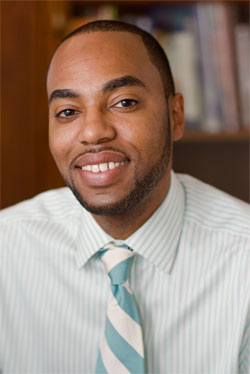
Christopher Emdin is a Professor of Science Education and Maxine Greene Chair for Distinguished Contributions to Education at Teachers College, Columbia University. He directs the STEAM, DREAM & IdeaLab initiatives. Emdin holds a B.S. in Physical Anthropology/Biology/Chemistry from Lehman College (2000), an M.S. in Natural Sciences from Rensselaer Polytechnic Institute (2003), and a Ph.D. in Urban Education from the CUNY Graduate Center (2007). His research focuses on urban STEM education , culturally responsive pedagogy , and Hip-Hop Education (HipHopEd) . Emdin has received prestigious awards including the Strage Prize (2011) and PDK International Outstanding Dissertation Award (2008) . He pioneered projects like the Science Genius B.A.T.T.L.E.S. , using rap battles to engage urban students in science. His work bridges theory and practice, emphasizing reality pedagogy and cosmopolitan ethics . Key contributions include over 50 publications on urban science education, equity, and hip-hop pedagogy. He is a leader in professional organizations such as NARST and AERA. Emdin’s grants include collaborations with NSF and Fund for Teachers, focusing on science agency and leadership in urban schools. His lab, IdeaLab , advances innovative teaching strategies rooted in youth culture.
Dr. Wim Biemans is an Associate Professor at the Faculty of Economics and Business of the University of Groningen, specializing in Innovation Management and Marketing. He holds a PhD from Eindhoven University of Technology (1989) and has over 25 years of experience in research, teaching, and consulting. His work focuses on service innovation, B2B marketing, customer involvement in innovation, and the marketing-sales interface. He has authored over 100 peer-reviewed articles and books, including the best-selling Dutch B2B marketing textbook. His research has been recognized with awards like the Thomas P. Hustad Best Paper Award. He serves as Triage Editor for the Journal of Product Innovation Management and editorial board member for Industrial Marketing Management and Journal of Business & Industrial Marketing. Biemans teaches at the University of Groningen and multiple international institutions, including guest professor roles in Europe, Asia, and the U.S. He also designs executive programs for managerial training in innovation management and customer value creation. His recent research explores humor’s impact on creativity, digital tools in sales-marketing integration, and bridging technology-to-product development gaps. He emphasizes end-to-end value creation through intra-organizational collaboration and has published on the Valley of Death ecosystem challenges in innovation commercialization.
Sergio Moreno Gil is a Professor in the Department of Economics and Business Management at Universidad de Las Palmas de Gran Canaria (ULPGC), Spain. He is affiliated with the GIR TIDES research group (Economy, Environment, Sustainability and Tourism) and the Institute of Tourism and Sustainable Economic Development. His academic work focuses on tourism economics, marketing, and sustainability within the Social and Legal Sciences branch. Dr. Moreno Gil's research interests span across multiple dimensions of contemporary tourism. His primary focus areas include sustainable tourism development, destination marketing, sharing economy platforms in tourism, and consumer behavior analysis. He has made significant contributions to understanding tourism in the Canary Islands, particularly through his work with the Canary Islands Tourism Observatory. His research integrates traditional tourism studies with emerging fields like neurotourism and biometric analysis of tourist experiences. His publication record shows a clear trend toward addressing contemporary challenges in tourism. Recent works focus on sustainability in mass tourism destinations, the impact of sharing economy platforms, gastronomic tourism marketing, and collaborative tourism networks. His research demonstrates a strong methodological diversity, employing bibliometric analysis, social network analysis, and empirical studies of tourist behavior. Dr. Moreno Gil has been actively involved in the Canary Islands Tourism Observatory, contributing to annual reports on tourism sustainability in the region. His collaborative work spans across the Ibero-American region, with numerous co-authorships reflecting international research networks in tourism studies.
Yang Zhou is an Associate Professor in the Department of Computer Science and Software Engineering at Auburn University, part of the Samuel Ginn College of Engineering. His research focuses on big data algorithms, machine learning, data mining, and distributed computing. He has contributed to advancements in federated learning frameworks, graph mining tools, and spatial machine learning for environmental applications like flood mapping. Education includes a Ph.D. in Computer Science from Georgia Tech (2021), M.E. in Computer Application Technology from Chongqing University (2016), and B.E. in Engineering from Jiangnan University (2014). His work emphasizes scalable algorithms for large-scale systems, with tools like DirDense for dense subgraph mining and FedASMU for federated learning optimization. Recent publications explore adversarial robustness, blockchain strategies in IoT, and curriculum-based learning for large language models. He advises on interdisciplinary projects at the intersection of AI and environmental science.
Pamela J. Hinds is the Rodney H. Adams Professor and Fortinet Founders Chair in Stanford University's School of Engineering, holding a joint appointment in the Department of Management Science and Engineering. She co-directs the Center on Work, Technology, and Organization and serves on the Director's Council for the Hasso Plattner Institute of Design. Her research focuses on technology's impact on teams, collaboration, and innovation in global and cross-cultural contexts. She earned her Ph.D. in Organizational Science and Management from Carnegie Mellon University (1997). Research Interests: Dr. Hinds explores cross-boundary work teams, particularly those spanning national borders, examining cultural dynamics, language barriers, and site visits' role in knowledge sharing. She investigates human-robot interaction in workplaces and emerging technologies' effects on work practices, including AI, 3D printing, and open innovation systems. Her work bridges organizational behavior, human-computer interaction, and global work dynamics. Awards & Recognition: Lasting Impact Award (2018) Senior Editor of Organization Science Co-editor of Distributed Work (MIT Press) Advising & Leadership: As department chair, Hinds shapes educational and research agendas. Her grants include NSF-funded studies on digital technologies in agriculture and crowd-based innovation. She advises initiatives at the intersection of technology, work design, and global collaboration. Labs & Teams: Co-leads the Center on Work, Technology, and Organization, fostering interdisciplinary research on modern work environments. Engages in Stanford's Design School (d.school) to integrate human-centered design principles into workplace innovation.
Vicente Talanquer is a University Distinguished Professor in the Department of Chemistry and Biochemistry at the University of Arizona, College of Science. His academic journey includes a B.S., M.A., and Ph.D. in Chemistry from the Universidad Nacional Autónoma de México (UNAM), followed by postdoctoral research at the University of Chicago's James Frank Institute. He has held various academic roles, including Professor and Associate Professor at UNAM before joining the University of Arizona in 2000. His research focuses on chemistry education, particularly student reasoning, assessment, and the development of chemical thinking. Key areas include understanding how students conceptualize chemical reactions, design learning progressions, and improve formative assessment strategies. He has led initiatives such as the Instructional-Teams Model to enhance teaching practices in STEM courses. Dr. Talanquer has received numerous awards, including the ACS Award for Achievement in Research (2021) and Arizona Professor of the Year (2015). He actively contributes to national and international educational committees, editorial boards, and professional societies such as the American Chemical Society and NARST. His work emphasizes curriculum innovation, teacher preparation, and fostering equity in science education. His research is supported by grants from the National Science Foundation and the UA Provost Investment Fund, focusing on active learning, large-enrollment course redesign, and systems thinking approaches. Talanquer's publications span over 200 peer-reviewed articles, textbooks, and educational resources in chemistry education, reflecting his commitment to advancing both research and practice in the field.
Shaker A. Zahra is a Professor of Strategy and Entrepreneurship at the Carlson School of Management, University of Minnesota , where he holds the Robert E. Buuck Chair of Entrepreneurship. He has served as Department Chair, Director of the Holmes Center for Entrepreneurship, and Academic Co-Director of Carlson Ventures Enterprises, and was Founding Co-Director of the Center for Integrative Leadership. Previously, he held the Paul T. Babson Distinguished Professorship at Babson College and faculty roles at Georgia State University and the University of Twente (Netherlands). Education : PhD in Business Administration (University of Mississippi), MBA (National University), B. Commerce (Al-Azhar University) His research focuses on corporate and international entrepreneurship , dynamic capabilities , and social entrepreneurship , particularly in technology-based industries. He explores industry emergence, strategic novelty, and firm heterogeneity, applying theories across global markets. His recent articles emphasize corporate entrepreneurship, international new ventures, and the role of dynamic capabilities in innovation. His work spans industries like robotics, software, pharmaceuticals, and nanotechnology, with studies in China, Brazil, India, and Europe. Scientific Awards : 2014 Global Award for Entrepreneurship Research, 5 Honorary PhDs, Fellowships from AOM, IFERA, and others, and over 20 Best Paper Awards. He has advised 75+ PhD students, taught across undergraduate to executive programs, and consulted for global technology firms. His leadership includes roles on 25+ journal editorial boards, organizing conferences, and delivering 40+ keynote speeches worldwide.
Sheila Jasanoff is the Pforzheimer Professor of Science and Technology Studies at the Harvard Kennedy School of Government, where she founded and directs the STS Program. Previously, she was the founding chair of the STS Department at Cornell University. She holds AB, JD, and PhD degrees from Harvard University, along with honorary doctorates from the Universities of Twente and Liège. Current Position: Pforzheimer Professor of Science and Technology Studies (2002-present) Previous Position: Professor of Science Policy and Law at Cornell University (1991-1998) Education: AB (Mathematics) from Radcliffe College, PhD (Linguistics) and JD from Harvard University Professor Jasanoff's research explores the role of science and technology in the law, politics, and policy of modern democracies, with particular attention to environmental and biotechnology regulation in Europe and the U.S. She is a pioneer in the field of Science and Technology Studies (STS), having authored over 130 articles and chapters and written or edited more than 15 books, including The Fifth Branch , Science at the Bar , Designs on Nature , The Ethics of Invention , and Can Science Make Sense of Life? Her recent scholarly work focuses on climate communication, genome editing ethics, and the integration of STS perspectives into engineering and public policy. Jasanoff's publications demonstrate a consistent engagement with how different societies conceptualize scientific knowledge and incorporate it into governance structures, with particular attention to sociotechnical imaginaries and civic epistemologies. Holberg Prize (2022), often dubbed the 'Nobel Prize for social science and humanities' SSRC's Hirschman Prize Humboldt Foundation's Reimar-Lüst Award Guggenheim Fellowship Ehrenkreuz from the Government of Austria Foreign memberships in the British Academy and the Royal Danish Academy Jasanoff has served on the AAAS Board of Directors and as President of the Society for Social Studies of Science. She is a member of the Council on Foreign Relations. Her sponsored projects include the Global Observatory on Genome Editing funded by the John Templeton Foundation and Belmont Forum Collaborative Research on Governance of Sociotechnical Transformations funded by the National Science Foundation. She has held distinguished visiting appointments at leading universities worldwide and serves on numerous scientific advisory boards including at the Holberg Foundation, National Academy of Sciences, and University of Cambridge.
Raffaella A. Del Sarto is a Full-time Professor holding a Joint Chair in Mediterranean Studies between the Department of Political and Social Sciences and the Robert Schuman Centre for Advanced Studies at the European University Institute (EUI). Previously, she served as Associate Professor of Middle East Studies at Johns Hopkins SAIS Europe and held an ERC-funded BORDERLANDS project at the EUI. She earned her PhD (summa cum laude) in International Relations from the Hebrew University of Jerusalem and a MA in Political Science from Albert-Ludwigs University in Freiburg, Germany. Her research focuses on Middle East-North Africa (MENA) international relations, Europe-MENA relations, regional order dynamics, and the Israeli-Palestinian conflict. Notable works include Borderlands: Europe and the Mediterranean Middle East (2021) and Israel under Siege (2017). She is fluent in English, German, French, Italian, Hebrew, and has intermediate knowledge of Arabic and Spanish. Her publications analyze regional alliances, EU foreign policy, and border governance, reflecting her expertise in qualitative methods and constructivist approaches. Awards include the Robert Schuman Distinguished Fellowship (2019-2020) and Italian habilitation as Full Professor (2019). She advises on topics linking Mediterranean IR with comparative frameworks, emphasizing conceptual innovation beyond 'exceptionalism' narratives. Her research projects include the MENARA initiative (2016-2021) on post-2011 Middle East transformations and the BORDERLANDS ERC project (2011-2017), exploring EU-MENA border dynamics.
Professor Nguyen Van Chinh is a distinguished scholar in anthropology at the University of Social Sciences and Humanities, Vietnam National University (VNU-USSH), specializing in the Department of Anthropology and Religious Studies. With a PhD from the University of Amsterdam and extensive international research experience including a postdoctoral fellowship at the National University of Singapore, he has established himself as a leading expert in Southeast Asian anthropology, migration studies, and ethnic relations. His academic career spanning over four decades includes numerous visiting professorships at prestigious institutions worldwide. Professor Chinh's research interests encompass Anthropology Research Methods , History of Anthropology , Migration and Poverty Studies , Ethnic Identity , and Cross-border Ethnic Groups in Southeast Asia. His scholarly work demonstrates a particular focus on the intersection of economic development, cultural preservation, and social transformation in Vietnamese and Southeast Asian contexts. Through extensive fieldwork and theoretical contributions, he has shaped contemporary understanding of ethnic minorities, migration patterns, and socio-economic changes in the region. His extensive publication record shows a clear evolution toward contemporary issues including China's growing influence in the Mekong region, ethnic Chinese migration, and the challenges of poverty reduction in Vietnam. The research demonstrates increasing engagement with transnational phenomena, border studies, and the impact of China's economic expansion on Southeast Asian societies. His most recent work addresses pressing contemporary issues such as disability rights, academic publishing challenges, and urban migration dynamics. Distinguished PhD dissertation awarded by NVMC (Netherlands Association of Social Sciences and Cultural Sciences), 2000 Certificate of Merit from the President of National University for outstanding achievements, 2007 Asian Leadership Fellow (ALFP) awarded by the Japan Foundation, 2004 Asian Public Intellectual Fellow (API) awarded by the Nippon Foundation, 2010 Multiple research grants from prestigious foundations including Toyota, Rockefeller, and Japan Foundation Professor Chinh has served as an independent consultant for numerous national and international development projects implemented in Vietnam. His advisory work spans multiple sectors including labor, health, agriculture, and ethnic minority affairs, working with organizations such as WHO, World Bank, Asian Development Bank, UNDP, DFID, IUCN, UNICEF, and UNESCO. His expertise in ethnographic research methods and understanding of Vietnamese society has made him a valuable resource for policy development and implementation across multiple domains.
Reade Davis is Associate Professor of Anthropology at Nipissing University's Faculty of Arts and Science, specializing in environmental anthropology and political economy. Research examines: Fisheries management and aquaculture conflicts Neoliberal impacts on small-scale fisheries Protected area conservation politics Risk construction and commodity chains Historical memory in Eastern North America Publications critically analyze marine conservation in Newfoundland, industrial aquaculture resistance, and the socioeconomic effects of gambling in rural communities. His work employs ethnographic methods to document how coastal communities navigate environmental policy changes and economic restructuring. Regional expertise covers Newfoundland and Labrador and Eastern Ontario. Education includes: PhD and MA, Memorial University BA(Hons) and BA, Queen's University
Dr. Jeewanie Jayasinghe Arachchige is a Lecturer in the Department of Computer Science at Vrije Universiteit Amsterdam, Faculty of Science. She teaches undergraduate courses including Bachelor Project Computer Science, Professional Development, and Software Engineering Processes for the academic year 2024–2025. Her research focuses on process mining , healthcare informatics , and data security . She applies process mining to analyze healthcare pathways and subpopulation treatment variations, develops explainable AI frameworks for predictive analytics, and examines data governance in emerging architectures like Data Lakehouses. Her work intersects legal informatics, particularly formalizing Sri Lankan civil court processes using ontology engineering. Recent publications highlight trends in balancing simplicity and complexity in process modeling, Industry 4.0 healthcare applications, and cybersecurity in model-driven web development. She has contributed to over 20 peer-reviewed articles since 2006, spanning topics from service-oriented architectures to value network analysis. Her teaching and research emphasize practical applications of IT in healthcare, legal systems, and enterprise environments. No ancillary activities are currently recorded.
Tina Dacin is a Professor of Strategy and Organizational Behavior at the Smith School of Business, Queen's University, Canada. She holds the Stephen J.R. Smith Chair and serves as Director of the Community Impact Research Program. Her roles include former Director of the Smith School’s Centre for Social Impact, former University Senate member, and former Chair of the Principal’s Innovation Fund Committee. She co-founded the Community of Social Innovation Chair and holds affiliations with the Academy of Management and Informs. Education: Ph.D. (1993) in Business Administration from the University of Toronto and M.A. in Psychology from the University of New Brunswick. Research focuses on cultural heritage, social innovation/entrepreneurship, strategic alliances, and globalization. Key themes include custodianship, tradition preservation, place-making, and institutional dynamics. Recent work explores craft-based ventures, place-sensitive organizational practices, and institutional renewal in crises like the Detroit water wars. Awards: None explicitly listed, though her chair position reflects academic distinction. Teaching includes courses on global social impact and analytics/ethics policy. Labs/Teams: Leadership in the Community Impact Research Program and the Scotiabank Centre for Customer Analytics.
Lance Freeman is the Penn Integrates Knowledge (PIK) Professor of City and Regional Planning and Sociology at the University of Pennsylvania's School of Arts & Sciences. His research focuses on neighborhood dynamics, gentrification, urban poverty, housing policy, and the interplay between the built environment and public health. He holds a Ph.D. in City and Regional Planning from the University of North Carolina at Chapel Hill (1997), an MRP in Regional Planning (1991), and a B.S. in Business Administration from SUNY Buffalo (1987). Prior to academia, he worked at Mathematica Policy Research and as a City Planner at the New York City Housing Authority. Freeman teaches courses on urban planning theory, quantitative methods, and community development at Columbia University and the University of Delaware. His research interests include understanding neighborhood change, leveraging social media and technology for urban analysis, and promoting equitable urban development. Key publications include There Goes the Hood: Views of Gentrification from the Ground Up (2006), A Haven and a Hell: The Ghetto in Black America (2019), and co-authored Planning and Control of Land Development (2020). He has contributed to debates on inclusionary zoning, racial equity planning, and the impacts of urban policies on marginalized communities. Freeman's work intersects urban sociology, policy analysis, and spatial demography. His recent studies explore gentrification migration patterns, the role of social media in neighborhood change, and historical segregation dynamics. He advocates for evidence-based planning to address urban inequality and spatial injustice.
Professor Arlene Holmes-Henderson is a Professor of Classics Education and Public Policy at Durham University, holding a British Academy Innovation Fellowship (2022-2024). She teaches on the Latin with Classics PGCE course in the School of Education and leads interdisciplinary research projects on oracy, Classics education, and policy engagement. Education: Studied Classics at Oxford, Harvard, and Cambridge. Qualified as a schoolteacher and taught for over a decade before returning to academia. Affiliations: Visiting Research Fellow at the Institute of Classical Studies (School of Advanced Study) and Affiliated Researcher at the Bennett Institute for Public Policy, University of Cambridge. Research Interests: Focuses on Classics education, oracy development, and the intersection of policy and the humanities. Key projects include Shy Bairns Get Nowt (oracy and employability) and Aristotle Beyond the Academy (reception of rhetoric in non-academic contexts). Co-directs the Advocating Classics Education project and chairs the Classics Development Group. Publications: Over 80 articles and books, including Expanding Classics (Routledge, 2023) and Forward with Classics (Bloomsbury, 2018). Recent work emphasizes policy engagement and levelling-up through oracy education. Awards: MBE (2023) for services to education Elected Member of Academia Europaea (2024) Grants and Roles: Chair of the Latin Expert Panel at the UK Department for Education Advisor to All-Party Parliamentary Groups on Classics, Oracy, and Political Literacy Member of the Universities Policy Engagement Network (Vice Chair) Labs and Collaborations: Directs Durham’s Centre for Classics Education Research and EngagementS (CERES). Collaborates with institutions like the AHRC, Leverhulme Trust, and Novus Education to bridge academia and policy.