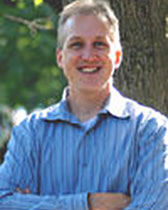
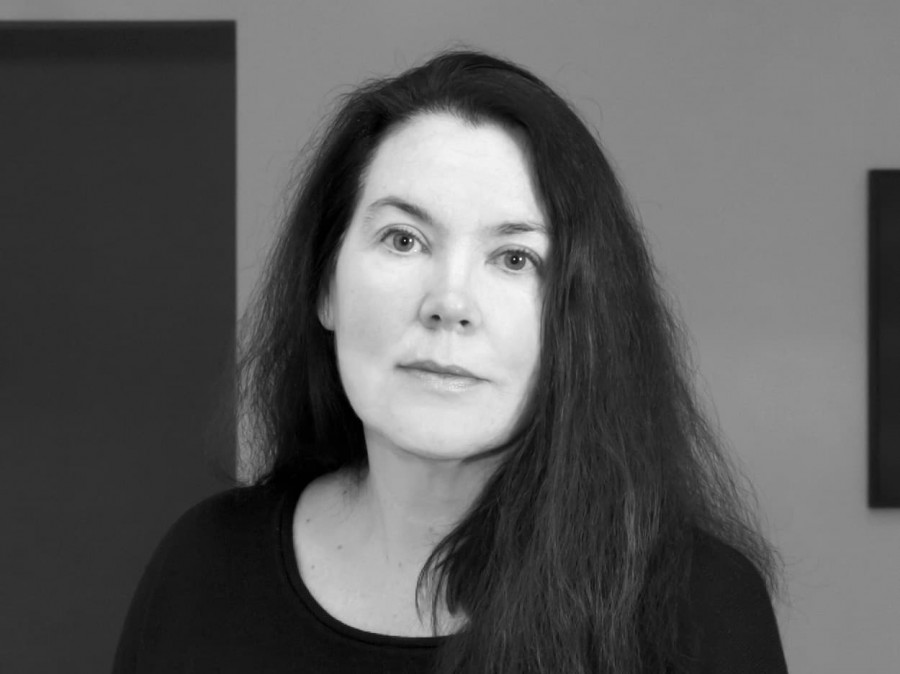
Mikaela Vasstrøm (b.1977) is an Associate Professor at the Department of Global Development and Planning, University of Agder. She holds a PhD from the University of Copenhagen and leads significant research projects including the Norwegian Research Council-funded WINDPLAN initiative, which analyzes social acceptance and governance challenges in onshore wind power development across Norway, Scotland, and Denmark. She co-leads work packages in the WINDREG project focusing on procedural justice and knowledge co-production for energy transitions. Her research examines: Just energy transitions and energy democracy Governance challenges in renewable energy deployment Public participation in environmental conflicts Local/regional development implications of energy policies She co-directs UiA's participation in the Empowered Futures research school, developing PhD-level expertise in energy policy frameworks. Publications focus on wind energy governance, policy legitimacy, and spatial planning conflicts, with consistent themes of: Energy justice in policy design Local government capacity in energy transitions Participatory approaches in sustainability planning Research group affiliations include: Energy and Society Urban and Regional Planning (URPLAN)
Kevin Chenchuan Chang is a Professor in the Department of Computer Science at the University of Illinois at Urbana-Champaign (UIUC), affiliated with the FORWARD Data Lab and the Data and Information Systems Laboratories. His research focuses on bridging structured and unstructured data through natural language processing, data mining, machine learning, and information retrieval, with applications in web search, social media analytics, and knowledge acquisition. He co-founded Cazoodle and developed GrantForward.com, a funding discovery platform used by leading institutions globally. Education: Ph.D. in Electrical Engineering from Stanford University (2001), B.S. from National Taiwan University. Professional roles include service on program committees for SIGMOD, VLDB, KDD, and NeurIPS, as well as editorial roles for PVLDB, TKDE, and the Encyclopedia of Database Systems. His awards include the ICDE 10-Year Test of Time Award (2022), NSF CAREER Award (2002), and multiple UIUC teaching excellence recognitions. He teaches courses such as CS 411 (Database Systems), CS 598 KCC (Understanding LLMs), and CS 511 (Advanced Data Management). Research contributions span graph algorithms (e.g., Geom-GCN, SimRank), social network analysis (ROSE), and NLP (DEER, Open Relation Modeling). The FORWARD Lab emphasizes real-world impact through systems like GrantForward and tools for analyzing large-scale data.
James Mahoney is the Gordon Fulcher Professor of Decision-Making, Professor of Sociology, and Professor of Political Science at Northwestern University. His work focuses on comparative-historical analysis, political development in Latin America, and methodological innovations in social sciences. He has authored and edited influential books such as Advances in Comparative-Historical Analysis (2015) and A Tale of Two Cultures: Qualitative and Quantitative Research in the Social Sciences (2012). Mahoney has held leadership roles including President of the Qualitative and Multi-Method Research Section at APSA and Chair of Sociology at Northwestern. His research has received multiple awards from ASA and APSA for methodological contributions and his book Colonialism and Postcolonial Development earned six major awards. His teaching includes courses like Comparative Historical Analysis and Global Development . Mahoney advocates for methodological pluralism, emphasizing integration of qualitative and quantitative approaches. His recent work examines historical institutionalism, Latin American political trajectories, and causal mechanisms in social science explanations. He has also contributed to debates on process tracing and set-theoretic methods in comparative research. Key areas of study include colonial legacies, state formation, and constitutional evolution in Latin America. Mahoney’s interdisciplinary approach bridges sociology, political science, and historical analysis, producing foundational texts for graduate and undergraduate education in social sciences.
Carlos Toxtli is an Assistant Professor at Clemson University where he leads the Human-AI Empowerment Lab. His research applies Human-Centered AI to create fair workplace tools, focusing on NLP, computer vision, and crowdsourcing ethics. He holds a PhD in Computer Science from Northeastern University and previously worked at Google, Microsoft Research, and Snap Inc. Education: Ph.D. Computer Science, Northeastern University M.S. Innovation & Technological Entrepreneurship, Monterrey Institute of Technology MBA, IEDE Business School B.S. Computer Science, University of the Valley of Mexico B.S. Computer Engineering, National Autonomous University of Mexico Research Focus: Dr. Toxtli develops AI systems promoting workplace fairness through ethical frameworks. His work spans: 1) Human-AI collaboration for task management, 2) Bias mitigation in gig economies, 3) Multimodal interfaces for accessibility, and 4) Culturally adaptive systems. His lab explores how AI can augment human capabilities while ensuring transparency. Publication Trends: Recent works demonstrate strong focus on LLM reliability (7 papers), human-AI teaming (4 studies), and ethical AI frameworks (3 publications). Over 60% of 2024-2025 output addresses real-world deployment challenges. Awards: UNESCO IRCAI Global Top 100 project Google Apps Developer Challenge 1st Place Facebook Developers World Hack 1st Prize Intel Innovation Latin App 1st Prize NSF STIR Labs Research Grant Leadership: Founded the Human-AI Empowerment Lab securing $1.2M in NSF/industry grants. Supervises 8 PhD students in human-centered computing projects. Previously co-founded 5 tech startups including ComproPago (acquired by Coca-Cola FEMSA).
Professor Nick Paul is a marine scientist at the University of the Sunshine Coast (UniSC), leading applied research in seaweed and algae for sustainable product development. He holds a PhD and BSc (Hons) from UNSW and a Graduate Certificate in Tertiary Education Management from the University of Melbourne. His work focuses on seaweed aquaculture innovations, including waste-to-resource biotechnology, functional foods, and environmental remediation. He leads international projects funded by organizations like ACIAR, CSIRO, and Advance Queensland. Research interests include seaweed-based solutions for livestock health, wastewater treatment, and sustainable aquaculture expansion near the Great Barrier Reef. He has pioneered commercial land-based seaweed farming and developed intellectual property in this field. Awards include the 2015 UNAA World Environment Day Award for Sustainable Water Management and the 2015 Queensland Water Innovation Forum Best Paper. He serves on the Asian Fisheries Society Council and Fiji’s National Seaweed Taskforce. Key publications span seaweed cultivation methods, marine genomics, and socio-economic impacts of aquaculture in the Pacific. Grants total over A$3.7 million for projects like diversifying Pacific Island seaweed industries and improving Indonesian seaweed production.
Dr. Andrea Grover is an Associate Professor in the Department of Information Systems and Quantitative Analysis at the University of Nebraska Omaha’s College of Information Science & Technology. Her research focuses on citizen science, technology design, and collaboration systems in data-intensive environments. She holds a Ph.D. in Information Science & Technology from Syracuse University, an MS in Information from the University of Michigan, and a BA in Mathematics from Alma College. Her research interests include organizational impacts of technology, open collaboration frameworks, and ethics in information systems. She teaches courses on management and IT ethics, employing ungrading techniques to enhance student engagement. Notable contributions include work on citizen science data quality, cyber-security tools leveraging crowdsourcing, and barriers in STEM education equity. Dr. Grover has been recognized with the 2022 Rising Star Distinguished Ecologist award and serves on editorial boards (e.g., Frontiers in Ecology) and conference committees (e.g., ACM CSCW DEI Co-chair). She has secured grants such as the NSF-funded “Streamlining Embedded Assessment to Understand Citizen Scientists' Skill Gains” (2017–2019) and contributed to media discussions on citizen science via National Public Radio. Her recent publications explore hybrid human-AI tools, agile citizen science methodologies, and systemic barriers in education. She actively participates in interdisciplinary initiatives, bridging technology, ecology, and social sciences to advance participatory research practices.
Michael C. Hughes ("Mike") is an Assistant Professor in the Department of Computer Science at Tufts University's School of Engineering, where he develops statistical machine learning methods for healthcare applications. His work focuses on building predictive models that extract actionable insights from complex clinical data, including electronic health records and medical imaging. PhD, Computer Science, Brown University (2016) MS, Computer Science, Brown University (2012) BS, Computer Science, Franklin W. Olin College of Engineering (2010) Research interests center on: Bayesian hierarchical models for documents, sequences, and medical images Optimization algorithms for approximate inference Model fairness and interpretability in clinical contexts Semi-supervised learning for medical diagnostics Recent publications demonstrate these capabilities through applications in cardiovascular disease diagnosis, opioid overdose forecasting, and ICU risk prediction. His lab emphasizes reproducibility through open datasets like TMED-2 and open-source tools like BNPy. Grants include NIH R01 funding for heart valve disease detection, NSF CAREER support for model interpretability, and NSF GCR funding for educational uncertainty research. Scientific awards include: NIH R01 Award (PI) for heart valve disease detection (2025) NSF CAREER Award (2024) NSF GCR Grant (2024) Best Poster Award at Time Series Workshop (ICML 2021) Top 10% Reviewer Awards at AISTATS (2023, 2022) Teaching activities include courses on Bayesian Deep Learning, Introduction to Machine Learning, and Statistical Pattern Recognition. He previously served as postdoctoral fellow at Harvard SEAS.
Kathy Fontaine serves as Senior Lecturer in Information Technology and Web Science at Rensselaer Polytechnic Institute and Program Manager for the RPI-IBM AI Research Collaboration. She joined RPI in 2014 after 25 years at NASA Goddard Space Flight Center where she developed international data access policies through CEOS WGISS, GEO, and USGEO. Her educational background includes: B.S. in Physics with Astrophysics Option from New Mexico Institute of Mining and Technology (1984) M.A. in Science, Technology and Public Policy from The George Washington University (2002) Ph.D. in Public Policy and Public Administration from Walden University (2013) Dr. Fontaine's research integrates data science policy with ethical frameworks, focusing on international data sharing cultures and volunteer organization dynamics. She develops courses like Big Data Policy and Ethical Informatics that address data scientists' societal responsibilities. Her work examines how policy implementations affect global earth observation systems and research data ecosystems, with particular attention to cross-cultural collaboration challenges in scientific consortia. Analysis of her publications reveals strong interdisciplinary connections between earth sciences and computer science, with emerging trends in data dexterity training, knowledge graph applications for social equity, and mineral inventory data legacies. Her research increasingly bridges technical data infrastructure with ethical considerations in data sharing. Dr. Fontaine actively contributes to scientific communities through the Earth Science Information Partners (ESIP), where she serves on GEO's Programme Board, and maintains affiliations with AGU, ACM Web Science, IEEE GRSS, and IEEE SSIT. Her current leadership in the RPI-IBM AI Research Collaboration extends her mission to develop responsible AI frameworks.
Dr Crispin Branfoot is a Reader in the History of South Asian Art and Archaeology at SOAS University of London, affiliated with the School of Arts and the Department of History of Art and Archaeology. He holds a BA in Ancient History and Archaeology from Manchester University, and an MA and PhD in Art and Archaeology from SOAS. His research focuses on the arts of southern India from the 14th to 20th centuries, with emphasis on Hindu temple architecture, colonial-era renovations, and the intersection of photography, archaeology, and conservation. He has supervised four PhD students examining topics ranging from temple iconography to colonial paper-making practices. His work explores how sacred spaces like the Minakshi-Sundareshvara temple in Madurai were reconfigured through colonial and post-colonial interventions, while also analyzing pilgrimage routes, portraiture traditions, and the legacy of the Vijayanagara Empire. He has contributed to major publications such as India: A History in Objects (2022), and his research bridges material culture studies with postcolonial theory. He previously worked at De Montfort University and the British Museum, where he gained expertise in South Asian art curation and historical documentation.
Besiki Stvilia is a Professor in the School of Information at Florida State University's College of Communication and Information. He holds a Ph.D. and M.S. in Library and Information Science from the University of Illinois at Urbana-Champaign, along with an M.S. in Applied Mathematics from Tbilisi State University. His research focuses on data quality assurance, digital curation, social informatics, and knowledge organization. He has led projects on research data management, metadata frameworks, and collaborative data practices in scientific communities. Stvilia has taught courses including LIS 6205 (Information Behavior), LIS 5263 (Information Retrieval Theory), and LIS 5787 (Metadata Practices). His funded research includes grants on data quality infrastructure for repositories, researcher identity curation, and mobile wellness application behavior studies. His work emphasizes bridging theoretical models with practical applications in digital libraries and academic systems. His research spans topics like GenAI credibility assessment, ontology development for data repositories, and user engagement with social Q&A platforms. He has advised multiple collaborative projects involving interdisciplinary teams and has published extensively in journals like Journal of Documentation and Information Processing & Management .
Christina Niklaus is an Assistant Professor in the Department of Computer Science at the University of St. Gallen (HSG). Her research focuses on Natural Language Processing (NLP), Artificial Intelligence (AI), and Computational Argumentation, with an emphasis on text simplification, knowledge representation, and responsible AI. She leads the project 'Conversational AI: Dialogue-based Adaptive Argumentative Writing Support' funded by SNSF Basic Research (2022–2026). Education : Ph.D. in Computer Science, University of Passau, Germany (2022) M.Sc. in Computer Science, University of Passau, Germany (2016) B.Sc. in Applied Computer Science, University of Bamberg, Germany (2011) Research Interests : Christina Niklaus develops AI systems to bridge complex information with human understanding, emphasizing accessibility and ethical integrity. Her work includes: Context-aware NLP systems for simplifying technical texts Computational tools for enhancing argumentation skills in academic writing Open Information Extraction (OIE) for structured knowledge representation Responsible AI frameworks ensuring fairness and transparency Recent Article Trends : Her recent work explores large language models (LLMs) in education, discourse-aware text simplification, and argument quality assessment. Key contributions include applying FinBERT for financial text analysis and developing adaptive writing support systems. Awards : Best Paper Award (ECEI 2024) Best Paper Nomination (CSEDU 2023) Nominated for GI-Dissertationspreis (2022) delina Innovation Award (2021) Teaching & Grants : Teaches Database Systems and Advanced Databases at HSG Principal investigator of multiple grants including SNSF Basic Research Labs/Teams : Her research group focuses on interdisciplinary AI applications in education and argumentation, collaborating with institutions like LEARNTEC and CHI.
Dr. Laura Mae Jacqueline Herzog is a postdoctoral researcher at the University of Osnabrück, affiliated with the Institute of Geography and the Research Center Institute of Environmental Systems Research. She serves as representative of mid-level faculty staff in the faculty council of Department 1 Cultural and Social Sciences for the term 2024-2026 and is a member of the working group Resource Management. Dr. Herzog received her PhD from the University of Bern, where she worked as a research assistant at the Chair of Policy Analysis and Environmental Governance. Prior to that, she completed her diploma in political science at the Otto-Suhr-Institut (OSI), Free University of Berlin, focusing on common-pool resource problems and environmental conflicts. Her research focuses on transformation pathways towards sustainable interactions between humans and nature in social-ecological systems, with particular emphasis on aquatic ecosystems. She works predominantly inter- and transdisciplinarily, examining sustainable land, water and open space management, participatory processes and co-creation, transformation processes and capacities, and environmental governance. Her methodological approaches include participatory modeling, interviews & surveys, comparative case study analysis, causal loop diagrams, and Social Network Analysis. Dr. Herzog's publications reveal a consistent focus on water resource management, social-ecological systems, and governance of common-pool resources. Her work spans from micro-pollutant regulation in the Rhine River to transformation processes in peatland use and digitalization in water management. She has developed expertise in analyzing cooperation networks, stakeholder engagement, and the emergence of collaborative governance structures in environmental management contexts. Member of the 3rd cohort of the PostDoc Academy for Transformational Leadership of the Robert Bosch Foundation (2020-2022) Founding member of the Working Group on Governance of Social-Ecological Systems of the Earth System Governance network Dr. Herzog actively engages with stakeholders and the public through her work on the Future Water Laboratory, MOOSland project, and LimnoScenES project. She has served on scientific advisory boards for research projects including BaltAqua and "Participatory visioning for collective action in natural resource management." Her commitment to climate action is evident through her involvement with Scientists4Future in Osnabrück. As part of her research on peatlands, Dr. Herzog works with regional stakeholders to investigate transformation processes toward rewetted peatlands and facilitates knowledge transfer of project findings into teaching materials and exhibition modules. She also conducts research on digital applications for sustainable water use within the Future Water Laboratory.
Christopher Piech is an Assistant Professor (Teaching) in the Department of Computer Science at Stanford University, with a courtesy appointment in the Graduate School of Education. He serves as a Faculty Affiliate at the Institute for Human-Centered Artificial Intelligence (HAI) and is affiliated with the Symbolic Systems Program. Current courses: AI for Social Good (CS 21SI), Introduction to Probability for Computer Scientists (CS 109), Researching Presenting and Publishing Work in AI & Education (CS 220/EDUC 481) Advises 11 Master's students and co-advises 3 Doctoral students His research focuses on computational education, leveraging artificial intelligence to enhance learning analytics, student collaboration detection, and knowledge tracing in programming education. Publications span ACM Technical Symposium on Computer Science Education (SIGCSE) and NeurIPS conferences. Key article trends include: (1) AI-driven educational tools for code analysis, (2) collaboration monitoring in large classes, and (3) probabilistic models for student learning trajectories.
Glen Searle is an Associate Professor at the Faculty of Architecture, Design and Planning at The University of Sydney, specializing in urban planning and metropolitan governance. His academic career demonstrates a strong focus on strategic planning, infrastructure governance, and urban policy development, particularly within the Australian context. Professor Searle's research interests span urban planning, strategic planning, metropolitan governance, infrastructure governance, land use planning, urban sustainability, and city development. His work critically examines planning systems, governance structures, and policy implementation challenges in metropolitan areas, with particular attention to Sydney's urban development strategies and infrastructure projects. He has made significant contributions to understanding the complexities of metropolitan governance, the public interest in mega infrastructure planning, and the challenges of population growth management. Analysis of Professor Searle's recent publications reveals a consistent focus on governance frameworks for urban infrastructure, metropolitan strategic planning, and the intersection of planning policy with population dynamics. His work demonstrates a methodological diversity, employing systematic literature reviews, case studies, and network analysis to examine urban phenomena. A notable trend is his increasing focus on infrastructure governance, particularly how governance structures respond to crises and changing urban conditions. His research bridges theoretical planning concepts with practical policy applications, often drawing on Australian case studies while connecting to international planning discourse. Professor Searle has secured significant research funding, including the 2020 Infrastructure Governance Incubator grant from The Henry Halloran Trust and the 2019 Population Growth and Regional Connectivity research grant from the Australian Housing and Urban Research Institute. His collaborative approach is evident in his extensive co-authorship patterns across multiple institutions and disciplines. His scholarly contributions include numerous journal articles in leading planning and urban studies publications, book chapters, and edited volumes such as Global Planning Innovations for Urban Sustainability (2019). Professor Searle's work has appeared in high-impact journals including Urban Studies , Journal of Planning Literature , Urban Policy and Research , and Planning Theory and Practice .
Brigid Doherty is Associate Professor jointly appointed in German and Art & Archaeology at Princeton University. She directs the Program in European Cultural Studies and serves on executive committees for Media + Modernity and international teaching initiatives. Her scholarship examines 20th-century German modernism through interdisciplinary approaches connecting art, literature, and psychoanalytic theory. Her research investigates relationships between aesthetic objects and psychological phenomena, with projects on Rainer Maria Rilke's writings, Rosemarie Trockel's artworks, and theories of projective identification. Current work includes a monograph on Trockel's Rorschach Pictures and a book project 'Homesickness for Things' exploring fantasies of return in German modernism. Professor Doherty has held fellowships at Radcliffe Institute, Courtauld Institute, and Zentrum für Literaturforschung. She participated in Manifesta 7 with her exhibition 'Learning Things' and received Princeton's President's Award for Distinguished Teaching in 2019. Her co-edited volume on Walter Benjamin's media writings is widely used in humanities curricula.