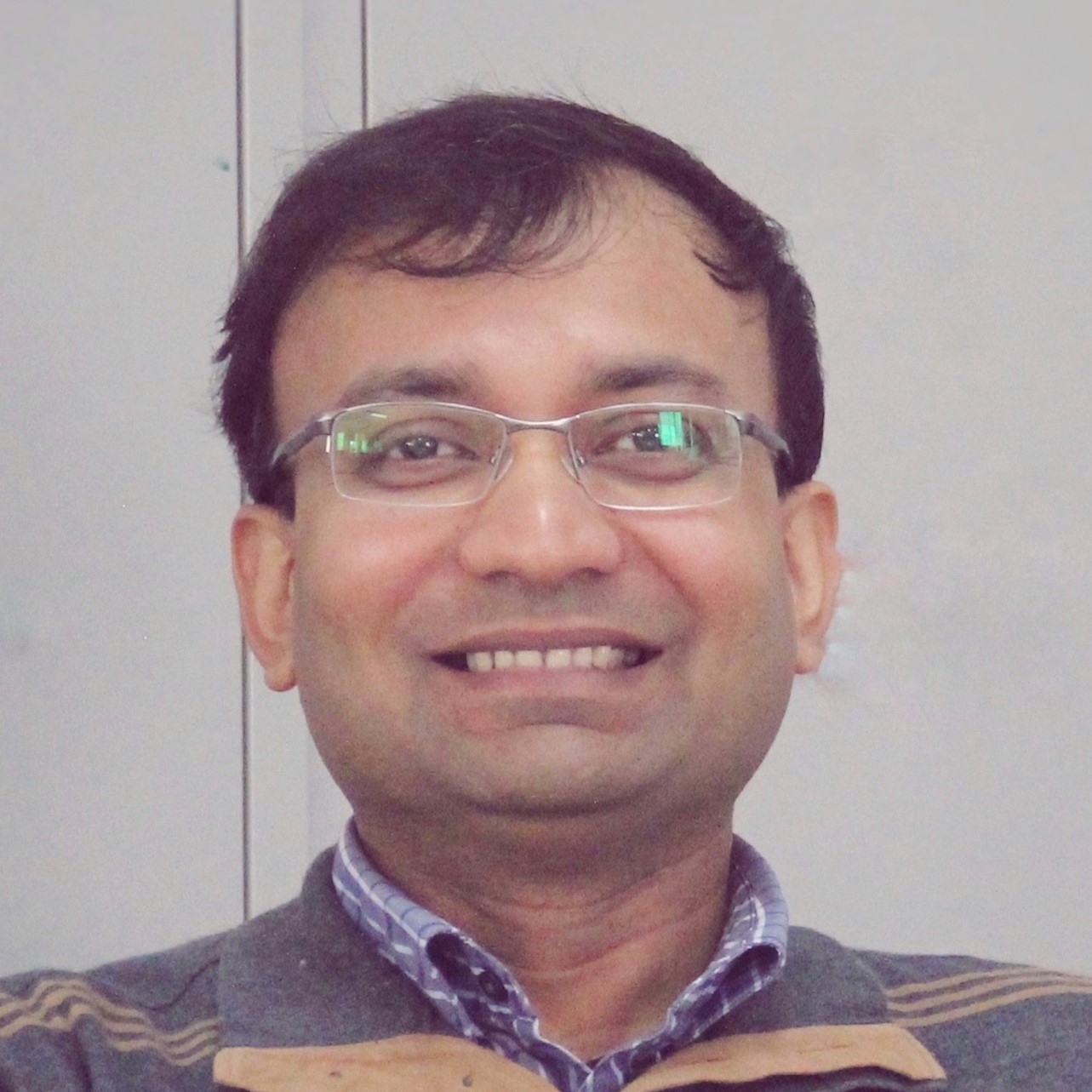
Professor Ashok Jashapara is a leading academic at Royal Holloway, University of London, affiliated with the School of Business and Management and Department of Information and Operations Management. As an internationally recognized expert in knowledge management, his work bridges artificial intelligence, business strategy, and healthcare systems with over £1m in research funding (ESRC, EU, NIHR, UN). Director of Teaching and Learning, School of Business & Management Principal Fellow, Higher Education Academy (first at Royal Holloway) TEF National Committee Appointments (2016-2018) His research spans three decades with recent focus on AI ethics, digital transformation, and knowledge mobilisation. Current projects examine authenticity dilemmas in information systems strategy and advanced data analytics teaching methods using no-code platforms. 2015-2024: Keynote speaker at 17th IADIS Conference, Big Data London, Alteryx Inspire Visiting Professor: ESADE (Spain), SPJIMR (India) External Examiner: University of Limerick (2022-2026) Scientific awards include Principal Fellowship (2015), TEF panel membership (2018), and multiple fellowships from Chartered Institute of Building (1992) and Institution of Civil Engineers (1984). Professor Jashapara has supervised nine PhD students to completion and contributed to global curriculum development through 55+ research outputs, 16 journal articles, and 10 case studies that apply theory to real-world problems.
Markus Puschenreiter serves as Associate Professor at the Institute of Soil Research within the Department of Natural Sciences and Sustainable Resources at the University of Natural Resources and Life Sciences, Vienna (BOKU). His research program integrates soil science, plant physiology, and analytical chemistry to develop sustainable remediation strategies for contaminated environments. His scientific focus encompasses: Phytomining of valuable metals using hyperaccumulator plants Rhizosphere biogeochemistry of trace element mobilization Advanced analytical techniques for root exudate characterization Silicon cycling in agricultural systems Development of decision support tools for contaminated land management Recent publication trends reveal a strategic shift toward high-resolution analytical approaches, particularly dual-column chromatography coupled with mass spectrometry, enabling unprecedented insights into plant chemical communication and metal-biomolecule interactions in the rhizosphere. His work bridges fundamental rhizosphere science with practical applications in circular economy initiatives. Dr. Puschenreiter's scientific recognition includes the APA OTS press release award (2004) and the venia docendi for soil ecology (2011). His research program has secured substantial funding from Austrian Science Fund (FWF), European Commission, and Austrian Research Promotion Agency (FFG) for projects including 'Mobilisation of Nickel by hyperaccumulating plants' and 'LooPi - the self-sufficient unisex plant-based urinal.' He actively supervises graduate theses while maintaining extensive collaborations across BOKU's interdisciplinary network, particularly with Institutes of Analytical Chemistry, Sanitary Engineering, and Zoology. His knowledge transfer activities include media engagements on phytomining applications and sustainable soil management solutions for contaminated sites.
Deana Leahy is an Associate Professor in the School of Education Culture & Society at Monash University, Australia. Her research critically examines health education from policy formations to classroom implementations, with interdisciplinary approaches spanning schools, museums, festivals, and digital platforms. She actively leads funded projects transforming health education and serves on editorial boards for Health Education Journal and Health Education. Her research centers on critical health education studies, emphasizing transformative models, policy analysis, and co-design methodologies. She investigates intersections between education and health systems, focusing on participatory approaches to develop solutions for nutrition, substance use, mental health, and sexual health education. Her work consistently challenges conventional health promotion frameworks while exploring social dimensions of wellbeing through food studies, identity, and inclusion. Recent publications demonstrate concentrated expertise in health education interventions, with recurring themes in sexual/reproductive health, food systems, and risk representation. Her scholarship employs mixed-methods designs to analyze policy translations and implementation challenges, increasingly incorporating co-design principles to amplify community voices in health solution development. Award highlights include: Dean's Award for Outstanding Contribution to Student Learning (2015) Dean's Award for Early Career Researcher (2016) WHO NCD Lab recognition for co-design tool-kit (2020) Vice Chancellor's Award for Community Education (2023) Leahy directs major projects including the National School Drug Education Principles review (NSW Health), Making the Link digital mental health platform, and Seeing through the Haze vaping resources (QUIT/VicHealth). She supervises PhD candidates and provides leadership through CHESS (Critical Health Education Studies), the EERA Research Network 8, and UNESCO Chair for Global Health and Education Scientific Committee, while co-editing the Routledge Critical Studies of Health and Education series.
Dr Shiva Ji is Associate Professor of Design at Indian Institute of Technology Hyderabad, with affiliate appointments in the Department of Climate Change (GreenKo School of Sustainability) and Department of Heritage Science & Technology. He also serves as Head of Design and Principal Investigator of the Design for Sustainability Lab and Digital Heritage Lab. Education PhD in Design, IIT Guwahati (2015-2020) – MHRD Design Innovation Center Fellow Master of Design (PGDPD), National Institute of Design, Ahmedabad (2005-2007) Bachelor of Architecture, Government College of Architecture (now FoA, APJAKTU), Lucknow (1999-2004) MBA, Indira Gandhi National Open University (2011) Certificate Course in Sustainability in Practice, University of Pennsylvania (2014) Professional Certificate in Environment & Sustainable Development, CEPT University (2011) Research Interests Dr Ji’s work converges architecture, sustainability, and digital technologies . His major thrust areas include Design for Sustainability integrating Life-Cycle Assessment (LCA) and system-design thinking, Digital Heritage using AR/VR/MR for architectural documentation and immersive reconstruction, and Climate-Responsive Design Innovation addressing micro-habitation, urban sprawl, and sustainability in the face of climate change. He also investigates vernacular and bio-architecture , leveraging indigenous knowledge for contemporary sustainable solutions, and explores industrial/product design for new-age services and circular-economy products. Publication Trends Since 2016 he has authored 25+ peer-reviewed works spanning urban analytics, digital heritage, sustainable architecture, and socio-cultural studies . Recent publications emphasize data-driven heritage documentation (photogrammetry, space-syntax, visibility graphs) and environmental performance evaluation of built environments, highlighting an interdisciplinary blend of design, computation, and sustainability science. Scientific Awards & Recognition 3rd Winner – Click! Japan Photo Contest 2020 (Embassy of Japan & Japan Foundation) JICA Travel Grant for Japan Universities visit Ford Foundation Scholarship NID Scholarship MHRD Design Innovation Center Fellowship All-India Rank 36 – CEED 2005 NASA Design Competition Citation 2002 Student Supervision & Funding Currently supervising 5 ongoing PhD and 4 ongoing Master’s students, with 14 Masters theses/dissertations already completed. He is Principal Investigator on DST-Govt. of India funded project and India partner for EU LeNSin project (Politecnico di Milano), mobilising international collaborations on sustainable product-service systems. Laboratories & Teams Dr Ji leads two flagship labs: • Design for Sustainability Lab – focuses on LCA, circular design, and strategic sustainable solutions for local to global challenges. • Digital Heritage Lab – pioneers AR/VR/MR applications for immersive heritage visualization and digital twins of architectural assets. Each lab runs multiple sponsored projects with interdisciplinary student teams, industry partners, and international collaborators.
Jon Roberts is a part-time Professor of Health Protection at the University of the West of England, Bristol, within the School of Health and Social Wellbeing, concurrently serving as a part-time Consultant in Health Protection for the UK Health Security Agency and collaborating with the Bristol Health Impact Team for Vaccination. His educational background includes: BSc (Hons) in Biological Sciences and Molecular Biology MPH (Master of Public Health) PhD Roberts completed the Specialty Registrar Training Programme in the South West with NHS England. His research focuses on operational research applied to Health Protection, with core expertise in outbreak investigation, vaccine preventable diseases, and knowledge mobilisation for public health practice. He actively promotes teaching and learning frameworks across health protection organisations. His professional distinctions include: Fellow of the Royal Society for Public Health (FRSPH) Fellow of the Faculty of Public Health (FFPH) Registration with the UK Public Health Register No specific student advising or research grant details were provided in source materials. His operational work integrates closely with UK Health Security Agency protocols and Bristol Health Impact Team vaccination initiatives through applied public health research.
Gwenaëlle Callemein is a legal historian and Lecturer (Maître de Conférences) in History of Law and Institutions at Université Côte d’Azur, Faculty of Law and Political Science. She teaches historical training in law, family law, obligations, contracts and enforcement, legal knowledge and digital humanities from Licence 1 to Master 2 level, and pursues prolific research on the history of criminal law, justice, penal doctrines and Norman customary law. Education and academic duties: Lecturer, section 03, Université Côte d’Azur (current) Teaches: Historical training in law (L1), History of Family Law (L2), History of the law of obligations (L2), History of contracts and enforcement methods (M1), History of legal knowledge (M2 HDCP), Introduction to Digital Humanities (M2 HDCP) Research interests: Her work straddles the history of criminal justice, the evolution of penal doctrines, the cultural place of poison in the 18th century, the persistence of Norman customary law, and the environmental regulation of rural areas in southern Europe. She mobilises archival judicial series to reconstruct how legal norms were produced, interpreted and contested from the medieval period to the 20th century. Publication trends: Over the last decade Callemein has produced a major monograph on poison trials before the royal courts (2021), edited volumes on incest, Norman custom and rural environmental norms, and a series of articles that together illuminate the intersection of criminal law, gender, regional custom and environmental governance. Her writing increasingly integrates digital humanities approaches and collaborative international projects. Scientific awards: No specific prizes or fellowships are recorded in the supplied documents. Doctoral supervision and grants: She has served on doctoral organising committees (ERMES JED 2013, 2014) and is currently supervising or co-supervising several PhD projects in legal history, although individual student names are not listed in the sources provided. No personal research grants are explicitly mentioned. Laboratory and teams: She is an active member of the ERMES laboratory (Université Côte d’Azur) and regularly co-organises study days and conferences with colleagues from Rouen, Montpellier, Perpignan and international partners.
Dr Jennifer Dvorak serves as Senior Lecturer in Law at Canterbury Christ Church University, holding dual administrative roles as Associate Dean for Research, Enterprise & Knowledge Mobilisation Capacity (School of Business, Law & Policing) and Deputy Director of Research, Enterprise and Postgraduate Studies (School of Law, Policing & Social Sciences). She teaches across LLB, LLM, Sociology, and Applied Criminology degree programmes while leading postgraduate research supervision. Her academic credentials include: BA (Hons) from University of Bath (UK) MA from The Ohio State University (US) PhD from University of Alberta (Canada) Dvorak's research critically examines intersections of law, ethics, crime and society through sociological and criminological lenses. She specializes in bioethical controversies surrounding beginning/end-of-life interventions (abortion, assisted suicide, euthanasia) and sport-related ethical dilemmas including violence, concussions, and bodily integrity. Her work bridges socio-legal theory with practical ethical challenges in medical and athletic contexts, emphasizing medicalization processes and biopolitical governance. Her award-winning 2020 publication on boxing exemplifies her focus on corporeal politics within sports ethics, demonstrating how athletic practices become sites for negotiating societal norms and legal boundaries. This work established her reputation in critical criminology and bioethics scholarship. Scientific recognition includes: Theoretical Criminology’s Best Article Award (2020) Dvorak actively mentors doctoral candidates in bioethics, law-society relations, and socio-legal sport studies while directing postgraduate research initiatives. Her leadership in research enterprise development shapes institutional knowledge mobilization strategies across legal and social science disciplines.