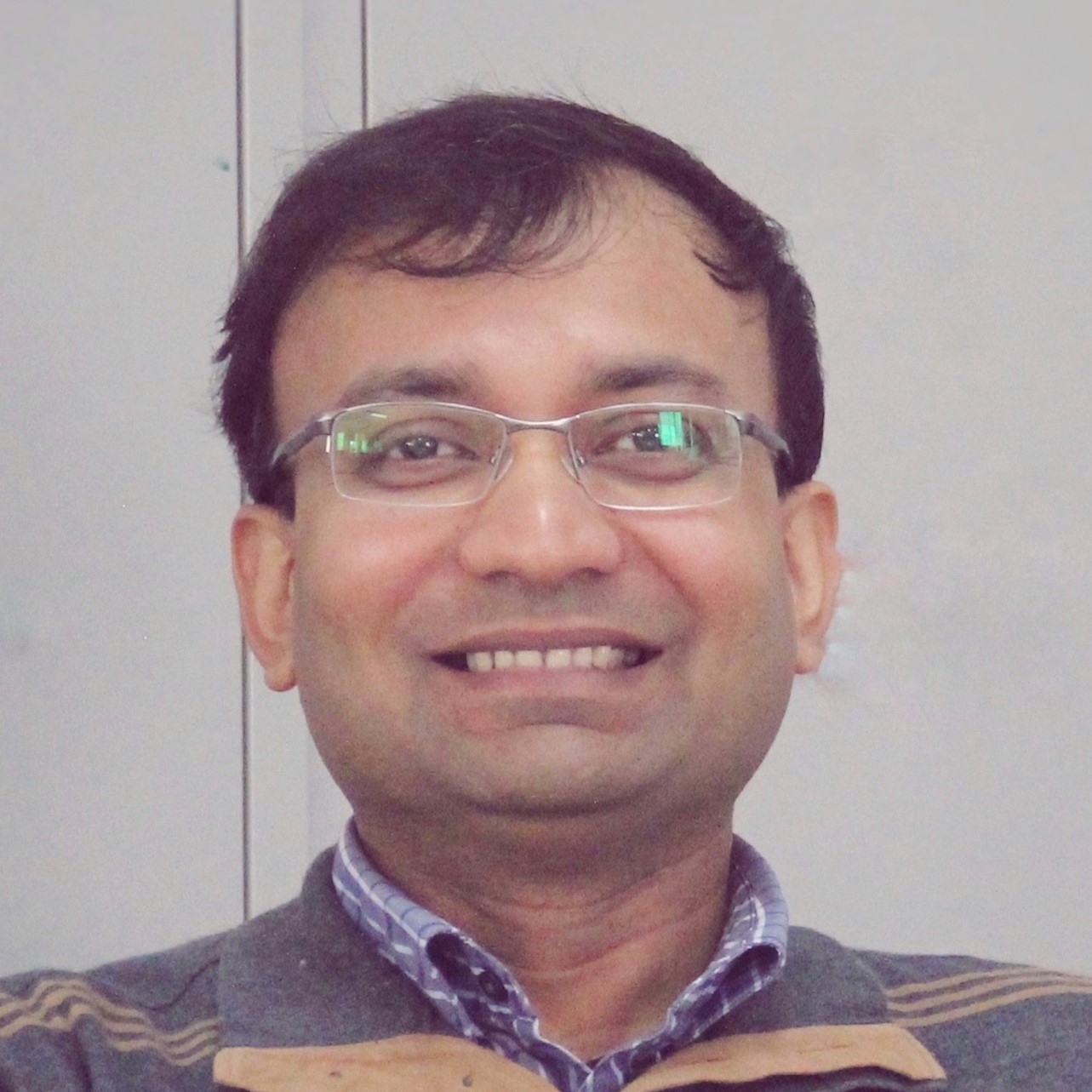
Indian Institute of Technology Hyderabad (IITH)India
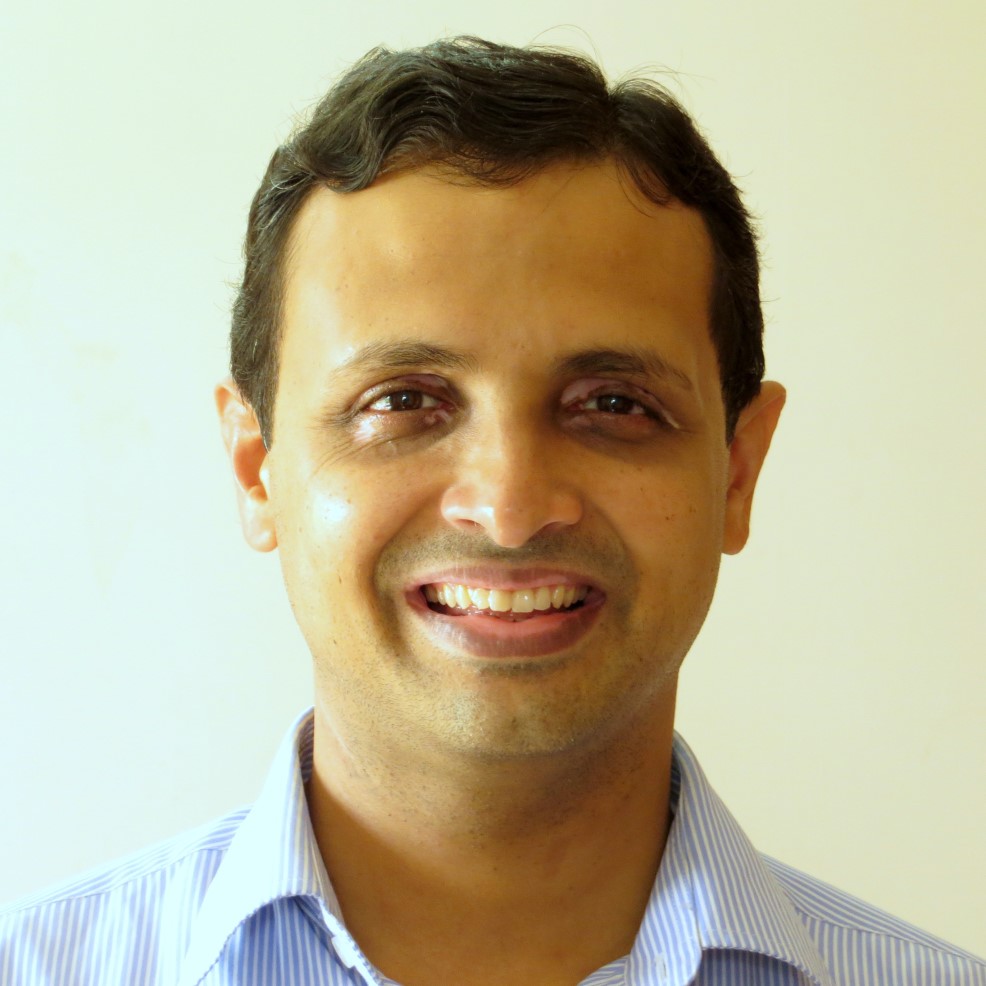
Vineeth N Balasubramanian is a Professor in the Department of Computer Science & Engineering at the Indian Institute of Technology Hyderabad, with affiliate faculty status in the Department of Artificial Intelligence. His research focuses on the intersection of deep learning, machine learning, and computer vision, emphasizing explainability, robustness, and real-world applications. He leads Lab 1055, which investigates problems such as Explainable and robust AI/ML systems Lifelong learning in evolving environments Multimodal vision-language models Applications in agriculture, autonomous navigation, and human behavior analysis His recent work includes causal reasoning in transformers, vision-language model capabilities, and drone-based object detection. Funded by organizations like Google, Microsoft, Intel, and DST, he has received multiple awards including the World's Top 2% Scientists (2022-23), INSA/INAE Fellowships, and Best Paper recognitions. Lab 1055 collaborates with institutions like CMU, UBC, and Monash University, contributing to cutting-edge advancements in AI.
Dr. Arnab Bhattacharya is a Professor in the Department of Computer Science and Engineering at the Indian Institute of Technology (IIT) Kanpur since December 2020. He previously served as Associate Professor (2014–2020) and Assistant Professor (2007–2014) at IIT Kanpur. Education: PhD in Computer Science (2007), University of California, Santa Barbara MS in Computer Science (2007), University of California, Santa Barbara Bachelor of Computer Science and Engineering (2001), Jadavpur University Research Focus spans Databases , Data Mining , Information Retrieval , and Artificial Intelligence . His work emphasizes graph analytics , skyline queries , probabilistic data , and knowledge graph management . Article Trends reveal expertise in graph neural networks , trajectory-aware systems , statistical significance in databases , and legal/medical data mining . His methodologies often integrate chi-square statistics , approximate indexing , and provenance tracking . Scientific Awards: IBM Faculty Research Award Yahoo! Faculty Research and Engagement Program Award Best Paper at COMAD 2011 Best Student Paper at COMAD 2010 Top-Five Student Paper at ICDM 2005 ICDM Student Travel Award sponsored by IBM Contact: Office RM 409, Department of Computer Science and Engineering, IIT Kanpur Email: arnabb@iitk.ac.in | Phone: +91-512-259-7650
Arijit Bishnu is an Associate Professor at the Indian Statistical Institute in the Advanced Computing and Microelectronics Unit (ACMU). He has taught courses such as Design and Analysis of Algorithms , Randomized Algorithms , Computational Geometry , and Algorithms for Big Data over multiple years (2008–2025), focusing on theoretical and applied aspects of computer science. Research Interests: His work spans Theoretical Computer Science , Randomized and Approximation Algorithms , Computational Geometry , and Combinatorics . He explores problems in sublinear algorithms, streaming computation, geometric data analysis, and complexity theory. Publications: Recent papers include contributions to STOC 2025 , RANDOM 2025 , and APPROX 2024 , covering topics like property testing, triangle counting complexity, and streaming algorithms. Collaborations with researchers like Sourav Chakraborty, Gopinath Mishra, and Sayantan Sen highlight his interdisciplinary approach. Academic Leadership: He has co-organized research courses such as Approximation Algorithms and Topics in Algorithms and Complexity , emphasizing mentorship and knowledge dissemination in theoretical computer science. His comprehensive work integrates algorithmic innovation with rigorous mathematical analysis, advancing computational techniques for large-scale and geometric data.
A. V. Ravishankar Sarma is Professor in the Department of Humanities and Social Sciences at Indian Institute of Technology Kanpur . He specializes in formal and philosophical logic, formal epistemology and philosophy of science, with current research centred on belief revision, causality and scientific-theory change. Education: PhD, Philosophy, IIT Bombay (2006) – Thesis on “ On Causal and Constructive Modeling of Belief Revision ” MA, Philosophy, University of Hyderabad (1998) MSc, Physics, Kakatiya University, Warangal (1996) Research Interests: His work integrates logical formalisms with philosophical questions about how scientific beliefs are revised when new evidence or causal information becomes available. Key themes include: Belief Revision & AGM Paradigms: developing constructive models that incorporate causal relevance. Causality: analysing causal counterfactuals and their semantics within logical frameworks. Philosophy of Science: investigating theory change, scientific realism (structuralist defence), and the role of abductive reasoning in discovery. Scientific Awards & Fellowships: Post-doctoral Fellow, Indian Institute of Management Bangalore (Feb–Sep 2006) GLoRiClass Fellow, Institute for Logic, Language and Computation (ILLC), University of Amsterdam (Oct–Dec 2006) Post-doctoral Fellow, Homi Bhabha Centre for Science Education, TIFR (Feb–May 2007) Contact & Resources: Office: Faculty Building FB-659, Department of Humanities and Social Sciences, IIT Kanpur Phone: +91 512 259 6137 (O) / +91 512 259 8208 (R) E-mail: avrs@iitk.ac.in Web: Homepage & CV
Piyush Rai is an Associate Professor in the Department of Computer Science and Engineering at the Indian Institute of Technology Kanpur. He also holds an Adjunct Assistant Professor position in Electrical and Computer Engineering at Duke University. His academic journey includes postdoctoral research at Duke University and the University of Texas at Austin, following his PhD from the University of Utah. His research interests focus on Machine Learning and Bayesian Statistics, with specializations in Latent Variable Models, Probabilistic Modeling, Approximate Inference, and Nonparametric Bayesian Methods. His work bridges theoretical foundations with practical applications in artificial intelligence and data science. Dr. Rai's publication record shows a consistent focus on tensor factorization, Bayesian nonparametrics, and scalable algorithms for large datasets. His work spans conferences including NIPS, ICML, UAI, and AISTATS, demonstrating strong contributions to both theoretical and applied machine learning. Best Student Paper Award at ECML-PKDD (2015) National Science Foundation (USA) EAGER Award (2015) Dr. Deep Singh and Daljeet Kaur Faculty Fellowship at IIT Kanpur (2015) NIPS 2013 Reviewer Award Sheldon Ekland-Olson Postdoctoral Fellowship (2012) He teaches advanced courses in Machine Learning and Probabilistic Machine Learning at IIT Kanpur, mentoring the next generation of researchers in statistical machine learning techniques. His collaborative work with Lawrence Carin and other researchers demonstrates strong interdisciplinary connections between institutions.
Soumen Chakrabarti is a Professor in the Department of Computer Science and Engineering at Indian Institute of Technology Bombay. His work bridges graph theory, natural language processing, and knowledge representation, focusing on scalable solutions for complex information retrieval problems. He has held visiting positions at Carnegie-Mellon University and Google. Education: B.Tech from IIT Kharagpur, PhD from UC Berkeley Key research areas: Graph Neural Networks, Knowledge Graphs, Code-Switched Text Analysis, Temporal Reasoning His recent publications emphasize neural graph matching , code-switched NLP , and multi-modal QA systems , often integrating symbolic reasoning with deep learning. Awards include the WWW 1999 Best Paper Award and ECML/PKDD 2008 Best Student Paper . He leads projects like CRUSH4SQL for text-to-SQL parsing and CSAW for annotated web search. His lab collaborates with IBM and Google on graph representation learning and temporal knowledge graph completion.
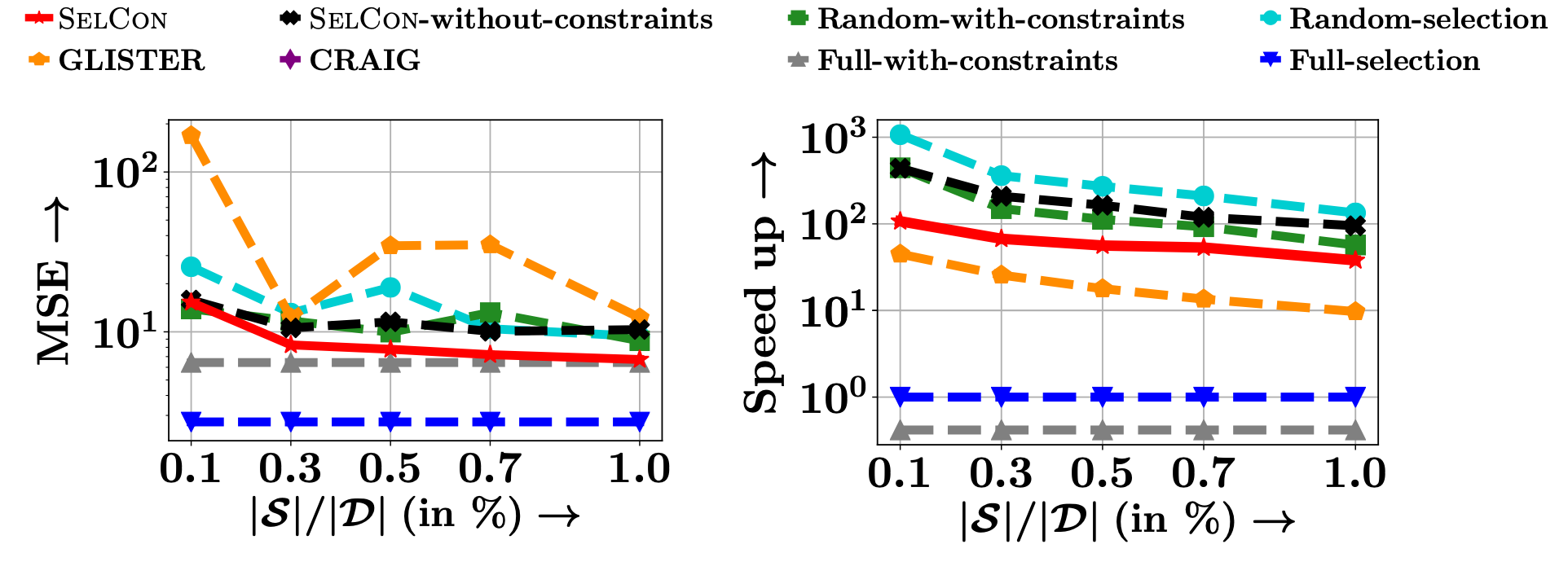
Abir De is an Assistant Professor at the Department of Computer Science and Engineering, Indian Institute of Technology Bombay. His research focuses on designing machine learning models for structured objects like graphs and sets, emphasizing data-efficient learning and human-machine collaboration. Academic Rank: Assistant Professor Institution: Indian Institute of Technology Bombay Department: Computer Science and Engineering Research Interests : Differentiable surrogates for combinatorial graph algorithms (e.g., subgraph isomorphism detection) Data-efficient machine learning through strategic subset selection Neural models for submodular set functions Human-in-the-loop machine learning Information diffusion with capacity constraints Scientific Awards : Qualcomm Innovation Fellowship Winner (2022) and Superwinner (2023) Indian National Academy of Engineering Young Engineer Award (2021) Prof. Krithi Ramamritham Award for Creative Research (2020) Google India PhD Fellowship (2013) Advising and Community Contributions : Co-advising PhD students Indradyumna Roy and N Lokesh Program Co-chair of IndoML 2023 Co-organizer of CSE Research Symposium (2023) and SubSetML workshop (2021) Tutorial creator at AIML Systems Conference (2021) and AAAI (2022) Serving on Senior PC at AAAI (2022-2024), PC member at NeurIPS (2016-2023), and ICLR (2018-2023)
Sutanu Gayen is an Assistant Professor in the Department of Computer Science and Engineering at the Indian Institute of Technology Kanpur. His research focuses on theoretical aspects of machine learning, algorithms, and computational statistics. Designing algorithms for Bayesian networks and causality Complexity analysis of distribution learning Applications in high-dimensional statistical modeling His recent publications explore challenges in total variation distance computation, Gaussian tree models, and interventional distribution learning. Courses taught include advanced algorithms for machine learning and data structures. Research connects fundamental computational limits with practical statistical learning tasks.
Sourav Chakraborty is a Professor in the Advanced Computing and Microelectronics Unit (ACMU) of the Computer and Communication Sciences Division at the Indian Statistical Institute (ISI), Kolkata, India. He joined ISI in July 2018 after serving as faculty at Chennai Mathematical Institute from 2010-2018. Previously, he held postdoctoral positions at Centrum Wiskunde & Informatica (CWI) in Amsterdam and Technion in Israel. Education: Ph.D. in Computer Science, University of Chicago (2008) M.S. in Computer Science, University of Chicago (2005) B.Sc. in Mathematics, Chennai Mathematical Institute (2003) Research Focus: Professor Chakraborty specializes in Theoretical Computer Science with emphasis on classical and quantum complexity of Boolean functions, including sensitivity analysis, property testing, and quantum database search. His work extends to graph algorithms, electronic commerce mechanisms, and coding theory. His research explores fundamental questions in computational complexity through innovative mathematical frameworks. Publication Trends: Recent work demonstrates a strong focus on property testing, sampling algorithms, and complexity theory, with significant contributions to streaming algorithms, Boolean function analysis, and quantum query complexity. His publications frequently appear in top theoretical computer science venues and exhibit consistent innovation in algorithm design and complexity boundaries. Awards & Honors: Praise from Donald E. Knuth for streaming algorithms research Inclusion in Oded Goldreich's 'my choices' list for Conditional Sampling and Huge-Object Model work Chakraborty's function named in his honor for Sensitivity Conjecture contributions Academic Service: Teaches courses in discrete mathematics and theoretical computer science, with detailed course materials available through institutional pages. Organized workshops including the 2020 Workshop on Sensitivity and Query Complexity at ISI.
Chethan Kamath is an Assistant Professor in the Department of Computer Science and Engineering at IIT Bombay, where he is a member of the Theory Group and Trust Lab. His primary research focus is on cryptography, particularly its foundations, with broader interests extending to theoretical computer science. His educational journey includes: PhD from IST Austria (2014-2020) under Krzysztof Pietrzak, with thesis titled "On the Average-Case Hardness of Total Search Problems" Master's in CS from IISc Bangalore (2010-2013) under Sanjit Chatterjee, with thesis titled "Constructing Provably Secure Identity-Based Signature Schemes" Bachelor's in CS from University of Kerala (2005-2009) at TKM College of Engineering, Kollam Dr. Kamath's research interests span the theoretical foundations of cryptography, with particular focus on secure computation, complexity theory, and cryptographic hardness assumptions. His work often bridges theoretical computer science with practical cryptographic applications, exploring the boundaries of what can be efficiently computed while maintaining security guarantees. His research frequently addresses fundamental questions about the relationship between cryptographic primitives and complexity classes, especially the PPAD and TFNP complexity classes. His recent publications demonstrate a consistent focus on foundational aspects of cryptography, with particular emphasis on secure computation (garbled circuits, Yao's protocol), proofs systems (proofs of work, proofs of exponentiation), and complexity-theoretic aspects of cryptographic primitives. A notable trend is his exploration of the connections between complexity classes like PPAD and cryptographic assumptions, as well as his work on verifiable delay functions and their underlying number-theoretic assumptions. His research often employs tools from algorithmic graph theory (treewidth, separators) to analyze cryptographic protocols. His notable scientific achievement includes: Azrieli Fellowship during his post-doc at Tel Aviv University Dr. Kamath actively mentors students and researchers, currently advising several PhD and MS students at IIT Bombay, often in collaboration with Sruthi Sekar. His service to the academic community includes extensive program committee memberships for major conferences including Crypto, Eurocrypt, and TCC, demonstrating his standing in the cryptographic research community. He has co-organized educational events like the "Introduction to Cryptography" school as part of the ACM India Summer School 2025 and the "Theoretical Foundations of Cryptography" school as part of the ACM India Summer School 2024. He leads research activities within the Trust Lab at IIT Bombay, which focuses on theoretical and applied aspects of cryptography and security. The lab actively recruits MS/PhD students and post-docs, with ongoing research in foundational cryptography and its applications to secure computation, verifiable delay functions, and complexity-theoretic aspects of cryptographic security.
Indian Institute of Technology Hyderabad (IITH)India
Dr Shiva Ji is Associate Professor of Design at Indian Institute of Technology Hyderabad, with affiliate appointments in the Department of Climate Change (GreenKo School of Sustainability) and Department of Heritage Science & Technology. He also serves as Head of Design and Principal Investigator of the Design for Sustainability Lab and Digital Heritage Lab. Education PhD in Design, IIT Guwahati (2015-2020) – MHRD Design Innovation Center Fellow Master of Design (PGDPD), National Institute of Design, Ahmedabad (2005-2007) Bachelor of Architecture, Government College of Architecture (now FoA, APJAKTU), Lucknow (1999-2004) MBA, Indira Gandhi National Open University (2011) Certificate Course in Sustainability in Practice, University of Pennsylvania (2014) Professional Certificate in Environment & Sustainable Development, CEPT University (2011) Research Interests Dr Ji’s work converges architecture, sustainability, and digital technologies . His major thrust areas include Design for Sustainability integrating Life-Cycle Assessment (LCA) and system-design thinking, Digital Heritage using AR/VR/MR for architectural documentation and immersive reconstruction, and Climate-Responsive Design Innovation addressing micro-habitation, urban sprawl, and sustainability in the face of climate change. He also investigates vernacular and bio-architecture , leveraging indigenous knowledge for contemporary sustainable solutions, and explores industrial/product design for new-age services and circular-economy products. Publication Trends Since 2016 he has authored 25+ peer-reviewed works spanning urban analytics, digital heritage, sustainable architecture, and socio-cultural studies . Recent publications emphasize data-driven heritage documentation (photogrammetry, space-syntax, visibility graphs) and environmental performance evaluation of built environments, highlighting an interdisciplinary blend of design, computation, and sustainability science. Scientific Awards & Recognition 3rd Winner – Click! Japan Photo Contest 2020 (Embassy of Japan & Japan Foundation) JICA Travel Grant for Japan Universities visit Ford Foundation Scholarship NID Scholarship MHRD Design Innovation Center Fellowship All-India Rank 36 – CEED 2005 NASA Design Competition Citation 2002 Student Supervision & Funding Currently supervising 5 ongoing PhD and 4 ongoing Master’s students, with 14 Masters theses/dissertations already completed. He is Principal Investigator on DST-Govt. of India funded project and India partner for EU LeNSin project (Politecnico di Milano), mobilising international collaborations on sustainable product-service systems. Laboratories & Teams Dr Ji leads two flagship labs: • Design for Sustainability Lab – focuses on LCA, circular design, and strategic sustainable solutions for local to global challenges. • Digital Heritage Lab – pioneers AR/VR/MR applications for immersive heritage visualization and digital twins of architectural assets. Each lab runs multiple sponsored projects with interdisciplinary student teams, industry partners, and international collaborators.