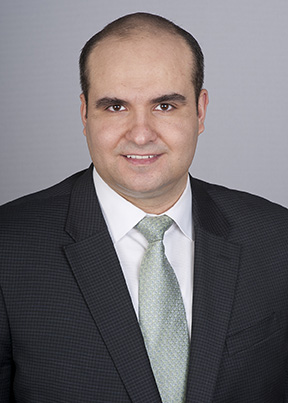
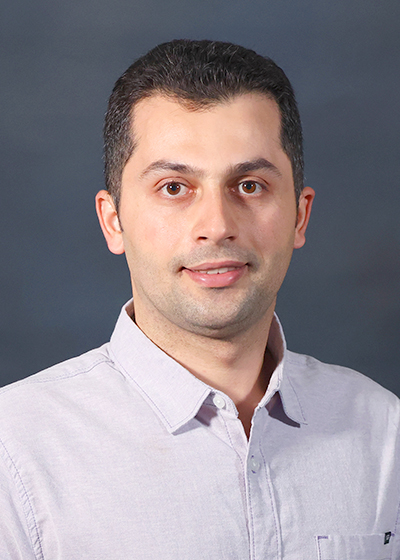
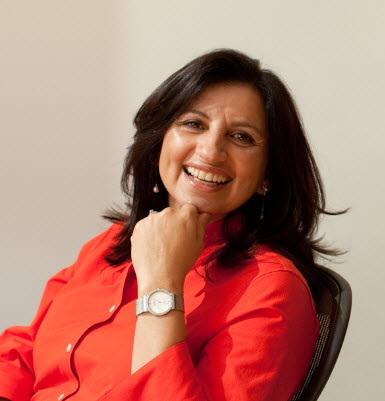
Anton Feenstra is an Associate Professor at the Vrije Universiteit Amsterdam, affiliated with the Faculty of Science's Bioinformatics department, as well as AIMMS and Integrative Bioinformatics. He holds a PhD (dr.) and an engineering degree (ir.). His research focuses on structural bioinformatics, protein structure prediction, computational biology, and bioinformatics algorithms. Key interests include protein-protein interactions, molecular dynamics, and knowledge graph applications in health and microbiota studies. Feenstra leads projects such as ELIXIR-NL (Digital Research Infrastructure) and has contributed to initiatives like BIOEXE and ENFIN. He teaches courses including Algorithms in Sequence Analysis and Fundamentals of Bioinformatics. His work spans over 86 publications, with recent contributions on protein interface prediction (PIPENN-EMB), microbiota-gut-brain axis analysis, and structural bioinformatics tools. Notable achievements include developing the PRALINE alignment toolkit and advancing machine learning methods for protein function prediction. Collaborations include work on Mycobacterium tuberculosis and SARS-CoV-2 protein analysis. His research aligns with UN Sustainable Development Goals, particularly in health and innovation.
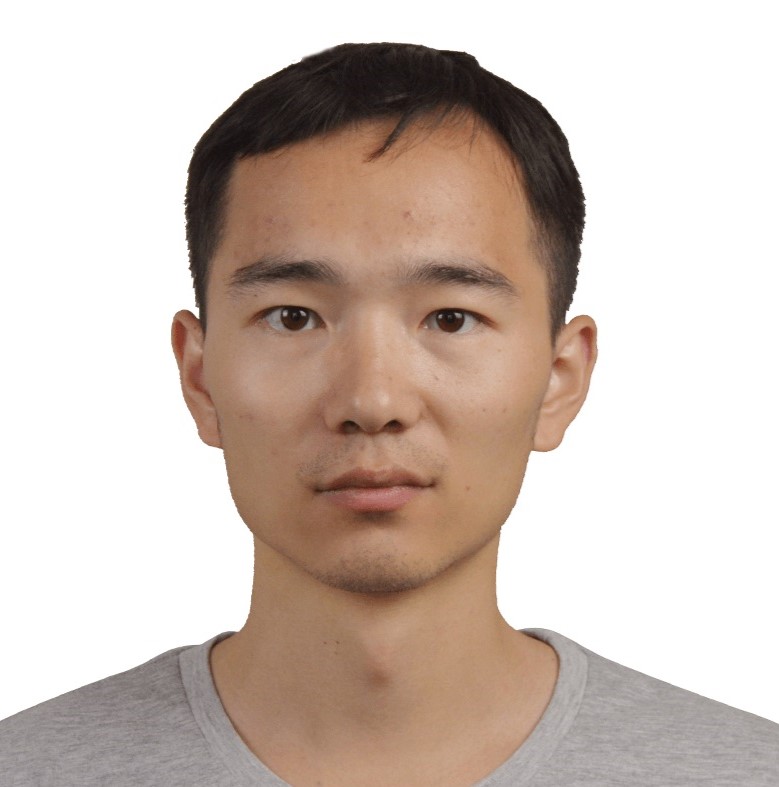
Professor Son Lam Phung is a faculty member at the University of Wollongong (UOW), holding the position of Professor in the School of Electrical, Computer and Telecommunications Engineering (SECTE) since 2022. He earned his B.Eng. (First-Class Honours) and Ph.D. in Computer Engineering from Edith Cowan University, Australia, where he was awarded the University Medal for academic excellence in 2000. His research focuses on image and signal processing, machine learning, and artificial intelligence, with applications in defense, healthcare, and autonomous systems. He has secured over 22 external grants from organizations such as the Australian Research Council (ARC), Qatar National Research Fund, and the Department of Foreign Affairs and Trade. Research Interests: Image and video processing Pattern recognition Machine learning and deep learning Assistive navigation systems for vision-impaired individuals Radar and sonar imaging for defense and environmental monitoring Grants & Projects: ARC Discovery Projects: 'Assistive Micro-navigation for Vision Impaired People' and 'Dynamic Visual Scene Gist Recognition' Qatar National Research Fund: 'Big Crowd Data Analytics' Defence Science and Technology Group: 'New Deep Networks for Iris-based Post-Mortem Identification' Awards & Recognition: Recipient of multiple best paper awards at IEEE conferences (ICASSP-2016, DICTA-2014) Highly Commended Supervisor Award (2012 Canon Extreme Imaging Competition) UOW Outstanding Contribution to Teaching Award (2010) Editorial Roles: Associate Editor, IEEE Access (IF: 3.4) Section Editor, Sensors Journal (Sensing and Imaging Section) Teaching & Supervision: Supervised 30 HDR students (20 PhD, 10 MPhil) to completion Teaching awards include the OCTAL Early Career Award (2010) Subjects include Digital Signal Processing, Embedded Systems, and Image Processing Labs & Teams: He leads the Centre for Signal and Information Processing (CSIP), focusing on algorithm development for defense, healthcare, and autonomous systems. His lab collaborates on projects involving AI-driven solutions for agriculture, environmental monitoring, and medical imaging.
James Z. Wang is a Professor in the School of Computing at Clemson University. He holds a B.S. and M.S. in Computer Science from the University of Science and Technology of China, and a Ph.D. in Computer Science from the University of Central Florida. He is a Senior Member of IEEE and ACM. His research focuses on bioinformatics, distributed systems, medical imaging, and data mining, with notable projects including G-SESAME for gene similarity analysis, ontology-based P2P information retrieval, and non-invasive skin cancer detection systems. He has taught numerous courses on databases, data mining, and multimedia systems since joining Clemson in 2005. Research Highlights: Developed tools for semantic similarity measurement in biomedical contexts (G-SESAME) Pioneered ontology-based approaches for P2P networks and proxy caching systems Advanced algorithms for distributed systems, self-stabilizing networks, and energy-efficient cloud computing Collaborated on medical imaging applications including melanoma detection and brain image analysis Publications reflect contributions to algorithms, distributed computing, bioinformatics, and multimedia systems, with over 100 peer-reviewed articles since 2000. His work bridges theoretical computer science with applied domains in healthcare and network infrastructure.
Alexander Kotov is an Associate Professor in Computer Science at Wayne State University's James and Patricia Anderson College of Engineering. He holds a Ph.D. from the University of Illinois at Urbana-Champaign (2011) and specializes in large-scale textual information analysis, particularly information retrieval, natural language processing, and health informatics. His research develops neural architectures for conversational entity retrieval (2024), clinical outcome prediction (2024), and behavioral intervention analysis. Key themes include knowledge graph integration, multimodal retrieval systems, and computational methods for health communication analysis, with applications in weight loss counseling and precision medicine. Research consistently bridges NLP/IR techniques with healthcare applications, exploring conversational AI for clinical support, knowledge graph retrieval, and behavioral pattern mining in therapeutic contexts. Recent projects include NIH-supported work on weight management chatbots.
Lihui Liu is an Assistant Professor of Computer Science at Wayne State University's James and Patricia Anderson College of Engineering. His research focuses on neural-symbolic AI, integrating knowledge graphs with large language models for enhanced reasoning capabilities. Research Focus: Dr. Liu develops methods for complex knowledge graph reasoning, conversational question answering, and neural-symbolic integration. His lab creates algorithms that combine structural knowledge representations with language model capabilities for interpretable AI systems. Recent work demonstrates strong emphasis on knowledge graph applications (60% of publications) and language model enhancement (30%). Notable contributions include logical query decomposition techniques and attention-based graph neural network architectures. Mentoring: Actively recruiting PhD students to work on NSF-funded projects involving knowledge-guided AI systems. Professional service includes program committees for major AI conferences and editorial contributions.
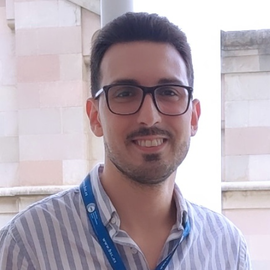
Riccardo Cantini is an Assistant Professor (RTDA) at the Department of Computer Science, Modeling, Electronics and Systems Engineering (DIMES), University of Calabria. He holds a European Ph.D. in Information and Communication Technologies (2023) and has been a visiting researcher at the Barcelona Supercomputing Center (BSC-CNS, 2021-2022). His research focuses on deep learning (Large Language Models, sustainable AI) and big social data analysis targeting politically polarized data and high-performance distributed systems. Education: B.Sc. (2016), M.Sc. (2019), and Ph.D. (2023) in Computer Engineering from the University of Calabria. Research interests include: Large Language Models and their ethical deployment Sustainable AI and energy-efficient edge computing Political polarization analysis using social media data Optimization of data-intensive workflows in distributed environments Key projects include the FAIR initiative (Green-Aware AI), eFlows4HPC (HPC workflows), and ASPIDE (Exascale data processing). He has authored/co-authored over 30 publications, including works on bias detection in LLMs and explainable AI in healthcare. Awards: 2024 Top 3 Best PhD Thesis in Big Data & Data Science (CINI), 2022 Editor's Choice article in Big Data and Cognitive Computing . Teaching roles include courses on Business Intelligence, High-Performance Computing, and Operating Systems. He has advised over 40 theses in AI, NLP, and big data. Professional services: Guest Editor for Big Data and Cognitive Computing , Program Chair of Green-Aware AI workshops, and reviewer for top journals/conferences (ICLR, IEEE BigData, etc.).
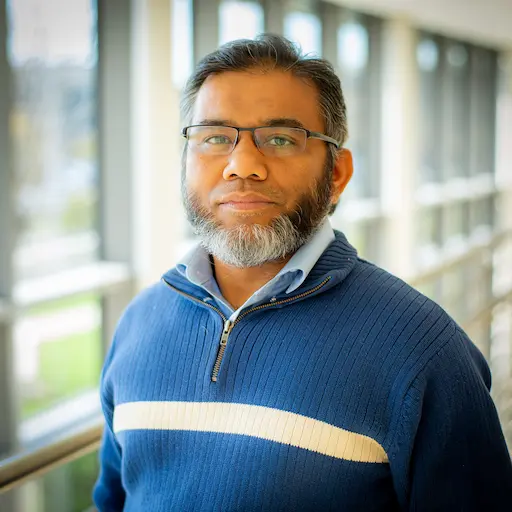
Mohammad Al Hasan is a Professor of Computer Science at the Luddy School of Informatics, Computing, and Engineering, Indiana University Indianapolis. He previously worked at eBay Research Labs and holds a Ph.D. from Rensselaer Polytechnic Institute. His research focuses on data mining, machine learning, and social network analysis, with contributions to graph embeddings, network sampling, and natural language processing for knowledge graphs. He leads the DDML Research Group at IU Indy. Education: Ph.D. Computer Science, Rensselaer Polytechnic Institute (2009) M.S. Computer Science, University of Minnesota Twin Cities (2002) B.Sc. Computer Science and Engineering, Bangladesh University of Engineering and Technology (1998) Research Interests: Bioinformatics, Information Retrieval, Machine Learning, Social Network Analysis, and Algorithm Development for Text and Relation Embeddings. Al Hasan has authored over 100 research articles and received prestigious awards including the NSF CAREER Award. His work emphasizes interdisciplinary applications of data science. Labs/Teams: Founder of the Database, Data Mining & Machine Learning (DDML) Research Group.
Noorbakhsh Amiri Golilarz is Assistant Research Professor in Computer Science and Engineering at Mississippi State University. His research focuses on artificial intelligence applications in image processing, computer vision, and medical diagnostics. Key research areas include deep neural networks for image denoising, medical image analysis, and cybersecurity for AI systems. Recent work explores adversarial robustness, medical knowledge graphs, and generative model evaluation. Publications demonstrate strong methodological innovations in optimization algorithms and deep learning architectures applied across domains including healthcare, renewable energy, and industrial quality control.
Ashraf Aboulnaga is a Professor in the Department of Computer Science and Engineering at the University of Texas at Arlington (UTA). He holds a Ph.D. in Computer Science from the University of Wisconsin-Madison and has held prior roles as Chief Scientist at the Qatar Computing Research Institute, Associate Professor at the University of Waterloo, and Research Staff Member at IBM Almaden Research Center. His research focuses on database systems, cloud computing, and graph analytics, with recent emphasis on cloud-native database architectures and scalable graph processing. Education: Ph.D. (2002), M.S. (1999) from University of Wisconsin-Madison; B.S./M.S. (1993/1996) from Alexandria University. Affiliations: ACM Distinguished Scientist (2015), IEEE Senior Member (2009). Research interests include cloud database systems, distributed transaction processing, and knowledge graph integration. He has authored over 100 publications in top venues like SIGMOD, VLDB, and ICDE, and received Best Paper Awards at SoCC 2015 and VLDB 2011. Grants: Current funding includes NSF travel support for ICDE 2024 and a $1.4M NSF MRI grant for DiscourseLab (2025). Past grants include DOE support for soil microbiome data integration. Service: Associate Editor for VLDB Journal, PVLDB, and Distributed and Parallel Databases. Served as Program Committee member for SIGMOD, ICDE, and EDBT. Industry collaborations include advising on cloud DBMS architectures and distributed systems.
Tina Eliassi-Rad is the Joseph E. Aoun Professor at Northeastern University's Khoury College of Computer Sciences. She serves as core faculty at the Network Science Institute and external faculty at the Santa Fe Institute and Vermont Complex Systems Institute. Her research bridges data mining, machine learning, and network science with emphasis on trustworthy AI systems and societal impacts. Her current research programs focus on: Trustworthy Network Science: Enhancing explainability, robustness, and fairness in graph-based machine learning Just Machine Learning: Analyzing AI within broader sociotechnical systems to mitigate systemic risks Dr. Eliassi-Rad teaches graduate courses in Machine Learning with Graphs and has organized numerous workshops including the 2024 ICML Workshop on Humans, Algorithmic Decision-Making and Society. Her interdisciplinary work connects computer science with social science, biology, and policy studies.
Soha Hassoun is a Professor at Tufts University with primary appointment in the Department of Computer Science and secondary appointments in the Department of Electrical and Computer Engineering and the Department of Chemical and Biological Engineering. Her interdisciplinary work bridges computer science, engineering, and biology to develop computational tools for biological systems analysis and design. Education: Ph.D. from University of Washington (1997) M.S. from Massachusetts Institute of Technology (1988) B.S. from South Dakota State University (1986) Soha Hassoun's research focuses on the intersection of Machine Learning and Biology, with particular emphasis on developing ANALYSIS + DESIGN tools to advance (RE-)DESIGNING BIOLOGY. Her work spans Systems Biology, Metabolic Engineering, and computer-aided design for integrated circuits. She develops MACHINE LEARNING models specifically tailored for biological data, drawing inspiration from her prior experience in circuit design and design automation for electronic systems where she contributed seminal ideas for FinFET devices and power grids for 3D integrated circuits. Her recent publications demonstrate a strong trend toward applying advanced machine learning techniques, particularly graph neural networks and transformer models, to biological problems including metabolite annotation, enzyme-substrate interaction prediction, and metabolic network analysis. Her work increasingly focuses on creating standardized benchmarks and frameworks for evaluating computational methods in metabolomics. Soha leads the Hassoun Lab, which is dedicated to developing computational tools that provide insight into complex biological systems and enable building novel biological components to produce useful chemicals and therapeutics. The lab's research spans from fundamental machine learning algorithm development to practical applications in biotechnology.
Nalini Ratha is a SUNY Empire Innovation Professor and Professor in the Department of Computer Science and Engineering at the University at Buffalo. She is affiliated with the School of Engineering and Applied Sciences. Her research focuses on computer vision, artificial intelligence, biometrics, and ensuring fairness and trust in AI systems. Education: PhD in Computer Science (Michigan State University), MTech in Computer Science and Engineering (IIT Kanpur), and BTech in Electrical Engineering (IIT Kanpur). Research interests include privacy-preserving AI, FHE (Fully Homomorphic Encryption) applications, adversarial defense, and ethical AI. Her work addresses challenges like secure biometric systems, deepfake detection, and medical data privacy. Notable contributions include developing FHE-based frameworks for secure inference, enhancing AI fairness, and combating identity fraud through biometric analysis. Awards: NAI Fellow (2021), ACM Distinguished Member (2015), IAPR Fellow (2008), and IEEE Fellow (2007). Her publications explore cutting-edge topics like encrypted medical diagnostics, secure UAV navigation, and robust deep learning models resistant to adversarial attacks.
Dr. Yan Zhang is a Lecturer in Information Technology within the Faculty of Science and Technology at Macquarie University. She completed her PhD in recommendation systems from the University of Technology Sydney (UTS) in 2022 and has established herself as an active researcher with 17 publications spanning from 2016 to 2025. Her academic profile shows consistent research output with multiple publications each year, demonstrating ongoing productivity and engagement in her field. She is registered to supervise postgraduate research, indicating her role in mentoring graduate students. Dr. Zhang's research interests center around recommendation systems, data mining, machine learning, and transfer learning. Her work spans both theoretical foundations and practical applications, with a strong emphasis on solving cold-start problems, cross-domain recommendations, and efficient recommendation techniques. The fingerprint of her research shows significant contributions in areas including User, Hashing, Collaborative Filtering, Recommender Systems, User Preference, Algorithms, Matrix Factorization, and Boolean Function. Her research contributes to UN Sustainable Development Goals through technological innovation in data science and information systems. Analysis of Dr. Zhang's publication history reveals an evolving research trajectory with increasing sophistication in recommendation system methodologies. Her early work focused on discrete techniques and hashing methods for efficient recommendations, while recent publications demonstrate expansion into federated learning, multi-agent systems, and medical applications. The thematic progression shows movement from foundational recommendation techniques toward more complex, interdisciplinary applications while maintaining core expertise in user preference modeling and efficient recommendation algorithms. Dr. Zhang has accumulated 268 citations with an h-index of 7, indicating growing scholarly impact in her field. Her publications appear in reputable venues including IEEE Transactions on Knowledge and Data Engineering, ACM Transactions on Information Systems, and proceedings of major conferences like IEEE ICDE. She has demonstrated consistent collaboration with researchers across institutions, as evidenced by her co-authorship patterns across multiple publications. As a postgraduate research supervisor, Dr. Zhang contributes to academic training in information technology. Her research program appears to focus on both theoretical aspects of recommendation systems and practical applications in cybersecurity, healthcare, and content delivery. The diversity of her recent work suggests she leads or participates in multiple research streams addressing different application domains while maintaining core methodological expertise in recommendation technologies.
Peter Dolog is an Associate Professor at the Department of Computer Science, Aalborg University, Denmark. He is affiliated with The Technical Faculty of IT and Design. His research focuses on Recommender Systems, Web Engineering, Machine Learning, and Health Informatics. He leads projects such as the MEco Medical Ecosystem and the IWIS Intelligent Web and Information Systems initiative. His work emphasizes explainable AI, knowledge graphs, and social media analytics for public health monitoring. Notable contributions include hypergraph-based recommendation models and sensitive information detection in legal documents. Projects include MEco (medical event surveillance) and IWIS (web systems personalization), funded by EU and national grants. His research spans 148 publications, with recent work on explainable recommendation systems and neural networks for medical data analysis. Collaborations include the University of Vienna and international conferences like ECIR and RecSys. Media coverage highlights his work on using social media for epidemic detection. Key research areas include recommendation systems with attention mechanisms, knowledge graph integration, and ethical AI applications in healthcare. His methodologies bridge machine learning with user-centric design, emphasizing transparency and explainability in AI-driven systems.
Alessia Antelmi is an Assistant Professor (RTD-A) in the Department of Computer Science at the University of Turin, where she contributes to the Parallel Computing Group. Her work bridges theoretical computer science with real-world applications in social and technological systems. Her educational background includes: Ph.D. in Computer Science with honors from the University of Salerno, focusing on diffusion phenomena modeling using high-order networks Her research centers on complex network structures and human behavior in digital environments: Develops hypergraph representation learning techniques for modeling complex relationships Investigates social influence diffusion and user behavior evolution in online networks Designs agent-based simulations for large-scale system analysis Creates tools for data literacy and knowledge graph education Her approach integrates mathematical modeling with computational experimentation to address challenges in social dynamics and information systems. Analysis of her 15 recent publications (2023-2025) reveals three dominant trends: hypergraph-based methods for complex data representation, large-scale analysis of online communities using agent-based models, and educational tools for data literacy. Her work increasingly incorporates LLMs for social network analysis while maintaining strong theoretical foundations in network science. Her scientific recognition includes: Best paper nominee at CSEDU 2023 for open data education research Best paper nominee at AsiaSim 2019 for Rust-based simulation frameworks She has secured competitive research funding: 55,200 DKK grant under the COCOONS project (2023) led by Prof. Luca Maria Aiello at IT University of Copenhagen Erasmus+ Traineeship grant (2018) to work with Prof. John Breslin at Galway's Data Science Institute Though no advisees are listed, her collaborative publications suggest active mentorship in computational research. She actively contributes to the Parallel Computing Group at the University of Turin, developing frameworks like SWH-Analytics for large-scale software analysis and HypergraphRepository for community-driven data curation.