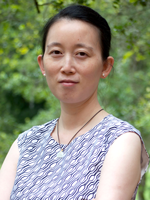
Wei GAO is an Associate Professor of Computer Science at Singapore Management University's School of Computing and Information Systems (SCIS), where he serves as full-time faculty. His research focuses on artificial intelligence applications in social computing, misinformation analysis, and natural language processing. Professor GAO leads research on large language models, rumor detection, and social media analytics through computational approaches. Research Focus Professor GAO's expertise spans several interconnected domains: AI & Data Science : Developing advanced machine learning models for complex data analysis Social Media Analytics : Studying misinformation propagation and user behavior patterns Natural Language Processing : Creating novel methods for text understanding and generation Computational Social Science : Quantifying psychological and social phenomena through AI Publication Trends Recent works demonstrate strong emphasis on enhancing large language models for: misinformation detection (rumor verification, fake news debunking), social computing (stance classification, moral reasoning), and efficient AI (model compression, transfer learning). Multimodal approaches and explainable AI frameworks appear consistently across publications. Academic Activities Professor GAO supervises PhD students including LAI Yibin, with mentorship focus on NLP and social computing research. He teaches courses on Natural Language Communication and contributes to SMU's research initiatives in digital transformation and AI safety.
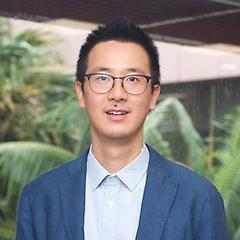
Xiaorui Liu is an Assistant Professor in the Department of Computer Science at North Carolina State University's College of Engineering, where he joined the faculty in August 2022. He also holds a courtesy appointment in the Department of Electrical and Computer Engineering. His research focuses on large-scale machine learning, trustworthy artificial intelligence, and deep learning on graphs, with applications across various domains including networking, cybersecurity, manufacturing, biology, and healthcare. He has established himself as a leading researcher in graph neural networks and scalable machine learning systems. Dr. Liu's educational background includes: Ph.D. in Computer Science from Michigan State University (2022) M.S. in Computer Science from South China University of Technology (2017) B.S. in Computer Science from South China University of Technology (2015) Dr. Liu's research interests span several cutting-edge areas in artificial intelligence and machine learning. His primary focus is on developing scalable and trustworthy machine learning systems , with particular emphasis on graph neural networks, large language models, and robust AI. His work addresses fundamental challenges in large-scale optimization , distributed machine learning , and adversarial robustness . He explores how to make AI systems more reliable, efficient, and applicable to real-world problems across diverse domains including social networks, biological systems, and industrial applications. His research group is actively investigating how to integrate graph learning with generative AI, enhance model robustness against attacks, and develop efficient training methods for massive datasets. His recent publications demonstrate a clear trend toward integrating traditional graph machine learning with emerging AI paradigms, particularly large language models. His work spans both theoretical foundations and practical applications, with increasing focus on real-world deployment challenges. The research covers diverse subfields including robustness certification, efficient model training, and application-specific adaptations for domains like manufacturing, healthcare, and cybersecurity. Dr. Liu has received numerous prestigious awards recognizing his research excellence: NSF CAREER Award (2025) AAAI-2025 New Faculty Highlights National AI Research Resource Pilot Award (2024) ACM SIGKDD Outstanding Dissertation Award (Runner-up, 2023) Amazon Research Award (2023) NCSU Data Science Academy Award (2023) NCSU Faculty Research and Professional Development Award (2023) Chinese Government Award for Outstanding Students Abroad (2022) Best Paper Honorable Mention Award at ICHI (2019) MSU Cloud Computing Fellowship (2021) MSU Engineering Distinguished Fellowship (2017) Dr. Liu actively mentors students at all levels, currently advising multiple PhD and Master's students including Zhichao Hou, Weizhi Gao, Xingyue Shi, and Daniel Buchanan. His research is supported by significant funding from organizations including NSF, Amazon Research, Snap Research, and internal university grants such as the NCSU Data Science Academy seed grant and the Faculty Research and Professional Development Program. He is expanding his lab to address emerging challenges in AI safety, large-scale graph learning, and trustworthy foundation models, with plans to recruit additional PhD and Master's students for Fall 2025 and 2026. Dr. Liu leads the Network and Data Science research group at NC State, focusing on large-scale graph neural networks and trustworthy AI. The group collaborates with institutions including Oak Ridge National Laboratory and industry partners like Amazon. They have developed innovative approaches such as LazyGNN for efficient large-scale graph learning and ProTransformer for enhancing transformer robustness. The lab maintains strong connections with the broader research community through tutorials at major conferences and active participation in standard-setting research venues.
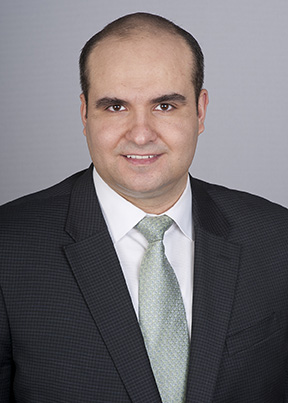
Dr. Yoshi Gotoh is a Lecturer and Student Projects Officer in the Department of Computer Science at the University of Sheffield's School of Computer Science . He holds a PhD from Brown University and a first degree in Engineering from the University of Tokyo. As a member of the Speech and Hearing (SpandH) research group, his work bridges audio-visual processing and language technologies. His core research explores: Video analysis and retrieval systems Natural language generation for video content 3D visual speech animation Crowd behavior modeling through trajectory clustering Medical imaging enhancements via colorization techniques Analysis of his 15 most recent publications reveals strong emphasis on multimodal systems combining computer vision with speech/language processing. Dominant themes include egocentric video analysis, human activity recognition, and cross-modal translation between visual and textual domains. He has secured significant research funding as Co-Principal Investigator: £218,226 from Innovate UK (2021-2024) for fake imagery detection £393,115 from Innovate UK (2018-2021) for unsupervised dubbing systems £284,248 from EPSRC (2001-2005) for spoken language summarization He leads projects within the Speech and Hearing laboratory, focusing on developing computational methods for audiovisual integration and video understanding systems.
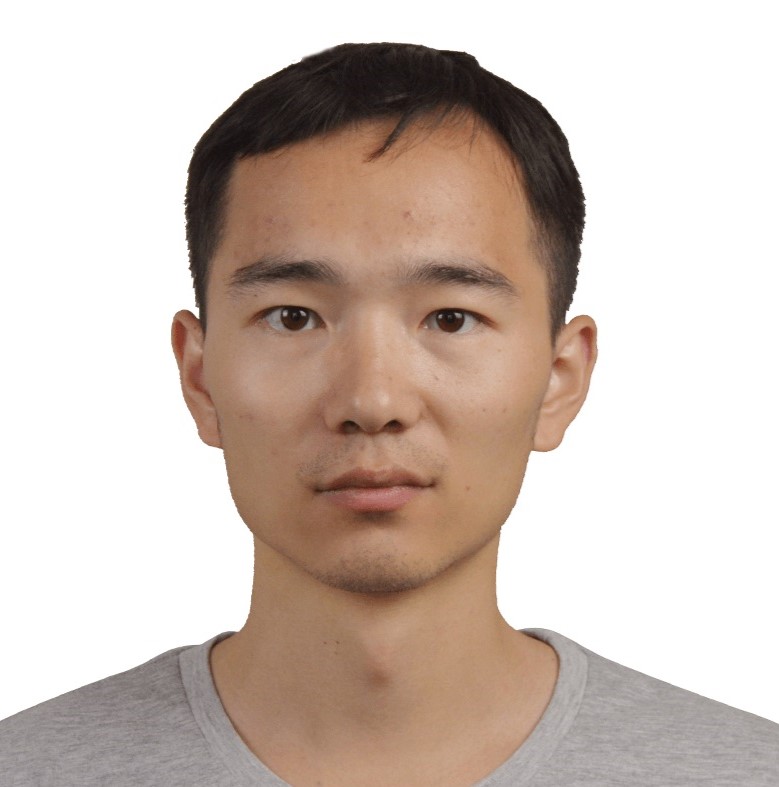
Yixin Chen is a Professor at Washington University in St. Louis , specializing in artificial intelligence, machine learning, and computational biomedicine. He joined the faculty in 2005 and has received prestigious awards such as the IEEE Fellow distinction and the DOE Early Career Award. His work bridges AI with healthcare, biotechnology, and interdisciplinary challenges like climate technology. Education: PhD, University of Illinois, 2005 MSc, University of Illinois, 2001 BSc, University of Science and Technology of China, 1999 Research focuses on human-AI collaboration, deep learning, and multi-omics data integration. Notable projects include AI-driven tools for synthetic biology, CO2 capture, and medical imaging improvements (e.g., NICUPose for neonatal care). He also leads clinical trials evaluating AI in surgery risk prediction (e.g., Perioperative ORACLE Trial). Awards include the St. Louis Innovator Award (2025), AAAS Fellowship (2025), and a $5M DOE grant for green fertilizer research. He serves as a NSF panelist and NSF reviewer, emphasizing interdisciplinary impact. Grants & Labs : Active in federal funding, including NSF and DOE projects. Lab work spans AI for healthcare, biotechnology, and environmental science, with collaborations in telemedicine and precision medicine.
Dr. Daisy Zhe Wang is a Professor in the Department of Computer & Information Science & Engineering at the University of Florida, affiliated with the Herbert Wertheim College of Engineering. She directs the Data Science Research (DSR) Lab, focusing on advanced data analysis systems using machine learning and probabilistic methods. Her work spans databases, data science, and informatics, with specializations in probabilistic knowledge graphs, multimodal fusion, and healthcare analytics. Education: PhD in Computer Science from the University of California, Berkeley (2011). Awards include the Arnold and Lisa Goldberg Rising Star Professorship in Computer Science (2019-2021) and the UF Term Professorship (2018). Her lab's current projects include developing systems for tree species classification using remote sensing and improving surgical risk prediction algorithms like MySurgeryRisk. Research emphasizes bridging data science with domain-specific applications, including electronic health records (EHR) analysis, environmental remote sensing, and knowledge graph-driven decision systems. She has pioneered frameworks like RAMQA for multimodal QA and M3 for multi-hop retrieval, advancing both theoretical and applied aspects of data science. Grants and collaborations include large-scale data competitions and partnerships with healthcare institutions. The DSR Lab maintains active research in AI ethics, explainable AI, and scalable data management systems, with ongoing work on neuro-symbolic architectures and multimodal learning.
Dr. Jie (Jack) Yang is a Lecturer in Database Systems & Big Data at the School of Computing and Information Technology, University of Wollongong. He holds a PhD from the same institution. His research focuses on Natural Language Processing (NLP), including Large Language Models (LLMs), Multimodal NLP, Machine Reading Comprehension, and Knowledge Graph applications across domains like Education, Healthcare, and Finance. He is affiliated with the Association for Computational Linguistics (ACL) and IEEE. Research Interests Dr. Yang's work emphasizes theoretical advancements and practical solutions in NLP. His recent projects include developing robust document retrieval systems, adversarial detection techniques, and enhancing AI models' robustness through masking and contrastive learning. He collaborates on applications like automated postural assessment using CNNs and AI-driven educational tools. Grants & Projects He leads projects such as AMKD.AI (Knowledge Graph toolkit), Next-Gen AIOT (interactive kiosks), and AI4U (AI competency initiatives). His funded research spans areas like LLM-based tourism data management, cybersecurity for AI models, and healthcare NLP applications. Teaching & Supervision Dr. Yang coordinates courses like Advanced Programming (CSCI851/CSCI251) and supervises PhD/Master’s students in topics like LLM explainability, skeleton-based action recognition, and adversarial learning. He emphasizes practical industry alignment in education and research. Labs & Teams He contributes to interdisciplinary teams advancing AI in education, healthcare, and industry collaboration through initiatives like the Telstra-UOW AIOT Hub and UOW’s Pretrained Language Models (PLMs) for medical document processing.
Dr Jaya Chaturvedi is a Research Associate in Health-Related Natural Language Processing at King’s College London’s Department of Biostatistics & Health Informatics, part of the Institute of Psychiatry, Psychology & Neuroscience (IoPPN). She holds a BDS from India, an MSc in Health Informatics from City, University of London, and a PhD from King’s College London. Her research focuses on applying NLP to mental health records, pain analysis, and improving healthcare data utilization. Research Interests: Natural Language Processing (NLP), Pain and Mental Health, Health Informatics, and Electronic Health Records (EHR). She has taught 'Natural Language Processing' and 'Python' modules at the MSc level. Jaya has contributed to projects like the Advance Choice Documents Implementation (ACDI) aiming to bridge research-to-practice gaps. Her recent work includes developing NLP models for pain mention detection in mental health records and knowledge graph embeddings for pain analysis. She has published extensively on EHR analysis, antipsychotic side effects, and multimorbidity in severe mental illnesses. Jaya is also involved in initiatives addressing mental health inequities and data linkage for population health studies.
Adele Marshall is a Professor at Queen's University Belfast (QUB), affiliated with the School of Mathematics and Physics, Mathematical Sciences Research Centre, and Intelligent Autonomous Manufacturing Systems. She holds roles such as Chair of the Statistics and Operational Research Examination Board and Programme Director of the MSc Data Analytics course, launched in 2017. Her research focuses on Survival Analysis, Bayesian Modelling, and healthcare applications, with notable contributions to Coxian phase-type distributions and infrastructure modelling. She has secured grants from national/international bodies and co-leads the Cumberland Initiative Group for healthcare policy impact. Education Pathways: Developed Mathematics, Statistics & Operational Research pathways (2005) and the MSc Data Analytics program. Research Interests: Combines statistical methodologies with real-world applications in healthcare, infrastructure, and data science. Recent work includes real-time patient flow simulations, knowledge graph expansions, and disease modeling for bovine tuberculosis. Awards: Elected member of the International Statistics Institute (2011). Grants & Projects: Leads projects like the Nudge-based intervention for ventilator wean (2019–present) and KTP collaborations with industry partners (e.g., SciLeads Limited, Terex GB Ltd). Outreach: Organized MathsQUBe, a public engagement initiative, and participated in events like the IEEE Computer-Based Medical Systems Symposium. Labs/Teams: Active in CenSSOR (Centre for Statistical Sciences and Operational Research) and collaborates with regional health groups on consultancy work.
Anton Feenstra is an Associate Professor at the Vrije Universiteit Amsterdam, affiliated with the Faculty of Science's Bioinformatics department, as well as AIMMS and Integrative Bioinformatics. He holds a PhD (dr.) and an engineering degree (ir.). His research focuses on structural bioinformatics, protein structure prediction, computational biology, and bioinformatics algorithms. Key interests include protein-protein interactions, molecular dynamics, and knowledge graph applications in health and microbiota studies. Feenstra leads projects such as ELIXIR-NL (Digital Research Infrastructure) and has contributed to initiatives like BIOEXE and ENFIN. He teaches courses including Algorithms in Sequence Analysis and Fundamentals of Bioinformatics. His work spans over 86 publications, with recent contributions on protein interface prediction (PIPENN-EMB), microbiota-gut-brain axis analysis, and structural bioinformatics tools. Notable achievements include developing the PRALINE alignment toolkit and advancing machine learning methods for protein function prediction. Collaborations include work on Mycobacterium tuberculosis and SARS-CoV-2 protein analysis. His research aligns with UN Sustainable Development Goals, particularly in health and innovation.
Professor Son Lam Phung is a faculty member at the University of Wollongong (UOW), holding the position of Professor in the School of Electrical, Computer and Telecommunications Engineering (SECTE) since 2022. He earned his B.Eng. (First-Class Honours) and Ph.D. in Computer Engineering from Edith Cowan University, Australia, where he was awarded the University Medal for academic excellence in 2000. His research focuses on image and signal processing, machine learning, and artificial intelligence, with applications in defense, healthcare, and autonomous systems. He has secured over 22 external grants from organizations such as the Australian Research Council (ARC), Qatar National Research Fund, and the Department of Foreign Affairs and Trade. Research Interests: Image and video processing Pattern recognition Machine learning and deep learning Assistive navigation systems for vision-impaired individuals Radar and sonar imaging for defense and environmental monitoring Grants & Projects: ARC Discovery Projects: 'Assistive Micro-navigation for Vision Impaired People' and 'Dynamic Visual Scene Gist Recognition' Qatar National Research Fund: 'Big Crowd Data Analytics' Defence Science and Technology Group: 'New Deep Networks for Iris-based Post-Mortem Identification' Awards & Recognition: Recipient of multiple best paper awards at IEEE conferences (ICASSP-2016, DICTA-2014) Highly Commended Supervisor Award (2012 Canon Extreme Imaging Competition) UOW Outstanding Contribution to Teaching Award (2010) Editorial Roles: Associate Editor, IEEE Access (IF: 3.4) Section Editor, Sensors Journal (Sensing and Imaging Section) Teaching & Supervision: Supervised 30 HDR students (20 PhD, 10 MPhil) to completion Teaching awards include the OCTAL Early Career Award (2010) Subjects include Digital Signal Processing, Embedded Systems, and Image Processing Labs & Teams: He leads the Centre for Signal and Information Processing (CSIP), focusing on algorithm development for defense, healthcare, and autonomous systems. His lab collaborates on projects involving AI-driven solutions for agriculture, environmental monitoring, and medical imaging.
James Z. Wang is a Professor in the School of Computing at Clemson University. He holds a B.S. and M.S. in Computer Science from the University of Science and Technology of China, and a Ph.D. in Computer Science from the University of Central Florida. He is a Senior Member of IEEE and ACM. His research focuses on bioinformatics, distributed systems, medical imaging, and data mining, with notable projects including G-SESAME for gene similarity analysis, ontology-based P2P information retrieval, and non-invasive skin cancer detection systems. He has taught numerous courses on databases, data mining, and multimedia systems since joining Clemson in 2005. Research Highlights: Developed tools for semantic similarity measurement in biomedical contexts (G-SESAME) Pioneered ontology-based approaches for P2P networks and proxy caching systems Advanced algorithms for distributed systems, self-stabilizing networks, and energy-efficient cloud computing Collaborated on medical imaging applications including melanoma detection and brain image analysis Publications reflect contributions to algorithms, distributed computing, bioinformatics, and multimedia systems, with over 100 peer-reviewed articles since 2000. His work bridges theoretical computer science with applied domains in healthcare and network infrastructure.
Alexander Kotov is an Associate Professor in Computer Science at Wayne State University's James and Patricia Anderson College of Engineering. He holds a Ph.D. from the University of Illinois at Urbana-Champaign (2011) and specializes in large-scale textual information analysis, particularly information retrieval, natural language processing, and health informatics. His research develops neural architectures for conversational entity retrieval (2024), clinical outcome prediction (2024), and behavioral intervention analysis. Key themes include knowledge graph integration, multimodal retrieval systems, and computational methods for health communication analysis, with applications in weight loss counseling and precision medicine. Research consistently bridges NLP/IR techniques with healthcare applications, exploring conversational AI for clinical support, knowledge graph retrieval, and behavioral pattern mining in therapeutic contexts. Recent projects include NIH-supported work on weight management chatbots.
Lihui Liu is an Assistant Professor of Computer Science at Wayne State University's James and Patricia Anderson College of Engineering. His research focuses on neural-symbolic AI, integrating knowledge graphs with large language models for enhanced reasoning capabilities. Research Focus: Dr. Liu develops methods for complex knowledge graph reasoning, conversational question answering, and neural-symbolic integration. His lab creates algorithms that combine structural knowledge representations with language model capabilities for interpretable AI systems. Recent work demonstrates strong emphasis on knowledge graph applications (60% of publications) and language model enhancement (30%). Notable contributions include logical query decomposition techniques and attention-based graph neural network architectures. Mentoring: Actively recruiting PhD students to work on NSF-funded projects involving knowledge-guided AI systems. Professional service includes program committees for major AI conferences and editorial contributions.
Riccardo Cantini is an Assistant Professor (RTDA) at the Department of Computer Science, Modeling, Electronics and Systems Engineering (DIMES), University of Calabria. He holds a European Ph.D. in Information and Communication Technologies (2023) and has been a visiting researcher at the Barcelona Supercomputing Center (BSC-CNS, 2021-2022). His research focuses on deep learning (Large Language Models, sustainable AI) and big social data analysis targeting politically polarized data and high-performance distributed systems. Education: B.Sc. (2016), M.Sc. (2019), and Ph.D. (2023) in Computer Engineering from the University of Calabria. Research interests include: Large Language Models and their ethical deployment Sustainable AI and energy-efficient edge computing Political polarization analysis using social media data Optimization of data-intensive workflows in distributed environments Key projects include the FAIR initiative (Green-Aware AI), eFlows4HPC (HPC workflows), and ASPIDE (Exascale data processing). He has authored/co-authored over 30 publications, including works on bias detection in LLMs and explainable AI in healthcare. Awards: 2024 Top 3 Best PhD Thesis in Big Data & Data Science (CINI), 2022 Editor's Choice article in Big Data and Cognitive Computing . Teaching roles include courses on Business Intelligence, High-Performance Computing, and Operating Systems. He has advised over 40 theses in AI, NLP, and big data. Professional services: Guest Editor for Big Data and Cognitive Computing , Program Chair of Green-Aware AI workshops, and reviewer for top journals/conferences (ICLR, IEEE BigData, etc.).
Mohammad Al Hasan is a Professor of Computer Science at the Luddy School of Informatics, Computing, and Engineering, Indiana University Indianapolis. He previously worked at eBay Research Labs and holds a Ph.D. from Rensselaer Polytechnic Institute. His research focuses on data mining, machine learning, and social network analysis, with contributions to graph embeddings, network sampling, and natural language processing for knowledge graphs. He leads the DDML Research Group at IU Indy. Education: Ph.D. Computer Science, Rensselaer Polytechnic Institute (2009) M.S. Computer Science, University of Minnesota Twin Cities (2002) B.Sc. Computer Science and Engineering, Bangladesh University of Engineering and Technology (1998) Research Interests: Bioinformatics, Information Retrieval, Machine Learning, Social Network Analysis, and Algorithm Development for Text and Relation Embeddings. Al Hasan has authored over 100 research articles and received prestigious awards including the NSF CAREER Award. His work emphasizes interdisciplinary applications of data science. Labs/Teams: Founder of the Database, Data Mining & Machine Learning (DDML) Research Group.