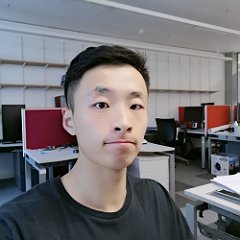
Dr. Stavros Nousias is a researcher at the Chair of Computing in Civil and Building Engineering at the Technical University of Munich , focusing on applications of Artificial Intelligence in the Built Environment . His work bridges Knowledge Representation and Reasoning , Geometry Processing , and Machine Learning to advance construction informatics and digital twinning. Research Interests: AI for building evacuation prediction, technical drawing segmentation, BIM optimization, and respiratory disease modeling. Publications: 15+ peer-reviewed articles on topics including graph neural networks for construction simulations, pulmonary airflow analysis, and heritage site monitoring. Supervised Theses: Guided projects on AI-based BIM command prediction and robotized construction simulation . Labs: Active in the BIM-Lab and Robotic Fabrication Lab . Teaching: Co-instructor for courses like Artificial Intelligence in Engineering and Computation in Engineering 1 .
Dr. Terry Payne is a Senior Fellow of the Higher Education Authority (SFHEA) at the University of Liverpool's Faculty of Science and Engineering. With over 30 years of research in agent-based computing and knowledge systems, he has published 195+ peer-reviewed papers. His current work explores dialogue-based ontological alignment for IoT environments and generative AI applications in education. Research Focus: His research integrates symbolic knowledge representation with multi-agent systems, specializing in: Ontology-driven service discovery/provision Agent negotiation in open environments Generative AI for knowledge engineering Pedagogical modeling using knowledge graphs Publication Trends: Recent work demonstrates strong emphasis on large language models for knowledge evaluation, competency question engineering, and bias analysis in medical AI applications, alongside foundational contributions to semantic web service frameworks. Awards & Honors: Faculty Learning & Teaching Awards (2022, 2019, 2016, 2013) Guild of Students Teacher of the Year (2016) SWSA Distinguished Paper Awards (2011, 2012) AAMAS Best Industrial Paper (2006) Academic Leadership: Supervised 17 PhD graduates, currently mentoring multiple doctoral candidates. Serves as Academic Lead for Recruitment and coordinates industry liaison activities. Professional roles include Program Co-Chair for ISWC 2023 and editorship at Journal of Web Semantics.
Prof. Dr. Axel Cyrille Ngonga Ngomo is a Professor at the University of Paderborn, affiliated with the Faculty of Electrical Engineering, Computer Science and Mathematics. He serves as the leader of the Data Science group at the Heinz Nixdorf Institute and the Informatik Rechnerbetrieb (IRB) unit. His primary research focuses on Knowledge Graphs, Semantic Web technologies, and Machine Learning applications in data science. University of Paderborn Faculty of Electrical Engineering, Computer Science and Mathematics Data Science / Heinz Nixdorf Institute Informatik Rechnerbetrieb (IRB) His research spans automated knowledge extraction, description logic learning, and explainable AI systems through dynamic data federation. Recent work explores convolutional embeddings for complex knowledge graphs and adaptive retrieval augmented generation architectures. Current projects include SAIL (Sustainable Life Cycle of Intelligent Sociotechnical Systems), TRR 318 (Constructing Explainability), Colide (Co-training and co-regulation for industrial data), 3DFed (Dynamic Data Distribution and Federation), and SFB 901 (On-The-Fly Computing). Contact details include offices at Fürstenallee 11 (Room F1.225) and Technologiepark 6 (Room TP6.3.106) in Paderborn, Germany. Consultation hours are available by appointment.
Cécile Ouvrier-Buffet is a University Professor of Mathematics Teaching at Université Paris-Est Créteil Val de Marne (UPEC) . She conducts her research within the André Revuz Didactics Laboratory (LDAR, EA 4434) , a multi-institutional unit that also federates Paris Diderot, Cergy-Pontoise, Artois and Rouen. Education & Academic Trajectory While the page does not detail her own degrees, her extensive record of doctoral supervisions, editorial boards and international scientific responsibilities attests to a full professorial status within the French higher-education system. Research Interests Her work centres on the didactics of mathematics , with four inter-connected thrusts: Epistemological and cognitive analysis of students’ mathematical activity (definitions, proofs) Design and study of Inquiry-Based Education in mathematics and experimental sciences from primary school to university Investigation of Mathematical Learning Disabilities (dyscalculia, algebra-related disorders) Teaching and learning of discrete mathematics at tertiary level Keywords that recur in her publications include epistemology, didactics, proof, definitions, learning disabilities, inquiry-based learning . Publications & Scholarly Impact Across the last decade her output has blended theoretical advances with empirical classroom studies. A strong collaborative orientation is evident in multi-author works on dyscalculia, while single-authored pieces model definitional processes or analyse inquiry situations. Recent papers in Journal of Mathematical Behavior and Educational Studies in Mathematics consolidate her international reputation. Scientific Awards & Distinctions The page lists no named prizes, but highlights a dense portfolio of scientific responsibilities that function as peer recognition: President of the French Association for Research in Mathematics Didactics (ARDM) since 2019 Member of the French Mathematical Society Education Commission (2012-2019) Scientific committee memberships for ANR, IREM network, and several leading journals Co-editor-in-chief of Recherches en Didactique des Mathématiques (2016-2019) Doctoral Supervision & Grants She has directed or co-directed 5 completed PhDs and currently supervises 4 ongoing theses . Her research has been supported by: Hubert-Curien CEDRE / EMa2S project (co-direction of two theses) ANR IDEX IMEP on modelling and investigation (2014-2016) ECOS-Sud Chile comparative study on analysis teaching (2014-2016) PIA Incitative Amont project on inquiry processes in mathematics and science (2014-2015) Founding member of the international RITEAM network on mathematical learning disorders (2017-) Participant in GDR DEMIPS on didactics, epistemology and computer-science interfaces (2020-) Laboratory & Team All research is carried out within the LDAR , a multi-site laboratory whose Paris-Diderot premises are located at Sophie-Germain building, Paris 13. The lab focuses on learning, teaching and training in mathematics, physical sciences and natural sciences across all educational levels.
Roy Villafane serves as an Associate Professor in the Department of Computing at Andrews University, bringing industry experience from Symantec Corporation and the University of Central Florida's IT departments to his academic role. His foundational training includes BS, MS, and PhD degrees in Computer Science from the University of Central Florida. His educational qualifications include: PhD in Computer Science, University of Central Florida MS in Computer Science, University of Central Florida BS in Computer Science, University of Central Florida Professor Villafane's research centers on data mining, high performance computing, and distributed systems, with notable publications addressing transaction recovery in federated databases, broadcast techniques for vehicular networks, and algebraic data mining for performance analysis. He conceptualizes computing as a modular creative process where basic building blocks enable infinitely complex constructions, a perspective he actively shares with students across various computing courses. His work consistently bridges theoretical computer science with practical system implementation challenges. No scientific awards are documented in the available information, though his publication record spans over a decade with contributions to IEEE proceedings and journals. Regarding student mentorship, while specific current advisees aren't listed, his doctoral thesis and collaborative publications indicate research supervision experience. His industry background at Symantec suggests practical applications of his research, though active grant funding isn't specified in the provided materials. There is no indication of a dedicated research laboratory or named research group in the available documentation, though his collaborative publications suggest interdisciplinary project work.
Birutė Plačienė is an Associate Professor in the Department of Marine Engineering at Klaipėda University's Faculty of Marine Technology and Natural Sciences. With a career spanning over 30 years at the university since 1991, she has established herself as a prominent researcher in marine engineering and port logistics. Her research significantly contributes to the understanding and development of maritime transport systems in the Baltic Sea region. Dr. Plačienė earned her doctoral degree from Klaipėda University, defending her dissertation in 2002. Her educational background includes graduating from Žvingiai Secondary School in 1982 and completing her higher education at KTU Klaipėda Faculty in 1989. Before joining Klaipėda University permanently, she briefly worked at the Ministry of Communications in 1991 and KTU Klaipėda Faculty in 1990. Professor Plačienė's research primarily focuses on marine engineering, port development, logistics, and short-sea shipping. Her work addresses critical challenges in port infrastructure, navigational safety, and sustainable maritime transport. Recent research has increasingly focused on green transitions in the maritime industry, port organizational ecosystem resilience, and the integration of digital technologies in logistics. Her publications demonstrate a consistent contribution to advancing knowledge in maritime transport engineering, with particular emphasis on practical applications that enhance efficiency and sustainability. Analysis of Professor Plačienė's recent publications (2018-2025) reveals a strong focus on contemporary maritime challenges. Her research spans theoretical frameworks for short-sea shipping systems, virtual logistics centers, port safety mechanisms, and sustainability transitions. The interdisciplinary nature of her work connects engineering principles with economic, environmental, and organizational considerations, reflecting the complex nature of modern port operations and maritime transport. Scientific Contributions: Developed theoretical frameworks for short-sea shipping system evaluation Advanced methodologies for virtual logistics center creation Contributed to port safety through research on tug operations and approach channel design Explored green transition strategies for port organizational ecosystems Investigated multimodal transport optimization including inland waterways Professor Plačienė maintains an active research profile with consistent publication output in reputable journals such as Applied Sciences and Sustainability. Her work has received citations in both Web of Science and Scopus databases, indicating recognition within the academic community. She collaborates extensively with researchers across the Baltic region, particularly with Polish institutions, demonstrating strong international engagement. Her research group at Klaipėda University focuses on marine engineering applications with emphasis on practical solutions for port operations and maritime transport challenges. The research environment she contributes to serves as an important hub for maritime studies in the Baltic region.
Chao Peng is a Principal Research Scientist at ByteDance where he leads the Trae Research team (ByteDance Software Engineering Lab), conducting cutting-edge research on AI agents for software engineering. He also serves as a Part-time Postgraduate Student Mentor at Fudan University's School of Computer Science, bridging industry research with academic mentorship. PhD in Informatics (2021), University of Edinburgh, UK MSc in High Performance Computing and Data Science (2017), University of Edinburgh, UK BEng in Computer Science and Technology (2016), Xuzhou University of Technology, China Dr. Peng's research focuses on the intersection of software testing, program analysis, and large language models. His work explores how AI agents can revolutionize software engineering practices, with particular emphasis on automated bug detection, code generation, and testing frameworks. He has pioneered approaches for evaluating LLM performance in software engineering contexts and developing agent-based systems that enhance developer productivity while maintaining code quality and security. His recent publications demonstrate a clear trend toward integrating large language models with traditional software engineering practices. The research spans code generation evaluation, security vulnerability detection, automated bug reproduction, and issue localization. These works collectively advance the field of AI-assisted software development by addressing practical challenges in reliability, security, and efficiency of AI-generated code. Distinguished Reviewer for FSE'25 School of Informatics Scholarship (fully-funded PhD scholarship) Outstanding Graduate Scholarship at Xuzhou University of Technology Multiple China National Scholarships Honours Spot Bonus at ByteDance Certificate of Achievement for HPCAC Student Cluster Competition Dr. Peng actively mentors students through his role at Fudan University and previously at the University of Edinburgh, where he served as sub-supervisor for MSc projects and teaching assistant for software testing courses. His research has attracted significant industry attention, leading to multiple collaborations between ByteDance and academic institutions. He frequently serves on program committees for major software engineering conferences including ASE, FSE, and ICSE, demonstrating his leadership in the field. As leader of the Trae Research team at ByteDance Software Engineering Lab, Dr. Peng oversees research on AI agents for software engineering, including the application and evaluation of AI agents and training LLMs for agent-based systems. The lab's work focuses on practical systems that predict, detect, diagnose, and fix bugs across various software systems, with particular emphasis on real-world applications and measurable impact on developer productivity.
Laura Dietz is a tenured Associate Professor in the Department of Computer Science at the University of New Hampshire, where she leads the TREMA lab. Her academic journey began with a PhD from the Max Planck Institute for Informatics in Saarbruecken, Germany (2011), followed by postdoctoral positions at the University of Massachusetts Amherst (2010-2015) and University of Mannheim (2015-2016). Her educational background includes PhD studies at both the Max Planck Institute for Informatics (2007-2011) under Prof. Gerhard Weikum and Prof. Tobias Scheffer, and earlier research at Humboldt University in Berlin. She has built a distinguished career bridging theoretical computer science with practical applications in information retrieval and machine learning. Dietz's research primarily focuses on the intersection of information retrieval, natural language processing, and knowledge graphs, with a parallel research initiative in watershed data science. She is particularly known for her work on entity-aspect linking, complex answer retrieval, and the vision of automatic Wikipedia construction. Her approach integrates fine-grained knowledge annotations with text understanding to create comprehensive information systems that go beyond traditional 10-blue-links search paradigms. In watershed data science, she applies similar machine learning techniques to environmental data streams, focusing on solute transport analysis during storm events. Her recent publications reveal a strong trend toward fine-grained semantic understanding, particularly in entity-oriented search tasks. She has pioneered methods for entity-aspect linking that significantly improve retrieval accuracy by capturing different contexts in which entities appear. Her work increasingly integrates knowledge graphs with neural architectures, showing sophisticated understanding of how to leverage both structured and unstructured information for better search experiences. Best paper award at JCDL 2018 for work on entity-aspect linking NSF CAREER Award (2019-2023) for "Utilizing Fine-grained Knowledge Annotations in Text Understanding and Retrieval" OSSI Award 2013 from UMass ICB3 for open-source hardware/software Dietz actively mentors PhD and Masters students through the TREMA lab, with current research focusing on entity ranking, topic extraction, conversational search, and watershed forecasting. Her grant portfolio includes the NSF CAREER award and funding from the Northeast Big Data Innovation Hub for forecasting salinity in rivers during storm events. She has also coordinated the TREC Complex Answer Retrieval track (2017-2019), creating important benchmarks for the IR community. The TREMA lab (Text Retrieval, Entity Modeling, and Applications) serves as the hub for Dietz's research activities, bringing together students and collaborators to work on cutting-edge problems in information access. The lab's work spans both theoretical contributions to information retrieval and practical applications in domains ranging from environmental science to scientific publication analysis.
Dr. Carlos Francisco Moreno-Garcia is an Associate Professor in Computing at Robert Gordon University (RGU) in Aberdeen, Scotland, UK, affiliated with the School of Computing, Engineering & Technology and the Machine Vision Research Group. His academic journey began with a Bachelor's in Electronic Engineering from Tecnologico de Monterrey, Mexico, followed by a Master's and PhD in Spain at Universitat Rovira i Virgili. Dr. Moreno-Garcia's research spans Pattern Recognition, Computer Vision, Medical Image Analysis, Document Image Analysis, and Systematic Review Automation. His work bridges theoretical AI development with practical applications, particularly in digitizing complex engineering drawings for the Oil & Gas sector, developing medical diagnostic tools for cardiovascular diseases and neonatal pain assessment, and automating systematic literature reviews in healthcare. His recent publications demonstrate strong expertise in attention mechanisms, symbol recognition in technical diagrams, and NLP applications for medical literature analysis. His publication record shows consistent output with 77 documented research outputs, including significant recent contributions in 2024-2025 across high-impact journals and conferences. His work often addresses imbalanced datasets, few-shot learning challenges, and the integration of domain knowledge into AI models. General Chair of BMVC 2023 (elevated to CORE A Conference) Associate Editor of IEEE Transactions on Neural Networks and Learning Systems Co-leader of the Cluster of Machine Learning, AI and Data Science Leader of the Science, Technology and Innovation Pillar and Red Global MX Dr. Moreno-Garcia actively supervises PhD students working on document image analysis, medical applications of AI, and systematic review automation. His research is supported by collaborations with institutions including Universidad Nacional Autonoma de México (UNAM), Jiva.ai, NHS Grampian, and the University of Aberdeen. His lab focuses on real-world applications of computer vision and machine learning, with particular emphasis on healthcare and engineering documentation.
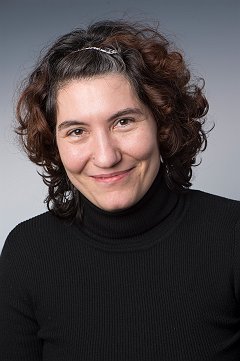
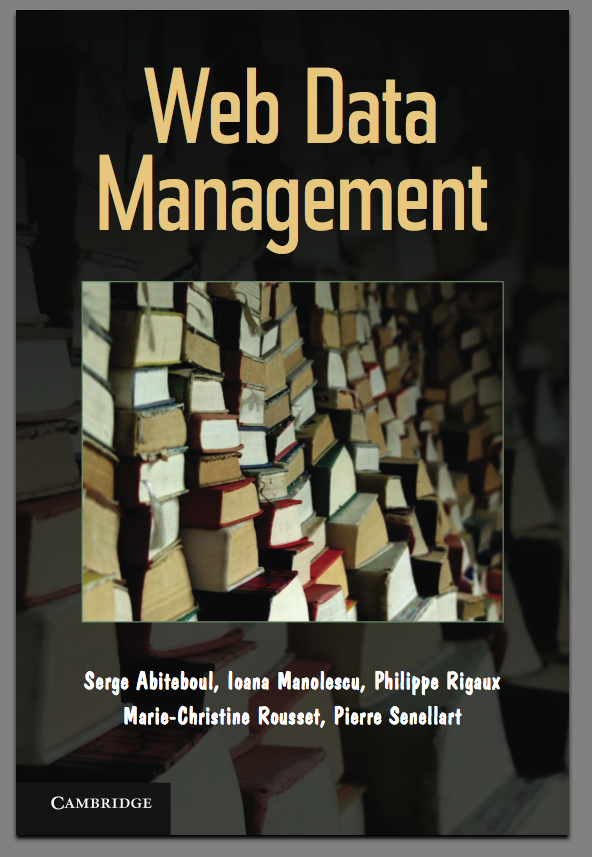
Marie-Christine ROUSSET is a Professor of Computer Science at the University of Grenoble Alpes (UGA) in France, where she is a member of the LIG (Laboratoire d'Informatique de Grenoble) in the SLIDE group. Previously affiliated with Paris-Saclay (LRI), she has established herself as a leading researcher in Knowledge Representation and Information Integration. She holds the distinguished position of Senior member of the Institut Universitaire de France (IUF) (2011-2016, renewed for 2016-2021) and serves as co-responsible for the chair Explainable and Responsible AI within MIAI Grenoble Alpes. Her research focuses on ontology-based data access, logic-based mediation between distributed data sources, query rewriting using views, data linkage, and distributed reasoning for the Semantic Web. She skillfully combines artificial intelligence and database techniques to address complex information integration challenges, with applications spanning biomedical informatics, educational technology, and trustworthy AI. Her work demonstrates consistent innovation from foundational research to practical implementations, as evidenced by her co-authorship of the book 'Web Data Management' published by Cambridge University Press. Professor ROUSSET's recent publications (2019-2022) reveal a growing emphasis on data privacy, RDF graph anonymization, and interactive ontology engineering, while maintaining her strong contributions to semantic web technologies and knowledge representation. Her research shows increasing attention to trustworthy AI concerns, aligning with her leadership roles in relevant projects. Scientific Recognition Senior member of Institut Universitaire de France (IUF) (2011-2016, renewed for 2016-2021) Junior member of Institut Universitaire de France (IUF) from 1997 to 2002 Chevalier de l'Ordre National du Merite (July 11, 2011) EurAI Fellow (nominated ECCAI Fellow in 2005) Best Paper Award at AAAI'96 for 'Verification of Knowledge Bases based on Containment Checking' Professor ROUSSET maintains an active role in the scientific community through editorial work and organizational leadership. She serves on the Editorial Board of Communications of the ACM (CACM) and has held significant roles including PC chair of EGC 2019, Workshops co-Chair of WWW 2018, and Area Chair of IJCAI 2017. Her consistent service on program committees of major international conferences demonstrates her standing in the field. Her laboratory, the SLIDE group within LIG, focuses on semantic web technologies, knowledge representation, and data integration. The group maintains strong connections with the international research community and participates in collaborative projects addressing cutting-edge challenges in artificial intelligence and data management, with particular emphasis on trustworthy and explainable AI systems.
David Chaves Fraga is an Assistant Professor in the Department of Electronics and Computing at the University of Santiago de Compostela (USC), specializing in Computer Science and Artificial Intelligence. He is also a researcher at CITIUS Research Center and maintains a collaboration with the Declarative Languages and Artificial Intelligence Group (DTAI) at KU Leuven. His research focuses on large-scale semantic data integration and its applications across various domains including DevOps, public procurement, and transportation. He is particularly recognized for his work in Knowledge Graph construction and lifecycle management. As co-chair of the W3C Knowledge Graph Construction Community Group and lead scientist for the European Public Procurement Data Space, he plays a significant role in shaping standards and practical implementations in the field. Dr. Chaves Fraga has published over 50 papers in the Semantic Web domain, with several appearing in top conferences like ISWC and ESWC. His work on 'Declarative Generation of RDF Collections and Containers from Heterogeneous Data' received the Best Paper Award at SEMANTiCS Conference. Margarita Salas Fellowship (2022) Best Paper Award at SEMANTiCS Conference (2024) He actively contributes to the academic community as a committee member for major conferences including ISWC, ESWC, WWW, SIGIR, and CIKM, and serves as a reviewer for leading journals in the Semantic Web field. Dr. Chaves Fraga is also involved in organizing two academic workshop series focused on Knowledge Graph Construction and Semantics for Transport.
Dr. Jörg Waitelonis serves as Scientific Co-Worker at FIZ Karlsruhe – Leibniz Institute for Information Infrastructure and Senior Researcher at Karlsruhe Institute of Technology's Institute of Applied Informatics and Formal Description Methods (AIFB), working under Prof. Dr. Harald Sack. His career spans over 15 years in semantic technologies research, beginning at Hasso-Plattner-Institute (2009-2018) and continuing at KIT/FIZ Karlsruhe. Dr. Waitelonis' research focuses on practical implementations of Semantic Web technologies across diverse domains. His work bridges theoretical knowledge representation with real-world applications in cultural heritage informatics, materials science, historical document analysis, and sports science. Key contributions include developing domain-specific ontologies (CourtDocs, PMD Core), advancing FAIR data implementation within Germany's NFDI framework, and creating knowledge graph solutions for cross-disciplinary research data integration. His publication record demonstrates consistent output in top Semantic Web venues (ISWC, SEMANTiCS) with recent work (2023-2025) emphasizing practical ontology engineering for national research data infrastructure projects. Current research directions show increasing focus on materials science ontologies, historical document processing, and BFO-based knowledge representation frameworks. As founder of yovisto GmbH since 2012, Dr. Waitelonis maintains strong industry connections while pursuing academic research. His work demonstrates the practical application of semantic technologies to solve real-world data integration challenges across multiple scientific domains.
Oscar Corcho is a Full Professor at the Department of Artificial Intelligence within the School of Computer Science at the Technical University of Madrid. He is a prominent member of the Ontology Engineering Group and has been serving as a Professor since May 2007, with his current position as Full Professor reflecting his significant contributions to the field. Professor Corcho's research primarily focuses on Ontology-based Data Integration and the application of Semantics in Open Science. His expertise extends across the broader domains of Semantic Web, Linked Data, Knowledge Graphs, and Ontological Engineering. His work bridges theoretical research with practical applications, particularly in data integration systems and knowledge representation frameworks. With over 460 publications and more than 12,000 citations, he has established himself as a leading researcher in semantic technologies. His recent publications show a strong emphasis on virtual knowledge graph architectures, RDF-star generation, semantic labeling techniques for tabular data, and applications of semantic technologies in scientific literature analysis. His research demonstrates a clear trajectory toward solving real-world data integration challenges across heterogeneous sources while advancing the theoretical foundations of knowledge representation. Third Spanish Award on Computer Science (2001) Beyond his academic role, Professor Corcho is a co-founder of LocaliData Spain, demonstrating his commitment to translating research into practical applications. He has supervised numerous research projects and has been instrumental in developing tools like Morph-KGC for knowledge graph construction. His work has significant implications for public procurement systems, transportation data integration, citizen science initiatives, and scientific research infrastructure. As leader of the Ontology Engineering Group, he oversees a research program that develops innovative methodologies for ontology engineering and semantic data integration across diverse domains. His group's work has influenced both academic research and industry practices in knowledge representation and semantic technologies.
Dr. Sadaf Hina is a Lecturer in Cybersecurity at the School of Science, Engineering and Environment (SSEE), University of Salford, Manchester, UK. She serves as the Programme Leader for the BSc Computer Science with Cybersecurity and holds significant research leadership roles as REF 2029 Co-Lead for People, Culture and Environment. Dr. Hina is an active member of the IoT Research and Innovation Lab (IRIL) and contributes to the Informatics Research Centre at the university. Her research interests span the critical intersection of artificial intelligence and cybersecurity, with specific expertise in IoT/IIoT security, zero-trust architectures, threat modeling in cyber-physical systems, and AI-aided security optimization. Over the past five years, her publication record shows consistent output in high-impact journals, with a notable increase in 2023-2025 focusing on cutting-edge applications of deep learning and vision transformers for security challenges. Her work demonstrates strong connections between theoretical security frameworks and practical industrial applications, particularly in critical infrastructure sectors. Dr. Hina has received significant professional recognition including: Fellow of the Higher Education Academy (FHEA, 2024) Advance HE Aurora Leadership Development Program certification (2025) REF Co-Lead roles for both People, Culture and Environment (2025) and Contributions to Knowledge and Understanding (2023) Editorial position for Applied Sciences journal (2024) Membership in professional organizations including IEEE (since 2014) and British Computer Society As a dedicated educator, Dr. Hina teaches Information Security, Information Security Management, Network Penetration Testing, Security and Privacy in IoT, and Fundamentals of Cybersecurity. She actively supervises BSc final year projects, MSc dissertations, and three PhD candidates working on AI-aided cybersecurity solutions. Her leadership extends to serving as Faculty Advisor for Women in Cybersecurity (WiCyS) and participation in cross-institutional mentoring programs, demonstrating commitment to developing the next generation of cybersecurity professionals.
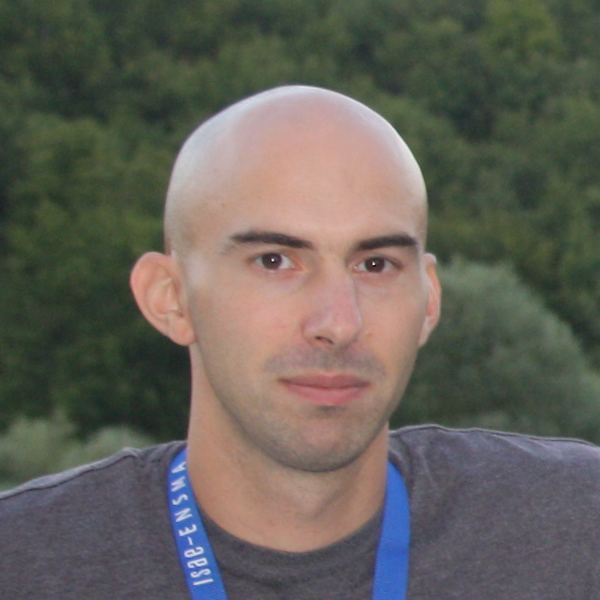
Brice Chardin is an Associate Professor in Data Engineering at ISAE-ENSMA since 2013, affiliated with the LIAS (Laboratoire d'Ingénierie des Applications de la Connaissance et des Systèmes) Data and Model Engineering team. His work bridges academic research and industrial applications, focusing on data management solutions for critical systems. His research spans clustering algorithms under dissimilarity constraints , RDF query relaxation for explaining empty/overabundant results, pattern mining through the RQL language, and energy data management . Key projects include Chronos (a NoSQL system for industrial sensor data) and collaborations with energy companies SRD and Nexeya for predictive consumption analysis. Recent publications (2021-2024) emphasize constrained clustering techniques and cooperative query processing for RDF knowledge bases, revealing a strong trend toward practical solutions for industrial data challenges. His work integrates machine learning with database theory to address real-world data imperfections. PhD in Computer Science from INSA Lyon (2011) Postdoctoral position at LIRIS (2012-2013) on ANR DAG project Specialized in industrial data management since 2011 EDF collaboration Chardin actively supervises academic projects including drone simulation with Ardupilot and Smart Data mining initiatives. His industrial partnerships focus on energy sector applications, particularly predictive analysis for electricity distribution and storage systems. Current work involves developing clustering algorithms with error bounds and query relaxation frameworks for semantic web technologies.