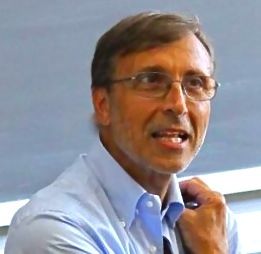
Yifei Jin is a WASP Industrial PhD student at KTH Royal Institute of Technology's School of Electrical Engineering and Computer Science, specifically within the Division of Theoretical Computer Science. They are supervised by Professor Aristides Gionis and Associate Professor Sarunas Girdzijauskas at KTH, and also serve as an Experienced Researcher at Ericsson Research and a Visiting Researcher at Yale University under Rex Ying and Leandros Tassiulas. Yifei's research focuses on graph mining , network analysis , and graph representation learning , particularly applied to crowdsourcing data and wireless communication systems. Their work intersects telecommunications network optimization machine learning for graph-structured data AI-driven wireless resource management edge computing and distributed AI as evidenced by their publications spanning 2017–2025. Their academic contributions include 15 recent papers exploring topics such as neural surrogates for voltage drop estimation, wireless ray-tracing models, scalable distributed AI deployment, and vehicle platooning coordination. These publications demonstrate expertise in network traffic reduction KPI conflict analysis graph convolutional networks hyperbolic embeddings for ontologies real-time network diagnostics .
Carsten Lutz is a Professor at the University of Leipzig, Faculty of Mathematics and Informatics, Institute of Informatics, where he leads the Department of Foundations of Knowledge Representation. He joined the university in April 2022 after previously holding positions at other institutions. His extensive service to the academic community includes numerous roles as Program Committee Chair, Area Chair, and Senior PC Member for major conferences in artificial intelligence, database theory, and knowledge representation. Professor Lutz's research focuses on the theoretical foundations of knowledge representation, with particular emphasis on description logics, ontology-mediated querying, and the intersection of database theory with artificial intelligence. His work bridges formal logic with practical applications in semantic technologies. His research has led to significant contributions in understanding the computational properties of knowledge representation formalisms and developing efficient query processing techniques. His recent publications demonstrate a continued focus on the theoretical aspects of knowledge representation, with increasing attention to connections with machine learning, particularly in areas like graph neural networks and PAC learning of logical concepts. The research trends show a consistent thread of applying logical methods to analyze and improve modern AI systems while maintaining strong theoretical foundations. Scientific Awards: Fellow of the Asia-Pacific Artificial Intelligence Association (AAIA) 2022 EurAI (formerly ECCAI) fellow 2016 IJCAI2023 distinguished paper award PODS2023 Best Paper Award PODS2023 Test of Time Award for PODS2013 paper on Ontology-Mediated Querying "AI Ten to Watch" award of IEEE Intelligent Systems Magazine Professor Lutz has been highly active in academic service, serving as PC Co-Chair for IJCAR2026, Area Chair for KR2025 and IJCAI2025, and PC Member for numerous prestigious conferences including ICDT2026, PODS2025, and DL2025. His commitment to reducing academic carbon footprint through reduced conference travel is noteworthy. He has also developed several software systems including Grind, Combo, and Spell that implement theoretical advances in ontology-mediated querying and concept learning.
Prof. Fabio Gasparetti is a tenured Full Professor at the Department of Civil, Computer and Aeronautical Engineering of the University of Rome 3 , Italy. His academic profile spans Machine Learning , Recommender Systems , and Educational Technology , with a strong focus on Cultural Heritage digitization and Social Media analytics. He is affiliated with the university's AI Lab (a website currently under construction). Email: fabio.gasparetti@uniroma3.it Phone: 0657333212 Location: Via Vito Volterra 62, Rome Research Interests revolve around: Contextual Recommender Systems for cultural and educational domains Social Network Mining for community detection and user modeling Machine Learning Applications in aerospace engineering and e-learning Temporal Analysis of MOOC dynamics and behavioral patterns Prerequisite Modeling for educational content sequencing Cultural Ecosystems in digital pandemic contexts Recent Publications (2021-2025) demonstrate interdisciplinary synergy between Computer Science and Humanities domains, particularly in: Machine Learning for aerospace physics Multimodal LLMs in art interpretation Social data-driven cultural personalization Graph-based educational community monitoring Cross-platform museum positioning Migration discourse analysis
Mark Steedman is a Professor of Cognitive Science at the School of Informatics , University of Edinburgh, and an Adjunct Professor in the Department of Computer and Information Science at the University of Pennsylvania. His research bridges Artificial Intelligence , Cognitive Science , and Computational Linguistics , with a focus on Combinatory Categorial Grammar (CCG) , Prosody and Intonation , and Temporal Semantics . He has led the Institute for Language, Cognition, and Computation and contributed to interdisciplinary research at the Human Communications Research Center and Centre for Speech Technology Research . Research Interests : Steedman's work explores the intersection of formal grammar, computational models, and cognitive processes. He investigates how CCG parsing can enhance semantic inference, how prosodic features improve speech processing, and the role of temporal semantics in language understanding. His projects often integrate language models with entailment graphs for question answering and dialogue systems. Scientific Awards : Fellow of the American Association of Artificial Intelligence (1993) Fellow of the Royal Society of Edinburgh (2002) Fellow of the British Academy (2002) Member of Academia Europaea (2006) Best Paper Awards at ACL 2023 and AACL/IJCNLP 2023 Influential Paper Award (IFAAMAS 2017) Recent Trends in Publications : His recent work emphasizes language models for semantic inference , entailment graphs in multilingual settings, and incremental parsing for brain-language interfaces. Papers address challenges in hallucination , cross-lingual transfer , and prosody-text alignment .
Nicolas HIOT is a Post-doctoral fellow at the University of Orleans affiliated with the LIFO laboratory (Laboratoire d'Informatique Fondamentale d'Orléans) and the Pamda project. His research bridges database systems, natural language processing, and medical informatics with a focus on text-to-database integration and consistency maintenance. His research interests center on: Database Systems for medical applications with emphasis on consistency and evolution Natural Language Processing for clinical text analysis and relation extraction Knowledge Graph construction from unstructured textual data Medical Informatics applications for healthcare data management Analysis of his 15 most recent publications (2020-2024) reveals a cohesive research trajectory at the intersection of databases and NLP. Key thematic clusters include automated medical database construction from clinical texts, consistency management in evolving RDF/property graph systems, and clinical entity/relation extraction for knowledge graphs. His work consistently addresses real-world challenges in healthcare data integration through tools like DataFix and ArchiTXT, demonstrating strong translational potential. Nicolas HIOT actively contributes to the LIFO research laboratory at the University of Orleans, collaborating extensively with Jacques CHABIN, Mirian HALFELD-FERRARI, and Dominique LAURENT. His technical output includes multiple software systems for database evolution management and clinical text processing, reflecting both theoretical contributions and practical implementations in semantic data management.
Christel VRAIN is a full-time University Professor affiliated with the University of Orleans, specializing in Machine Learning and Constraint Programming. Her research focuses on constrained clustering, knowledge integration, and hybrid AI systems, with applications in image classification, time series analysis, and geospatial data. She collaborates extensively with researchers like Thi-Bich-Hanh DIEP-DAO and Samir LOUDNI. University Professor at University of Orleans Affiliated with Laboratoire d'Informatique Fondamentale d'Orléans (LIFO) Her work bridges declarative programming with machine learning, emphasizing explainability and optimization. Recent publications explore continual learning, graph models, and constraint-based clustering frameworks. She contributes to interdisciplinary research through the Kay R. Amel group, investigating synergies between reasoning, knowledge representation, and data mining. Her methodological innovations include memory-efficient algorithms for large-scale datasets and shapelet transforms for time series.
Dr. Debayan Banerjee is a Researcher at the Institute for Business Information Systems (IIS) and part of the Professorship for Business Informatics, especially Artificial Intelligence and Explainability at Leuphana University Lüneburg. His work bridges academic research with practical applications in knowledge management, network science, and AI systems. Institute: Institute for Business Information Systems (IIS) Professorship: Business Informatics, Artificial Intelligence and Explainability Location: Universitätsallee 1, C4.308b, Lüneburg (21335) Email: debayan.banerjee@leuphana.de Research interests focus on knowledge graph integration, hybrid intelligence systems, and explainable AI. His projects include USIN5G, ARDIAS, and INSTANT, emphasizing human-AI collaboration and scholarly data accessibility. Recent publications highlight SPARQL translation automation, hybrid question answering frameworks, and environmental impact analysis of language models. Collaborative work spans DBpedia-Wikidata interoperability, DBLP knowledge graph applications, and graph embeddings for QA systems. Education and advising : Mentored students include Mathias Gross, Fatemeh Ghoochani, and Soham Majumder, focusing on final theses related to AI-driven data extraction and knowledge graph development.
Prof. Dr. Vlado Stankovski serves as Full Professor and Vice Dean at the University of Ljubljana's Faculty of Computer and Information Science, leading major EU-funded initiatives including EBSI-VECTOR (€14.5M), TRUSTCHAIN (€12M), and ONTOCHAIN (€6M) focused on blockchain integration, decentralized systems, and next-generation internet protocols. His research spans software engineering, cloud/edge/fog computing, distributed systems, semantics, and artificial intelligence, with particular emphasis on blockchain applications for smart contracts, digital identity (eIDAS2), and knowledge management. Current projects address real-world implementations in smart construction, healthcare traceability, educational credentialing, and public administration digitalization. Analysis of his 2020-2023 publications reveals dominant trends in decentralized architectures, with 70% of works integrating blockchain with semantic web standards (W3C DID) and fog computing. Key application areas include service-level agreement management (25%), smart construction ecosystems (20%), and cross-border AI/data governance (15%), demonstrating strong industry-academia collaboration through Horizon Europe and EU digital identity frameworks. As scientific coordinator of TRUSTCHAIN and ONTOCHAIN managing over €50M in combined funding, he mentors students through thesis topics in blockchain development and decentralized systems. His laboratory work at the Data Technologies Laboratory supports courses in computer science fundamentals, communications security, and fog computing for smart services, with active involvement in EU skills initiatives like ESSA for software competency standardization.
Dr Shiva Ji is Associate Professor of Design at Indian Institute of Technology Hyderabad, with affiliate appointments in the Department of Climate Change (GreenKo School of Sustainability) and Department of Heritage Science & Technology. He also serves as Head of Design and Principal Investigator of the Design for Sustainability Lab and Digital Heritage Lab. Education PhD in Design, IIT Guwahati (2015-2020) – MHRD Design Innovation Center Fellow Master of Design (PGDPD), National Institute of Design, Ahmedabad (2005-2007) Bachelor of Architecture, Government College of Architecture (now FoA, APJAKTU), Lucknow (1999-2004) MBA, Indira Gandhi National Open University (2011) Certificate Course in Sustainability in Practice, University of Pennsylvania (2014) Professional Certificate in Environment & Sustainable Development, CEPT University (2011) Research Interests Dr Ji’s work converges architecture, sustainability, and digital technologies . His major thrust areas include Design for Sustainability integrating Life-Cycle Assessment (LCA) and system-design thinking, Digital Heritage using AR/VR/MR for architectural documentation and immersive reconstruction, and Climate-Responsive Design Innovation addressing micro-habitation, urban sprawl, and sustainability in the face of climate change. He also investigates vernacular and bio-architecture , leveraging indigenous knowledge for contemporary sustainable solutions, and explores industrial/product design for new-age services and circular-economy products. Publication Trends Since 2016 he has authored 25+ peer-reviewed works spanning urban analytics, digital heritage, sustainable architecture, and socio-cultural studies . Recent publications emphasize data-driven heritage documentation (photogrammetry, space-syntax, visibility graphs) and environmental performance evaluation of built environments, highlighting an interdisciplinary blend of design, computation, and sustainability science. Scientific Awards & Recognition 3rd Winner – Click! Japan Photo Contest 2020 (Embassy of Japan & Japan Foundation) JICA Travel Grant for Japan Universities visit Ford Foundation Scholarship NID Scholarship MHRD Design Innovation Center Fellowship All-India Rank 36 – CEED 2005 NASA Design Competition Citation 2002 Student Supervision & Funding Currently supervising 5 ongoing PhD and 4 ongoing Master’s students, with 14 Masters theses/dissertations already completed. He is Principal Investigator on DST-Govt. of India funded project and India partner for EU LeNSin project (Politecnico di Milano), mobilising international collaborations on sustainable product-service systems. Laboratories & Teams Dr Ji leads two flagship labs: • Design for Sustainability Lab – focuses on LCA, circular design, and strategic sustainable solutions for local to global challenges. • Digital Heritage Lab – pioneers AR/VR/MR applications for immersive heritage visualization and digital twins of architectural assets. Each lab runs multiple sponsored projects with interdisciplinary student teams, industry partners, and international collaborators.
Hoda Eldardiry is an Associate Professor in the Department of Computer Science at Virginia Tech, where she directs the Machine Learning Laboratory. Her research focuses on artificial intelligence and machine learning, particularly in building human-machine collaborative AI systems that can learn context-aware and explainable models from multisource and interconnected data. Prior to joining Virginia Tech, she led research at Palo Alto Research Center (Xerox PARC) in the machine learning research group. Dr. Eldardiry received her educational qualifications from: BE in Computer and Systems Engineering from Alexandria University, Egypt MS and PhD in Computer Science from Purdue University Her research interests span multiple domains of AI and machine learning. She specializes in robust machine learning for information extraction, forecasting, and control. Her work integrates graph neural networks, time-series analysis, and relation extraction to develop explainable and context-aware AI systems. She also investigates the intersection of AI with ethics, policy, and governance, exploring how to build responsible AI systems that align with human values and societal needs. Dr. Eldardiry's recent publications demonstrate a strong focus on advancing graph-based time-series modeling, zero-shot learning techniques, and optimal control systems. Her work bridges theoretical advancements with practical applications in healthcare, transportation, and e-commerce. She has made significant contributions to knowledge graph construction, explainable AI, and federated learning frameworks that operate efficiently in resource-constrained environments. Her scientific achievements have been recognized with several prestigious awards: Purdue University College of Science Early Career Scientist Award for the Department of Computer Science (2021) Honorable Mention Best Paper Award for Exploring Approaches to Artificial Intelligence Governance: From Ethics to Policy (IEEE Ethics 2023) Most Cited Paper Award for COVID-19 Pandemic Impacts on Traffic System Delay, Fuel Consumption and Emissions (2023) Purdue CS Women's History Month Celebration Recognition (2022) VT CS Women's History Month Celebration Recognition (2023) Early Career Distinguished Scientist Award from Purdue University College of Science (2021) Purdue University College of Science Distinguished Alumni (2021) Dr. Eldardiry has successfully secured substantial research funding, with total grant funding of $27,424,460 ($13,808,328 share) from diverse sources including VT, IARPA, DOE, NSF, DARPA, NIH-iTHRIV, CCI, EBAY, SIEMENS, ADOBE, P&G and XEROX. Her current projects include NSF-funded research on Advancing Health Equity using Interactive Condition Assessment and Monitoring and Exploring How AI Engineers Perceive and Develop Translational Ethical Competency, as well as industry collaborations with EBAY on Heterogeneous Hypergraph Modeling for Zero-Shot Product Aspect Identification. As director of the Machine Learning Laboratory at Virginia Tech, Dr. Eldardiry leads a research team that bridges theoretical AI advancements with real-world applications. Her lab collaborates extensively with industry partners and government agencies to develop practical AI solutions while maintaining a strong commitment to ethical considerations and societal impact.
Maurizio Lenzerini is a Full Professor at the Department of Computer, Control and Management Engineering Antonio Ruberti , Sapienza University of Rome. He is a leading international expert in Ontology-Based Data Management , Description Logics , and Data Integration , with foundational contributions to Semantic Web technologies and service composition. ACM Fellow (2009) AAAI Fellow (2021) Peter P. Chen Award (2022) ACM Recognition of Service Award (2008) His research spans Artificial Intelligence , Database Theory , and Service-Oriented Computing , focusing on inference mechanisms, query rewriting, and knowledge graph ecosystems. He has pioneered MASTRO , a tool for ontology-based data access, and led European projects in data interoperability. Recent publications highlight advancements in knowledge graph lifecycle management , semantic classifier explanations , and quality-aware data integration . As PODS 2024 Executive Committee Chair , he shapes database theory research agendas. Teaching includes courses on Databases , Data Management , and Logic in Computer Science , with materials on SQL, ER modeling, and relational algebra.
Prof. Rosario Nunzio Mantegna is a Full Professor in the Department of Physics and Chemistry - Emilio Segrè at the University of Palermo (Unipa), Italy. He has held office hours in Building 18, Viale delle Scienze, focusing on appointments via email at rosario.mantegna@unipa.it. Research Interests: Econophysics, Complex Networks, Financial Market Dynamics, Air Traffic Systems, and Statistical Physics Applications. Methodological Expertise: Network Validation, Correlation Filtering, Hierarchical Clustering, and Stochastic Modeling. His work bridges physics, finance, and data science through network-based approaches to complex systems. Key contributions include analyzing financial indices, market lead-lag relationships, and air traffic networks. Publications span interdisciplinary topics from autism spectrum disorders to volcanic impact on ATM systems.
Prof. Dr. Andreas Harth holds the Chair of Business Information Systems, especially Technical Information Systems, at Friedrich-Alexander University Erlangen-Nuremberg (FAU), where he has been a faculty member since 2018. He also serves as a department head at the Fraunhofer IIS-SCS in Nuremberg. His academic work spans both theoretical research and practical applications in decentralized information systems, with strong connections to industry through numerous collaborative projects. Harth completed an apprenticeship as a banker before studying computer science. He earned his doctorate from the Digital Enterprise Research Institute at the National University of Ireland, Galway, and completed his habilitation at the Karlsruhe Institute of Technology. His academic journey included teaching and research stays at the universities of Heidelberg, Innsbruck, Stanford, and Southern California, providing him with a global perspective on information systems research. His research focuses on developing methods and technologies for decentralized information systems found in the World Wide Web and blockchain environments, with applications in companies. He investigates data integration using Semantic Web and Linked Data technologies, process modeling languages, and their applications in the Internet of Things, Web of Things, and Industry 4.0 contexts. His work bridges theoretical computer science with practical business applications, particularly in data sovereignty and decentralized architectures. Analysis of his recent publications reveals a strong trend toward Solid protocol applications, knowledge graph technologies, and the integration of large language models with semantic web technologies. His research increasingly focuses on practical implementations in enterprise settings, healthcare data management, and manufacturing systems, demonstrating the real-world applicability of his theoretical work. As a member of FAU's research focus on Digitalization and Innovation, Harth collaborates with strategic partners including the Fraunhofer Institute for Information Systems (IIS) and major German industrial companies. His work contributes significantly to FAU's position as one of Germany's most research-intensive universities, particularly in the fields of business informatics and decentralized systems.
Prof. Dr.-Ing. Sebastian Esser serves as Group Lead for Information Management at the Chair of Computing in Civil and Building Engineering at Technical University of Munich. His research focuses on advancing Building Information Modeling (BIM) methodologies, particularly in infrastructure and railway applications. He contributes significantly to international standardization efforts including IFC-Road and IFC-Rail projects, and leads research initiatives such as RIMcomb and BauPuls360. Dr. Esser's research spans several critical areas in digital construction: Graph-based version control systems for BIM collaboration Digital twin development for infrastructure management Semantic modeling of built environments BIM-based regulation checking for railway infrastructure Interdisciplinary model coordination techniques Knowledge representation in civil engineering His work bridges theoretical computer science with practical civil engineering applications, focusing on improving data interoperability and workflow efficiency in construction projects. Analysis of his recent publications reveals a strong emphasis on graph-based approaches to BIM challenges. His research has evolved from foundational work on BIM programming interfaces to sophisticated implementations involving knowledge graphs, semantic reasoning, and digital twin architectures. Key trends include increasing integration of semantic web technologies with BIM standards, development of specialized query interfaces like GraphQL for construction data, and application of formal methods to infrastructure modeling problems. Dr. Esser actively supervises numerous bachelor's and master's theses annually, with recent topics covering graph-based entity alignment, BIM-GIS integration for flood assessment, incremental model updates, and digital twin implementations. His teaching portfolio includes courses such as Bau- und Umweltinformatik, BIM.fundamentals, BIM.infra, and Semantic Modeling of the Built World, demonstrating his commitment to educating the next generation of digital construction professionals. He is involved in multiple research initiatives including DFG FOR 5672 (The information backbone of robotized construction), SPP 2187 (Adaptive modularized constructions), and AM2PM (Additive to Predictive Manufacturing). His laboratory work spans the BIM-Lab and related computational infrastructure supporting his research in digital construction technologies.
Benedict Harder is a Researcher at the Chair of Computing in Civil and Building Engineering, Technical University of Munich, specializing in Building Information Modeling and Model-Based Systems Engineering. He contributes to the DFG SPP 2187 project on modular concrete bridges and maintains active roles in research and teaching. His educational foundation includes a 2024 Master's thesis on algorithmic design of modular precast structures and a 2021 Bachelor's thesis exploring train station design via parametric modeling. These works established his trajectory in computational civil engineering. Harder's research integrates semantic web technologies with infrastructure design, focusing on SysML-OWL interoperability, graph-based modular construction, and formal methods for BIM. His work bridges computer science formalisms with practical civil engineering challenges, particularly in bridge systems and precast structures. Publication trends reveal consistent advancement in formalizing design processes: early work centered on parametric regulation compliance (2021), evolving to SysML-based bridge representation (2024) and semantic reasoning frameworks (2025). Key themes include graph rewriting for modular design, incremental BIM updates, and MBSE applications in structural monitoring. He supervises graduate research including a 2025 Master's thesis on MBSE for bridge monitoring and teaches courses like Computer-Aided Modeling of Products and Processes. His academic activities align with TUM's BIM-Lab and research groups in Digital Twinning and Knowledge Representation.