
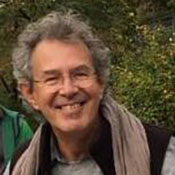
Nicholas Evans is Distinguished Professor of Linguistics and Director of the ARC Centre of Excellence for the Dynamics of Language (CoEDL) at the Australian National University’s School of Culture, History & Language. His work bridges fieldwork-based language documentation with theoretical questions in typology, cultural evolution, and social cognition. Focus on endangered Australian and Papuan languages Director of ARC Laureate Project on 'The Wellsprings of Linguistic Diversity' Co-leader of SCOPIC (Social Cognition Parallax Corpus) study Collaborator in global linguistic diversity initiatives His research explores how micro-level community multilingualism shapes macro-level linguistic diversity, with fieldwork spanning seven years in remote Indigenous communities. Recent projects include PARABANK (paradigm syncretism analysis) and Southern New Guinea language studies, particularly Nen and Yam family languages. Scientific recognition includes the Ken Hale Award (Linguistic Society of America), Anneliese Maier Forschungspreis, and fellowships in the Australian Academy of Humanities, Australian Social Sciences Academy, and the British Academy.
جستجوی استاد راهنمای دانشگاهی
برای مسیر پژوهشیتان، استاد راهنما، استاد دانشگاه و پژوهشگر مناسب را پیدا کنید و با آنها ارتباط بگیرید.
نمایش ۱-۱۵ از ۲٬۸۷۶ استاد راهنما
اطلاعات پروفایلها از صفحات عمومی دانشگاهها گرفته شده و ممکن است بهروز نباشد.

Robert Westمشاهده پروفایل
دانشیار
Robert West is an Associate Professor at EPFL (École polytechnique fédérale de Lausanne) in the School of Computer and Communication Sciences , leading the Data Science Lab (dlab) . His research focuses on Natural Language Processing , Machine Learning , and Computational Social Science , analyzing human-generated data from the web, social media, and online platforms. Education : PhD in Computer Science (2016) - Stanford University MSc in Computer Science (2010) - McGill University BSc in Computer Science (2007) - Technische Universität München Research Interests : West develops algorithms for analyzing large-scale web data, with emphasis on multilingual NLP , social network analysis , and AI ethics . His work bridges machine learning with social science to understand digital human behavior. Scientific Awards : ICWSM’22 Adamic–Glance Distinguished Young Researcher Award Google Faculty Research Award Facebook Research Award Multiple Outstanding Paper Awards at ICWSM and WWW Advising & Grants : He advises 12 PhD students and has secured funding from the Swiss National Science Foundation , Swiss Data Science Center , and industry partners. His lab maintains collaborations with Microsoft Research and CROSS . Labs & Collaborations : West leads the Data Science Lab at EPFL, which focuses on web-scale data analysis , privacy-preserving machine learning , and AI for social good . The lab develops tools like Wikispeedia and Quotebank for public data exploration.
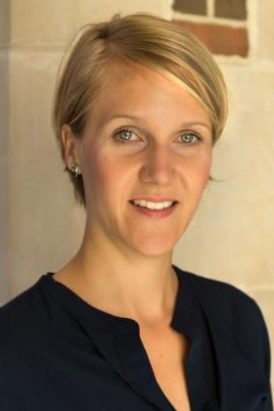
Silvia Lindtner is an Associate Professor at the University of Michigan's School of Information and Director of the Center for Ethics, Society, and Computing (ESC). She holds courtesy appointments in the Penny W. Stamps School of Art and Design and the Digital Studies Institute. Her work focuses on the social and cultural study of technology in China and globally, with a focus on data-driven governance, AI ethics, and the intersection of technology and labor. Lindtner has conducted nearly two decades of fieldwork in China, examining innovation ecosystems, digital economies, and the affective dimensions of state control. She is the author of the award-winning *Prototype Nation: China and the Contested Promise of Innovation* (2020) and co-author of *Technoprecarious* (2020). Education: PhD in Information and Computer Sciences from University of California, Irvine; BS/MS in Media Technology and Design from University of Hagenberg, Austria. Research Interests: Science and Technology Studies (STS), China Studies, HCI, Critical Computing, AI Ethics, Data Governance, Labor Studies, and Transnational Digital Economies. She explores how technological systems shape governance, labor practices, and everyday life, particularly in contexts of global inequality and state surveillance. Awards: Joseph Levenson Prize (2021), Francis L.K. Hsu Book Prize (2021), ACM Distinguished Member (2022), and fellowships from the National Committee on US-China Relations (2021-2023) and China-US Scholars Program (2021-2022). Grants: Supported by NSF, IMLS, Intel Labs, Google Anita Borg, and Chinese National Natural Science Foundation. Leads interdisciplinary initiatives including Tech.Culture.Matters research group and Michigan Interactive and Social Computing (MISC) research group. Labs/Teams: Directs the Center for Ethics, Society, and Computing (ESC) and collaborates with the Lieberthal-Rogel Center for Chinese Studies. Current projects include studies on affective control in AI governance and transnational data practices in healthcare and labor.
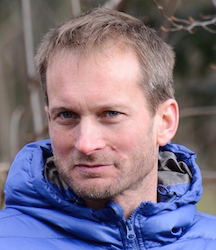
Pascal Frossard is a Full Professor at the Department of Electrical Engineering in the School of Engineering (STI) at EPFL, with a courtesy appointment in the School of Computer and Communication Sciences. He founded and directs the LTS4 laboratory since 2003, co-leads the EPFL AI Center and Swiss Data Science Center, and serves as Associate Dean for Research at STI. Research Focus: Machine Learning, Graph Signal Processing, AI Applications in Healthcare, Computer Vision Academic Leadership: IEEE Fellow, ELLIS Fellow, Conference Chair roles Key Projects: Digital Pathology for Oncology, Cardiac Digital Twins, Robust Machine Learning Research Interests: His work bridges signal processing, machine learning, and applied mathematics, emphasizing biomedical applications. Recent research includes adversarial robustness in classifiers, network representation learning, and 360-degree video analysis. Scientific Awards: IEEE Fellow ELLIS Fellow Leadership in IEEE technical committees Advising & Grants: Supervised 20+ PhD students and postdocs. Secured major grants from PHRT, Hasler Foundation, FNS-Sinergia, Armasuisse, Google, and Cisco.
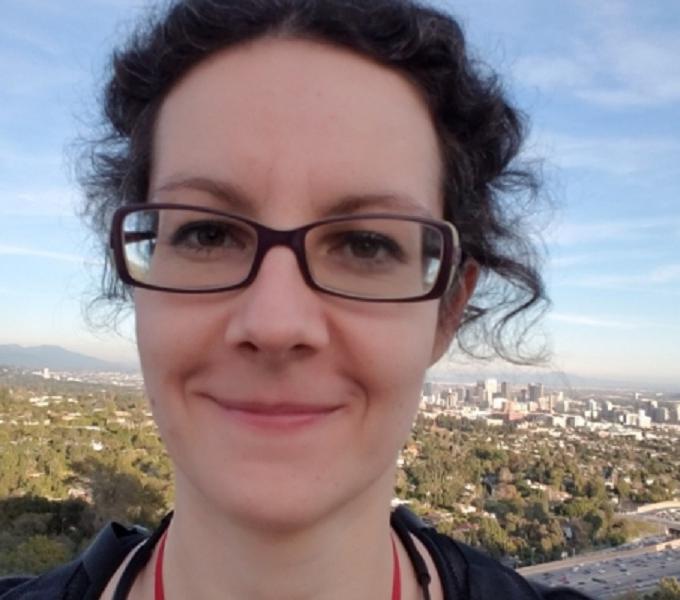
Adriana Kovashka is an Associate Professor at the University of Pittsburgh , affiliated with the School of Computing and Information and serving as Department Chair . Her academic journey began with BA degrees in Computer Science and Media Studies from Pomona College (2008) and a PhD in Computer Science from The University of Texas at Austin (2014). Joined Pitt’s faculty in January 2015 NSF CAREER awardee (2021) Google Faculty Research Award recipient Dr. Kovashka’s research spans Computer Vision , Machine Learning , and Natural Language Processing , focusing on visual rhetoric, weak multimodal supervision, and domain adaptation. She pioneered techniques for analyzing political imagery, developing robust object detection frameworks, and exploring the intersection of visual and textual persuasion through large-scale annotated datasets. Her recent work emphasizes geographic diversity in vision-language systems, audio-visual fusion for domain generalization, and shape-texture bias mitigation in CNNs. Key publications include groundbreaking studies on symbolic reasoning, multimodal dialogue systems, and ethical AI applications in education. Scientific honors include: NSF CRII Award (2016) NSF CAREER Award (2021) Pitt CRDF Award (2016, 2018) Best Paper at ECV Workshop (2021) Google Faculty Research Award (2016, 2018) Dr. Kovashka actively mentors students in multimodal learning projects and collaborates with interdisciplinary teams on NSF-funded initiatives. She co-organizes workshops like the first CVPR workshop on advertisement understanding and leads research groups exploring human-AI co-learning systems.

Greg Durrettمشاهده پروفایل
دانشیار
Greg Durrett is an Associate Professor in the Department of Computer Science at University of Texas at Austin, leading the TAUR Lab (Text Analysis, Understanding, and Reasoning ). His research focuses on advancing Large Language Models (LLMs) for knowledge-intensive tasks in medical information processing scientific discovery legal reasoning . He received his B.S. in Computer Science and Mathematics from MIT (2010) and Ph.D. in Computer Science from UC Berkeley (2016). His work develops techniques to train LLMs with new capabilities augment models for reliability assess model outputs improve reasoning frameworks . His 15 most recent publications (2021-2025) span knowledge propagation in LLMs chain-of-thought reasoning code generation benchmarks multi-modal reasoning fact verification discourse analysis . Scientific honors include NSF CAREER Award (2024) NSF grants (2018, 2024) Bloomberg Data Science Grant (2017) Facebook Fellowship (2014) Best Paper Finalist (EMNLP 2013) . Teaching: CS388: Natural Language Processing (graduate) CS371N: NLP (undergraduate) High school NLP module .
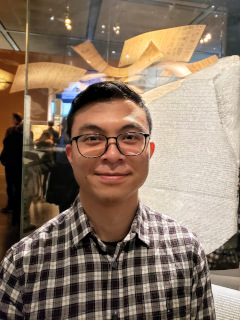
Jackie Chit Kit Cheung is an Associate Professor in the School of Computer Science at McGill University, where he co-directs the Reasoning and Learning Lab. He holds the Canada CIFAR AI Chair and serves as an Associate Scientific Co-Director at the Mila Quebec AI Institute. He is also a consulting researcher at Microsoft Research Montreal. Academic Background: Ph.D. in Computer Science, University of Toronto (2010–2014) M.Sc. in Computer Science, University of Toronto (2008–2010) B.Sc. (Honours) in Computer Science, minors in Linguistics and German, University of British Columbia (2004–2008) Research Interests: Jackie Cheung's research lies at the intersection of natural language processing, machine learning, and cognitive science. He focuses on natural language generation , automatic summarization , commonsense and pragmatic reasoning , and the evaluation of NLP systems . His work aims to build language models that reflect real-world structure and reasoning, with applications in health, education, and language revitalization. He is particularly interested in how implicit meaning is processed in context, a core concern in linguistic pragmatics. Publication Trends: His recent publications (2024–2025) show a strong emphasis on evaluation methodologies (e.g., COSMIC, ECBD), hallucination and factuality in language models, coreference and reasoning , and long-context modeling . He frequently collaborates across institutions and integrates insights from linguistics and psychology into NLP system design and analysis. Scientific Awards: Best Paper Award, ACL 2018 Outstanding Paper Award, NAACL 2018 Student Research Workshop SAC Award, ACL 2024 (for COSMIC) Best Poster Award, CMDO AI-Health Symposium 2024 Advising and Grants: He advises a large and diverse group of graduate students, including PhD and Master’s candidates, often in co-supervision with other faculty. His group has received support from major AI and health research initiatives, including CIFAR and Mila. He has trained alumni who have gone on to faculty and industry research positions. He has served in leadership roles in top NLP conferences, including as Senior Area Chair, Workshop Chair, and Program Chair of Canadian AI 2018. Labs and Teams: He co-directs the Reasoning and Learning Lab at McGill and is deeply involved with Mila – Quebec AI Institute . He founded the NLP Reading Group at McGill, which brings together researchers from computer science, linguistics, and information studies to discuss theoretical and applied NLP topics.

Dr. Jimeng Sun is a Health Innovation Professor at the Siebel School of Computing and Data Science and Carle Illinois College of Medicine at the University of Illinois Urbana-Champaign. Co-founder of Keiji AI , he leads groundbreaking research at the intersection of artificial intelligence and healthcare, actively deploying clinical AI systems and developing frameworks like PyHealth and Therapeutics Data Commons . His research spans four major areas: Clinical AI Systems : Developing interpretable models (e.g., RETAIN) for patient similarity, temporal event prediction, medication recommendation, and clinical outcome forecasting Drug Discovery : Creating molecular optimization frameworks, drug-target interaction models, and AI-driven platforms Clinical Trials : Pioneering patient-trial matching, outcome prediction, and optimization frameworks using deep learning and graph neural networks Biosignal Analysis : Advancing sleep staging, seizure classification, and automated EEG/Cardiac monitoring systems With over 500 top-tier publications (including in Nature , NEJM AI , and leading AI conferences) and an h-index of 99, his work has been recognized with the Top 100 AI Leaders in Drug Discovery and Advanced Healthcare award. He maintains active collaborations with institutions like Massachusetts General Hospital , Medidata Solutions , and OSF Healthcare . His recent publications reveal a strong focus on: Reinforcement learning applications in medical data analysis Large language model adaptation for clinical tasks Knowledge graph integration with AI systems Synthetic data generation for healthcare Multi-modal learning in clinical contexts Explainable AI for medical applications Dr. Sun's lab ( Sunlab ) emphasizes practical impact over theoretical work, actively collaborating with hospitals and healthtech companies. He welcomes contributions from clinicians, researchers, and industry partners through initiatives like his AI for Health webinar series .

Kamalika Chaudhuri is a Professor in the Department of Computer Science and Engineering at the University of California, San Diego (UCSD), and also serves as a Director and Research Scientist with the FAIR team at Meta AI. Her research focuses on the foundations of trustworthy machine learning, including robust machine learning, learning with privacy, and out-of-distribution generalization. Dr. Chaudhuri has earned her PhD from UC Berkeley in 2007 with a dissertation on "Learning Mixtures of Distributions." Her academic journey has led her to become a leading researcher in machine learning theory with a particular emphasis on privacy and robustness. Her research interests span machine learning foundations with a strong focus on trustworthy AI . She investigates problems at the intersection of differential privacy , adversarial robustness , and out-of-distribution generalization . Her work addresses critical challenges in developing machine learning systems that maintain privacy while preserving utility, resist adversarial attacks, and generalize effectively beyond training data distributions. She has pioneered approaches in privacy-preserving machine learning, robust learning theory, and methods for detecting and mitigating data memorization in models. An analysis of her recent publications (2024-2025) reveals a strong focus on the intersection of privacy, security, and machine learning. Her work spans differential privacy mechanisms, membership inference attacks, memorization detection, and fairness certification. She has been particularly active in developing methods for privacy-preserving foundation models, with several papers on differentially private computer vision and language models. Her research demonstrates a consistent thread of addressing fundamental challenges in trustworthy AI while developing practical solutions that balance privacy, accuracy, and utility. Best Award at the ICLR 2024 Workshop on Privacy Regulation and Protection in Machine Learning Distinguished Paper Award at IEEE Conference on Secure and Trustworthy Machine Learning (SaTML), 2024 Dr. Chaudhuri has advised numerous PhD students who have gone on to prominent positions at Google, DeepMind, Microsoft Research, and other leading AI institutions. Her group maintains an active research blog with guest posts from UCSD researchers. She has served in significant leadership roles including General Chair for ICML 2022 and Program Co-Chair for both ICML 2019 and AISTATS 2019, where she pioneered initiatives to improve reproducibility in machine learning research. Her research group at UCSD focuses on trustworthy machine learning, with current projects spanning privacy-preserving AI, robustness against adversarial attacks, and methods for ensuring reliable out-of-distribution generalization. The group collaborates closely with the FAIR team at Meta AI, where Dr. Chaudhuri serves as a Research Scientist.
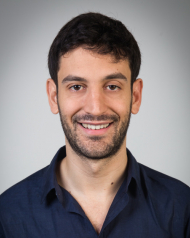
Brenden Lakeمشاهده پروفایل
دانشیار
Brenden Lake is an Associate Professor of Computer Science and Psychology at Princeton University, starting Fall 2025. Previously, he was an Associate Professor of Psychology and Data Science at New York University. He is the principal investigator of the lab for Human & Machine Intelligence, which moved from NYU to Princeton in 2025 and is jointly affiliated with the Department of Computer Science and the Department of Psychology. His lab is located in Princeton's Peretsman Scully Hall, rooms 117, 120, and 121. Ph.D., Massachusetts Institute of Technology, 2014 Lake's research focuses on the intersection of human and machine intelligence, specifically examining human cognitive abilities that elude current AI systems. His work centers on few-shot learning of new concepts, learning by generating new goals, learning by asking questions, and learning by producing novel combinations of known components. He employs modern neural network modeling approaches including meta-learning, fine-tuning LLMs, neuro-symbolic modeling, and learning from child headcam videos. His research aims to advance both psychology and computer science by exploring what makes human intelligence unique and using those insights to develop more powerful AI systems. Lake's recent publications demonstrate significant trends in grounded language acquisition through child perspectives, systematic generalization in neural networks, and the intersection of developmental psychology with AI. His work has appeared in top-tier venues including Science (2024) and Nature (2023), with multiple publications exploring how insights from human cognition can improve machine learning systems. His research shows how incorporating human cognitive ingredients can make AI systems more powerful and human-like while addressing longstanding debates about neural network capabilities. Science publication (2024) on Grounded language acquisition through the eyes and ears of a single child Nature publication (2023) on Human-like systematic generalization through a meta-learning neural network Multiple publications covered by major media outlets including New York Times and Washington Post Lake advises Ph.D. students in computer science, psychology, and related fields through his lab. His research is supported by publications in top venues across computer science and cognitive science. He teaches courses including Computational Cognitive Modeling and Advancing AI through Cognitive Science, bridging the theoretical and practical aspects of his research. Lake leads the lab for Human & Machine Intelligence, which studies the ingredients of intelligence in humans and machines. The lab investigates human cognitive abilities that current AI systems cannot replicate, with the dual goal of advancing psychological understanding of human intelligence while developing more capable artificial intelligence systems. Current research focuses on few-shot concept learning, learning through goal generation, and learning by asking questions.
Min Yen Kanمشاهده پروفایل
دانشیار
Min Yen Kan is an Associate Professor and Vice Dean of Undergraduate Studies at the National University of Singapore's School of Computing, Department of Computer Science. With a PhD from Columbia University (2002), he leads the Web Information Retrieval / Natural Language Processing Group (WING.NUS) and serves as ACL Ethics Committee co-chair. His research spans Natural Language Processing , Large Language Models , Digital Libraries , and Information Retrieval , with specific focus on scientific discourse analysis, fact verification, and multimodal systems. Current projects include Scholarly Document Information Extraction (TRL 6), Task-Oriented Dialogue Systems (TRL 4), and Recommendation Systems (TRL 5). Recent publications reveal strong trends in LLM limitations (bias, hallucination, evaluation), conversational recommendation systems , and misinformation detection . His work consistently bridges theoretical NLP with real-world applications in digital libraries and scientific communication. Award highlights include: CIKM 2019 Best Paper Award ACL Distinguished Service Awards Vannevar Bush Best Paper Award (JCDL 2012) ACM Distinguished Speaker designation Kan mentors PhD students with placements at Google and USTC, and serves as associate editor for Information Retrieval and survey editor for Journal of AI Research . His lab WING.NUS develops practical tools like SciWING for scientific document processing and FANG for fake news detection. Media engagements include commentary on AI regulations in Southeast Asia and workforce implications in the AI era.

Christopher Potts is Professor and Chair of Linguistics at Stanford University, with a courtesy appointment as Professor of Computer Science. He serves as Director Emeritus of the Stanford Center for the Study of Language and Information (CSLI) and leads the Pragmatic Enrichment & Contextual Interface Lab. His work bridges theoretical linguistics and computational approaches to language understanding. Education: B.A. in Linguistics from New York University (1999) Ph.D. in Linguistics from University of California, Santa Cruz (2003) Potts' research focuses on how computational methods can illuminate linguistic phenomena, particularly in the areas of semantics, pragmatics, and sentiment analysis. His work explores how emotion is expressed in language and how linguistic production and interpretation are influenced by context. He has made significant contributions to understanding conventional implicatures, sentiment analysis frameworks, and the application of neural networks to linguistic problems. His recent work has increasingly focused on the interpretability of large language models and the development of frameworks like DSPy for building reliable AI systems. An analysis of Potts' recent publications reveals a strong trend toward the intersection of linguistic theory and practical AI applications. His work spans theoretical linguistics (e.g., compositionality, preposing constructions), neural network interpretability, and practical NLP systems (e.g., ColBERT, DSPy). The research demonstrates consistent focus on making language models more transparent, controllable, and linguistically informed, with particular attention to how context shapes meaning. Scientific Awards: Best Paper Award at 2024 ACL for 'Mission: Impossible Language Models' Outstanding Paper Award at 2024 ACL for 'CausalGym' ACL Test of Time Award 2023 Dean's Award for Distinguished Teaching (2015-2016) Best New Data Set or Resource Award at 2015 EMNLP Potts has secured numerous research grants as PI or Co-PI from major organizations including Google, Amazon, NSF, Office of Naval Research, and Stanford's HAI institute. His current projects focus on evaluation of retrieval-augmented generation systems, LLM-mediated communication in organizations, interpretability techniques for language models, and frameworks like DSPy for building next-generation AI systems. He has mentored numerous researchers who have gone on to make significant contributions in NLP and computational linguistics. As Director of CSLI (2013-2020) and current Chair of Linguistics at Stanford, Potts has played a key leadership role in shaping interdisciplinary research at the intersection of language, computation, and cognition. His Pragmatic Enrichment & Contextual Interface Lab continues to be a hub for innovative research combining formal linguistic theory with cutting-edge computational methods.
Yu-Ru Linمشاهده پروفایل
دانشیار
Yu-Ru Lin is an Associate Professor at the School of Computing and Information, University of Pittsburgh, and serves as Research & Academic Director at the Institute for Cyber Law, Policy and Security (Pitt Cyber). She leads the Pitt Computational Social Dynamics Lab (PICSO Lab) and holds secondary appointments in Political Science, Computer Science, and the Intelligent Systems Program. PhD in Computer Science from Arizona State University Postdoctoral research at Harvard University and Northeastern University Her research focuses on computational approaches for: Networked social dynamics High-dimensional social information summarization Trust and distrust propagation Misinformation detection Policy diffusion analysis Recent publications span 2014-2020, covering: Social media crisis response Graph visualization techniques Policy diffusion patterns Misinformation mitigation Temporal topic modeling Scientific support includes: National Science Foundation (NSF) awards Minerva/ONR funding AFOSR grant for distrust modeling DARPA Understanding Group Biases program As director of PICSO Lab, she leads interdisciplinary research teams on: Digital accountability Urban mobility patterns Health informatics via crowdsourcing Trust-influence dynamics
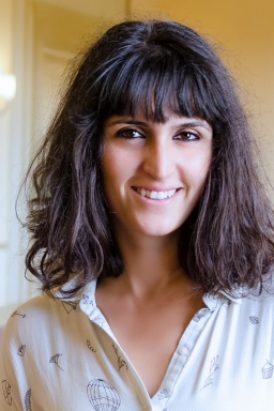
Ceren Budakمشاهده پروفایل
دانشیار
Ceren Budak is an Associate Professor at the University of Michigan School of Information and holds a joint appointment as Associate Professor of Electrical Engineering and Computer Science in the College of Engineering. Her work bridges computer science, statistics, and social sciences through computational social science approaches. Her educational background includes a PhD in Computer Science from the University of California, Santa Barbara (2012) and a Bachelors degree in Computer Science from Bilkent University in Turkey (2007). Prior to joining the University of Michigan faculty, she was a Postdoctoral Researcher at Microsoft Research New York. Professor Budak's research centers on computational social science, with particular emphasis on analyzing large-scale datasets to address questions with social, political, and policy implications. Her work spans several interconnected domains: News Media Production & Consumption (examining bias in news outlets and reader preferences), Social Movements & Media (using social media data to study collective action), Social Networks (understanding information diffusion processes), and Measuring and Promoting the Quality of Online Discussions (developing tools to improve online conversations). She teaches SI 608 (Networks) and SI 618 (Data Manipulation and Analysis) at the School of Information. Her publication record demonstrates consistent contributions to understanding how online information ecosystems operate, with recent work focusing on AI-human collaboration, misinformation dynamics, social movement framing, and the application of computational methods to political communication. Her research shows a clear trajectory from foundational work on social network diffusion to increasingly sophisticated analyses of contemporary information challenges. Among her service activities, she has served as Registration chair for COSN (ACM Conference on Online Social Networks) 2015 and as Program Committee Member for numerous prestigious conferences including WWW, ICWSM, WebSci, AAAI, and others. She has also been involved in organizing the MSR NYC Data Science Seminar Series and instructing the Microsoft Research Data Science Summer School.
Andrea Kordaمشاهده پروفایل
دانشیار
Andrea Korda, PhD (University of California, Santa Barbara), is an Associate Professor of Fine Arts & Humanities and Associate Dean (Research) at the Augustana Campus of the University of Alberta. Her academic career bridges art history, material culture studies, and pedagogical innovation. Educations: BA in Fine Arts, Queen's University MA in Art History, Concordia University PhD in Art History, University of California, Santa Barbara Research Focus: Dr. Korda specializes in 19th-century visual and material culture, with a focus on education's visual dimensions, children's literature, and community-engaged projects like the award-winning Crafting Communities initiative. She co-curated the virtual exhibition Photographies (Bruce Peel Special Collections) and explores hands-on learning through historical crafts. Teaching: Courses include modern art history (AUART 220), photography theory (AUART 225), and special topics in visual culture (AUART 382). She emphasizes experiential learning and digital humanities integration, as seen in her work with the Getty Museum Challenge and OER projects. Collaborations: Leads interdisciplinary teams on projects like Crafting Communities , blending scholarship with public engagement. Her research bridges historical methodologies with contemporary pedagogical practices, fostering connections between academia and communities.
نمایش نتایج تا ۷۵۰ مورد اول. برای یافتن نتایج دقیقتر، جستجوی خود را با فیلترها محدود کنید.