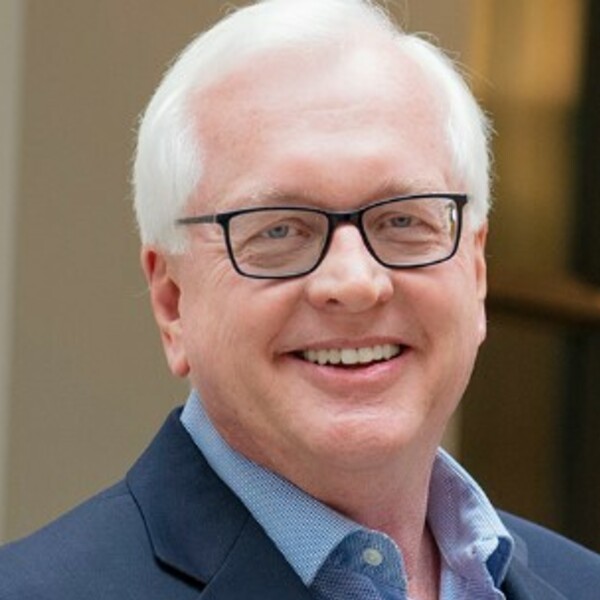
Harald Bathelt is a Professor at the University of Toronto’s Department of Geography & Planning and holds the Zijiang Visiting Chair at East China Normal University. His research focuses on relational economic geography, industrial clustering, interregional inequality, and knowledge creation over distance. He has authored influential works such as *The Relational Economy* and serves as Editor of *ZFW – Advances in Economic Geography*. Bathelt holds a PhD and Habilitation from the University of Giessen, Germany. His work bridges economic geography, political economy, and methodology, emphasizing governance structures at firm, cluster, and territorial levels. **Education**: Habilitation (2007), PhD (1991), and Diplom (1987) from University of Giessen. **Administrative Roles**: Editor of ZFW, Member of University of Toronto’s Research Ethics Board. **Research Themes**: Relational approaches to economic processes, innovation systems, and global value chains. **Publications**: Over 150 articles in journals like *Journal of Economic Geography* and *Regional Studies*, with 20k+ Google Scholar citations (h-index 52). **Teaching**: Courses on economic geography, methodology, and statistical analysis.
JYH-SHEN CHIOU is a Professor at the Department of International Business, College of Commerce, National Chengchi University (NCCU). He obtained his Ph.D. in Marketing from Michigan State University in 1996 and has been with NCCU since 1996, serving as Associate Dean of Commerce (2013-2017), Department Chair (multiple terms), and Convener of Management Division II at Taiwan's National Science and Technology Council. His leadership extends to editorial roles in journals like Journal of Business Research and Management Review . His research focuses on strategic marketing, consumer behavior in digital contexts (e-commerce reviews, social media), international B2B relationships, and brand management. Recent work explores fintech adoption, luxury retail strategies, and cross-cultural buyer-seller dynamics. He has published extensively in top-tier journals including Journal of World Business and Industrial Marketing Management . He has led over 30 research projects funded by Taiwan's National Science Council, including multi-year grants on brand crisis management (2019-2022), consumer asset perception (2016-2019), and financial technology innovation (2017-2021). His work consistently examines technology's impact on marketing practices. Honors include : Fulbright Scholar 4 EMBA Teaching Excellence Awards (104th–107th academic years) 3 College of Commerce Teaching Excellence Awards Distinguished Professor title from NCCU
Dr. Kelly White serves as an Assistant Professor of Computer Science at the University of Maine at Fort Kent, within the Humanities and Professional Studies department. He holds a Doctoral degree in Educational Leadership from the University of New England, specializing in online learning orientation's impact on student success. His professional experience spans over two decades in community college distance education administration, including roles at the Community College of Vermont and McLennan Community College. He has taught computer science, physical science, and physics at MSAD1 in Presque Isle. Education: EdD – Educational Leadership, University of New England EdS – Computing Technology in Education, Nova Southeastern University MAEd – Educational Technology, University of Phoenix BFA – Photography, Arizona State University AA – Visual Arts, Community College of Vermont Research & Presentations: Dr. White focuses on augmented reality, large animal detection, and human-computer interaction. He has presented at conferences including Technology, Knowledge, and Society (2017), eLearning (2017, 2010, 2009), and the National Institute for Staff and Organizational Development (2010). His work emphasizes innovative solutions for online course design, student engagement, and leveraging work-study programs in instructional teams. Advising & Grants: No information available on current advising roles or grants. His professional contributions emphasize practical, applied research in distance education and instructional design.
Dragan Boscovic is a Clinical Professor at Arizona State University's W. P. Carey School of Business, serving as Director of the Blockchain Research Lab and Associate Director of the Center for AI and Data Analytics. He holds a PhD in Electrical Engineering and Computer Science from the University of Bath and has over 35 years of experience in high-tech industries across multiple countries. His research focuses on blockchain, AI/ML, IoT, digital twins, and tokenomics, with notable contributions to cognitive networks and distributed systems. Boscovic also leads VizLore, LLC, applying IoT and AI to digital agriculture. Education: PhD in Numerical Electromagnetics (University of Bath, 1991), Magistar in Optoelectronics (University of Belgrade, 1988), Dipl. Inz in Electronics & CS (University of Belgrade, 1983). Research Interests include cognitive networks integrating socio-technical systems, blockchain applications in circular economies, and GenAI for smart contracts. He has secured 24 patents, including recognition from Motorola, and authored influential papers on topics like data analytics for sustainability and cybersecurity. Key roles include Distinguished Visiting Scholar at Stanford’s mediaX, former executive roles at Motorola and Google, and leadership in initiatives like the AZ Blockchain Applied Research Center. His awards include the Motorola Standards Impact Award (1999) and Patent of the Year (2005).
Prof. em. Dr. Peter Maas is an Affiliate Professor of Management at Vlerick Business School, specializing in Service Management and Insurance Management. His research focuses on digital transformation's impact on consumer behavior, particularly in the insurance sector, emphasizing prevention through advanced technologies. He explores topics like customer experience, omnichannel strategies, and organizational ambidexterity in SMEs. Key research areas include the role of self-tracking technologies in healthcare, cultural influences on information sharing, and the evolution of experience research over four decades. His work bridges academic insights with practical strategies for enhancing customer value and organizational effectiveness. Notable contributions address challenges in digital reputation management, the ethical implications of nudging in consumer decisions, and fostering cooperation among insurers and insurtech firms. He advises students like Lukas Fischer (2021) and Matthias Rüfenacht (2017), focusing on impactful research in service innovation and organizational dynamics.
Associate Professor Dmitrij Slepniov is affiliated with the Aalborg University Business School under the Faculty of Humanities and Social Sciences. He holds leadership roles in initiatives like the Sino-Danish Center’s Innovation Management Program and the AI for the People research group. His academic background includes a PhD in Business and Management (2010) from Aalborg University and an MSc in Business and Management from the London School of Economics (2005). His research focuses on global operations management, innovation ecosystems, and cross-border business strategies. Notable projects include studying the green transition in the Port of Aalborg, servitization in manufacturing, and R&D strategies in multinational corporations. He has led over 16 projects, including the 'Green Nexus' initiative assessing port sustainability and 'Value Chain Innovation' exploring Danish-Chinese collaboration. Publications span topics like virtual internationalization of mobile apps, co-creation in automotive acquisitions, and digital servitization. His work bridges strategic management, institutional theory, and global value chain dynamics. He frequently engages with industry partners like Novo Nordisk and Samsung, emphasizing practical applications of academic research. Key contributions include frameworks for strategic R&D management in fragmented markets and conceptualizations of value co-creation in digital ecosystems. His teaching and research emphasize multicultural innovation education and the interplay between global business systems and local contexts.
Celiane Camargo-Borges is an Adjunct Senior Lecturer at Breda University of Applied Sciences (The Netherlands), affiliated with the School of Consciousness and Transformation and the Transformative Inquiry department. She holds a Ph.D. in Public Health and Wellbeing from the University of São Paulo and the University of New Hampshire, alongside advanced degrees in Social Psychology and Psychology. Her research focuses on social constructionism, systems thinking, decoloniality, and design thinking, emphasizing their applications in education, healthcare, and organizational development. She is a member of the Transversal Sustainability Transitions research group and contributes to global initiatives through her role on the Taos Institute’s Executive Board. Her academic journey reflects extensive international experience, having lived and worked in Brazil, England, the USA, Taiwan, Singapore, and the Netherlands. This multicultural background fuels her work in fostering inclusive, innovative practices across diverse communities. Key contributions include co-editing The SAGE Handbook of Social Constructionist Practice and authoring Design Thinking and Social Construction: A Practical Guide to Innovation in Research . Research interests span collaborative inquiry, participatory action research, and the integration of arts-based methods. Over 30 publications highlight her expertise in education transformation, sustainable tourism, and relational approaches to social challenges. Her work bridges theory and practice, prioritizing co-creation and ethical engagement in diverse contexts.
Annie Taylor, Ph.D., serves as Teaching Professor and Senior Assistant Dean for Distance Learning at The Pennsylvania State University's College of Earth and Mineral Sciences, while directing the John A. Dutton Institute for Teaching and Learning Excellence. With over 30 years of experience since 1991, she spearheads strategic planning for online degree programs targeting working professionals and supports residential teaching initiatives through innovative faculty development. Her research centers on distance education, learning design, and creating inclusive online environments through servant leadership principles. Dr. Taylor actively advances diversity, equity, and inclusion in educational settings while developing frameworks for faculty engagement and student success in digital learning spaces. Her professional philosophy emphasizes empowering others through collaborative development and organizational excellence. Dr. Taylor's publication record reveals consistent focus on online education evolution, with recent scholarship addressing pandemic-era student engagement challenges, adjunct faculty retention strategies, and geospatial knowledge frameworks. Her work bridges theoretical research with practical implementation, emphasizing evidence-based approaches to improve online teaching quality and accessibility across disciplines. As a dedicated university leader, she served on the Penn State Faculty Senate from 2007-2023 and contributes to institutional committees shaping distance learning policy. Her directorship of the Dutton Institute cultivates a high-performing team that develops faculty resources, implements best practices, and drives innovation in online education through strategic partnerships and continuous improvement initiatives.
Univ.-Prof. Erich J. Schwarz is a distinguished Professor at the University of Klagenfurt , serving as Dean and Head of the Institute for Innovation Management and Entrepreneurship within the Department of Economics . With over two decades of academic leadership, he specializes in sustainable business start-ups , technology-oriented innovation management , and environmental business practices . Research Focus: Modeling growth potential of young technology companies Analyzing success factors in entrepreneurial teams Developing regional value creation through industrial networks Implementing environmentally conscious production technologies Academic Contributions: His work spans 15+ years of publications on business planning, cultural capital impacts, and eco-innovation systems. Notable monographs include Innovation Compass for SMEs and From Business Idea to Market Success . Institutional Impact: As institute leader, he has driven initiatives in distance learning for entrepreneurs and regional sustainability projects . His research integrates digitalization trends with traditional innovation management frameworks.
Alejandro Acuña-López is an Associate Professor in the Industrial Design Department at Tecnológico de Monterrey (ITESM) Campus Querétaro, within the School of Architecture, Art and Design. He serves as an Adjunct Researcher for Advanced Design Processes for Sustainable Transformation and is the Administrator of DICI Workshops (Design, Innovation and Industrial Creation). His educational background includes: Bachelor of Industrial Design from Universidad Nacional Autónoma de México Master's Degree in Industrial Design from Universidad Nacional Autónoma de México PhD in Design from Universidad Autónoma Metropolitana Acuña-López specializes in innovative approaches to design education and practice, with particular expertise in virtual and augmented reality applications, sustainable design methods, and the integration of AI technologies in the design process. His research focuses on transforming traditional design education through immersive technologies and interdisciplinary approaches, creating learning environments that bridge theoretical knowledge with practical application in industrial design contexts. He has developed methodologies for incorporating biomimicry principles into product design with recycled materials and has explored the use of digital twins for virtual assembly processes. His publication record demonstrates a strong focus on educational innovation, particularly in how emerging technologies can enhance design education. A significant portion of his recent work centers on the TEC21 educational model, examining how virtual reality, augmented reality, and mixed reality can create more effective learning experiences for design students. His research also explores the application of generative AI in multidisciplinary design projects, spanning areas from automotive concepts to sustainable product development. Many of his publications address the practical implementation of these technologies in workshop settings, with particular attention to safety considerations when working with high-risk equipment. His scientific recognition includes: Reconocimiento Estrella from ITESM Campus Querétaro (2009) Reconocimiento Estrella from ITESM Campus Querétaro (2010) Reconocimiento Estrella from ITESM Campus Querétaro (2011) With over 12 years of professional experience in design studios and companies (1992-2004), where he developed and mounted exhibitions and point-of-purchase displays, Acuña-López brings substantial industry expertise to his academic work. His teaching activities include Design Project Management, Development of Strategic Design Projects, and Visual Sound and Culture. His research spans multiple Sustainable Development Goals, particularly focusing on affordable and clean energy, gender equality, industry innovation and infrastructure, quality education, and sustainable cities and communities. He has presented research papers internationally in England, Japan, Netherlands, and Norway, demonstrating the global relevance of his work in design education and practice. As Administrator of DICI Workshops, he leads initiatives that foster design innovation and industrial creation, providing students with hands-on experience in contemporary design methodologies and technologies. His work bridges academic theory with industry practice, creating pathways for students to engage with real-world design challenges through challenge-based learning approaches.
Professor Xiaohua Yang is a Full-Time Faculty member at the University of San Francisco's School of Management, specializing in international business and strategic management. She founded the Center for Business Studies and Innovation in Asia-Pacific and directs the China Business Studies Initiative. Her research focuses on Chinese firms' globalization, MNE corporate social responsibility, R&D alliances, and market entry strategies. She has held roles at institutions in the USA, Australia, and Taiwan, including Senior Lecturer at Queensland University of Technology and Visiting Associate Professor at National Sun Yat-Sen University. Education includes a PhD in International Business/Strategic Management from the University of Kansas, an MBA from Iowa State University, and a BA from Shanghai University of International Studies. Her awards include multiple Best Paper Awards, the Outstanding Research Award (2016, 2013), and grants from China Natural Science Foundation. Research interests emphasize institutional influences on emerging multinationals, innovation capacity in China, and the interplay between China’s Belt and Road Initiative and global development goals. She has authored/co-authored over 30 peer-reviewed articles in journals like Business Ethics Quarterly and Thunderbird International Business Review . Her advising and grants include leadership in USF’s School of Management and editorial roles for Journal of Asia Business Studies . She frequently presents at international conferences and media outlets, including CBS and Armenia National TV. Labs and initiatives include the China Business Studies Initiative, fostering cross-border business research and collaboration.
Emilio Paolucci is a Full Professor at the Department of Management and Production Engineering (DIGEP) at the Polytechnic University of Turin. He serves as Director of the School for Attitudinal Teaching and is actively involved in strategic collaborations, including the Partnership Agreement with UNIPOLTECH. His research focuses on entrepreneurship, technology transfer, and innovation, particularly in hi-tech start-ups and digital platforms. He leads multiple projects on sustainable innovation, circular business models, and the impact of digital technologies on industries. Prof. Paolucci has extensive experience in doctoral education, overseeing programs in Management and Production Engineering since 2006. He teaches courses on entrepreneurship, decision-making, and strategic management across undergraduate and graduate levels. His work includes over 50 publications and collaborations with institutions like Bocconi University, Bari Polytechnic, and Edmond de Rothschild Group. His research lines include technology commercialization, proof-of-concept programs, and the role of digital platforms in tourism and manufacturing. He has contributed to projects on hydrogen energy transition, AI in cancer research, and decarbonization strategies. His interdisciplinary approach bridges engineering, business, and policy, addressing challenges in innovation ecosystems and sustainable development. Prof. Paolucci advises PhD students exploring topics like constrained start-ups, Industry 4.0 integration, and AI adoption. He has led initiatives to enhance student entrepreneurship through incubators and challenge-based learning programs. His involvement in over 30 funded research projects underscores his commitment to translating academic insights into practical solutions for industry and society.
Keith Skowronski is an Associate Professor of Management Science at the Darla Moore School of Business, University of South Carolina. He holds a Ph.D. and B.S. from The Ohio State University, and an M.S. from the University of Akron. Prior to academia, he spent over a decade in manufacturing roles focused on engineering and quality management, contributing to two patents. His research focuses on global supply chain complexities, offshore manufacturing costs, reshoring strategies, and sustainable supply chain practices. Key areas include supply chain governance, operational risk management, and environmental sustainability. His work has been published in top journals like Journal of Operations Management and Journal of Supply Chain Management . Research trends emphasize the interplay between buyer-supplier dynamics, cultural influences in outsourcing, and innovation within supply networks. Notable themes include reshoring economics for SMEs, environmental signaling theory, and IP protection mechanisms in manufacturing. Skowronski’s industry experience informs his academic work, blending practical insights with theoretical frameworks. His articles address both strategic sourcing decisions and operational execution challenges in global manufacturing contexts. Active research also explores mergers & acquisitions impacts on supply chains and the role of asset ownership in performance incentives. He maintains a vibrant research program with publications spanning over a decade, demonstrating sustained engagement with critical issues in supply chain management and operations strategy. His innovative work has contributed to both academic discourse and industry practices in managing complex global operations.
Jeffrey Bergstrand is a Professor of Finance at the Mendoza College of Business, University of Notre Dame, with concurrent roles as Professor of Economics (College of Arts and Letters) and Professor in the Keough School of Global Affairs. He is also a Faculty Fellow at the Helen Kellogg Institute for International Studies. Bergstrand’s research focuses on international trade, foreign direct investment, multinational firm behavior, and real exchange rates, with foundational contributions to the gravity equation model. He has advised governments (U.S., EU, Switzerland) on trade policy and economic integration agreements, influencing policy analyses worldwide. His work spans over 50 peer-reviewed articles in top journals like the American Economic Review and Journal of International Economics. His methodologies underpin the gravity equation, widely used in studying trade flows, FDI, and policy impacts. He earned his Ph.D. in Economics from the University of Wisconsin-Madison (1981) and joined Notre Dame in 1986. Education: Ph.D. in Economics (UW-Madison, 1981); M.A. in Economics (UW-Madison, 1979); B.A. in Economics and Political Science (Northwestern University, 1974). Teaching: MBA and Executive MBA programs at Notre Dame, with awards for teaching excellence. Research Interests: Gravity Equation Applications Economic Integration Agreements (EIAs) Trade Policy Analysis FDI Determinants Regional Economic Integration Real Exchange Rate Dynamics Publications: Over 50 articles and book chapters since 1985, with recent focus on heterogeneous effects of EIAs, deep trade agreement impacts, and policy implications. Key works include Understanding Globalization Through the Lens of Gravity (2019) and the NSF-Kellogg EIA database (2004–present). Grants & Projects: Co-PI of the NSF-funded database on economic integration agreements (1950–2017), analyzing treaty impacts across 195 countries. This database uniquely indexes EIAs on a 0–6 scale and provides treaty documentation for most entries. Labs/Teams: Lead researcher for the NSF-Kellogg Institute database project, collaborating with institutions like Clemson University and the European Commission.
Dr Alan Serrano-Rico is a Professor in the Department of Computer Science at Brunel University London. He serves as Department Industry Lead, Chair of the Industry Advisory Board, and Director of the Brunel Talent Marketplace – an initiative connecting academia with industry. Prior to joining Brunel, he worked in industry and public sectors in Mexico. PhD in Information Systems, Brunel University London MSc in Data Communication Systems, Brunel University London His research focuses on Information Systems and Organizational Strategy , particularly how businesses adopt ICT in complex environments. Current interests include social network phenomena , business process simulation , and knowledge dissemination to industry. He has collaborated with BMW , AXA Insurance , NHS , and Standard Chartered . Recent publications show expertise in geospatial simulation , malware threat avoidance , and data quality metrics . Over 26 publications appear in journals like European Journal of Information Systems and International Journal of Information Management . Scientific contributions : SAP Certified Associate Teaching includes Data and Information module , Business Analysis and Process Modelling , and Computer Science Final Year Project . He previously taught Java Programming and Telecommunications .