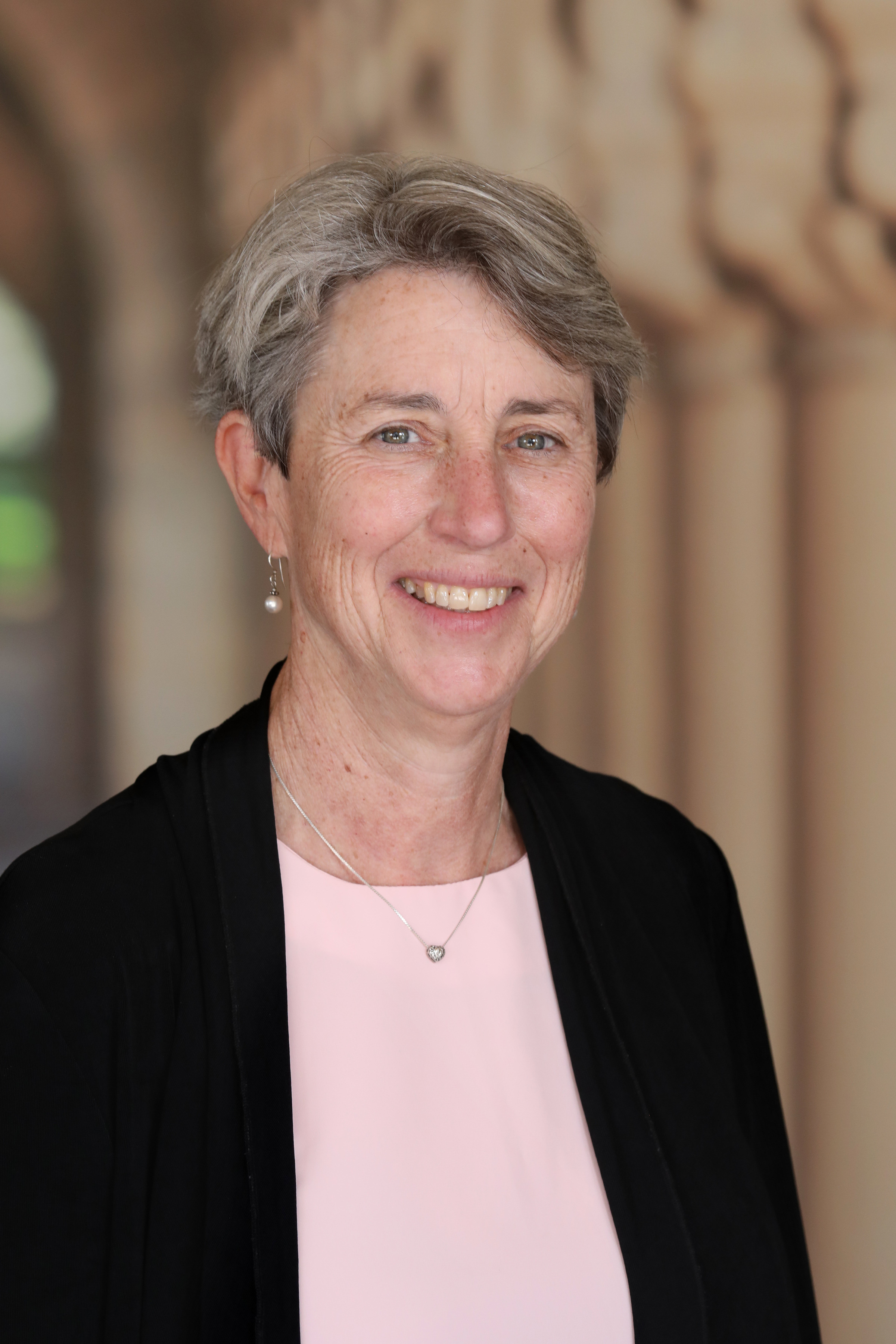
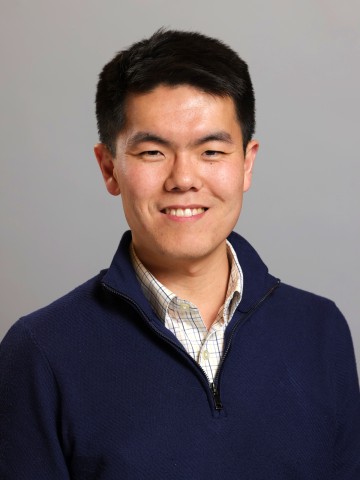
Defang Chen is a Researcher and Postdoctoral Associate in the Department of Computer Science and Engineering at the University at Buffalo, working under the supervision of Siwei Lyu. He is affiliated with the School of Engineering and Applied Sciences and is based at 301A Davis Hall in Buffalo, NY. His research focuses on advanced machine learning techniques, including knowledge distillation, diffusion models, graph neural networks, and domain generalization. Defang's work emphasizes improving model efficiency through distillation methods, exploring generative models like diffusion processes, and enhancing cross-domain adaptability. His contributions span both theoretical advancements and practical applications, such as accelerating diffusion sampling and optimizing neural network architectures. His publications between 2023–2025 highlight trends in model compression, generative AI, and graph-based learning. Notable themes include refining knowledge transfer between models, improving adversarial robustness, and developing scalable sampling techniques. Defang’s research has implications for computer vision, natural language processing, and semantic segmentation. No academic awards or grants are explicitly listed in the provided information. While no formal advisees are noted, his role as a postdoctoral researcher suggests collaborative involvement in academic projects and teams. Defang’s work is accessible via his Google Scholar profile .
Silvia BOZZA is an Associate Professor in the Department of Economics at Ca' Foscari University of Venice, where she also serves as Department Delegate for Teacher Training for High Schools. Her academic profile is centered around Statistics (SSD STAT-01/A), with a strong focus on forensic applications of statistical methods. She maintains dual institutional affiliations, working within both the Department of Economics (based in San Giobbe) and the Interdepartmental School of Economics, Languages and Entrepreneurship for International Exchanges (located in Treviso - Palazzo San Paolo). Professor BOZZA's research primarily explores the application of Bayesian statistics to forensic science and legal evidence evaluation. Her work demonstrates a consistent trajectory from early publications on spatio-temporal models to her current specialized focus on forensic statistics. She has developed expertise in probabilistic graphical models, Bayes factors, and statistical decision theory as applied to evidence interpretation. Her research addresses critical questions in forensic science regarding how to properly evaluate and communicate statistical evidence in legal contexts, with particular attention to handwriting analysis, DNA evidence, and authorship attribution. Her publication record shows remarkable consistency and productivity, with over 90 publications spanning from 2001 to 2025. Recent work (2022-2025) demonstrates her ability to address contemporary challenges, including AI authorship discrimination using Bayesian methods for distinguishing human from ChatGPT-generated text. Her articles frequently appear in high-impact forensic and statistical journals including Law, Probability & Risk, Forensic Science International, and Annual Review of Statistics and its Application. Professor BOZZA actively supervises undergraduate and graduate theses involving data analysis, requiring knowledge of statistical software including the R programming language used in the Statistics for Economics Laboratory course. She encourages students to propose topics while offering guidance to refine research questions. Her office hours show she maintains regular availability for student consultations, indicating active engagement in academic mentoring.
Morgane Chevalier is an Associate Professor at Vaud Teacher Training College (HEP Vaud) working within the Media, Digital Uses and Computer Science Teaching unit (UER MI). She specializes in multimedia pedagogical engineering, combining project management with e-learning scripting. Her work bridges educational theory and practical implementation of digital technologies in classroom settings, with particular focus on primary education. With prior experience teaching in primary schools in Seine-Saint-Denis (France), working in human resources in Montreal (Canada), and teaching in the Canton of Vaud, Chevalier brings diverse perspectives to her academic work. She holds a Master's degree in e-learning from IPM, Lille 1 and is currently pursuing a MAS in 'Theories, practices and training devices for teachers' to refine her understanding of institutional and social contexts of teacher training in French-speaking Switzerland. Her research interests focus on three complementary areas: online homework implementation in blended learning environments and fostering teacher communities of practice; how e-learning supports teacher professionalization; and robotics as a medium for knowledge, specifically examining how classroom robot integration impacts student learning and teaching practices. She is particularly interested in emerging communities of practice around educational technology. Analysis of her recent publications reveals a strong emphasis on educational robotics as a vehicle for developing computational thinking in primary education. Her work consistently explores scaffolded learning approaches, intervention methods, and teacher perspectives on implementing robotics in classrooms. A recurring theme is the development of models to help teachers identify relevant computational thinking concepts during different phases of educational robotics activities. Chevalier serves in several organizational roles including as an Associate HEP Professor, delegate of the intermediate body to the HEP Council, delegate of the Specialized Pedagogy Study Commission, and scientific collaborator at EPFL's LSRO. She is also a member of the educanet2 Community. Her teaching spans Bachelor primary programs, MASPE education, and continuing education courses covering image creation and processing, media education, Thymio II robotics, and flipped classroom methodologies. She collaborates extensively with EPFL researchers, particularly on projects involving the Thymio educational robot, and has developed frameworks for creative computational problem solving through robotics. Her work demonstrates a commitment to translating research into practical classroom applications while supporting teacher development in the digital age.
Professor Boris Konev is a faculty member at the University of Liverpool, affiliated with the School of Electrical Engineering, Electronics and Computer Science. He holds the academic rank of Professor in Computer Science. Description Logics Ontologies Automated Reasoning Temporal Logic Formal Verification Encrypted Database Applications His recent research focuses on temporal queries mediated by ontologies, knowledge evaluation agents using large language models, and semantic modularity in description logics. Key sub-fields include LLM applications, encrypted databases, and formal verification techniques. He has contributed to software development projects and industry partnerships, including design of equine simulators and online services with Racewood Limited. Current teaching includes the Foundations of Computer Science module (COMP109). Professional roles include guest editorships for AI Communications and program committee membership for the European Conference on Logics for Artificial Intelligence (JELIA).
Rolf Steier serves as Professor at Oslo Metropolitan University within the Faculty of Education and International Studies, Department of Primary and Secondary Teacher Education, holding the position of Head of Studies for Area of Responsibility 5. His office is located at Pilestredet 52, 0167 Oslo (B534), with contact details including mobile +47 906 92 626, office +47 672 36 014, and email rolf.steier@oslomet.no. He actively contributes to the Digital Learning Arenas research group, focusing on technology-enhanced educational environments. Steier's research centers on computer-supported collaborative learning (CSCL) and virtual reality applications in education, with specific expertise in embodied cognition, science education, museum learning, and narrative structures in STEM. His work examines how learners co-construct knowledge through digital interactions, particularly investigating the role of physical embodiment in virtual environments and the integration of narrative techniques to facilitate engagement in informal learning contexts. Recent projects explore immersive VR experiences for collaborative meaning-making and the adaptation of interaction analysis methodologies for technology-mediated educational research. Analysis of Steier's 2021-2025 publications reveals a clear trajectory toward increasingly sophisticated integration of virtual reality in educational research, with growing emphasis on interdisciplinary applications in science education. Key thematic developments include the refinement of interaction analysis frameworks for digital contexts, the exploration of perspective-taking across blended realities, and the strategic use of narrative to enhance STEM engagement in informal settings. His work consistently bridges theoretical learning science with practical educational technology implementation. The Digital Learning Arenas research group serves as the primary platform for Steier's collaborative work, functioning as an interdisciplinary hub for developing and studying innovative digital learning solutions. This group facilitates partnerships across educational sectors to transform teaching practices through emerging technologies, with recent focus on VR-based collaborative learning environments and cross-contextual knowledge transfer.
Jianmin Guan, Ph.D., serves as Associate Professor of Kinesiology within the College for Health, Community and Policy at the University of Texas at San Antonio (UTSA). His academic work bridges physical education pedagogy, motivational psychology, and cross-cultural fitness assessment methodologies, with emphasis on student engagement in activity settings. Education: Ph.D. in Sport Pedagogy, Texas A&M University (2004) Master of Education in Measurement and Evaluation, Wayne State University (1999) Master of Education in Sport Pedagogy, Shanghai Institute of Physical Education (1993) Bachelor of Science in Kinesiology, Huizhou Normal College (1984) Dr. Guan's research centers on achievement goal theory applications in physical education, examining how work-avoidance and mastery-approach goals influence student persistence across developmental stages. His work extends to health-related fitness evaluation among minority populations and sensory integration interventions using sport-based protocols, with particular focus on Chinese student cohorts. Methodologically, he employs longitudinal growth modeling, MIMIC analyses, and cross-cultural validation techniques. His recent publications (2022-2025) demonstrate consistent investigation of achievement goal trajectories from elementary through college levels, alongside innovative comparative studies of global fitness testing frameworks. The research reveals persistent gender disparities in physical competence perception and identifies declining mastery-goal intensity during adolescent transitions, while establishing basketball training as an effective sensory integration modality. Scientific Awards: Research Fellow, Society of Health and Physical Educators (SHAPE America, 2007) Research Funding: Secured $29,732 across two grants (2018-2019) for Psychological Skills Inventory development targeting law enforcement populations. His presentations at AAHPERD conventions and Pre-Olympic conferences reflect extensive national and international scholarly engagement, particularly with Chinese research institutions on fitness knowledge assessment and sensory processing interventions. Dr. Guan maintains active international collaborations, especially with Chinese universities, developing culturally responsive physical activity interventions while addressing measurement challenges in diverse educational contexts.
Sherri Irvin is Presidential Research Professor of Philosophy and Women's and Gender Studies at the University of Oklahoma, where she serves as Senior Associate Dean of the Graduate College. She holds a PhD from Princeton University and focuses on aesthetics, philosophy of race, and intersections between aesthetics and justice. Her work examines contemporary art ontology, body aesthetics, and everyday aesthetic experiences. PhD, Princeton University Presidential Research Professor of Philosophy and Women's and Gender Studies Senior Associate Dean of Graduate College, University of Oklahoma Her research investigates how rules constitute contemporary artworks, as seen in her book Immaterial: Rules in Contemporary Art (Oxford 2022) and edited collection Body Aesthetics (Oxford 2016). Current projects analyze aesthetic blight, embodiment practices, and justice intersections. Recent publications (2022-2025) span topics from Taylor Swift's re-recordings as conceptual art to mental health in aesthetic experiences. Her work has appeared in Journal of Aesthetics and Art Criticism , Estetika , and edited volumes on collaborative art and mental health aesthetics. Key Scientific Awards Big Idea Challenge Grant (2021-2023) 30th Anniversary Feminist Caucus Prize (2020) Humanities Forum Fellowship (2018-2019) Franklin Research Grant (2013) American Society for Aesthetics Prizes Irvin contributes to Journal of Aesthetics and Philosophy Compass editorial boards. Her courses include Survey of Aesthetics, Philosophy and Race, and Seminars on Social Construction and Contemporary Art.
Stefan Leyk is a Professor of Geography at the University of Colorado Boulder within the Department of Geography in the College of Arts and Sciences. His research focuses on GIScience, spatial uncertainty modeling, and historical landscape analysis, with significant contributions to cartographic pattern recognition from historical maps and spatial dynamic modeling in public health. He holds a Ph.D. from the University of Zurich and the Federal Research Institute for Forest, Snow and Landscape (2005). His primary research interests include uncertainty in GIScience and spatial uncertainty modeling, land cover change modeling using historical spatial information, cartographic pattern recognition from historical maps, and spatial dynamic modeling approaches in public health. His work bridges historical geography with advanced computational methods, particularly in extracting settlement patterns from historical map archives and developing spatiotemporal datasets spanning centuries. Leyk's recent publications demonstrate strong trends in historical settlement analysis, with major projects like CHRONEX-US and HISDAC-US creating century-long datasets of urban infrastructure and settlement evolution. His work increasingly integrates machine learning with historical map processing, focusing on uncertainty quantification, built-up land validation, and environmental justice applications related to flood risk and coastal hazards. Key thematic areas include long-term urban growth patterns, rural poverty dynamics, and wildfire risk assessment at the wildland-urban interface. Leyk has received significant research funding through collaborative grants including 'HNDS-I: Building Long-term, National-scale Spatiotemporal Data Collections from Historical Map Archives' (2025) and 'HNDS-I: Data Infrastructure for Research on Historical Settlement and Population Growth in the United States' (2021). He actively mentors graduate students including Alek Berg, Caitlin McShane, and Yuying Ren, and teaches advanced GIS courses such as GEOG 4303/5303 GIS: Spatial Programming and GEOG 4103/5303 GIS: Spatial Analytics. His laboratory work centers on geospatial modeling of historical settlement and landscape analysis, with a focus on developing automated methods for processing historical map archives and creating linked spatiotemporal data. Current projects involve machine learning applications for feature extraction from historical maps, uncertainty prediction in built-up land layers, and the development of fine-grained datasets measuring 200 years of land development in the United States.
Professor Chris J Budd OBE is a distinguished Professor of Applied Mathematics at the University of Bath's Department of Mathematical Sciences, where he serves as Director of Knowledge Exchange for the Bath Institute for Mathematical Innovation (IMI). He is also Professor of Mathematics at the Royal Institution of Great Britain and a former Gresham Professor of Geometry. His leadership extends to directing the Centre for Nonlinear Mechanics and serving as Super Champion of the KE Hub. His educational background includes a gap year with Marconi that profoundly shaped his career, followed by undergraduate studies at Cambridge and a DPhil at Oxford. This industry experience during his formative years established his lifelong commitment to industrial mathematics and knowledge exchange. Budd's research focuses on nonlinear mathematical problems with industrial applications, particularly adaptive moving mesh methods for meteorology and climate modeling, data assimilation, non-smooth dynamical systems, and the mathematics of machine learning. He approaches linear problems as 'for cissies,' preferring the challenges of nonlinear systems that better represent real-world phenomena. His work bridges theoretical mathematics with practical applications across meteorology, environmental science, and engineering. His recent publications reveal a strong trend toward integrating machine learning with traditional numerical methods, particularly in climate modeling and solving partial differential equations. This includes Fourier Neural Operators, adaptive mesh methods enhanced by graph neural networks, and mathematical frameworks for understanding climate tipping points through non-smooth dynamics. OBE for services to mathematics National Teaching Fellowship (NTF) Knowledge Transfer Award for work with the Met Office Fellow of the Institute of Mathematics and its Applications (FIMA) Chartered Mathematician (C Math) British Science Association award for best science festival (2009) As principal investigator of the £3.5M EPSRC Programme Grant 'Maths4DL' on the Mathematics of Deep Learning, Budd leads a major collaborative effort between Bath, Cambridge, and UCL. He actively supervises numerous PhD students across diverse projects including climate modeling, machine learning applications, and industrial mathematics problems. His commitment to knowledge exchange is exemplified through V-KEMS (Virtual Forum for Knowledge Exchange in the Mathematical Sciences), which he co-founded to address challenges like the COVID-19 pandemic through mathematical approaches. Budd directs the Centre for Nonlinear Mechanics at Bath, fostering interdisciplinary research through mathematical modeling of complex systems. He also leads the Bath Institute for Mathematical Innovation's knowledge exchange activities, connecting academic mathematics with industrial and societal challenges. His work with V-KEMS has proven particularly effective during the pandemic, mobilizing teams of mathematicians to address urgent real-world problems.
Janet Carlson is an Associate Professor (Research) of Education at Stanford University's Graduate School of Education, with her office located in Room 530 of the CERAS building. Her research focuses on science education, teacher professional development, and curriculum materials design. Dr. Carlson earned her BA in Environmental Biology from Carleton College, an MS in Curriculum and Instruction from Kansas State University, and a PhD in Instruction and Curriculum (science education) from the University of Colorado. With over 20 years of experience beginning as a middle and high school science teacher, she brings extensive practical knowledge to her academic work. Her research examines how educative curriculum materials and transformative professional development impact science teaching and learning, with recent expansion into mathematics education and equity issues. She investigates teacher noticing, pedagogical content knowledge, and responsive teaching practices through innovative methods like video annotation and teaching rehearsals. Dr. Carlson's publication record (2017-2023) reveals consistent contributions to science and mathematics teacher education, particularly in refining pedagogical content knowledge models and developing video-based professional development approaches. Her work demonstrates strong collaboration with researchers like Hilda Borko and spans practical applications in K-12 classrooms. No scientific awards are mentioned in the provided text. While no specific advisees are listed, Dr. Carlson leads multiple research projects that likely involve mentoring graduate students. Her grant-funded initiatives include the AP Success Project, Letovo School collaboration, Middle School Science Coaching, PLATO protocol development, and the TELOS project focused on equity in learning opportunities. She actively collaborates with Stanford's Center to Support Excellence in Teaching (CSET) and maintains research partnerships across institutions, contributing to national efforts in improving STEM teacher preparation and classroom practices through evidence-based approaches.
Steven Zhou is an Assistant Professor of Psychological Science at Claremont McKenna College, where he leads the STATS Lab (www.statslabatcmc.com). His academic work bridges quantitative methods with psychological research, focusing on leadership, personality, and vocational psychology. With methodological expertise in psychometrics, machine learning, and data visualization, he actively contributes to both academic and practitioner communities through research, teaching, and consulting. Dr. Zhou's educational background includes: PhD in Organizational Psychology + Certificate in Computational Social Sciences from George Mason University BA in Organizational Psychology + Certificate in Conflict Resolution from Pepperdine University His research program centers on developing and refining psychological assessments while investigating bias in measurement systems. Dr. Zhou specializes in forced-choice personality assessments, leadership evaluation methodologies, and career calling research. His work consistently addresses the gap between academic research and practical application in organizational settings, with recent projects incorporating large language models and agent-based simulations to study complex behavioral phenomena. Dr. Zhou's publication record shows a clear trajectory toward increasingly sophisticated methodological approaches to organizational psychology questions. His recent work demonstrates growing integration of computational techniques (machine learning, NLP) with traditional psychological research, while maintaining strong connections to practical organizational applications. The research consistently addresses measurement challenges in leadership assessment and career development. His notable scientific achievements include: 2025 Jablin Dissertation Award from the International Leadership Association and Jepson School of Leadership Studies 2025 Chapman Dissertation Award from the Network of Leadership Scholars and Academy of Management 2023 Dissertation Research Award from the American Psychological Association 2022 Free Inquiry Grant from the Foundation for Individual Rights and Expression 2022 Graen Grant for Student Research on Leaders and Teams from SIOP 2021 Kenneth E. Clark Student Research Award from ILA and Center for Creative Leadership 2021 Outstanding Graduate Student Instructor from GMU Department of Psychology Dr. Zhou actively mentors both graduate and undergraduate students, with numerous student co-authors across his publication record. He has secured nearly $40,000 in external research funding to support his work on leadership assessment and psychometric methodology. His professional service includes editorial roles for multiple journals and leadership positions within the Society for Industrial and Organizational Psychology. As director of the STATS Lab, Dr. Zhou leads a research team focused on applying quantitative methods to understand leadership, career development, and personality. The lab's five research pillars include Psychometrics & Measurement Science, Bias in Measurement & Analytics, Leadership Assessment & Team Dynamics, Integrating Novel Methods into Research, and Career Development & Vocational Psychology, all emphasizing both methodological rigor and practical application.
Erdal DEMİRCİ serves as a full-time Lecturer in the Department of Physical Education and Sports at Sarıkamış Faculty of Sports Sciences, Kafkas University since 1995. His academic journey includes a PhD from Sofia 'Vasil Levski' National Sports Academy (Bulgaria, 2013-2017), Master's degree from Kafkas University's Faculty of Education (2005-2007), and Bachelor's degree from Dokuz Eylül University's School of Sports Sciences (1986-1991). His research centers on critical intersections of sports science and public health, with particular emphasis on childhood obesity interventions and physical activity efficacy. Key focus areas include: School-based exercise programs for 9-11 year-old girls Economic impacts of children's ski zones on winter tourism Nutrition knowledge and self-efficacy in obesity prevention Inclusive physical education for students with learning difficulties Analysis of his 2017 publication burst reveals strong interdisciplinary connections between sports pedagogy, public health metrics, and behavioral economics. His work consistently targets practical applications in educational settings while addressing Turkey's growing childhood obesity concerns through measurable intervention frameworks. No major scientific awards or fellowships are documented in available records. His collaborative research patterns indicate significant partnerships with Nevzat Demirci (6 joint works) and Pervin Toptaş Demirci (5 joint works), primarily focused on obesity and physical activity studies between 2013-2017. Professional service includes administrative leadership as Deputy Director of Sarıkamış Faculty (2006-2010), demonstrating institutional commitment beyond core teaching responsibilities. Current work appears centered on refining exercise efficacy metrics for vulnerable youth populations.
Ilaria Canavotto is an Assistant Professor in the Department of Philosophy within the College of Arts and Humanities at the University of Maryland. Her academic work focuses on formal logical frameworks applied to legal reasoning, normative systems, and philosophical problems of agency. Her research centers on deontic logic, STIT logic, and the resolution of inconsistent precedents in legal contexts. Key interests include normative reasoning, causal responsibility, counterfactuals grounded in voluntary imagination, and the dynamics of open-textured predicates. She develops computational models for piecemeal knowledge acquisition in normative systems and refines logical structures for agency and responsibility through STIT semantics. Analysis of her recent publications reveals a strong trend toward integrating dynamic deontic logic with legal AI applications, particularly in modeling inconsistent case bases and deriving actual prescriptions from ideal norms. Her work bridges philosophical logic with practical legal reasoning challenges, emphasizing choice-driven counterfactuals and the metaphysical foundations of structured entities in normative contexts.
David Sjöberg serves as Associate Professor at Umeå University's Unit of Police Work, specializing in research, teaching, and pedagogical development for police and emergency response education. His work bridges academic theory with practical training methodologies for first responders. His educational background includes a Ph.D. in Education and the Swedish Docent title, signifying advanced research competence and doctoral supervision资格. Ph.D. in Education Docent in Education Sjöberg's research centers on simulation-based training innovations, examining psychological responses in mass casualty incidents, mixed reality applications, and informal workplace learning among police educators. He investigates how preparation phases, debriefing models, and role assignments impact practical knowledge development in vocational contexts, with strong emphasis on real-world applicability for police training. Analysis of his 15 most recent publications reveals consistent focus on simulation fidelity and learning transfer in emergency response training. Recent work (2023-2025) explores mixed reality integration and psychological adaptation in mass casualty scenarios, while earlier studies examine observer roles, secondary participant learning, and virtual case effectiveness. His research demonstrates methodological diversity through qualitative analyses, comparative studies, and longitudinal assessments. Awarded for teaching excellence, his recognitions include: Excellent teacher award at Umeå University Distinguished university teacher designation Sjöberg secures significant research funding through projects like MELODY (2018-2022) on police learning dynamics and Safety & Security Test Arena (2016-2019) for emergency response innovation. As Docent, he supervises doctoral candidates though specific advisees aren't listed in source materials. His grants consistently target simulation technology advancement and pedagogical refinement in high-stakes vocational training. He leads Umeå University's "Learning in police work" research profile, coordinating interdisciplinary collaboration between police educators, practitioners, and simulation specialists to develop evidence-based training protocols and evaluate learning outcomes in realistic operational environments.
Leonard Edward White is an Associate Professor in Neurology at Duke University, with additional appointments in Psychology and Neuroscience, Orthopaedic Surgery, and Neurobiology. He serves as Associate Director of the Duke Institute for Brain Sciences and Director of Undergraduate Studies of Neuroscience. His academic career spans over three decades since earning his Ph.D. from Washington University in St. Louis in 1992. Dr. White's research focuses on the structure and function of the mammalian brain, particularly through the development of advanced magnetic resonance methods for interrogating brain structure. His work combines light sheet microscopy with MRI techniques to provide new insights into microscopic brain structure, whole-brain connectivity, and how neural tissue constrains connectivity in animal models. He maintains a sustained interest in how early sensorimotor experience influences neural circuit formation and maturation in the cerebral cortex, as well as the intersection of brain sciences with humanities. His recent publications (2020-2025) reveal a strong emphasis on high-resolution brain imaging techniques, particularly MRI and light sheet microscopy for creating detailed brain atlases. His work spans multiple species (mouse, rat, human) and addresses fundamental questions in neuroanatomy, connectomics, and developmental neuroscience. Notably, he has been developing the Duke Mouse Brain Atlas and exploring the impact of prenatal drug exposure on brain development. Dr. White has secured significant research funding, including the current 'Ultra-high Resolution Structural Connectome Atlases of the Animal Brain' grant (2022-2026) from the University of Pittsburgh, and previously led NIH-funded projects on visual cortex development spanning nearly two decades. He is deeply involved in medical education, serving as Director of Undergraduate Studies of Neuroscience and developing innovative approaches to teaching neuroanatomy. His educational scholarship includes work on integrating art into medical education and revitalizing neuroanatomy teaching methods. He also maintains an active presence in neurohumanities, exploring the intersection of neuroscience with arts and humanities.