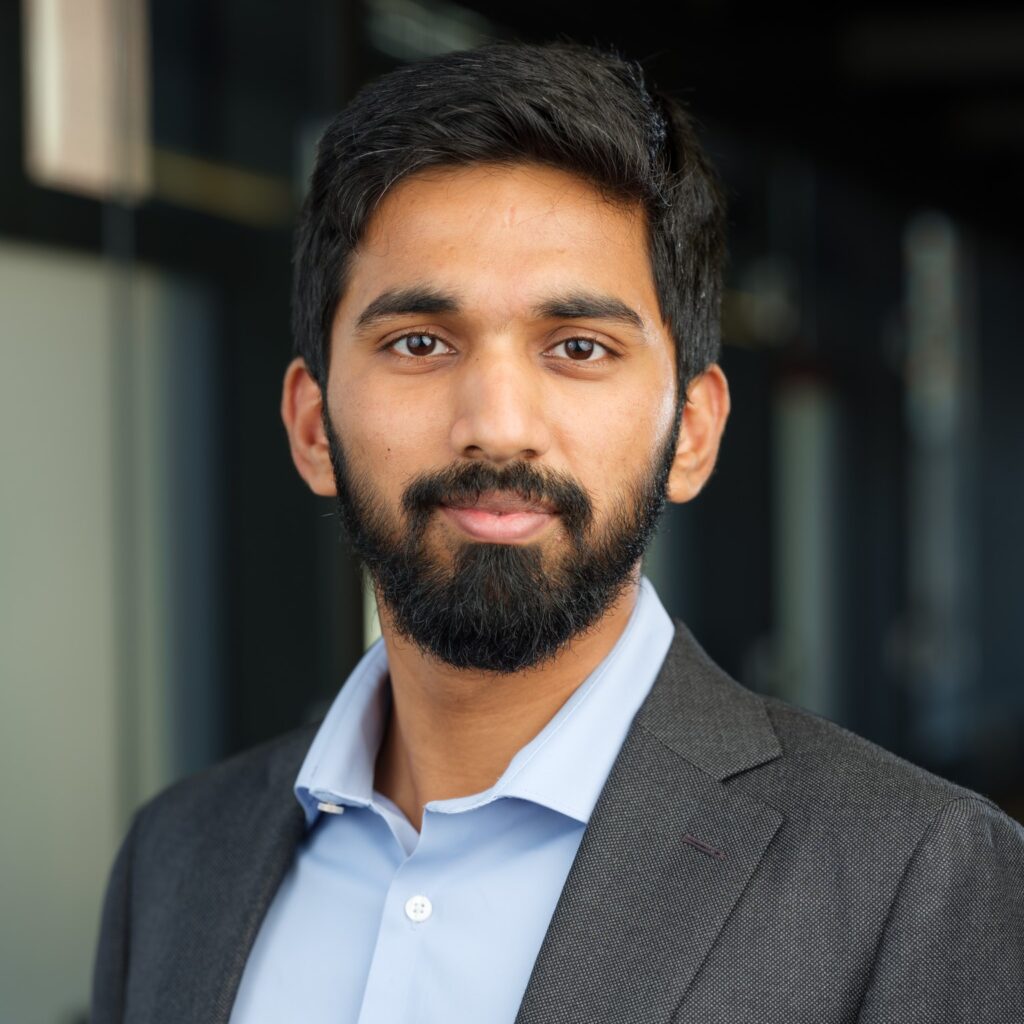
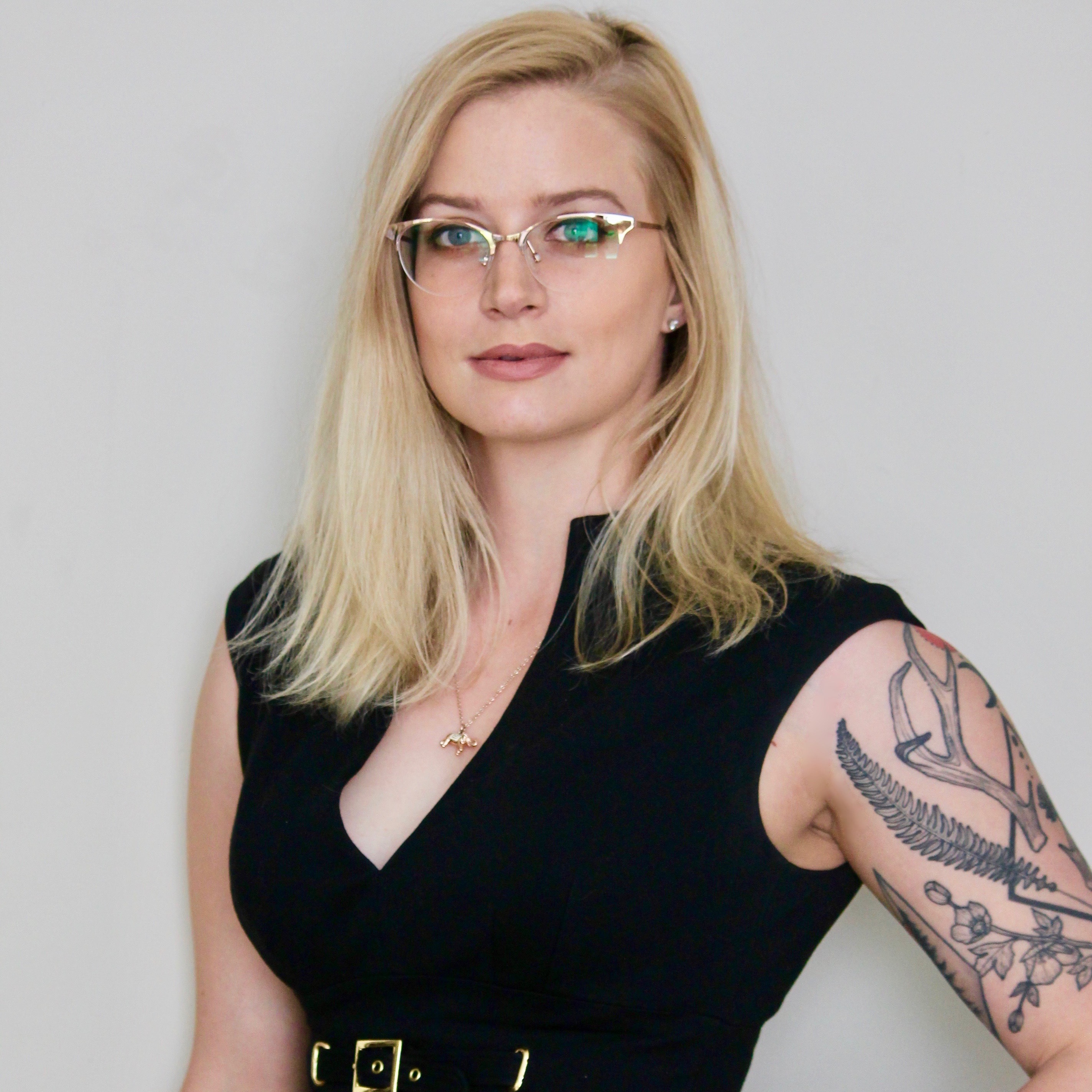
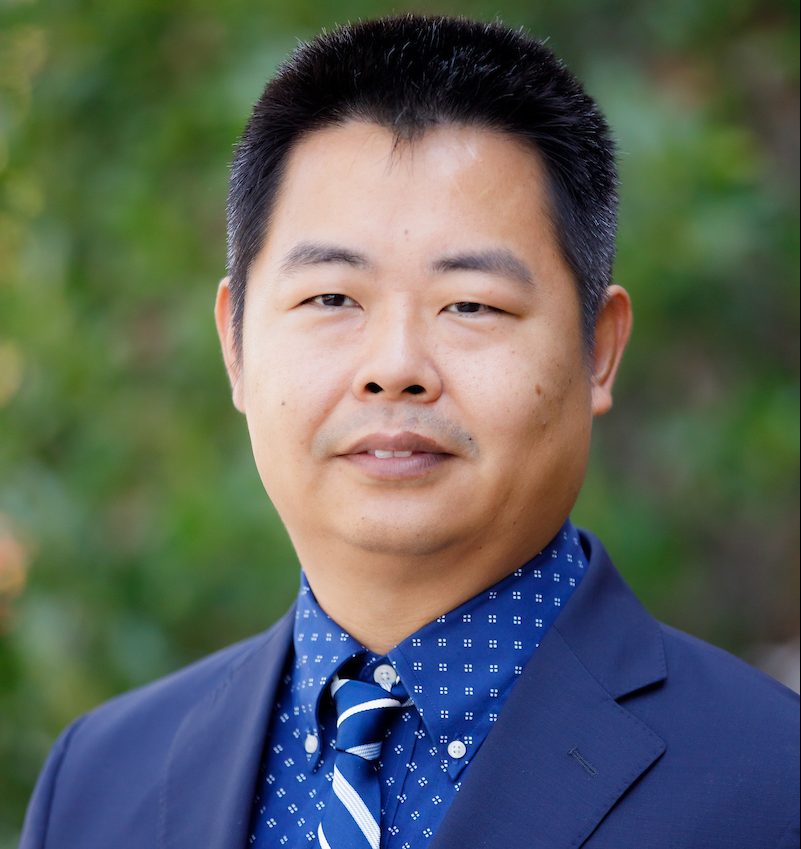
Dinesh Jayaraman is an Assistant Professor at the University of Pennsylvania, with primary and secondary appointments in the Department of Computer and Information Science (CIS) and Electrical and Systems Engineering (ESE), respectively. He leads the Perception, Action, and Learning (PennPAL) Research Group at the GRASP Laboratory, focusing on interdisciplinary research at the intersection of robotics, machine learning, and computer vision. Research Interests: Robotics, computer vision, reinforcement learning, and autonomous systems. Recent Publications: His work explores vision-language models for robotic tool use, symmetry-based control acceleration, articulated object modeling, and in-context learning frameworks. Awards: Recipient of the 2022 NSF CAREER Award for innovative contributions to robotics and AI. Teaching: Co-teaching a robot-learning seminar (CIS 7000/ESE 6800) with Antonio Loquercio in Spring 2025. Students: Advising PhD candidates including Edward Hu, Arjun Krishna, and co-advised students with Osbert Bastani, Vijay Kumar, and Rajeev Alur.
Professor Christian Bizer is a leading figure in web-based systems and data integration at the University of Mannheim , where he chairs Information Systems V: Web-based Systems . His research focuses on integrating data from multiple sources using large language models and LLM-based agents, with applications in product data extraction and DBpedia knowledge graph construction. He co-founded the DBpedia project and initiated the WebDataCommons initiative. Current research areas: Entity matching, schema matching, table annotation, information extraction, data discovery Key projects: WebMall benchmark, WInte.r integration framework, Schema.org analysis His work applies to e-commerce data integration and knowledge graph construction, with empirical studies on schema.org adoption. He supervises PhD students including Alexander Brinkmann and Ralph Peeters. Scientific Awards: Best Paper at iiWAS 2024 SWSA Ten-Year Award at ISWC 2019 Yahoo FREP Award 2015 Semantic Web Challenge winners Teaching includes courses on web data integration, web mining, large language models, and data mining for master's programs. He leads the DWS PhD colloquium and team projects on LLM agents for data integration.
Dr. Emily Wall is an Assistant Professor in the Department of Computer Science at Emory University, leading the CAV Lab (Cognition and Visualization). She earned her Ph.D. in Computer Science from Georgia Tech (2020) and completed a postdoctoral fellowship at Northwestern University before joining Emory. Ph.D., Computer Science, Georgia Tech (2020) Postdoctoral Researcher, Northwestern University Current: Assistant Professor, Emory University Her research focuses on enhancing human decision-making through data visualization and visual analytics by addressing cognitive limitations and biases. Key areas include metacognition promotion, computational strategies for bias mitigation, and human-AI collaboration in data analysis. She combines cognitive psychology principles with technical implementation using tools like D3.js and Tableau. Recent publications highlight her work on LLM applications in visual analytics, cognitive bias interventions, and trust calibration in AI systems. Current students like Mengyu Chen, Shiyao Li, and Zhongzheng Xu are presenting at top conferences such as CHI and IEEE VIS. She also explores educational applications through interactive visualization pedagogy and innovative assessment methods. Dr. Wall actively engages in academic service through graduate mentorship, conference judging, and diversity initiatives. Her lab emphasizes both technical proficiency and social justice implications in visualization design, reflected in course projects that merge artistic expression with data-driven storytelling.
Julian McAuley is a Professor in the Department of Computer Science and Engineering at the University of California, San Diego's Jacobs School of Engineering. His research spans recommender systems, machine learning, natural language processing, music information retrieval, and multimodal learning. He maintains an active research group with numerous PhD students and postdocs working on cutting-edge AI problems. His research interests focus on developing advanced algorithms for personalized recommendation systems, with particular emphasis on sequential recommendation, multimodal learning, and integrating large language models with traditional recommendation approaches. His work bridges the gap between theoretical machine learning and practical applications across multiple domains including e-commerce, music, and healthcare. McAuley has published extensively in top-tier conferences including NeurIPS, ICML, KDD, SIGIR, and ACL, with his most recent work exploring the intersection of large language models and recommendation systems. His publications reveal a strong trend toward multimodal approaches that combine text, vision, and audio for more comprehensive understanding and recommendation. He has received significant research funding from major technology companies including Google, Amazon, Facebook, Adobe, and Samsung, as well as government agencies like the National Science Foundation and Department of Defense. His work has practical applications across multiple industries, with a focus on improving user experience through better personalization. McAuley advises numerous PhD students who have gone on to successful careers at leading technology companies and academic institutions. His former students include Wang-Cheng Kang and Jianmo Ni at Google DeepMind, Chris Donahue and Zachary Lipton as assistant professors at CMU, and Ruining He at Google Deepmind.
Dr. George Stamou is a Professor at the School of Electrical and Computer Engineering of the National Technical University of Athens (NTUA), serving as Director of the Artificial Intelligence and Learning Systems Laboratory (AILS). His expertise spans knowledge representation, machine learning, neural networks, and semantic technologies. He leads interdisciplinary initiatives such as the postgraduate program 'Data Science and Machine Learning' (2018–2022). Research Interests: Focuses on knowledge graphs, interpretable AI, semantic web applications, and multimodal learning. His work integrates formal logic systems (e.g., description logics) with modern deep learning techniques, addressing challenges in explainability, bias detection, and ethical AI applications. Publications: Over 150 articles in AI journals/conferences with an h-index of 34 (Google Scholar). Notable contributions include datasets like CHORDONOMICON (music analysis), GOSt-MT (gender bias in MT), and methodologies for counterfactual explanations in machine learning. Awards & Committees: Active in W3C and RuleML standardization bodies. Co-organized major AI conferences. Recognized for contributions to semantic interoperability and knowledge-based systems. Labs & Teams: Directs AILS-NTUA lab and collaborates with CISRI (Computer & Information Systems Research Institute). Engages in EU projects like CultureLabs (cultural heritage digitalization) andsmarty4covid (health data analysis).
Mi Zhang is an Associate Professor in the Department of Computer Science and Engineering at The Ohio State University and Director of the OSU AIoT and Machine Learning Systems Lab. He holds multiple affiliations including the Institute for Cybersecurity and Digital Trust, Translational Data Analytics Institute, and 5G and Broadband Connectivity Center. Dr. Zhang received his Ph.D. from University of Southern California and B.S. from Peking University, followed by a postdoctoral position at Cornell University. His academic journey previously included a position at Michigan State University before joining OSU. His research focuses on Empowering Billions of Everyday Devices with AI to realize the Artificial Intelligence of Things (AIoT) vision. His lab works across several interconnected domains including efficient generative AI (multimodal LLMs, diffusion models), edge AI for mobile/AR/wearables, systems for AI agents, spatial computing, foundation models for IoT, and human-centered mobile health applications. This interdisciplinary work draws from mobile/edge computing, AI/machine learning, distributed systems, computer networks, and human-centered computing. Analysis of his recent publications reveals a strong focus on making AI more efficient and accessible for resource-constrained devices. His research trajectory shows increasing emphasis on large language models and their optimization for edge deployment, alongside continued work in federated learning for IoT applications. The publications demonstrate both theoretical contributions and practical applications across healthcare, wireless networks, and human-computer interaction. Best Paper Award, IEEE Internet Computing Magazine (2024) University of Chicago Outstanding Educator Award (2024) Best Paper Award, ECCV'24 Workshop (2024) USC ECE SIPI Distinguished Alumni Award (2023) Multiple Best Paper Awards from ACM/IEEE conferences NSF CRII Award Facebook/Meta Faculty Research Award Amazon Research Award MSU Innovation of the Year Award (2020) Dr. Zhang actively mentors students at all levels, with a current group of Ph.D. students working on cutting-edge AI/ML systems. His lab has secured significant funding including Meta Reality Labs Faculty Awards, NVIDIA academic grants, and NSF grants. The OSU AIoT and Machine Learning Systems Lab serves as the central hub for his research activities, fostering collaboration across multiple disciplines to advance the field of AIoT.
Raquel Fernández is Full Professor of Computational Linguistics and Dialogue Systems at the University of Amsterdam, where she leads the Dialogue Modelling Group at the Institute for Logic, Language & Computation (ILLC). As Vice-Director for Research at ILLC and a Fellow of the ELLIS Society, she bridges computational linguistics, cognitive science, and artificial intelligence through her research on language use in multimodal and conversational contexts. PhD in Computational Linguistics from King's College London Prior research positions at University of Potsdam and Stanford University's CSLI Her work explores how cognitive constraints, social interaction, and perception shape language use, with a focus on: Visually-grounded language processing Multimodal dialogue modeling Model uncertainty and calibration Language grounding in multimodal data Language learning and semantic change Dialogue reference resolution Recent publications analyze multimodal reasoning limitations, cross-lingual knowledge consistency, and uncertainty modeling in dialogue systems. She has received multiple accolades including an ERC Consolidator Grant , NWO VENI/VIDI/Aspasia fellowships , and EMNLP/GenBench awards . Outstanding Paper Award (EMNLP 2023) Best Data Award (GenBench Workshop 2023) ELLIS Society Fellow ERC Consolidator Grant #819455 recipient NWO VENI/VIDI/Aspasia awardee As a leader in academic service, she serves on the SIGDAT Executive Committee and chairs multiple conference committees. Her lab develops models for multimodal dialogue, visual storytelling, and grounded language understanding.
James Glass is a Senior Research Scientist at the Massachusetts Institute of Technology (MIT) and heads the Spoken Language Systems Group within MIT's Computer Science and Artificial Intelligence Laboratory (CSAIL). He is also affiliated with the Harvard-MIT Division of Health Sciences and Technology. His research spans automatic speech recognition, multimodal learning, and spoken language understanding, with applications in healthcare and video analysis. Education: SM and PhD in Electrical Engineering and Computer Science from MIT His work focuses on paralinguistic speech analysis, health markers in speech, and the intersection of speech and natural language processing. Recent trends emphasize audio-visual alignment, recursive reasoning, and AI applications in cognitive disorder diagnosis. Scientific awards include IEEE Fellow, ISCA Fellow, and Associate Editor for IEEE Transactions on Pattern Analysis and Machine Intelligence. His group explores unsupervised learning, speaker verification, and social text analysis. James leads the Spoken Language Systems Group at CSAIL, collaborating with institutions like IBM and Harvard-MIT Division of Health Sciences and Technology. His research integrates vision-language models, neural audio codecs, and self-supervised frameworks.
Dr. Jiaqi Gong serves as Associate Professor in Computer Science and Adjunct Associate Professor in Mechanical Engineering at The University of Alabama's College of Engineering, while directing the Alabama Center for the Advancement of Artificial Intelligence. His academic foundation includes: B.S. in Engineering, China University of Geoscience (2004) Ph.D. in Engineering, Huazhong University of Science and Technology (2010) Dr. Gong's research pioneers human-AI convergence through cyber-physical systems and smart health technologies, developing mobile/wearable platforms to enhance human perceptual, cognitive, and physical capabilities. His work spans artificial intelligence, machine learning, computer vision, and IoT with applications in healthcare, environmental monitoring, and education. The Sensor-Accelerated Intelligent Learning (SAIL) laboratory he founded drives innovation in behavior change interventions, human movement modeling, and educational data mining. Recent publications reveal strong interdisciplinary trends: healthcare AI dominates with medication adherence prediction and surgical classification systems, while environmental applications feature flood-risk communication and drought analysis. His work increasingly integrates generative AI and LLMs across domains, demonstrating methodological innovation in federated learning, knowledge graphs, and explainable storytelling frameworks. Notable recognitions include: Best Student Paper Award, IEEE/ACM Connected Health Conference (2022) Best Student Paper Award, Body Sensor Networks Conference (2019) Data Challenge Win, IEEE Biomedical Health Informatics (2018) Best Paper Award, Body Area Networks Conference (2014) Best Demonstration Award, IEEE Wireless Health Conference (2014) Dr. Gong leads significant funded projects including a $2M CDC/NIOSH grant for first responder safety and $3M NSF funding for hydrologic research. As SAIL laboratory director, he mentors students in developing clinically deployed technologies for multiple sclerosis, dementia, and mental health. Future work focuses on scaling AI applications in chronic disease management and climate resilience through the Alabama AI Center. The SAIL laboratory (founded 2017) operates as a multidisciplinary hub developing wearable/mobile systems for health applications, with active collaborations across medical clinics and engineering departments for real-world deployment of behavior change interventions and movement analysis tools.
Toby Jia-Jun Li is an Assistant Professor in the Department of Computer Science and Engineering at the University of Notre Dame, where he leads the SaNDwich Lab. He also serves as the Director of the Human-Centered Responsible AI Lab in the Lucy Family Institute for Data & Society and is a Faculty Fellow at the Institute for Educational Initiatives (IEI). Previously, he was affiliated with Carnegie Mellon University's Human-Computer Interaction Institute (HCII) and GroupLens Research. Dr. Li's research spans the intersection of Human-Computer Interaction (HCI), End-User Software Engineering, Machine Learning (ML), and Natural Language Processing (NLP), with recent work focusing on addressing societal challenges in the future of work through human-AI collaborative approaches. His work has resulted in over 40 publications at premier venues including CHI, UIST, CSCW, ACL, and ICSE, with 8 papers winning Best Paper or Honorable Mention awards. His recent publications demonstrate a strong focus on human-AI collaboration across various domains, including code understanding, privacy, accessibility, and creative tools. The work shows a trajectory toward increasingly sophisticated integration of human-centered design with AI capabilities, particularly using large language models to enhance human productivity and address societal challenges. Google Research Scholar Award recipient Recipient of Yahoo! Fellowship ($100,000/year) Best Paper Award at UIST 2020 Best Paper Honorable Mention Award at CHI 2021 Best Paper Award at CSCW 2024 Best Paper Award at CHI 2025 Dr. Li actively mentors Ph.D. students and has established collaborations with Google, Microsoft Research, IBM Research, Adobe, Verizon, and J.P. Morgan. His research has been supported by NSF, Google Research Scholar Program, AnalytiXIN Initiative, Yahoo! InMind project, and J.P. Morgan. He is currently recruiting Ph.D. students and undergraduate researchers for his SaNDwich Lab, which focuses on developing interactive systems to empower individuals to create, configure, and extend AI-powered computing systems.
Virginia Smith is the Leonardo Associate Professor of Machine Learning at Carnegie Mellon University's School of Computer Science, with a courtesy appointment in the Electrical and Computer Engineering Department. She leads research addressing critical challenges in machine learning systems, particularly focusing on safety and efficiency. Her research interests span federated and collaborative learning, efficient training methods, data privacy, and AI safety. Recent work has explored topics such as model unlearning, LLM security, and resource-efficient distributed learning systems. She has made significant contributions to understanding how to make machine learning systems more robust, private, and efficient while maintaining performance. Professor Smith's publication record demonstrates a clear progression toward addressing practical challenges in deploying machine learning systems at scale. Her recent work shows strong emphasis on large language model safety, privacy-preserving techniques, and efficient distributed learning approaches. The research spans theoretical foundations to practical implementations, with numerous papers appearing in top-tier venues including NeurIPS, ICML, ICLR, and MLSys. AFOSR Young Investigator Award Sloan Research Fellowship 2023 Samsung AI Researcher of the Year Best Paper Award at ICML 2025 Exploration in AI Workshop Outstanding Paper Award at MLSys 2023 As an educator, Professor Smith mentors numerous PhD students and postdocs while teaching advanced machine learning courses at CMU. She serves as Program Chair for ICML 2025 and co-organizes a semester program on Federated and Collaborative Learning at the Simons Institute. Her research group maintains strong collaborations with industry partners including Amazon, where she has received research awards.
Rex Ying is an Assistant Professor in the Department of Computer Science at Yale University's School of Engineering & Applied Science. He leads research in graph neural networks, geometric representation learning, and explainable AI, with applications spanning physical simulations, biology, knowledge graphs, and recommender systems. His lab actively recruits PhD students interested in geometric deep learning, graph neural networks, and trustworthy AI. Dr. Ying received his PhD in Computer Science from Stanford University under Jure Leskovec, with a thesis titled "Towards Expressive and Scalable Deep Representation Learning for Graphs." Prior to that, he graduated from Duke University in 2016 with highest distinction, majoring in Computer Science and Mathematics. His research focuses on three interconnected areas: advancing graph neural network architectures for improved expressiveness, scalability, and interpretability; innovating in geometric representation learning for data with diverse characteristics; and developing real-world applications across scientific domains. He has pioneered influential algorithms including GraphSAGE, PinSAGE, and GNNExplainer, and developed the first billion-scale graph embedding services at Pinterest as well as graph-based anomaly detection algorithms at Amazon. His recent publication trends show a strong focus on hyperbolic geometry for foundation models, non-Euclidean representation learning, and multimodal applications in computational biology. The research demonstrates increasing integration of geometric deep learning with large language models and foundation model architectures. KDD 2022 Dissertation Award 2019 Baidu Scholarship in Artificial Intelligence Dr. Ying actively serves the research community as a committee member for major conferences including AAAI, ICML, NeurIPS, ICLR, KDD, and WebConf for over seven years, and as area chair for LoG 2022. He co-leads the open-source PyTorch Geometric project and has organized numerous workshops on graph learning. His industry collaborations include Pinterest, Amazon, Facebook AI Research, DeepMind, Siemens, SLAC National Accelerator Laboratory, and Saudi Aramco. He teaches "Deep Learning for Graph-Structured Data" at Yale and mentors students in developing cutting-edge graph learning algorithms. His research lab collaborates with both academic institutions and industry partners to advance the state-of-the-art in graph representation learning, with particular emphasis on geometric deep learning and its applications to scientific discovery and real-world systems.
Prof. Martin Boeker is a Professor of Medical Informatics at the Technical University of Munich (TUM), affiliated with the TUM School of Medicine and Health. His work focuses on advancing healthcare through AI-driven solutions, interoperability frameworks, and precision medicine initiatives. Key projects include the German Medical Text Corpus (GeMTeX) and the MIRACUM DIFUTURE Alignment Hub. Expertise: Medical Informatics, AI in Healthcare, Federated Learning, Health Data Integration Key Contributions: FHIR-based systems, clinical decision support, patient-centered outcomes research Leadership: Director of the Institute for AI and Informatics in Medicine at TUM Hospital Right of the Isar Research emphasizes bridging clinical practice and data science through projects like modular health crawlers, automated guideline adherence monitoring, and cross-institutional medical NLP solutions. His work spans oncology informatics, rare disease management, and pandemic response data ecosystems. Recent articles highlight innovations in digital twins for precision oncology, federated analysis in oncology, and German-language medical NLP challenges. He collaborates internationally on EHR standardization and healthcare interoperability, contributing to the Medical Informatics Initiative (MII) and pandemic evidence ecosystems. Grants and collaborations involve the German Federal Ministry of Education and Research, European initiatives, and industry partnerships. Educational efforts focus on training future medical informatics professionals through MII competency programs.
Wenpeng Yin is an Assistant Professor in Computer Science and Engineering, specializing in Natural Language Processing and Machine Learning. His research focuses on advancing Large Language Models (LLMs) and their applications in scientific, societal, and interdisciplinary domains. Research Interests : LLMs, medical QA, financial AI, model consistency, and instruction-following frameworks. Recent Work : Investigates low-resource NLP tasks, bias evaluation (Gptbias), and adaptive trading systems using LLMs. Current trends in his publications highlight innovations in multimodal learning, symbolic reasoning, and ethical AI, with a strong emphasis on practical implementations across diverse fields.
Prof. April Wang is an Assistant Professor in the Department of Computer Science at ETH Zurich. Her work focuses on Educational Technology, Human-Computer Interaction, and AI-driven tools for programming education. She is affiliated with the Professur Educational Technology group and teaches courses such as Human Computer Interaction and Ethics in Computing. Her research explores interactive learning environments, collaborative data science workflows, and AI-augmented educational systems. Her research interests span computational notebooks, live coding interfaces, and human-AI collaboration in software development. Notable contributions include frameworks like DBox for algorithm learning and EDBooks for interactive programming narratives. She also investigates challenges in real-time collaboration tools and automated documentation systems for data scientists. Recent work emphasizes understanding user needs in automated copilot systems and resolving conflicts in collaborative notebook environments. Her projects often bridge theoretical HCI principles with practical educational tools, aiming to enhance both instructor efficacy and student engagement. Prof. Wang’s teaching portfolio includes courses on user-centered interface design and ethical scientific practices. She actively contributes to advancing interdisciplinary computational literacy through initiatives like datAR, which uses everyday objects to teach data concepts.